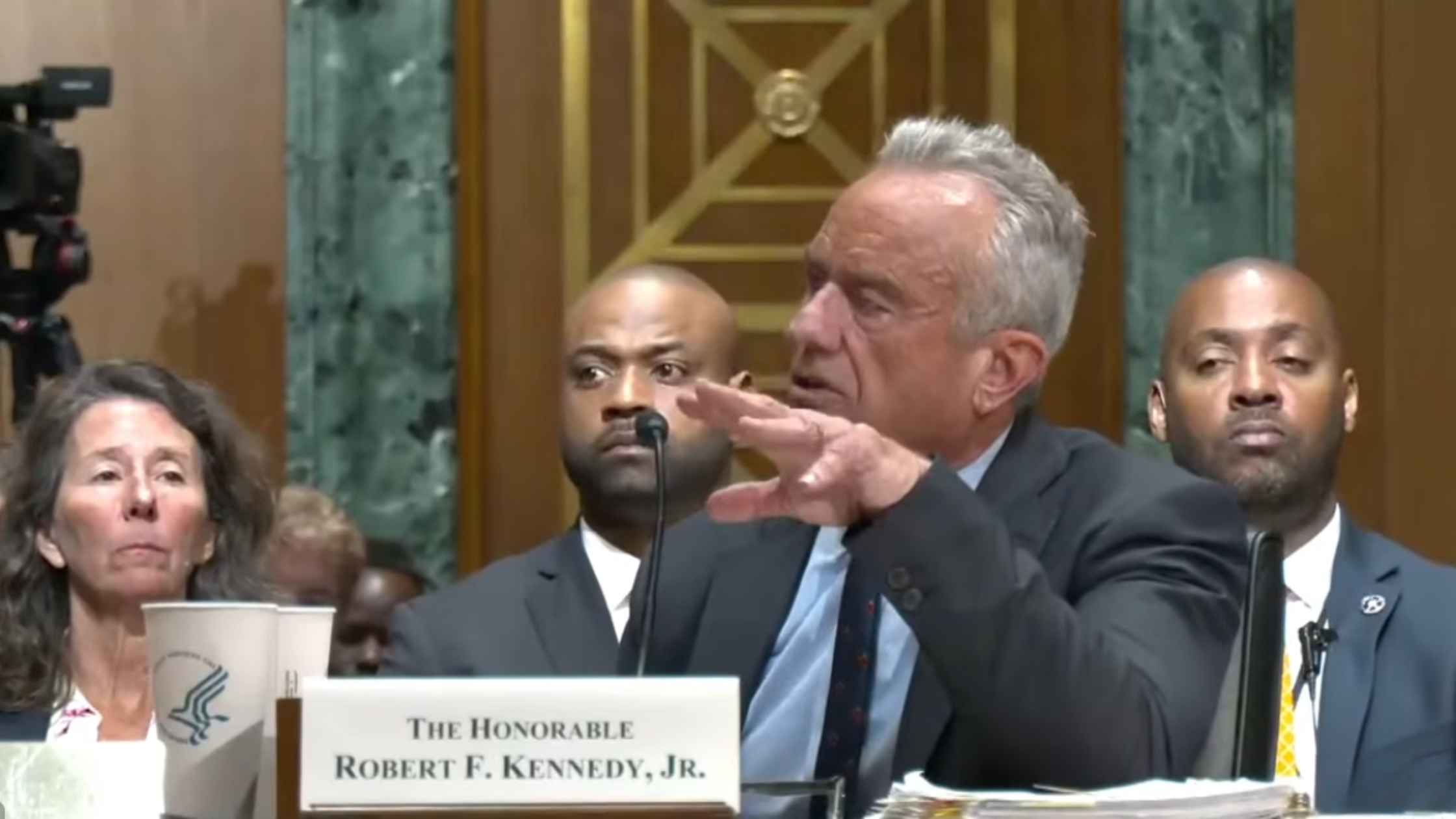
Senator Mike Crapo (00:00):
As costs for patients and taxpayers soared, outcomes and access continued to decline. I suggested these challenges presented an opportunity to chart a better way, a better way forward. Although much work remains, we have made significant progress. For too long, Medicaid's financing and pragmatic oversight was on autopilot. Coupled with pandemic-related increases in costly regulations under the previous administration, Medicaid spending, and hear this, doubled between 2019 and 2025. The Working Families tax cuts took significant steps to realign our healthcare system, strengthening access for those in need, putting patients back in charge of their care, and providing overdue reforms to curb waste, fraud, and abuse.
(00:54)
The law prohibits coverage of certain non-citizens under federal healthcare programs. It removes Medicaid beneficiaries who are deceased, enrolled in multiple states, or own a home worth over a million dollars. It also requires individuals who are able to work or volunteer or go to school to do so to be able to be eligible for Medicaid, a requirement that mirrors similarly intended safety net programs. These common sense reforms, along with policies to prevent financing gimmicks, will save taxpayers hundreds of billions of dollars and ensure Medicaid's long-term sustainability. Ensuring the program's dollars reach those for whom it was intended.
(01:44)
Under the Working Families tax cuts, Americans will keep more of their hard-earned money and have greater control over their healthcare. The law expands access to health savings accounts so that patients, not insurance companies, can choose the healthcare that is right for them. Individuals with high deductible health plans can also rely on telehealth services without meeting minimum out-of-pocket payments. Republicans also made a historic $50 billion investment in rural healthcare through the Rural Health Transformation Program. Beginning this year, all 50 states are receiving funds from the program, which will be used to bolster workforces, invest in connective technology, and promote preventive health interventions. Working in partnership with Ranking Member Wyden, the finance committee delivered on our commitment to bring transparency and accountability to the prescription drug supply chain through pharmacy benefit manager reforms. The bipartisan law will end perverse incentives for PBMs to steer patients toward higher cost drugs and vertically integrate pharmacies. Our work to address anti-competitive consolidation is just beginning, and I look forward to continuing these efforts with Ranking Member Wyden and all members of this committee. On a bipartisan basis, we also extended Medicare coverage of telehealth and hospital at home services, ensured Medicare Advantage plans maintain accurate provider directories and removed Medicaid barriers to high quality specialized healthcare for children. These extraordinary accomplishments will expand choice and lower costs for all Americans.
(03:35)
Mr. Secretary, under your leadership, HHS has also taken sizable steps to fix the failures in our healthcare system that frustrate both patients and providers. Together with the private sector, the administration is breaking down the bureaucratic obstacles that for too long have been accepted as the norm. HHS is reducing health insurers' cumbersome overuse of prior authorization, which routinely delays care delivery.
(04:04)
Through Trump RX, patients can shop for lower priced versions of their drugs covered, especially by those that are not covered by many insurance plans. I appreciate your commitment to making America healthy again by empowering patients with the tools and information they need to create a healthier future. Under your leadership, the department has focused on addressing root causes and prevention of illnesses. Now Medicare is becoming a system that invests in the whole person, in lifestyle interventions, and our medical schools are equipping providers with the education to deploy these services. Thank you for that.
(04:48)
Mr. Secretary, I look forward to learning more about how we can work together to build on the progress we've made in the last year to put patients at the center of our healthcare system. And now I recognize Ranking Member Wyden for his opening remarks.
Senator Ron Wyden (05:02):
Thank you very much, Mr. Chairman. Today we gather to discuss Donald Trump's healthcare blueprint for the coming year. Robert Kennedy came into the Office of Health Secretary with sweeping promises of restoring the public's trust in government and making Americans healthy again. Now, as the Trump campaign pollsters flail about trying to cover up Robert Kennedy's devastatingly unpopular anti-vaccine policies, I believe the witness will try to have it both ways. He'll serve up enough fakery this morning to help Senate Republicans ignore the real harm that's being caused, while twisting the truth enough so he can go back to pushing anti-vax policies that make kids sick when he's out of the hearing room.
(05:56)
The rank hypocrisy of the Trump administration on health can be summed up in a sentence. Goodies for those at the top while American families get sicker and poorer. While Donald Trump and the secretary are cozying up to insurance executives by handing over more than $20 billion and throwing consumer protections in the trash, Oregonians now play Russian roulette with their healthcare, actually trying to figure out how they can go without insurance until they qualify for Medicare because they can't afford higher ACA premiums.
(06:37)
When Donald Trump cuts the sweetheart deals with the big pharma executives, rural America continues to struggle, often because Republicans have made the largest cut to healthcare in American history. What these communities are seeing now, I believe, is only a beginning of how things are going to get worse when the cuts Republicans have hidden, and I've never seen this in all my time in public service, hiding the details until after the election. Time and again when Republicans are put in charge of American's healthcare, there's a never ending flood of benefits for special interests while American families get left further behind.
(07:20)
Nothing illustrates the Trump-Kennedy hypocrisy on health more than their approach to prescription drugs. Donald Trump spent the last year hosting executives from the big pharma companies in the Oval Office. He boasted of so called deals to bring down the price of medicine. The details, the important facts about these deals are totally secret. My staff spoke with each company involved in these deals. The only thing that's clear is the list of goodies that the companies got in exchange. Robert Kennedy is here this morning and he's going to ask Congress to codify these sweetheart deals sight unseen. Let me repeat that. People in Congress aren't going to see the details about these deals. So while the American people wait for their costs at the pharmacy to go down, the administration touts Trump RX, which actually offers higher prices for drugs than what most people can get through their insurance. There is no bigger fraud on the planet when it comes to drug costs than Donald Trump. Meanwhile, Robert Kennedy has presided over the biggest cut to American's healthcare and history. A choice that's already kicked Americans off their care, forced hospitals to close and caused healthcare workers to lose their jobs. Since Republicans passed that law, my staff has been thoroughly cataloging every hospital, every clinic, and every healthcare provider that has shut their doors, reduced services, or laid off staff, so we have the receipts. There have been over 170 closures and service reductions across 34 states. Nearly 7,500 healthcare workers have lost their jobs across 24 states. These healthcare providers cited the impossible financial challenges caused by the Republican Medicaid cuts. Mr. Chairman, I'd like to enter into the record our analysis.
Senator Mike Crapo (09:21):
Without objection.
Senator Ron Wyden (09:23):
I recently held a forum with healthcare workers at home in rural Oregon in a place where Donald Trump got better than 70% of the vote. What I heard there underscores the reports that are coming in from around the nation. Healthcare providers are walking an economic tightrope and these communities can't afford to lose the services they're providing. So Mr. Chairman, I'd like to enter into the record submissions from five states, including Oregon, as well as news articles from around the country that confirm the catastrophe that is playing out on the ground if states contend with the impossible task of implementing more than a trillion dollars in cuts.
Senator Mike Crapo (10:00):
Without objection.
Senator Ron Wyden (10:03):
Mr. Kennedy is the most senior and influential healthcare official in the country. When it comes to vaccines, Robert Kennedy has used this once in a lifetime platform to make parents doubt themselves and doubt their doctors. 90% of Americans infected with measles during this unprecedented outbreak, mostly kids, have not been vaccinated. It is no coincidence that it comes as the person in charge of our country's healthcare lays out propaganda about vaccines all on the taxpayer dime. The secretary has ducked, bobbed, and weaved without taking responsibility of saying what needs to be said. Vaccines save lives in America. They keep kids from getting sick, and yet the secretary won't say it in plain straightforward terms. He's repeatedly lied before the Congress. First, he lied to me about his trip to Samoa. As chairman, I'd like to enter into the record a report by the guardian and the associated press disclosing emails between state department officials that make it clear that the secretary was traveling to the island nation to promote his anti-vax views.
Senator Mike Crapo (11:15):
Without objection.
Senator Ron Wyden (11:16):
Second, he lied to Congresswoman Terri Sewell by denying that he said Black children should be reparented if they receive treatment for ADD and ADHD, and he's continued to lie about the Republican cuts to Medicaid, claiming that there have been no cuts. That is an absurd claim that would get him laughed out of any room in rural America where public officials and healthcare providers gather to make agonizing choices about payment cuts at this moment. These lies and misrepresentations underscore. Why? As you know, Mr. Chairman, I asked Robert Kennedy to testify under oath the last time he came before the committee. Regardless of whether or not he's taken the oath, he ought to remember that you can't lie to Congress. It's a crime.
(12:02)
Our witness is going to tell the committee this morning that Democrats are interested in protecting the status quo. Nothing could be further from the truth. The nation's healthcare system is broken. That's only going to get worse than with the Republican cuts that the secretary has been cheerleading for from the sidelines. Right now, Democrats on this side, to a person, are leading an effort to reimagine healthcare for American families so it is more affordable, more simple, and less beholden to the corporate interest that Republicans empower at every single opportunity. My own take is if the secretary was serious about making America healthy again, he'd be working with us and dealing with these issues rather than going to the side of big insurance and big pharma with sweetheart deals. It's an important hearing and I look forward to the questions.
Senator Mike Crapo (12:54):
Thank you. And with that, Mr. Secretary, we turn it over to you for your opening statement.
Secretary Robert F. Kennedy Jr. (13:01):
Chairman Grapo, thank you Ranking Member Wyden and members of the committee. Thank you for the opportunity to appear before you today to discuss President Trump's proposed 2027 budget for HHS. First, I'd like to take a moment to express my deepest condolences to your colleague, Senator Mark Warner, over the recent loss of his daughter, Madison. My thoughts and prayers with him and his family.
(13:27)
We stand at a generational turning point. Our children are the sickest generation in modern history and decades of failed policies, captured agencies and profit driven systems caused it. Parents across this country demanded change and we are delivering it. We're ending the era of federal policies that fueled the chronic disease epidemic and replacing them with policies that put the health of the American people first. President Trump and I are challenging the status quo and the institutions that defended as we work to make America healthy again. In just 15 months, HHS has delivered historic wins. We negotiated the most favored nation drug prices with 16 of the largest pharmaceutical companies so that Americans no longer pay more than other people in wealthy countries for the exact same medications. We're bringing real transparency to healthcare pricing so that patients know the cost of care before they receive it. I used the full convening power of the federal government to bring health insurance CEOs to the table to reform prior authorization, and I brought the 400 largest tech companies together to end information blocking so that for the first time Americans will be able to get their own health records, which they own on their cell phones.
(14:52)
We are cutting red tape, speeding decisions and abandoning transparency. We're also cracking down on waste, fraud, and abuse. This year, HHS and USDA issued new dietary guidelines that put real whole food at the center of the American plate. We flipped the food pyramid upside down and sent a clear message to the American people, "Eat real food." HHS has opened the door to partnerships with industry, trade associations, nonprofits, and advocacy groups. More than 50 medical schools have committed to expand nutrition education from an average of two hours to 40 hours. Food manufacturers are stepping up too. More than 40% of the food industry has committed to phase out petroleum based dyes by the end of the year, and many have already eliminated them. In conjunction with these efforts, FDA approved six natural food colorings derived from fruits and vegetables. Through President Trump's Great American Recovery Initiative, HHS is matching compassion with action to help Americans break the cycle of addiction.
(16:02)
At HHS, we are prioritizing patients with ultra-rare diseases and their families driving faster access to lifesaving treatments. We're restoring gold standard science and integrity across the agency. We're protecting children from sex rejecting procedures that expose them to irreversible harms. We're eliminating outdated and misleading warning labels on hormone therapies used by women during menopause. We're strengthening oversight of organ procurement. We are regulating television advertisements for pharmaceutical industries, something that Democrats have been asking for for generations. We're implementing Operation Stork Speed to ensure the safety and quality of infant formula. We're applying that same focus and urgency to rural America. The Rural Health Transformation Fund delivers the largest investment in rural health in our nation's history. $ 50 billion over five years. The strength in rural hospitals ensure Americans can access the care they need no matter where they live. The HHS has also last week announced more than $135 million investment this month to expand rural residency programs and nutrition services. The data is clear. When physicians train in rural communities, they're far more likely to stay and serve there.
(17:29)
The president's budget puts all these priorities in action. It invests in prevention because preventing disease costs less than treating it. As my uncle President John F. Kennedy said, "Progress is a nice word. Change is its motivator and change has its enemies." We see those forces clearly entrenched interest defenders of a failing status quo and institutions that put profits ahead of the American people. The resistance underscores the urgency of this moment. We can reverse chronic disease, improve public health, and lower costs. I stand ready to work with this committee and Congress to seize this opportunity to implement and codify lasting generational reform in American healthcare for our country, for our children, and for the health of the American people. Together we can make America healthy again. Thank you, Mr. Chairman.
Senator Mike Crapo (18:30):
Thank you, Mr. Secretary. And I believe that your effort and focus on making America healthy again and helping us to focus on nutrition and prevention and healthy lifestyles is one of the most significant things that you have done among the many that you described in your testimony. In that context, in your testimony, you identified nutrition as a bedrock of health and one of the primary levers for treating and preventing chronic disease. You also emphasize that it's imperative for our nation's healthcare providers to be equipped to incorporate nutrition into patient care. Securing commitments from more than 50 medical schools to provide at least 40 hours of nutrition education is an incredible start. I don't think it was very long ago that there was probably very little nutrition taught in medical school, and now we are encouraging that to be a focal point. How does HHS plan to build on this progress by securing additional commitments from medical schools and expanding nutrition education into other key areas such as residency training, medical licensing, and continuing medical education?
Secretary Robert F. Kennedy Jr. (19:45):
Thank you very much, Chairman. We're expanding the number of medical schools. There's already many, many others that have signed on since the original 54. We are working with the states, more than a half the states on a mild legislative plan. More than half the states have already required past legislation requiring nutrition education in continuing medical education. We've now issued notices to all the hospitals in America that they must start serving nutritious foods in the hospitals. Something that... The food before that has been appalling. They're giving diabetic patients jello and custard and a soda drink. And if they want to continue to get Medicaid, Medicare dollars, they need to change that now. And then we're driving good nutrition through the WIC program, through SNAP, through school lunches, through the Indian Tribal Services, and other federal subsidies programs as well.
Senator Mike Crapo (21:03):
Well, thank you very much. I will just tell you that I, for one, deeply appreciate that strong focus on helping us get focused on nutrition. It was a sad thing that our society had not focused on it as well as it should have until now. Republicans established the Rural Health Transformation Program in the Working Families Tax Cut Act to strengthen and modernize our nation's rural healthcare delivery system. We do have a problem in the rural healthcare system. And with this funding, we are hoping that states will be able to implement comprehensive strategies that not only expand preventive primary maternal and behavioral health services, but also create new access points that bring care closer to home and stabilize our challenged rural hospitals. All 50 states received their first year awards, ranging from 147 million to $281 million. What do you think are some of the most innovative ways that states are now going to be able to work to transform their rural healthcare networks?
Secretary Robert F. Kennedy Jr. (22:11):
The applications from the states were really extraordinary. We were astonished how resourceful and imagine if they are. Among, I think, the most common applications were to improve or to maximize the use of AI in diagnostics, in health delivery, and also just in billing and in management of the systems. A lot of the money is being spent on telehealth, which is going to deliver rural healthcare to many areas that are particularly remote in this country, places like Wyoming, Alaska, and many others where healthcare just simply is not accessible. A lot of the applications for residency programs and for worker recruitment and retention, and then just [inaudible 00:23:15] for badly needed infrastructure repairs. We've lost more than 120 hospitals in rural areas since 2010, and it's a crisis. When they lose that hospital, they're not just losing access to proximate healthcare. They're also losing the greatest economic driver in many of these communities.
(23:39)
These are, in many cases, the greatest employer. They have the highest pay for their workers, and when they close, businesses stop moving to the area. So it's absolutely critical that we keep those hospitals open, and that's why this plan raised by 50% the amount of the infusion of federal dollars that is flowing to rural areas in this country.
Senator Mike Crapo (24:07):
Thank you very much. My time's expired, and I want to try to stay at these five minutes when I'm trying to set a pattern here for the rest of the committee. And I had questions on telehealth and innovation and AI, as well as waste, fraud and abuse. You anticipated many of those in your answers. Thank you very much. Senator Wyden.
Senator Ron Wyden (24:24):
Thank you, Mr. Chairman. Mr. Secretary, it sure looks to me like the president is working very hard to muzzle you on the issue of the vaccine question. It is very clear you weren't mentioned at the State of the Union address. The pollsters that the president has have found that 80% of all voters support the childhood vaccine for measles and hepatitis B, but at the same time, your handpicked people at HHS voted to end the universal recommendation of a hepatitis B vaccine for every newborn. So my question to you is, we are seeing with measles, we're seeing with vaccines, a problem all over the country, and putting infants at risk like this is so dangerous that a court even blocked your new policy from taking effect. Why would you be doing something that is so awful for kids on this vaccine issue? I know it's been your life work, but you promised that you do differently when you came for your confirmation hearing.
Secretary Robert F. Kennedy Jr. (25:29):
Senator, we, under my leadership, handled the measles outbreak better than any country in the world. There's a global outbreak. Mexico has three times the amount of measles and they have one third of our population. Canada has twice the number of measles and has one eighth of our population. We had 1700 case this year, 2200 last year. Europe had 33,000 last year and 127, 000 the year before. There are populations that don't want to vaccinate. Mennonites do not want to vaccinate. They have not vaccinated since 1797. It has nothing to do with me. I have not visited Mexico or Europe. I had nothing to do with the measles outbreak here. We have limited our outbreak better than any country in the world because I've talked to Dr. Abbott or Governor Abbott regularly. I talked to Governor McMaster. We send the epidemic intelligence services into their regions when they need it immediately, and we give them the help we can to end the pandemic. There are going to be people who don't vaccinate. The vaccination red levels drop during COVID because people stop trusting the American government. I am here to restore that trust.
Senator Ron Wyden (26:53):
All I can tell you is that in America today when a baby is born, doctors give the baby a hepatitis B vaccination on day one. With hepatitis B, we're talking about a serious lifelong illness that leads to liver failure and liver transplants. There is no cure. And as of December, you're still appointing people who are trying to undermine that policy. That's not in the interest of families, and that's why the president's pollsters are telling them to isolate you and keep you from talking about it. But I'm telling you, we're going to make sure that the truth gets out. I'm going to move on now to this drug pricing-
Secretary Robert F. Kennedy Jr. (27:29):
That's a mischaracterization of the president.
Senator Ron Wyden (27:31):
I'm going to move on... I'm asking the questions, Mr. Secretary. I'm moving on now to the drug pricing question and the disclosure of these deals. These secret deals with pharmaceutical companies set up a never ending flood of goodies for big pharma. You take Pfizer, for example, the day after Pfizer's CEO stood in the Oval Office with Trump, the company's stock prices soared through the roof. Pfizer's going to get a blanket exemption from Trump's drug tariffs, and all of Pfizer's drugs are exempt from Trump's latest fake scheme to align Medicare prices with those in other countries. So it doesn't seem to me that the American people get a whole lot from this. And every Democratic member of our committee is demanding that you disclose the deals, the specifics. The public's got a right to know about something of this kind of consequence. And every single Democrat up here wants to see this as a transparency issue.
(28:28)
Now, yesterday you indicated to my colleagues, Senator Merkley, that you would give out some information about the deals, but not the real information that would indicate if the deals are so good, why is the Trump administration trying to hide them? So my question to you is, yes or no? This is a yes or no question reflecting the interest of our colleagues up here. Will you commit to releasing your written agreements with the pharmaceutical companies tomorrow?
Secretary Robert F. Kennedy Jr. (29:01):
No, I will not. And I can explain why. Those agreements contain proprietary information and trade secrets. When you passed the Inflation Reduction Act and ordered me to negotiate with the pharmaceutical companies, you put in a provision that required NDAs because nobody's going to come to the table with me if I start releasing proprietary information. You seem to be saying, "We were paying the highest prices for drugs in the world." You seem to be arguing... Now we're paying the lowest. We've dropped IVF by 83%. We've dropped GLPs by 89%, insulin, COPD drugs, asthma drugs for the American people. Now they're paying the lowest costs in the world rather than the highest. And you want to go back on that? You can do this better than us. We did it because you wouldn't act. You have a lot more power to negotiate than we do. Why don't you just go do it? Well, you've been promising to do it for 20 years and you've never done it.
Senator Ron Wyden (30:07):
We are going to do it, Mr. Secretary. We are going to do it. But when you try to hide the information on consequential issues as you're doing on these Trump RX things, it makes it harder for us to make marketplace forces. You're in bed with big pharma.
Secretary Robert F. Kennedy Jr. (30:20):
You're telling me you don't have secret agreements here and secret meetings here in Congress all the time, every day?
Senator Mike Crapo (30:29):
Senator Scott.
Senator Rick Scott (30:31):
Thank you. Good morning.
Secretary Robert F. Kennedy Jr. (30:32):
Morning.
Senator Rick Scott (30:33):
Secretary Kennedy, I want to start off by thanking you for everything that you, HHS, CDC did truly an incredible job helping South Carolina, my home state throughout our measles outbreak. South Carolina has experienced the largest outbreak in US history since measles was declared eliminated more than two decades ago. From the calls you made to our governor, to the countless weekly calls between CDC and South Carolina's Department of Public Health staff, to the CDC staff being deployed to the upstate, I know without a question, we would not be on the right side of this outbreak without your leadership and without your help. And South Carolina is indebted to your leadership, and we really appreciate that.
Secretary Robert F. Kennedy Jr. (31:24):
Thank you, Senator.
Senator Rick Scott (31:26):
I'm very hopeful that in just a few days, on April 26th, we can declare the outbreak long and gone as long as there are no new cases. That is a big deal for a state that has been suffering for months and months through this challenge. Thank you. It is thanks to your leadership and the leaderships of the folks that I mentioned from CDC to the HHS to our folks on the ground that this day has finally come. While it is hard to find positives, it's really hard to find a silver lining through this process. If we did, it is early detection matters a lot. The more time we spend on figuring out how to get ahead of it, the better off we will all be in the future. That is why last month, I, along with several of my Senate colleagues, introduced a PREDICT Act to strengthen and expand wastewater surveillance.
(32:27)
When someone is infected with a virus like measles or the flu, they shed viral material often before they even are aware that they are sick. CDC helped work through the sequencing of positive wastewater samples from 20 wastewater sites testing for measles in South Carolina. This critical work highlights the best kind of government, one that works in the background on prevention and saving lives using smart science. It is an idea that should reach
Senator Rick Scott (33:00):
Every single community across the country, not just a handful of communities who have the resources to deploy. By utilizing these tools and monitoring the spread of disease early, public health officials can see an outbreak coming days or weeks before hospital admissions begin to rise and take steps to intervene in moments when time is truly of the essence. Americans deserve a public health system that sees threats coming before they become emergencies and the PREDICT Act brings us one step closer to that reality. Secretary, as we look forward to lessons learned from this outbreak, can you please commit to working with me on wastewater surveillance such as the PREDICT Act?
Secretary Robert F. Kennedy Jr. (33:49):
Absolutely. Absolutely. Can you hear me?
Senator Rick Scott (33:54):
Yes, sir. I can hear you.
Secretary Robert F. Kennedy Jr. (33:55):
Absolutely, Senator. Thank you for your kind words about the management of the measles. And I just had a wonderful interchange series with Governor McMaster, and I want to thank all the health department in South Carolina for the hard work they did with CDC too and the outbreak. I absolutely will work with you on the PREDICT Act. It's something that's very personally important to me to have more wastewater surveillance. And we are also putting $325 million in this budget into a new biothreat radar system that will integrate with the microbial surveillance at wastewater treatment plant to detect pathogens as soon as they emerge in our country and elsewhere in the world.
Senator Rick Scott (34:51):
That's really important because with your new system, the biothreat radar system, it strengthens outbreak detection. And I think it would be a perfect fit for us to take this PREDICT Act and put it under that umbrella, so to speak.
Secretary Robert F. Kennedy Jr. (35:05):
I look forward to working with you, Senator.
Senator Rick Scott (35:07):
Thank you very much. For those unaware of South Carolina's ... The negative impact of measles, it was the largest outbreak. Hundreds of hundreds, thousand cases. And it was a response, all of government response where we saw HHS, CDC, the secretary working together. I know we have disagreements around this dais, but when you need help and they show up and it's effective, you should take the time to say thank you.
Secretary Robert F. Kennedy Jr. (35:35):
Thank you very much, Senator.
Chairman (35:38):
Thank you. Senator Bennet.
Senator Bennet (35:39):
Thank you, Mr. Chairman. Thank you, Mr. Kennedy for being here again. For decades, parents in this country were able to send their kids to school without worrying about whether they could come home with a dangerous case of the flu or a dangerous case of the measles, as my colleague from South Carolina is saying. Last year, we saw the largest number of children die from the flu in modern history. Are you familiar with that, Mr. Secretary?
Secretary Robert F. Kennedy Jr. (36:08):
Yes, I am.
Senator Bennet (36:11):
And have you told President Trump about that, that last year was the largest childhood death of flu in modern American-
Secretary Robert F. Kennedy Jr. (36:20):
Well, that's one of the reasons that FDA just approved two new vaccines for influenza A and influenza B.
Senator Bennet (36:28):
Because you would agree that last year was the worst year on record in terms of flu deaths in modern history, not in the old day, not in those-
Secretary Robert F. Kennedy Jr. (36:36):
In the old days, we were having hundreds of thousands of people die.
Senator Bennet (36:41):
Right. Of course. And do you agree that 89% of the children who died from flu were unvaccinated?
Secretary Robert F. Kennedy Jr. (36:51):
I don't know the exact number.
Senator Bennet (36:53):
That is the exact number, Mr. Kennedy. And it was I think of interest to a lot of people in America that you took down the communications from HHS on the flu, the importance of getting a vaccine when you first became the secretary. And I just wondered whether you regret having done that. You're now saying that you're approving vaccines for the flu.
Secretary Robert F. Kennedy Jr. (37:22):
I approve lots of vaccines. I've spent a billion dollars, authorized a billion dollars developing new vaccines, including a universal flu vaccine.
Senator Bennet (37:33):
So you know [inaudible 00:37:34]-
Secretary Robert F. Kennedy Jr. (37:34):
I think the last year the flu vaccine had something like a 20% efficacy. So having these single antigen vaccines is not serving the public interest. The Cochrane Collaboration said this, they simply don't work.
Senator Bennet (37:52):
For the record, Mr. Secretary, then I assume you no longer believe that the flu vaccine is destroying children's brains, that there's zero evidence that the flu vaccine prevents any hospitalizations or any deaths, because today you're here agreeing that the vast majority of kids that died from the flu were people without vaccines. And you're saying that you're now approving vaccines for the flu.
Secretary Robert F. Kennedy Jr. (38:17):
We're making sure that we follow the science, Senator.
Senator Bennet (38:20):
Well, I hope you'll follow the science because that's what put us in the position 30 years ago of essentially having measles declared at an end in the United States of America.
Secretary Robert F. Kennedy Jr. (38:33):
Well, many nations have lost their elimination status.
Senator Bennet (38:41):
I'm sorry-
Secretary Robert F. Kennedy Jr. (38:41):
Including Canada, the UK, a lot of Europe this year because of the outbreak. And the outbreak has nothing to do.
Senator Bennet (38:48):
Yeah, I mean, I would hope that the ... I know you said the outbreak has nothing to do with you. That was your answer to Ron Wyden. You're the head of the agency. You're the head of HHS.
Secretary Robert F. Kennedy Jr. (38:56):
My agency has no jurisdiction over Canada, Mexico, the UK, Austria.
Senator Bennet (39:00):
I agree with that. I would agree with that. We are, I think everybody on this dais believes that the United States of America ought to be leading in these matters. That's why we're so discouraged by your cuts to NIH because that's going to make it harder for us to lead. That's why we are so discouraged by your cuts to Medicaid that are making impossible to invest in rural America. That's why we're discouraged-
Secretary Robert F. Kennedy Jr. (39:23):
There are no cuts to Medicaid, Senator, as you know. There's no cuts to Medicaid.
Senator Bennet (39:27):
No, I don't.
Secretary Robert F. Kennedy Jr. (39:28):
They just set that congressional budget.
Senator Bennet (39:30):
That is absolutely... Mr. Kennedy.
Secretary Robert F. Kennedy Jr. (39:32):
Look at the Congressional Budget Office this week. They say we are increasing Medicaid by 47% over 10 years.
Senator Bennet (39:40):
They have not.
Secretary Robert F. Kennedy Jr. (39:41):
That's not a cut except in Washington.
Senator Bennet (39:43):
Okay. It is a cut when it comes to the rural hospitals all over America that are having to close because of the Medicaid cuts. And those are real dollars. Mr. Kennedy, did you-
Secretary Robert F. Kennedy Jr. (39:55):
They were closing before I came in here, now they're not closing.
Senator Bennet (39:57):
Let me just ask you, do you realize that last year the United States had the highest number of measles cases in 30 years, that the last time we had more than that was before measle-
Secretary Robert F. Kennedy Jr. (40:10):
The whole world did. The whole world did.
Senator Bennet (40:12):
Yeah. We were the leader, Mr. Kennedy.
Secretary Robert F. Kennedy Jr. (40:14):
We still are. We have a 92% vaccination rate. We have one of the highest vaccination rates for measles on earth.
Senator Bennet (40:22):
So are you taking the position ... Let me ask you, are you taking the position as your CDC director has taken that the measles vaccine is vital to keeping American children healthy in this country? Are you taking that position today? That has not been your position.
Secretary Robert F. Kennedy Jr. (40:41):
That's my position. We promote the measles vaccine.
Senator Bennet (40:44):
Thank you, Mr. Chairman. I hope you will go out to America and promote this.
Secretary Robert F. Kennedy Jr. (40:49):
That's what we said.
Senator Bennet (40:50):
The idea that you have nothing to do with this is dead wrong.
Secretary Robert F. Kennedy Jr. (40:55):
The measles vaccine prevents measles in 97% of the people who take it. I've always said that. That's what the science says.
Senator Bennet (41:00):
I would ask you to please underscore it because there's a reason that we are having these outbreaks, Mr. Chairman, and that is the misinformation that's been propagated. If you would have a change of view, that's excellent. Let's get it out there to the Americans.
Chairman (41:13):
Senator Lankford.
Senator Lankford (41:16):
Mr. Chairman. Mr. Kennedy, good to see you again. Thanks for your work on this. You have been one that has spoken out often on vaccine issues and to be able to provide clarity in this area. And so I appreciate your engagement on this so much lately. I want to talk to you a little bit about pharmacy benefit managers. This has been an issue that we've talked about before, you and I, and that we talk about often around this dais. We have now passed a piece of legislation that de-links the compensation between the price for pharmacy benefit managers and the price of the drug, which I think is exceptionally helpful to be able to work towards the consumer, the any willing pharmacy, which PBMs have been fighting to destroy our independent pharmacies around my state and around the country.
(41:57)
We're losing more than one pharmacy a day now around the country, often because of what PBMs are actually doing to them in the compensation structure and the way they do the scoring on this. So I appreciate that. That law has now been passed. You all are in the process of implementing that. We want to continue to be able to work with your team on the implementation, any questions that your team may have, or any way that we can actually help in the process. We want to be able to stay engaged on this because this has been a passion area for us for quite a while. I know it's been a real interest for you as well.
(42:26)
Senator Maggie Hassan and I, we have a piece of legislation that takes another step on this dealing with the pharmacy benefit managers, and that is this issue of tiering that has been out there. Now, your team has put out a clear statement to say there's an expectation that when a drug is released in the biosimilar or the generic level, it's actually put on that tier to be sold. But you and I both know that's not happening. You have said it. We're trying to make it clear in law as well to be able to give you the reinforcements that you need on that to be able to say when a generic or biosimilar is put out there, it needs to be put on that lower tier cost and not put up on the more expensive brand cost because that will ultimately drive the generic out of business.
(43:07)
The brands know that. We want to be able to push back against that. So I would ask only for your help and your team's help on technical assistance to make sure that we get this language right, so that whenever we can get this passed on the tiering issue, we can actually get that enforced as quickly as possible.
Secretary Robert F. Kennedy Jr. (43:22):
Yeah. And thank you, Senator Lankford, for your leadership on this issue. It's been a long time coming. It's a bipartisan issue. Everybody knows it's a problem. I think the biggest fix, as you pointed out, was delinking the compensation to the PBMs from the list price of the pharmaceutical, which created the first incentive of having them choose. They're supposed to be looking out for our interest, but the highest cost pharmaceutical would net them the most profits, so they were giving us a higher cost rather than lower cost. There's a couple of the PBMs that have now ... Well, Cigna, David Cordani has, I think, taken the lead in expanding transparency. So the industry has a template for doing this, but we need to keep working on this to make sure that they're actually, to the extent they're working in the system, that they're doing what they were meant to do, which is to lower cost for consumers rather than raise it.
Senator Lankford (44:29):
Yeah. That's our target as well. I've told the PBM companies, "Hey, I'm not opposed to your company. I'm just opposed to you trying to shut down my independent pharmacies and raising the prices of consumers." That's the biggest issue that's out there on that. We want to get lower price and greater access on this, not less and less on it. I want to switch to the subject you and I have not spent a lot of time talking about, but it's continued to be able to rise, and that's the issue of assisted suicide.
(44:53)
We now have three states, California, Colorado, and Vermont that disability groups are filing charges against some of the assisted suicide laws because it seems to target those with disabilities and the Americans with Disability Act passed in 1990, that act has worked to be able to protect those with disabilities, not incentivize them to take their own life. And so this is an ongoing conversation on this. And I think my question for you today is HHS engaging ... Some of these lawsuits are out there among states right now. I know you're not engaging in the lawsuits. What is HHS doing to be able to protect those with disabilities that may be targeted by these assisted suicide laws?
Secretary Robert F. Kennedy Jr. (45:35):
I mean, to me, I think those laws are important and we see in Canada today, I think it's the number one cause of death is assisted suicide. And as you say, it targets people with disabilities and people who are struggling in their lives. And I don't think we can be a moral society, we can't be a moral authority around the globe if that becomes institutionalized throughout our society. So I'm happy to work with you in whatever way we can.
Senator Lankford (46:11):
Great. Love to have the help on that. We've now seen a rise of people with eating disorders that are given access to assisted suicide, and this is just wrong in a multitude of ways. One quick statement, we'll follow up on this in writing on it. Oklahoma is still pursuing the Title X dollars that the Biden administration took away from my state of Oklahoma because we would not promote abortion in the state, so they removed Title X funding from us. It's about $9 million on that. We'll follow up with your team on that one as well, but we're still trying to be able to get access to those dollars the Biden administration tried to punish my state.
Secretary Robert F. Kennedy Jr. (46:43):
We will work with you to try to fix that, Senator Lankford.
Senator Lankford (46:46):
Thank you.
Chairman (46:46):
Thank you. Senator Hassan.
Senator Hassan (46:48):
Thank you, Mr. Chair and Senator Wyden for holding this hearing. Thank you, Secretary Kennedy, for being here this morning. Look, I have noticed that while HHS has done relatively little promotion of the life-saving measles vaccine that we were all just discussing, you have been doing a lot of your own self-promotion using official government channels and resources. HHS produced a video of you and Kid Rock exercising and drinking milk in a hot tub I think at his pretend White House. Another official video features a dramatic sequence of you as a shirtless WWE fighter. You also posted a video on government accounts that depicts you as a video game hero. And you've even posted multiple photos of your younger self over time, your face, to say that you alone are the leader taking on big pharma in this administration. Does the president know about this self-promotion campaign that you're carrying out with official HHS resources?
Secretary Robert F. Kennedy Jr. (47:50):
I didn't know about a number of those videos. We have a-
Senator Hassan (47:56):
They've all come out in the last six weeks, a couple of months.
Secretary Robert F. Kennedy Jr. (47:59):
I just happen to not see them. I have no idea if the president-
Senator Hassan (48:03):
So you don't know how your own team is managing official U.S. resources and promoting you in the process. So the president hasn't authorized you to use HHS resources for these vanity projects?
Secretary Robert F. Kennedy Jr. (48:17):
I was asked the other day by one of the senators about the Kid Rock video, how much it cost the U.S. government. And I asked my team how much it cost and they said zero, so-
Senator Hassan (48:30):
Interesting. I mean, you were at Kid Rock's home. Did the president authorize you to use official HHS resources for these vanity projects? That's my question. Have you discussed them with the president? Did he authorize the use of them?
Secretary Robert F. Kennedy Jr. (48:42):
I've never discussed it with the president.
Senator Hassan (48:44):
All right. So as far as you know, he hasn't authorized it. Now let me move on to a couple of other decisions that you've made. Did the president approve your decision to fire all 17 members of the CDC's vaccine committee in June of 2025?
Secretary Robert F. Kennedy Jr. (49:01):
You mean did I talk to him directly? We talked to the White House DPC.
Senator Hassan (49:09):
So again, my question is about the decision process in this administration about firing 17 members of the CDC's vaccine committee that is established under law. Did the president approve that decision to fire the CDC's vaccine committee members in June of 2025?
Secretary Robert F. Kennedy Jr. (49:28):
Well, yes, he did.
Senator Hassan (49:31):
Yes, he did. Okay. So now you also made changes to the vaccine committee charter just two weeks ago. It appears to get around the federal court decision that said you had improperly disbanded the vaccine committee. So did President Trump authorize you to do that?
Secretary Robert F. Kennedy Jr. (49:46):
DPC did, which is the Domestic Policy Council, which is in the White House.
Senator Hassan (49:56):
So the Domestic Policy Council did.
Secretary Robert F. Kennedy Jr. (49:57):
The White House approved it.
Senator Hassan (49:57):
But you discussed with the president-
Secretary Robert F. Kennedy Jr. (50:00):
I don't know if it was elevated to the presidential level, but it was [inaudible 00:50:03].
Senator Hassan (50:04):
So you're making extraordinary changes to the vaccine charter so that you will be able to bring on quacks and conspiracy theorists to guide vaccine policy in this country, and you haven't discussed it with the president. Look, I am asking these questions because it appears to me that you are focused on promoting your-
Secretary Robert F. Kennedy Jr. (50:26):
We're required to upgrade the charter every two years.
Senator Hassan (50:28):
This is my time, sir. I'm asking these questions because it appears to me that you're focused on promoting yourself over everyone else, promoting your own theories over actual scientific inquiry, promoting your own unqualified lackeys over doctors and scientists, and promoting images where you think you look cool rather than messages that will help people live healthier lives. It is always about you and building a platform for yourself, which means it's never about the American people or health and safety.
Secretary Robert F. Kennedy Jr. (50:58):
Is that a question? Is it a question? Because I'd like to answer it.
Senator Hassan (51:01):
No. Let me go on to my next question.
Secretary Robert F. Kennedy Jr. (51:02):
That was a question if I'm not allowed to answer it.
Senator Hassan (51:04):
I agree with you that all Americans ... You answered questions.
Secretary Robert F. Kennedy Jr. (51:06):
Yeah, yeah.
Senator Hassan (51:07):
And I drew those conclusions from your answers, and that's why I have time on the dais and you do not.
Secretary Robert F. Kennedy Jr. (51:11):
Can I answer the question?
Senator Hassan (51:13):
Now, I agree with you that all Americans should have access to healthy food. However, President Trump has made it far harder for families to afford their groceries. As I am looking at my time, so I'm going to hold this question for the next hearing where I will see you this afternoon. Thank you.
Chairman (51:33):
Thank you. Senator Cortez Masto.
Senator Cortez Masto (51:37):
Thank you. Let me keep in the line of the conversations about whether the president understands what you're doing here. Just yesterday, there is a article in the Wall Street Journal, Oncologist versus the FDA and RFK, Jr. [inaudible 00:51:52].
Secretary Robert F. Kennedy Jr. (51:51):
I can't hear you, Senator.
Senator Cortez Masto (51:54):
There are many concerns from oncologists in this country because under your administration, the lifesaving drug for metastatic melanoma has not been approved. And in fact, you've been asked about this in hearings, and according to the article in the review journal, so I want to give you an opportunity to correct some of this. You said every panel within an FDA, all the career panels, the career scientists who looked at the drug said it was not effective. According to the Wall Street Journal, that isn't true. The initial panel that reviewed Replimune's RP1 recommended approval. Secondly, when you sent a rejection letter, you parroted that Replimune not only was it a one arm trial and all the people who were testing-
Secretary Robert F. Kennedy Jr. (52:46):
I can't hear you.
Senator Cortez Masto (52:47):
... also received a chemotherapy drug, so we don't know what the effect was. And again, the fact check, no patients in the trial received chemotherapy. Let me also reiterate, oncologists in this country, oncologists who treat patients with cancer, life-saving drugs are asking and anticipated that this drug would be approved. There is no concern. And my question to you is based on the misinformation that you have said in previous hearings about this drug, are you prepared to change your position and actually move forward? And does the president understand that your decision that you're making is preventing oncologists in this country from treating cancer patients with a lifesaving drug?
Secretary Robert F. Kennedy Jr. (53:35):
Yeah. I mean, first of all, I had nothing to do with this decision. This decision comes out of FDA and we trust the process there. And I've been told by Marty Makary that every panel that looked at that drug unanimously voted against it and they voted against it because it does not appear to work because the trial was a one arm trial when the company was asked to do a two arm trial.
Senator Cortez Masto (54:00):
But clearly that's misinformation.
Secretary Robert F. Kennedy Jr. (54:01):
I would ask yourself.
Senator Cortez Masto (54:02):
Mr. Kennedy, no, I'm going to ask you-
Secretary Robert F. Kennedy Jr. (54:03):
Why would I ever reject the drug that works?
Senator Cortez Masto (54:06):
Why would you prevent the opportunity for lifesaving drugs to an individual?
Secretary Robert F. Kennedy Jr. (54:10):
Well, that's a great question.
Senator Cortez Masto (54:12):
Why wouldn't you take a second look at this?
Secretary Robert F. Kennedy Jr. (54:12):
Why would I?
Senator Cortez Masto (54:20):
Why wouldn't you take a second look? That's exactly right.
Secretary Robert F. Kennedy Jr. (54:20):
Why do you think ... I mean, what kind of-
Senator Cortez Masto (54:20):
I'm going to ask you to take a second look at it. My next question for you-
Secretary Robert F. Kennedy Jr. (54:20):
What kind of perverse motive are you ascribing to me?
Senator Cortez Masto (54:21):
My next question fo you, Mr. Kennedy, is this.
Secretary Robert F. Kennedy Jr. (54:22):
If the drug works, we're going to approve it.
Senator Cortez Masto (54:24):
Let me just say.
Secretary Robert F. Kennedy Jr. (54:26):
Why would you hold back drug that works?
Senator Cortez Masto (54:27):
I appreciate your comments earlier in this administration going after waste, fraud and abuse. I think the Health Care Fraud and Abuse Control program is important. I've been calling for more funding for it. I think it's essential that HCFAC has the dollars that it needs to go after in healthcare fraud. But let me ask you this. As we are fighting for funding for it to go after healthcare fraud, this president has actually pardoned at least two people convicted of healthcare fraud in just the first year of this administration.
(55:02)
Mr. President Trump commuted the sentence of Lawrence Duran who filed more than 205 million in false claims to Medicare by taking advantage of people seeking treatment for severe mental illness. Someone who defrauded Medicare for hundreds of millions of dollars, he no longer faces consequences and wiped out 87 million obligation in restitutions and fines. Have you talked to the president about the fact that he is actively undermining your agency's work to combat fraud?
Secretary Robert F. Kennedy Jr. (55:32):
The president doesn't consult me on his pardons. I don't know anything about that case. What I do know is that during the Biden administration, they purposely opened the door for hundreds of billions of dollars-
Senator Cortez Masto (55:45):
I'm not talking about the past, I'm talking about now, so that answers that.
Secretary Robert F. Kennedy Jr. (55:47):
Yeah, but you're talking about one case that I don't know anything about.
Senator Cortez Masto (55:48):
Let me move on to Medicaid cost.
Secretary Robert F. Kennedy Jr. (55:48):
Why would I know anything about that case?
Senator Cortez Masto (55:52):
Let me tell you the reality in my state, Mr. Secretary, with respect to the Medicaid cuts. Effective May 1st, Boulder City Hospital in my state will no longer be able to support inpatient stays longer than 24 hours and will transform into a rural emergency hospital rather than retain the current designation as a critical access hospital. According to the CEO, it is because of the financial constraints exacerbated by the upcoming Medicaid provider tax cuts due to HR1. 71 people will lose their jobs because of HR1 and those Medicaid cuts. This is one of my rural communities. This is going to be devastating for so many, and this is the first that we're seeing in my state. My question to you is, what are you going to do to make sure that our rural communities aren't left in a healthcare desert without a reasonable way to access those services?
Secretary Robert F. Kennedy Jr. (56:47):
We're putting largest investment in the history into rural hospitals. There's never been anything like it. Prior to the rural health transformation-
Senator Cortez Masto (56:55):
Apparently that's not true for my rural hospital in Boulder City and many other are concerned, so you don't have an answer for that either.
Secretary Robert F. Kennedy Jr. (57:00):
There's rural hospitals are closing-
Senator Cortez Masto (57:02):
I know my time is up. Thank you, Mr. Chairman, I appreciate it.
Secretary Robert F. Kennedy Jr. (57:04):
... at an alarming rate around the country long before President Trump got in here.
Chairman (57:08):
Thank you. Senator Daines.
Senator Mike Crapo (57:10):
Chairman, thank you. Secretary Kennedy, welcome. It's good to see you here again.
Secretary Robert F. Kennedy Jr. (57:16):
Good to see you, Senator Daines.
Senator Mike Crapo (57:20):
Since you were first nominated in this role, it's been your goal and the president's to make HHS the gold standard of science. I appreciate your sincere commitment to that goal and the role you're playing in restoring America's leadership in scientific rigor, transparency, and public health. And before I get into a more specific public health question, I just want to follow up on the exchange you just had about the rural healthcare in our country. And Montana, I think when you think of Montana, you think rural. We love that about our state, but I want to build on what you just said, Mr. Secretary, because there was a transformative $50 billion investment that Senate Republicans made in working with the Trump administration to strengthen healthcare across rural America in our working family tax cut bill.
(58:14)
This has been $50 billion. Following a competitive application process, Montana is receiving a $233 million investment from the Trump administration, the fourth highest funding award of all 50 states to stabilize and modernize rural healthcare delivery throughout the state. Mr. Secretary, could you touch for a moment on the real change this investment will have on rural healthcare access, delivery and outcomes in places like Montana as well as across America?
Secretary Robert F. Kennedy Jr. (58:55):
Yeah. And I mean, and would refer in my answer to the Senator's criticism. The Senator's hypothesis that some future cut Medicaid is closing hospitals in her state. Right now, Medicaid pays about 7% in total to rural hospitals. It's about $20 billion a year to all the rural areas in our country. We have now increased the influx of federal dollars by an extra $10 billion a year. It's astronomical. It's a 50% rise in the money that rural hospitals are getting traditionally from Medicaid.
(59:39)
So first of all, we're not cutting Medicaid and they keep saying we are, but the Congressional Budget Office says we're raising it by 47%. And in addition to that, this fund is putting an unmatched flow of federal dollars into those hospitals and President Trump cares. And all these hospitals are closing. We got to keep rural America alive and you cannot do that without local healthcare.
Senator Mike Crapo (01:00:06):
Secretary, I met yesterday with our hospital administrators from across our state. They came in, CEOs came into my office, and we were talking about the enthusiasm, excitement they had about what's happening right now, as you just articulated. And the fact you're also going after the fraud that's occurring right now in these programs, the American want the right people help. They want the fraudsters removed. And I appreciate your leadership on that, and that's delivering real results and outcomes for the American people.
(01:00:37)
Back on the issue of safety, I want to go back to my earlier comment, and I want to continue the conversation we had around what HHS is doing to apply the principles of safety for the American people as it relates to the federal regulations on mifepristone. You've stated the FDA is conducting a comprehensive safety review, which they are, and I encourage you to see that review through completion guided by the best available data. Some of the evidence we already have today points to some serious real world consequence as it relates to safety for women. We know about the outcomes to the baby, I'm talking about the outcomes now to women.
(01:01:22)
In fact, there was analysis of over 865,000 mifepristone prescriptions compiled from insurance claims found that 11% of women experienced a serious adverse event. That typically means going to the ER, serious medical care required within 45 days of taking mifepristone. That's 22 times higher than the FDA's longstanding estimate of less than .5%. In the first half of 2025, over 27%, in fact, of all abortions in the U.S. were chemical abortions provided by online clinics, and that number continues to grow. Given the fact there's a lot of disturbing data that already exists, will you implement interim safeguards as well as look at reinstating the in person dispensing requirements until the full safety review is completed?
Secretary Robert F. Kennedy Jr. (01:02:25):
Regrettably, Senator Daines, I cannot comment on that because of the litigation. I've been advised by the Office of General Counsel not to talk about it.
Senator Mike Crapo (01:02:37):
Well, maybe I can use this platform.
Secretary Robert F. Kennedy Jr. (01:02:37):
But I have read that study.
Senator Mike Crapo (01:02:39):
Right. And the actual adverse effects are 22 times what the FDA had in there on the label. And so we want to see action taken because women are being harmed by mifepristone. Mr. Chairman, thank you.
Chairman (01:02:58):
Thank you. Senator Warren.
Senator Warren (01:02:58):
Thank you, Mr. Chairman. So after President Trump and the Republicans slashed healthcare for millions of families, the president pitched his TrumpRx website as the answer for Americans who are worried about healthcare costs. He claims that TrumpRx has reduced prices by as much as 600%. 600%, which I think means companies should be paying you to take their drugs. But let's do some real math here. Take one drug, Protonix, a 30 day supply of this heartburn medication costs $200 on TrumpRx, but there is an identical generic version of this pill called pantoprazole. Secretary Kennedy, do you know how much it costs for a 30 day supply of that drug at Costco?
Secretary Robert F. Kennedy Jr. (01:03:53):
Oh, but I would say this, Senator.
Senator Warren (01:03:56):
Do you know what it costs [inaudible 01:03:57]?
Secretary Robert F. Kennedy Jr. (01:03:58):
President Trump has a different way of calculating. There's two ways of calculating percentage. If you have a $600 drug and you reduce it to 10, that's a 600% reduction.
Senator Warren (01:04:08):
Mr. Kennedy, I understand but you know I only have five minutes. Do you know what the drug costs at Costco?
Secretary Robert F. Kennedy Jr. (01:04:15):
I do not.
Senator Warren (01:04:17):
The drug is $16 at Costco. TrumpRx charges $200 for Protonix and Costco charges $16. Let's do another one. Pitocin is a treatment for heart arrhythmia. It costs $336 on TrumpRx, or you can get the generic at Cost Plus Drugs for $12. So you tell me, Mr. Secretary, are patients better off paying $336 on TrumpRx or 12 bucks at Cost Plus Drugs?
Secretary Robert F. Kennedy Jr. (01:04:55):
You're comparing apples to oranges because you're comparing the brand drug to the generic drug.
Senator Warren (01:05:02):
Yeah, to the exact same drug.
Secretary Robert F. Kennedy Jr. (01:05:06):
Well, people should be buying the generic and we will be directing them to generic.
Senator Warren (01:05:09):
To the exact same drug.
Secretary Robert F. Kennedy Jr. (01:05:10):
We'll be directing them to the generic.
Senator Warren (01:05:12):
So tell me, tell me, Mr. Secretary, you think people ought to be paying $336 instead of 12 bucks?
Secretary Robert F. Kennedy Jr. (01:05:19):
Well, a lot of people, a lot of doctors prescribe the brand. So we're giving them 600% reductions on the brand. We will be directing them to the generic whenever it's available.
Senator Warren (01:05:32):
So here's the thing. We know about brand names versus generic. It's a big pharma talking point in order to fool people into buying a more expensive drug. The generic is chemically the same. And here's the thing. If you're buying a drug on TrumpRx, there is a more than one in four chance that Trump's discount is actually a price hike. And for an anti-big
Senator Warren (01:06:00):
... pharma guy, you sure don't seem worried about steering patients to more expensive drugs that are going to pad big pharma's profits. But there's more in this deal. In exchange for these scam discounts, President Trump has exempted these drug companies from his 100% tariffs. So think about that. Big pharma makes billions of dollars in tariff relief by listing their drugs on Trump RX and then they don't even lower the costs on many of these drugs. That is a great deal for big pharma.
(01:06:35)
So Secretary Kennedy, here's my question. Did you sign off on these sweetheart deals for big pharma? Or was this all President Trump's idea?
Secretary Robert F. Kennedy Jr. (01:06:46):
The tariff relief is only applicable if the company has agreed to produce the drug in America. They have one year to do so.
Senator Warren (01:06:56):
Well-
Secretary Robert F. Kennedy Jr. (01:06:58):
And they don't get the tariff relief and then it is going to bankrupt them.
Senator Warren (01:07:02):
So you're the one who negotiated these?
Secretary Robert F. Kennedy Jr. (01:07:05):
Did I negotiate the deal?
Senator Warren (01:07:06):
You negotiated these deals. Will you make those deals available to us so we can see them?
Secretary Robert F. Kennedy Jr. (01:07:11):
I didn't personally negotiate them.
Senator Warren (01:07:13):
All right. Did your team negotiate these deals?
Secretary Robert F. Kennedy Jr. (01:07:15):
Yes.
Senator Warren (01:07:16):
Will you make those deals available to us so we can see them? A little transparency?
Secretary Robert F. Kennedy Jr. (01:07:22):
I've already said this. I'm happy to make the deals available except for proprietary information and trade secrets, which when you pass the IRA-
Senator Warren (01:07:31):
Will hold you to that, Mr. Secretary, because if these deals with big pharma are so great for Americans, then we should be able to see what promises have been made. [inaudible 01:07:40]-
Secretary Robert F. Kennedy Jr. (01:07:40):
You have the power to make this deal yourself. Why don't you do that? We did this because you refused to do it.
Senator Warren (01:07:47):
I think what we've got is Trump [inaudible 01:07:48]-
Secretary Robert F. Kennedy Jr. (01:07:48):
You have a lot more power to negotiate than we do.
Senator Warren (01:07:52):
... steaks.
Secretary Robert F. Kennedy Jr. (01:07:52):
We got the lowest prices in history.
Senator Warren (01:07:54):
Americans are getting [inaudible 01:07:55] by healthcare costs, and you and Donald Trump are actually making the problem worse. The American public deserves better. Thank you, Mr. Chairman.
Secretary Robert F. Kennedy Jr. (01:08:03):
Millions of people who are using Trump RX disagree with you.
Senator Warren (01:08:05):
I'm sorry. What was it?
Secretary Robert F. Kennedy Jr. (01:08:11):
I said the millions of people who are using Trump RX disagree with you.
Senator Warren (01:08:14):
They've got a better than one out of four chance of paying more at Trump RX than they would if they went to Costco. That's not much of a deal for the American people.
Secretary Robert F. Kennedy Jr. (01:08:22):
Not on branded drugs.
Senator Warren (01:08:25):
Oh, so your answer is Americans should just not take prescription drugs and pass the financial-
Secretary Robert F. Kennedy Jr. (01:08:30):
We will be directing people to the generics to the cheapest available. But a lot of doctors prescribe the brands and we're giving them massive reductions on the brands.
Senator Warren (01:08:40):
So those mass, mass discounts-
Secretary Robert F. Kennedy Jr. (01:08:43):
Massive.
Senator Warren (01:08:43):
... are that people can pay-
Secretary Robert F. Kennedy Jr. (01:08:44):
600%.
Senator Warren (01:08:45):
600%. They can pay hundreds of dollars-
Secretary Robert F. Kennedy Jr. (01:08:49):
Or more.
Senator Warren (01:08:49):
... on Trump RX, or they can get it for 12 bucks at Costco.
Senator Wyden (01:08:53):
This is the second instance of the Secretary denying the public's right to know. That's all that the members on this committee have asked for.
Senator Crapo (01:09:03):
All right. Thank you, Senator Wyden, Senator Warren. At this point, to the rest of the members of the committee, we're going to take a five or 10 minute break, and then we will come back and resume the questioning. The Senate will ... I mean, the committee will recess.
Speaker 1 (01:09:19):
No. Don't do that.
Senator Crapo (01:15:25):
The committee will come to order. And the next senator for her questions is Senator Cantwell.
Senator Cortez Masto (01:15:31):
Thank you, Mr. Chairman. Thank you, Secretary Kennedy. Thank you for your very long statement that's in the book. You covered a lot. I think it was 10 or 11 pages. I don't think secretaries usually show up covering 11 pages of material in their written testimony. So I wanted to ask a couple ... I have three subjects that I want to go over if I could. One ...
Speaker 2 (01:15:56):
Are you being sarcastic?
Senator Cortez Masto (01:15:58):
No. No, no, no. No. Ernie Moniz once said, "I read the four-year quadrennial energy report for our nation," and he thought that was crazy. But when somebody spends that, I think he probably took him two years to write what was our four-year energy outlook, somebody needs to read it. So I actually think you covered a lot of subjects there. So I wanted to ask about that because I have priorities that I wanted to cover and see if we could get your commitments on them.
(01:16:26)
One, you talked a lot about Indian healthcare, which I appreciated. I've met with several of my tribes. One issue is that we don't have for urban ... IHS does their thing and you've addressed trying to fix that, but Indian urban health needs the full FMAP funding. We got a fix, myself and Senator Murkowski, but it only lasted for two years. And so we would like to see urban Indian health get the full federal medical assistance for the Indian healthcare programs, and would you work with us on that?
Secretary Robert F. Kennedy Jr. (01:17:01):
Absolutely, and enthusiastically.
Senator Cortez Masto (01:17:03):
Okay, great. Second issue-
Secretary Robert F. Kennedy Jr. (01:17:05):
And you can call me directly on that.
Senator Cortez Masto (01:17:07):
Great. So appreciate that. This is a really big issue. People don't understand, but we have 150,000 American Indians and Alaska natives that live in urban areas like Seattle. And so when they only get half the money for the care that everybody else gets, it creates a disparity in actually being able to deliver that care.
(01:17:25)
Okay. Second issue is in the cuts to the administrative issues in Head Starts and not putting out the new RFP for proposals, Walla Walla, which is, yes, a real place, they may have to shut down their whole Head Start program. So are you going to put out requests for proposals for funding for Head Start?
Secretary Robert F. Kennedy Jr. (01:17:53):
A request for proposal for ... I mean, Head Start, we have-
Senator Cortez Masto (01:18:01):
There's been some administrative cuts. And so one of the things they haven't put out are these RFPs that allow programs in small communities to actually apply for those federal dollars and then be able to keep their program open. I think what I should do is send you a letter on this. I mean,
Secretary Robert F. Kennedy Jr. (01:18:18):
I'm very committed to Head Start, certainly. My family started Head Start. We protected it in the budget. I just put 62 million extra into it so that they can do good nutrition. I'm happy to work with you to make sure.
Senator Cortez Masto (01:18:32):
I think this is an area where we might say, yes, secretary, would you call the administrator in Walla Walla, Washington. Okay. So the big question-
Secretary Robert F. Kennedy Jr. (01:18:39):
I'm happy to do that.
Senator Cortez Masto (01:18:40):
Thank you. The big question I wanted to ask about is this issue of Wiser. I don't know if you've heard about this. And you mentioned briefly in your testimony the coverage of modernization of CMS in technology. And the concern that I wanted to try to address today is something that's been raised in our newspaper in Seattle. We obviously know a lot about AI because we have a big AI community, but what's happening is AI is being used as a denial device for the CMS system, and it's apparently had some problems where it's not taking a few days to find out whether you're going to get covered or not. It's basically taking weeks to find out that you're denied on things that never were a prior denial before.
(01:19:32)
And so what I'm worried, this is a gentleman who had some back issues and wanted to get what would have been under Medicare an approved system by his doctor, whether he could have that steroid or whatever care he could get. Now he's under this Wiser application process, which can just turn down and deny. So we have hospitals calling me about this, I have doctors calling me about this, I have patients calling me about this. So I appreciate if you take a look at it. Go ahead.
Secretary Robert F. Kennedy Jr. (01:20:09):
Okay. First of all, that kind of delay is unacceptable, and we will work with you on it. The Wiser model, we do only 5% prior authorization across Medicare and Medicaid, but we found we were being ripped off by certain categories of procedures that are not good for the patient, and a lot of time they're unnecessary and they're very lucrative for the doctors. Skin substitutes went in three years from being 250 million to 23 billion. The spinal surgery, certain kind of spinal surgeries, which is maybe the one that he's in, and then knee arthroscopic surgeries. So the AI targets those, and I don't know what happens then. But anyway, it shouldn't be delayed and we will try to work with you to fix it.
Senator Cortez Masto (01:21:05):
Thank you. So I just want to bring in my last point because I know my time's [inaudible 01:21:07]. But this is exactly the point. Somebody might have had a bright idea. I think AI should be used for advancing research and finding things that might take us years to figure out and find them out in months instead. But to use AI as an app or a tool that might deny people and then cut them off of Medicare when this part of Medicare was never a referral is making me anxious that somebody really does think that AI should be used to judge our Medicare services. And so it makes me anxious, so I appreciate you saying you-
Secretary Robert F. Kennedy Jr. (01:21:39):
It's supposed to allow us to deduct fraud early. There's probably kinks in the system. I will work with you to try to straighten that out.
Senator Cortez Masto (01:21:47):
Great.
Secretary Robert F. Kennedy Jr. (01:21:48):
But as I said, we were getting ripped off for $23 billion just by one category of procedure.
Senator Cortez Masto (01:21:54):
I don't want Mr. Magnuson, who I showed to be ripped off, though. And I think the scary thing about AI is that if we really think we're going to put AI in charge of deciding on instead of doctors, I think we're going to have some real problems.
(01:22:07)
And also, would you think about the transparency on this? Because if you created that model or that app, or I think here's a third party, what is the transparency that we all have about how that app works?
Secretary Robert F. Kennedy Jr. (01:22:18):
Yeah. It's supposed to have a human supervisor so that the human, when prior authorization is denied that there's supposed to be a human being who checks that off and that the AI just identifies at the outset.
Senator Cortez Masto (01:22:32):
We want to know before so that we're not ... I hear what you're saying. So thank you, Mr. Chairman.
Senator Crapo (01:22:39):
Senator Barrasso.
Senator Barrasso (01:22:40):
Thank you, Mr. Chairman. Mr. Secretary, thanks for being here today. I really applaud what the administration's doing in terms of focusing on making America healthy again. And we can agree that addressing chronic diseases is not a simple task. At its core, making America healthy depends on prevention. I believe that as a doctor who practiced a long time, was involved with the Wyoming Health Fairs, all focused on prevention.
(01:23:02)
There is something called the US Preventative Services Task Force. It has a 40-year history of providing independent evidence-based recommendations on preventive care. It's part of HHS. And as a doctor, I've relied on these recommendations over the years. They've helped shape the standard of care across the country from cancer screening to heart health. And I believe actually if more people follow the recommendations, our country would be a lot healthier.
(01:23:27)
Last week before the House Ways and Means Committee, you said you thought the task force had been lackadaisical and negligent for 20 years. I mean, they did a lot of good work on breast cancer prevention, cervical cancer, alcohol and pregnancy, and then you said you'd plan to bring on new members with a clear mission. So over the last year, they've canceled and not rescheduled multiple meetings of the task force that the department has. One of them was just on three days notice. And I'm concerned that these actions show that we're not really prioritizing this important task force. So how are you demonstrating that you have a serious and consistent plan to reform the task force on prevention? And what exactly do you believe the preventive services task force has been getting wrong?
Secretary Robert F. Kennedy Jr. (01:24:14):
The task force is critically important. It plays a critical role in getting compensation, CMS compensation for important approved interventions. We consider that critical. The meetings were intermittent. I know I have not done a good job at getting the meetings out there. We are going to change that. And then we are going to ... We're posting applications that a number of the members are rotating out, and I think there's only five left. We're posting applications, we're going to get resumes this week. We encourage people to send in resumes who are in all these different specialties. The number of specialties were not well represented on the committee, and we want to increase that to make sure that everybody is represented there, and to increase the number of meetings, and also increase the transparency of the meetings.
Senator Barrasso (01:25:16):
In January of 2026, the addition to the American family physicians, a lot of physicians that practice all across the country read, they follow this. Dr. Doug Campos-Outcalt raised some concerns about the future of the task force that we're talking about here, particularly he talked about the risk of undermining its independence and evidence-based methodology. And Mr. Chairman, I ask unanimous consent that this article I could submit to the record.
Senator Crapo (01:25:43):
Without objection.
Senator Barrasso (01:25:44):
Thank you, Mr. Chairman. And I share his concerns because what we've just seen for the last year, the task force's methodology is grounded in an independent review of the evidence, careful evaluation of the benefits and the harms. And among so many health providers, it is widely even considered the gold standard for preventative care. So I hear what you're saying in terms of the different specialties of people rotating off.
Secretary Robert F. Kennedy Jr. (01:26:05):
I can promise you, Senator, we are not going to undermine any of those functions and I don't think we'll get any criticism for doing so. We just want to get the best people and have a more representative group of specialties.
Senator Barrasso (01:26:18):
Okay. So you believe it's still the current methodology, the way they do it is still the gold standard?
Secretary Robert F. Kennedy Jr. (01:26:23):
I think there are some limitations that we are trying to address, and I'm happy to meet with you or consult with you to make sure we're doing it right.
Senator Barrasso (01:26:34):
Well, no, I'd be very happy about that. And then on vaccines and a number of people have asked vaccines, you committed when we visited in September to increasing transparency, to rebuild trust in the public health guidance. And since then, there have been some changes to the vaccination schedule, specifically with children. There have been some disruptions to the advisory committee on immunization practices, and I think that there's been more confusion for families and for providers, and I think sometimes it's very hard to keep up with some of the recommendations. So I'll ask you again, are you taking steps now to ensure vaccine guidance is clear, evidence-based, and trustworthy? And when what those steps will be?
Secretary Robert F. Kennedy Jr. (01:27:13):
Yeah, absolutely. That's what we're doing. For the first time we're going to be doing for new vaccines that are not yet on this schedule, to make sure that they have safety studies, placebo-controlled trials first. And for the vaccines on the schedule, they're being reviewed. There's a limitation. I can't really talk about it because it's under litigation.
Senator Barrasso (01:27:39):
Thank you. Thank you, Mr. Chairman.
Senator Crapo (01:27:40):
Thank you. Senator Cassidy.
Senator Lankford (01:27:42):
Hey, Mr. Secretary, thanks for coming in.
(01:27:45)
First, just a statement. CMS is working with Louisiana to approve Medicaid provider tax pre-prints after passing the Working Families Tax Cut Act. We have one more to be approved, the Physician 2026 pre-print. Louisiana's fiscal year starts in two months, and we just need to get this done ASAP, as well as congressional intent. Please prioritize getting it resolved and I'll follow up with you and Dr. Oz, but critical to my state's providers and to my state's fiscal health, if you will, that this be complied with.
Secretary Robert F. Kennedy Jr. (01:28:22):
I'm happy to meet with you or I'm happy to put my staff in touch. You can call me anytime to make sure it's happening.
Senator Lankford (01:28:29):
Thank you, sir. Next, affordable healthcare. My gosh, when I'm on the campaign trail, for example, or just speaking to folks back home, it's all about that. We have expanded access to health savings accounts. Now, I'm not clear though, particularly on the exchanges. So a bronze plan is now eligible for an HSA, as an example. How is the department alerting folks, enrollees that this HSA opportunity exists?
Secretary Robert F. Kennedy Jr. (01:29:07):
I'm aware of the opportunity. I do not know whether there's an advertising campaign or what. I will check on that for you, Senator.
Senator Lankford (01:29:15):
Thank you. The Biden administration-
Secretary Robert F. Kennedy Jr. (01:29:17):
I mean, the Trump administration is absolutely committed to increasing access to HSAs and to direct primary care and to the catastrophic plans. And so we'll do everything in our power to make sure that that is known.
Senator Lankford (01:29:37):
Sounds great.
Secretary Robert F. Kennedy Jr. (01:29:37):
If an opportunity is known.
Senator Lankford (01:29:38):
Staying on the exchanges, there's a lot of fraud with zero-premium policies in the ACA. People paying hundreds of millions of dollars in fines for doing this. I'm not seeing additional funding to address that fraud in your 2027 budget, and yet I recently had an insurance broker told me she has still seen folks fraudulently enrolled in the ACA marketplace. So the problem continues, even though there's now a greater awareness. Going back to your budget, there was not dollars that I saw to address ACA fraud. Any comment on that?
Secretary Robert F. Kennedy Jr. (01:30:19):
Well, the President's marketplace integrity rule eliminates the zero premium plans. Those plans were particularly subject to fraud. We think there were 4.4 million people on them, many of them who didn't even know they were registered because there was broker fraud. People were getting names, signing people up, and collecting the commission for signing people up who didn't know they were signed up. I think only 40% of the people on it ever made a claim, which indicates-
Senator Lankford (01:31:00):
I accept all that. But it appears that the problem persists. And so I'm being told by folks involved that the budget, as we see it, does not have money to go after that. And so knowing that we've already done good work, what are we doing prospectively to attempt to address the continued threat and perhaps reality of fraud in the marketplace?
Secretary Robert F. Kennedy Jr. (01:31:24):
I mean, we're using now AI throughout the department to detect fraud, and we're using it very aggressively. We have the best people in Silicon Valley who are now designing the systems.
Senator Lankford (01:31:36):
Now, is that on the Medicare, Medicaid [inaudible 01:31:39]-
Secretary Robert F. Kennedy Jr. (01:31:39):
Medicare led the tour. But I think we're relying on the marketplace integrity rule to eliminate a lot of the opportunities for fraud in the ACA.
Senator Lankford (01:31:49):
Okay. We may follow up with you on that just for clarity.
Secretary Robert F. Kennedy Jr. (01:31:53):
Okay.
Senator Lankford (01:31:54):
Then next, on Medicare Advantage, we know Medicare is going insolvent soon. We want to protect the 72 year old retiree in Jefferson Parish, for example. Your department has banned the use of unlinked chart reviews, a little technical, but you and I know what we're talking about. But in the latest MA rate notice, HHS is continuing to use 2018 diagnoses and 2019 expenditure data, not 2023 diagnoses and 2024 expenditure data. Why would CMS not use the more recent numbers, which gives more precision as regards what the expenditure, what the payment should actually be?
Secretary Robert F. Kennedy Jr. (01:32:36):
Well, I can't answer that question. The guy who can is behind me, Chris Klump, but we're happy to talk to you about it. I mean, we know we went through a lot of effort to end the de-linking of chart reviews with payments to end the upcoding fraud, which was the biggest opportunity for fraud throughout the system. So I don't know why we got the year, why we're not doing it back to doing it to 2023 and 2024, but I will find out for you.
Senator Lankford (01:33:13):
Sounds great. With that I yield. Thank you, sir.
Senator Crapo (01:33:15):
Thank you. Senator Johnson?
Senator Johnson (01:33:16):
Thank you, Mr. Chairman. Mr. Secretary, welcome. Thanks for your service. Thanks for putting up with all this abuse, but in particular, thank you for your commitment to radical transparency. I think you're aware of the fact that I, on many fronts, think our response to the pandemic was a miserable failure. I'm also well aware that because the pandemic's over, so many people just want to put it behind us. Let's not examine all the things that went wrong.
(01:33:46)
One group of people who do not want to move on, one group of people that insist on a reckoning are those who are injured by the COVID mRNA injection. I think you're aware of the fact that on VAERS today, worldwide, we have almost 1.7 million reports of adverse events. Almost 39,000 deaths. By the way, of those deaths, 24% occurred either on the day of injection or within one or two days. I know VAERS doesn't prove causation, but man, that's a correlation.
(01:34:21)
The injection injured, and I refuse to call the vaccine, it's not a traditional vaccine. The injection injured at a minimum would like to have their injuries acknowledged so they can get treatment. I saw a horribly sad video of a man in Japan, the central line being effectively treated for his injection injury, couldn't get treatment here in the US. One of the things preventing is we have no ICD code for those. So I know this is running through HHS. I think that NHA Director Botacharia is looking for an ICD code. I'm just asking you if you're willing to look at that and prioritize that to get the injection injured at least an IDC code and acknowledge these injuries. Would you make that correct? We are working
Secretary Robert F. Kennedy Jr. (01:35:07):
On it and we are working on it. We're trying to make that happen as quickly as possible. And we're also doing the studies that now need to be done at NIH, the coroner's reports on the blood clots and all
Senator Johnson (01:35:25):
Of these I'm glad you talked about coroners. So my next question is a memo that is apparently from CBRE director, Dr. Prasad, in December 2015, where apparently within FDA you're reviewing, I think it was 96 autopsies of child death following the COVID mRNA injection. In that memo, Dr. Prasad writes, "This is a profound revelation. For the first time, the US FDA will acknowledge that COVID-19 vaccines killed American children. Healthy young children who faced tremendously low risk of death were coerced At the behest of the Biden administration via school and work mandates to receive a vaccine that could result in death. In many cases, such mandates were harmful. It is difficult to read cases where kids seven to 16 may be dead as a result of COVID vaccines. Putting these facts together, it is horrifying to consider the US vaccine regulation, including our actions, may have harmed more children than we saved. This requires humility and introspection."
(01:36:27)
It requires oversight. And so I wrote a letter to you and your agency back in December 15th. Of the 10 responses, I got three out of 10. No response in terms of the documents I requested. So I'm asking you, please, will you commit to responding fully to my December oversight letter?
Secretary Robert F. Kennedy Jr. (01:36:49):
You have my 100% commitment.
Senator Johnson (01:36:51):
In the letter, we also mentioned the fact that I was requesting the delivery process on the Biden administration last-minute requesting or granting a four-year extension of the liability shield for these COVID injections. So please, would you also commit to providing me that deliberative, those documents?
(01:37:10)
If we have them, I will hand them over to you.
(01:37:14)
Finally, let's just put up this graph. Because of your radical transparency, I've got close to 11 million pages. We uncovered, they hid the signal on myocarditis. We also just recently uncovered that they also hid a signal on ischemic stroke for people over 65 [inaudible 01:37:30] in 2022, 2023. They hid both signals. They downplayed them. But what is most alarming, and we'll be holding a hearing on this next week. I've got a draft report. They were made aware. Peter Marks was made aware on March 26th of 2021 that the inventors of the algorithm that analyzes the VAERS data was going to mask adverse events. He was told that by using a different system, they had uncovered 49 examples of extreme masking 25 significant adverse events, including sudden cardiac death, Bell's palsy, pulmonary infarction.
(01:38:15)
So this report will be issued in conjunction with that hearing. Again, I didn't need a sophisticated mathematical model to tell me that we had safety signals screaming at us. This chart shows the deaths associated with the vaccines all the way going back to 1990 when VAERS started, a couple of hundred a year. Anaphylactic shock, that type of thing. 2021, over 20,000 deaths and for five years, FDA's been saying, "Oh, we don't see a signal." This was a signal screaming at us that to this very day we are covering up. So there are a bunch of people involved in this coverup that still continue to work within the HHS, CDC, FDA.
Senator Mike Crapo (01:39:00):
FDA, I want your commitment that those people be made available for interviews. I'll have to subpoena others. I'm going to dig into this massive government.
Secretary Robert F. Kennedy Jr. (01:39:09):
You have my commitment.
Senator Mike Crapo (01:39:11):
Thank you.
Mr. Chair (01:39:12):
Thank you. Senator Smith.
Senator Tina Smith (01:39:13):
Thank you, Mr. Chair. Mr. Chair, a few rounds ago, there was a back and forth between Senator Daines and Secretary Kennedy about Mifepristone. So Mifepristone's safety profile is well-established, 25 years of data, 100 peer-reviewed studies. It's a safety profile that is better established than many everyday medications. And so I'd like to submit for the record, Mr. Chair, 40 peer-reviewed statistically significant studies on Mifepristone's safety profile. These are the same that Senator Hassan submitted during Secretary Kennedy's confirmation hearings.
Speaker 3 (01:39:53):
Mr. Chairman, just very quickly, I'd like to associate myself with your important remarks.
Mr. Chair (01:39:57):
Without objection.
Senator Tina Smith (01:39:58):
Thank you very much. Good morning, Mr. Kennedy. I'd like to talk about prevention and where we should be able to agree not only to how prevention can help to keep Americans healthier, but also save healthcare dollars. And I'd like to start by associating myself with Senator Barrasso's questions and concerns about what's happening with the Preventative Services Task Force. But let's get into it. Last week you said that screening for prevention is absolutely critical. So I want to dig into that. I agree with that. Let's start with mammograms. Would you agree that mammograms are important preventative healthcare?
Secretary Robert F. Kennedy Jr. (01:40:35):
Yes.
Senator Tina Smith (01:40:35):
Absolutely. I agree with that too. So it makes me wonder why your agency cut the programs that fund breast cancer screenings. Hospitals in my neighboring states of South Dakota, North Dakota actually had to pause breast cancer screenings because your agency announced cuts to the National Breast and Cervical Cancer Early Detection Programs. Doesn't make any sense to me. Let's try another one. Is depression screening preventative care in your mind?
Secretary Robert F. Kennedy Jr. (01:41:06):
Depression?
Senator Tina Smith (01:41:07):
Yes.
Secretary Robert F. Kennedy Jr. (01:41:08):
Yes.
Senator Tina Smith (01:41:08):
Yes. Okay. I agree with that too. However, the Trump administration and Congressional Republicans pushed through the biggest cuts to Medicaid in the history of that program, and Medicaid is the largest payer of behavioral healthcare. So that's cutting access to care for millions of Americans to get mental health care. How about smoking? Is smoking cessation, pardon me, preventative care?
Secretary Robert F. Kennedy Jr. (01:41:36):
Yes.
Senator Tina Smith (01:41:37):
Okay. So again, your latest budget eliminates the CDC's office for smoking and health. And 200 CDC employees who were working on smoking cessation are gone now. The flu shot, is the flu shot preventative care?
Secretary Robert F. Kennedy Jr. (01:41:56):
Yes.
Senator Tina Smith (01:41:56):
Okay. So you said that it would be better if fewer kids got the flu shot. You've rescinded recommendations for scientifically and medically sound flu vaccines. You've canceled public awareness campaigns about the importance of getting the flu vaccine. I mean, this is not a record that matches with saying that preventative care is important. I do not understand the contrast here between what you say you want to do and what is actually happening in this administration. Now, let me go to this. Are you familiar with Title X?
Secretary Robert F. Kennedy Jr. (01:42:35):
Yes.
Senator Tina Smith (01:42:36):
Okay, great. Title X is a highly successful, comprehensive strategy to provide birth control and preventative care to low-income women. And we know that every dollar that's invested in Title X, Mr. Chair, saves somewhere between $7 in Medicaid costs, preventing unintended pregnancies. So Secretary Kennedy, can you explain why you were recommending zeroing out funding for Title X, which would eliminate screenings for cervical cancer and would almost certainly result in higher unintended pregnancies?
Secretary Robert F. Kennedy Jr. (01:43:11):
Can I respond to some of your earlier statements?
Senator Tina Smith (01:43:14):
Please.
Secretary Robert F. Kennedy Jr. (01:43:15):
First of all, there are no cuts in Medicaid. I keep saying this, here's what the CBO said. Fiscal year '25, $668 billion. Fiscal year 2036, $981 billion. That's not a cut.
Senator Tina Smith (01:43:31):
Secretary Kennedy-
Secretary Robert F. Kennedy Jr. (01:43:32):
It's a 47% increase.
Senator Tina Smith (01:43:33):
... a trillion dollars in cuts according to the CBO, seven million people losing their health insurance because of the Trump administration actions. That's not debatable.
Secretary Robert F. Kennedy Jr. (01:43:43):
There's nobody who is legally enrolled in Medicaid who is losing coverage.
Senator Tina Smith (01:43:48):
That is just not true. That is just not true.
Secretary Robert F. Kennedy Jr. (01:43:50):
It is so. It is true, how can this be a cut?
Senator Tina Smith (01:43:54):
How else would you like to respond to my questions about why the administration is cutting preventative care?
Secretary Robert F. Kennedy Jr. (01:44:00):
We're putting... A lot of it is being returned to the states. We're doing a $667 billion block grant to the states for mental health and-
Senator Tina Smith (01:44:11):
My counties are asking why the cost shift to their taxpayers is happening at the same time as rural hospitals-
Secretary Robert F. Kennedy Jr. (01:44:16):
It's the federal taxpayer, the states administer.
Senator Tina Smith (01:44:18):
... are going out of business, Secretary.
Secretary Robert F. Kennedy Jr. (01:44:22):
The states administer the programs better than we do. So we're giving the same money to the states to administer the program.
Senator Tina Smith (01:44:28):
That is not the way it is working. Thank you, Mr. Chair.
Mr. Chair (01:44:31):
Thank you. Senator Lujan.
Senator Ben Ray Lujan (01:44:34):
Thank you, Mr. Chairman. Mr. Chairman, I'd like to ask unanimous consent to submit into the record a CBO report from July 2025 on HR1. Unanimous consensus-
Mr. Chair (01:44:50):
Without objection.
Senator Ben Ray Lujan (01:44:51):
Appreciate that. Mr. Kennedy, that report found that there was a $990 billion cut to Medicaid CBO report. That's not my question though.
Secretary Robert F. Kennedy Jr. (01:45:01):
How can that be a cut?
Senator Ben Ray Lujan (01:45:04):
Mr. Secretary, it's in the record. I'd be happy to share it with you. Your team has it as well. CBO report, July '25.
Secretary Robert F. Kennedy Jr. (01:45:09):
It's a cut from the growth rate. Only in Washington is that considered a cut.
Senator Ben Ray Lujan (01:45:13):
There you go, Mr. Sec- in the same way, the gas prices are not high today so, all right.
Secretary Robert F. Kennedy Jr. (01:45:16):
It doubled in the last four years.
Senator Ben Ray Lujan (01:45:18):
Mr. Secretary, let's talk about vaccines. You've been asked quite a few questions today about vaccines, your hearings this last week, in the House as well you've been asked a lot of questions about vaccines. You've been responding quite a bit about vaccines. I went back to look at statements you've made, I don't know, over the last 10 years or so on vaccines as well. I appreciate that you say today that you support people getting vaccine. Is that accurate?
Secretary Robert F. Kennedy Jr. (01:45:52):
Yes.
Senator Ben Ray Lujan (01:45:54):
I was reminded though that July 6th, 2023, Samoa 2019, August 2018, February 23rd, 2021, and the dates go on. I have a list of them where there was a lot of misinformation predating this-
Secretary Robert F. Kennedy Jr. (01:46:10):
Tell me a piece of information that I ever promoted about vaccines. Tell me one piece of information.
Senator Ben Ray Lujan (01:46:17):
Mr. Secretary, again, if I could continue.
Secretary Robert F. Kennedy Jr. (01:46:21):
Well, tell me one piece of misinformation. You said I've provided misinformation.
Senator Ben Ray Lujan (01:46:25):
Thank you, Mr. Secretary. I'll get there. So Mr. Secretary, the history shows that you were pushing vaccine misinformation, predating your tenure as-
Secretary Robert F. Kennedy Jr. (01:46:36):
Tell me one instance.
Senator Ben Ray Lujan (01:46:39):
Mr. Secretary-
Secretary Robert F. Kennedy Jr. (01:46:40):
Tell me one statement.
Senator Ben Ray Lujan (01:46:41):
So now during your leadership at HHS, measles, a disease once eliminated in the United States is on the rise in over 1700 Americans, as you're aware. You've been asked by colleagues as well where, you know, kids died last year as a result.
Secretary Robert F. Kennedy Jr. (01:47:02):
Can I answer the question?
Senator Ben Ray Lujan (01:47:04):
I don't have a question yet, Mr. Secretary.
Secretary Robert F. Kennedy Jr. (01:47:05):
You're making misstatements.
Senator Ben Ray Lujan (01:47:07):
At a previous hearing, you seem to almost brag about how well the United States has failed in response to measles outbreaks compared to Mexico and Canada, I think here again today.
Secretary Robert F. Kennedy Jr. (01:47:14):
And Europe and all the other countries.
Senator Ben Ray Lujan (01:47:16):
The United States has always been a leader and we demand that it's a leader. That should not be a question.
Secretary Robert F. Kennedy Jr. (01:47:21):
We're still the leader.
Senator Ben Ray Lujan (01:47:23):
Can you please tell us here today what you're going to do to reduce the number of measles cases and improve the MMR vaccination rate?
Secretary Robert F. Kennedy Jr. (01:47:32):
Improve the MMR. We promote the MMR. We advise every child to get the MMR. That's what we do.
Senator Ben Ray Lujan (01:47:43):
Mr. Secretary, I'd be happy to just ask for that to be in the record, and I'd be happy to get a question on the record, you can respond to it.
Secretary Robert F. Kennedy Jr. (01:47:46):
Yeah.
Senator Ben Ray Lujan (01:47:46):
I'm real curious if you're going to include funding, coordinated vaccine education and distribution campaign, for example, countering misinformation about measles and the MMR vessel.
Secretary Robert F. Kennedy Jr. (01:47:55):
Tell me one piece of misinformation I've ever said. One statement, just one.
Senator Ben Ray Lujan (01:48:00):
If I could continue, Mr. Secretary.
Secretary Robert F. Kennedy Jr. (01:48:01):
You say you have a list of them, read one.
Senator Ben Ray Lujan (01:48:03):
Tailoring outreach to communities with declining vaccination rates as well, measuring whether those campaigns are working.
Secretary Robert F. Kennedy Jr. (01:48:09):
You're just making things up, Senator. You're just inventing stuff. Tell me one piece of-
Senator Ben Ray Lujan (01:48:13):
Mr. Secretary, what I'm asking-
Secretary Robert F. Kennedy Jr. (01:48:13):
You say you have a whole list there. Read me one thing I've ever said that is-
Senator Ben Ray Lujan (01:48:18):
Mr. Secretary, if you want to run for the United States Senate and get on the diocese, you're happy to do it. You should resign from the HHS today and run for office. And you can be in here, you can ask anyone all the questions you want, Mr. Secretary. I'm asking you some questions. What I just gave you wasn't even-
Secretary Robert F. Kennedy Jr. (01:48:30):
You're not asking questions. You're just making statements that are incorrect.
Senator Ben Ray Lujan (01:48:35):
Let me ask you a question about someone that you know very well, David Geier. So Mr. Secretary, does David Geier work for you?
Secretary Robert F. Kennedy Jr. (01:48:43):
He is a contract, he's a contract employee.
Senator Ben Ray Lujan (01:48:49):
Secretary, last time you were here, I asked you why was it that David Geier was listed on the HHS directory as a senior data analyst? He still is.
Secretary Robert F. Kennedy Jr. (01:48:59):
He's a contract.
Senator Ben Ray Lujan (01:49:00):
Is he a staff member or is he a contractor?
Secretary Robert F. Kennedy Jr. (01:49:01):
He's a contract employee.
Senator Ben Ray Lujan (01:49:02):
Mr. Secretary, you were asked by one of my colleagues about getting their hands on some documents that you may have. Do you have Mr. Geier's contract?
Secretary Robert F. Kennedy Jr. (01:49:11):
I imagine we do.
Senator Ben Ray Lujan (01:49:14):
Would you share that with the committee by Friday?
Secretary Robert F. Kennedy Jr. (01:49:18):
I don't think there's any problem, legal problem with it. I have to check with the lawyer.
Senator Ben Ray Lujan (01:49:21):
It's not a legal problem. Subject to Information of Public Records Act, which we could go about as well.
Secretary Robert F. Kennedy Jr. (01:49:25):
Well then, yeah, I'm happy to.
Senator Ben Ray Lujan (01:49:27):
I appreciate that. Including in the contract, would you share... Can we expect you to share with the committee by Friday the scope of David Geier's contract?
Secretary Robert F. Kennedy Jr. (01:49:37):
I don't see any reason why not.
Senator Ben Ray Lujan (01:49:38):
I appreciate that. Does David Geier report to the HHS office here in DC?
Secretary Robert F. Kennedy Jr. (01:49:46):
He reports to CDC.
Senator Ben Ray Lujan (01:49:49):
So what I asked for in the last time we had a conversation, Mr. Secretary, was about the protocols that go into David Geier's work. You responded to me by saying that those protocols are public. They are not. I asked the committee chair and ranking member-
Secretary Robert F. Kennedy Jr. (01:50:03):
I said they will be public when he does the work, when he develops the protocols.
Senator Ben Ray Lujan (01:50:07):
Will you commit to share the protocols to David Geier's work with this committee by Friday?
Secretary Robert F. Kennedy Jr. (01:50:12):
No, I won't because they don't exist.
Senator Ben Ray Lujan (01:50:15):
Okay. So Mr. Secretary, I appreciate that honest response. Mr. Chairman, ranking member Wyden, you'll remember, and I can get you the information from this. Last time I asked this question to the secretary, he said it was all public, it was all available. He just said it's not. So I don't know if it's going to take [inaudible 01:50:33]-
Secretary Robert F. Kennedy Jr. (01:50:33):
I said we will make it available when it's done.
Senator Ben Ray Lujan (01:50:36):
I certainly hope that we can get our hands on the protocol information and David Geier's work. Thank you, Mr. Chairman.
Mr. Chair (01:50:42):
Thank you. Senator Blackburn.
Senator Marsha Blackburn (01:50:44):
Thank you, Mr. Chairman and Mr. Secretary, thank you for being with us today. We appreciate it. I really want to applaud your leadership on the CMS strategy to crush fraud.
Secretary Robert F. Kennedy Jr. (01:50:57):
This is getting longer and longer.
Senator Marsha Blackburn (01:50:58):
This is something that Tennesseans are welcoming seeing and the fact that you have already found, I think it's $5.7 billion in fraudulent Medicare payments. And when you look at that as a recurring expense, you see how much that's costing the taxpayer. Pardon me.
(01:51:21)
I also want to highlight the remarkable success we have seen with the Rural Healthcare Transformation Program. And Republicans on this committee really worked hard. And to make that happen, we're looking forward to good results. I do want to go to your question, your comments about fraud and fighting fraud. And you mentioned the work that was being done to beef up your systems. Pardon me. Too much pollen in the air. Talk for a minute about what you're doing there with the data transfer, with aggregating data from the states and what you plan to do to make certain that the audit is now a mandatory component to weed out some of this fraud like we've seen in Minneapolis and in LA.
Secretary Robert F. Kennedy Jr. (01:52:28):
I mean, let me just talk about what happened to the Biden administration that opened the door of all this fraud. The Biden administration took many steps, but three major steps. One, it implemented what they called a pay and chase system, where when we get invoices that we know to be fraudulent, we have to pay them. And then they had a clawback strategy that then you would go after them, and of course, nothing ever got clawed back. And it opened the door wide.
(01:52:58)
Two, they stopped, they told the states that they could only check for valid, for enrollment validity once a year. They can fine them. They told people... In my agency, we had 80 people assigned to do program integrity and fraud detection over 50 states and six territories. It wasn't enough. The Biden administration came in and fired all but six of them.
(01:53:31)
So now when I came in, I have six people in my office. My predecessor, Mr. Becerra, all his staff, "We don't do program integrity. We should focus on enrollments." And that's what happens. And so now you've got all of these problems, and I'll give you one example. The hospices in Los Angeles, we've shut down 500 of them. We have not gotten one call from a Congressperson or one call from a patient. Why? Because those hospices did not exist. They were signing up patients. They were getting patient IDs, signing them up and charging us $6,000 a month for that patient. How did we detect them all? Because the patients never died.
Senator Marsha Blackburn (01:54:18):
And then I would assume that you all are sharing this information with the states and working with the states when it comes to Medicaid fraud.
Secretary Robert F. Kennedy Jr. (01:54:31):
Some of them refused to work with us. Minnesota refused to work, Florida where there was terrible, terrible fraud in the durable medical equipment space is working very aggressively side by side with us, with the Governor DeSantis and with the attorney general. Certain states have refused to produce an audit. In those states, we are withholding their reimbursements.
Senator Marsha Blackburn (01:54:55):
All right, I want to move to the Area Wage Index. This is something Senator Warner and I are working on because you've got hospitals in urban areas and they are receiving higher payments than the hospitals in the rural or the low-wage communities. But of course, we know that so much healthcare now is technology and technology costs the same regardless of where you are. And last week, I know that at the Ways and Means hearing, they discussed this issue with you. And I would like to know that you are confirming your support for the approach of bringing into parity this Area Wage Index so that we can level the playing field with these rural and disadvantaged hospitals with hospitals in urban areas.
Secretary Robert F. Kennedy Jr. (01:55:50):
Yeah, absolutely. And I've worked on it with Senator Whitehouse because he has the same problem with Rhode Island. Unfortunately, there's no way that we can fix it in HHS. We need congressional help and we will work with you on a-
Senator Marsha Blackburn (01:56:05):
Well, we have the bill and we are pushing it forward. Thank you. Thank you, Mr. Chairman.
Mr. Chair (01:56:10):
Thank you. Senator Young.
Senator Mike Crapo (01:56:13):
Welcome, Mr. Secretary, it's good to have you here. Thank you to you and your team for your hard work and for your focus on preventative measures. I think that point of emphasis of the Make American Healthy Again, movement's important. Well, focusing more broadly on wellness as opposed to just healthcare and health delivery is important.
(01:56:35)
I also appreciate the attention and interest you've shown with respect to long COVID. This collection of symptoms that remain after people get COVID and has an economic cost globally of conservatively at a trillion dollars per year. It's adversely impacting millions of Americans. No doubt is having some impact on our long-term unemployment rate, and people need some hope. And I think you offered some hope for starters during your confirmation hearings when you told me you were going to prioritize this issue.
(01:57:16)
Secondarily, when you held a round table session, bringing in some of our nationally renowned doctors who have expertise in this area, I'd like an update, sir. How are you working with your FDA Commissioner, Makary and our NIH Director, Bhattacharya, to advance treatment for long COVID?
Secretary Robert F. Kennedy Jr. (01:57:41):
Yes, we are, Senator. And a lot of the reforms came out of that long table... I mean, that round table, I want to thank you for your leadership. And we're working with many of the doctors that we brought in, with Bruce Patterson from California, with Jordan Vaughn from Florida and the leading doctors who become experts in this area, and we are working to develop biomarkers. As you know, there are many, many different presentations of this disease. They have to be identified and diagnosed differently, they have to be treated differently. We are identifying the biomarkers for those. We're putting everything up on a website so that patients will have access to the best care and the best doctors who have had the most success in treating their particular form of the illness.
Senator Mike Crapo (01:58:31):
Well, there's urgency to this. Thank you for prioritizing this. I will ask again for your commitment to continue to work together on this. Do I have it?
Secretary Robert F. Kennedy Jr. (01:58:43):
Oh, yes.
Senator Mike Crapo (01:58:44):
Okay. And I'll see Dr. Alicia Jackson later today. Of course, our director of ARPA-H. This seems to lend itself to the ARPA-H model in light of the fact that once we come up with treatments, diagnostics, et cetera, it typically takes two decades to find their way out in the clinical practice. We can't wait for that.
(01:59:07)
So moving on to biotechnology more generally. For the last couple of years, I've chaired a National Security Commission on Emerging Biotechnology. Bottom line up front, we have assessed that unless we optimize our nation's biotech research, development, production, and innovation ecosystem, we are at risk of falling behind the Chinese Communist Party, our primary adversaries by my lights in biotechnology, which has direct national security, economic security implications.
(01:59:44)
In 2022, Chinese pharmaceutical companies accounted for just 5% of licensing deals by 2025, that figure jumped to 42%. I've been encouraged to see the FDA under your leadership speed up approval times for drugs, but I think more needs to be done. We outlined some of this in our report, which can be found at biotech.senate.gov. How, Mr. Secretary, can we work together to spur further domestic development and investment in the US biotech industry?
Secretary Robert F. Kennedy Jr. (02:00:19):
Yeah. And last year, 50% of the new drugs approved came out of China, and that rate is increasing exponentially, and they're stealing our IP, they're stealing our researchers, they're stealing our best scientists, they're operating duplicate labs in other countries, and it's a crisis. They're threatening our biosecurity and our public health and our dominance in the area.
(02:00:50)
As you pointed out, we have speeded the length of time from concept to commercialization dramatically. We just approved, in record time, two oncology drugs, one in 54 days, one in 45 days. The average for that part of the process was before that was 310 days.
Senator Mike Crapo (02:01:15):
Yes.
Secretary Robert F. Kennedy Jr. (02:01:15):
And both of those are drugs that bring people out of hospice. Literally, they're so effective. We are now doing inspections in China so we're dramatically ramping up our inspection of Chinese sites. A lot of them are violating ethics, the clinical trial sites. They're using minorities against their will and doing all these kind of mischief that needs to be exposed. We are investing hundreds of billions, hundreds of millions of dollars in reassuring KSMs and APIs in this country so that we can end that chain. And we have a pre-check program that encourages pharmaceutical companies to build in this country. The ones that produce the drugs here, if they research them here, they will be given preference and be able to move up in the line.
Senator Mike Crapo (02:02:14):
Thank you so much for your leadership as it relates to this issue, Mr. Chairman.
Mr. Chair (02:02:19):
Thank you, Senator Tillis.
Senator Thom Tillis (02:02:20):
Thank you, Mr. Chairman. Secretary Kennedy, thank you for being here. You mentioned China, I was just chairing a committee for the last two hours on China's rampant theft of intellectual property and all the other Milan activities they're involved in, which actually takes me back to a statement I think you made a while back about China is eating our lunch on pharmaceutical innovation.
(02:02:45)
I think there's an argument to be made that we're handing China our lunch. And I've talked about this in the committee for several years. By simultaneously cutting NIH funding for basic research and imposing MFN, price controls that slash private R&D by 30 to 50%, HHS is squeezing both sides of a balloon and expecting it not to pop. And I'm not picking on this administration. It's exactly what the Biden administration did with the Build Back Better bill within six months of passing that bill, trying to impose price controls. We saw a 40 to 60% drop in small molecule research. It's inescapable, the connection between the two.
(02:03:34)
So I think that these steps that this administration's taking, similar to the steps of the Biden administration, China gets the IP, China gets the manufacturing, America gets the lower prices on drugs we didn't invent, produced in facilities that we don't own, and you've already alluded to the unacceptable circumstances in China for the workers and those there. We're aiding and abetting that, I think, through this policy.
(02:04:01)
So MFN tells the world that America will no longer invent in the future, in my opinion. Now I want to get to a question, give you a chance to answer that. For years, I've been saying that we've got to drive down healthcare prices. We've got to drive down the cost of pharmaceutical drugs, but we have a simplistic approach that we use here. We never have everybody in the barbershop at the same time. We just try to scalp whoever we can as a matter of public policy.
(02:04:30)
MFN is the most recent example of that. MFN is the most aggressive single link intervention in a complex value chain attempted at the federal level. It doesn't address supply chain concentration or IP theft. It just hammers the end price in hopes that the rest of the system magically adjust. So well-intentioned, single link interventions have failed for a decade. What other than political branding makes this one different? In other words, the Democrats had embraced this for years, this sort of socialized approach or socialized approach to controlling prices. What's different about now the Republican approach to do almost fundamentally the same thing?
Secretary Robert F. Kennedy Jr. (02:05:15):
Senator Tillis, when President Trump charged us with lowering prices to the same as Europe, he also made two separate provisos. He said he did not want to end the research domination in US companies, and he said he wanted them to reshore pharmaceuticals, which seemed like an impossible task. We managed to do all three things. And the truth of that, our success of that is reflected in the share prices of those pharmaceutical companies that went up about $1.3 trillion after we signed the agreement. And the way the magic, part of the magic-
Senator Thom Tillis (02:05:59):
And are you certain that we will see an equal or greater amount of R&D coming out of these companies that have taken price cuts?
Secretary Robert F. Kennedy Jr. (02:06:07):
Yeah, we absolutely will-
Senator Thom Tillis (02:06:09):
Because we've seen the empirical data from Build Back Better, it didn't prove to be true.
Secretary Robert F. Kennedy Jr. (02:06:11):
Look at the investments they're making in our country. I think Eli Lilly is building six new plants, Pfizer's building plans. Merck is building plants. Everybody is building plants here in this country. And we-
Senator Thom Tillis (02:06:25):
So if the policy's working so well, why not apply the MFN to everything, versus the select number that you've chosen to negotiate agreements with, and I think have recommended that we codify those agreements?
Secretary Robert F. Kennedy Jr. (02:06:37):
We chose the top 17 companies that produced 99% of our drugs, our brand drugs, and we have agreements with-
Senator Thom Tillis (02:06:45):
But if it's working well, why not this just be a univers- if it's working well and sustainable, why not this just be a universal program for any drug that makes it through FDA approval?
Secretary Robert F. Kennedy Jr. (02:06:54):
Each one of those companies had separate needs and separate circumstances, and there's separate agreements with each one of them. A lot of it, the magic behind it was that we used tariffs of forced Europeans to raise their prices.
Senator Thom Tillis (02:07:07):
With that in mind, how could you possibly codify that if it represents different... I know that there's a discussion about codifying it. How do you codify something that is unique to each one of those entities?
Secretary Robert F. Kennedy Jr. (02:07:18):
That is a long discussion and I agree it's complicated, but I think that we can do it. The man who is the genius behind this is Chris Klomp and he's working on legislative language now, but you're happy... I mean, I'm happy to make him available to you.
Senator Thom Tillis (02:07:35):
Thank you. We'll submit other related questions for the record. Appreciate you being here today.
Mr. Chair (02:07:40):
Thank you. Senator Whitehouse.
Senator Sheldon Whitehouse (02:07:44):
Thanks very much. Secretary Kennedy, I'm going to talk about some Rhode Island stuff with you. I think as you know, and as CMS has long agreed, New England is a regional healthcare market, and there is literally zero justification for having Rhode Island suffer a 20% payment hole compared to its neighboring states of Connecticut and Massachusetts. You have said that that requires legislation to change, and that is what CMS constantly says, but as somebody who has tried to work this problem for well over a decade, what I have seen has been CMS has not even tried. They give no indication that they could care less about the disruption to healthcare services that this causes in Rhode Island. In the past, they have even gone out of their way to make the problem worse for Rhode Island, and I had to fight back and fix that worsening, but the underlying problem remains.
(02:08:53)
And I just want to flag for you again that Rhode Island has been a leader in the move to value-based care. When accountable care organizations were set up, there were times when the two best in the country were Coastal Medical and Primary Care Physicians of Rhode Island. So we've got a record of doing value-based care right. The move to value-based care could be the vehicle for correcting the payment hole. And I just want to flag that for you because I want to make darn sure we get there.
(02:09:31)
We cannot be in a situation where Rhode Island's costs have been depressed because CMS kept Rhode Island's revenues down and now we're supposed to compare with Connecticut and Massachusetts, which had higher spend because they had higher revenues. It's obvious mathematics. I appreciate that you've taken an interest in this. I'm raising it again because I ain't going away on this subject. It is likely to cause real damage to healthcare services in Rhode Island if it is not fixed.
(02:10:02)
The second irritation that I've had with CMS for a long time has been a similar disinterest with respect to how families with a loved one facing the end of their life get dealt with. It is not uncommon for someone to wish to die at home. It is not uncommon for the family to wish that they stay at home through this very delicate period. And yet there are times when the family just can't take it any longer and they're frightened, and they would like to get their loved one to a nursing home. And what CMS has required is that that dying mom has to go and spend three days and two nights in a hospital. Check in, go through all that rigmarole, all that nonsense, all that expense before Medicare would let them into a nursing home.
(02:10:58)
We are fixing that with your help. I'm looking forward to getting that actually landed. But I just have to point out how long CMS was willing to stand idly by and look at that kind of effective cruelty in the system. Thank you for changing that. Similarly, if your loved one is dying at home and you want them to stay at home, you're not ready to go to a nursing home, but you need some help. Respite care for years was sending your loved one to the hospital. Again, all the anxiety, all the nervousness, the whole neighborhood worried about the ambulance in the yard. All of that completely unnecessary when you could send respite care to the home where the patient was less expensively. CMS was just obstinate about that.
(02:11:48)
Ditto home care. If you're a dying patient, you still can get outside. You should still be able to get home care to support the family through that period. You shouldn't have to wait until you're home bound.
Senator Sheldon Whitehouse (02:12:00):
So we're fixing those three things and others, but it's really important that we get this right, and I think Rhode Island, when we get this right, can provide a model for the rest of the country, and I just want to flag the vast bureaucratic disinterest of CMS over decades about these problems, and we just need to change the culture there so that they listen and think a little bit about the actual human harm that some of their policies are causing. Last thing I'll mention to you is prior authorizations. I'd love to get rid of even more of them. Prior authorizations make some sense in a fee for service model, but they've been abused by the insurance industry for cash flow advantage. In a value-based care model, the logical underpinnings for a prior authorization evaporate. Evaporate. So I would urge that you continue to work with us to get rid of prior authorizations for doctors who are working in a value-based care model.
(02:13:08)
Thank you, Chairman.
Senator Mike Crapo (02:13:10):
Thank you.
Secretary Robert F. Kennedy Jr. (02:13:10):
Thank you for your leadership, Senator. I agree with you.
Senator Mike Crapo (02:13:15):
Thank you. Senator Welch.
Mr. Welch (02:13:17):
Thank you. My view, Mr. Secretary, is the healthcare system is absolutely broken. It's too expensive, and one of the areas that your administration is focused on, the president specifically, is the cost of pharmaceuticals, TrumpRx, and I just want to go through that to determine what actually has happened. The front page of TrumpRx says it has "the world's lowest prices on prescription drugs."
(02:13:48)So I want to do a comparison about our prices versus prices, say, in Germany, and we have a chart here. One drug, this is for infertility, 10 bucks cheaper in Germany than here. Another one for diabetes and heart problems, $88 cheaper in Germany. Diabetes, $116. Another diabetes drug, $122. Autoimmune conditions, $1,653 cheaper in Germany. Another drug, really important for stunted growth in children, $2,723 cheaper. I mean, do you dispute any of these figures?
Secretary Robert F. Kennedy Jr. (02:14:35):
We currency and adjust the prices.
Mr. Welch (02:14:37):
You what?
Secretary Robert F. Kennedy Jr. (02:14:39):
We currency adjust the prices. So we're getting the lowest prices in the world.
Mr. Welch (02:14:46):
So you're saying my chart is wrong?
Secretary Robert F. Kennedy Jr. (02:14:48):
Yeah. I'm saying it's apples and oranges. Yeah.
Mr. Welch (02:14:54):
I really don't get that. We check what the price is. I mean, it's $2,700 in apples more if you buy that prescription drug here than there. I mean, the point here is TrumpRx was sold as the cheapest prices. Our research shows challenges that, unfortunately. Another thing, TrumpRx isn't even the cheapest prices in the United States. Only a small fraction of available drugs are included. There's 24,000 FDA approved drugs. 80 drugs are on TrumpRx, literally 80 drugs, and that obviously means that for the vast majority of drugs, they're not even in TrumpRx.
(02:15:47)
The other thing that is important is that the everyday Americans cannot access TrumpRx. You've got a coupon if you go on the website and it tells a very different story. A patient is not eligible if he or she is enrolled in any federal or state healthcare program with prescription drug coverage, such as Medicaid or Medicare, or any similar federal health program, TRICARE. Do you dispute that?
(02:16:21)
This is the terms of TrumpRx. The vast majority of people aren't even eligible. The other point is that, who's really benefiting? You mentioned that there was $1.3 trillion in market increase for the drug companies, but I'm not seeing any reduction in cost to everyday Americans who want to get prescription drugs. Drug companies who made these deals were given exemption from Trump tariffs, right? They got a quick drug quote.
Secretary Robert F. Kennedy Jr. (02:16:54):
Only if they moved their production to this country.
Mr. Welch (02:16:57):
Well, so they got a tariff reduction arbitrarily-
Secretary Robert F. Kennedy Jr. (02:17:00):
They got a tariff reduction only if they produce here, and if they make a commitment to produce here, they can get it a year in advance.
Mr. Welch (02:17:08):
Alright. Thank you for that clarification, but what I understand is that all but one of the 16 TrumpRx companies have increased prescription drug prices since making their deals. The prices are going up. Companies that signed deals made even more money. You mentioned $1.3 trillion in market value increase, but those companies have made $177 billion in profits up from $107 billion.
(02:17:42)
Here's my concern. I met with President Trump in his first term. He said very directly, and he has on the campaign, that people are getting ripped off with pharma pricing. He gets it, but he's not solving it. TrumpRx doesn't work. So I have a bill co-sponsored by Senator Holly, the Fair Prescription Drug Prices for Americans Act, which would prohibit pharmaceutical companies from selling drugs in the United States at higher prices than at the international average, which is something I thought the president said he supported.
(02:18:18)
Does your administration support that legislation?
Secretary Robert F. Kennedy Jr. (02:18:22):
Senator, we would love to work with you on the codification. TrumpRx does not yet cover every drug. It covers the most common drugs. It's dropped the price of GLPs by 89%.
Mr. Welch (02:18:38):
Let's just level, though. It's 80 drugs out of 24,000.
Secretary Robert F. Kennedy Jr. (02:18:42):
It's the most common drugs.
Mr. Welch (02:18:43):
You can't be eligible if you're on any other healthcare.
Secretary Robert F. Kennedy Jr. (02:18:45):
It's the most commonly used drugs.
Mr. Welch (02:18:47):
The companies that have agreed to this have had increase in profits by $170 billion dollars.
Secretary Robert F. Kennedy Jr. (02:18:52):
It's asthma drugs, it's insulin, it's GLPs. It's all the most...
Mr. Welch (02:18:58):
TrumpRx is a fraud.
Senator Mike Crapo (02:18:59):
We need to move on. Senator Sanders.
Bernie Sanders (02:19:04):
Secretary Kennedy, how are you?
(02:19:10)
In public life, we all make misstatements. A couple of hours ago, I think you said to Senator Wyden that we now pay the lowest prices in the world for prescription drugs. That is an absurd statement. Nobody in the world believes that. Do you want to correct that statement?
Secretary Robert F. Kennedy Jr. (02:19:29):
It's for the drugs that are on TrumpRx.
Bernie Sanders (02:19:31):
I'm not talking about drugs. You said we pay the lowest prices in the world for prescription drugs.
Secretary Robert F. Kennedy Jr. (02:19:35):
For those drugs, we do.
Bernie Sanders (02:19:36):
I'm sorry?
Secretary Robert F. Kennedy Jr. (02:19:37):
For those drugs, we do, Senator.
Bernie Sanders (02:19:39):
Well, for certain drugs, but in general, would you agree with the Rand Corporation and every other independent survey that we continue to pay the highest prices of the world? You agree with that?
Secretary Robert F. Kennedy Jr. (02:19:49):
Many drugs are not covered by the agreements yet.
Bernie Sanders (02:19:52):
On average, do we pay the highest prices in the world?
Secretary Robert F. Kennedy Jr. (02:19:56):
As we always have, except the most common drugs.
Bernie Sanders (02:19:59):
I'm not saying this is a new development, but you said a moment ago that we pay the lowest prices in the world.
Secretary Robert F. Kennedy Jr. (02:20:04):
For the most common drugs, we do, or GLPs or IVF drugs or COPD drugs, or asthma drugs, for insulin.
Bernie Sanders (02:20:13):
Well, for ... Let me give you an example. For the cancer drug, Opdivo, it costs $260,000 in the United States, costs $56,000 in Japan. We paying the lowest prices? Et cetera, et cetera. Senator Welch made the same point. Alright. The bottom line is, look, there are thousands of drugs out there. There may be a drug here or a drug there, we pay lower prices. In general, according to the Rand Corporation, we now pay nearly three times as much for prescription drugs than 33 other countries in the OECD. You agree with that?
Secretary Robert F. Kennedy Jr. (02:20:50):
For the most common drugs, we have the lowest prices.
Bernie Sanders (02:20:53):
Alright. I am working on legislation, which is not inconsistent with what Trump has talked about, and that is, we should not be paying higher prices for prescription drugs than people in Europe or in Canada. Is that a concept that you can support?
Secretary Robert F. Kennedy Jr. (02:21:12):
Yes. President Trump wants this codified, and you have a lot more power than we do.
Bernie Sanders (02:21:17):
You're right. You're exactly right, and that is why I am going to be offering an amendment to the budget process right now, which would in fact codify what Trump is talking about, that the United States should not be paying higher prices than other countries around the world. Is that an amendment that you can support and get Republicans to come on board?
Secretary Robert F. Kennedy Jr. (02:21:38):
We will work with you, but in theory, that's exactly what we want.
Bernie Sanders (02:21:43):
Alright. Let me ask you another question. We're on the help committee. Casey Means, who is the Trump nominee for Surgeon General, was before us a while back. She agreed with me that prescription drug TV ads in America should be banned. As you may know, we're one of two countries in the world. Do you agree with that?
Secretary Robert F. Kennedy Jr. (02:22:08):
Yes. I agree with it in theory. Constitutionally, you can't ban it, but we are now regulating it for the first time, and you'll see that the ads have changed on TV recently, because we've sent out a thousand disciplinary letters.
Bernie Sanders (02:22:26):
You may be right, but I think the people who determine the constitutionality of laws of the Supreme Court.
Secretary Robert F. Kennedy Jr. (02:22:32):
Well, we worked a lot on it because I wanted to regulate it.
Bernie Sanders (02:22:35):
Okay, but bottom line is, am I hearing you correctly to say that you would like to see a ban on prescription drug TV ads?
Secretary Robert F. Kennedy Jr. (02:22:44):
Yes.
Bernie Sanders (02:22:44):
Okay, good. There are a lot of seniors in this country who right now cannot afford dental care. Many seniors have no teeth in their mouths, can't afford hearing aids. I am introducing an amendment to the budget process, which would expand Medicare to cover dental, hearing, and vision. Is that something you can support?
Secretary Robert F. Kennedy Jr. (02:23:18):
I'm happy to talk to you about it. I'm happy to work with you on it.
Bernie Sanders (02:23:26):
Other question. Right now, we have a diabetes epidemic in this country, an obesity epidemic. Many parents who would like to buy healthy food for their kids really can't make sense of the labeling on food products. All right. Other countries in the world are quite clear in their labeling about the amount of sugar, et cetera, that's in a product. Are you guys making any progress in coming up with simple, strong labeling on food products?
Secretary Robert F. Kennedy Jr. (02:24:02):
Yes, we are.
Bernie Sanders (02:24:04):
When will we see something?
Secretary Robert F. Kennedy Jr. (02:24:05):
Well, the delay in it has been that one of the big enemies, as you point out, obesity is costing 80% of Medicaid and Medicare dollars. One of the big problems is ultra processed food, and there has been no federal definition or any usable definition. We've now worked on a definition. There are other ... and here at HHS, we're in the process of going through the interagency process. There's other agencies that are equity, USDA, Department of Commerce, OMB, and they are reviewing our regulations. As soon as we promulgate those, we already have the labeling ready to go.
Bernie Sanders (02:24:45):
Do you have any sense when that will be?
Secretary Robert F. Kennedy Jr. (02:24:47):
Excuse me?
Bernie Sanders (02:24:48):
Any sense when that you'll be promulgating them?
Secretary Robert F. Kennedy Jr. (02:24:51):
It has to go, Senator, through the other agencies that I don't have any control, but we want it to happen quickly.
Bernie Sanders (02:24:57):
Thank you.
Senator Ron Wyden (02:24:59):
Mr. Chairman, before he leaves, let me agree with Senator Sanders and ask unanimous consent that an article in the New York Times which shows that there's a higher price for Wegovy on TrumpRx. This is the fact in terms of America, and Senator Sanders has been correct.
Senator Mike Crapo (02:25:17):
Without objection. Senator Warnock.
Mr. Warnock (02:25:21):
Thank you, Brother Chair. Secretary Kennedy, you're here today to defend the president's budget request. In September, you said that the CDC " will again become the world authority on infectious disease policy." Do you still stand by that statement, yes or no?
Secretary Robert F. Kennedy Jr. (02:25:39):
We already are.
Mr. Warnock (02:25:41):
Secretary Kennedy, do you know what rabies is?
Secretary Robert F. Kennedy Jr. (02:25:45):
Rabies?
Mr. Warnock (02:25:46):
Yeah. Do you know what it is?
Secretary Robert F. Kennedy Jr. (02:25:47):
I know what it is.
Mr. Warnock (02:25:47):
Okay. So rabies, people contract rabies, as we know, through bites from infected animals like skunks, foxes, like raccoons, and it can devastate a family when a pet is infected. It is very serious. It's 100% fatal in humans.
Secretary Robert F. Kennedy Jr. (02:26:13):
Yes.
Mr. Warnock (02:26:14):
If left untreated, and generally, it's a horrific experience. Staff at the CDC rabies division in Atlanta, Georgia, have historically been able to field emergency calls 24/7 from providers about complex rabies cases using CDC expertise to determine appropriate care. Secretary Kennedy, since you and President Trump took office, do you know how many people are left to staff this 24/7 line?
Secretary Robert F. Kennedy Jr. (02:26:50):
I do not know, Senator.
Mr. Warnock (02:26:51):
Okay. So the answer is one. So I want you to know that. There's one person left to staff a 24/7 line to respond to rabies, a disease which, left untreated, is fatal?
Secretary Robert F. Kennedy Jr. (02:27:10):
You know how many rabies cases there are every year in the United States?
Mr. Warnock (02:27:13):
So I'm asking the questions. The CDC's infectious disease work has been so decimated under your leadership that there's only one person left to staff to line and respond to families about this very deadly and terrifying infectious disease. Let me ask about another disease. Secretary Kennedy, do you know what prion diseases are? Yes or no?
Secretary Robert F. Kennedy Jr. (02:27:34):
Yes, I do.
Mr. Warnock (02:27:34):
Okay, thanks, and when you think of prion diseases, one of them would be mad cow disease.
Secretary Robert F. Kennedy Jr. (02:27:39):
Mad cow disease.
Mr. Warnock (02:27:42):
Diseases like mad cow disease can be transmitted from animal meat to humans, and it can cause a rapid onset of dementia, challenges with walking, personality changes, and severe insomnia. It's also 100% fatal, and there is no cure, with people's brain tissue essentially turning into a sponge before death. Do you know which office at CDC monitors prion disease?
Secretary Robert F. Kennedy Jr. (02:28:20):
I do not know, sir.
Mr. Warnock (02:28:21):
It's the prion and public health office. Do you know what population is most at risk of contracting the disease?
Secretary Robert F. Kennedy Jr. (02:28:31):
I would say it's people who eat meat from CAFOs.
Mr. Warnock (02:28:36):
So hunters. Hunters. The prion and public health office is critical in a state like Georgia. In Georgia, we have a lot of hunters. There are more than 600,000 hunters in my state, but your budget proposes to eliminate this office. Respectfully, you seem distracted, Brother Secretary. Why does your budget propose to eliminate the CDC office that focuses on monitoring this deadly infectious disease that's especially a risk to rural communities? Why are you proposing to eliminate the office?
Secretary Robert F. Kennedy Jr. (02:29:14):
There's a lot of cuts at the agency that nobody wants. We have a $39 trillion debt. We've been asked to cut across the agency 12%.
Mr. Warnock (02:29:25):
I assure you that the 600,000 hunters in Georgia would want this office. They would want the protection. I assure you that families that are dealing with rabies or the prospects of that would want to know that somebody's going to answer the phone when they call. You've come to Congress and justified destroying the CDC by saying you want to just restore the CDC's mission to focusing on infectious diseases, yet you're also gutting the very offices that keep American families safe from disturbing and deadly infectious diseases.
Secretary Robert F. Kennedy Jr. (02:30:05):
Senator...
Mr. Warnock (02:30:06):
Hold on, sir.
Secretary Robert F. Kennedy Jr. (02:30:06):
Senator, there's one to three rabies cases a year in the United States. I think one person manning that office full-time probably can handle that traffic.
(02:30:18)
In terms of prion disease, it's very, very rare.
Mr. Warnock (02:30:21):
I beg to differ. Here's the issue, and we see this across the board with CDC. The incredible folks at the CDC in Atlanta, Georgia, they protect us every day from the threats that we don't see, and they don't get much credit for it because of the stuff that does not happen, and it's okay for the general public not to wake up thinking about that, but we expect you to keep Americans alive, and the cutting that we're seeing, these Draconian cuts for an agency that you said you wanted to restore to be the leader in infectious disease, yet you're cutting the coverage of infectious disease. Personally, sir, even as you seem distracted while I talk to you about deadly diseases, I think you're dangerous to the American public, and you ought to be fired, and if you're not fired, you ought to have the decency to resign. You're way in over your head. Thank you.
Senator Mike Crapo (02:31:23):
Senator Marshall.
Mr. Marshall (02:31:24):
Thanks, Mr. Chairman, and welcome Secretary Kennedy. Mr. Chairman, it breaks my heart. I want to cry when I see the weaponization of healthcare used by my colleagues across the aisle. I've never seen so many disingenuous statements, misleading statements, the outright manipulation of data to meet their political narrative. I've never seen this before, and again, at stake is people's health, Mr. Secretary. Measles. Two thirds of the people that had measles last year were over the age of five. Were you secretary of HHS for people that over the age of five that decided not to get a vaccine years ago?
Secretary Robert F. Kennedy Jr. (02:32:15):
That decision by those people predated my appointment, and I think it's 80% or over five, and the epidemic, the outbreak started before I came into office.
Mr. Marshall (02:32:31):
Yeah. Yeah. So thank you for helping clean up that mess, and I think about the flu vaccine. Again, the total mismanipulation of data. Probably the biggest challenge with flu vaccines is it's not very efficacious, and I don't know whether it's 20 or 40% good you get a shot. There's so many different brands and flavors of flu. Are you working on trying to make a more efficacious flu vaccination?
Secretary Robert F. Kennedy Jr. (02:32:55):
Yes, we are. We're trying to make a universal flu vaccine that can protect against all strains of flu. Many years, the vaccine is 20% effective or in that range. So we need something that actually works and that doesn't have to be given every year.
Mr. Marshall (02:33:15):
Yeah, and I'm so glad though, today, that my colleagues that go across the aisle have recognized the failure of Obamacare. Pointed out both sides here, hundreds of hospitals closing, but there's no policies that this Congress has passed that are implemented yet. Our Medicaid policies, which will increase spending by 50% over the next five years or so, have not even taken effect till 2027, for the most part. So I think it's an admission that the ACA didn't work, that Medicaid expansion didn't work.
(02:33:50)
Why do we have failing hospitals now? Well, number one is overregulation, especially in smaller hospitals. The ACA led to so much overregulation, which leads to consolidation of industry. The next issue is the deep population of rural America. We built hospitals with 50, 100 beds, and now the average census in these rural critical access hospitals is 1.6 patients per night. So it's just really hard to make a business plan that works like that.
(02:34:19)
But I want to point out and say thanks to President Trump that our Medicaid provider tax, because that Medicaid provider tax, Kansas is going to get an extra billion dollars this year, an extra billion with the B dollars. Rural Health Transformation Fund, $222 million. Doc pay is increased by 2.5% as well. So I think that you have done some great things. I mean, I would assume that you've done as much financially for rural hospitals as any president in American history any HHS has done.
Secretary Robert F. Kennedy Jr. (02:34:57):
I would agree with that. I think the Rural Health Transformation Fund is an inflection of money and increases the annual federal dollars to rural hospitals by 50% for the next five years.
Mr. Marshall (02:35:14):
Yeah. I mean, significant funding out of that billion dollars I was talking about from the Medicaid provider tax increased new dollar to Kansas, of course, will be going to the critical access hospitals, making them eligible for it as well, and I want to talk about the rural emergency hospital model for a second. This is something that we worked on really hard in Kansas saying, what is the alternative? Here's three hospitals in the same county, two hospitals, same county, three or four hospitals within a 20-mile radius. They're each seeing 1.6 inpatients per day. There's just no model that works. So what does work? What type of healthcare model works in rural America? What's really important to our rural American healthcare? Well, it's access to primary care, addressing our chronic diseases, but a darn good emergency room connected with telemedicine to a tertiary care center. That's what's important.
(02:36:04)
Mr. Secretary, I want to submit for the record some suggestions that would make it easier for hospitals to make those transitions to a rural emergency hospital model, and there's some that you can do, but there's also things that guess what Congress needs to do. Can you just briefly speak about rural emergency hospitals for a second? If I can just submit this for the record, please?
Senator Mike Crapo (02:36:24):
Without objection, and please be brief in your response, Mr. Secretary.
Secretary Robert F. Kennedy Jr. (02:36:29):
I think you're right. If you can, if there's one or two patients a day, you can't sustain that, that are going to stay overnight, but what those hospitals do need is really top rate emergency care, and as you say, you can now use telehealth to talk to specialists at a centralized hospital who can make sure that you're getting the best procedures possible.
Senator Mike Crapo (02:36:55):
Thank you, Mr. Chairman. Thank you, and that concludes the senator's questions, except Senator Wyden has asked to make one more brief question, and then we will wrap it up.
Senator Ron Wyden (02:37:07):
Yeah. I saw in the news a little bit ago, Secretary Kennedy, that a three-year-old girl was sexually abused in a foster home at an agency that you oversee. Are you familiar with this?
Secretary Robert F. Kennedy Jr. (02:37:24):
No, I am not.
Senator Ron Wyden (02:37:27):
You're the Secretary of Health and Human Services, and it's in a national publication, and you didn't know that a three-year-old girl was being sexually abused on your watch?
Secretary Robert F. Kennedy Jr. (02:37:37):
I can tell you there were tens of thousands of girls and boys who were sexually abused. The Biden administration lost 425,000 children, and you never complained.
Senator Ron Wyden (02:37:50):
Whose job is it to inform you of something like this? Because this, to me, is an unconscionable case.
Secretary Robert F. Kennedy Jr. (02:37:57):
Yeah, but why weren't you worried when he lost 425,000 children?
Senator Ron Wyden (02:38:01):
I read this...
Secretary Robert F. Kennedy Jr. (02:38:01):
Why are you suddenly worried?
Senator Ron Wyden (02:38:02):
Mr. Secretary, I read this in the newspaper.
Secretary Robert F. Kennedy Jr. (02:38:04):
Why are you suddenly worried about sexual abuse of children now and trafficking when it was mass promoted under the Biden administration where they gave 425,000 children...
Senator Ron Wyden (02:38:16):
Mr. Secretary, I'm asking...
Secretary Robert F. Kennedy Jr. (02:38:16):
... To adults without identification.
Senator Ron Wyden (02:38:18):
I'm asking the questions here, and this was in a national publication seen by millions of people, an unconscionable example of mistreatment of a three-year-old, and you don't know anything about this.
Secretary Robert F. Kennedy Jr. (02:38:30):
This is selective indignation.
Senator Ron Wyden (02:38:32):
I'm just going to say...
Secretary Robert F. Kennedy Jr. (02:38:33):
It's very dishonest, Senator.
Senator Ron Wyden (02:38:34):
We have been working on this for years.
Secretary Robert F. Kennedy Jr. (02:38:36):
Why don't you help us find those children who are lost, still lost? We found 138,000.
Senator Ron Wyden (02:38:41):
We're working on this right now, and we'll have additional opportunities to talk to you. The reality is that this has been a long hearing, but a particularly important one, because the view on so many of these issues where you basically bob, weave and deny. For example, your views on vaccines are toxic. People are suffering as a result of your discouraging vaccination, and American families suffer, and I've asked you repeatedly to give specifics. We had all these members who are on our legislation, all these members say that they're concerned about TrumpRx and people not getting fair prices. You could settle this by giving me tomorrow all the details. Now, if you want to talk about redactions or things like that, you can do it, but hand it over now so we can get going, and I think that...
Secretary Robert F. Kennedy Jr. (02:39:36):
Why don't you do an agreement yourself? You've had power to do that for 20 years and haven't done it, and that's why I was forced to do it.
Senator Ron Wyden (02:39:43):
For years, I put...
Secretary Robert F. Kennedy Jr. (02:39:44):
Why are you complaining about what I did instead of doing it yourself?
Senator Ron Wyden (02:39:48):
I'm speaking out today.
Secretary Robert F. Kennedy Jr. (02:39:51):
It's ridiculous.
Senator Ron Wyden (02:39:51):
I think this is a sweetheart deal for big pharma, and the last exchange proves that when you kept saying the drugs were cheaper.
Secretary Robert F. Kennedy Jr. (02:39:59):
It is selective indignation, Senator. It's all tribalism that's just destroying our country.
Senator Ron Wyden (02:40:06):
It's about public service and building...
Secretary Robert F. Kennedy Jr. (02:40:07):
It's not honest. It is not honest.
Senator Ron Wyden (02:40:10):
I yield the floor.
Senator Mike Crapo (02:40:13):
Thank you, Senator Wyden, and Mr. Secretary, thank you for coming. You've spent nearly three hours here with us, and we appreciate you coming to have this discussion with us. Obviously, we have disagreements up here on the dais, and I think that you have handled yourself very well, and you've answered the questions very well. I also think you're doing an outstanding job as the Secretary of Health and Human Services, and I commend you for the results that we are seeing, as I said in my opening remarks.
(02:40:45)
Before we conclude, I ask unanimous consent that Senator Grassley's questions be entered into the record. Without objection, be so ordered.
(02:40:55)
Again, Mr. Secretary, thank you for coming before the committee today. Members are informed that the questions for the record should be submitted by next Wednesday, April 29th at 5:00 PM, and before I adjourn the committee, I would like to ask the public to remain seated while the secretary departs.
(02:41:13)And with that, the committee is adjourned.