







Tammy Bruce (00:00):
… to an unproductive and ill-timed conference on the so-called two-state solution in New York City. This is a publicity stunt that comes in the middle of delicate diplomatic efforts to end the conflict in Gaza. Far from promoting peace the conference will prolong the war, will embolden Hamas and reward its obstruction and undermine real-world efforts to achieve real peace.
(00:27)
As Secretary Rubio has made clear, this effort is a slap in the face to the victims of October 7th and a reward for terrorism. It keeps hostages trapped in tunnels. The United States will not participate in this insult, but will continue to lead real-world efforts to end the fighting and deliver a permanent peace. Our focus remains on serious diplomacy, not stage-managed conferences designed to manufacture the appearance of relevance.
(00:56)
Also, the United States welcomes the ceasefire declaration announced yesterday between Cambodia and Thailand. We commend both governments for taking this important step to ease tensions along the border. President Trump and Secretary Rubio spoke with their Cambodian and Thai counterparts on July 26th to underscore the need for an immediate cessation of the violence.
(01:19)
Building on those conversations, the United States working in close coordination with the government of Malaysia co-organized the ceasefire talks in Kuala Lumpur on July 28th. These talks provided a vital platform for both parties to come together in good faith and ultimately reach agreement on a ceasefire. We are also grateful to Malaysian Prime Minister Anwar Ibrahim for his leadership and for hosting the ceasefire talks. President Trump and Secretary Rubio remain firmly committed to an immediate cessation of violence and expect the governments of Cambodia and Thailand to honor their commitments to end this conflict.
(01:58)
Further, in the aftermath of the recent typhoon and tropical storm that have devastated the Philippines, the United States remains committed to supporting the Philippine government in assessing the needs and providing critical assistance.
(02:13)
The State Department is deploying a U.S.-based team to strengthen the local relief efforts, including supporting food distribution efforts for displaced families and coordinating logistics for relief efforts led by the government of the Philippines. To date, we have helped transport tens of thousands of food packs to the hardest hit communities ensuring vital resources reach those in need. This collaboration underscores the enduring partnership and strong ties between the United States and the Philippines.
(02:45)
Finally, in today's topper. Yesterday, President Trump announced a trade deal with the European Union. Fundamentally rebalancing the economic relationship between the world's two largest economies. This deal marks a generational modernization of the Transatlantic Alliance and will provide Americans with unprecedented levels of market access to the European Union. The deal bolsters America's economy and manufacturing capabilities. The EU will purchase 750 billion with a B, my favorite, of US energy and make new investments of 600 billion in the United States, all by 2028.
(03:26)
Through decisive leadership and an unyielding commitment to American workers, President Trump has delivered yet another agreement that positions the United States as the world's preeminent destination for investment, innovation and advanced manufacturing. Since day one, President Trump challenged the assumption that American workers and businesses must tolerate unfair trade practices that have disadvantaged them for decades and contributed to our historic trade deficit.
(03:53)
Yesterday's announcement opens up historic market access to the second-largest economy in the world, reestablishing the strong, positive, long-term relationship between the United States and its key ally, the European Union.
(04:08)
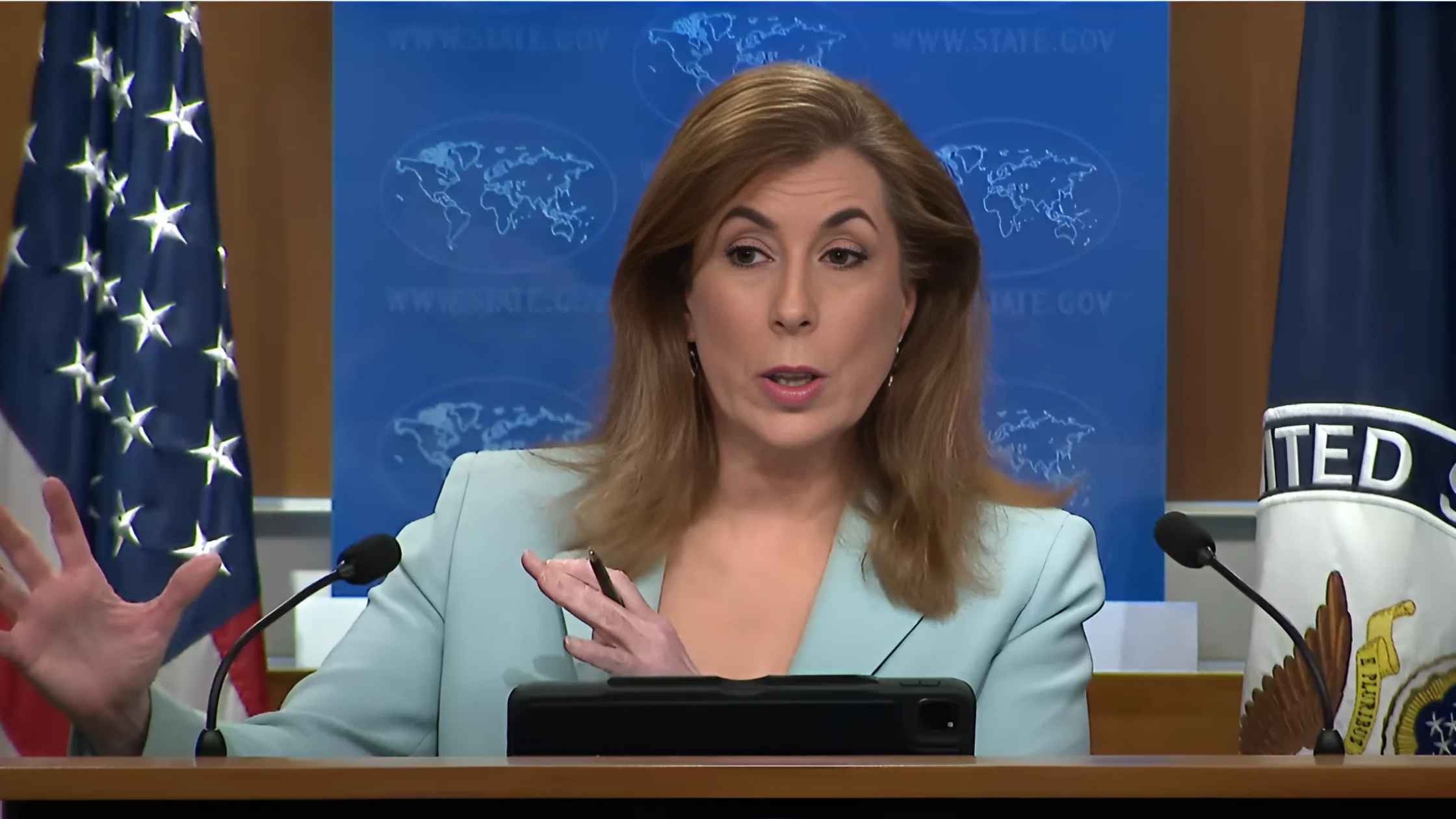
And before we begin and I take your questions. We have switched things up a little bit here in the front row. I'm looking at some new faces. While all the faces that you guys recognize at home watching the briefings for these last six months, recognize, I have to say that the bullpen members and the individuals that you see on camera have their own fan bases, if you will. So people are excited, of course, each day to see the exchanges. And I appreciate that. But what people may not know are the number of people who come to this room for each briefing. Who are journalists with outlets that speak to people around the world. And we think it's time, as I'm used to seeing, well, you, far back there, nice to see you, Nadia as well. But I'll be introducing you to the front row today. It'll change for each briefing. But this is an opportunity for us to get to know you, for further experience and advancement for the nature of what Americans and the world see as we answer these questions. Said, of course, has his own fan club. But nice to see you over here, it's a little confusing, as opposed to over there.
(05:15)
So just as a reminder for those of you watching at home, whether it be C-SPAN of course, or our State Department account on X, et cetera, wherever you may be viewing us. First over here is Said. Said is with Al-Quds, a bullpen member as a matter of fact. And Tim with the Washington Examiner here. Welcome aboard, Tim. We also have Yelena, yes, from NTN from Columbia. Vaughn is here with Washington Times. And Danielle, as we noted. And Nadia, who you've also gotten to know here at our briefing. So welcome to the front row. Again, it will change for each briefing. I don't know what Tommy has in mind for Thursday. He'll be briefing on Thursday as usual.
(06:02)
But let us begin with your questions. I'll start with the front row. Yes, sir, Vaughn.
Vaughn (06:09):
President Trump and Israeli Prime Minister Benjamin Netanyahu have issued seemingly contradictory statements on the humanitarian crisis in Gaza. Is there a rift emerging between the two leaders? And how is this impacting peace efforts, if at all?
Tammy Bruce (06:22):
Well, of course what I won't comment on is the nature of a relationship. What we've seen between the President and the Prime Minister has been a very good relationship. Certainly this is a fluid, dynamic situation, that's an understatement, when it comes to what's happening in Gaza, especially with the new efforts regarding the humanitarian assistance. Certainly the President's point of view regarding what we need to do and continue to do, which we have been doing, which is facilitating the food assistance through GHF, but also of course the financial investment and the President's work and this government's work and Secretary Rubio's work to stop the carnage, to have a ceasefire, to get the hostages released and to have the killing stopped.
(07:07)
I think that when we look at the nature of remarks by the President, there's one thing that's clear, that everyone can agree on, is that it is his humanitarian nature to focus on diplomatic solutions. But he's a realist in needing to … and he'll go and do what he needs to to realize what his goals are, which is peace and a ceasefire.
(07:27)
And also I think the recognition that no one has denied, we have not denied it in this room, that the humanitarian assistance to this point has not been enough. My argument has been is that it would never be enough in that obscene, unnatural environment. And so we are proceeding in that regard. And of course with President Trump's leadership, as he noted yesterday, to do even more to assist when it comes to food and other aid.
(07:51)
So that's I think, without getting ahead of the President, is we'll learn more about what his plans are coming up. We know the Secretary, of course, has led the way in this regard as well. But the focus remains, certainly the humanitarian aid and our focus remains also on a ceasefire and ending that carnage. All right.
(08:12)
Yes.
Speaker 1 (08:13):
Yeah, thank you, Tammy, I like this position, it's really nice.
Tammy Bruce (08:15):
Don't get used to it. Okay.
Speaker 1 (08:18):
All right. I have two questions if you don't mind. The first one is about the United Nations conference that is taking place in New York. You just read a statement, we heard the President. We all agree that Hamas attacked Israel October 7th. But there were 193 nations attending, so my question, led by the French and the Saudis, struck a deal also with the United States in a couple of months ago. So we understand there's going to be hopefully, the President is only six months in his mandate with the Secretary, and they're fighting for a peace deal, but how-
Tammy Bruce (08:56):
Your question, sir?
Speaker 1 (08:57):
The question is how the State Department envision the future for the Palestinian and the Palestinian state, is it going to be a Palestinian state or they're pushing for a one state solution?
Tammy Bruce (09:08):
Well, first of all, the President has noted, as has Secretary Rubio, that they are envisioning a future, which is not something that most people can say. All of their work has led to getting to a point where we can discuss and envision that future. And then act on that. Regardless of the conflict that has been worked on, whether it's Russia, Ukraine, the Gaza Strip or anywhere else, you can't really begin to contemplate what's next until people stop killing each other. We are still at that point. We have not, because of Hamas's recalcitrance and refusal to lay down its arms, refusal to release the hostages, we're not at a point where we're looking at what is next. We know things have to be rebuilt. The President has made remarks in that regard. But from the beginning, calling for new ideas and a new way forward so that it's not just a repeat of what we've experienced for generations now.
Speaker 1 (10:07):
And if I can do a follow-up about the Gaza Humanitarian Foundation. Yesterday, the President also talked with the UK Prime Minister. And the UK will help in the Humanitarian Foundation, I mean, sorry, in the aid. So what are we going to see next, is the President and the State Department see that this organization somehow maybe is not working out for different reason?
Tammy Bruce (10:32):
What I said from the start is that this is not about what has not worked, clearly we're now I think close to a hundred million meals have been distributed by GHF, but as we've discussed, there has to be more. There's always had to be more. The calls from the President, from the Secretary, and even GHF has been, have more join us. There needs to be more ideas, more movement.
(10:58)
We know of course there have been some airlifted airdrops of food. There's been corridors that there's a window for corridors for delivery of more aid. And of course that's good, that's important. But adding to the aid and to the mechanisms that are there is what we've all called for. It is not an indication that there should be only one. It should be everyone should be contributing to helping to make a difference here. So far it has been GHF with the mechanism that has worked to keep the aid out of the hands of Hamas. And that has been fundamental. So it's good news.
(11:37)
And of course, as the President returns to the United States, no doubt we'll have more information about how much more good news we'll have regarding aid and supplies.
(11:45)
Yes.
Speaker 1 (11:46):
Thank you.
Speaker 2 (11:46):
Thank you.
Tammy Bruce (11:47):
Wait, hold on, please, hold on.
Speaker 2 (11:50):
Me?
Tammy Bruce (11:50):
No. There.
Speaker 3 (11:51):
Thank you, Tammy.
Tammy Bruce (11:52):
No, not you. Maybe it's my pointing or maybe because there's a tall guy here. Yes, ma'am.
Speaker 4 (11:58):
Thank you.
Speaker 5 (12:00):
I just want to follow up on what Trump has said about setting up new food centers.
Tammy Bruce (12:03):
Sure.
Speaker 5 (12:04):
Will these be part of the GHF?
Tammy Bruce (12:07):
We don't know the framework of how something would proceed regarding the details. I'm waiting for the President to return and don't want to get ahead of him regarding announcements and what the framework would be.
Speaker 5 (12:21):
When do you expect this to be announced?
Tammy Bruce (12:24):
Considering the nature of the urgency of the situation in everything that President Trump does, very quickly and very soon. But we'll let that play out when he gets here and we get the details from those involved.
Speaker 5 (12:36):
And if I could just follow up, the IPC has said that GHF food items require water and fuel to cook, which is largely unavailable, and the IPC's Famine Review Committee said that their analysis of the food packages supplied by the GHF shows that their distribution plan would lead to mass starvation. Has the U.S. vetted what supplies the GHF is providing and ensured that they are providing the necessary nutrients, and that they are able to be cooked?
Tammy Bruce (13:02):
All right. I'm going to pass this off so we can get an answer to you. I do know that, again, the issue here is getting more food, more access, more everything. That has always been at the top of our list. But when it comes to the specificity of what's being handed out, we'll get back to you.
(13:21)
Yes, ma'am.
Speaker 6 (13:22):
Thanks, Tammy. The President has now said multiple times that his administration has pledged $60 million toward food and other supplies for Gaza. The State Department has only announced $30 million for the Gaza Humanitarian Foundation. Can you say has more money been earmarked for the GHF, or is there other funds that are going out to make up for that 60 million to 30 million difference here?
Tammy Bruce (13:45):
I would suggest a question for the White House there. Again, I speak, I know what we've done here at State. Clearly, the President is in a position when it comes to decision-making, knowing what parts are moving, and where things are headed, that they would have probably a better answer for you regarding the rest.
Speaker 6 (14:02):
But it's only 30 million for GHF at this point? Can you say that?
Tammy Bruce (14:05):
From what we, of course, have announced here at the State Department, that's … in this particular, I would caution against the suggestion that with what State may have done and what's been announced is a reflection of the complete picture. I tend to caution about those things. I will caution about that again. But this is, as we all know, a very large issue, a very fast-moving issue, and there's many different pieces that are coming together in how it moves. And so, the element that we have announced is an element and does not speak to an end or a final, complete piece to what it is we're doing.
(14:50)
All right. Yes?
Speaker 7 (14:51):
Thank you. Just following up on Daphne's question, I had asked about what Gaza Humanitarian Foundation is distributing specifically, since last week's briefing, specifically the high-nutrient food that is needed.
Tammy Bruce (15:06):
Yes, I know. It's come up before as well, so yes.
Speaker 7 (15:07):
Yeah. And you mentioned that you would take that back to get more details on the distribution. I did get a line from this department in response to my questions last week, and a State Department spokesperson had said the Gaza Humanitarian Foundation award remains subject to strict requirements, vetting, and oversight mechanisms, like all department awards. And then they also deferred to GHF on the exact food items that are being distributed.
Tammy Bruce (15:32):
Sure.
Speaker 7 (15:33):
There's been a lot that's happened since you were actually last at the podium.
Tammy Bruce (15:35):
It's been a week.
Speaker 7 (15:36):
As you know, there's been the news out of France, and also with the UK prime minister saying that the UK may well recognize a Palestinian state in September at UN Week if certain conditions are not met by Israel.
(15:48)
And then, of course, there's been wall-to-wall coverage on images of starving children, photographic evidence of that from our colleagues covering the story on the ground in Gaza.
(15:58)
So, I just wondered whether the vetting process and the strict requirements in this department is now having to take into account, obviously, all of this evidence, this photograph evidence. And is this giving the department some pause on these funds that are ready to go out the door to this organization?
Tammy Bruce (16:17):
Here's what … Thank you. First of all, some of you may have seen a remark from Anna Kelly, from the White House, about the President's stance and what his plans are. She said President Trump wants to alleviate the suffering for the people of Gaza because he has a humanitarian heart. He announced a new aid plan today to help Gazans obtain crucial access to food. Details are forthcoming.
(16:40)
What I will note about what's happening on the ground, of course, is what our focus is on, which is getting more aid in, which is getting a ceasefire, which has not been accomplished because Hamas refuses to do so. From the beginning, they have been the problem about why this continues to be an issue. We know that, of course, more food aid will be going in, considerably more, and for those, as we care about the nature of nutrition and the value of that, we'll have those details for you. And GHF can be reached, many of you have reached out to them, to ask them for those details.
(17:16)
We at the State Department, the Secretary, and the President of the United States, are focusing on saving lives, dealing with individuals who can stop what they're doing to create peace. And of course, as you know, the President has been frustrated on a couple of fronts regarding the killing of civilians, the using of civilians, the nature of what's happening at too many conflicts around the world. And that's what he's focused on. But it's a good issue to have, if there is a silver lining, about the fact that more food, more nutrition, more access is being created. And that's what we're doing in the meantime, while still trying to stop a war that makes that zone almost impossible.
(17:59)
Nadia.
Speaker 8 (18:00):
Thank you, Tammy. I have two questions. An Israeli settler called Yinon Levi has shot and killed a Palestinian peace activist. He's a father of three; his name is Awdah Hathaleen, in the West Bank. This settler was identified by the previous administration as an extremist and he was under sanction, brought by the EU and the U.S. You, the Trump Administration, has lifted the sanction on him. You often say you have the same values with the Israelis. How can you make sure that this guy is accountable when he killed a civilian, especially a peace activist?
Tammy Bruce (18:34):
Well, of course, I think it needs to be said, it shouldn't have to be said, but we decry the loss of life everywhere. That has been the hallmark of the work that this administration is doing. It is at top of mind for Secretary Rubio and all of us who work here at the State Department for a reason, because we care about what happens with other people. Here certainly we care it about, it is an American First framework, but that value is about peace around the world as well, which also helps us.
(19:02)
I would say also that we, as you know, we don't comment on investigations that belong to another government. Israel has investigations that it's implementing regarding situations of this sort. I don't know the end result of what that's going to be, nor will I comment or speculate on what should happen. What we do know, and I don't think we should have to. We have a status here, a posture, where all of this matters to us, to the point where the President's last and only, the second term, but his last effort is to make these things better and to save people's lives.
(19:39)
So, it is at certainly Gaza, a war zone. We're doing our best to make a difference there, and we will wait for the result of an investigation before we have any comment.
Speaker 8 (19:52):
This guy in the West Bank; is not in Gaza.
Tammy Bruce (19:54):
Well, but with the West Bank and Gaza, obviously, the nature of conflicts and what we've been working on, but I appreciate that, yes, of course. It's the same, I think the same … It's the same argument. We see this in the West Bank. We know when there's violence in general. We saw something unfold in New York City as well, with a shooting in New York City yesterday. These things touch all of us, with the hero there being a Bangladeshi immigrant, a cop for three years, dies defending New Yorkers. It is the American story, and it's something that we all work to help try to make a difference on.
(20:37)
All right.
Speaker 8 (20:37):
My second question is: two Israeli human rights organizations found, that they concluded that Israeli practice in Gaza has aspects of genocide. The Trump Administration has put sanctions on UN officials who concluded the same. So, are you going to sanction these human rights organization or are you going to change your position?
Tammy Bruce (20:57):
Well, I appreciate that, Nadia. But of course, you know I'm not going to speculate or say what actions will be. I'm not going to comment on outrageous allegations, effectively, which have also been disputed. Again, you know I won't preview things or guess or speculate about actions in any regard.
(21:19)
All right. Yes.
Speaker 9 (21:21):
Can I just ask you about the trucks that are getting into Gaza? Over the weekend, there was an uptick, I think over 100 trucks that got in on Sunday. But at times during this crisis, there have been upwards of 300 trucks delivering humanitarian aid into Gaza. What is the number of trucks that this administration wants to see Israel allow into Gaza on a daily basis?
Tammy Bruce (21:44):
Well, I won't discuss, of course, details with you or the content of conversations or even a specific like that. What I do know is that there is this overarching work that we've done to make sure as much can get in as possible. At the same time, we do know that the UN had noted that they were not moving materiel in because of the violence. We know it's a war zone. I mean, that has been the overriding issue, and how to make it safe to get food through to those who need it versus into the hands of those who are causing the destruction and using it and weaponizing it.
(22:25)
I'm not going to speak to you about specifics or if that conversation has been had. We know, of course, it's in everyone's interest to help stop the kind of environment in general that's happening in the Gaza Strip. It's, again, monstrous and abnormal and all of us have an interest in stopping it.
Speaker 9 (22:44):
And GHF's contracts expire at the end of August. Is this administration pushing for those contracts to be renewed?
Tammy Bruce (22:49):
I won't speak on the details of contracts or agreements or if that's accurate or if it's not.
(22:54)
Yes.
Speaker 10 (22:55):
Thank you so much. Two very quick questions. Secretary Rubio, for the past several months, has been wearing two hats, both leader of the-
Tammy Bruce (23:01):
Four hats.
Speaker 10 (23:02):
Four. many, many, hats.
Tammy Bruce (23:02):
Four hats.
Speaker 10 (23:03):
But specifically, Department of State and NSC. He has shrunken down the NSC and called it right-sizing. And my question is: are these two roles being sort of merged together into the same official, or are they being fulfilled in two separate capacities?
Tammy Bruce (23:20):
Well, I can't speak to the decision-making about the nature of what he's doing as the NSA. I'm here with State Department. Of course, he is the Secretary of State. What I can tell you is when I've been on various trips where the NSA, the National Security Advisor and the Secretary have been there together, it's the same kind of work. It's working together seamlessly. Of course, a great deal of time of overlap, regarding the nature of what's happening in the world. So, it seems and it appears to be working out smoothly and effectively.
Speaker 10 (23:58):
And my second question. Today Kim Yo-jong
Speaker 10 (24:00):
Kim Yo Jong in North Korea, the sister of Supreme Leader Kim Jong Un, published an official statement regarding the US's desire to denuclearize the peninsula. While rebuking the United States, the memo did include a line stating that Kim Jong Un's relationship with President Trump is, quote, "not bad." And I'm just wondering if the Department of State is familiar with the nature of bilateral relations between the US and North Korea at this time and why they might have said that?
Tammy Bruce (24:31):
Well, I would suspect that you should contact the White House when it comes to the relationship between the president and another country. Of course, we do know, as we see now, as we saw in the first term, President Trump's willingness to talk with everyone in order to achieve the peace and prosperity and some semblance of normal life for people around the world.
(24:54)
Regarding the note you mentioned, or if it was a social media tweet, I don't have a remark on that, of course, but the White House can tell you more about the president's approach with North Korea.
(25:07)
Yes, ma'am?
Speaker 11 (25:09):
Thank you, Tammy. Me?
Tammy Bruce (25:10):
Yes, you. Indeed.
Speaker 11 (25:13):
Okay. I have two question to you, the first one is after President Uribe's conviction, will the US consider any sort of action similar to what we saw after the decision against former President Bolsonaro in Brazil? The first one. And the second one, after you answer-
Tammy Bruce (25:28):
Yes. So, regarding the verdict with former President Uribe, yes?
Speaker 11 (25:33):
Yes.
Tammy Bruce (25:33):
Yes. Well, the secretary of state put out a tweet on this as well, noting that former Colombian President Uribe's only crime has been to tirelessly fight and defend his homeland. The weaponization of Colombia's judicial branch by radical judges has now set a worrisome precedent.
Speaker 11 (25:52):
And the second one is would the US allow Chevron to operate in a country led by an administration target with promoting terror and drug trafficking?
Tammy Bruce (26:02):
Well, I can tell you this, and I love your very direct questions, I know that there's two separate details that I don't have in front of me, that I want us to take and get back to you in that regard.
(26:18)
What we have said repeatedly, though, is that we will not allow oil revenue to fund or benefit that regime. And so, I think that's something that we can repeat here at this point. But when it comes to some further details, let's see if we can get you-
Speaker 11 (26:34):
Thank you.
Tammy Bruce (26:36):
All right. Said?
Speaker 12 (26:38):
Thank you. And Tammy, and I must admit, I feel a little bit vulnerable and closer to the floor here. I was always shielded by the front row [inaudible 00:26:45].
Tammy Bruce (26:44):
Well, see how you're thinking now?
Speaker 12 (26:45):
It's okay.
Tammy Bruce (26:47):
But trust us, you're fine without the Italian rule about never having your back into an open space.
Speaker 12 (26:53):
Very quick question. IPC said today what's going on in Gaza is famine. And the reason they didn't classify it as such is because they need the actual data and they have to be in Gaza to collect that data, which Israel prevent them. So, my two questions to you-
Tammy Bruce (27:08):
Let me just say, as you know I might, is that there is someone preventing people from getting into Gaza, and that's Hamas.
Speaker 12 (27:14):
Hamas-
Tammy Bruce (27:15):
Hamas is preventing everyone from being able to get in there, whether it is reporters, whether it's food deliveries or those who might need to assess the nature of what's happening on the ground. People are afraid of a terrorist group, the masterminds of October 7th, which slaughtered babies up to the elderly, when they're living, dismembering them, putting a baby into a microwave, murdering women as they're raping them. That set of people are running the Gaza Strip.
(27:42)
So, it's understandable why people are concerned and can't get in. It is not the Israelis, who have been defending themselves in this framework, and who are ready to sign a ceasefire deal and have been ready for weeks to do so.
Speaker 12 (27:55):
Well, in fact, the Israelis are preventing everybody. They control the area, but that's another issue.
(27:59)
My question to you, does this add the kind of urgency that would allow more trucks … To follow up on Kylie's point, more trucks, and to the level that it was before it was something like 400, 500 trucks, especially during the ceasefire? And second, would the US call on Israel to allow these groups to go in and give them the facilities they need to report actually and factually from Gaza?
Tammy Bruce (28:25):
Well, we've had progress here from the beginning of this conversation and with the catastrophe of October 7th and what has unfolded since then. We have discussed all the time about what we need and we've had progress. We've had, again, close now, I think, to 100 million meals distributed by GHF. We have had more trucks now moving into the area. Israel making accommodation to be able to try to allow that to happen without people being in danger. And so, we've seen this progress being made.
(28:53)
When it comes to the number of trucks, I would caution that it's not an issue of numbers, but clearly, the position, the posture of the president, of the secretary of state, is that all of this has to stop and everything has to get to whomever it needs it. That may end up being a certain number of trucks, it may be a certain other kind of effort, new ideas. So, I would just ask that we focus on what we've been focusing on here, which is having this violence end so that we can do a wholesale reformation of that area, stopping of the violence and a wholesale view that a future really can exist.
(29:41)
So yes, ultimately it's going to be the best scenario, everyone can go into Gaza and help. The president clearly will have ideas. The partners in that area, whether it be Egypt or Qatar and others, Jordan with their airdrops, everyone has an interest in the resolution of this. And inevitably, of course, it'll result in everyone getting what they need. All right.
(30:05)
Yes, Abby?
Abby (30:07):
What is the US position on the UK saying they will recognize the Palestinian State before the UN this September? I know my colleague brought it up, but considering they're using it as leverage to try to stop some of the starvation that President Trump himself said he's concerned about taking place in Gaza.
Tammy Bruce (30:24):
Well, I think President Rubio's statement and my statement that I issued regarding the conference, the two-state solution, the fact of the matter is his remarks also when President Macron of France also did something similar in this regard, that this is a slap in the face to the victims of October 7th, that it rewards Hamas and it harms the ability to stop this framework. It allows it to continue. It gives one group hope, and that's Hamas. It is a rewarding of that kind of behavior that if you wait long enough, if you don't cooperate … In any other normal environment where someone was so utterly defeated, they would surrender. In this case, that just does not occur.
(31:19)
And part of it is because of perhaps the hope that they receive on how long the suffering lasts, how much that pushes the world to acquiesce to their arguments. And there's one group that benefits from the images and the reality of the horribleness, and that's Hamas. And so, there's a reason why they don't cooperate and stop. And this adds one more thing onto it that adds into their apparent posture that this is a winning thing to do. Clearly, we are of the opposite mind and that I think we can say in general about that issue. All right.
Abby (31:59):
One quick follow up, President Trump said he didn't mind the UK prime minister taking a position on statehood. Can you explain what the difference is there as far as-
Tammy Bruce (32:09):
Well, obviously I'm not going to speculate on the president's reasoning, but I do know that none of us are in the business of telling people not to speak their mind. At the same time, I'm a big believer, as I know the secretary is and the president is, and we showed this I think last November, is that persuading people, explaining your position, why it matters, how it impacts what we all want to achieve, is something that we must do and that it's the way to persuade people, to change people's minds.
(32:43)
And so, it doesn't surprise me that that is what he said, but of course we also know, as I described, the nature of our situation here about what that does in our efforts to stop the carnage. Yes.
Speaker 13 (32:57):
Thanks so much, Tammy. Appreciate it. According to the UN, there's been more than 1,000 Palestinians killed at or near the aid sites since May 27. Does the US have an assessment on that number?
Tammy Bruce (33:13):
That's not something I will speak on or go into the details about regarding our assessments of that situation. Certainly, a wartime situation, but in the details and the numbers, no, I won't speak to that.
Speaker 13 (33:26):
Okay. And you mentioned the details of this new aid plan will be forthcoming. Will they be forthcoming to the State Department or are they coming from the State Department? Are there people in this building working on something right now?
Tammy Bruce (33:39):
Well, it's the White House who noted that. So, the White House noted that the details will be forthcoming. We, of course, all work for the president, he is the guiding hand here and he gets ideas and he knows more than all the rest of us know.
(33:55)
So, we are excited about his commitment. The fact that he and Mrs. Trump are humanitarians and are working first to make America first so that Americans' lives can be predictable and strong and we have a future we can look forward to, but also that obviously is translating around the world as well.
(34:13)
Yes, sir?
Speaker 14 (34:14):
Thank you, Tammy. I'm going to move to Ukraine, if I may. We have new deadline.
Tammy Bruce (34:17):
Yes.
Speaker 14 (34:18):
And Ukrainians are certainly hopeful that the president's new deadline and his tough words about Putin and Russia will follow with certain concrete actions. And in fact, yesterday you told the media that now we are going to see some actions.
Tammy Bruce (34:32):
Yes.
Speaker 14 (34:32):
With the caveat that we have 10 days to go. Can you give a sense of his preparation-
Tammy Bruce (34:34):
Oh, you might not even have 10 days. I would just suggest even when he set that 50-day timeline for Russia, I think one of the things I've said is, who knows when that could happen? He's had timelines before in which he acted very quickly. With the president, he also noted that he was going to shorten that timeline because he pretty much knew what the situation was.
Speaker 14 (34:58):
Okay. My question is, can you give us any sense of any preparation that are going on in this [inaudible 00:35:03], so that Russians take it seriously?
Tammy Bruce (35:05):
Well, clearly, President Trump has proven that he should be taken seriously because he's a serious man. And we've seen the results of that around the world, again, most recently in the Indo-Pacific, and of course, with his envoys and the nature of the commitments we've made.
(35:24)
I would say that what's been discussed regularly are sanctions and the president also brought up the issue of sanctions and even secondary sanctions as certain countries are benefiting from buying Russian oil. But that's up to the president. We've known that's in his toolbox. There are many things that he can do, just as there are many things that Secretary Rubio can do and help facilitate, but the president himself mentioned those two dynamics. He has been patient and that may have been misinterpreted by some people. And I think the time for misinterpretation is now over.
Speaker 14 (35:59):
On
Speaker 15 (36:02):
And on that point, Tammy, the President said that he knows the answer and he also thinks that there's no reason to wait. If there's no reason to wait, then why wait till then?
Tammy Bruce (36:08):
Well again, as we know, there are a million fronts in these kinds of dynamics. There's negotiations that go on. I can't speak to what the president's involved in, the conversations that are currently being had and the importance of what the president says privately and publicly. I would just trust that he's the one who would know and being in a position here at the State Department where we're all ready to do what we need to do to get this situation accomplished for the president. All right, Eric?
Eric (36:37):
Yes, thank you, Tammy. I wanted to ask two questions. One, on the impact of potential secondary sanctions, potential secondary tariffs. Is there a concern that that may be too blunt an instrument in that some US allies or current countries for which the US has been partnering and having negotiations, fruitful negotiations as we saw today, for example, China or India could be hit, that there could be a boomerang reaction from such secondary sanctions or the EU, other countries that would be inadvertently hurt in a way that would be counterproductive to broader US goals?
Tammy Bruce (37:18):
Well, no doubt, I'm not in the business though of the negotiations. There are questions that are asked about everything with the actions that might be taken and I would presume as we should, that all of the impact would be considered. Obviously the president's first effort and first desire to solve problems is through diplomacy.
(37:38)
For people who might be confused, I have a few comments that I can share with you from the president at first here. "I'm disappointed in President Putin. I'm very disappointed in him. I'm going to reduce that 50 days that I gave him to a lesser number because I think I already know the answer, what's going to happen." He also said, "Yes, I'm going to make a new deadline of about 10 to 12 days from today." I think that was yesterday. "There's no reason in waiting. I want to be generous, but we just don't see any progress being made." He said, "10 to 12 days, I'll announce it probably tonight or tomorrow, but there's no reason to wait. If you know what the answer is going to be, why wait? And it would be sanctions and maybe tariffs, secondary tariffs." And he says, "We are going to do secondary sanctions unless we make a deal. Based on common sense, you would think he'd want to make a deal. We'll find out."
(38:36)
The president is not someone who's making a decision on the fly. This has clearly been consideration from the beginning and we're prepared to do what's necessary.
Eric (38:47):
Thank you, Tammy. Following up on my colleague's question about Colombia, we know that we have a president and a Secretary of State who take a great interest in what happens in the Western Hemisphere and pay a lot of attention. We've seen the president's attack and criticism of the Brazilian judiciary, but I'm wondering what makes a judicial process a radical process or radicalized by judges or otherwise inappropriate? I mean, is it determined by who ultimately is convicted or charged or what's the context or the qualitative judgment as to what makes a politicized judicial process for this administration?
Tammy Bruce (39:29):
Well, the Secretary, like the president's a very talkative young man and he's very clear about what interests him and why it matters. On virtually every issue he does long-form interviews. He's got his Twitter that he participates personally in, statements, op-eds, all of which he's personally involved in and expresses the nature of how he's making his decisions and why. So I will let his work speak for itself, including again, current comments and no doubt, more comments and explanations if you will, or opinion pieces to help explain why these things matter, why corruption matters, how it might look whatever country you live in and why it's important to stand up against it. All right. Yes, sir.
Speaker 16 (40:21):
Yes, hi. Thanks. A lot of my colleagues have asked a lot of the questions I had, so I'm going to totally change subjects if I may.
Tammy Bruce (40:28):
Well, all right. Sounds good to me.
Speaker 16 (40:30):
There are millions of dollars worth of contraceptives stocked in Belgium that are due to be incinerated in France. It's our understanding that they're still stocked in Belgium. They haven't moved to France. Could you give us an update as to where that stands? I know that the Belgian government is trying to find alternative solutions. Is the US government ready to find alternative solutions or are they destined to be destroyed?
Tammy Bruce (40:58):
Well, I want to have that taken back. This is a situation that changes each day. What I can tell you is for those who've asked previously, there are no AIDS drugs involved in this. No PEPFAR dynamics are set to be destroyed. This is a situation regarding birth control and other mechanisms that could be used, first of all, that would violate our Mexico City policy regarding the use of abortifacients, but also the use of some elements that could be used in a forced sterilization framework that some nations do apply, which also we will not facilitate. So we can say that there's no AIDS drugs, no condoms are being destroyed. This is about a long-standing, I think this was a purchase from the previous administration, and so we're dealing with. But we're aware of it and we recognize the issues, but we also of course, are committed to policy that Americans care about and we're going to be moving forward. No doubt we'll have some additional information for you in perhaps the coming days. Yes, ma'am.
Speaker 7 (42:14):
Returning to your statement at the top, could you explain why talking about Palestinian statehood or Palestinian future in Gaza rewards Hamas or is a slap in the face to the victims of October 7th? And I'm asking, given that none of the parties involved to my knowledge, who are involved in these discussions or have plans to recognize statehood, have said anything about wanting Hamas to be in power. It seems like according to the United States, according to Israel, and obviously as well as all these other folks involved in these conversations now at the UN, no one has expressed a desire to have Hamas in power. So how does it reward Hamas?
Tammy Bruce (42:57):
Well, I think that it's very often, if not most often, actions speak louder than words. And our argument is that there are certain actions you can take that reward in the midst of the defense of a country after a horrific atrocity implemented on October 7th and the end result is create a two-state solution, solve this problem, when in fact, the problem was mass murder and just an indescribably obscene environment. And then the continuation of the terrorism of the people of Gaza, the first victims of Hamas, still just the nature of living in that environment, the hostages that remain held, the weapons that remain held and a refusal. We had a ceasefire early on. We had a ceasefire on October 7th. We had a ceasefire early on. They broke that. And there is a point where you don't find ways to placate or reward the people that have done such horrible things to humanity. The actions of what is being suggested, and I think we've made clear here, do just that. And I think everyone deserves better, certainly first the Gazan people, but certainly the world itself.
Speaker 7 (44:21):
Can I follow up?
Tammy Bruce (44:21):
All right, now we're going to continue. Yes, sir, in the green shirt.
Speaker 17 (44:23):
Thank you. It has been reported that Taiwanese President Lai's trip to his central and South American allies with transit in the US has been postponed. Could you elaborate on this or did the Washington or the State Department play a part in this delay?
Tammy Bruce (44:39):
Well, I do have something I can tell you about this. Taiwan has not announced any travel plans for President Lai. So that is generally a hypothetical. Now, I know it's been in the news. There's been a lot of questions and a lot of suppositions here that have happened. But I can say that it is a hypothetical at this point. There have been no plans, travel plans for the president. There's been, as a result, nothing canceled.
(45:05)
I can tell you though, a reiteration that transits by high-level Taiwan officials, including presidents, are fully consistent with our longstanding policy and practice. This has not changed. And just as a reminder for people who may have not heard us say this from the podium, if they're newbies, "The United States remains committed to our longstanding One China policy, which is guided by the Taiwan Relations Act, the Three Joint Communiques and the Six Assurances. The United States is committed to preserving peace and stability across the Taiwan Strait."
Speaker 17 (45:39):
Thank you.
Tammy Bruce (45:39):
All right, thank you, sir. All right, Abby, one more time.
Abby (45:42):
Can the State Department confirm or offer comment on reports that two Americans were recently detained in Iran on suspicion of spying for Israel? Have they since been released? Has the State Department or the US been in touch with Iran regarding their detainment?
Tammy Bruce (45:56):
I can't speak to that at this point, but hopefully I can soon. And I think that's going to be it for today. Thank you everyone. And again, Thursday, a lot of these things might return with more and new information, but you never know what's going to happen from one day to the next. Now the president, I believe, will be back. Tommy Pigott will be at this podium. And thank you so much for being with me today. And my thanks to our guests here on the front row. It was great getting to know you. I appreciate it and we'll see you again on Thursday. Thanks everybody.