Tammy Bruce (00:02):
Hi, everyone. Last night, that storm, that was pretty outrageous. But glad we made it. Thank you all very much for being here. Popular today in the back. Hi everyone. Hi everyone at home. So yes, we have a few announcements as you might imagine, and then I'll be ready to take your questions. So good afternoon everyone.
(00:29)
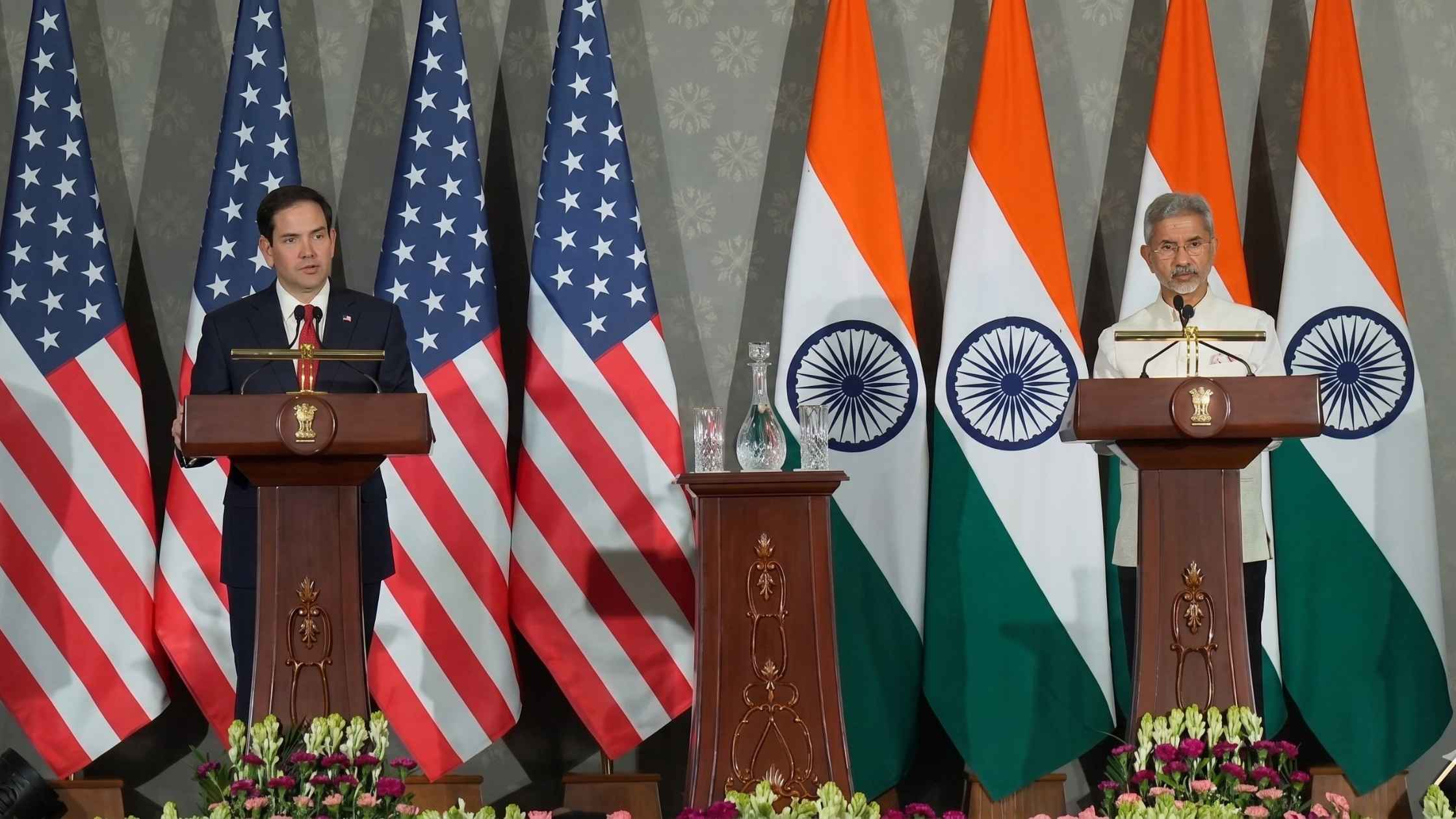
Secretary Rubio is in Kuala Lumpur for the ASEAN-related foreign ministers meetings and bilateral engagements reaffirming the United States commitment, our enduring commitment if I may add, to a free, open and secure Indo-Pacific. Earlier today, he participated in the ASEAN-US Post-Ministerial Conference and held meetings with Malaysian Prime Minister, Anwar, and counterparts from Malaysia, Russia, Japan, and the Philippines. As the secretary has stated, the Indo-Pacific accounts for two-thirds of global growth and remains a central focus of US foreign policy. The Secretary also signed a nuclear cooperation memorandum of understanding with Malaysia, advancing civil nuclear energy collaboration under the highest standards of safety, security, and nonproliferation. Negotiations toward a 123 Agreement are underway and once finalized, it would permit the transfer of nuclear material and equipment for peaceful purposes, further deepening bilateral energy, security and economic ties.
(01:37)
Tomorrow also marks the fourth anniversary of the Cuban regime's July 11th crackdown. Deputy Secretary Landau met with Cuban democracy and human rights advocates reaffirming the United States steadfast support for freedom and democracy in Cuba. Secretary Rubio's video message to the group made clear the Trump administration promotes accountability for the Cuban regime's human rights violations and continues to stand with the Cuban people in their pursuit of freedom and prosperity. Additionally, the United States is imposing sanctions on UN Human Rights Council Special Rapporteur, Francesca Albanese, for her abuse of her role, and in recent weeks, she also targeted US companies in an unacceptable campaign of political and economic warfare. The United States will take whatever actions we deem necessary and appropriate to protect our sovereignty, Israel and any other US ally from illegitimate actions by the ICC.
(02:44)
In parallel, the department is announcing a new awareness campaign, warning Americans, especially Iranian Americans, about the continuing severe risks of travel to Iran. The Iranian regime does not recognize dual nationality and routinely denies consular services to detained US citizens. And while the bombing has stopped, that does not mean that it is safe to travel to Iran. It is not. We are also launching a new website dedicated to warning Americans against travel to Iran. And there you have it. You can get that website starting at state.gov/do-not- travel-to-iran. That's do, hyphen, not, hyphen, travel, hyphen, to, hyphen, Iran. But I think if you go to state.gov, you do a search, you will find that quite easily. The message is clear, as you can tell in multiple languages. Our travel advisories are there as well. They remain in place and we cannot stress enough as we continue to do, as I have multiple times from this podium. Do not travel to Iran, especially those of you who are the dual citizens, who have Iranian heritage, it is not safe for anyone to travel to Iran.
(04:09)
And again, this supplements also the existing travel advisories that does not supplant them at travel.state.gov. Our message is clear. I think so. And finally, as many of you would know, the department is also undertaking a historic reorganization. As announced by Secretary Rubio on April 22nd, to better align workforce activities and programs with the America first foreign policy priorities, the Supreme Court's recent near unanimous decision allows the reorganization to commence and will ensure that the department moves at the speed of relevancy and restores the department to its roots of results-driven democracy. The plan which has been approved by the Secretary and developed with extensive feedback from Congress and the workforce itself is moving into implementation.
(05:05)
I do also want to make a note here as my experience at the State Department now moves into its sixth month, the remarkable experience, the life-changing experience I've had getting to know the people who work in this building. There are tens of thousands of them and they are at the heart, whether they be political appointees, foreign service officers or career individuals, people who have made their career, their service for this country, something that has been a part of their lives for a long time. It has been a remarkable experience to see how this building works, how the people work together moving forward to promote and to implement American foreign policy through the commitment and their patriotism. I have to say that in the midst of all of this, it's been, again, very transparent. I've been proud of that coming from the leadership of this building as we've discussed this many times, and now this is the point where it begins.
(06:04)
And all of us understand and it's sometimes difficult as any enterprise in America has learned that when change is necessary, but in this case, we've inherited a dynamic that needed reform and we are taking and implementing reform. And of course, in the midst of this, know that the people who've committed to the State Department and to diplomacy that they know also this is not about them, this is about making sure that the State Department is able to operate in a manner that makes it relevant and effective. That is what the American people want. It's what all of us want. And in this dynamic, that's exactly what we're achieving. So it is been a long road. Every day is one that I'm very proud of working here. And of course, every briefing I'm proud of, it's always very different, the briefings. But we will start now with today's briefing as I take your questions. All right. Andrea Mitchell. Yes, ma'am.
Andrea Mitchell (07:03):
Before I ask you about Ukraine and the possibility of sanctions and strong support from this department for sanctions, given what the President said that his impatience with Vladimir Putin after the Secretary's conversations with Sergey Lavrov.
Tammy Bruce (07:19):
Yes.
Andrea Mitchell (07:19):
Let me just say that for the workforce, for those who are going to be leaving foreign service as well as civil service, many of whom I and my colleagues have worked with for many, many years, five decades-
Tammy Bruce (07:34):
Of course.
Andrea Mitchell (07:35):
… to be told that as you just said, you're going to make it relevant and effective. You're basically saying that they are not relevant or effective. Many of them are not.
Tammy Bruce (07:44):
I'm glad you bring that up.
Andrea Mitchell (07:45):
Because thousands of people are going to be losing their jobs.
Tammy Bruce (07:47):
Because I think that is, Andrea, it's the antithesis of what I've said, that this is not a matter of the individual being targeted or an individual not being right. This is about being able to be effective due to the size of the organization and to the structure of the organization. This involves, as you all receive material and a new org chart and all these other kinds of wonky things, that this is about an entity that has grown unsustainable over the years with elements related to the Cold War and other elements that we have moved beyond but still stayed. An aspect that you have a size and people working on things that are not within the framework of the modern age or of what we want to accomplish. And certainly, the decision that the American people made last year, that Donald Trump's vision about what the world should be in the context of how America can be great again and what we can contribute as Americans, that when something is too large to operate, too bureaucratic to actually function and to deliver projects or action, it has to change.
(09:01)
And it's not the fault of the people who were misled effectively by certain administrations that grew this department into being irrelevant. We must be able to contribute to a world that we've seen in the modern age, can destroy everyone's lives. Our department, the State Department, can make the difference with diplomacy and Donald Trump is the highlight of that. So I will repeat, as I said, this is not a statement about the individuals who are affected in this building. It is a statement about a structure that needs to adapt, that must be smaller in order for us to be relevant, but even more than relevant, effective, quick. We've seen, even just in these past five months, how quickly things can change and what can happen when you move at the speed of relevancy. So no, it's unfortunate, Andrea, that you would take that
Tammy Bruce (10:00):
… that point and move that point because it is … Nothing could be further from the truth. And it's exciting for the people who are here and the people who've committed their years to the State Department to be able to watch it become even more powerful through diplomacy and making the world safer again and better again and healthier again. They can be proud of that because they have contributed to that, and we're determined to make sure we continue it as well.
(10:26)
All right.
Andrea Mitchell (10:28):
Well …
Tammy Bruce (10:28):
Yeah, well.
Andrea Mitchell (10:29):
Was I? Am I able to ask my question?
Tammy Bruce (10:31):
Yeah. Do you have a question about? Yes, go ahead.
Andrea Mitchell (10:33):
I have a question about the importance of sanctions right now at this pivotal moment for Ukraine given the President's stated impatience with what he saw as misleading understandings.
Tammy Bruce (10:47):
Of course.
Andrea Mitchell (10:48):
From the Russian president.
Tammy Bruce (10:51):
Well, the Secretary made some comments earlier today in Malaysia, and in part he said, "Our strategy is to continue to engage all the parties that are involved in finding an outcome to this conflict. I echoed to Lavrov what the President said, both the disappointment and frustration at the lack of progress in peace talks or in a path forward. We hope that can change, and we're going to stay involved where we see opportunities to make a difference."
(11:22)
He also said that the Russians shared some ideas that he said he would take back to the President. And of course, we will see what he says. The President is the guiding hand of these kinds of decisions. And other than that, of course, this is a meeting involved with diplomatic discussions which I will not get into the details with.
(11:40)
All right, Humeyra.
Speaker 1 (11:42):
Hi, Tammy. Thank you.
Tammy Bruce (11:43):
Sure.
Speaker 1 (11:43):
Just to quickly go back to the reorganization, you said it's moving into the implementation phase. Can you say when the first RIF notices will go out? Is it tomorrow?
(11:51)
And apparently, the judge wanted to see the RIF plans. That was a demand from the court yesterday. Is that going to slow down the sending of the RIF notices?
Tammy Bruce (12:02):
First, of course, I won't comment on anything that's moving through the legal system or the requests of the legal system. And also I will not, other than saying that now the Supreme Court decision has allowed us to commence, and that's what we're doing.
(12:14)
But I think it's fair to say that with everyone else that happens here, it will happen quickly. This is not going to be an extended wait for people who are listening and watching in this building or fellow Americans at home and around the world. This will happen quickly. We understand that there has been a delay, not to our interests but because of the courts. It's been difficult when you know you need to get something done for the benefit of everyone. So it will be quickly. I cannot give you the timing. And again, won't discuss any legal aspects that may have arisen as well.
Speaker 1 (12:50):
Okay, two quick things.
Tammy Bruce (12:51):
Yes, ma'am.
Speaker 1 (12:51):
One is on Russia and the other one is about Steve Witkoff. Follow-up to Andrea's question: Are you able to tell us at all about this, what's new about this, these ideas or comments that is going to open a path for peace, which the administration has been trying to do unsuccessfully?
Tammy Bruce (13:06):
Well, what the Secretary said was that he would bring the new ideas to the President. We didn't say that they were going to open a path for peace. So don't read into the nature-
Speaker 1 (13:14):
Isn't that what you guys are trying to do, though?
Tammy Bruce (13:18):
Well, and that is in the process of the diplomacy that the Secretary undertakes, that he's in a conversation with Lavrov as an example, conversations the President would have with Zelenskyy, the President of Ukraine, as an example. These are things that are important to realize. They're not static events that stand on their own. They're part of a fluid dynamic of conversations and negotiations. We are, as the President has said and the Secretary has said and engaged in, we'll speak with everyone. Because every step makes a difference in the decision that you have to make in the end. And that's where we're at.
Speaker 1 (13:50):
The final thing is an Israeli airstrike hit Palestinians near a medical center in Gaza today. It killed 10 children and 6 adults. I'm wondering if there's been any outreach from the U.S. Government to the Israeli authorities to take any steps to ensure civilians aren't killed in this.
Tammy Bruce (14:06):
Well, I can't speak to that particular event. I would direct you to the country of Israel for answers in that regard. But we have said repeatedly that we decry the death of innocents. It's why we do what we do in so many countries around the world. It's part of what informs our action. And at the same time, we know that it's a war, and we stand by Israel, to say the least. And we also know that Israel, when it is due, investigates, and we will await to see what their action will be. And we'll keep you up to date, obviously.
(14:42)
Yes, Jen.
Speaker 2 (14:43):
Can I follow up on that, Tammy?
Tammy Bruce (14:44):
Sure.
Speaker 2 (14:44):
There used to be mechanisms in this building to look into incidents of civilian harm using U.S. weapons. Do those mechanisms still exist? And have you come to any conclusions with regard to Gaza?
Tammy Bruce (14:53):
Well, I can tell you again that the choices that we're going to make diplomatically in reaction to another country's actions, or the nature of what's happening around the world, I won't discuss at this podium, or what our process is. But I can tell you that what I've experienced, and I think what all of you have seen over the years, is that we have mechanisms like that, because we care about those issues. We have constant communication with our allies around the world, and that is also something that we see benefitting the agenda of the President and the work of the Secretary of State. So clearly, we care about these issues, we're acting on them actively every day, and that will be one. Obviously, I can update you on that, I'm sure, as we move forward.
Speaker 2 (15:34):
And then quickly on GHF, my colleagues and I reported that there were a number of internal concerns about funding GHF that were raised prior to the approval. Can you say whether the Secretary was aware of those concerns, and why that approval was granted despite these bevy of concerns?
Tammy Bruce (15:49):
Well, yeah, I know we've had that conversation before. First of all, I can give you an update: There is now 69 million meals that have been distributed to date at four distribution centers, all while preventing Hamas looting, which is of course an incredible feat. It should be commended and supported; I think most of us do. We also call on other aid agencies and the UN to participate in this system. It has been implemented, and it works. And of course, as part of the creative solutions that the President has asked for regarding that region.
(16:24)
When it comes to the activity that is happening, or allegations that are made, or the framework of what we're trying to achieve, I think that we're looking at a dynamic where it is a war zone, it's the same issues that we've been discussing about the task of getting humanitarian aid to people who need it. The world has clamored for this, and it's happening. And I think at this point, when we look at the nature of the number of meals that have been delivered, and the efforts that have to be taken to save those lives, it is to be commended.
(17:03)
Certainly nothing will be perfect. I've said this before, that it can't be perfect because it is an unnatural, obscene environment. And for people looking for perfection in a war zone like that, being terrorized by terrorists, to demand perfection or a new normal of this environment is unacceptable. Nothing will be enough. So that's why we've got to have a solution and an end, a durable ceasefire and a durable peace, because otherwise, the suffering and the carnage continues, and that's what we're working to end.
(17:35)
All right. Yes, Alex.
Speaker 3 (17:36):
Thank you, Tammy. I appreciate it. I want to go back to Ukraine and press you a little bit more, if I may. You said that the Secretary will inform the President about new ideas. At what point you guys are planning to inform the Ukrainians?
Tammy Bruce (17:49):
I'm sorry, what are we?
Speaker 3 (17:49):
The Ukrainians. They're in the dark. So are you going to inform them?
Tammy Bruce (17:52):
Well, obviously I'm not going to speak about every conversation or connection we have with partners that we're working with every day, all the time. The communications don't just happen when you hear about it in the news, or if there's one phone call that's talked about. These are in every region that has required special envoys and discussions and help regarding ceasefires or at least finding where you can find some common ground, is a 24/7 operation with innumerable people working on it.
(18:25)
So when it comes to the Ukrainians, our friends, President Zelenskyy, he had a fabulous phone call with President Trump. That was discussed somewhat publicly. Certainly, when it comes to the issue of armaments and defensive weapons, essentially, that was discussed publicly. And of course, we have news in that regard.
(18:45)
So you might not hear in the new. It doesn't mean that we're not talking quite often, if not all the time, with our Ukrainian friends.
Speaker 3 (18:53):
Thank you. And going back to Andrea's point earlier, we all heard just two days ago from the President that he expressed his frustration with Putin.
Tammy Bruce (19:01):
Yes.
Speaker 3 (19:02):
Saying that he was lying to him. And then we also have seen in past few days Russians have been engaging in record-breaking attacks, Kyiv and other cities. Why do you think Lavrov deserves a Secretary-level meeting given all this background?
Tammy Bruce (19:17):
Well, again, a lot of people didn't think Putin should be talked with at all during the last administration. He wasn't talked to for three years. That's not a way that you can come to some kind of understanding or agreement or an effort to stop any carnage and the suffering. You've got to talk to everyone at any point, when it comes to those who are involved in the situation, to say nothing of the leverage that we have with the ideas and the power of President Trump and, clearly, the effectiveness of Secretary Rubio in the midst of this.
(19:46)
At the same time, the escalating Russian attacks, the President's been clear, they're abhorrent. I can say to you here that we strongly condemn Russia's escalating attacks on Ukraine and extend
Tammy Bruce (20:00):
… extend our deepest condolences to the victims and families of those killed. Every week we see reports of Russia setting new records for the scale of its aerial attacks. Every nation wants to have records, but not that kind. As Secretary Rubio said today, "We've seen an acceleration of attacks. President Trump's number one interest is to stop people from dying and the destruction that's gone going every single day. He is going to do everything he can within his power to end this war and any other war he has a chance to end. We're going to continue to work at it. We understand that these things take time and patience, but obviously we are also frustrated that more progress has not been made."
(20:47)
And I again would remind you that that's an opinion regarding the state of situation now in the midst of ongoing conversations that are conveyed publicly. And while I won't speak or characterize the secretary's conversations with Lavrov or any other person, it's clear that this is part of that movement toward making decisions about what is necessary to stop this madness. All right. Yes, Tom.
Speaker 4 (21:17):
Is there any update on Steve Witkoff's travel? He'd said in the cabinet meeting earlier this week, I think by the end of the week, he expects to go to Doha. So can you confirm whether or not that's happening? And just on what the president was saying last week which was with quite a lot of certainty, expecting a deal this week, what we should read into the raising of expectations. Do you think that it's that close that now there will be a breakthrough by next week, for example?
Tammy Bruce (21:48):
Well, on your question about Special Envoy Witkoff, the answer is no. I know it's a very short word with two letters.
Speaker 4 (21:55):
No, he's not traveling? Or no-
Tammy Bruce (21:55):
I think it's the same in seven languages. Well, I have no update for you on his travel.
Speaker 4 (21:59):
No update? But he might be traveling, but you don't have an update? It's not, no, he's not traveling?
Tammy Bruce (22:04):
My comment or lack thereof is not a negative to your question that he's not traveling. The answer is that I don't have an update for you.
Speaker 4 (22:14):
Okay.
Tammy Bruce (22:14):
I'm sorry about that.
Speaker 4 (22:15):
That's all right.
Tammy Bruce (22:16):
Regarding, of course, the potential of a ceasefire president made clear that he was optimistic and he's considering his lifelong experience, but certainly the experience over the last five months and even certainly through his first term with the Abraham Accords, et cetera, and the nature of what's been going on in the Middle East, all of us understand that this is a difficult process. So when you are getting close, when you know the nature of the monsters in this case that you're dealing with, you have a general sense, and especially with how the Middle East has changed dramatically because of the action of the United States a few weekends ago, that the playing field is different.
(22:59)
So his optimism is based on the multitude of things that he knows that I don't, and I think that we should maintain the awareness of his opinion and the optimism that he has. He doesn't say it very often, so when he does, we need to take it seriously. But we do know that of course, once again, this is an active zone and we've got the best people working on it, and that's what we pledge to the United States.
Speaker 4 (23:30):
Can I just come back with one other issue, which is about the town of Taipei in the West Bank in which there are around 300 US citizens, a Christian town. The priest there said that it's come under sustained settler attack. There was an arson attack on one of the holy sites at the beginning of this week, and they feared that what the church there could have caught fire. It was extinguished. And I have contacted the Jerusalem Embassy, but has there been any outreach from the US Embassy to the town? Is there any support for the US citizens there?
Tammy Bruce (24:06):
Well, I can't comment on the actions we've taken, even if they're phone calls. What I do want to note, of course, is the decrying we have made of civilians, innocent people being hurt in this process. So obviously we're concerned when we hear about anyone being targeted, let alone Christians in this case, that the president has made it clear his feelings on that issue writ large. And it's difficult, all of this. It's war. It's war manifesting in very different contexts within that region, but also other places around the world.
(24:56)
President Trump has long-established, and I know Secretary Rubio concurs that protecting Christians is a priority as seen through his executive order against anti-Christian bias. We do condemn, so there's no confusion. Criminal violence by any party in the West Bank and support actions to ensure all civilians, including Christian civilians, remain safe.
(25:21)
In the meantime though, also we would refer you to the government of Israel regarding security incidents and the IDF posture in the West Bank in this regard. All right, yes?
Speaker 5 (25:31):
Tammy, I'm just circling back to GHF. We do know that in this latest round of ceasefire negotiations, Hamas has been insisting that GHF end its operations.
Tammy Bruce (25:40):
Of course they are.
Speaker 5 (25:41):
Do you see any scenario, of course, given that you're talking about how successful it is.
Tammy Bruce (25:45):
Hamas has been enriched by previous aid efforts, by looting. They steal this material. They steal the trucks. They not only enrich themselves, you notice it's the highlight of the last generations that aid gets in there and is taken by the people causing the destruction and the pain. They make money. They use those resources to build more weapons. They buy more weapons. They're certainly not stealing it to get it to the Gazan people faster. That's not why they're taking it. They're taking it for themselves so they have obviously a few square meals every day.
(26:29)
But there's money and it makes… There's many… It is an industrial complex, an aid industrial complex, but in that dynamic through a war zone, we've known that the enemy is the only one benefiting from that and that's why this change… And of course, well, Hamas doesn't like it. Good, good. That's perhaps an indication that it has ruined that pipeline of money and support. You have people with the best of intentions of getting aid in, but when you see it's going to the people you're trying to stop, we have a duty to change the strategy and that is what has occurred. So there is, of course, this obviously is working. It is important as I noted before, for other aid organizations and other efforts, we now have a platform, if you will, at least a template of how to do this without enriching and facilitating the carnage itself.
Speaker 5 (27:33):
So given your answer there, is it safe to say that the US and Israel see it as imperative that GHF be allowed to continue operating in Gaza under the terms of any ceasefire agreement?
Tammy Bruce (27:43):
Well, I think that it's when you have the success, and I would say any entity that was able to break through that wall that is able to get 69 million meals to the people in need without the enemy looting it and taking it and benefiting is a framework that must be supported. It doesn't mean that someone else also can't join in on the nature of this supplying. That's, I think ,what the difference is.
(28:14)
We've finally seen a new idea that works so separate from the entity that's doing it right now there's one because everyone else said, "Don't, or we don't support you, or you can't do it, or yes, we want aid to go in, but not by those guys." It is now undeniable, this is the format that works and others… Now it's an open dynamic of what it is that's making it work. Others should implement it. Others should come in. There is no excuse to stand on the sidelines either because of envy or because of a political consideration, because all of this transcends those things. It's about feeding people, feeding those children, and this is a dynamic obviously that works and we hope will continue to work. Sayed.
Speaker 6 (29:00):
Thank you, Tammy. Two quick thing.
Tammy Bruce (29:02):
Yes, sir.
Speaker 6 (29:03):
On Albanese, on the timing of imposing these sanctions, does it have anything to do with her tweet the day before that basically and slamming Greece, France, and Italy for allowing Netanyahu's plan over their airspace when there are signatories to the Rome protocol? I mean, she's talking about technical thing. Did that have anything to do with it?
Tammy Bruce (29:28):
This has been… And it's good question-
Speaker 6 (29:28):
And then I have on the West Bank.
Tammy Bruce (29:30):
… because it highlights that this is not an action based on one action or one thing. This has been a long-term issue. And what I will say to you is today and just more details, the United States is imposing sanctions on UN Human Rights Council special rapporteur, Francesca Albanese for her abuse of that role to directly engage in ICC actions against Israeli officials.
Tammy Bruce (30:00):
… officials. In recent weeks, she has also targeted US companies in an unacceptable campaign of political and economic warfare. As the president's executive order EO14203 makes clear, the ICC's actions set a dangerous precedent for lawfare that endangers our national security and foreign policy and infringes on the sovereignty of the United States. The president declared a national emergency under the EO that emphasizes, quote, "The United States will impose tangible and significant consequences on those responsible for the ICC's transgressions, which would include blocking of property and visa restrictions. The United States will take whatever actions we deem necessary and appropriate to protect our sovereignty, to protect Israel and any other US ally, any other US ally from illegitimate actions by the ICC." That's why that occurred.
Speaker 6 (30:59):
Yeah. Okay, and one-
Tammy Bruce (31:00):
Yes, sir.
Speaker 6 (31:01):
… quick follow-up on Tom's-
Tammy Bruce (31:02):
Yes.
Speaker 6 (31:02):
… West Bank thing. Now, we have seen really a spike in settler violence in the West Bank, whether it's in places like Masafer Yatta where they basically… There was a big film about it and so on that won the Oscar and so on but also in other places in the Jordan Valley and so on. And my question, who is in the State Department following up on these incidents? I mean, how do people, including Palestinian Americans that live in my village, for instance, some of my relatives and so on, who do they go to when they say, "We have been subject of attack by settlers and so on"?
Tammy Bruce (31:43):
Well, obviously first of all, Israel, of course, it's the government of Israel who they go to. Israel is an ally. But when you say, "Who in this building works on this?" I'm going to answer that.
Speaker 6 (31:57):
Yeah, okay.
Tammy Bruce (31:58):
And I've said this before. A lot of people don't know how the State Department works. It's not a bunch of people in suites typing things down. Some people are. I do that sometimes, but I don't have a suite. But it's thousands of people, you guys.
Speaker 6 (32:12):
Right.
Tammy Bruce (32:13):
It is thousands of people in bureaus that are assigned to regions who work, literally, and they have people assigned different times of the day and the night who are working all the time looking at the nature of what's occurring all around the world based on where their region might be. And of course, this region involving, of course, the Middle East is very busy. I see them almost every day, and during the briefing days, we sit down, and I get briefed by these people, these experts who watch everything that's happening, who are talking to everyone, who know what's occurring, who know where the policy is moving, who know what the secretary is thinking or at least what his trajectory might be.
(32:53)
I then blend into that with what I know from leadership as I work in this building. So, when we say, "Who cares?" the American people care. The State Department cares as a collection of the American people who have committed to this work specifically, which is not easy and does not make anyone rich because they care about the country, and they care about what happens around the world in the relationship of making sure America stays safer, more secure, and more prosperous. That's who cares, and that's who's working on it.
Speaker 6 (33:23):
Thank you.
Tammy Bruce (33:23):
Yes, sir, right there behind.
Speaker 7 (33:28):
Okay, so-
Tammy Bruce (33:28):
Yes. Yes, sir.
Speaker 7 (33:28):
Thank you so much for having me. Just a follow-up on Said's question as well, is the office of the US security coordinator in Jerusalem still working under General Michael Flynn's I believe? Because, recently, there were a few reports indicating that there was a visit to Nur Shams refugee camps [inaudible 00:33:49].
Tammy Bruce (33:49):
Let's stop right there. Let's stop right there. This is moving into gossip and a report or reports of something. We can save everyone's time because we're moving out of my time, but I will not comment on things that you've seen in a paper somewhere or reports of wanting gossip or my speculation. That won't happen. I will have it taken back, your question, in the event there's something we can get to you, but-
Speaker 7 (34:11):
Please, what-
Tammy Bruce (34:11):
… we're going to move on from that. Yes, sir, go ahead.
Speaker 7 (34:11):
Yes, just a quick follow-up.
Tammy Bruce (34:11):
No, we are going on.
Speaker 7 (34:14):
Okay.
Tammy Bruce (34:15):
That was your chance, sir.
Speaker 8 (34:16):
You want me?
Tammy Bruce (34:17):
No, sir, right there.
Speaker 9 (34:17):
Thank you. Thank you, Tammy.
Tammy Bruce (34:18):
Yes, thank you.
Speaker 9 (34:19):
On the optimism expressed by the administration on the potential ceasefire in Gaza and particularly the distribution of humanitarian aid, are there plans in place to stop the firing on Palestinians trying to get that aid?
Tammy Bruce (34:33):
Well, we've been demanding for a long time… There's one group there… It's just horrible… that will not stop shooting people or lay down their weapons, Hamas. They could lay down their weapons. There are fewer of them, we will have to admit, since the beginning of this war. And they also won't release the hostages. So, part of the ceasefire plan, of course, you have a ceasefire when people stop shooting. So, if we're looking at the nature of if there's a plan in that framework and also, of course, what Secretary Rubio has noted that there is no place in the future for Hamas, Hamas should not exist, it cannot exist, so in that context, yes, the firing on anyone who is attempting, who's an innocent civilian who's attempting to get something or just living their lives, the Gazan people have been the first victims of this horror as they have been controlled for generations by Hamas, by terrorists, by those who don't care about them. So, the piece that President Trump wants and Secretary Rubio is working for aims, to say the least, of ending that across the board no matter who might be doing it but certainly those who are controlling that framework now and the ones with the weapons, and that would be Hamas. Yes, at the end of the row here.
Speaker 10 (35:47):
Anthony Merchak from MTV Lebanon.
Tammy Bruce (35:52):
Right, welcome aboard.
Speaker 10 (35:52):
So, we're asking about Beirut.
Tammy Bruce (35:52):
Thank you, sir.
Speaker 10 (35:52):
Could you please clarify the special envoy Tom Barrack's recent comment stating that Hezbollah has a political wing? Had the US position changed regarding the distinction between Hezbollah's political and military branches?
Tammy Bruce (36:05):
Well, I have a few things I can say to you. First of all, our position has not changed. Hezbollah is a designated terrorist organization, and we do not distinguish between its political or armed wings. As Ambassador Barrack said while in Beirut, Lebanon must utilize this moment to make progress, and that includes progress on disarming Hezbollah. And at the same time, Ambassador Barrack, he's the ambassador to Türkiye, as well as, of course, our special envoy for Syria, I'm not going to characterize his diplomatic conversations in that regard at all, but he has said publicly that he has been very satisfied with the initial response by the Lebanese government but now has noted that they're working on details in this regard. And on the security front, the Lebanese armed forces have made progress on disarming Hezbollah in the south, but there is still more to be done. So as he said, Ambassador Barrack, while in Beirut, Lebanon must utilize this moment to make progress, and we do not want to see Hezbollah or any other terrorist group in Lebanon recover their ability to commit violence and threaten the security in Lebanon or in Israel. And I will take one more, you, sir, in the white shirt. Thank you.
Speaker 11 (37:24):
Thank you, Madame Bruce, I'm Ahmad Shahidov, a journalist from Azerbaijan, and recently Secretary Rubio said he hopes to see a peace agreement between Armenia and Azerbaijan soon. And today, Azerbaijan President Ilham Aliyev and Armenian Prime Minister Nikol Pashinyan met in Abu Dhabi. Is there any connection between Secretary Rubio's remarks and this meeting? And does Washington currently have a concrete plan or proposal to support a peace agreement between Armenia and Azerbaijan? My second question is-
Tammy Bruce (37:49):
Let me answer that-
Speaker 11 (37:49):
Okay.
Tammy Bruce (37:51):
… because get me while it's right here on the front, and I will take your second question, and then that's likely going to be it because we have a thing. First, regarding the peace process, the United States supports those efforts to promote peace and stability in the South Caucasus. We also are tracking the referenced press reports in general and don't have any additional information to share. But as you know also, I think the Trump administration and Secretary Rubio's approach speaks for itself, and his remarks at the cabinet meeting is that this is an administration working for peace. They will do and go wherever they need to go. It has not waned. It is because the core of the commitment to making America great again is improving, of course, the condition of the world around us. And your second question, sir?
Speaker 11 (38:41):
And my second question is, for several months now, there has been no US ambassador appointed to Azerbaijan. Could you please clarify if this delay is due to procedural and technical reasons or if there are any political consideration behind it, and how does the US government view the importance of having a full ambassadorial presence in Baku at this time?
Tammy Bruce (39:00):
Very good question. I don't have the answer to that right now, but we will take it back and get it back to you in the full content-
Speaker 12 (39:05):
On Iran-
Tammy Bruce (39:06):
… in which you answered it.
Speaker 12 (39:06):
On Iran-
Tammy Bruce (39:07):
All right, you guys, that's it right now. Thank you very much. I will see you again next week, but there will be, of course, updates on everything we're working on throughout today and tomorrow. Thank you. Have a great rest of your day everybody. Thank you.