


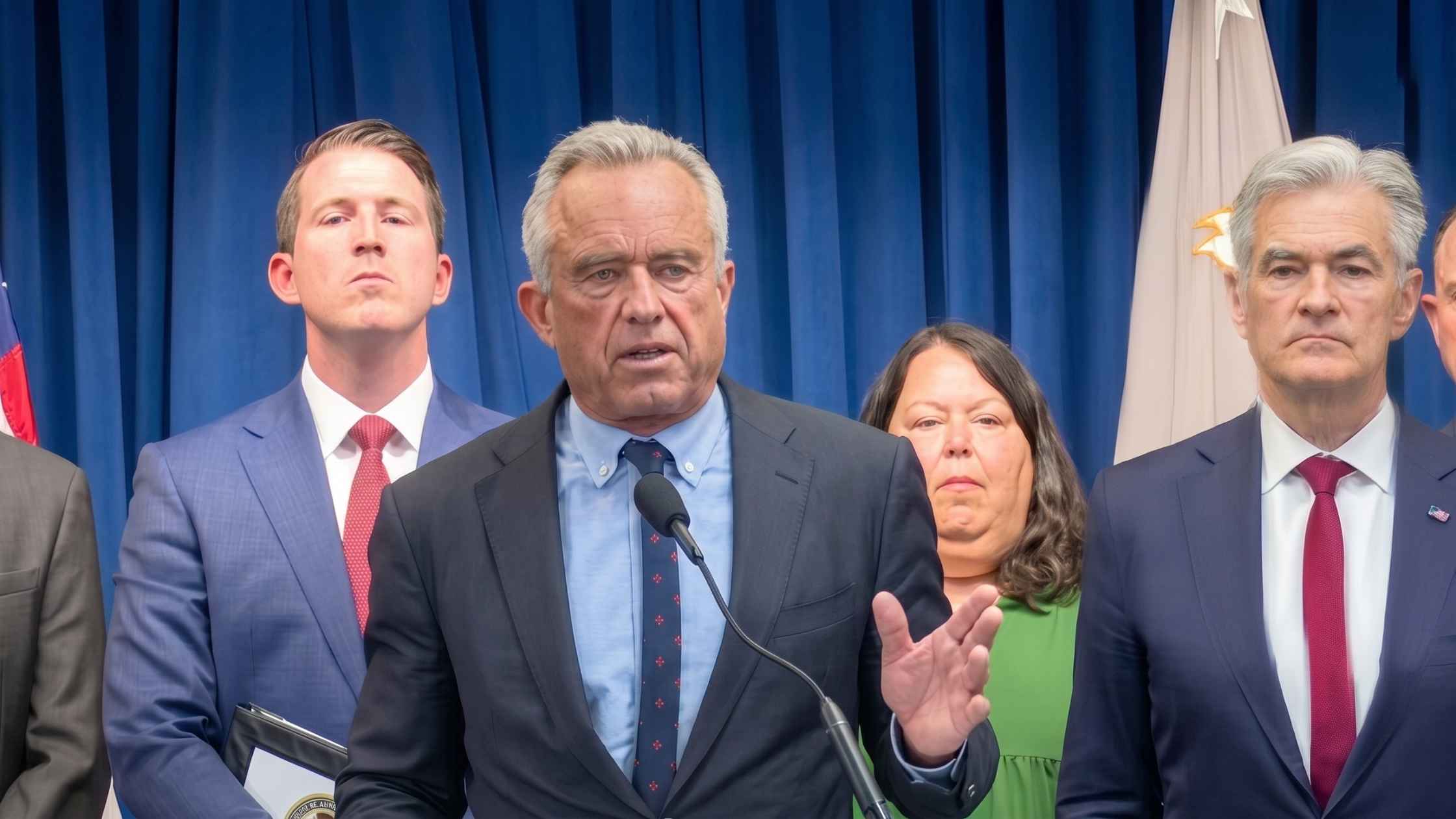
Colin McDonald (03:11):
[inaudible 00:00:03]. Good morning to you all. My name is Colin McDonald, Assistant Attorney General for the National Fraud Enforcement Division at the Department of Justice. I am joined today by a lineup of committed public servants who are devoted to protecting the financial security of America. Today we are announcing criminal charges against 15 defendants in Minnesota for fraud schemes that targeted over 90 million in taxpayer dollars. Let me be clear upfront about something. This is not the end of our work in Minnesota. This is not the end of the beginning of our work in Minnesota. This is the beginning of our work in Minnesota. The fraud here in Minnesota is shocking.
(04:02)
Our cases today involve seven different state managed Medicaid programs that have been systematically pilfered by fraudsters who treated Minnesota run programs as their personal piggy bank. One of the programs has been completely shut down because there's no money left. It's all gone. That was Minnesota's state run housing stabilization services program designed to help the homeless find and maintain housing. It was estimated in 2020 that it would cost only about 2.5 million a year to fund this program, but it ended up costing almost 50 times that much over $104 million by 2024 due to fraud.
(04:53)
And because of all the fraud, Minnesota had to shut the program down in 2025 and now these services no longer exist for these vulnerable homeless populations. The same trends exist for other Minnesota run taxpayer funded programs. An autism program that cost the taxpayer 600,000 just six years ago skyrocketed to over 400 million. And to be sure, that number is not driven by supply and demand. It is not driven by healthcare or charity. It is fraud. To tackle this crisis and it is a crisis in Minnesota, earlier this year the Department of Justice surged 11 strike force prosecutors from across the country to be here on the ground fighting the rampant fraud targeting our taxpayer funded programs and large numbers of agents from our partners at the FBI, HHSOIG, HSI, IRSCI and others joined our prosecutors to rapidly unmask fraudulent actors in Minnesota. These agents and prosecutors have been working around the clock to root out the criminal stealing taxpayer dollars and I am proud of all they accomplished in such a short time their hard work made today possible.
(06:17)
Make no mistake, today's charges are unprecedented. They include the highest loss amount ever charged in a Medicaid case in Minnesota and the largest autism fraud scheme ever charged by the Department of Justice. The common theme throughout these cases is fraudsters exploiting vulnerable programs and vulnerable people to enrich themselves no matter the consequences to the programs or to the people. For example, one defendant is charged with defrauding the integrated community supports Medicaid program. This program is designed to help individuals with disabilities live independently.
(07:01)
One patient was supposed to be receiving 24-hour care through this program, but he was actually being serviced by a fraudster and received no services. This patient was later found dead. Meanwhile, the architect of this fraud scheme was billing Medicaid as if he was providing care to this patient. The defendant even submitted a claim of over $400 for services he never provided the day before this man died. In another example, two defendants have been charged for defrauding a program designed to offer medical services to those with autism spectrum disorder.
(07:43)
As alleged, the defendants paid kickbacks to parents who brought their children to autism centers, diagnosed children with autism regardless of medical necessity and billed for autism services that were never actually provided. In one final example, two defendants have been charged in an over 22 million fraud scheme involving the individualized home supports program. This program was meant to support disabled individuals who wanted to live in their own homes. Instead, these disabled individuals were used like lottery tickets by these defendants to generate millions of dollars, which these defendants used to expand their real estate holdings, purchase luxury vehicles, and splurge on expensive jewelry.
(08:34)
We will not full stop tolerate this greed and deceit. We will not let fraudsters bankrupt Medicare and Medicaid the same way that they bankrupted the Housing Stabilization Services Program. As mentioned, this is just the beginning. With the support of President Trump, Vice President Vance, Acting Attorney General Blanche, Chairman Ferguson, and the White House Anti-Fraud Task Force, Secretary Kennedy, Dr. Oz and his team, and the entire federal fraud fighting apparatus, the Department of Justice will continue expanding our reach across the country to pursue all fraud, no matter how large, no matter how small, no matter how hard.
(09:16)
Since April 1st, DOJ's Fraud Division has announced over 450 fraud enforcement actions nationwide, representing billions of taxpayer dollars. And this week already we're delivering results coast to coast with a trial conviction in Brooklyn involving a 40 million drug distribution and fraud scheme and a trial conviction in Los Angeles involving a 40 million Botox injection fraud scheme. To continue to expand our reach, we are announcing today the expansion of the healthcare fraud Midwest Strike Force to Minnesota and the hiring of 15 additional prosecutors dedicated to combating Medicaid fraud nationwide. These additional resources will ensure that the DOJ's fraud division will be better equipped to stop fraud and hold criminals accountable. My message to the Minnesota community and to all of America is this. If you see something that seems too good to be true, tell us. In some areas, such as in the daycare prosecutions we announced today, a culture of fraud has taken root where childcare centers even offer kickbacks to parents to enroll their children. If something sounds good to be true, it is. Do the right thing, speak out, help us win the fight against fraud. And now my message to the fraudsters is this.
(10:49)
Eat, drink and be marry today because your days of frolicking and freedom are numbered. We are doing everything we can to find you and when we do, we will prosecute you and we will claw back every dollar you have stolen from the American people. We will not rest until every fraudster knows that the cost of stealing from the American people is far higher than any scheme is worth. Thank you all for being here. I'll now turn the podium over to Secretary Kennedy.
Kennedy (11:27):
Thank you, Colin. Hey everybody. I want to start. I thought I was going to have a slide here. I want to call your attention to this, which is in your ... Okay, here it is. Which is in your packet. This was the cost of your early intervention and development program in 2020. It was 38.1 million. This is what we expected to be paying every year. Instead, this year, it hit 442 million. I'm showing you that because that's the magnitude of the fraud and the damage that we're talking about today. And I want to thank Todd Blanche who couldn't be here today. Colin McDonald and everyone at the Department of Justice for leading this effort.
(12:23)
I want to thank also the FBI who you're going to hear from in a little while. The HHS Office of Inspector General, CMS, and especially Dr. Oz, the White House Anti-Fraud Task Force and Vice President Vance and the investigators and law enforcement personnel whose relentless work made today's action possible. Today's arrest represent the largest autism fraud bust in American history. This was not a paperwork error. It was not a technical violation. This was organized threats, organized theft that exploited the most vulnerable children in America. Deceive...
Kennedy (13:00):
Exploited the most vulnerable children in America, deceived families, stole taxpayer dollars meant to help children with autism and access legitimate care and support. Investigators uncovered brazen schemes that billed taxpayers for non-existent services, fraudulent diagnoses, and fake care while criminals enrich themselves at public expense. Every fraudulent autism diagnosis steal time, care, and resources from the children for whom this program was denied and who desperately need this care. Families with autistic children already face enormous challenges navigating therapies, specialists, and support systems. Fraud makes those barriers even steeper. America is facing a real autism crisis. Today, approximately one in every 31 children is diagnosed with autism spectrum disorder. Medicaid finances a significant share of autism related services nationwide and spending has risen dramatically over the last decade and a lot of that spending is because of fraud.
(14:19)
When criminals exploit these programs, taxpayers lose billions and vulnerable children lose their access to care. Healthcare fraud now costs the United States tens of billions of dollars every year. Some estimates place the broader cost of healthcare fraud and improper payments at $100 billion annually. That fraud drives up healthcare costs for all Americans, it weakens public trust, it drains taxpayer resources, and threatens the long-term stability of both Medicaid and Medicare. If we fail to confront the fraud aggressively, these programs will not survive for future generations in the form Americans rely upon them today. Under the leadership of President Trump and Vice President Vance, this administration is carrying out the most aggressive anti-fraud effort in American history. And I want to be clear, this is an extraordinary bust today because these kind of operations usually take many years, sometimes a decade. This was executed with a precision and speed that is unprecedented in the history of law enforcement, and it's unprecedented now, but under Vice President Vance's leadership and President Trump's direction, we are going to normalize this speed.
(15:44)
We're restoring accountability, strengthening oversight, prosecuting criminal networks, and protecting the integrity of our public health systems. We will not allow criminals to treat children as billing opportunities while American taxpayers foot the bill. This administration will continue rooting out fraud because every stolen dollar is a dollar taken from a child, a parent, a senior of a family who desperately needs help. We're going to protect these programs and protect vulnerable children and restore integrity to the American healthcare system. And now I want to introduce the United States Attorney Rosen.
Daniel N. Rosen (16:34):
Thank you, Mr. Secretary and my thanks, there you go, to Colin McDonald, who has led the Department of Justice's national fraud prosecution effort with a tenacity and an effectiveness that is really inspiring to all of us who are on the team. Here in Minnesota, we have the unfortunate distinction of being the place that brought to national attention the fraud committed against governments across the United States, governments that turned the other way either deliberately or negligently while it was happening under their noses. The numbers that we have here in Minnesota are enormous but I'm happy to tell you that we have more prosecutors prosecuting fraud, more law enforcement resources investigating the fraud, and we are identifying and investigating and prosecuting fraud at a pace that is unprecedented here in this state. I am happy to report to you all, although I imagine many of you know that just a short time ago this morning, Aimee Bock, cornerstone operator in the Feeding Our Future Fraud was sentenced by Judge Brasel to 500 months in prison, that's 41.6 years.
(17:58)
While Feeding our Future, while that fraud in and of itself was breathtaking, the truth is Feeding our Future is only a start and we believe it's only a small fraction of the fraud that is actually ongoing here in the state of Minnesota. And I can say so Secretary Kennedy and Dr. Oz, it's my pledge to you that we're going to do our best to deter future thefts from your department and from your agency, to recover as much of the losses as we possibly can, and to put the thieves here in Minnesota into prison. And with that, I give you Chairman Ferguson.
Andrew N. Ferguson (18:44):
Good afternoon. When President Trump said he wanted an all-of-government to fighting fraud, he meant it. He wants us to stop fraud by preventing money from going out the door and he wants fraudsters swiftly brought to justice, and that's why he created the Anti-fraud Task Force and put Vice President Vance in charge of it to coordinate both arms of the Anti-fraud campaign. Today is about bringing justice to the fraudsters at an unprecedented pace and the whole country owes tremendous gratitude to the acting Attorney General, to Assistant Attorney General Colin McDonald, to the US Attorney Rosen, to the Deputy FBI Director Raia for today's indictments, and also to the healthcare fraud strike force that was sent here in Minnesota. And I just want to reiterate what was said earlier having met some of the prosecutors today. The work done at the speed at which it was done is unprecedented and because of Attorney General Blanche and Colin McDonald, this is going to become the new norm for American fraud prosecutions.
(19:44)
We saw last week an example of keeping money in the agency thanks to Administrator Oz and Kim Brandt, the task force helped keep billions of dollars in HHS rather than going out the door to fund fraud. And this week the other arm of the pincher becomes apparent with fraudsters who took money from the American people getting their just deserts. That is all about restoring deterrence, and restoring deterrence is important for two reasons. First, this is how we have to save these programs. Fraud is going to bleed our social programs dry. All of these programs are made possible by the most generous country in the world and the most generous people in the world, Americans turning over trillions of their hard-earned dollars to fund social programs to help their families, their friends, and their neighbors through hard times. If fraudsters get to siphon off that money and put it into their own pockets, these programs, like Secretary Kennedy just said, will not survive in the form to which we are all accustomed, and Americans who've paid in expecting these programs to be around in the future will have doubts about whether they will be. So stopping fraud is how we save these programs. And no matter what your party identity is, that has to be one of our goals, saving programs by stopping fraud.
(21:01)
The second reason that deterrence is so important is that all of our programs are built for a high trust society. We didn't set up these programs with layers and layers and layers of anti-fraud redundancy because we set it up for a people who are accustomed to being able to trust their neighbors, their families and their friends to do the right thing, to be honest, and not to try to bilk their fellow Americans by raiding these programs. It's become clear that that social trust has been diminished and that people have taken advantage of these programs. Deterrence is how we restore social trust, it's how we have Americans believing in one another again, believing in their government, believing in these programs, and that social trust is necessary for the entire American experiment to work.
(21:48)
Like the Assistant Attorney General said, today's work is just the beginning. The Vice President at President Trump's direction is working incredibly hard every day to fight fraud in every agency and DOJ to stop the fraud, after it happens arrest and prosecute the fraudsters, and I think today makes very clear to every fraudster, if you somehow get money that goes out the door that doesn't belong to you, the FBI is going to find you, put you in handcuffs, and prosecutors are going to throw you in jail. Again, I'm very grateful to the acting Attorney General and his incredible team, including the Strike Force that sent prosecutors from all over the country to achieve today's results. President Trump promised justice and today DOJ is delivering. With that, I'll turn it over to Administrator Oz.
Dr. Mehmet Oz (22:34):
Thank you, Andrew. I want us to think back to what life looked like here in Minnesota a year ago, because that's when we started hearing their concerns in this state about programs that had been built to provide services that historically had been given by families to their family members who were struggling. Kim Brandt, who's standing behind me, received a phone call and her team began to work with Minnesota trying to understand some concerns that were raised, suspicious billing that didn't seem to make a lot of sense, but Minnesota Department of Health here said they had it handled, they were going to take care of it. And we didn't hear back from them until last week of August at a conference, at an event around that conference, there was a comment made by someone who worked in that organization here in Minnesota that they actually didn't have it handled and there were significant problems that had gotten so out of hand that panic was setting in.
(23:34)
And it was at that point that we reengaged the process and realized that there were programs that had been created here with massive spending that had increased so rapidly that there was no way to save the program. The housing stabilization program, which takes care of people who are struggling with homelessness or substance abuse and many other reasons why they may need housing, especially in a place like Minnesota, were in the cold that can be lethal, needed that program to survive. We are all up here because we love these programs. Medicaid is the fundamental payer of last resort for our most needed, most vulnerable citizens, and when we're unable to keep these programs alive because of fraudsters, it hurts all of us deeply, and that's what happened here in Minnesota. Housing stabilization program, which had gone from a tiny little program to over a hundred million dollars of spending just to find someone on the streets a place to stay, which was doubling in its expenditures annually was shut down.
(24:32)
Now these are not the outcomes that we desire, but when you have to force a shutdown, it's an issue. Now along that way, Nick Shirley, Nick stand up, Nick Shirley I just noticed standing there, came and started doing videos. I want to call out the folks who are angry and frustrated about this, thank you, Nick, perhaps if you want to serve, come join us. But if you can't serve, do what you can to shine a light on these cases. And with lots of folks beginning to tell us more and more of the different clues that we were able to put into a larger quilt to understand the magnitude of the catastrophe happening here in Minneapolis and Minnesota in general, we began to take action. Now I want to point out that a lot of this started during COVID. If you're asking how and why, COVID led to a general abandonment of principles around protecting these programs.
(25:15)
The corruption that ensued grew rapidly. Total Medicaid spending has increased by 50% since the start of COVID, 50% increase. Spending on prescription medications quadrupled in the last six years. Now the president can work hard and he has to deal with fraud and he made the most Most-Favored-Nation drug pricing a reality because he's going to save the American people $600 billion, but you cannot keep up with fraud if we're not actually getting it at the root cause of it, which is when states do not police their own systems. And so because COVID caused a lack of oversight and because agencies like mine were gutted in their ability to provide program integrity, we have allowed this monstrous outrageous increase in spending, which does not benefit anybody to increase. The 15 arrests today, getting $90 million is a very important symbol because it's a shot across the bow and we've all...
Dr. Mehmet Oz (26:00):
... Million dollars is a very important symbol because it's a shot across the bow and we're all going to say this in our different ways, but I'm telling you if you're a fraudster, do not walk away from this press conference. Run, because we are coming after you. We have lots of weapons to be able to use in order to accomplish that. The kinds of reprehensible behavior that we've identified with individuals bribing parents to lie that their children have autism will carry that diagnosis for the rest of their lives. As a physician, that bothers me to my core. Not only are we selling our licenses as doctors when we allow this to happen, we're selling our souls and there were doctors involved in some of these issues as well. This rampant failure of this program is addressable, but we've got to be able to deal with it from within.
(26:40)
There's a whistleblower, her first name is Faye. She's on Capitol Hill today testifying, I believe. But she's spoken to me about the fact that there was a general fear within the health agency here of being called a racist and fear that you'd be politically inappropriate, politically incorrect and that fear is what stifled much of the action that should have taken years ago ... Taken place in an effort to prevent why we're here today. But we will keep coming back and we will keep helping.
(27:06)
So let me announce a few things that we are doing specifically on Secretary Kennedy's leadership at HHS within CMS. We have deferred, as many of you know, $350 million to the State of Minnesota based on two sequential reports from the state of its spending over the last two quarters. This is all, again, money that we are going to defer because our job is to protect the federal taxpayer and as Minnesota is able to justify some of these expenses, we will discuss these.
(27:35)
We've also asked for a revalidation of all of the high risk providers. Again, these are providers providing services for the kinds of things like driving someone to the office or carrying the groceries upstairs, things that again, your family would often do for you. These other 5,600 people who are being revalidated, the state has told us as recently as May 7th, that only 40% have responded, rather 40% have not responded or their responses are clearly inadequate. We believe that by the end of this month, which is the deadline that half of these providers may no longer be allowed to provide services. That is a lot of people doing things to other human beings that are not supposed to have been able to do them. Again, that is the humanitarian risk that we're facing.
(28:16)
We're here to fix these problems. We love these programs, but we're going to crush the fraudsters who threaten with corruption the foundation of the social safety that we have built in this wonderful nation over the last 60 years since the foundation of Medicaid and Medicare. We're going to make as many visits as we need to Minnesota. I've been here. I'll come back. So has everyone else on this panel and my colleagues at OIG, DOJ, FBI and many others share our passion. Chris, to the FBI.
Chris (28:45):
All right. Thank you Administrator Oz and thank you to the fine men and women behind me who made this day possible. I also want to specifically thank Acting Deputy Attorney General Colin McDonald. I want to thank Secretary Kennedy. I want to thank FTC Commissioner and his White House Task Force on Fraud, Commissioner Ferguson, obviously Administrator Oz, who you just heard from, and of course none of this would be possible without U.S. Attorney Rosen. Before I begin my crux and my remarks, I need your help. On the screen, you will see a subject depicted on the screen here of an individual who's a target of the investigation this morning. That individual is currently on the run after having jumped out of a fourth story balcony. I want you to get a good look at him right now. You'll see him running here. He is currently on the run. We need your help. If you recognize this individual, if you know this individual, if you can provide any information related to this individual, I would encourage you to call 1-800-call FBI C-A-L-L FBI or go to the internet at www. tips.fbi.gov or call your local law enforcement.
(30:07)
Obviously this morning, our partners have gone into a lot of the details of today's charges, so I'll try not to repeat what was already said. What I would like to do, however, is speak briefly about the FBI's work in this particular fraud space. The Bureau, as you know, is one of the primary agencies responsible for investigating and rooting out healthcare fraud with jurisdiction over both federal health insurance programs and private insurance plans. At any given time, we're running roughly 3,300 investigations related to healthcare fraud across the country. Unlike some of our work in say the violent crime space or the national security space, this work doesn't always get the same amount of attention or national headlines as some of those other threats we work.
(30:57)
But let me be clear. This work is just as crucial, just as important because healthcare fraud is not a victimless crime. It targets our most vulnerable population demographic. It costs our country hundreds of billions of dollars each year as you heard from the folks behind me, and that dries up the cost of healthcare for everyone sitting in this room. It's not lost on me and it should not be lost on any you or anybody in the public that every single dollar stolen through these schemes is a dollar that came from the pocket of hardworking American taxpayers and each of those dollars were meant to help somebody in true need. Not to line the pockets of shameless crooks filing false claims.
(31:49)
Unfortunately, too often here in Minnesota lately, fraudsters have turned government programs into their own personal ATMs. What is even more troubling is these programs are meant to help our most vulnerable population demographic, the sick, the elderly, the disabled, and the unprivileged. That's why starting last December, the FBI has surged personnel and resources here in Minneapolis and across the country for that matter to help in these efforts. These charges we're announcing today are a direct result of those efforts. These cases are often complex and take a lot of time and effort to investigate. Simply stated, they can take years to come to fruition.
(32:37)
Fortunately at the FBI, we have dedicated teams working healthcare fraud in each of our 56 field offices, not just Minneapolis. We've also got specialized teams of agents, intelligence analysts, data scientists, and forensic accountants that we deploy to support these cases, just like we deployed here in Minneapolis. So I want to personally thank our hardworking team here in Minneapolis under the leadership of SAC Chris Dotson, our financial crimes team at headquarters, and all the FBI personnel who've been part of our work here to get the results for the American people. I told you I wasn't going to repeat what was said earlier, but I'm going to repeat this because I think this is important.
(33:19)
The speed, precision, and effort that the folks behind me and their collective agencies have shown in the last several months is truly unprecedented. In my 23 years in the FBI, I've never seen a healthcare fraud case of this breadth, depth, and scale come to fruition so quickly. It's historic and everyone who worked this case should be extremely proud of what you accomplished in a very short amount of time.
(33:47)
The next step, as the Acting Deputy Attorney General said, is we're going to normalize that speed for cases in the future. Obviously, none of this is possible without our partner agencies represented here today behind me and so many others who couldn't be here today. These fraud investigations truly are a team effort and thanks to our teamwork, these criminals will now face justice.
(34:08)
As I close, I want to send a message to anyone still defrauding the good citizens of Minneapolis, the good citizens of the State of Minnesota, and the good citizens of the United States of America. No matter how many shell companies you have, no matter how clever or how brazen your schemes are, if you steal money from taxpayers and people in need, the FBI and our partners will pursue you relentlessly. We will find you and ensure you feel the power of American justice. Thank you.
Colin McDonald (34:41):
We'll take a few questions. Yes, sir.
Speaker 1 (34:45):
[inaudible 00:34:45] with the New York Times. I'd like to ask for your assessment of the way immigration agents conducted themselves here earlier this year.
Colin McDonald (34:53):
I'm not going to talk about that. Any other questions? Yes sir?-
Speaker 2 (34:58):
... These prosecutions are vital and it started here going back to 2022 when the prosecutions started. So they're vital. The question I have is what's the plan to go after the leadership that enabled this whistleblower going back to 2019 who just had their career [inaudible 00:35:16], who raised this and the administration's known about the government here and have enabled it. So what's the plan to go after [inaudible 00:35:28]?
Colin McDonald (35:29):
Yeah, it's a very important question. The answer that I would give you is that the Department of Justice and our partners here on this stage, we are intent on building a fraud-fighting apparatus that's capable of reaching the full spectrum of fraud that we see wherever it is and that there's no fraud that's too big for this team to solve and we are intent in going wherever the facts require us to go and charge whoever we need to charge for those who are within the chain of criminal culpability. Anyone within the chain of criminal culpability, we are interested in finding you and prosecuting you. Those outside of the chain of criminal culpability, we are not. But it takes investigation, takes hard work, takes the agents and prosecutors working together to find the exact boundaries of those within the chain of criminal culpability and that's what's underway.
Speaker 2 (36:20):
But just a tiny followup, is it your view that those who enable this are a part of this criminal enterprise?
Colin McDonald (36:28):
I would hate to get ahead of any facts, of any investigatory findings. As I mentioned before, we are intent in uncovering and unmasking anyone involved in these schemes, including obstructing investigations into these schemes. That is our focus in this effort. Yes, sir?
Speaker 3 (36:46):
You mentioned a new fraud, Medicaid fraud task force to be created here in Minneapolis. Can you explain what that entails and how it'll function and what will be different than what's currently in place?
Colin McDonald (36:56):
Yeah, so we're doing two things. One is we are adding strike force prosecutors to our Midwest healthcare strike force team. That will be to put additional prosecutors on the ground here in Minnesota in a dedicated fashion to work for the American people right here from Minnesota. Our healthcare fraud strike force team, their work returns $106 for every dollar we spend. The ROI is 106 to 1 for the work of these healthcare strike force prosecutors. So that's what we're doing there.
(37:28)
The second thing is to build out a completely new Medicaid strike force team. We're going to start with 15 attorneys. Those are going to be deployable across the entirety of the United States to enter the places where Medicaid fraud is of utmost concern. That includes Minnesota, it includes California, it includes other places, but we're forming that team so that we can deploy them to the hotspots and make sure that we can reach the fraudsters across the country. Yes, sir?
Speaker 4 (38:00):
With criticism of the Minnesota state governments over how this has all been handled, the attorney general here in the state has said that this team was involved in the investigations and the charges that you described today. So can you talk about collaboration with Minnesota. And on top of that, is the federal government satisfied with what the state has done in this past legislative session to move forward with tackling fraud?
Colin McDonald (38:24):
I'll start by saying that to make this work happen and to do it really well requires very good partnerships with local law enforcement, with local prosecutors. That's what will really solve this national problem is people setting aside ego and agenda and deciding, "You know what? We're actually going to do the right thing." That's what is going to be required across the country for this to work. Has the cooperation from the Minnesota individuals met that standard? No, it has not. It's fallen significantly short of the standard that we are seeking to set in terms of what a strong ...
Colin McDonald (39:00):
... standard that we are seeking to set in terms of what a strong state and federal partnership looks like. Yes.
Paul Bloom (39:08):
I'm just wondering within the recent raids... First off, Paul Bloom with Fox Channel 9 here in town. I'm just wondering within the recent raids, do you continue to see ongoing fraud being committed or are these... Obviously, these charges go back several years. I mean, are the crooks still trying to get away with these schemes?
Colin McDonald (39:29):
Yes. What we're seeing is these schemes are active, they are ongoing and they frequently metastasize when law enforcement shines a microscope on one area, they shift to another area. What we're seeing is that a lot of these fraudsters will actually cross pollinate between different programs. They might be simultaneously defrauding a USDA program, Feeding Our Futures for instance, while also simultaneously defrauding Medicaid. The fraudsters are agnostic as to whose money or what program they are defrauding. They just want our money. And so yes, we are seeing that the fraud is ongoing and we are interested in rooting it out.
Speaker 8 (40:09):
Did the suspect in the ICS case you indited last I heard he fled the country, is that still accurate?
Colin McDonald (40:15):
So we are working rapidly to bring into custody everyone who is facing charges and who faces arrest warrants. I don't want to speak more specifically to any operational updates in that regard, but we are actively tracking that situation and others to make sure that folks are held accountable for the charges that have been brought. Yes.
Speaker 8 (40:40):
Who's the man in this video?
Colin McDonald (40:42):
The man in this video, he is a charged defendant named Mohammad Omar. Mohamed Omar is the man in this video. He is 1 of the 15 defendants charged in the fraud cases that we have brought today and I would encourage the public to help turn this man in to face justice for the fraud that he has perpetrated and now to face the additional charges for seeking to flee from law enforcement and seeking to obstruct justice by virtue of his conduct today. Yes, sir.
Speaker 5 (41:13):
Question for Dr. Oz.
Colin McDonald (41:14):
Yes.
Speaker 5 (41:14):
Are you satisfied with how the state government here is responding to what you want to see in order to lift those suspensions of the Medicaid reimbursements?
Dr. Mehmet Oz (41:24):
Not yet. If they had satisfied our needs, we would have released the money. So we're still waiting for the state to go through the multiple documents that were initially sent to us as part of our review of the last quarter of last year and it's a fiscal year. So last quarter of last year and the first quarter of this year to identify the many areas where there's variability. Again, what we look for very specifically, and you would do the same thing. If your normal bill is $100 and then all of a sudden it's $500, someone needs to ask what happened. Sometimes there's a reason for that. But as Secretary Kennedy pointed out, and again, it's an all government approach. So we have treasury also helping us looking at numbers. We have OIG and DOJ giving us support. Jake Foster is he who runs the healthcare group there.
(42:07)
They do a lot of heavy lifting together with our CPI unit that Kim Brandt behind me runs to make sure that we are actually looking for all the variability. But we are able to identify enough concerns that it's caused us to defer $350 million to Minnesota. And as you know, we deferred last week with the announcement with the White House Anti-Fraud Task Force with Vice President Vance that we are also deferring $1.34 billion to the State of California for the exact same kinds of problems with the documents that we're seeing.
Speaker 5 (42:35):
Is it a lack of cooperation here or are they just slow rolling this?
Dr. Mehmet Oz (42:39):
I'm a heart surgeon. When you go out and talk to the family, the motivation is nice to hear, but you want the result. Is the patient alive? Is the bleeding stopped? We need actual numbers and factual written responses to the many areas that we've pointed to as evidence that these documents are not satisfactory. Again, our job is to make sure that your tax dollars and the tax dollars of other Americans coming to the federal government are appropriately spent.
(43:05)
I did not go into this job that the president appointed me to stop people who need money from getting money. We just don't want the money stolen from people. I mean, this gentleman in this picture, he's one of the reasons that the housing stabilization program in this fine state is shut down. So all the people in Minnesota who actually might need those help, the folks that we always feel badly by when we're driving by and we see them homeless, especially when it's cold outside or they're obviously strung out on drugs, those people need our help. Because of that man, they're not going to get the help anymore. And the state shut down the program. We helped, but the state shut down. They knew it was unfixable.
Colin McDonald (43:41):
Couple more questions. Yes, sir.
Aaron Johnson (43:43):
Hi, thank you. Hi, my name is Aaron Johnson. I'm a community based independent journalist. I'm a victim of... this month. I finally got help from a different program. There are people who lost a family member. Is there any plan to compensate people for damages?
Colin McDonald (44:21):
So sir, first let me say that I am hugely sympathetic to you and to anyone else who has suffered harm or injury by virtue of fraudsters taking advantage of you and exploiting you. Recently the president issued an executive order that relates to the establishment of a fund for victims of fraud. President Trump announced that around 60 days ago and we are actively engaged in the development of a whistleblower program that will allow people to come forward to report fraud and to ensure that people both have their voices heard when they have been damaged by fraudulent conduct and also have a chance to see some of the money that has been stolen from them be recovered. That is a focus of President Trump's administration and a tasking that he has given to the anti-fraud task force to consummate and seek to implement.
Speaker 6 (45:19):
Is there a timeline to get funds back into the hands of legitimate providers? I know a lot around the state are still waiting for those funds to get unfrozen
Colin McDonald (45:28):
So that might be a question for the administrator.
Dr. Mehmet Oz (45:32):
Just to put numbers out there, the state has a several billion-dollar rainy day fund. So when we defer $350 million, we're not taking money out of the pockets of anybody. The money exists within the State of Minnesota and that's why we want everyone in Minnesota to know that, that they are safe and legitimate providers are our biggest allies. The people that we call to find out where the problems are, are folks who are actually working in these businesses who see the fraud and they went into these jobs because they love these people and they love these professions and they're not allowed to compete because fraudsters who have no cost of goods sold make a lot of money and they scale up quickly and they take over, like pariahs, the entire system. So our biggest allies are part of the community that we want to keep supporting.
(46:14)
It is our hope that the State of Minnesota is able to reply to the questions that we have asked. It was $250 million in the first deferment. It was $100 million in second deferment. So there tends to be a trend. We'll see if it continues is when we get the responses that the federal government needs and requires, and you would desire us to do if you were taxpayers, which hopefully most of you are, then you'd agree with us that's the right time to let the money go. I am very sorry that you were caught up in this, but this is an important story that you're sharing. We didn't talk about it in much detail, but there was a man who passed away and as was discussed by Colin, there were bills sent to the government for monitoring a dead person. I mean, I thought I'd heard it all because we're selling insurance policies through brokers to dead people quite a few times, unfortunately. I've never heard of us being billed for someone who died, who was supposed to be monitored, but that's how egregious this has become.
Colin McDonald (47:10):
Yes, ma'am.
Speaker 6 (47:11):
I was wondering if you talk, this might be more of an admin question, but when you look across the country and we're talking about normalizing the speed of these cases, are you finding that US Attorney's Offices either don't have the knowledge, the technology or experience to get these cases off the ground as quickly as the administration would like? And how would you and your position make sure that all of the US Attorney's Offices across the country have the education, the tools that they need to bring these cases forward quickly?
Colin McDonald (47:35):
The US Attorney's Offices are proving that they are the best that America has to offer when it comes to prosecutors and capabilities to bring investigations to move them forward rapidly. What you see today is the result of the collaboration between the US Attorney's Office here and our healthcare strike force team. Prosecutors across the country are equipped, they are resourced and they are ready to implement the type of speed that we've seen here and to replicate that across the country. Yes, sir.
Speaker 7 (48:12):
There was a pretty well publicized exodus of prosecutors from the DOJ office a few months ago. We just wanted to know how that exodus impacted this work.
Colin McDonald (48:23):
I would start by saying that the work of this office in the last five months has been historic, both on the reactive cases that this office successfully brought to bear, but also the fraud cases that you're seeing here bringing to fruition charges at a rate never before seen. Mr. Rosen might be able to speak with even greater specificity, but I would say that the US Attorney's Office here is in fantastic hands. The leadership here has cast a vision of one that is making sure that the public is safe and secure and that taxpayer money stays in the taxpayer's pocket and that's due to the fantastic leadership of US Attorney Rosen. We'll do one final question. Yes, sir.
Max Nesterak (49:10):
Max Nesterak from Minnesota Reformer. President Trump has granted clemency to numerous individuals who have stolen hundreds of millions of dollars in Medicaid funds. Can we expect Amy Bach or any of these folks to be shown the same mercy in the future?
Colin McDonald (49:25):
I'll take a different question as the final question. Yes, sir.
Speaker 2 (49:27):
In December, the US attorney here, Joe Thompson estimated the fraud at I believe it was $9 billion over I think it was 14 programs. Several weeks later, Governor Walz slammed that as hyperbole. I'm wondering if you could clarify if the number is in fact 9 billion or growing.
Colin McDonald (49:43):
Yeah. So I don't have the exact number because what I do is I look at individual people committing individual crimes and at the end of all of our work, we'll tally it all up and we'll tell you exactly how much was stolen from the American people. We're focused on individual defendants. The fraud is enormous. I wouldn't be surprised if that number is accurate or even small, but today the collection of cases reaches 90 million in intended loss from the pockets of the taxpayer. And like I said, we're just getting going. This is not the end of the beginning, this is the beginning. Thank you all.