60% of Americans Get Their Legal Knowledge From Media Consumption
A new survey reveals what Americans think lawyers do, spotlighting the growing need for solutions that close the gap between legal reality and public perception.


For most people, the legal world is defined more by "Law & Order" than reality. But according to our latest survey, that image is more fiction than fact — and the people who are most confident they've got it right are often the most wrong.
We asked 1,000 Americans what they really think lawyers do all day. The results reveal a surprising knowledge gap, fueled by pop culture, and a worrying underestimation of just how exhausting legal work can be. Here's what we found.
Key Takeaways
- 6 in 10 Americans rely on media consumption for their legal knowledge.
- People who are "very confident" in their understanding of legal work are more likely to get basic facts about lawyers wrong.
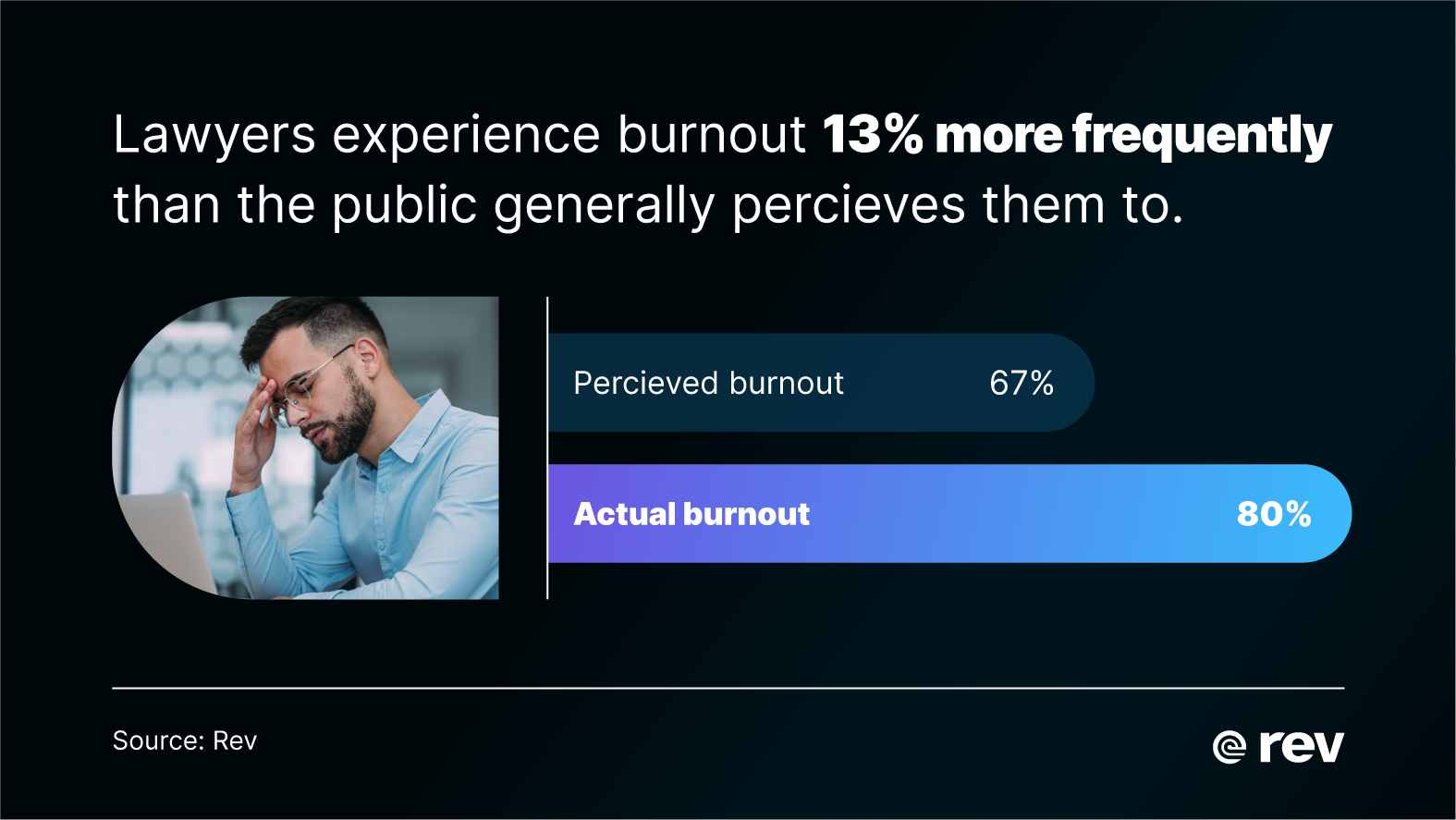
- 71% of the public believes burnout affects less than half the profession, when in reality, nearly 80% of legal pros report struggling with it.
- While 44% of Americans think lawyers are happy in their careers, only 27% of actual lawyers report feeling even somewhat satisfied.
- 13% of respondents believe AI can handle more than half of a lawyer's job.
The Majority of Americans Get Their Legal Knowledge From Media Consumption
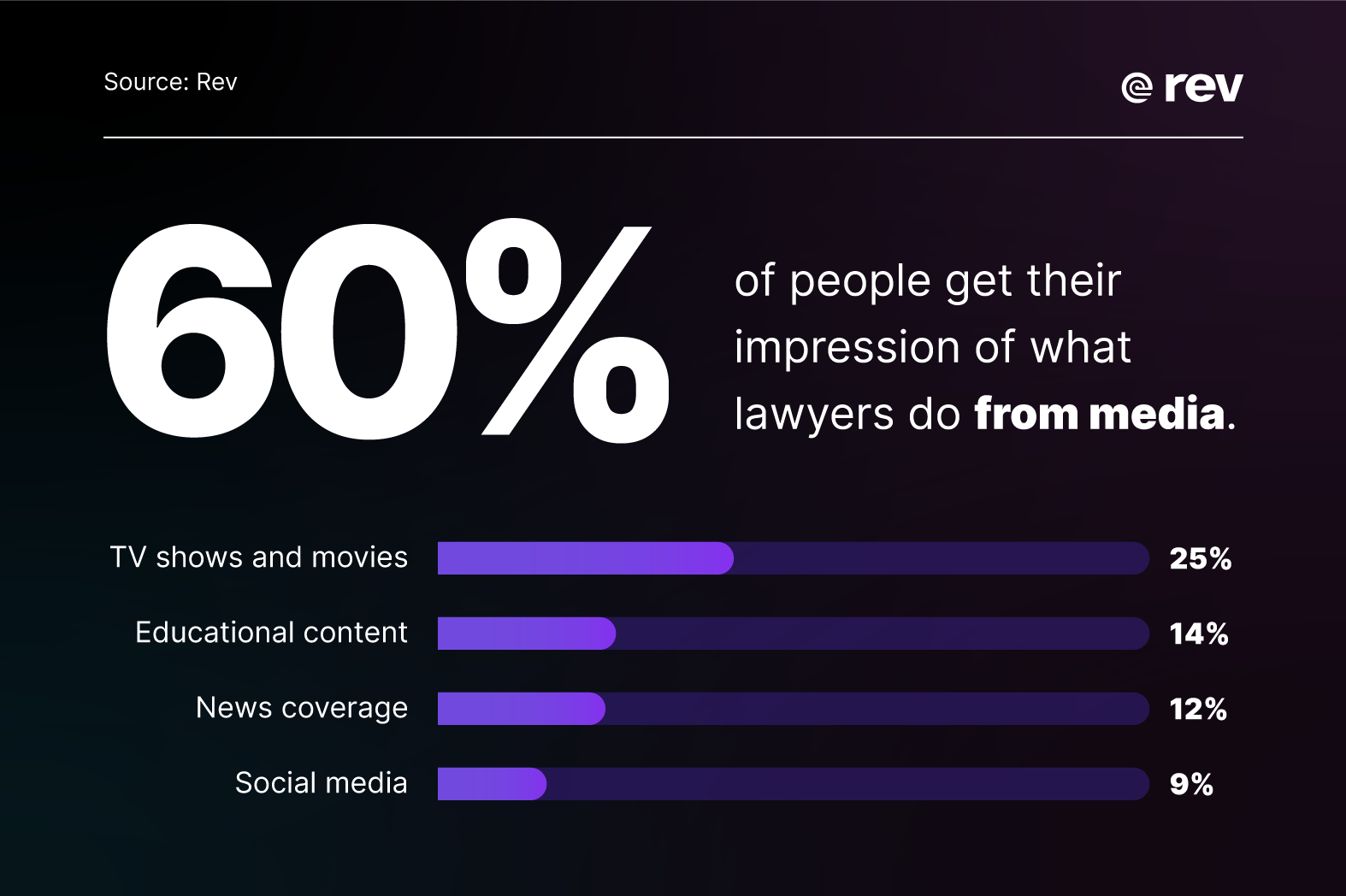
According to our survey, 6 in 10 Americans form their impressions of lawyers from what they watch, read, and hear, including:
- TV shows and movies (24%)
- Podcasts, books, and documentaries (14%)
- News coverage (13%)
- Social media (9%)
That leaves just 40% who draw their opinions from more direct sources: 24% from personal experience, 15% who personally know legal professionals, and just 1% who actually work in the legal field themselves.
For most Americans, the "TV lawyer" effect is real. In fact, people whose views are shaped by media are far more likely to overestimate courtroom time. Our survey found that over a third (34%) believe preparing for court is a lawyer's single most time-consuming task.
However, folks with real-life connections know the truth is buried in paperwork. Among Americans who personally know legal professionals, 34% said that researching and writing legal documents is the most time-consuming task, aligning almost perfectly with what lawyers themselves report (33%).
The real issue here isn't just inaccuracy. It's that these media portrayals are so convincing. The courtroom theatrics make people feel like they understand the profession, even when their understanding is based on a tiny, glamorized piece of the puzzle.
44% of Respondents Think Lawyers Are Happy
Americans have a surprisingly accurate, though slightly optimistic, take on lawyer job satisfaction.
Overall, 44% of survey respondents believe lawyers are happy in their careers. The actual data from legal professionals themselves shows a profession struggling with job satisfaction:
- Only 27% report feeling even somewhat happy in their work.
- 33% openly describe themselves as unhappy.
This represents one of the few areas where public perception, while still overly optimistic, comes closer to reflecting the challenging reality that legal professionals face daily.
7 in 10 of Americans Underestimate Lawyer Burnout — By a Lot
Most people (82%) know that lawyers typically put in more than 40 hours a week, but they don't seem to realize the cost. Our survey reveals that while the public understands the workload, they are largely unaware of the burnout it causes.
For example, 71% of Americans think lawyer burnout is relatively uncommon, affecting less than half the profession. The truth is much worse. According to our own lawyer burnout survey:
- 80% have felt burned out.
- 40% say it's a regular part of their job.
- Less than 4% made it through the last year without any burnout.
- 60% have considered leaving their job or the entire profession because of stress.
Even more striking, the public struggles to connect lawyers' intense workload with the psychological toll it takes. Only 17% identified long hours as mentally draining, compared to half of actual lawyers who pinpoint long hours and heavy workloads as their burnout trigger.
What's strange is that it doesn't matter if you know a lawyer or just watch them on TV — both groups guessed wrong about burnout rates. Only 28% of respondents whose impression of attorneys comes from the media expect lawyers to have high burnout. People who know one personally are only slightly more accurate (30%).
Lawyers Are Embracing AI, But the Public Isn't Convinced
While legal professionals are rapidly adopting legal tech, their clients and the public haven't gotten the memo. Only 13% of respondents believe AI can handle more than half of a lawyer's job. When asked how easy it is for lawyers to collect and use viral videos—like footage from protests or police incidents — as evidence, the most common answer was "somewhat difficult" (38%), with many noting that "there's a lot to verify" despite available tools.
Inside law firms, AI is already a fixture. Rev's 2025 legal tech survey found that half of all legal professionals (49%) use it for tasks like research, and 20% believe AI could handle the majority of their current administrative duties.
Among those who get their law knowledge primarily from TV and movies, 60% believe AI can't even handle a quarter of legal tasks. This is a significant underestimation according to a Goldman Sachs study, which projects that 44% of legal work is automatable.
This disconnect may have real-world consequences. When clients are skeptical of AI's potential, law firms are less likely to invest in the very tools that could make their work faster and more accurate. You wouldn't want a pilot flying with an outdated navigation system, so why would you want your legal team using outdated tools when your freedom, finances, or family are at stake?
And here's the real irony of leaving those tools on the shelf: The very technology clients might be skeptical of is already making a huge difference for the law firms that use it. Lawyers with AI can sift through mountains of documents in minutes, uncover critical details others might miss, and spend their time building a winning strategy instead of getting bogged down in tedious research.
The More Confident Respondents Are, the More They Get Wrong
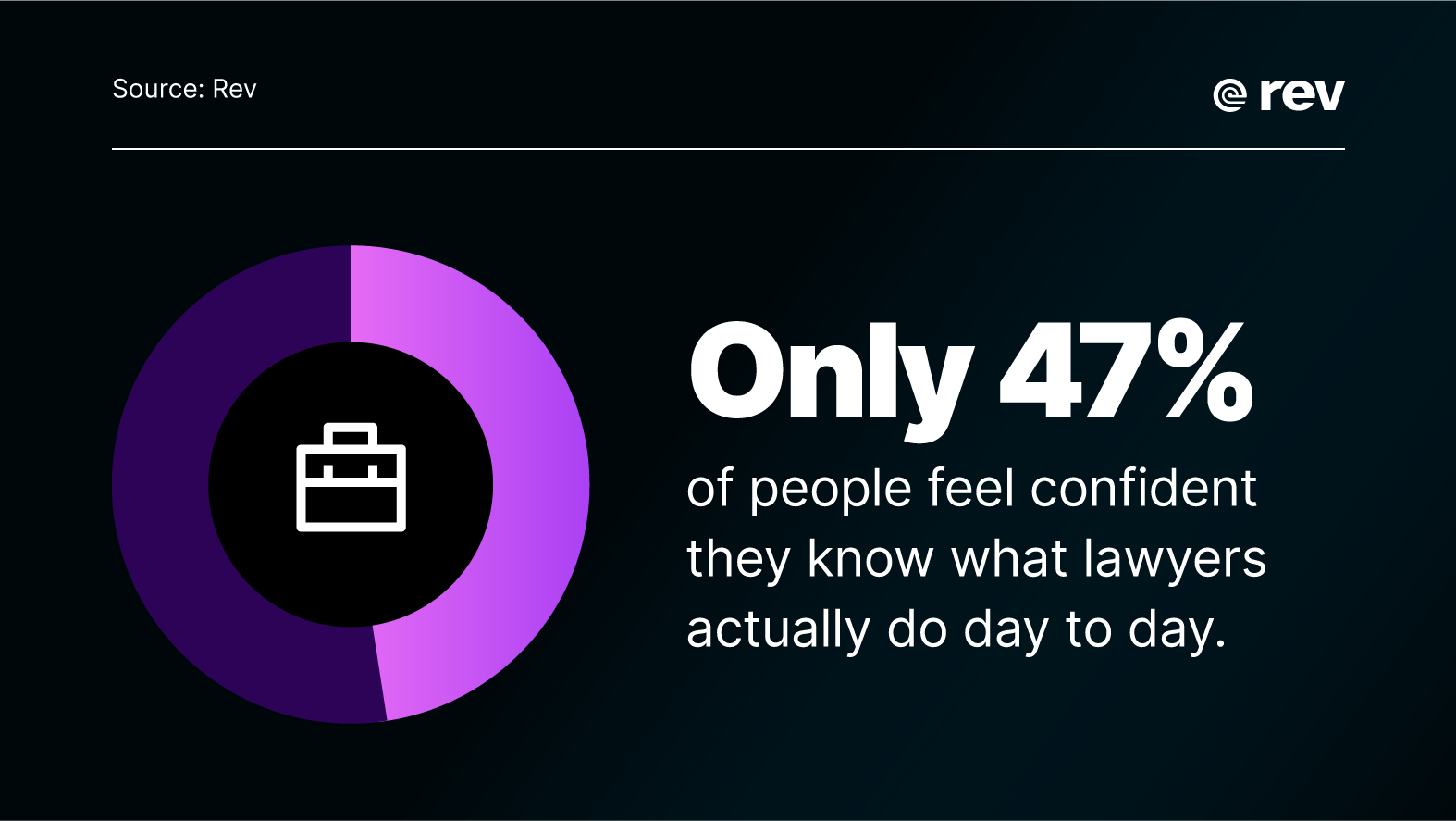
Nearly half (47%) of all respondents feel confident that they understand what lawyers actually do day to day, but based on our data, that confidence might be misplaced. Contrary to what you might expect, our survey found that the more certain respondents were, the less likely they were to be right.
For instance, when we asked about lawyer work hours, only 43% of "very confident" respondents guessed that lawyers typically work 50+ hours per week. Meanwhile, 57% of those who said they weren't confident got it right. According to Bloomberg Law, lawyers average 53 hours of work per week, meaning the least confident group was closer to the truth.
We saw the same pattern with questions about professional stress. Among the most confident people, 21% believed court preparation was the most mentally draining task. The less confident group was more likely to point to long hours (22%) as the main stressor.
Again, the less confident group was on the right track. Our lawyer burnout survey shows that 47% of legal professionals cite long hours and heavy workloads as their primary source of stress — more than six times the rate estimated by the "very confident" group (7%).
Eliminate Behind-the-Scenes Legal Bottlenecks With Rev
It's easy to laugh off bad TV lawyering, but those portrayals have real consequences. When the public — including potential law students, clients, and policymakers — misunderstands what lawyers actually do and how they're faring, it affects everything from career decisions to support for legal tech adoption — a resistance that ultimately hinders lawyer efficiency, inflates costs, and compromises client service.
Our survey shows that these misconceptions won't hold up in court. The more confident someone is in their perception of lawyers, the more likely they are to be wrong. And that confidence gap makes it harder to build empathy for a profession under immense pressure.
The legal work that's often invisible to clients and media alike is where AI tools for lawyers can make a real impact. It's the key to solving the administrative overload behind the scenes. Rev directly targets these hidden bottlenecks, using advanced transcription and AI-powered chat capabilities to turn hours of depositions, hearings, and client calls into searchable, actionable intelligence.
Stop drowning in administrative tasks and start focusing on the strategic legal work that defines your profession. Explore how Rev can help you eliminate the background work and reclaim your time.
Methodology
The survey was conducted by SurveyMonkey Audience for Rev. The survey was fielded between July 2 and July 3, 2025. The results are based on 1,008 completed surveys. In order to qualify, respondents were screened to be residents of the United States and over 18 years of age. Data is unweighted, and the margin of error is approximately +/-2% for the overall sample with a 95% confidence level.