Confidential Transcription: Protect the Record With Rev
Learn how to choose confidential transcription services that protect legal, medical, and corporate recordings. See how Rev keeps your sensitive data secure.

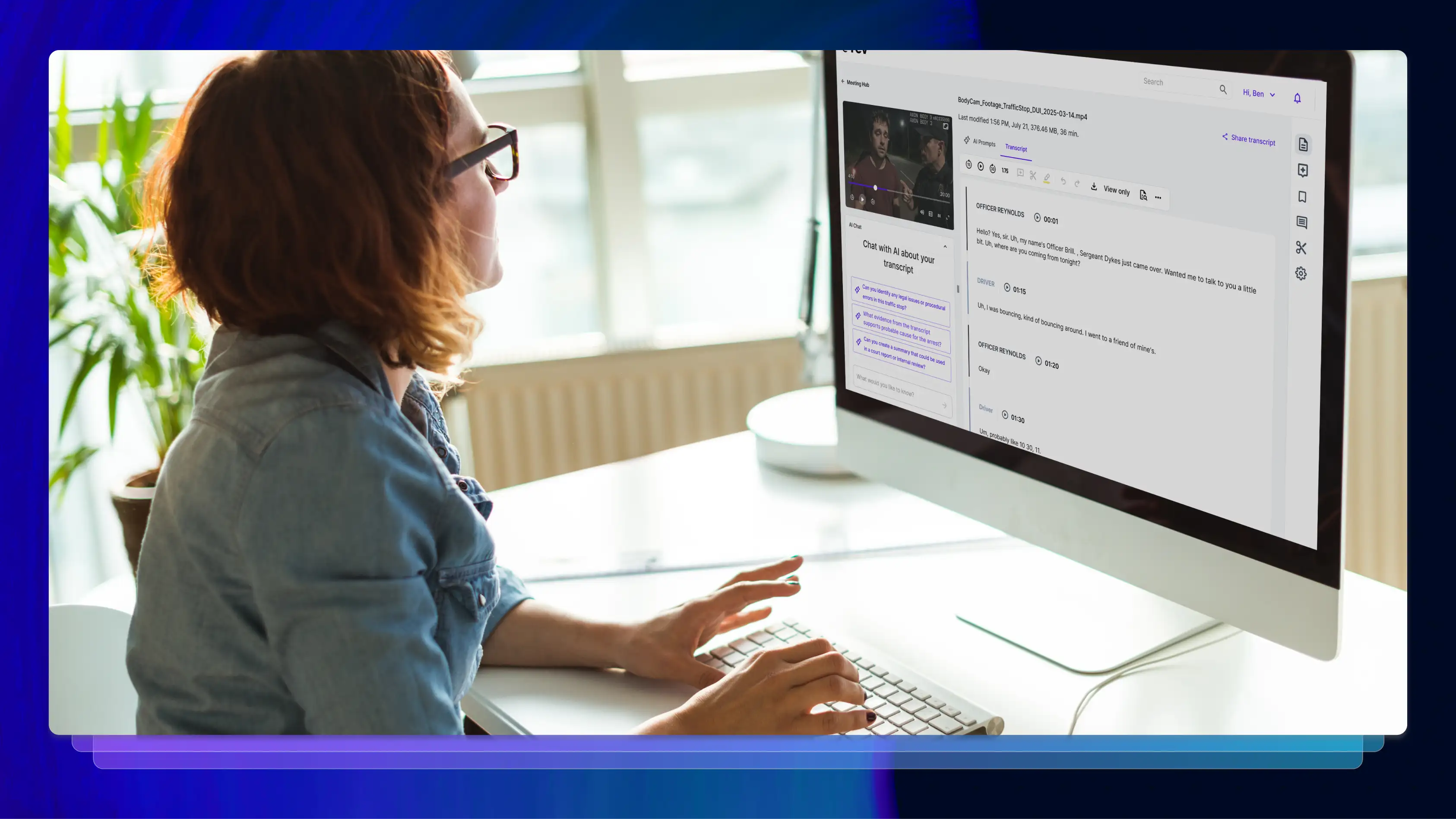
In professions that handle sensitive data — especially in-depth recorded interviews — confidentiality is everything. And whether it’s a deposition, a patient interview, or an internal investigation, the raw audio is only part of what needs protection. The transcripts of those exchanges can be even more vulnerable.
One unsecured upload can expose private medical history or circulate sensitive details that were never meant to leave the room. When a transcript passes through an unvetted vendor or an insecure platform, the fallout can be devastating for the people who trusted you with their information.
But what does “confidential” really mean in the context of transcription? In this guide, we’ll explain what it is, what to look for in a secure provider, and how Rev keeps your data safe during every step of the transcription process.
Understanding Terms: Confidentiality vs. Security vs. Privacy
Confidentiality, security, and privacy are often used interchangeably. However, each term describes a different piece of the puzzle for protecting sensitive data, and those distinctions are important for sharing files with a transcription service.
- Confidentiality is the obligation to restrict information access to only those authorized to see it. In law, it protects attorney-client privilege; in healthcare, it shields patient records. When transcripts are involved, they must be shielded from anyone other than approved team members.
- Security is the system that makes confidentiality possible. It’s all the processes that limit access and prevent data loss. Any organization with sensitive information must have clear procedures for data security management, especially for transcription files.
- Privacy governs how data is collected, used, and shared. It ensures transparency and compliance with frameworks such as the California Consumer Privacy Act (CCPA) in the U.S. or the General Data Protection Regulation (GDPR) in Europe. When using a transcription service, you must know who has visibility into your files, how long data is kept, and whether your data is ever used to train external AI models.
In short, privacy sets the boundaries, security enforces them, and confidentiality is the professional duty to protect what matters most.
What Is Confidential Transcription?
Confidential transcription involves converting audio or video into text using strict security controls to protect sensitive information. It goes beyond ordinary transcription, where files are often routed through open vendor networks or freelance marketplaces. Confidential transcription uses secure platforms, vetted personnel, and strict privacy policies to keep data from being exposed.
Why Is It Important to Use Confidential Transcription Services?
It’s important to use confidential transcription services because transcripts frequently capture far more than a simple record of who said what.
They often include unfiltered testimony, medical details, financial information, case strategy, and personal disclosures that never appear in polished, public-facing documents. If those details are processed by an unvetted vendor or stored on an insecure platform, it could harm the clients and organizations that rely on you.
The cost of exposure can be especially serious in fields such as the legal profession, where highly sensitive details are intertwined in everyday operations.
“Confidentiality is enormously important in the legal profession because it is the assurance that access to client information will be maintained for trust and legal requisite purposes,” says attorney David Weisselberger of Erase The Case. “The recordings and transcripts may contain informality which, if divulged, will jeopardize the client’s case, reputation, or personal safety.”
Similarly, under the Health Insurance Portability and Accountability Act (HIPAA), healthcare organizations must maintain confidential medical transcription practices. And even corporate teams have to follow data security best practices to protect intellectual property and financial information. Whatever the setting, a secure and compliant transcription provider helps meet legal requirements and avoid unnecessary risk.
Consequences of Compromised Confidentiality
Breaches of confidentiality in transcription can lead to a host of serious consequences:
- Legal repercussions: Violations of attorney-client privilege, HIPAA requirements, or privacy laws can trigger fines, sanctions, disciplinary action, or liability. A recent class-action suit filed against Otter.ai, which claims the service recorded and processed private conversations without clear consent, shows how quickly transcription-related privacy issues can lead to legal action.
- Reputational damage: Breach disclosures often make headlines and taint public perception of an organization.
- Financial impact: A security failure may cause clients or customers to walk away or cut off entire market opportunities. According to IBM’s latest report, the average data breach costs $4.88 million.
- Operational delays: Investigations and corrective efforts can halt ongoing cases or projects, diverting time from more important work.
- Loss of intellectual property (IP) or trade secrets: Exposed transcripts may hand competitors internal strategy, product roadmaps, or confidential negotiation records.
While each of these outcomes is harmful, one of the most lasting impacts of compromised confidentiality is the loss of trust. In professions like law, which are built on discretion and credibility, the breakdown of trust can destabilize entire client relationships.
“Client trust is everything,” says Riley Beam, attorney at Douglas R. Beam. “If there’s a breach, then that’s going to destroy the trust we’ve worked so hard to build. And if that isn’t damaging enough, it can also compromise the entire case in the bargain. Personal injury cases just have too much sensitive medical and financial information, and it’s our duty to uphold the confidentiality of our clients.”
Core Elements of a Confidential Transcription Service
As organizations compare transcription tools, it can be difficult to separate marketing language from genuine protections.
“When I look at legal tech, I always look for tools that have both encrypted data and audit logs that can be checked,” says Spyridon Mesimeris, CMO at LegalDocs.
“A lot of service providers talk about ‘encryption everywhere,’ but they don’t show who viewed what and when. Real privacy isn’t about keeping things secret; it’s about being able to track them down. You can’t really trust a tool that can’t explain what it does.”
A truly secure real-time transcription platform for confidential meetings or interviews must keep sensitive material safe throughout its lifecycle. Key features include:
- End-to-end encryption: Protects files during upload, transfer, processing, delivery, and storage, limiting exposure at every stage.
- Granular access controls: Role-based permissions, single-sign-on (SSO), and multi-factor authentication (MFA) prevent unauthorized access once files are in the system.
- Comprehensive audit logs: Reveal who accessed which files and when, making it possible to maintain transparency and satisfy compliance audits.
- Vetted human transcription workflows: Human transcriptionists should be bound by transcription confidentiality and disclosure agreements, background checks, and controlled-access environments. This adds a layer of security throughout transcription processing.
- Secure storage policies: Providers should outline where recordings and transcripts are stored and how long they’re retained, and offer options for automatic deletion.
- Compliance certifications: SOC 2 Type II, HIPAA alignment, Criminal Justice Information Services (CJIS) support, and GDPR compliance show that the provider follows recognized security frameworks.
Services that meet these standards can verify that sensitive information is safe from start to finish. That’s essential for keeping confidentiality in legal audio transcription and equally crucial in healthcare, corporate, and research settings.
How Your Industry Plays Into Transcription Security
Confidential transcription is important for any industry with sensitive audio and video recordings. However, it’s non-negotiable in fields with strict privacy laws and regulations. In the following settings, secure transcription helps to:
- Protect legal transcription security: Keeps attorney-client conversations, case strategy, and discovery materials private, where even small leaks can affect the case outcome.
- Maintain medical transcription confidentiality: Ensures medical recordings meet HIPAA standards and keeps protected health information from being exposed.
- Support law enforcement processes: Handles interviews, evidence, and investigative recordings in compliance with CJIS and preserves the chain of custody.
- Secure media and entertainment: Prevents leaks of unreleased footage, interviews, or creative work until it’s meant to be public.
- Safeguard corporate and financial matters: Protects board meetings, investor updates, and internal decisions that may affect markets or competitive standing.
- Shield research and academic work: Keeps participant identities, sensitive study data, and early findings confidential to uphold ethical and academic standards.
How Rev Protects Your Data
As the leading platform for legal transcription accuracy, Rev understands how important privacy and confidentiality are. Every file you upload to our system is protected by security practices we built specifically for organizations that can’t afford mistakes — law firms, healthcare teams, schools, researchers, and businesses of all sizes.
Enterprise-Ready Security
We maintain SOC 2 Type II certification and support HIPAA, CJIS, and GDPR-compliant workflows. In simple terms, this means we follow strict, independently verified rules for keeping your data safe.
Everything you upload is encrypted when it’s sent to us and while it’s stored. We also monitor our systems around the clock to make sure nothing slips through the cracks. Some transcription tools gloss over how their systems work; we make our controls and standards clear.
We Don’t Use Your Files to Train AI
Unlike many other services, we never use customer recordings to train third-party AI or large language models (LLMs). Your audio, video, and transcripts stay inside Rev’s secure environment, and they’re never fed into outside AI systems or shared with external vendors. You are always in control of your content.
We Stand Between Your Data and Any Outside Request
If anyone outside your organization asks for access to your files, we don’t hand anything over. We notify you immediately and only release information if you give explicit permission. We also track everything through a documented process, so you always know what’s happening behind the scenes.
Attorney-Client Privilege Stays Intact
For legal teams, we operate like a trusted service provider, similar to a paralegal or IT administrator. We don’t peek into your files, we don’t share them, and we don’t move them anywhere without your direction. If a prosecutor or other third party requests transcripts directly, we notify you and decline the request unless you say otherwise.
You Control Who Sees What
Through tools like SSO, MFA, domain claiming, and role-based permissions, you decide exactly who can upload, download, or share files. It’s an easy way to prevent accidental access and keep sensitive information limited to the right people.
Clear Audit Trails For Peace of Mind
We make file access transparent. Admins can see who opened what and when, which is helpful for compliance checks, internal reviews, and maintaining a clean chain of custody. Instead of piecing together where files went (as you often do with email-based transcription or freelancer networks), everything is clearly documented for you.
Watch the video below for more information about Rev’s commitment to end-to-end security:
Protect Your Record Without Compromise
Every organization that works with sensitive transcripts faces a simple choice: either accept unnecessary risk, or work with a transcription partner that is built to help eliminate it.
Rev’s multilayered security model, strict privacy controls, and industry-leading accuracy help you protect your most sensitive recordings and documentation. When confidentiality matters, Rev ensures your process stays fully under your control.