
Insurance Transcription: 5 Services for Claims + Compliance
Take a look at the top insurance transcription services that understand insurance workflows and can handle even the most sensitive investigation recordings.


If you work in insurance, this workflow may sound familiar: record calls with policyholders, witness statements, investigator interviews, and medical consults. Then, spend hours reviewing, documenting, and referencing these recordings throughout the claim's lifecycle.
While these are standard practices, they haven’t changed much since the industry began, even though technology has more than caught up to the compliance and security standards that the insurance industry requires.
That's where insurance transcription comes in. The latest tech can turn those frustrating hours of manual scrubbing into one quick search, speeding up everything from routine claims processing to complex fraud investigations.
Below, we take a look at the transcription services that actually understand insurance workflows and can handle everything from straightforward claims calls to sensitive investigation recordings.
What Is Insurance Transcription?
Insurance transcription is the process of converting recordings into accurate text files for claims processing, investigations, and compliance documentation. This can include everything from transcribing witness statements and medical provider consultations to deposition testimony and even surveillance footage commentary.
1. Rev
Rev’s high-quality transcription and analysis platform is specifically designed for complex documentation needs that insurance adjusters face every day.
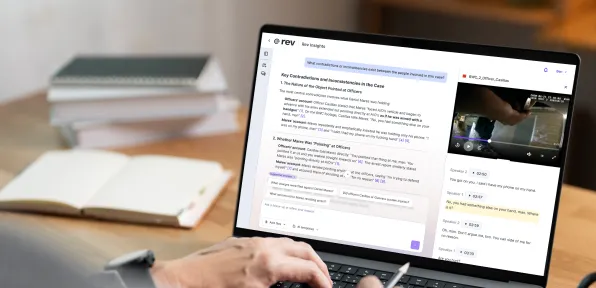
What sets Rev apart for insurance professionals is our integrated AI tools. After uploading case files, teams can generate custom summaries, extract key facts, and create searchable repositories of case evidence—all within a single secure platform. This helps to eliminate workflow friction caused by hopping between platforms for different needs.
For policy investigation units, Rev's Insights feature can analyze multiple witness statements and flag inconsistencies or patterns that might indicate fraudulent claims. In addition, Rev’s highly accurate ASR, verbatim transcription, and timestamping features have been proven to hold up in court, meaning you can trust what you see.
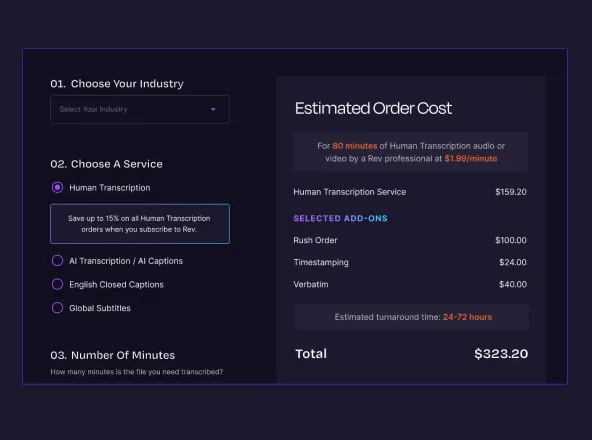
Price: $0.25/min for AI transcription, $1.99/min for human transcription
Accuracy: 96%+ for AI, 99%+ for human review
Favorite Feature: Integrated AI Templates that automatically extract case-critical information from recorded statements, interviews, and depositions without requiring separate tools or additional uploads.
2. Athreon
Athreon specializes in serving insurance companies with high daily transcription volumes, offering dedicated account management and customized workflow integration.
The company emphasizes HIPAA-compliant medical-legal transcription, making them a good fit for insurance companies handling workers' compensation or personal injury claims. Athreon's strength lies in consistent quality control and the ability to handle specialized insurance terminology.
However, their focus on enterprise contracts can make them less accessible for smaller insurance offices or teams not looking to commit to larger agreements.
Price: $0.30/min for AI Scribing, $1.50/min for multi-speaker human transcription
Accuracy: 99% with human review
Favorite Feature: Customized integrations for enterprise insurance companies.
3. SpeakWrite
SpeakWrite positions itself as a transcription service with fast turnaround times, offering 3-hour delivery for small files. This speed can benefit insurance adjusters working under tight claim settlement deadlines or investigators needing quick documentation of time-sensitive interviews. However, larger files often take much longer to transcribe, due to SpeakWrite’s human-only offerings.
This lack of integrated case management features or AI-powered insights is SpeakWrite’s biggest drawback, as many modern insurance operations have now come to expect these features in their transcription provider. Teams will need to use separate tools for analyzing transcripts, identifying key information, or comparing multiple witness statements.
Price: $1.25/min
Accuracy: 99%
Favorite Feature: Human-only service ensures proper formatting.
4. Ditto Transcripts
Ditto Transcripts offers insurance transcription services with a focus on human services and high levels of security. Their business model works well for insurance companies with moderate transcription needs who prioritize cost over advanced features or rapid turnaround.
Their service can handle standard insurance needs like policyholder statements, claims calls, and basic investigation interviews. However, their standard 3-5 day turnaround time can create bottlenecks for time-sensitive claims (though rush services are available).
In addition, Ditto lacks integrated AI analysis tools, case management features, or advanced security certifications like SOC 2 Type II that larger insurance companies require for vendor compliance.
Price: $1.75/min, with rush and extended options available
Accuracy: 99%
Favorite Feature: Flexible pricing depending on company needs.
5. TranscriptionHub
TranscriptionHub markets to a wide range of industries, offering straightforward transcription offerings with high accuracy, custom pricing options, and experience with insurance terminology.
However, without AI options, TranscriptionHub falls behind many other competitors in terms of turnaround times. The platform also lacks the security certifications and data handling protections that insurance companies handling sensitive personal information typically require from vendors.
Price: $0.75/min, with rush options available
Accuracy: 99%
Favorite Feature: Insurance-specific services and experience with industry terminology.
Why Should Insurance Companies Use Transcription Services?
Insurance companies should use transcription services because it boosts their team's productivity without sacrificing accuracy and trust, something current teams need to stay afloat.
As natural disasters climb across the country, insurance premiums and claims follow suit. This leads to a cascade of issues for insurance teams; an increase in claims leads to an increase in work, which in turn increases the time it takes to review claims. The results create burnt-out teams, angry customers, and delays in payouts that people desperately need.
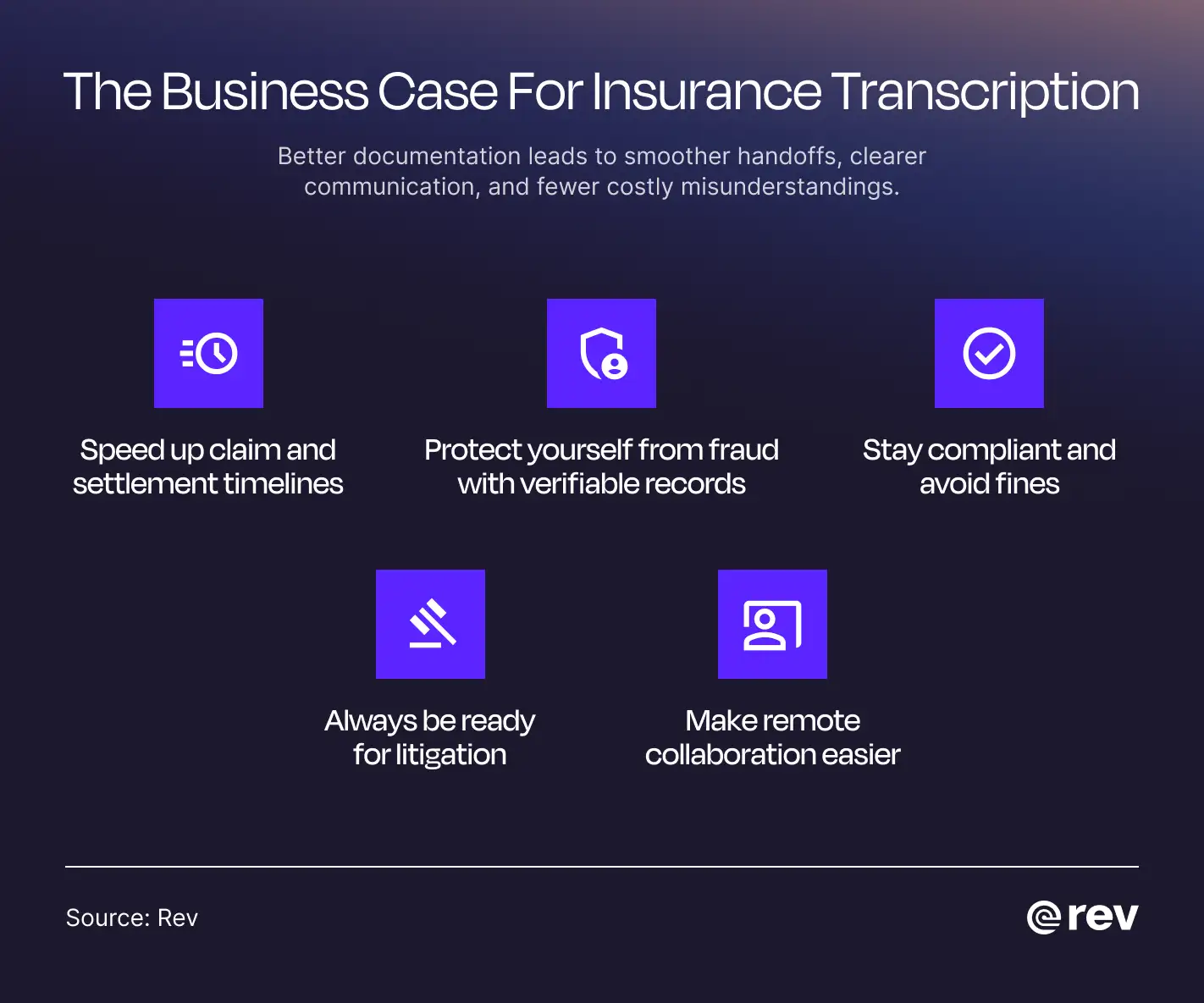
Below are the main reasons transcription services can benefit insurance companies:
- Speed up claim and settlement timelines
- Transcription allows for quicker review and documentation, which speeds up claim intake and timelines.
- Strengthen fraud investigations
- Timestamped and searchable transcripts strengthen fraud and SIU cases when stories change.
- Ensure regulatory compliance
- Accurate transcripts create a permanent record of all customer interactions, protecting companies during regulatory audits and disputes.
- Legal and litigation support
- Instant transcriptions allow legal teams to prepare for court faster.
- Increase remote team collaboration
- Shareable transcripts and clipping features ensure smooth communication between remote teams.
“It requires three to four times the amount of time listening to audio than reading a transcript since the teams are constantly having to stop and start the recording in order to keep up with those specific details,” explains Michael Benoit, founder of Contractor Bond & Insurance Services. “I have seen adjusters spend hours going back through interviews trying to locate one sentence that gives clarity on liability or damages.”
What Should Insurance Companies Look For in a Transcription Service?
Insurance companies need to consider a variety of factors in their transcription service, including security, compliance, accuracy, pricing, integrations, turnaround times, and multi-file support.
When evaluating your vendor options, taking the time to dive deep into each of these features will help ensure smoother onboarding, faster workflows, and fewer errors over time. Below, we break down what to look for within each feature of your future provider:
- Security and compliance
- Look for services with SOC 2 Type II certification, HIPAA compliance, and clear data retention and training policies.
- High accuracy
- The industry standard falls around 99%, and you should expect this level from your provider. This includes accurate speaker identification and human verification options.
- Integrations
- Look for platforms that offer the ability to connect to your current tools to create a repository where all evidence lives together.
- Turnaround time
- Ensure your chosen service offers flexibility and can accommodate rush orders when the insurance claims process demands it, without excessive upcharges.
- Support for multiple file types
- Your transcription service should handle a wide range of file formats without requiring time-consuming file conversion work.
.webp)
Getting Started Outsourcing Transcription Needs
Successfully integrating insurance transcription services into your current workflow is not a one-and-done process. Follow the steps below to ensure your company is getting the most out of your transcription service:
- Identify what will benefit most from outsourcing
- By starting small and focusing on high-impact needs, you can get the most bang for your buck without the overwhelm.
- Establish clear guidelines
- Set standard operating procedures for your team around when to order transcriptions, what format to request them in, and how to store and reference the files over time.
- Train your adjusters and investigators
- Get your team up to speed on how to use your tools AI and in-platform features to ensure proper onboarding.
- Follow up regularly
- Ask for feedback from your team, and make adjustments accordingly, so that your vendor serves your company’s unique needs.
- Analyze Your Data
- If your service offers AI analysis tools, you can analyze the data to gain better insight into your company's efficiency and opportunities for improvement.
“I have seen insurance organizations use transcripts to train better investigators, spot trends in questionable claims, fine-tune how adjusters conduct interviews, and create more robust documentation that sticks, " says Cody Schuiteboer, CEO of Best Interest Financial.
“Transcription also allows claims professionals to focus on analysis and decision-making rather than administrative listening, thereby serving as a catalyst for claims resolution and a contributor to customer satisfaction. The organizations that are winning in insurance understand that speed and accuracy in documentation affect their bottom line and how their customers perceive them.”
Resolve Claims Faster With Rev
Insurance transcription can be a game-changer for companies bogged with manual review work. Imagine being able to review all files for a single case in minutes instead of hours, and surface key insights with just a few clicks. That’s the power of insurance transcription. That’s the power of Rev.