Cell Phone eDiscovery Workflows for Modern Litigation
Learn how cell phone eDiscovery works, what mobile data to collect, when forensic collection makes sense, and how legal teams can streamline review.



A phone can hold years of conversations, photos, location information, recordings, and activity from dozens of apps. When that data becomes an important part of litigation, finding relevant data is rarely the hard part.
The challenge is collecting the right information without losing context, preserving what matters, and turning a messy mix of mobile data into something a legal team can actually review.
That makes cell phone eDiscovery a distinct challenge within the broader eDiscovery process. A good workflow has to account for the quirks of mobile devices from the start, rather than treating phone data like a smaller email inbox. Here's what you need to know about cell phone eDiscovery workflows.
How Cell Phone Data Became Crucial To Modern Cases
Phones can hold potentially thousands of relevant pieces of electronically stored information, or ESI, including photographs, recordings, messaging-app conversations, location information, call histories, and other device or application data.
Under Federal Rule of Civil Procedure 34, that information can fall within discovery and be used as evidence. But keep in mind that citizens still maintain their right to privacy, as ruled in Chatrie v. United.
What does this mean for attorneys? Well, the bigger task is not determining if cell data can be used as evidence, but how. Attorneys and their teams must figure out what data is relevant, how it should be preserved and collected, and how its authenticity and context will be established.
These tasks are crucial because mobile evidence can be unusually fragile. Photos may be deleted, apps may use disappearing-message settings, and information may be synced across a device and a cloud account. Even an operating-system update can affect how certain information is stored or recovered.
"The hardest part is that the same conversation can exist in multiple places, in different forms, with different gaps," explains Robert Montanez, Founding Partner at Montanez Yu Personal Injury Lawyers.
"A WhatsApp thread on one phone might show deleted messages, while a cloud backup shows an earlier snapshot, and a recipient's device shows different timestamps because of time-zone settings or a mis-set clock. Review becomes less about reading and more about reconciling identities, time, and completeness."
Because of this, a defensible workflow starts well before the evidence review begins. It starts by understanding cell phone data types and the proper collection process for each.
Types Of Mobile Data
"Phone data" isn't one singular data type. One device can contain many sources of potentially relevant information, each with different collection and review considerations.
Text Messages & Messaging Apps
SMS and MMS messages are the obvious place to start, but business and personal conversations increasingly happen through messaging apps as well.
These conversations can provide valuable context because they preserve the back-and-forth between participants. Reviewers may need to see messages together as a thread rather than as isolated records. That context is especially important for text message forensics. A single sentence can be read very differently once you know what came before it, who sent it, and when it was sent.
Disappearing messages create another problem. Auto-delete features can remove potentially relevant information unless collecting mobile data is prioritized early on in the process.
Photos & Videos
A phone's camera roll can contain evidence of locations, people, injuries, property damage, documents, events, and other facts relevant to a case. But it's important to focus on more than just what appears in the image.
Remember that the associated information may also matter. Depending on the file and how it was created or transferred, metadata can provide additional context about the file, like when it was taken, who had seen it, and how it was shared. Audio and video also present a separate review problem: the files need to be transcribed for easy analysis; otherwise, you can expect to spend hours scrubbing through files trying to find the one moment you need.
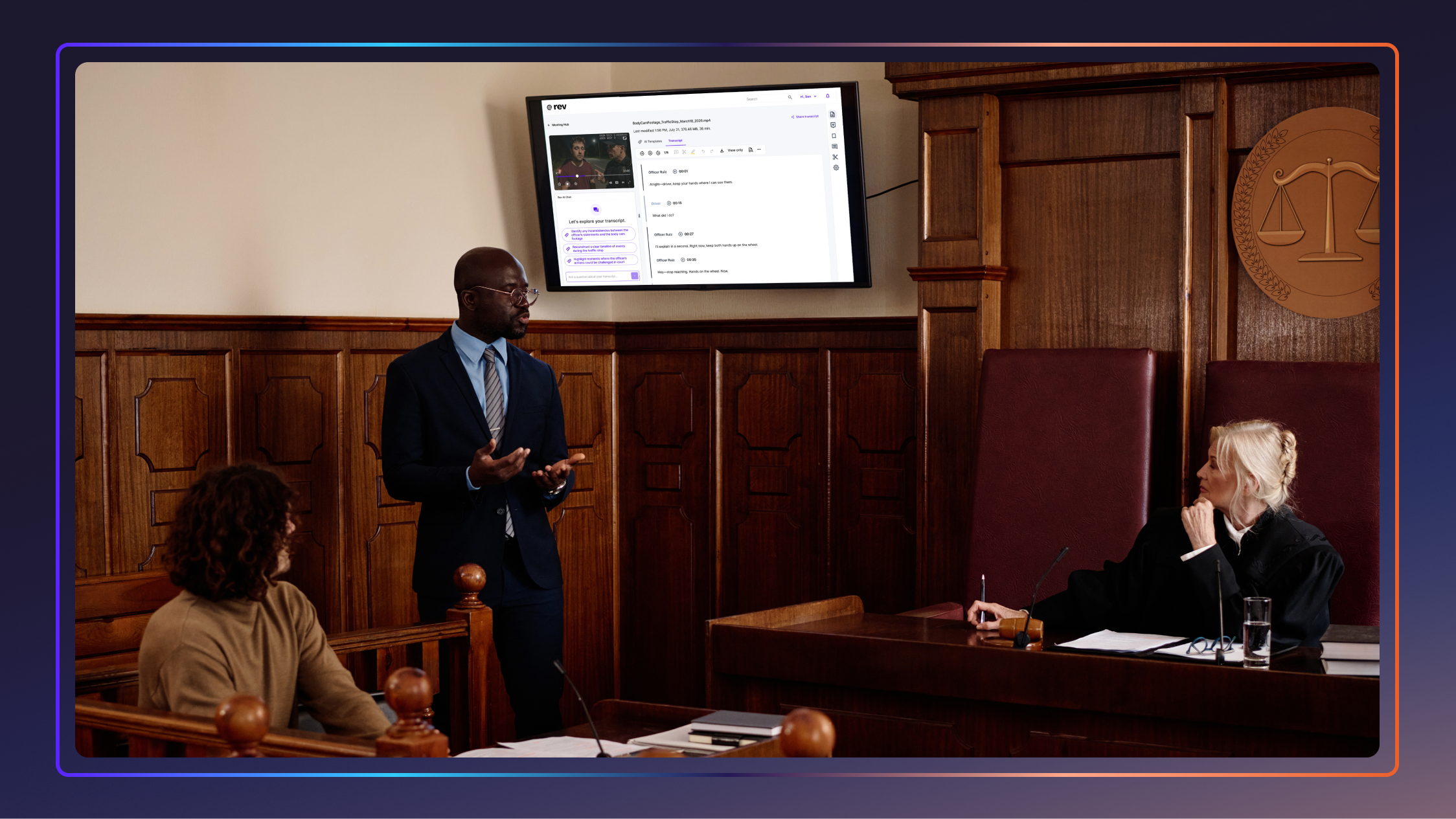
This type of evidence is easy to review in Rev. Simply upload your files, and Rev will turn all your audio and video into searchable transcripts. Plus, our new AI image analyzer allows you to ask questions about your photos and find contradictions with a few simple keystrokes (all cited back to the source material).
Call Logs & Voicemail
Call histories may help establish that communication occurred between particular people at particular times. Voicemails can add the substance of those conversations.
These records become more useful when reviewed alongside other evidence. A call at 8:15 p.m. may mean little by itself. Put it next to a text sent at 8:12, a photo created at 8:27, and testimony about what happened that night, and it may take on more significance.
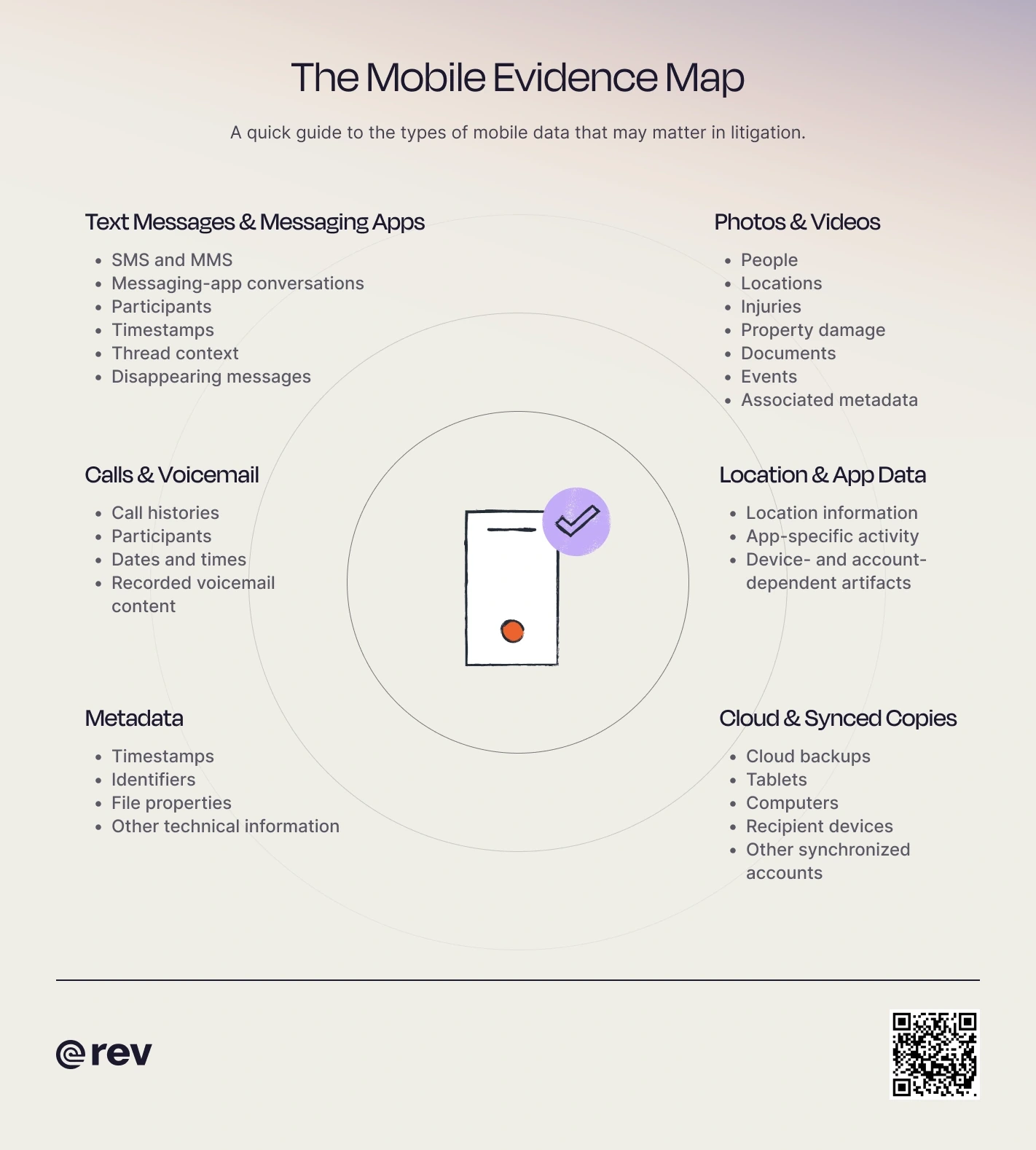
Location & App Data
Depending on the device, application, settings, and collection method, mobile evidence can include location information and app-specific data. However, collection teams shouldn't assume that every theoretically available artifact is relevant to their legal matter.
Mobile devices often mix business information with deeply personal material, so that makes determining the right scope crucial to a productive evidence review workflow. Keep in mind what sources, custodians, applications, and date ranges are actually relevant before collecting everything a device can possibly reveal.
Cell Phone Metadata
Cell phone metadata can help legal teams understand the surrounding circumstances of a file or communication. Depending on the source, that may include timestamps, identifiers, file properties, or other technical information. Forensic collection can preserve system artifacts and metadata that a simpler export might not capture.
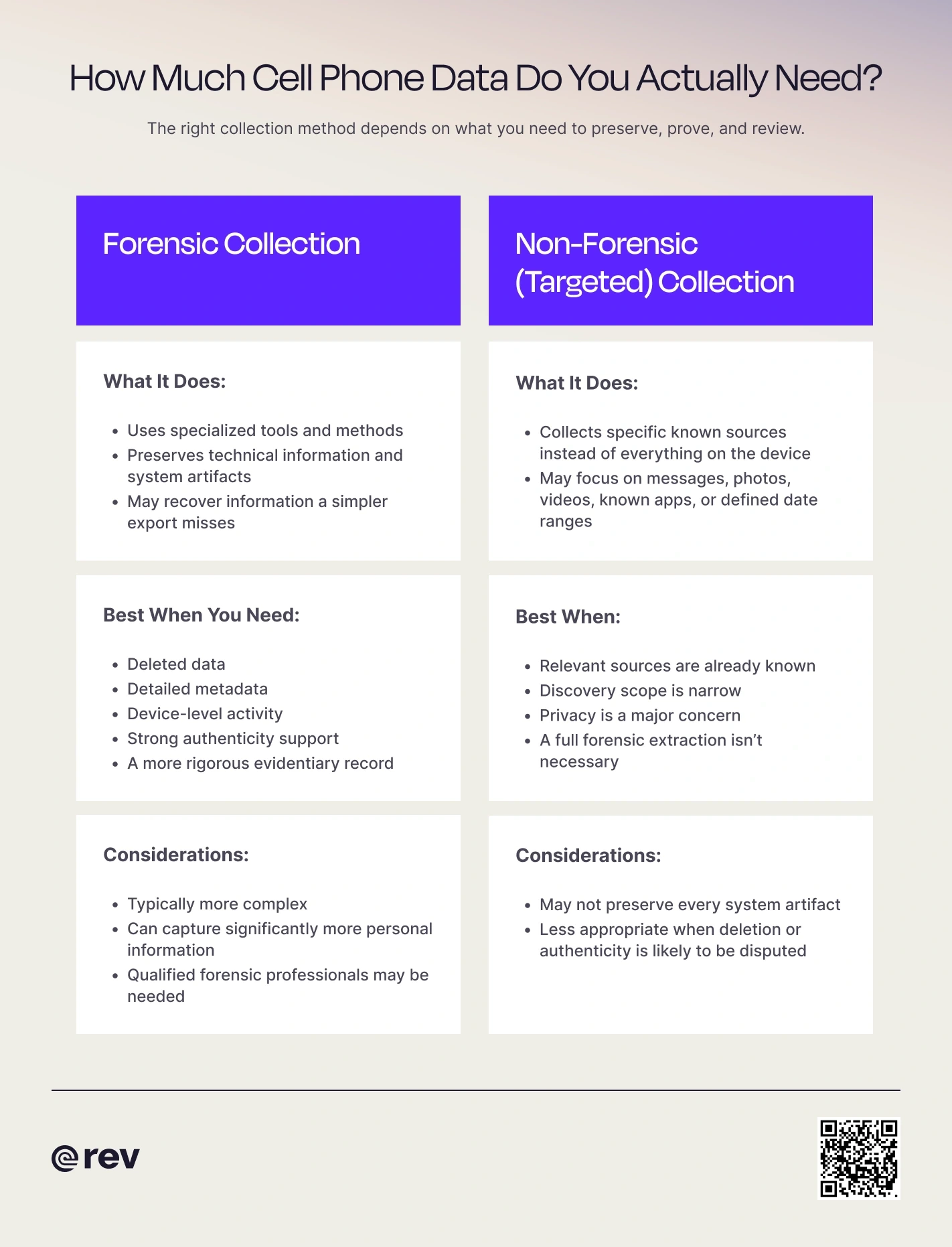
Collection Type: Forensic Or Non-Forensic?
One of the biggest decisions in a mobile device data collection project is how much of the device you actually need.
There isn't one collection method that's right for every matter, but they are typically segmented into two different categories:
- Forensic collection uses specialized methods and tools to collect mobile evidence while preserving relevant technical information. This type of collection is needed when deleted data, system artifacts, metadata, authenticity questions, or particularly rigorous evidentiary records are important.
- Non-forensic or targeted collection can capture info such as messages, photos, or videos without having to pull all available data. This can be useful when the relevant sources are already known, so only a narrow collection is actually needed.
The right choice depends on what you're trying to prove, the expected discovery scope, privacy concerns, proportionality, and the level of risk for missed information. When in doubt, or if authenticity, deletion, or device-level activity may become disputed, always involve qualified forensic professionals early.
Key Issues You May Run Into During Cell Phone eDiscovery
Phones can make discovery complicated fast. A few problems come up again and again. Here's what you might run into and how to solve for them.
Data Can Disappear
Automatic deletion, disappearing chats, device replacement, account changes, and routine system behavior can all affect mobile information. That makes preservation one of the earliest priorities.
Rule 37(e) addresses the loss of ESI that should have been preserved in anticipation of litigation, and provides potential remedies when that info cannot be restored or replaced.
To avoid potential fines or sanctions, ensure your legal holds include relevant mobile data instead of just email and other, more traditional systems.
The Same Conversation Can Exist In Several Places
A message may appear on a phone, tablet, synced computer, cloud backup, or recipient's device.
Figure out where relevant information lives before deciding how to collect it. This can also help avoid duplicative work and prevent issues if the copy does end up deviating from device to device.
Personal & Business Data Get Mixed Together
Phones rarely respect the clean boundaries litigation teams would prefer.
A custodian may use the same device for client calls, family photos, Slack, personal text messages, banking, social media, and work emails. Collecting the entire device can therefore create significant privacy concerns.
Use the needs of the case to define a reasonable scope. Date ranges, relevant applications, participants, and data categories can help limit unnecessary collection and protect privacy.
Mobile Data Is Hard to Review
A giant export of individual messages isn't especially useful if reviewers can't reconstruct the conversation.
Messaging and chat formats often require processing before they can be searched and reviewed efficiently. Playing each recording from beginning to end is slow, and important statements can remain buried inside otherwise irrelevant material.
This is where the quality of your mobile eDiscovery tool matters. The tech you use should transform your evidence into a format that preserves context while still making it easy to understand and review.
Rev can turn all your evidence into a searchable database, with each finding cited back to the original source. Our AI simplifies the legal discovery process and helps attorneys find the case-changing detail faster. What's not to love?
Strategies to Improve Your Cell Phone eDiscovery Workflow
The best mobile eDiscovery solutions don't fix a messy process by themselves. Start with the workflow, then choose technology that supports it.
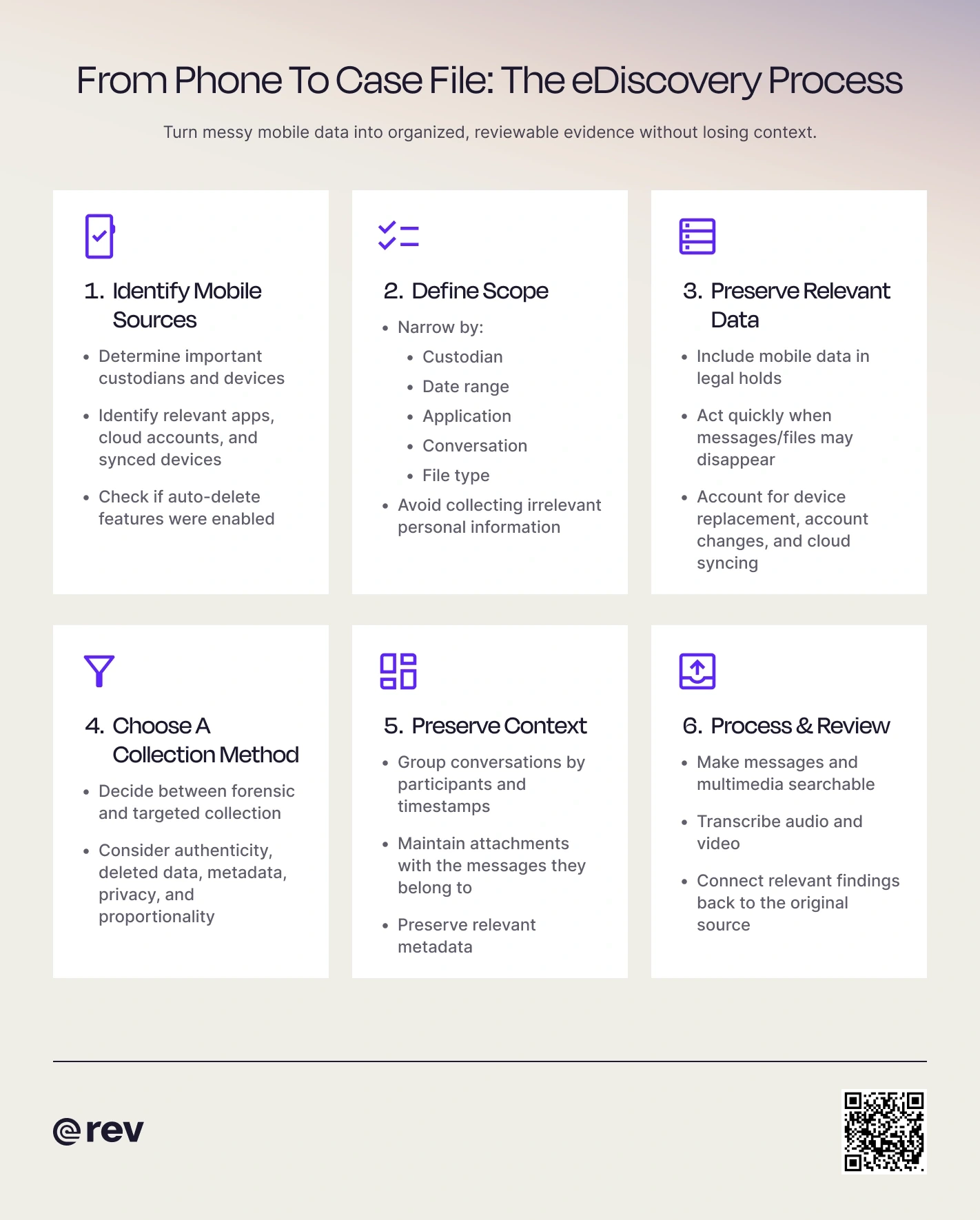
Identify Mobile Sources Early
First, always ask about phones during initial discovery planning. Questions to consider asking include:
- Which custodians used personal or company devices?
- Which messaging apps mattered?
- Were disappearing messages enabled?
- Is the information stored locally, in the cloud, or on another synced device?
Finding those answers early gives the team more options for preservation and collection.
Narrow The Scope Before Collection
Define relevant custodians, dates, applications, conversations, and file types when possible. A targeted scope can reduce privacy issues, prevent your team from spending time on irrelevant material, and help control eDiscovery costs.
The Federal Rules also place discovery within proportionality limits under Rule 26, making scope an official legal issue rather than just an administrative nuisance.
Document Your Process
Keep a record of what was preserved, how collection occurred, which sources were included, and any limitations that affected the process. If mobile evidence later becomes important, your team shouldn't have to reconstruct its collection history from memory.
For matters that demand formal forensic handling, work with professionals who can maintain the documentation and evidentiary integrity required by the case. You'll be thankful you took the extra steps early when a previously unimportant piece of evidence becomes crucial to your case.
"Multi-platform evidence needs a defensible map," suggests Montanez. "Without a clear evidence register, consistent unique IDs, clock normalisation, and a logged separation between source, working and production materials, the review can become a confusion of versions rather than a coherent record of what happened."
Preserve Conversation Context
Don't reduce a messaging thread to a bag of unrelated sentences. Keep messages organized around participants, timestamps, and threads whenever possible. Attachments should remain associated with the conversations that gave them meaning.
The goal is simple: the opposing counsel or judge on the case should be able to understand the exchange without solving a puzzle first.
Use Technology to Make Multimedia Searchable
Once relevant recordings have been collected, legal teams still need a practical way to review them. Rev can turn recorded evidence into searchable transcripts so attorneys can find names, phrases, statements, and other moments without repeatedly scrubbing through audio or video.
Rev's investigative platform includes AI-assisted tools that help users search and analyze their evidence while keeping findings connected to source material. Rev's unlimited plans are also SOC 2 Type II, CJIS, and HIPAA compliant. Plus, Rev will never use your data to train third-party models.
That matters when mobile evidence includes sensitive client information. The latest eDiscovery tech should make evidence easier to work with without asking legal teams to give up traceability or security.
Interested in learning more? Teams handling recordings in the field can also review these best practices for legal work and mobile recording.
Make Mobile Evidence Easier to Work With
A phone can contain critical messages. However, they are often buried within 20,000 irrelevant messages, spanning across six different apps (and that's not even including the hundreds of photos and hours of recordings often saved on mobile devices).
Good cell phone eDiscovery separates the signal from that noise. Rev helps legal teams turn their multimedia evidence into accurate, searchable information they can actually use during case preparation.