40+ Voir Dire Questions To Build Better Follow-Ups
Find 40+ voir dire questions for criminal, civil, and personal injury cases, plus a practical way to build better follow-ups from mock-jury transcripts.


The questions you plan to ask during voir dire can look great on paper. But then a mock juror says something you never expected, and now your carefully prepared list for trial needs some tweaking.
Maybe they assume an innocent person would always testify. Maybe they distrust an injury they can't see. Or maybe several jurors latch onto the same small detail that your trial team barely considered. Those reactions can reveal the beliefs and assumptions worth exploring when the real jury selection begins.
That's why some of the best voir dire questions can come from listening to how mock jurors actually discuss your case. Below, we'll cover 40+ example questions for criminal, civil, and personal injury cases, plus tips on how to adapt your trial strategy based on what you learned.
What Are Voir Dire Questions?
Voir dire questions are questions asked of prospective jurors during the jury selection process. They are used to identify potential bias, conflicts, prior experiences, or other issues that could affect a juror's ability to decide a case fairly.
The exact voir dire process varies by court. In some courts, the judge handles most of the questioning. Others give attorneys more room to question the panel directly or ask follow-ups. Federal judges, for example, may use their own procedures and standard question sets.
The strongest questions are usually open-ended to invite further explanation, rather than a simple "yes" or "no." Framing questions in this way can reveal crucial information about a juror's attitude and give attorneys useful material for follow-up.
What Questions Can Lawyers Not Ask During Voir Dire?
There's no universal list of questions that lawyers can't ask during voir dire, because the rules vary by jurisdiction and judge.
But generally, attorneys should avoid questions designed to make a juror prejudge the case, commit to a particular outcome, or hear an argument disguised as a question. Some courts also restrict questions about sensitive topics such as political or religious beliefs unless the subject is relevant and approved by the judge.
Check the applicable rules, standing orders, case law, and judge-specific procedures before finalizing a voir dire examination.
How Do You Uncover Juror Bias During Voir Dire?
To uncover juror bias during voir dire, start with questions that encourage prospective jurors to describe what they think, rather than questions that tell them what the "right" answer should be.
Compare these two statements:
"Can you be fair to someone accused of this crime?" vs. "What concerns, if any, would you have about sitting on a case involving this type of allegation?"
See the difference? While the first question suggests that they must be fair, the second leaves room for a real answer.
Follow-ups matter too. If someone mentions a positive or negative experience with police, an insurance claim, a lawsuit, or the courts, ask how that experience shaped their views. The goal is to understand the belief behind the initial response to better understand how they might react to the facts in your case.
40+ Example Voir Dire Questions
There is no perfect set of jury selection questions for every trial. Use these 40 questions as starting points and adapt them to your case, jurisdiction, and the court's rules.
Questions About Personal Experiences & General Bias
These work across many civil and criminal cases and can help open the conversation before moving into sensitive subjects. Questions include:
- What experiences have most shaped your view of the court system?
- Have you or someone close to you ever been involved in a lawsuit?
- Have you previously served on a jury?
- What was that experience like for you?
- Have you ever testified as a witness?
- Have you or someone close to you been the victim of a crime?
- Have you or someone close to you ever been accused of a crime?
- Have you had an experience with the legal system that you felt was unfair?
- Are there types of cases you think you would find especially difficult to judge?
- What would make it difficult for you to keep an open mind until you have heard all the evidence?
Federal voir dire commonly explores prior jury service, involvement with crime, testimony, law enforcement experiences, and connections to the justice system.
Criminal Voir Dire Questions
Voir dire questions in criminal cases often focus on law enforcement, the presumption of innocence, the burden of proof, criminal accusations, and attitudes toward particular charges.
- What are your general impressions of law enforcement officers?
- Have you had an experience with police that changed how you view them?
- If you had to rate your trust of police officers on a scale from 1 to 5, what score would you give?
- Do you tend to give a police officer's testimony more or less weight because of their job?
- What does the presumption of innocence mean to you?
- How do you feel about the prosecution carrying the burden of proof?
- Would you expect a defendant to present evidence proving their innocence?
- How would you feel if a defendant chose not to testify?
- Are there criminal charges that would make it difficult for you to remain impartial?
- What assumptions, if any, do you make when you hear that someone has been arrested?
- How comfortable are you returning a not-guilty verdict if you believe the government has not met its burden?

A criminal defense attorney may also want to explore how prospective jurors understand reasonable doubt, subject to the judge's rules about questioning on the law.
Civil & Personal Injury Voir Dire Questions
Civil cases can raise different biases, particularly around lawsuits, corporations, insurance, injuries, medical treatment, and damages. Here are some sample questions to consider:
- What comes to mind when you hear that someone filed a personal injury lawsuit?
- Do you believe there are too many lawsuits in the United States? Why?
- Have you ever filed an insurance claim?
- How did that experience affect your view of insurance companies?
- Have you or someone close to you lived with a serious injury or chronic pain?
- What makes you believe someone's description of pain or physical limitations?
- How do you feel about awarding money for injuries that cannot be seen on an X-ray or scan?
- What concerns do you have about large damages awards?
- How do you generally view corporations involved in lawsuits?
- Would you have difficulty awarding substantial damages if the evidence and instructions supported that result?
Current civil voir dire materials likewise examine experiences with litigation, attitudes that could affect impartiality, and whether jurors can apply the civil burden of proof.
Questions About Witnesses, Experts, and Evidence
These questions can work in criminal cases, personal injury litigation, medical malpractice matters, and other trials where credibility or technical evidence will play a major role.
- How do you decide whether someone is telling the truth?
- What makes a witness seem credible to you?
- How much confidence do you generally place in eyewitness memory?
- Have you ever remembered an event differently from someone else who was there?
- How do you feel about experts being paid for their work on a case?
- Would payment affect how you evaluate an expert's opinion?
- What experience do you have working with medical, scientific, or technical information?
- Do you tend to trust video or audio evidence more than a person's recollection? Why?
- How would you approach conflicting accounts from two witnesses?
- What would you want to understand before deciding which expert opinion you found more persuasive?
Why Your Best Voir Dire Questions May Come From Mock Jurors
A standard voir dire checklist tells you what attorneys commonly ask. Mock jurors can tell you how real people talk about the issues in your case.
Suppose several mock jurors describe a defendant as "having something to hide," even though they never actually heard the defendant testify. That description gives the trial team a specific attitude to investigate during voir dire.
Or imagine a personal injury jury panel repeatedly uses phrases such as "jackpot lawsuit," "pre-existing problem," or "people should just move on." Each phrase points toward a belief worth examining, and something to prep for come time for the real thing.
"I've seen mock jurors focus on a fact that the defense team initially considered relatively minor, only to realize that it was actually shaping their entire view of the defendant," explains Michael T. van der Veen, Attorney at van der Veen, Hartshorn & Levin.
"That can force you to rethink the order in which you present evidence or devote more time to explaining a particular issue. A mock trial is valuable because it can show what you think is important versus what a juror thinks is important."
The value of a mock jury lies in deciphering their raw reactions before trial, so you can turn them into neutral questions that invite prospective jurors to discuss the same topics.
How To Turn Mock-Jury Transcripts Into Voir Dire Questions
Start by recording and transcribing your mock trial, focus group, or other jury research sessions.
Then search the transcripts for recurring reactions tied to your case themes. Look for places where jurors strongly agree, push back, change their minds, or use similar language independently.
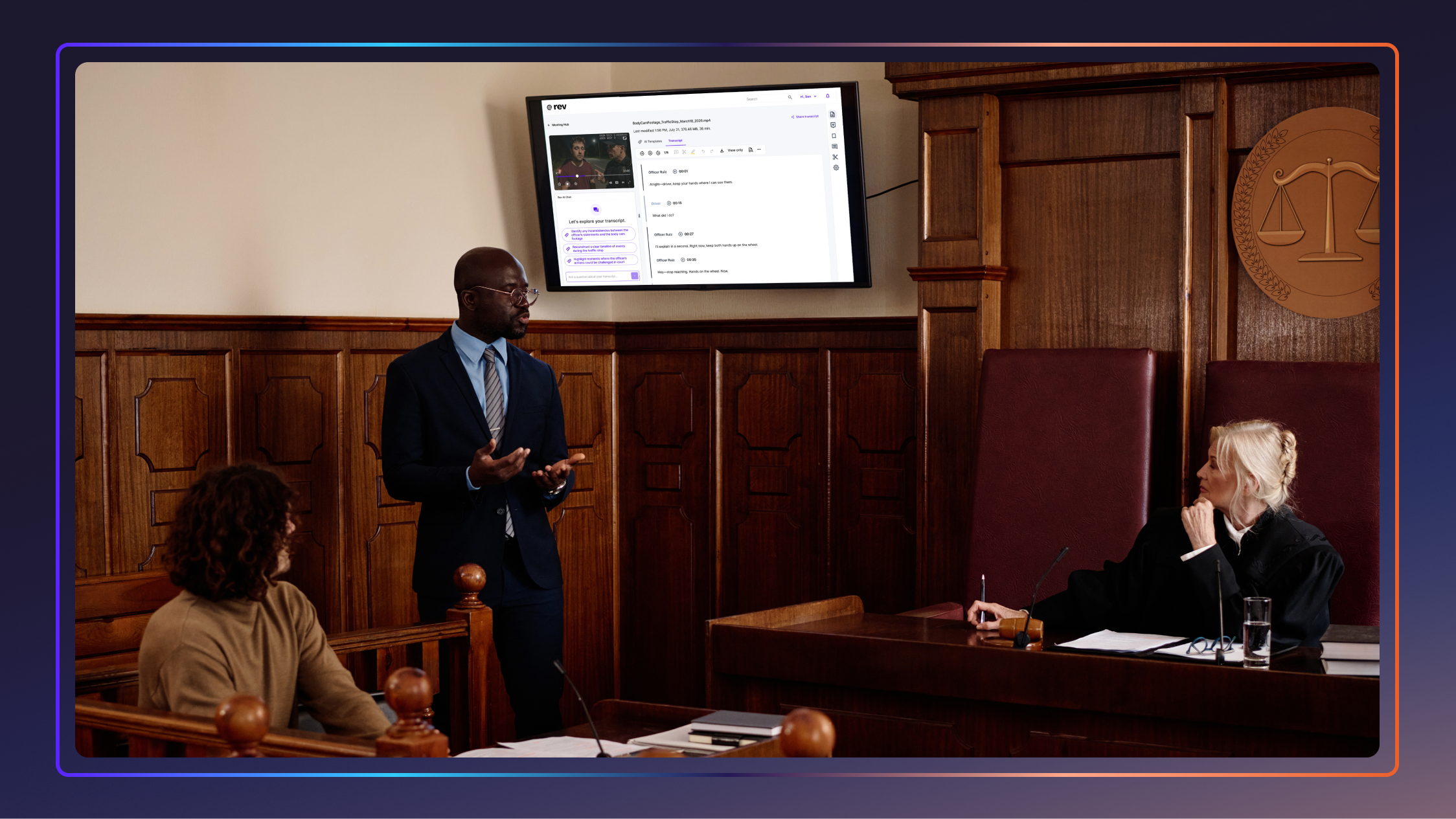
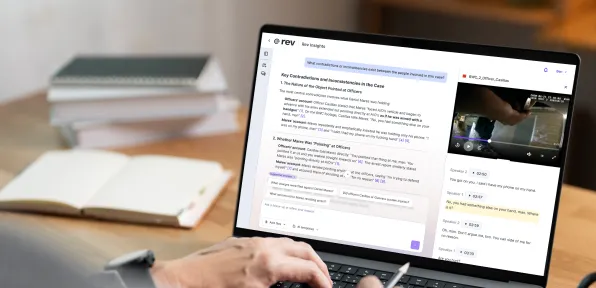
Rev can help trial teams search through transcripts for exact phrases and review relevant moments. For jury research involving multiple panels, teams can also compare discussions across files to see which concerns appear repeatedly, or where jurors contradict themselves. These moments can then be used to help shape potential voir dire questions. For example:
Mock juror: "If there wasn't DNA, I'd have trouble believing it happened."
Possible voir dire follow-up: "What expectations would you have about scientific or forensic evidence in a case like this?"
Mock juror: "Anybody can say they're in pain."
Possible follow-up: "How do you decide whether someone's description of pain is credible?"

What To Look For In Mock-Jury Transcripts
When analyzing transcripts of your mock jury, pay special attention to language that signals an assumption rather than a reaction to one isolated fact.
Watch for absolutes such as "always," "never," "everyone knows," or "obviously." Statements like "police wouldn't arrest someone for no reason" or "people always exaggerate injuries in lawsuits" can expose assumptions that a standard questionnaire may never reach.
Also review moments of disagreement. One mock juror challenging another often forces both to explain why they hold a position. Those explanations may be more useful than their initial reactions.
With searchable transcripts, teams can return to the exact wording instead of relying on handwritten notes or memories after a lengthy session. Rev's legal workflows are designed to help attorneys search and reference recorded material while keeping the original transcript as the source of truth.
Then, all you need to do is save the most useful findings alongside the rest of your digital trial notebook, so they remain accessible as trial preparation develops.
"Ten years ago, I had a fairly scripted voir dire. I had a set of questions I wanted to ask in almost every case. Today, because we understand the case much more deeply through the data and our focus-group work, I know which questions actually matter for that particular jury," explains Sean Claggett, Attorney at Claggett & Sykes.
Best Practices For Asking Voir Dire Questions
A strong question plan should leave room for jurors to talk while staying within the court's procedures.
- Ask open-ended questions.
- "Tell me about…" and "What do you think about…" usually reveal more than "Can you be fair?"
- Follow the juror's language.
- If they introduce a concern, ask them to explain it in their own words.
- Explore uncomfortable answers.
- An answer that hurts your case may contain information crucial to your case.
- Avoid arguing.
- Voir dire is an examination, not an opening statement.
- Separate experience from bias.
- Having dealt with police, lawsuits, injuries, or insurance does not automatically tell you how someone will evaluate your case.
- Watch for group dynamics.
- One juror's answer may encourage others to disclose similar beliefs.
- Prepare case-specific follow-ups.
- Generic questions establish a baseline, but your mock-jury research can show you where to dig deeper. Know the court's rules and remember that Judges retain a lot of control over the scope and method of voir dire.

Build Voir Dire Questions From What Jurors Actually Say
The most useful voir dire plan begins well before the venire enters the courtroom. But with Rev in your corner, you can turn hours of recordings into searchable transcripts, making it that much easier to find the insights that matter for your client.