


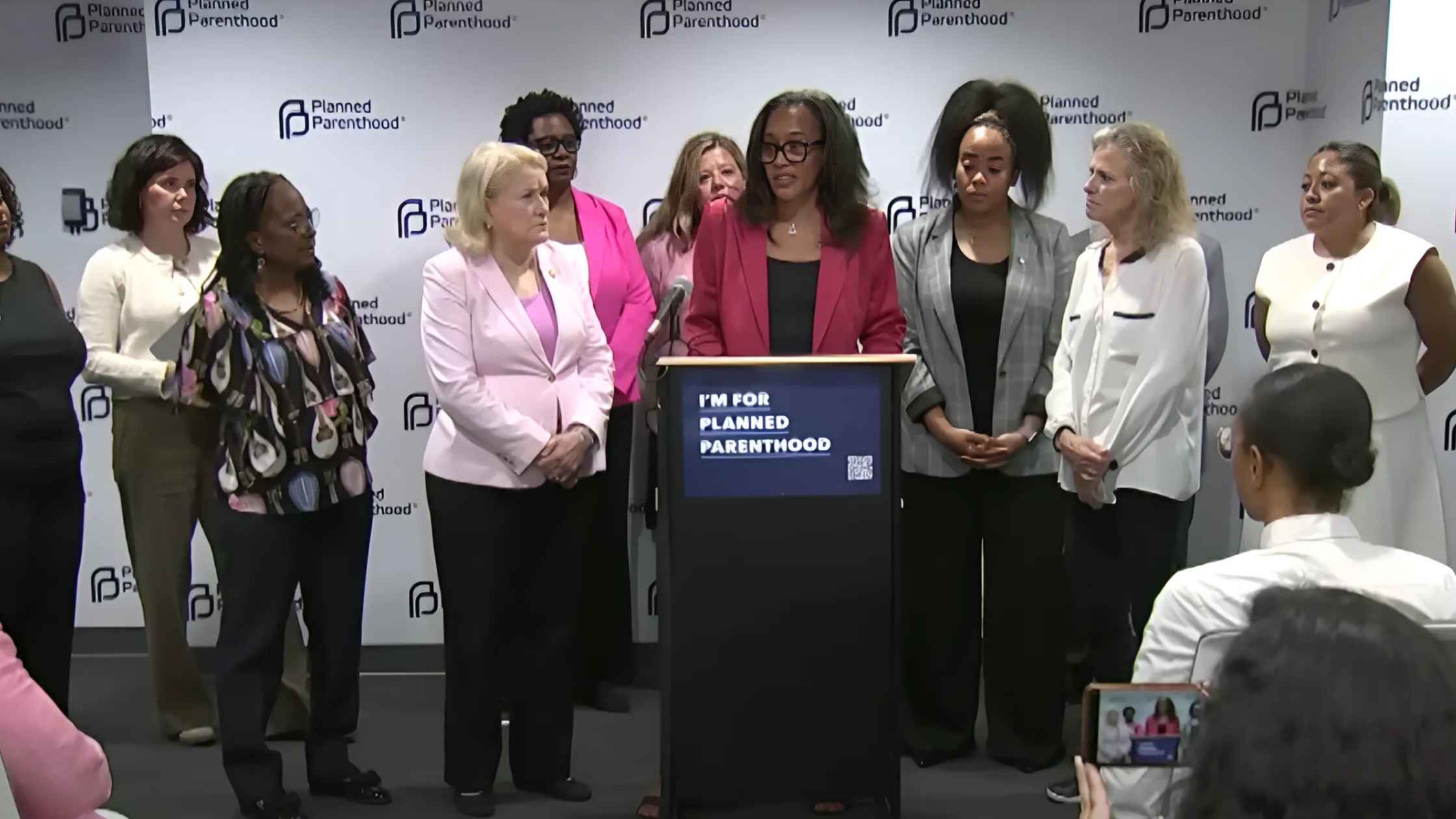
Shellie Hayes-McMahon (00:00):
It is not a what if, it's not a worst case scenario. It's the record, it's the blueprint, and it's been devastating. In Texas, we have lived through what happens when lawmakers make it their mission to dismantle reproductive care. We don't have to imagine what happens when Planned Parenthood is defunded or when the worst anti-abortion bills turn into laws because we have the proof. In 2013, as Rep Howard was mentioning, Texas lawmakers kicked Planned Parenthood out of the state's Healthy Texas Women's program. In 2021, they went even further, removing us from Medicaid. The impact was devastating. Thousands lost access to basic care, contraceptive use plummeted, preventable diseases spread, unplanned pregnancies rose, many clinics closed, and wait times got longer. Even with these obstacles, Planned Parenthood in Texas, I am proud to say, has remained a steadfast provider of exceptional sexual and reproductive healthcare.
(00:56)
In 2023, Texas had the highest rate of uninsured people, yet Planned Parenthood persisted in doing our part in bolstering the safety net. Texas has one of the worst maternal mortality rates in the country, yet Planned Parenthood in Texas has fought to keep their doors open and served over 100,000 patients. Texans are fighting for access to healthcare on city, county, and state levels, threats to the ability to access safe and legal medication abortion, threats of surveillance and financial profit in what should be very private and personal medical decisions, and just the waste of government resources, trying to test wastewater to find more ways to persecute and threaten Texans. Texas has shown the country exactly how to enact bad policy and others have followed. In the following year, states like Iowa cut Planned Parenthood out of their state funded programs, and then the same playbook spread to Medicaid in Missouri, Tennessee, and Idaho and moved to block us from Medicaid. South Carolina tried also, and in June, the US Supreme Court ruled in their favor.
(02:06)
That decision gave every state in the country the green light to kick Planned Parenthood out of Medicaid even when, just like in Texas, we are the healthcare safety net that they cannot replace. Thank you. What solidified this assault on our reproductive rights was Congress passing its budget bill defunding Planned Parenthood nationwide and slashing Medicaid, the next move in a strategy Texas launched and has been replicated step by step across the country. And like with every other bad policy, the people hit first and hardest were the ones already facing the steepest barriers to care. Black and Latino communities, LGBTQ+ people, rural residents, and those with low incomes, the communities, our healthcare centers, our healthcare system, I'm sorry, has failed for generations. And now, in 2025, the quote from Mr. Rogers, "Look for the helpers. You will always find the people who are helping out." could not be more appropriate.
(03:01)
Since 2021, thousands of Texans have come to Illinois for care because Illinois is a safe haven for them, and our own state has abandoned them. Our sister clinics, and right now, the entire state of Illinois are the helpers and we are grateful. Grateful for their grace, their generosity, and their grit. There is a pattern to spreading cruelty, and Texas wrote the playbook. What happens in Texas doesn't stay in Texas. It spreads, it harms. We have the evidence, we have the patient stories, we have the data. The harm is real and the stakes are national. So I'm asking our communities in Texas and across the country to stand with your Planned Parenthood providers, stand with Texas patients, stand with Illinois patients because if Texas wins this playbook to ban, defund, and export, no one's rights are safe. Not in Texas, not in Illinois, not anywhere. And with that, I'm proud to introduce Texas Champion Congresswoman Sylvia Garcia.
Sylvia Garcia (04:04):
Thank you. Thank you. And first, I too want to thank all our friends, our partners from Illinois in welcoming us, in hosting us this morning. It is a true partnership that is about putting women first. I always like to say that I stand with Texas women, but I also always say that I'm Catholic and I'm pro-choice. I stand with Planned Parenthood. Have for many, many years, and I will never stop. But I can tell you that what I have seen most recently from my days in the Texas Senate when we had the filibuster, I had a staffer recently who said, "Did you know that you were in a documentary about Wendy Davis and the filibuster?" And I said, "No." I said, "I don't have the luxury of watching too many things. It took me forever to even get to go see Superman."
(05:00)
But she said, "You're right there in it." And I said, "Yes, and I'll continue to be right there in it until we're sure that women have full access to the healthcare that they need." And I mean all healthcare. Because that's the bottom line. And for me, the Planned Parenthood of Gulf Coast in Houston, their main office or headquarters was in my district. It was a landmark. It was I could get on that freeway and see that tall building with Planned Parenthood at the top, and I knew I was in my district, I knew I was heading to the east end and I knew that women in my area were covered. Y'all, I was there last week. It's closing down. That was always their goal. It started in Texas, but as was said by all the speakers before me, it is now spreading around the country.
(05:53)
The fight is bigger than we think it really is because we don't know what they're going to do next. I think soon, they're going to start suggesting that even if we think of getting pregnant, that they have a role in it. It is just ridiculous that some of the bills that I see and some of the amendments that I see in Congress because they forget that that building was not just a symbol of Planned Parenthood's mission, but it was a place where women could feel safe to go and talk about what their issues were. And it wasn't just about abortion. It was always about making sure that they had their wellness exams, their prenatal care, everything that they needed, and now, where are they going to go? Where are they going to go? That facility handled about 350,000 visits. Now, all those folks are going to have to figure out where else to go.
(06:56)
Now, there do have some other clinics in Houston that are staying open, but that one in the heart of my community no longer will be. And I can tell you that I know a lot of folks that stop me as I visit around my district, they tell me that they went there or their daughter went there, and now, they may have to travel a longer distance. And I know it's not as far as going from the Rio Grande Valley to Houston, but it's from going from one end of Houston to the other end of the county and in Houston traffic, that's comparable. So that's the state of affairs and we'll continue to fight to make sure that all of these women that went there can have a place to go. And we'll continue the fight in Congress to restore and make the changes needed so that Medicaid will cover some services to make sure that women have access and to undo the damage of the Dobbs decision.
(07:59)
So it's going to take a lot of work. I'm certainly committed to doing it and I want to thank again Illinois for being so welcoming and seeing our patients. And be prepared because now, 350,000 women from my district may be showing up, but we toured your facility, it looks great, and I have no doubt that you'll be able to handle it. Next, I'd like to introduce Margot Riphagen, President and CEO of PPGR. I'm sure that's Planned Parenthood Good for Everybody.
Margot Riphagen (08:37):
Thank you, Congresswoman.
Sylvia Garcia (08:38):
[inaudible 00:08:39].
Margot Riphagen (08:41):
Hi, my name is Margot Riphagen, I use she/her pronouns, and I serve as president and CEO of Planned Parenthood Great Rivers, proudly serving the St. Louis region and the Missouri Ozarks, including seven counties in Southern Illinois. For our organization and especially for our health center workers, there is a stark difference between the two states that we serve. In Illinois, patients from around the country, they know they can come here to receive the healthcare that they need, including abortion on their own terms and without judgment. In fact, where one health center in Fairview Heights, Illinois, we've welcomed patients from 33 states this year, primarily states with excessive bans and restrictions that put patients' lives at risk. However, just across the river in Missouri, we've been fighting tooth and nail to ensure that our patients can access the same care in their own communities only to run into roadblock after roadblock by politicians and regulators.
(09:40)
See, this is what happens when you're governed by an anti-abortion supermajority when so-called public health initiatives are rooted in scoring political points rather than actually improving the health and wellbeing of Missourians. And we know Texans are very familiar with this as well. In Missouri, we continue to see the devastating effects of our state's abortion bans and restrictions. Residency applications for future OB-GYNs dropped dramatically, leaving health deserts across the state. Women, Black and Brown people, LGBTQ+ people, and families with low incomes are forced to travel farther for crucial care. Last November, Missourians enshrined the right to reproductive freedom in our state constitution through a grassroots, citizen-led initiative process. After all of this, we've been met with nothing but resistance, shifting goalposts and a referendum forcing Missourians to vote again next year, all because legislators decided they didn't like how their constituents voted.
(10:44)
For years, these same lawmakers have relentlessly fought to block Missouri Medicaid patients from accessing cancer screenings, STI testing, birth control, and more from their trusted Planned Parenthood providers. It is clear to us that they will dig for any opportunity to smother the voices of voters and advance policies that could worsen our public health outcomes. It's also clear to us that Congress took a page out of Missouri and Texas' playbook when they advanced defunding efforts to block Medicaid patients nationwide from accessing crucial care at Planned Parenthood. These reckless decisions only put Americans further at risk even in healthcare havens like Illinois. Planned Parenthood is a safety net provider. Without us, patients have nowhere else to go. So let me be clear, we are not going anywhere. I stand here with our Planned Parenthood partners from Illinois and Texas and many reproductive health champions who stand firm in our commitment to make sure every single person can get the essential healthcare that they need, when they need it, no matter what. I'm proud now to turn over to Tonya Tucker, interim CEO of Planned Parenthood Illinois. Thank you.
Tonya Tucker (12:01):
All right. Thank you, Margot. I'm proud to be standing here today to talk about what it means for Texas, the things that are happening in Texas and its impact on us here in Illinois. I'm Tonya Tucker. I'm the interim president and CEO of Planned Parenthood Illinois. I'm also the chief financial officer and I use she/her pronouns. Since Roe V. Wade was overturned in 2022, Planned Parenthood of Illinois has seen the number of abortion patients nearly double. Before Roe overturned, only 4% of our patients traveled from out of state. Today, a quarter of our patients come from another state. We've welcomed patients from nearly every state, including Texas. In fact, we began seeing patients from Texas in 2021 just days after SB 8, their abortion ban, when it went into effect.
(12:58)
Since Roe was overturned, the number of Texas patients that we have seen has jumped by 200%. And it's not just Texas. As a haven state, Illinois sees more out-of-state patients than any other state in the nation. This influx is stretching our system to its limits. Patients who travel here often need more financial assistance. They face bigger barriers, they require more subsidies from us. And now, this already challenging situation is getting worse. Medicaid is being slashed and we risk losing reimbursements for gender-affirming care and family planning service. And what that means is birth control, STI testing and treatment, cancer screenings, and routine exams are all at risk. Furthermore, Medicaid cuts will dramatically affect people already facing barriers to care. People who live in rural areas, people living in poverty, people of color, the LGBTQ plus community, young people, and students.
(14:06)
Though we are fortunate to live in Illinois where our state covers the cost of abortion care for PPIL Medicaid patients, we are still facing a $4 million federal Medicaid loss for family planning and gender-affirming care. This is in addition to cuts for family planning care through the Title X program. Throughout all of this, we remain committed to serving Medicaid patients and have contingency plans to protect their access to care. However, this model is not sustainable if we lose funding. We join our sister organizations in Missouri and in Texas today in solidarity because what happens in one state is felt everywhere else. No one should be forced to travel hundreds of mile for the care they could receive in their state from a trusted provider. Now, I am proud to introduce one of PPIL's trusted providers, our interim chief medical officer, Dr. Sisco.
Dr. Katie Sisco (15:12):
Good morning. Thank you, Tonya. My name is Dr. Katie Sisco. I use she/her pronouns and I am the interim chief medical officer of PPIL. I have been an abortion provider for PPIL for 14 years, providing both procedural and medication abortion. Medication abortion has been used by more than 4 million people since the FDA approved it 20 years ago, and it is safe and effective. At Planned Parenthood of Illinois, about half of our patients choose the medication abortion option. Patients can access medication abortion care either by coming into one of our health centers or virtually through a telehealth visit. For patients living outside of Illinois, this means traveling for their appointment and starting the process here in Illinois. Since the Dobbs decision, I see patients every day who have traveled from out of state and overcome incredible obstacles to sit in my exam room. It is incredibly frustrating because the care I provide is something they could and should get in their home state.
(16:22)
There are physicians and medical professionals in all 50 states capable of providing abortion care. The patients I see from other states, including Texas, are stressed. Not being able to access care where you live causes anxiety. It makes a difficult decision even harder. I recently had a patient from Texas who was very upset. She had a planned pregnancy, but unfortunately, that pregnancy had complications. So she and her partner made the gut-wrenching decision to terminate. Due to state law, they were forced to travel for the procedure and come to Illinois. Adding to her stress, her obstetrician was opposed to abortion, so they had to navigate the system alone until they found us. Fortunately, we had staff to help figure out lodging, child care for their two-year-old, and travel arrangements. And after the procedure's over, the stress and fear continues. My out-of-state patients worry about what will be in their medical record and if they will face other penalties or repercussions for seeking health care in Illinois. They face shame and stigma. This was the case for my Texas patient.
(17:41)
It saddens me to see my patients struggle with such unnecessary challenges, especially when their home state is sending the message that what they are doing is wrong for simply accessing basic healthcare. Abortion is healthcare. I am grateful that I practice in Illinois where I can continue to provide abortion and care for my patients. It is now my honor to introduce Illinois State Senator Celina Villanueva. Thank you.
Celina Villanueva (18:14):
Good morning, everyone. I'm State Senator Celina Villanueva. I represent the 12th District here in the city of Chicago on the southwest side. I am very proudly the daughter of a Mexican immigrant woman who was also very Catholic and very pro-reproductive rights. My mother was the type of mother that made sure that we knew growing up that we had options because she was a teenage mother. She had my older sister when she was 17 years old and she ensured that my sister and I and my brothers all knew that we had options were we ever to find ourselves in that situation at younger ages but also further on.
(18:52)
My mother has passed away unfortunately. She passed away a few years ago from cancer. But one of the last things that I remember, and it popped up recently on my Facebook, because yes, I still have Facebook, was a picture of me and her at the first Women's March here in Chicago where we had hundreds of thousands of women and men. We did have men, but it was the ladies that were out there. And I remember how excited she was to get out there that day. She had actually been meeting up with a group of women in one of the neighborhoods that I represent in Pilsen to sign postcards to send to other women to encourage them to participate and get involved. And I remember they also had a button making party. And I have those buttons. I had them for a very long time in my car and I have those buttons framed at home.
(19:40)
And it still brings a lot of emotion when I get to see that and that's one of the first things I see when I wake up in the morning because for me, standing here with colleagues from Texas with incredible champions like Planned Parenthood Illinois, Planned Parenthood Great Rivers, and the Chicago Abortion Fund, who I get to work with almost on a daily basis on the important rights, of reproductive rights, gender-affirming care here in Illinois, we do it because we know that there are so many people in other states that are unfortunately facing the same type of realities that women and families are facing in the state of Texas. And that is literally the taking away of their rights to choose what is best for their bodies and to choose what is best for their families.
(20:26)
But in Illinois, we've enshrined that right. I was part of the freshman class of women who came in in 2019 in the Illinois legislature and said we need to make sure that the access to abortion care is enshrined in our laws because we understood and we saw the writings of the walls of what was going to happen. And sure enough, when the Dobbs decision came about, we saw what happened in Illinois. We had our laws, we made sure that people have access to reproductive healthcare, to abortion. But we didn't stop there and I didn't stop there because I come from a very proud Mexican woman who said, "Oh, no, if somebody tries to punk you out, you show them who you are and where you come from." And I know my folks from Texas also know this. You show people where you come from. And we did that and we continuously did that.
(21:18)
And working with incredible partners here in Illinois to not only just further enshrine these rights, but to protect other women and families who were coming to Illinois so that they would be free of criminal persecution from states like Texas who seek to persecute them for making their own choice for their body and for their family. And we're going to continue to do that work. We have continuously tried to provide more financial resources and will continue the fight to do even more work to ensure that anybody that is coming to the state of Illinois has the ability and the accessibility to be able to get access to reproductive rights because that is the right thing to do, not just in this moment, but in every moment. And so while the world seems uncertain, the future seems uncertain, just know this, that in Illinois, we have your back.
Sylvia Garcia (22:09):
Thank you. Thank you.
Celina Villanueva (22:10):
And we will always have your back.
Sylvia Garcia (22:11):
[Spanish 00:22:12].
Celina Villanueva (22:12):
And for all of the Texans and Illinoisans and everyone else in the rest of the state and our United States, Illinois is always going to have your back. Thank you.
Sylvia Garcia (22:20):
[Spanish 00:22:21]. Thank you.
Celina Villanueva (22:23):
And now, it's my honor to bring up Representative Lauren Ashley Simmons.
Lauren Ashley Simmons (22:32):
Thank you so much. And I want to say thank you to everybody who's here today. This is a very important issue. And I also want to say thank you to our extended family in Illinois who has welcomed us with such hospitality and Planned Parenthood Illinois for being just a angel for our women in Texas who have not had access to the healthcare that they deserve and need. I'm State Representative Lauren Ashley Simmons. I bring you greetings from House District 146. That is smack dab in the middle of Houston, Texas. I became a mom for the first time at 19 years old, one of the scariest times of my life. I was a freshman in college and I came from a family where you just do not have babies at 19. And I remember the hurt and the shame that I witnessed from both my parents.
(23:16)
I come from a family where I was the granddaughter of three public school teachers. Both of my parents had gone to college and so there was an expectation that I was supposed to do more. But for me in that moment, becoming a mom was doing more. And I remember not being able to reach out at the time to my family and have conversations, and it was Planned Parenthood and the caregivers there and the health providers that really did not just provide care and access to care for me, but compassion, and helped me understand the decision that I was making was mine to make. And it hurts me right now to know that there are 19-year-old women or teenagers in Texas who regardless of what decision that they make, have already had a choice that has been made for them.
(24:04)
I'm the chairwoman and founder of our Texas Labor and Workforce Caucus. And the reason I did that as a freshman, because I couldn't just come into legislature and just learn the ropes. I had to bite off more than I can chew. But the reason I mentioned that, because the labor movement and the fight for labor rights is inextricably intertwined with a fight for reproductive justice. I mean, even the way that we organize and we work together, we sit at the same tables, but oftentimes, many of the people who are seeking abortions already have children. They work low-wage jobs where they know that they're not going to be able to afford to care for another child, or they work a job where they don't have health insurance and so they need centers and health facilities like Planned Parenthood where they can access the healthcare that they need. And I know that Planned Parenthood does so much more than provide just abortion care, but abortion care is healthcare. And we have to be okay with saying that.
(25:04)
Abortion is life-saving, but it's also life-enhancing. And we have to be honest about what that means for states to be able to make a determination about your healthcare in a way that impacts your life. Their clinics are just a safe place for women in general. They are able to get an expansive array of healthcare, including cancer screenings, STD screenings, necessary medications, and so much more. It has been stated that Texas women have suffered the consequences of defunding our state's clinics. They have less access to comprehensive healthcare services than they did before those clinics closed. And that clinic that Congresswoman Sylvia Garcia spoke about is a clinic that I've used before and I drive past it often. It's not in my district, but it's close to where I grew up. And it's heartbreaking to know that people in that community have had their healthcare shut off from them.
(25:58)
Women are dying without access to reproductive care. And it should not be a divisive political issue. We should be working to expand healthcare access and using resources to combat maternal and infant mortality. Communities of color are disproportionately impacted by negative outcomes, with Black women experiencing the highest rates of maternal deaths. It pains me to know that my 10-year-old daughter is living in a world where she has fewer rights than me and her grandmother and less bodily autonomy. I've buried friends who did not survive childbirth, and we are heading down a path that will continue to become a norm. I am so appreciative, again of Planned Parenthood Illinois for providing the care that women need.
(26:46)
But we have to be clear, you should not have to leave a state. You should not have to escape a state to get the care that you need to save your life. And let me be clear, and it's been said before, Texas is not Vegas. What happens in Texas does not stay in Texas. And we are the canary in the coal mine. I don't want to see women across this country suffer the way that so many women in Texas are. And so I appreciate all of us here being on the front line because this is a fight that we are not going to lose, and we will continue to forge forward. So thank you so much. Again, I appreciate the hospitality here and I love that we have been received with such a warm welcome. Thank you.
Speaker 8 (27:30):
So if any of the media have any questions, we'll take on-topic questions now. Marnie?
Marnie (27:38):
Okay. Marnie with [inaudible 00:27:40]. Yeah, I had a number of questions on different issues. I actually wondered if Reps Howard and Simon-
Speaker 11 (27:51):
Simmons.
Marnie (27:52):
… could just talk about how you're doing. It's been about a week since you've been here. Do you expect you're going to be returning and are you concerned about [inaudible 00:28:05]?
Shellie Hayes-McMahon (28:05):
We'll have to take that one later.
Marnie (28:06):
Okay.
Shellie Hayes-McMahon (28:07):
Okay.
Marnie (28:10):
I guess my other question was can you just characterize, maybe the doctor, characterize some of the patients you're taking care of from Texas? Age, situations.
Dr. Katie Sisco (28:26):
All of them. Right, all ages, all situations. I've been here for 14 years. I remember when we first started seeing Texas patients before the Dobbs decision, and it was shocking to me then that a patient had to travel from out of state to get their care. As I said, they're coming, they are stressed, they are anxious. It is making a situation that is hard even harder for them. But we see patients of all race and color, ages.
Speaker 8 (28:57):
Okay, great. Thank you so much for coming, and thank you all for being here.
Sylvia Garcia (29:06):
Thank you.
Speaker 8 (29:06):
All right.