Rural Health Roundtable

Rural Health Roundtable

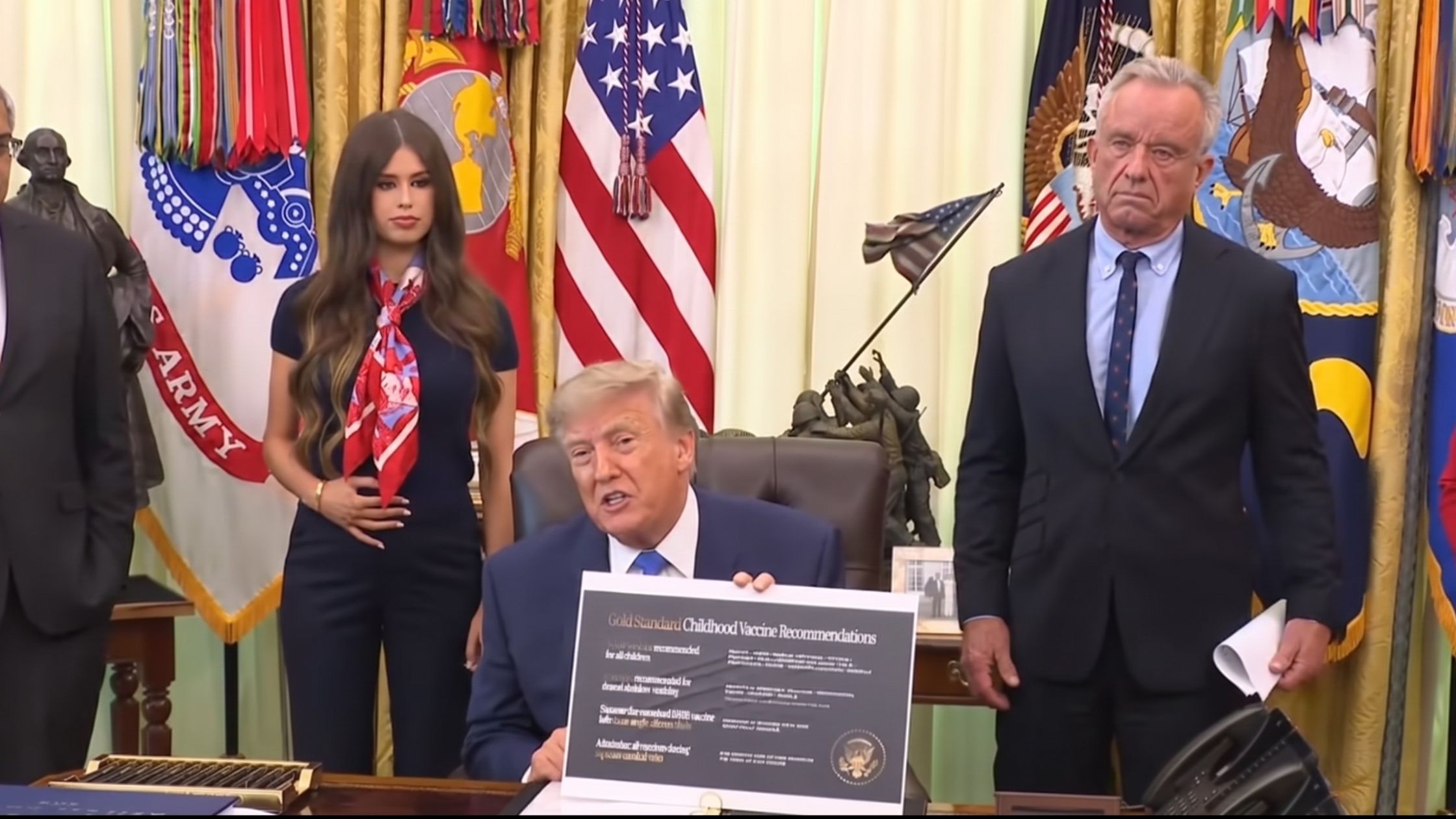
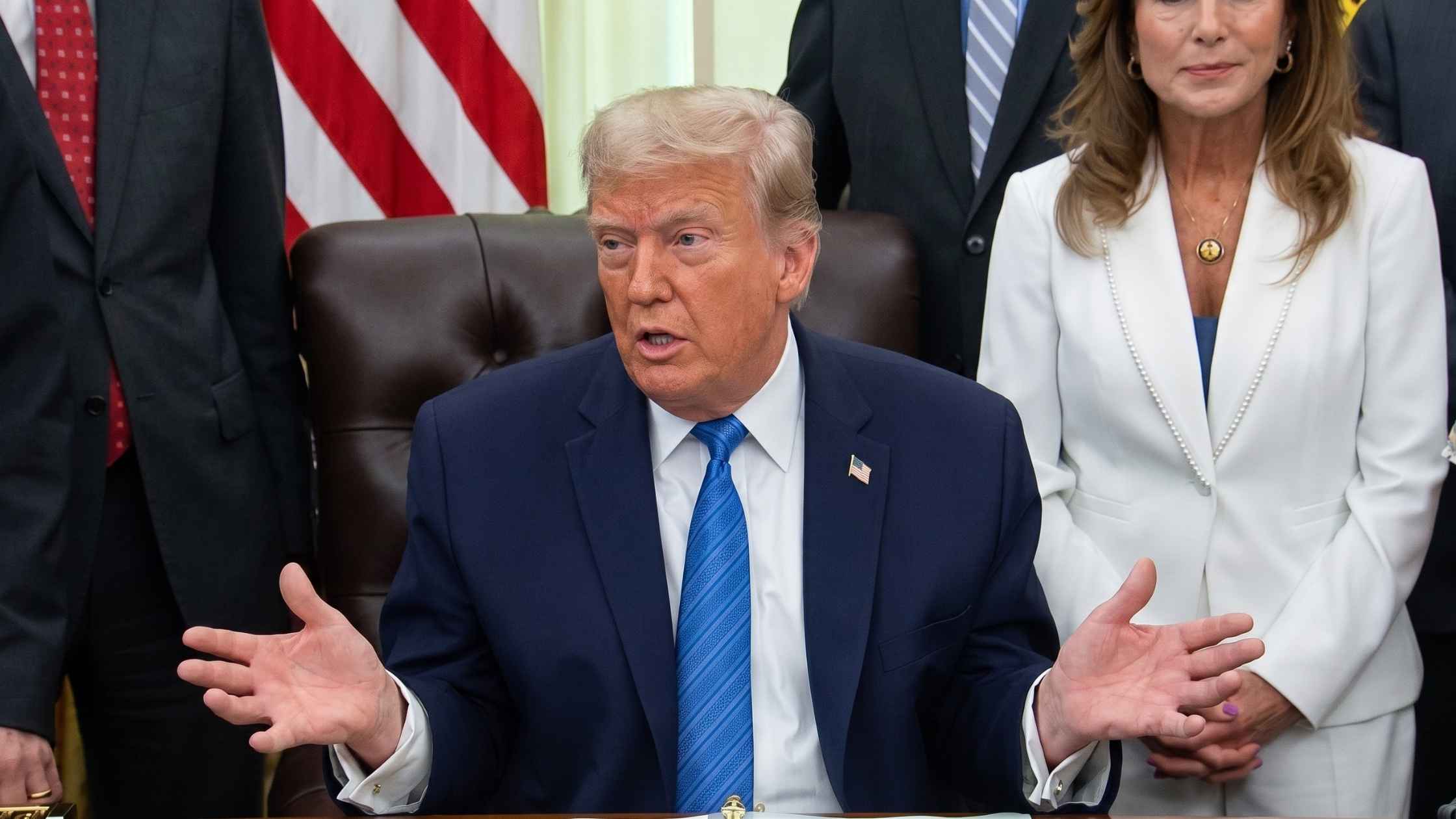
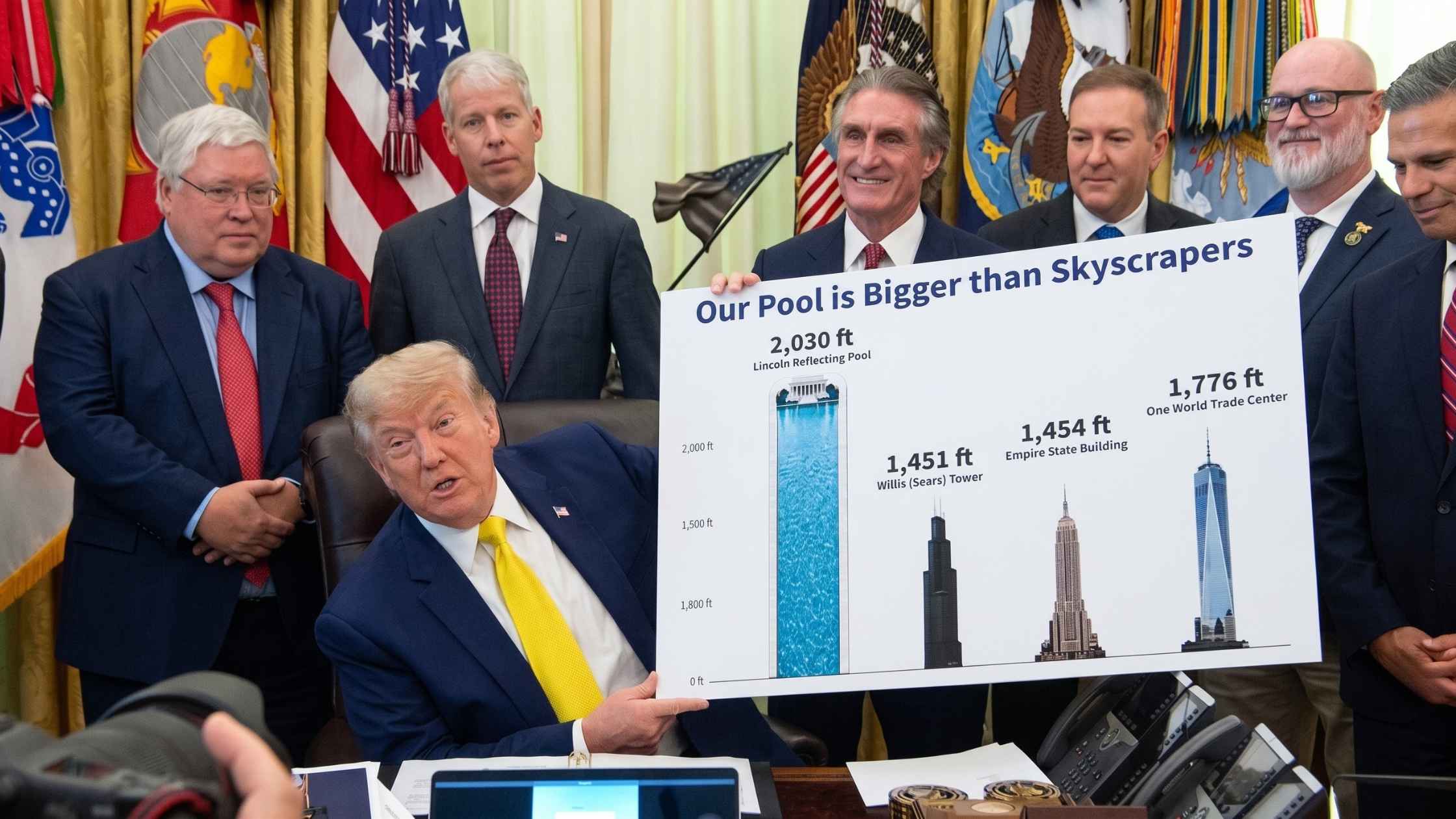
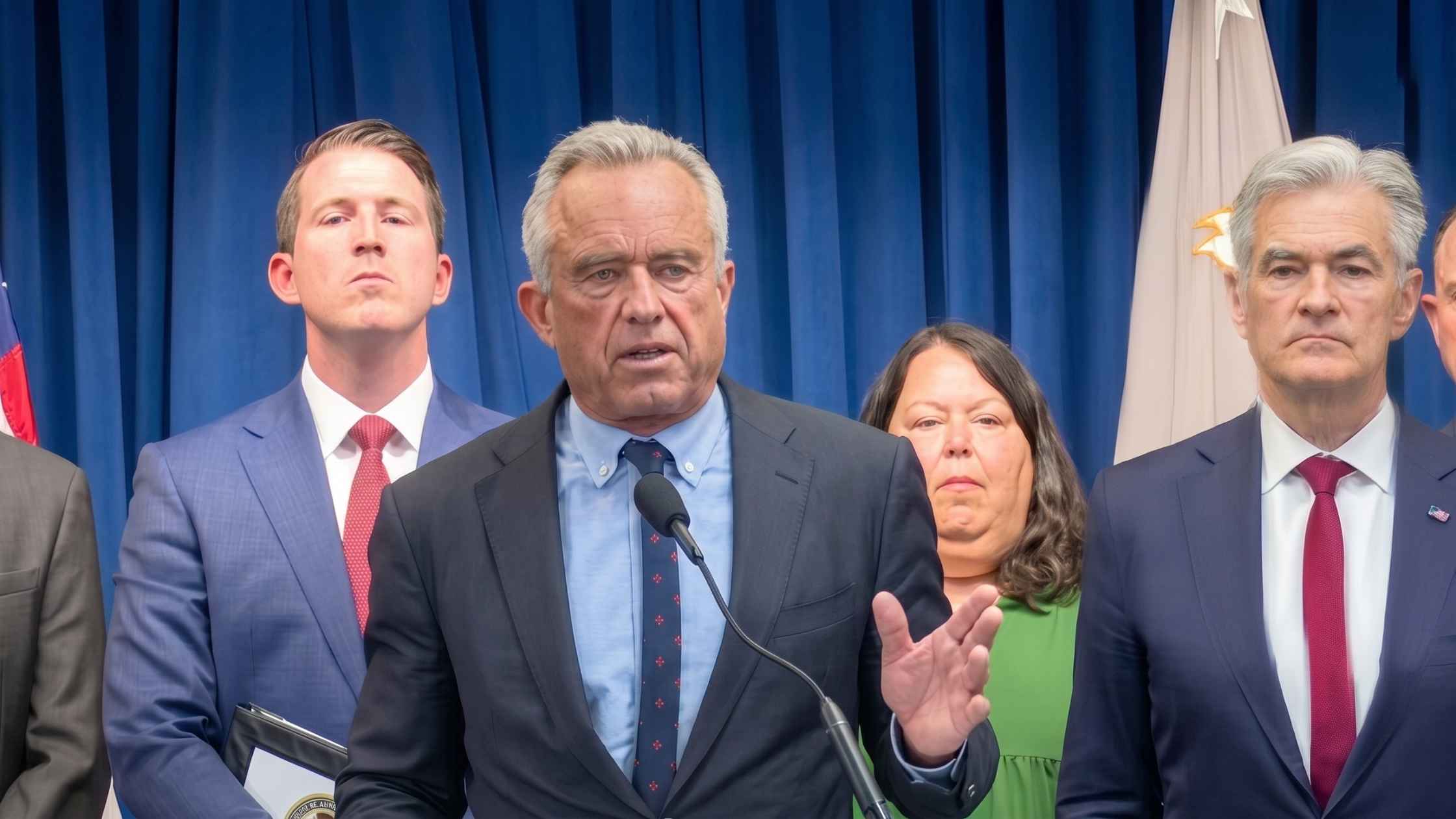
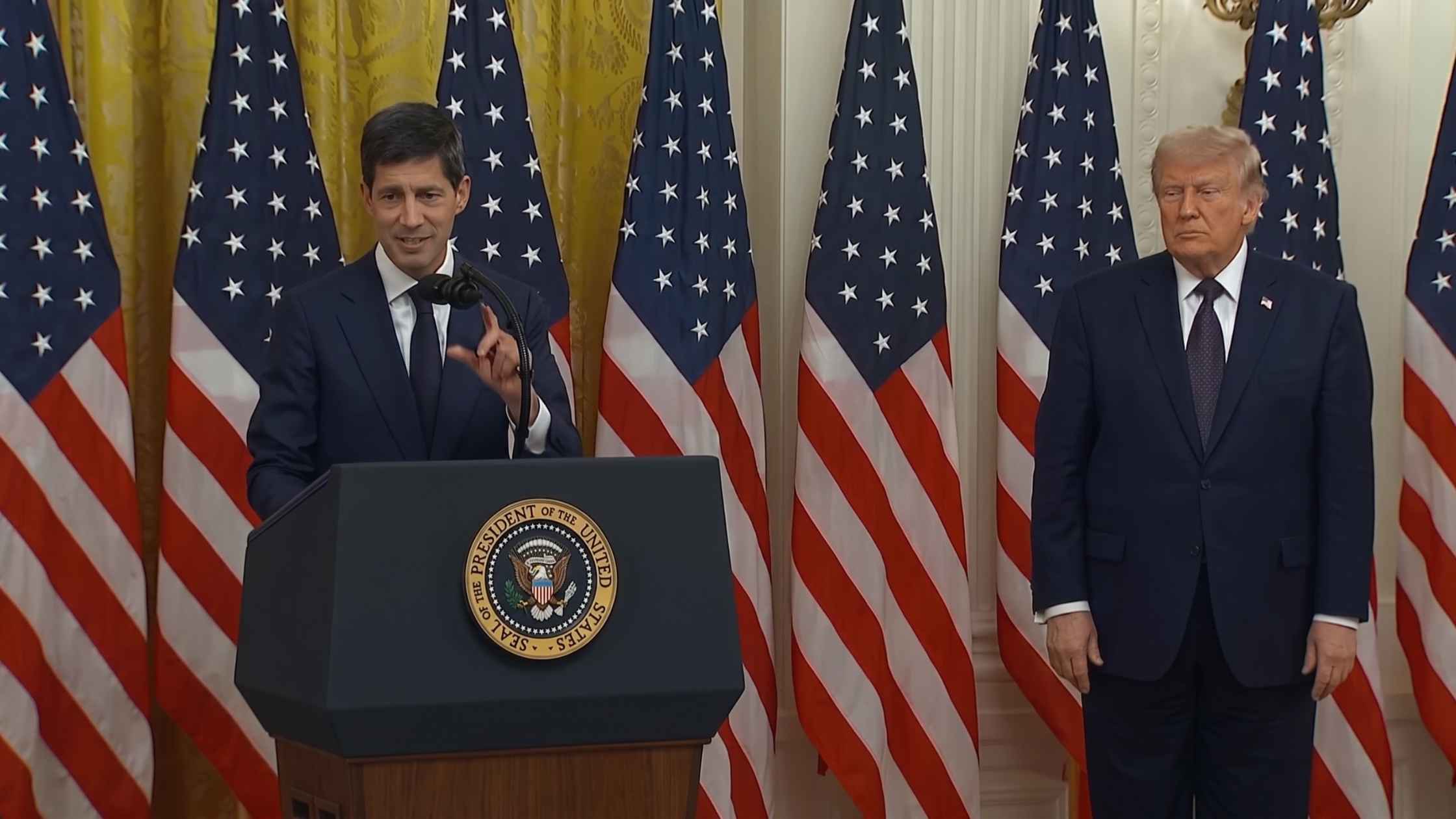
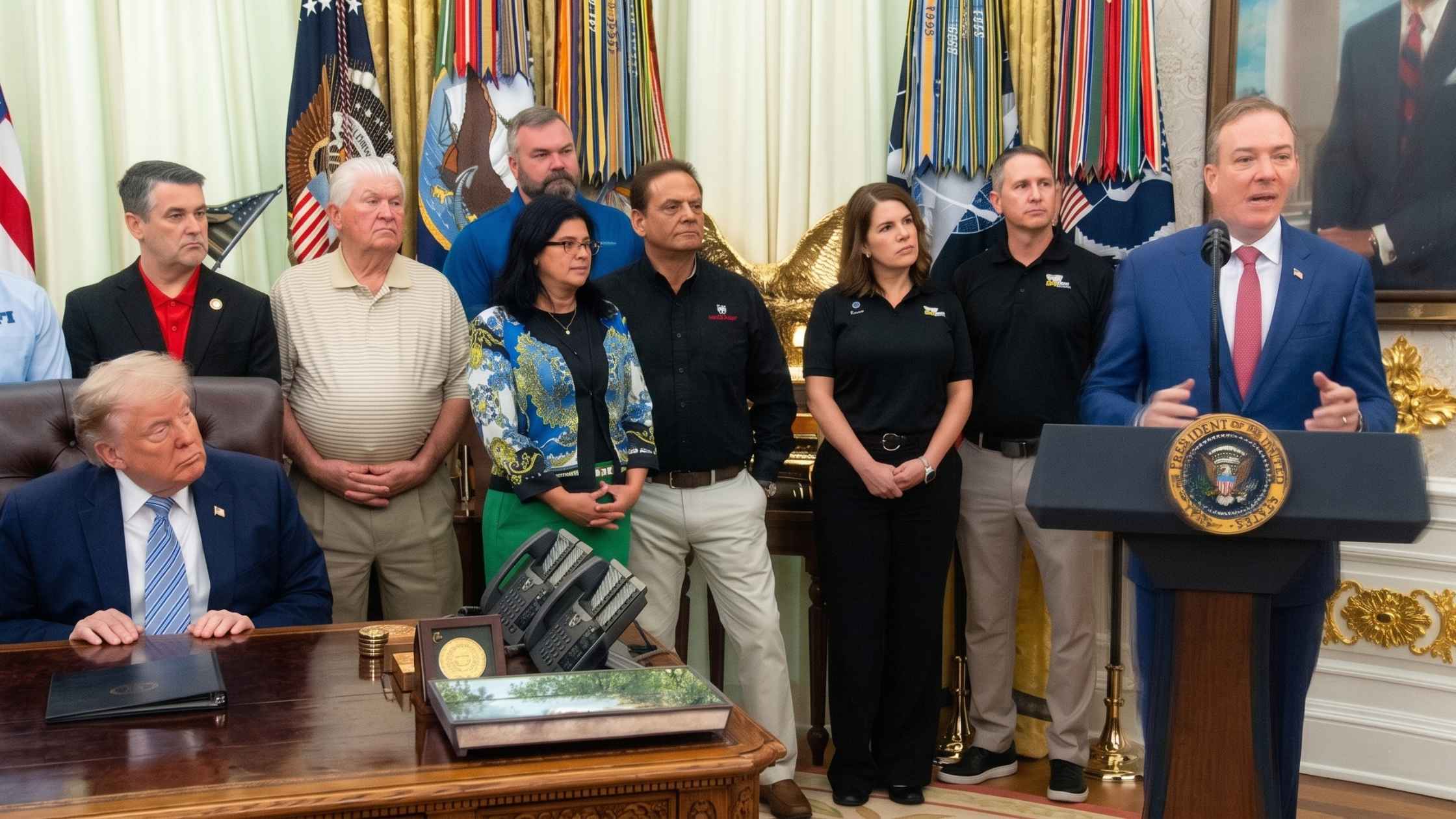
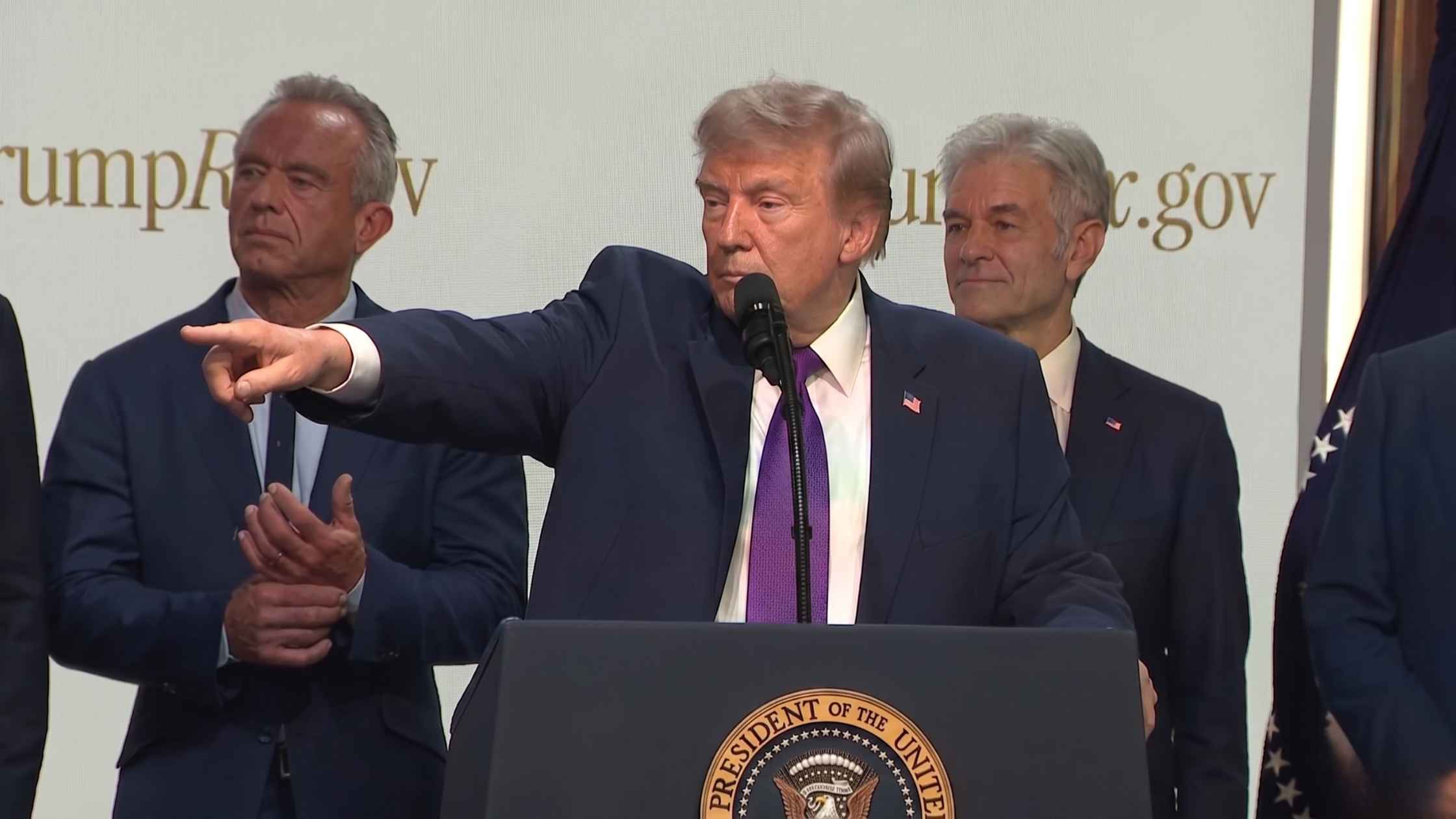
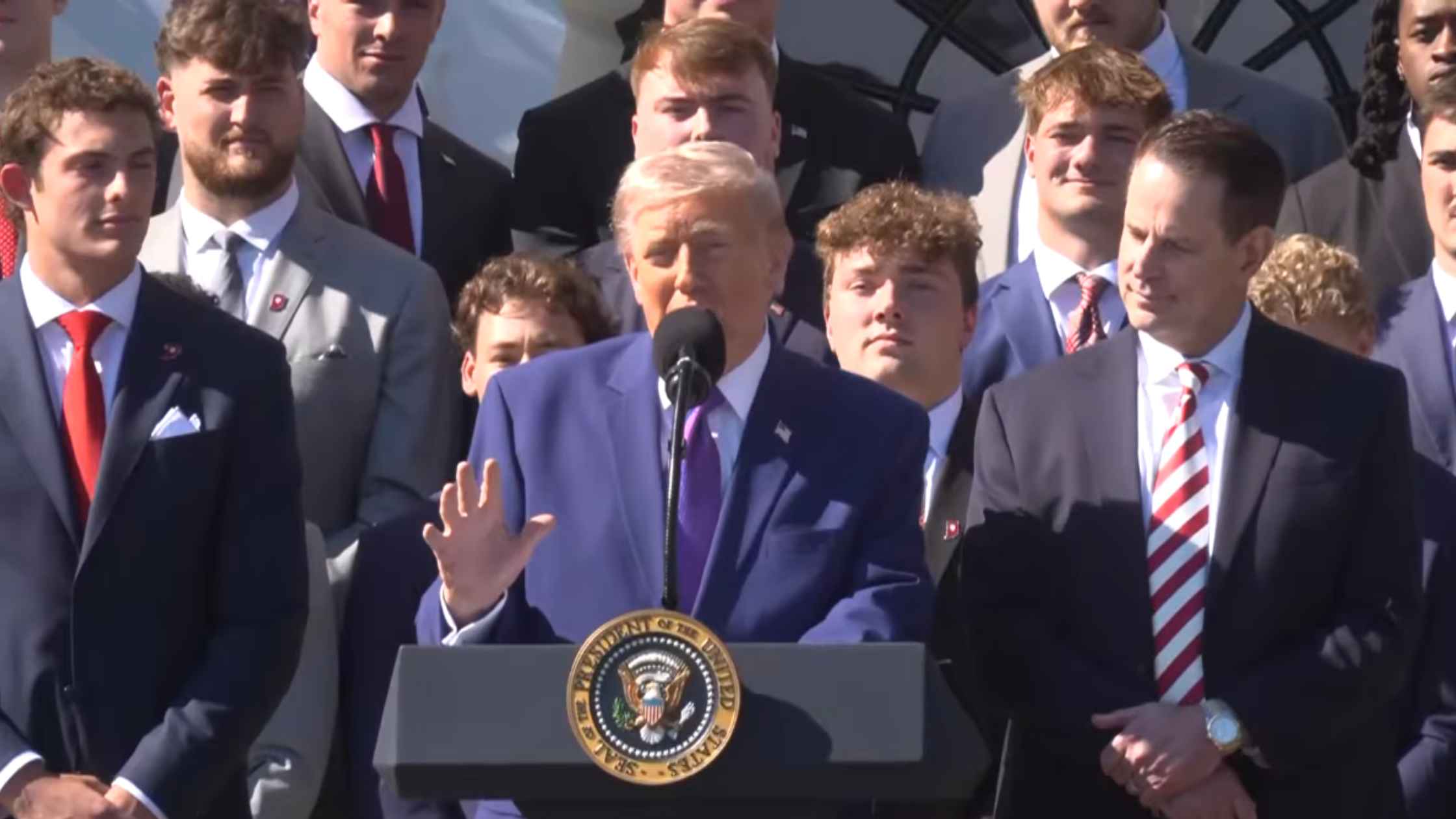
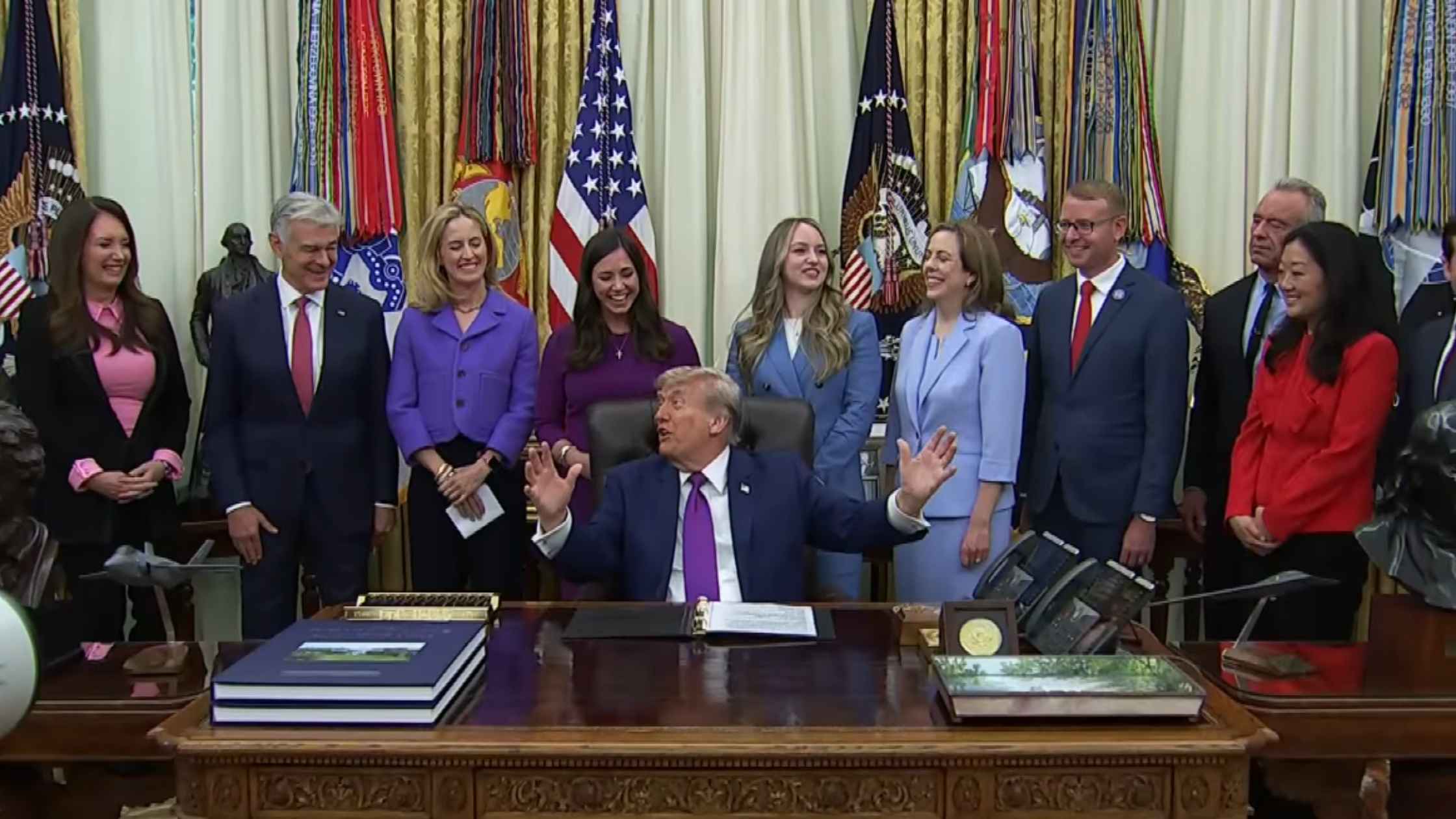
Donald Trump takes part in a rural healthcare roundtable alongside RFK Jr., Dr. Oz, and other health officials. Read the transcript here.

Dr. Oz speaks to the press.
Hungry For More?

Luckily for you, we deliver. Subscribe to our blog today.

Thank You for Subscribing!

A confirmation email is on it’s way to your inbox.

Share this post
LinkedIn
Facebook
X logo
Pinterest
Reddit logo
Email

Copyright Disclaimer

Under Title 17 U.S.C. Section 107, allowance is made for "fair use" for purposes such as criticism, comment, news reporting, teaching, scholarship, and research. Fair use is permitted by copyright statute that might otherwise be infringing.

President Trump (00:00):

... long and hard. For years they've been working on it. And I see Kevin's in the audience and I just want to thank you. You were fantastic on television today. I actually want to keep you where you are if you want to know the truth. Kevin Hassett is so good. I'm saying, wait a minute. If I move them, these Fed guys, certainly the one we have now, they don't talk much. I would lose you. It's a serious concern to me. So I just want to say thank you very much. You've been incredible. We don't want to lose him, Susie, but we'll see how it all works out. Okay? Thank you, Kevin. Great job.

(00:33)
And thank you for all being here as we discuss the largest investment in rural healthcare in American history. This is the big one. We're delighted to be joined by many incredible members of the healthcare community, including doctors, nurses, and pharmacists from all across America. We're also very happy to have with us some very talented people. A man who is really good at this, extremely non-controversial, which is, I wanted somebody non-controversial. So I chose Robert F. Kennedy Jr. to head the whole shebang up.

Brooke Rollins (01:10):

The best. The best.

President Trump (01:15):

And he's also happens to be a great guy. Brooke Rollins, who's doing a fantastic job at agriculture, and thank you. And how are the prices coming?

Brooke Rollins (01:24):

Sir, they're coming down.

President Trump (01:25):

Don't forget, we inherited a mess.

Brooke Rollins (01:28):

We sure did.

President Trump (01:28):

Remember eggs? They were up four times higher than they ever were. And in my first day, they said, "What are you going to do about eggs?" I said, "I didn't cause the problem." We didn't cause. We inherited a mess, but the prices are coming down.

Brooke Rollins (01:39):

Yes, sir. Wholesale prices are down 86%, retail a little bit less than that. But yes, we're making America affordable again.

President Trump (01:47):

With you in charge, I have no doubt and I appreciate it. Thank you.

Brooke Rollins (01:50):

Thank you.

President Trump (01:51):

And administrator for the Centers for Medicare and Medicaid Services, a really good man, a really brilliant guy. Dr. Mehmet Oz. Thank you very much. Thank you, Dr. Oz. And thank you also to Governor Jim Pillen, Senator Dan Sullivan and representatives, Rob Bresnahan, Mike Lawler, John McGuire, and Nic Begich. Thank you all for being here. Appreciate it very much. Oh, we have other congressmen here, I see, and a couple of senators and we appreciate everybody being here. Everyone wants to be a part of this. It's so important. It's maybe, I don't know, for many people there's nothing more important. I would say maybe defense, we need defense and we need offense too, by the way.

(02:41)
As part of the great Big Beautiful Bill we're increased and we have increased funding for the healthcare by an unprecedented $50 billion. That's rural healthcare. Nobody thought that was going to happen and we got it done. So we have rural healthcare for those that were trying to make a case that we weren't taking care of the rural community. I'm all about the rural community. We won the rural communities by numbers that nobody's ever won them before, and we're taking care of those great people. So we already did this. We increased funding for rural healthcare by an unprecedented record setting, $50 billion over five years, which will benefit Americans in all 50 states.

(03:24)
And this made possible and was made possible by cutting massive waste, fraud and abuse from Medicaid and reinvesting those funds to revitalize hospitals in our cherished rural communities and hospitals and rural communities. And I want to say with all of the fraud that we're seeing in Minnesota and California and other places, I actually think that if we do an unbelievable job, you could almost balance your budget, Kevin. If you take a look at the kind of numbers you're talking about, nobody ever saw anything like it. They're all corrupt politicians from the Governor of Minnesota to the Governor of California. Everybody, they're just corrupt politicians. And you're talking about hundreds of billions of dollars in fraud, waste fraud and abuse. But in fraud, you're talking about hundreds of billions of dollars.

(04:14)
Under the Unaffordable Care Act, which is Obamacare, it's called the Unaffordable. It is unaffordable. Remember that. Rural hospitals and communities were devastated by soaring costs and that continues. Despite colossal increases in government spending since Obamacare was passed, only 7% of the annual Medicaid spending on rural hospitals has gone to rural hospitals. So there's only a very little ... They didn't care. Obama didn't care about the rural community, to be totally blunt. What he did care about is insurance companies. And this was a bill to make insurance companies wealthy. And they did. They made insurance companies very wealthy. I would say they don't like me too much because they spent hundreds of billions of dollars and we're going to have that money spent to the people and given to the people, we're going to circumvent the insurance companies.

(05:07)
Partially as a result, rural healthcare facilities have suffered from low occupancy rates, workforce shortages, and failing programs that put Band-Aids, literally put Band-Aids over the problems in those communities. And we're not going to have that. We're taking great care of them. With the Rural Health Transformation Program, we are getting rural communities the health support they need, and we're getting it immediately. These funds will go to empowering rural hospitals, strengthening their workforce, modernizing facilities and technology, and ensuring that rural Americans get world-class healthcare in their own community, right smack in their own community like they've never had it before. And they've been hurt very badly by the Unaffordable Care Act.

(05:56)
Every single Democrat in Congress voted against the lifeline for rural communities. And I hope everyone knows this, and this is not about elections, but I hope you remember this in the midterms because the Democrats are just so horrible toward the rural community. But I want to take a moment to thank the incredible House and Senate Republicans who worked so hard on making this historic investment possible. That's what they did. And they did work hard. We, I don't think, got a Democrat vote, did we? Did we get one Democrat vote? We got all Republican votes. It was amazing feat. And I want to thank Mike, our Speaker of the House, Mike Johnson and John Thune for really doing a great job. It was tough. We have small majorities and I want to thank the Congressmen that are here for doing, in particular, for working so hard and getting this done.

(06:53)
Yesterday I also announced our framework to lower healthcare prices for all Americans, including those in rural America. And we're calling it the Great Healthcare Plan. We had to come up with a name and everybody wanted to say, "Oh, well, can we put something about lowering costs? Because we're lowering costs very substantially." So I had Bobby and I had Oz. We had everybody in there. We had a whole group of people trying to come up with ... So saying, "The cost reduction plan that gives you good healthcare." And I said, "It's too long. It's not going to sell." We had more plans. And they wanted to get the words cost reduction in their ... Especially you. They wanted cost reduction in, and then they wanted great healthcare in. I said, "Look, you can have one or the other, but it gets too long. We're talking about the name of a plan."

(07:47)
So we got it down to seven or eight words, which is far too long. Nobody could remember that much. And I said, "How about just call it, because this is the Great Healthcare Plan?" Now, a great plan has to be cost effective, otherwise it can't be a great plan. That's the way I looked at it. So we have a very glamorous name. It's called the Great Healthcare Plan, not the Unaffordable Care Act. I don't like that name. This is called officially the Great Healthcare Plan. That means low price and great healthcare. So you're going to have, at a lower price, great healthcare.

(08:21)
First, our proposal codifies the massive discounts on prescription drugs that my administration is achieving through our most favored nation provisions. Okay. We can go into this. We can go into this for hours, but the bottom line is we'll be paying the lowest price of any nation in the world. Whoever's paying the lowest, we match it. This could have been done years ago. I was going to do it in my first administration, but when COVID came toward the end, I said, "I can't believe ..." it wasn't the right ... It wasn't exactly a good time to be doing it. But I said, "Why isn't somebody doing it?" And the reason they're not doing it is that no other nation would agree.

(09:10)
France, as an example, paid 10% of what we paid. Germany was paying 13 or 14% what we paid. In other words, we paid many times more, not a little bit more, not 10% more, 10 times more. A pill would cost 10 times more in New York than it would cost in London, as an example, than it would cost in Munich. And this went on for many decades. This was right from the beginning. And the reason it went on was a little bit of the healthcare companies, but it was other nations. And I understand that. If I were heading Germany, I'm not going to double and triple and quadruple my healthcare. They got the healthcare companies to pay. It just took place over a long period of time. Got worse and worse. And it just hit numbers that were just absolutely unsaleable.

(09:57)
And if you remember, the doctors in the audience remember they said, "Well, we have to do research and development." I said, "Well, what about research and development for Germany?" Well, we've decided to put up the ... So the pill would cost five times more because of research and development and five times more for other reasons. They had all these phony reasons. And finally, I said to the healthcare companies, "Can't do it anymore. We can't do it." And it started, really, I tell the story. It wasn't meant to be funny. People find it funny. But a friend of mine who's a very smart guy, very, very rich, very powerful man actually, but he was very fat. And he took the I call it the fat drug, I won't give you which one. It was Ozempic. I won't tell you that.

(10:45)
And he went to London on one of his many business trips. It's all he does is business. He can't walk across the street, but he's a great businessman. And he said, "President, President." I said, "What?" He used to call me Donny. Now he calls me President. So I said, "You've come a long way." He goes, "But I have a problem." "What's your problem?" "In New York, I pay $1,300 for this drug." Now this means nothing to him. This is like a penny out of your wallet. The guy's worth hundreds of millions, billions of dollars. He said, "And in London, sir, I pay just a fraction of that." I said, "What are you paying?" "$87."

(11:27)
I said, "Well, is it the same drug?" I knew exactly what he was getting at because it bothered me for a long time. He said, "It's the exact same drug." And because of his wealth and his business smarts, he had it check, it was made in the same plant by the same company. It's identical. And "Here I pay 87 and in New York, I pay $1,300."

(11:50)
So it was too much to bear because after I told him that the drug does not work on him, because I saw him recently, he's actually fatter than ever. I said, "The drug is not working on you. You're going to have to go to something else, but it does work on a lot of people." And he said, "Thanks, you make me feel good." I said, "Well, I got to be truthful." You always tell the truth, right, Mr. Congressman? Oh, look, two of the great congressmen. But the drug, we have to do something about it because that's the same with every ... I would say Bobby, every drug, essentially. It doesn't have to be in that proportion. In some cases, it's much worse.

(12:32)
Because what happened, I might as well get off this crap because it doesn't explain it properly, because what happened is these countries are very smart, and the drug companies would go to them and they said, "Look, we're paying $10 for the pill. We're not paying more. Charge America." And this happened one time, then the next year, the next year, this is over 40 years. All of a sudden they're paying $10 for a pill and we're paying like $130 for the same pill. It just happened over years, slowly. And it got to a point over the last 10, 12, 15 years where it just was unbearable. And I went to a great executive at Eli Lilly, the top man, he's a very smart guy, and I confronted him and he had the same line that they always had, blah, blah, blah, research and development.

(13:27)
I said, "Look, look, we got to stop this nonsense. We're paying 10 times more for things than Europe. It's not research and development. And if it is research and development, they should pay their share of that too." And he said to me, and he's a great guy, he said, "Look, you're right. We can't defend it anymore." I said, "You're admitting it?" Because these guys had a ... All of them, they must have taken a class together, must have been ... It's probably illegal what they did, Laura, you'll check it right? They must have gone to school together and said, "This is the way we're going to fight this crazy thing where the United States pays 10, 12, 13 times more for a drug." Same drug, same drug made in the same plant.

(14:09)
And he said," Here's the problem we have. The nations are brutal. When we go in and say, 'we have to give you an increase.' They say, 'No, put it on America. We're not paying you on anything.' And they say it with such power and they actually shut us off from selling the drug." And it just happened over and over again. It got a little worse, a little worse, little worse. All of a sudden we're paying many times more for the same. I said, "Well, it's not going to happen anymore." He said, "The problem is, sir, you'll never get the nations to agree. It's impossible. They're very tough," and they are, "And they'd have to agree to a doubling or tripling of their drug prices in order to get you down because the world is a bigger place than us."

(14:50)
So it's not like you cut it in half. Actually, if they raised it a little bit, we'd go down a lot. You understand that? I think people understand that. So you raise it like from 10 to $20 or 10 to $30, but we'd go from 130 down to 30 or down to 20 because the numbers are much bigger. The numbers on their side are much bigger. So they'd need a doubling or tripling or quadrupling. Now, if you're the head of France, the last thing you want to do is say, "I'm going to quadruple the cost of a drug." And that's the way it is. But I said, "I know, but it's not fair." And this has taken place. And the head of Eli Lilly, and I really mean it, an unbelievable executive, an unbelievable guy, one of the most successful companies, and who's, by the way, spending hundreds of billions of dollars right now, he told me the other day, he's building six major plants in the United States. You know why he's doing that? Because of tariffs. He's doing that because of tariffs. Without tariffs, he wouldn't be doing that. Nobody understood tariffs until I came along. Other than President McKinley, he understood them a long time ago, and because of him, we were the richest nation that we ever were at that period of time.

(16:08)
And then when he died, he was assassinated, Teddy Roosevelt came over and he inherited a war chest and he built the Panama Canal, which is the single most expensive thing ever built in the history of the United States, relatively. We spent what would be the equivalent of $5 trillion building the Panama Canal. It was also the most successful thing probably we've ever built. And to this day, and then Jimmy Carter gave it away for $1. This is the same theory we have on favored nations. The great Jimmy Carter, President Jimmy Carter gave it away for $1. We lost 38,000 men. In those days it was men, I hate to say this, but mostly men. They didn't have a lot of women workers on the Panama Canal, but we lost 38,000 people. They died from malaria

President Trump (17:00):

... and snake bites. It was a combination of the... vicious snake, one of the most vicious. You get hit, you're dead. They died from snake bites. 38,000. They paid workers from the United States three times more than they made to come over to Panama and dig. For many of them, that was not a good deal. They died, 38,000. We gave it away for that. But that same stupidity having to do with the Panama Canal, and I could tell you about a hundred other stories too. You don't have time. But that's what went into this whole thing with favorite nations. So Europe and other nations all over the world were getting drugs from the same plant, same factory, same everything, same location, everything, same company for a tiny fraction of what we're paying. So our people were paying a tremendous amount.

(17:51)
So the gentlemen from Eli Lilly and others, we had a meeting, and they all finally put up their hands. "You got us. We give up." And they were great from that time, but we had a problem, the other nations weren't going forward. France turned it down. Germany turned it down. UK turned it down. European Union turned it down, the whole group. And they said, "There's nothing you can do about it, sir." And I said, "Yes, there is." "No, there isn't. You'll never be able to get them up. I mean, the whole industry's going to be torn apart." I said, "We'll get them up easily." "Are you crazy?" " Of course we'll get them up. That's what I do for a living. I get people up." So I called, I started with President Macron of France. A very nice person, I like him a lot. I hope he's listening because he doesn't believe that, but I do. He's a nice man.

(18:44)
And I said, "Emmanuel..." "Yes, Donald, Donald. Thank you so much for calling." I said, "You're not going to like this call. You're going to have to get your drug prices up." "No, no, no, no, no. I will not do that." I said, "Emmanuel, we're paying 13 times more than..." 13 times, not 13%. "... 13 times more than you are for this pill." I rattled off some numbers that are crazy. You know the numbers I'm talking about, Oz. Oz would give me some numbers. I'd say, "This is crazy. We're paying 10 times, 12 times, 13 times." "No, no, no, no, I will not do that." I said, "Look, you've got to do it. 100% you're going to do it." "No, no, Donald. I told you, I will not do that." I said, "Here's the story, Emmanuel. If you don't do it, I'm going to put a 25% tariff on all goods, wine, champagnes, and everything else coming into the United States of America." He said, "Donald, I would love to do this for you. It would be a great honor to do it."

(19:42)
And that's where it began. And I went through country after country. Susie was responsible for getting every one of those leaders on there. By the way, stand up, Susie. She is doing such a good job. She's the first female chief of staff, and she might be the best chief of staff too, but she's doing a great job. Thank you, Susie. So Susie got them on, and I just went one after another. I called Germany. "No, no, no, we will not do that." I said, "No, we're going to put a 25% tariff," which is, by the way, about seven times more than they would have to pay by raising their drug... Seven times. This wasn't like a little bit more, seven times more. And I may do that for Greenland too. I may put a tariff on countries if they don't go along with Greenland because we need Greenland for national security. So I may do that. I'll take you out of that. In fact, that'll end up being the story. But, actually, this is a much bigger story because we're reducing healthcare by numbers that you haven't seen.

(20:51)
So I spoke to the top 10 countries. They all said no, and within about two minutes, they all agreed, and we were off to the races. And now we have favored nations. It's called most favored nations. So if France is paying let's say $20 or $30 instead of $10, we are going to pay that 20 or 30. We pay the lowest price, whatever the lowest price is. So if France is paying $100, but Germany's paying $20, we pay what Germany pays. So we go from a horrible situation on drugs, prescription drugs, to the lowest price anywhere in the world. Is that a correct statement, Oz? Because they're going to blame you. If you want to correct me, you can, but you won't be here for long if you do.

Mehmet Oz (21:40):

You're correct, Mr. President.

President Trump (21:42):

Oz has left employment. No, but is that a correct statement?

Mehmet Oz (21:47):

That's absolutely a correct statement, and that's what we want to codify in the great healthcare plan. That's what we're codifying.

President Trump (21:53):

[inaudible 00:21:54].

Mehmet Oz (21:55):

Because if the president's not here, there's a flight risk with these companies not obliging us anymore because I think it's the strength of your personality, but also they know they'll follow through with the threats if we don't act. We believe other countries will change their opinions and so will drug companies, so we've got to get it into legislation.

President Trump (22:12):

Well, if you have the wrong president... The countries have tremendous influence over us. Look, why did we go to an income tax system instead of a tariff system? We had the wealthiest nation. If you go back to the 1800s, 1887, we had money, so much money, we didn't know what to do with it, but the countries at that time, same, no different. They have a tremendous influence over this country. For whatever reason, I don't know, but they do. So if you have the wrong president, they'll change the system in two minutes. I mean, they'll change it. And the drug companies are very powerful too. You have to deal with them. In this case, it was both. I mean, you had a problem with the drug companies, but yet a tougher problem in theory, other than the fact that I understood how to deal with them.

(22:56)
And I'm the tariff king and the tariff king has done a great job. And I hope we win the Supreme Court case because if we don't, be ashamed for our country, be ashamed. We have a great, safe, beautiful country now. We're doing better than we've ever done. We hit 42 stock market highs during the 11-month period that I've been here. There's never been anything like it. Stock market's hitting a new high again today. So it's been incredible. So just to end it on this, because it's such a big subject and it can't be explained by reading as good as my speechwriter as he's fantastic, but he can't write it in one sentence, what we're talking about. So we're going to get most favored nations. We will be taking prescription drugs down to levels, never even contemplated, and that's all great for healthcare.

(23:43)
Because when you're paying a tiny fraction of what you had anticipated paying prior 'til today, prior to this month, this all took place over the last month and a half, and the sad part is that when we first announced it, and we did it in a little bit less, more general form. When we first announced it, the Times did a story on page 22 or something, way back in the little story in the back of the newspaper. This is the biggest revolution in the history of medicine in this country because it's price. You're going to buy the drugs for a small fraction of what you were paying for them last month. And I tell the story of my first term, I was the one after 28 years that got drug prices down. It was either one quarter or one eighth of 1%. I got them down for the year, first time in 28 years. I was so proud of myself, I called the news conference. I said, "Ladies and gentlemen, for the first time in 28 years, drug prices have gone down for the year." One eighth of a point.

(24:49)
In fact, I had a chart. It was the worst chart I've ever seen. It was a line that went from January to December and it was dead straight. You had to get a little... like a carpenter just to see. I said, "This doesn't look good." It's not the greatest line, but I was proud of it because it went down either a quarter of a point or an eighth of a point, tiny. And now, think of what we're doing. We're bringing medicine down by many times, by many times nobody's ever seen. And there are two ways of... You could say 1,000%, 2,000%, or you could say 90% or 80%. The Democrats want you to say 90 or 80, but there are two ways of calculating it. You understand that, Dan. And we'll take either way, it doesn't matter, but we'll be paying a tiny fraction.

(25:39)
So that's going to go into our plan. And what I said is very important, it's very important that whoever is in this office is strong and intelligent. And if they're not, it could be ended, but what we want to do is we want to have it codified so it's very hard to change, and that's all part of the process. I think it's the greatest revolution because its financial is a big part of the drugs, and all of the doctors sitting there know exactly what I'm talking about. They have their patients in Europe and they say, "I can't believe it. I'm buying the same thing for 15% of what I pay in New York or in Chicago," and they're all nodding their head, "That's right." That's not going to happen anymore. We pay now just to end it. The lowest price in the world, whatever that is, that's what the United States of America will be paying.

(26:34)
Isn't that an amazing long story? I was going to say long, boring. It's not, but to me, it's long and exciting. It's the biggest thing to happen to healthcare. I don't think there's anything we can do. We can do all of our different methods, but there's nothing we can do that can ever top what we do. And the press should treat it fairly instead of not writing about it because they don't write about it because it's me. Primarily because it's me but also because it's Republican, and they don't write about it and they should be ashamed. Fortunately, the public understands it and that's why we won the election in a landslide. So it's a great thing. Instead of Americans paying the highest drug prices anywhere in the world by far, by 10 times sometimes, we'll now pay the lowest cost paid by the lowest nation. So the lowest nation, whatever that is, I hope they negotiate a great deal. I hope somebody out there of all those nations going to be a better negotiator than everybody else. And whatever they get, we get, Mike. Is that pretty good? Look at Mike, [inaudible 00:27:38], first time I've ever seen them smile.

(27:42)
And next, our plan would reduce your insurance premiums by stopping government payoffs to big insurance companies and sending the money directly to the people. I'm not really a healthcare maven, but I was always a good businessman. I started, I'm reading the paper and I see the money that the insurance companies were making from us on Obamacare and they're up by 1,000%. I think one was up 1,723%, 1,700%, and it's because of the massive amount of money that's sent to them by the United States government. And I said, "Why don't we just send it directly to the people instead?" And I made that statement. It was a common sense statement. I didn't check with anybody. I didn't even call Oz or anybody, but just made sense. I made a statement and it went viral. Can you believe it? It was so popular.

(28:32)
In other words, we cut out the insurance companies, they're making a fortune. They're good people. They're business people. I don't blame them, but we cut them out. We pay the money directly to the people. The people love it. I said it as a non-professional in that business. And I made the statement like it was... All of a sudden, it's like the biggest story. That one, the biggest story. And I get a call from Caroline, who's around here someplace. She said, "Sir, we're getting inundated." Margo called me too. Margot, you called me too. Everyone knows Margo. She's been here from the beginning, right from the beginning. But she said, "Sir..." Both of them, they said, "Sir, we're being inundated." "By what?" "You made a statement about healthcare being paid directly to the people into health savings accounts," or whatever you want, healthcare accounts. And I said, "I did. What's the story?" They said, "It's crazy. It's blown up." People loved it. And so that's where we started.

(29:36)
So Obamacare was designed to make insurance companies rich. It really was. I mean, maybe not knowingly at the time by Obama because he didn't know much about this stuff. It was designed by other people in Congress that are total pros that are bought off by the insurance companies. And the problem we'll have with this is we'll get no Democrat votes, even though it should be very bad. Very bad for them if they don't, but maybe you'll get some. You'll call some of your friends, fellas, and Bob, you'll call some of your friends over on the other side. I don't know how they can reject it. It's just so popular. It's so compelling. So Obamacare was designed to make insurance companies rich with taxpayer subsidies, and I want that extra money straight to the health savings accounts for you. And you can choose your own healthcare. You go out and negotiate your own healthcare. It makes people entrepreneurs, many entrepreneurs. They'll pick the healthcare that's best for them because it's so different.

(30:29)
A young person, they need healthcare for different reasons, and an old person doesn't need certain things that a young person needs, and vice versa. To further reduce insurance premiums, my plan ends the giant kickbacks to insurance brokers and corporate middlemen. We're getting rid of the middlemen. How long have you heard doctors? All these doctors over there look so smart. They're all brilliant people. I assume you're brilliant. Otherwise, you wouldn't be here, right? I assume we have the best. Do we have the best of the doctors? I would imagine, right? Hey, how cool is the White House? Okay. They're always in operating rooms. I wouldn't want to be in an... I don't like operating rooms, but they do. But how cool is the White House, right? The coolest place on earth. And this is where it all begins. This is where we came up with a little concept about a place called Venezuela. How did that work out? And this is going to be the same thing in terms of its precision. Its importance is so big. It's going to work just like that. Venezuela was so amazing, but I equate that to other things because we can do other things like that. It doesn't always have to be a Minnesota where everything is corrupt, where they have healthcare centers that nobody shows up and somebody's making millions of dollars, where they have daycare centers where there are no kids. It's a scam. It's a big scam. It's a horrible thing. We have a country that was great. We have a country that's now great again. It's really come a long way. Make America Great Again is almost going to be obsolete because our country is very close to... Originally, we were going to keep America great. We may have to switch to keep America great. But I don't know, there's something about MAGA we should never change. Susie said, "Don't change." We like MAGA. Everybody likes MAGA. So we want to make this precision just like a Venezuela, just like the attack on the Iran nuclear weapons, which wiped that out, just like all of the other things we do, they're precision.

(32:29)
We want to make it the opposite of Minnesota, California, and all these places that are so badly run. So to further reduce insurance premiums, my plan ends the giant kickbacks to those insurance brokers and corporate middlemen that you've been hearing about for so long. It also funds the so called cost sharing reduction program to bring down the cost of the most common plans on the exchanges by more than 15%. And next, the great healthcare plan mandates unprecedented accountability and transparency from insurance companies and all healthcare providers. We want transparency. You're not allowed to ask a doctor how much is it going to cost. You're going to have your heart ripped out and you're not allowed to negotiate. This is a giant scam. It's in certain ways. Look, nothing can compare to most favored nations, but when you give yourself the right to negotiate... You're not allowed to even ask how much it costs. You're supposed to go into a hospital and get operated on, then they send you a bill and you have to file for bankruptcy. Not going to let that happen.

(33:32)
So we're going to have insurance companies and healthcare providers, gonna have to have... and hospitals great transparency. The word transparency is a very important word, so they can't get away with ripping you off any longer. It requires insurance companies to make it easy for you to compare plans. You got to be able to compare plans. You can't do that now. You're not allowed to do that. It's not even believable. I'll tell you what, I used to sit, before I was a politician, home and I used

President Trump (34:00):

... just say, "How is that possible?" Things happen that, I guess, it's just the forces of nature, the forces of power. And you end up with very, very badly treated people, and they won't stand for it.

(34:14)
But these forces are going to release an earthquake of reduced price healthcare. You're going to have massively reduced costs. This is no longer we're going to cut it by the famous one-eighth of a point. You're going to have massively reduced healthcare, and it's going to be massively better. You're going to have great healthcare at a much lower price, which is the two things. We want great healthcare, and we want low price. You're going to have great healthcare at low price.

(34:42)
Now, you have terrible healthcare at a high price. You have horrible, horrible Obamacare healthcare. Like everything else he did, it was crap. It was a horrible plan. It was from day one, and it should have never been approved. It was a very sad night that night when there was a thumb raised.

(35:04)
Most importantly, we'll require any hospital or insurer who accepts Medicare and Medicaid to prominently post all prices. You're going to post your prices at their place of business, something they don't have to do, something they're not even allowed to do. We'll have the maximum price transparency, and the cost will come down just by that, not even talking about Favored Nations. The price will come down.

(35:26)
So, just in conclusion, I'm calling on Congress to pass this framework into law so that we can get immediate relief to the American people, including rural America. And I hope to get Democrat votes. They know. They saw it. I know a lot of Democrats, and they say that plan is unbelievable. "Are you going to vote?" "Well, I'm going to try." They have tremendous pressure on them. "Vote no. Vote no."

(35:53)
We have a couple of Republicans. Thomas Massie, he always votes, "No." There's something wrong with a guy. If you have any clinical psychiatrists in there, maybe go check out his mind, but he always votes, "No." He's a very bad person. He's a very bad Republican, bad American, when you always vote, "No," just vote, "No." "Do you approve?" "No." There's not a thing you can say to him either, Lala. Look, Lala wants to be nice. He likes to get along with everybody. I don't. I don't. But they vote, "No," but so I don't know. You have some people that are very...

(36:26)
I call him Rand Paul, Jr. Rand Paul always votes... I don't know why he votes, "No," but I guess he thinks it's good politics. I got him elected twice. If I didn't endorse him, he wouldn't have been elected, but he doesn't reciprocate, and I guess that's okay.

(36:39)
But I want to hear now, if I could, from Dr. Oz. And then we're going to have Dan Sullivan say a few words, and Rob, and Mike. And Governor, you're going to say a few words, and we appreciate you being here very much. You're doing a fantastic job.

(36:54)
I just want to leave by saying that this is the biggest thing to ever happen to healthcare in our country. It will not be covered that way by the fake news, and that's a sad thing. It will probably not be voted positively by the Democrats, and that's a sad thing. They all know how good it is. I think we can make healthcare into a Republican issue because the Republicans are going to be close to unanimous on this. It should be unanimous. Maybe we will be unanimous, but it'll be close, but we have a small majority. We probably need a little bit of help from the Democrats, so whatever we can do, we're going to do it. It's the biggest thing to happen to healthcare, maybe from the beginning.

(37:36)
So, Oz, would you take it away, please? Thank you very much.

Mehmet Oz (37:40):

Mr. President... Mr. President, thank you for standing up for American healthcare, and I just want to underline this fundamentally important issue. We need Congress to help craft the Great America Healthcare Plan.

(37:56)
And the Great Healthcare Plan will work. It's a brilliantly conceived framework. And as it comes to the American people, and they understand it, they'll want it. And it should represent the analogous situation similar to what you did, so brilliantly, last spring with the Working Families Tax Cut legislation that the president mentioned has created the Rural Health Transformation Fund, which is why we're here today. I want to put a little bit of texture around why this is such an important issue, because the Rural Health Transformation Fund is the largest investment ever, in American history, in our rural communities.

Speaker X (38:31):

Yeah, how about [inaudible 00:38:39].

Mehmet Oz (38:39):

50% increase the amount of money that Medicaid, which Secretary Kennedy and I regulate, into our rural communities, $50 billion. You can do the math. It's one billion per state. And that's an important factor because it got them competing.

(38:52)
There's 60 million rural Americans, and these folks do not have access to the same care that's available in urban and suburban America. Their life expectancy, if they're in a vulnerable situation, is nine years shorter because your zip code actually is your destiny. It determines how long you're going to live. And we can make a dent in this because the high rates of chronic disease and other ailments that plague our rural areas are often driven because they don't have access to care. That's going to change because of this sentinel legislation. And again, it's similar teams, the same leadership, same president, same Congress that passed the Working Families Tax Cut legislation, which is incredibly popular around the country and will make the Great Healthcare Plan successful as well.

(39:39)
From the day the legislation was signed to create this wonderful fund, this transformational fund, the team at CMS, which is under Secretary Kennedy, began working. And they're here today. Steph Carlton, outstanding chief of staff, Alina Czekai and Emily Chan, that day started working, it was July the 4th, by the way, on the specific vision for the program. How do you actually get the money out the door in six months? The president was insistent, did not want the money in Washington. So, began working closely to make sure that we'd use the money, not as a Band-Aid, but to empower those closest to the challenges that rural patients face. And who are those people? The 50 people who know rural healthcare the best, the governors. They wanted the money out of Washington into the governors' hands, and that was done in a remarkable way. The governors thought big. We have one here from Nebraska, who's actually the first to start working on community engagement, which is part of that legislation, as well. But we have to right-size healthcare in rural America, and that's an important phrase.

(40:38)
All 50 states submitted amazing ideas to transform rural healthcares in ways that should have been done decades ago. The CMS team awarded each team their portion of the $50 billion investment precisely with the same precision that we took Venezuela leadership, a convicted individual, and with Iran as well, the same position on time, before the end of the year, and got it out of Washington into the states.

(41:02)
Now, I want us to take a step back and do a little thought experiment, Mr. President, if you're willing to do this. If you, and God forbid this happened, had turned your head the other way in Butler, Pennsylvania, it wouldn't have been an ear injury. Now, I've been to Butler. I'm from Pennsylvania. Butler General Hospital is a good hospital. They don't have neurosurgery there. If you have an injury to the head, you have a golden hour to get cared for. You were taken to Butler General Hospital. Because the injury, thankfully, was not as lethal as it was designed to be, it wasn't a problem. But if you'd had a head injury, you could have had your life saved, but without a neurosurgeon, and there is no neurosurgeon at Butler General Hospital, unfortunately, you wouldn't have an option because Pittsburgh is a far, far ride away. That's the closest metropolitan area where there are lots of neurosurgeons.

(41:51)
But with this bill, this legislation rather, this funding of $50 billion, Pennsylvania got its share, and they're going to be able to build telemedicine hookups, even telerobotic surgery that would allow a injured individual in a car accident or any other reason that has a head injury in Butler General and rural hospitals across the country to access the best care our nation has to offer, so rural America will not suffer. That's the promise of what this money offers to our nation. It's not just paying the bills, not just picking up the pieces. It's actually transforming, using technology we have widely available in urban America, the way we save lives in rural America.

(42:31)
Each state competed aggressively because, for a billion dollars, Mr. President, you'll fight pretty hard. And they gave us brilliant ideas that they're talking with each other about. So, we're actually creating teams that now, across state lines, will connect because they're all Americans. And they base their advances on several pillars. Secretary Kennedy can talk about MAHA because there was MAHA elements to this, as well, but very precisely, sustainable access. We ask states, "How can we bring top care closer?" like in the thought experiment I gave you for Butler General. In Pennsylvania and North Carolina, they're regional spoke models, which at hub and spoke means you've got a big hospital in the city, and they adopt or work closely with some rural hospitals to solve the challenges of fragmented care. And that actually works. You share administrative back office work. You group purchase your stuff. You save money. You exchange medical records.

(43:23)
Alabama has no OB-GYNs in many of their counties, so they're doing something pretty cool. They're actually having robots do ultrasounds on these pregnant moms, so we can actually get those images back to the big center. So, we know if the child has a problem, and we know if that mother is at risk. We have one of the highest maternal mortality rates in the world in the country with the best medicine in the world. It's often stated, people ask, "Does healthcare stink in America?" Well, they don't like it. "Would you leave America to get healthcare elsewhere?" Nobody leaves. We have the best healthcare, if you can get to it. We don't want rural America left behind anymore.

(43:59)
As an aside, by the way, we've talked about the Most-Favored-Nation drug pricing. One of the first companies and areas we used Most-Favored-Nation drug pricing is fertility drugs. That's why we're going to have so many Trump babies because we've dropped, dramatically, the most expensive part of the fertility space, and so America no longer will pay so many times more. In that case, it was 10 times more for the same fertility drugs that they're available for moms who want to get pregnant in Europe.

(44:26)
I want to thank Terry, who's here as a nurse practitioner, Andrew, who's a doctor, West Virginia, New Mexico. They're representatives of the workforce in rural America, but there are only two of them here, representative, because we don't have enough people working in rural America. It's a big challenge.

(44:41)
So, Delaware is creating its own medical school, their first ever medical school in a rural part of the state. So, that can get more local talent that will stay local in those parts of Delaware. Michigan is launching the high school, the healthcare Pipeline grant program. They want to take kids out of high school in Michigan, local rural communities, and get them into the system, get them trained as nurses. Because they'll stay home because they're from those communities, and they'll save lives for decades there. These are the types of programs that can get our rural communities and economies up to high gear and keep it that way long after this five-year funding is done.

(45:16)
And finally, tech innovation. Rural communities would benefit the most from high-tech advances like we just discussed, as possibly if there was a head trauma case. Many states want to partner with our CMS data interoperability network. It was created by Amy Gleason, who spearheaded so much of the technology transformation in our government. It's going to support the president's pledge to provide transparency, that he mentioned as part of the Great Healthcare Plan. And Congress can ensure these are all available for decades to come, if we can get this legislation through.

(45:47)
As in the tech innovation forefront, just to give you a couple examples, Texas and Hawaii are making targeted investments in statewide telehealth, so everybody has telehealth. The best doctors for the best knowledge available where you are. We'll meet you where you are. If you're a vet and depressed, and you're thinking of taking your life, we'll be there. Just let us know you're in trouble, and we'll help.

(46:06)
Alaska wants to deploy, and I'm going to hand it to Senator Sullivan in a second, wants to deploy unmanned pharmaceutical distribution kiosks and drones that will deliver medications because in the north slope of Alaska, you can't get there this time of year. So, these technologies, they exist. Why are we using them in Midtown Manhattan? We should use them in rural Alaska.

(46:24)
This administration is committed to collaborating with all 50 states, all 50, red and blue, all 50 states to carry out bold plans to tackle the challenges that local communities face. We're not pouring funds blindly, however, into a broken system. We're going to carefully, precisely, as the president said, target this investment with healthcare front running rampant.

(46:46)
And I was in Minnesota this week. Mr. President, it's worse than we've heard, but Minnesota, pardon the pun, is just the tip of the iceberg. California is the varsity team when it comes to fraud-

Speaker X (46:56):

That's right.

Mehmet Oz (46:56):

... waste and abuse. We're not going to let that happen. We want transparency for this $50 billion investment. We owe it to Capitol Hill, we owe it to this president, and we want accountability to be a top priority.

(47:07)
For that reason, we've created a Office of Rural Health Transformation at CMS for long-term oversight, the office led by Alina Czekai. Alina, again, was one of the people who helped create this program in the forefront. She was in the first administration, Mr. President. She's going to guide states in implementing their rural health transformation plans, coordinate all the federal and state partnerships, making sure there's appropriate oversight.

(47:31)
In addition, every single state is going to have a dedicated project officer. We will be there with you. We're going to help you. Please engage us. You've got lots of lives at risk. It's a true state-federal partnership, unbelievable, extraordinary milestone for healthcare. Your zip code will no longer dictate whether you have excellent healthcare. Your zip code will no longer be your destiny. It's not going to dictate your life expectancy.

(47:53)
Mr. President, I cannot thank you enough for the leadership that it took to get this $50 billion investment in rural healthcare. They don't make a lot of noise. They just want to get the job done. You stood up for them. And Congress, God bless you for making this possible. Please do it again. Please do it again for the Great Healthcare Plan.

(48:10)
Let me hand it to Dan Sullivan, who's a spectacular member of the Senate, and obviously, Alaska, they're pretty rural.

Dan Sullivan (48:17):

Thank you. Thank you, Dr. Oz. And Mr. President, I am very honored to be here. This is a really exciting day. I want to thank you, sir, and your team. Worked really closely with Dr. Oz, Secretary Kennedy, many others. This is a great example of how Congress working closely with your administration can achieve historic things.

(48:48)
This is historic for our rural healthcare, certainly, and the Working Families Tax Cuts Act. You combine it with what you were talking about, sir, in terms of drug price reductions for all Americans. So, these are two things that are happening right now in our historic... And I agree 100% with you, Mr. President, has got a lot of press even though it is historic. It's going to really impact people in rural America, especially my state, this fund that I want to talk about, but what you've done on the drug is even-

President Trump (49:26):

Dan, will you get Lisa Murkowski to vote for it?

Dan Sullivan (49:28):

She voted for it.

President Trump (49:30):

No, are you going to get her to vote for the-

Speaker X (49:31):

[inaudible 00:49:32] great.

President Trump (49:32):

... Great Big Beautiful Healthcare Bill that we're doing?

Dan Sullivan (49:34):

Oh, when we get that, I think MFN drug pricing, I bet-

President Trump (49:38):

No, are you going to get her to vote for it?

Dan Sullivan (49:39):

... every member of Congress votes on that.

President Trump (49:39):

Are you going to get her to vote for it?

Dan Sullivan (49:41):

We'll work on it, sir.

Speaker X (49:41):

Good question.

Dan Sullivan (49:44):

We'll work on it.

(49:47)
So, let me actually talk a little bit about the context of what's going on in Alaska and how this relates to it. After four years of being locked up and shut down by the previous administration, we are on the cusp of achieving some huge goals in my state that we've been working on for decades.

(50:08)
We have this huge resource development boom going on on the north slope of Alaska. I was with a bunch of the Inupiat Alaska Native people who live up there. They're so excited about what's happening there. We are, as you know, Mr. President, building icebreakers when we're homeporting some of those in Alaska. We have huge historic infrastructure in economic and national security investments happening, in particular, the gas line that you have championed so much, the big LNG project. All of these things are happening. It's really exciting.

(50:45)
By the way, all of these issues I just talked about, all of those were in the Working Families Tax Cuts Act, so there's a lot of excitement. But Mr. President, in addition to a strong economy, the thousands of jobs that these projects are going to have, we have to have

Dan Sullivan (51:00):

... Have a strong healthcare system in every state. And rural Alaska, as you mentioned, as Dr. Oz mentioned, has often almost always been an afterthought when it comes to investing in healthcare in America.

(51:17)
And that's not happening anymore after the Working Families Tax Cuts Act. As you said, Mr. President, as Dr. Oz said, this is the biggest investment in rural healthcare in American history. $50 billion, the award the great state of Alaska was able to get working with Dr. Oz, and the parameters of the bill was about 1.4 billion over five years to transform our healthcare system.

(51:45)
So, that's really exciting, but here's a big deal. This is not just about money. This bill isn't just about money. The reason it's so impactful is that it's focused on letting states and governors design the system that they need.

(52:05)
Alaska has many unique healthcare challenges, Mr. President, as you know. But for decades, the mentality in Washington DC is this approach to one size fits all. DC tells every state, "Here's how you have to do it." And it never works. It never works. It certainly doesn't work in my state.

(52:25)
I'll just give you one example, the federal match on Medicaid. Our state typically has the lowest match in the country, even though we have the highest healthcare costs and highest delivery costs in the country. The one size fits all doesn't work.

(52:40)
This bill is different. This bill that we wrote with your administration is all about allowing states to design a system that works for them with CMS guidance. And this will be a generational opportunity for every state to bring healthcare closer to home, to make it more responsive to the people who live in that state and make it more affordable.

(53:05)
I'll just end with this, Mr. President. Like I said, a lot of excitement. We've got Governor Dunleavy, who sends his greetings, was hosting the stakeholders in Alaska who are going to be applying for these funds, working with CMS in our state. Over the last couple of days, we have over 300 people coming to these meetings on how to use this transformation fund to better healthcare in Alaska. And this is going to help my constituents. It's going to help every American. And it is really exciting. And I want to thank again you, Ms. President, and your team.

President Trump (53:39):

Thank you. Thank you, Dan.

Dan Sullivan (53:39):

Thank you very much.

President Trump (53:40):

Thank you very much. We're going to have to go very fast. We're going to have to go very, we are way behind schedule, and I have a couple of meetings that are very important. Nothing more important than this, but let's go. Come on, Bob. Rob?

Rob (53:58):

Fire round.

President Trump (53:58):

Please.

Rob (53:59):

Mr. President, thank you very much for having me here today. And I represent Northeastern Pennsylvania. Your governor from Scranton, Pennsylvania, so never had the opportunity to meet, but I inherited a very similar problem. Before I was even sworn into office, I had two hospitals, Moses Taylor and Regional and Scranton that were eminently facing closure.

(54:18)
And working with Dr. Oz, Administrator Oz, and the CMS team has been absolutely incredible on so many levels. And thank you again for intervening and shepherding us through that process.

(54:28)
But when you're looking at Pennsylvania, we're going to receive over $193 million. In five years, it'll be over a billion dollars for the Commonwealth of Pennsylvania. And when you think about Northeastern Pennsylvania, clinics and regional hospitals, rural hospitals are the backbones of our communities.

(54:43)
So, making a targeted investment that is not just going to Band-Aid over poor operational procedures, it's going to actually transform rural healthcare, that's what we are so excited about. Pike County in my district is the largest growing county in the Commonwealth of Pennsylvania, where there's not a hospital. The nearest commute to a hospital is over 55 minutes away.

(55:02)
So, these are going to be funds that will be so imperative. The unprecedented investment is going to be incredible. And thank you for having me up here and being a part of this journey.

President Trump (55:12):

Thank you, Rob. Appreciate it.

Speaker 2 (55:14):

Thank you, Mr. President. This is a great opportunity to be here with you and your team. Dr. Oz has been a tremendous asset. The $50 billion commitment to rural health transformation is critical. New York State is going to see about 212 million in the first year, which is vital for workforce development, access to care, primary, behavioral, maternal, emergency, telemedicine, etc.

(55:40)
How were we able to do it? Because we rooted out waste, fraud, and abuse in the system. And Democrats will just say we cut a trillion dollars in Medicaid. That's not what we did. We said, "You need to be eligible. You need to be a citizen. You need to work if you are able-bodied without dependent children."

(55:58)
We reigned in the provider tax and state-directed payments, which have exploded over years. And we are taking this money, not only preserving Medicaid for the IDD community, our seniors, our children, our single mothers, but we're investing it in rural health.

(56:13)
When you look at Obamacare, health insurance premiums have risen 96% since Obamacare took effect. Insurance revenues up 2,000%. Mr. President, you are 1,000% correct that the insurance companies are the problem. They wrote Obamacare. It's to their benefit, and the American people are being screwed.

(56:32)
And so, we can get a bipartisan agreement on what you are trying to do. When it comes to lowering drug prices, I will tell you one of the largest pharmaceutical companies is in my district, in Westchester County. I met with them in 2024, and I said, "What would you do to lower drug prices?"

(56:49)
And the response was, "Go after the European price controls."

(56:52)
You are spot-on on taking on the price controls that have been put in place. Most favored nation is the single best thing we can do to lower prescription drug prices here in America. The pharmaceutical companies will tell you that privately.

(57:06)
And that is the fundamental fact. We need to go after PBM reform, associated healthcare plans. We put that on the floor. Every Democrat voted against it, every Republican for it. Those would reduce costs by 11% because businesses, small businesses would be able to pull together and purchase healthcare plans at a lower rate.

(57:26)
We need to go after the PBMs and make sure that insurance companies are not owning providers and owning PBMs. That is what is driving up the cost of healthcare in this country.

(57:37)
You've talked about IVF. I've been a big champion on this. We need to make sure the insurance companies cover it. I also have a tax bill to provide tax incentives to Americans, and what you have done to lower IVF costs on the drugs is critical.

(57:51)
And you are 1,000% correct on expanding HSAs. I fundamentally believe that we can address the issues with Obamacare, make sure that the American people have access to care at a lower rate.

(58:04)
We can get a bipartisan agreement to address the EPTC with expansion of HSA so that the money goes to the people and not the insurance companies. We are committed to working to get this done, and I thank you for your leadership.

President Trump (58:17):

Thank you. Thank you.

Speaker 3 (58:18):

Governor Pillen.

Jim Pillen (58:20):

Mr. President, gigantic thank you. And thank you for your incredible leadership. Your courage gives me more courage to say it the way it is. We're working very hard in Nebraska to run government like a business.

(58:34)
This investment into rural America, which by the way, in all of Nebraska, you poll 85%. I don't know what the hell's wrong with the other 15, but 85 is a pretty good number.

(58:45)
I think, be very, very brief. This plan will allow us to do common sense, pragmatic investments in rural Nebraska, and they will be sustainable. We will make sure that we don't need another dollar after five years. We are working on simple things like food. Real food is good medicine. We're working on making sure that all of our veterans, Nebraska's 500 miles long, 250 miles wide, no longer are veterans going to have to drive to Omaha to get care.

(59:21)
We're going to take care of our veterans at home. Investments and technology so we can educate our children in rural Nebraska to provide healthcare are really, really important issues. And I think that the other is we've developed what we call Six Regions One Nebraska, and that will focus and take advantage of those.

(59:41)
So, we're working on what we have and then being able to use these resources to also help us within mental health and drug care as well. So, we're incredibly grateful. Nebraska, we work hard. We're about faith, family, hard work, the American dream, and we don't ask for much help in rural Nebraska.

(01:00:01)
So, we're really grateful for this investment. Thank you.

President Trump (01:00:04):

Thank you.

Jim Pillen (01:00:05):

Thank you.

President Trump (01:00:05):

Thank you for being here. One minute.

Brooke Rollins (01:00:10):

How about 30 seconds? How about 30 seconds, sir? As a small town kid from Glen Rose, Texas, population 1200 where I grew up, what you are doing today changes everything. And on behalf of our farmers and our ranchers in rural America, it is a new day, and we're so grateful.

(01:00:27)
The final thing I'll say is I think about Abraham Lincoln, who also sat in this room, and I think about other presidents throughout American history. And you think about how the fundamental course of American history has changed in certain pivot points throughout history.

(01:00:41)
I think about you as the peace president. Eight wars solved, more coming. I think about you as the security president, a border that is secure for the first time and more than any time in American history. I think about you as the prosperity president. We talk about Kevin wages going up, poverty coming down.

President Trump (01:01:00):

We'll give her more than one minute. In fact...

Brooke Rollins (01:01:03):

Oh no, I'm almost done. I'm almost done.

President Trump (01:01:05):

No, she can speak as long as she wants.

Brooke Rollins (01:01:10):

I'm almost done. The prosperity president and what's happening. Think about you as the affordability president. Everything is coming down. Inflation is coming down. The cost of groceries is coming down, fuel, housing, etc.

(01:01:22)
And sir, today, in the last two weeks, you will go down in history as the greatest president for the health of this country in history. Think about our new dietary guidelines from Bobby Kennedy and I, but with your leadership, putting real food back in the middle of our healthcare conversation.

(01:01:42)
Whole Milk for Healthy Kids with those dairy farmers two days ago. We were in Pennsylvania talking about it yesterday. And today, putting the patient and the doctor back in charge of healthcare with great leaders like Governor Pillen.

(01:01:57)
God bless you, your leadership and all of our leaders. Thank you so much, sir.

President Trump (01:02:05):

Thank you very much. Thank you very much. [inaudible 01:02:06] And Terry and Andrew, thank you. Thank you very much for being here. I hear you're just outstanding people and have really helped. We appreciate it. Do you want to say something?

Speaker 1 (01:02:12):

Thank you, President Trump. And I would just echo everything that's been said here. Thank you very much for what you're doing. I'm from the northwest corner of New Mexico. We also work with the Navajo Nation.

(01:02:23)
And so, we have a lot of rural areas in our state and in our county. I'm also a county commissioner. So, I take as being a nurse practitioner, county commissioner, with a heavy weight in order to see this happen. And it will help produce accessibility, which is a huge thing.

(01:02:45)
People have to drive for miles in order to see a healthcare provider, workforce, quality care, and sustainability for our hospitals. That's what we're looking at. We meet next week in Santa Fe with our legislators. And so, we're going to be addressing the licensure compact as well. And-

President Trump (01:03:05):

They've got to clean up their elections in New Mexico.

Speaker 1 (01:03:08):

We're working.

President Trump (01:03:09):

Because those elections are so corrupt. It's incredible. If they clean it up, we'd win by a lot, but they are really corrupt elections. So, I think if you want to do this, you have to tell them to start working on that. It's unbelievably one of the more corrupt states in terms of that. But you, uncorrupted, so I appreciate you being in here.

Speaker 1 (01:03:26):

Well, the northwest corner loves you.

President Trump (01:03:28):

I know. I know. Thank you. I know we have great love in New Mexico, but the elections are so corrupted. Not much you can do about it. We have that with numerous states. Thank you very much. Andrew, thank you very much. You have anything to say?

Andrew (01:03:42):

Mr. President, thank you for having me here today. It's an honor to be here to represent my community. I'm from Northwest Georgia. I grew up in West Virginia to represent my colleagues and my profession. It's truly an honor. This is so important to our patients to put the physician and the patient back together and take everything else out of the middle.

(01:03:59)
I practice in cardiology. Having efficient, effective, high quality care is so important, and time is of the essence. And patients need to be able to have close proximity to their doctors to get the care that they deserve. Quality of care shouldn't matter about the zip code. We should be able to do what we are best at and take care of our patients on an equal playing field, and this certainly helps that. I greatly appreciate all that you've done for the American people.

(01:04:22)
You are an inspiration to us. You make us believe no problem is too big to solve. I mean, you are representative of that. And I thank you for your leadership. Thank you for this opportunity to be here and thank you for putting healthcare at the forefront. It's so important to every patient and every family that we take care of.

President Trump (01:04:37):

Thank you very much, Andrew. Great job. Great job you both do. Amazing. I've heard unbelievable things. And doctors in particular, thank you very much for being here. We very much appreciate it. Thank you everybody. It's a big story. Thank you.

(01:04:50)
Thank you, Bob.

Hungry For More?

Luckily for you, we deliver. Subscribe to our blog today.

Thank You for Subscribing!

A confirmation email is on it’s way to your inbox.

Share this post
LinkedIn
Facebook
X logo
Pinterest
Reddit logo
Email

Copyright Disclaimer

Under Title 17 U.S.C. Section 107, allowance is made for "fair use" for purposes such as criticism, comment, news reporting, teaching, scholarship, and research. Fair use is permitted by copyright statute that might otherwise be infringing.

Subscribe to The Rev Blog

Sign up to get Rev content delivered straight to your inbox.