
Artemis Update

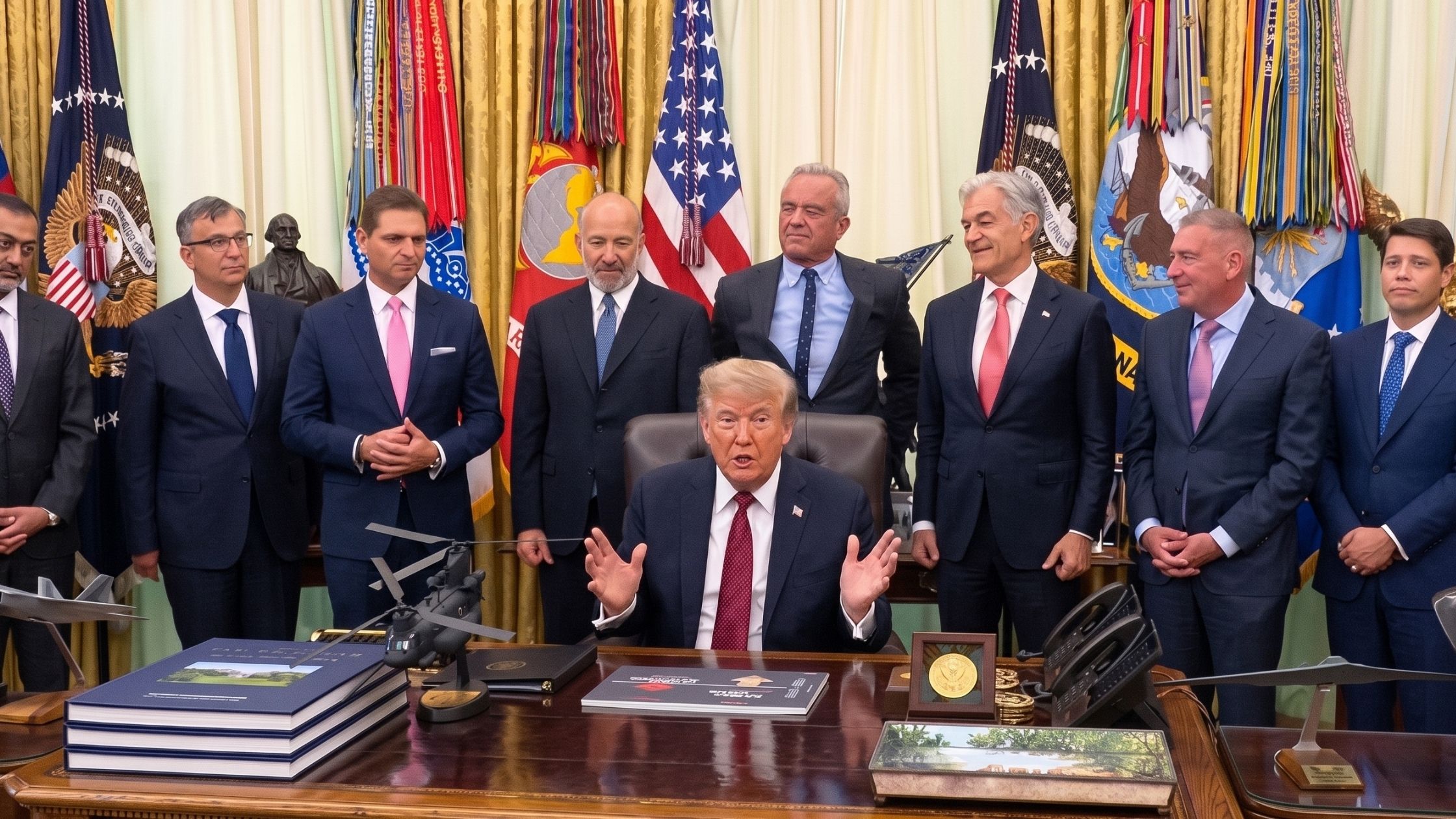
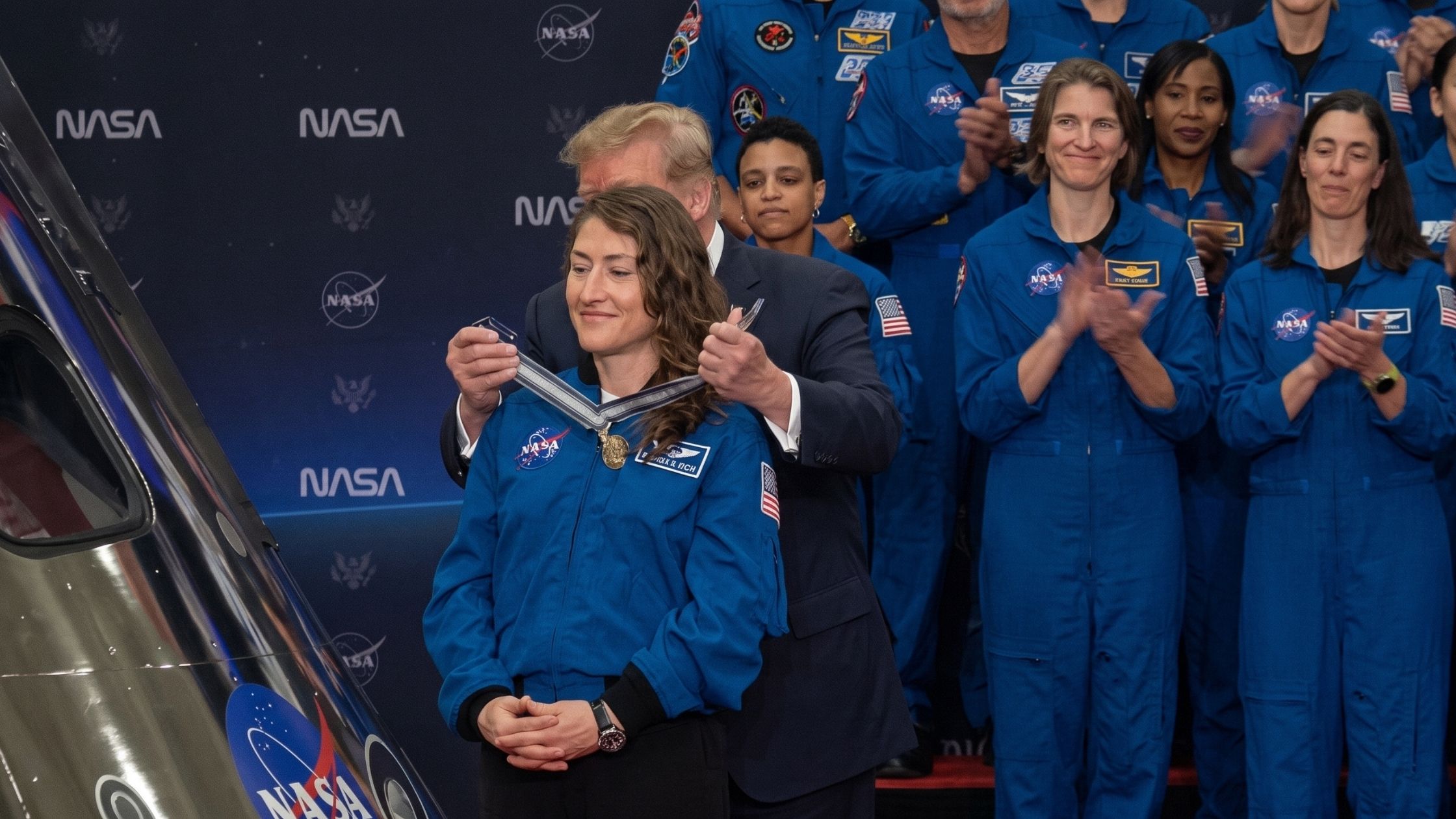
NASA holds a news conference to provide an update on the Artemis II mission. Read the transcript here.

NASA officials speak to press.
Hungry For More?

Luckily for you, we deliver. Subscribe to our blog today.

Thank You for Subscribing!

A confirmation email is on it’s way to your inbox.

Share this post
LinkedIn
Facebook
X logo
Pinterest
Reddit logo
Email

Copyright Disclaimer

Under Title 17 U.S.C. Section 107, allowance is made for "fair use" for purposes such as criticism, comment, news reporting, teaching, scholarship, and research. Fair use is permitted by copyright statute that might otherwise be infringing.

George Alderman (11:21):

You are looking live at the Artemis II Space Launch System rocket and Orion spacecraft in the vehicle assembly building. Today, we are joined by agency leadership to discuss the Artemis II mission and the next steps for the entire Artemis campaign.

(11:34)
Good morning and welcome to NASA's Kennedy Space Center. I'm George Alderman, NASA's deputy press secretary, and I'll be moderating today's news conference.

(11:42)
I'm joined by NASA Administrator Jared Isaacman, Associate Administrator Amit Kshatriya, and Moon to Mars Program Manager Lori Glaze. Today, we'll be taking questions both in person and through our phone bridge. Media interested in asking a question, please press *1 to enter the queue. Now, we'll begin with opening remarks for Administrator Isaacman.

Jared Isaacman (12:03):

Thank you very much, George. Good morning, everyone. Good morning. Appreciate everyone coming out. We're seeing each other a lot lately, lots of updates. Expect more of it.

(12:17)
First, I just want to give a lot of credit to the NASA workforce and our partners that have been working really tirelessly through the Artemis campaign. It's really especially impressive work, and I know they're all feeling it after we had what was a near flawless Wet Dress II performance that Artemis II is now back in the vehicle assembly building, which is imperfect.

(12:45)
We want to give you two sets of updates. Lori is going to speak with you about what we're learning about Artemis II now that it is back in the VAB and what our path is back out to the pad and to launch this historic mission. But before that, I'd like to talk a little bit about the overall Artemis program. How we're going to achieve the president's objective to return American astronauts to the moon, to build an enduring presence, and ideally not wind up in some of the situations that we've seen recently.

(13:13)
Let's talk about the situation. Artemis I launched more than three years ago. We had helium leaks with Artemis I. I'm sorry. We had hydrogen leaks with Artemis I. We had helium flow issues with Artemis I. Artemis II went out to the pad. Wet Dress I, we had hydrogen leaks. And then after a second, Wet Dress II, we made a lot of great progress. We wound up with helium flow issues, a lot of similarities between the two.

(13:44)
Why is that essentially the case? Look, three-plus year launch cadence. I mean, Artemis III right now, as it's currently designed, won't fly for approximately another three years. Launching a rocket is important and as complex as SLS. Every three years is not a path to success.

(14:01)
A component of that is when you are launching every three years, your skill's atrophy. You lose muscle memory. We've got a lot of really talented folks that have been working hard on the Artemis II campaign, and whether they're going to want to stick around for three more years after this mission is complete is a question mark. This is just not the right pathway forward. I'd say also when you are experiencing some of the same issues between launches, you've probably got to take a close look at your process for remediation. Are you truly getting the technical root cause or are you getting close to it?

(14:34)
We've got issues with low flight rate. And I would say a great way to exasperate that problem further is to start making changes to vehicle configuration. SLS is a very impressive vehicle. We don't want to turn every one of them into a work of art. And then I would also say that having very big objectives. A wide objective gap between missions is also not a pathway to success. We didn't go right to Apollo 11, right? We had a whole Mercury program, Gemini, Apollo, lots of Apollo missions before we ultimately landed.

(15:08)
Right now, our program is essentially set up with an Apollo 8 and then going right to the moon. That is, again, not a pathway to success. What is the right way forward here? First, today we're announcing a standardization of the SLS fleet to what we'll call essentially a near Block 1 configuration. The idea is we want to reduce complexity to the greatest extent possible. We want to accelerate manufacturing, pull in the hardware, and increase launch rate, which obviously has a direct safety consideration to it as well. You get into a good rhythm launching a great frequency, you get that muscle memory.

(15:48)
In order to do that, we need to rebuild and strengthen the workforce here at NASA. Now, this is directly in line with a workforce directive that I released several weeks ago. We have to rebuild core competencies. The ability to turn around our launch pads and launch with frequency greater than every three years is imperative. Some people ask me questions on that already as we've talked about this and it's like, "How are we going to do that? How we can go from three years to something significantly less to what I think should actually be inside of one year?"

(16:19)
I'll point you to our history. We have a nice infographic that's coming out from Mercury, Gemini, Apollo through the shuttle program. I don't think it would surprise many of the folks in the room that our average launch cadence was closer to three months throughout all those programs, not three years. In fact, if you want a history tidbit, you look at the time when Apollo 7 splashed down to when Apollo 8 launched, you're approximately two months apart. We need to start getting back to basics and moving in this direction.

(16:45)
Rebuilding the civil servant workforce and restoring core capabilities, again, that will directly contribute to NASA's launch cadence where we're going to endeavor to get our launches inside of a year, specifically down to potentially 10 months. And then we are going to add missions. In fact, we're essentially going to pull in Artemis III to launch in 2027 with a revised mission profile. Instead of going directly to a lunar landing, we will endeavor to rendezvous in low earth orbit with one or both of our lunar landers, test out integrated operations between Orion and the landers ECLSS systems, even to the extent possible, if we can get development components of our XEVA suits to test out vehicle interfaces. Even just getting an astronaut in a suit and microgravity, we can learn a lot with the idea that we should be learning and take this information back to inform hardware development, whether it's in the landers or in the suits before Artemis IV, where we will attempt to land on the moon.

(17:52)
We are also, as a component of the strategy, endeavoring to preserve up to two landing attempts in 2028. If we get it inside of the 10-month turnaround time that we would like to see, Artemis II will launch on its historic mission in the weeks ahead. Artemis III will have its opportunity if we can by mid-2027, which sets us up for an early '28 and a late '28 opportunity. That is the approach that we are taking.

(18:25)
At a very high level, I will tell you we're not surprising our industry or our stakeholders at this press conference right now. We've been having these discussions for a long time. In fact, I give a lot of credit to NASA and its team. No one at NASA forgot their history books. They knew how to do this. They've had plans like this for a long time. Now, we're putting it in action. We had a chance to have these discussions across all of our industry partners, all of the prime contractors on the SLS vehicle, both of our HLS landing providers. Everybody agrees this is the only way forward. And [inaudible 00:19:01] had similar conversations with all our stakeholders in Congress and they're fully behind NASA in this approach. They know this is how NASA changed the world and this is how NASA's going to do it again. With that, I'll hand it over to Amit.

Amit Kshatriya (19:14):

Thank you, Sir. Let's see, the path forward that the administrator laid out, I think, is pretty clear. It reduces risk, it strengthens our ability to execute these missions and the campaign ahead of us. It reflects the adjustments that we need to keep our schedule credible and our teams focused on what matters most, which is safe and achievable missions.

(19:35)
Also, I think it's important that we talk a little bit about the Artemis II crew. This is for them also. When they get on top of that rocket, they need to know that they're doing it as part of a plan that's going to work, that they have said many times they're doing this mission so that their teammates can walk on the moon. They need to know that they're going to get on top of that rocket, and we're going to give them a plan for the rest of the team that's going to be assigned that's going to go do this work

Amit Kshatriya (20:00):

... to actually get to the moon.

(20:01)
So our update today reinforces that commitment to them. And when we ask them to take that risk, when we take that risk together, that they're doing it for a reason. So we're going to build that program grounded in safety, incremental learnings, technical excellence, and long-term sustainability. So I think it's our commitment to flight readiness, this is not about slowing down momentum, this is about increasing it, about making sure that we are focused on the right things.

(20:25)
In terms of how we execute the program, we need to get back to doing the workforce initiative that the administrator has directed us to implement is the absolute key ingredient to this. We need to get our teams working side by side with our partners outside and get this work done.

(20:42)
So it's challenging, it's ambitious, but with this course correction, we are on a more stable foundation, a more realistic path to the milestones we have ahead. And we're so grateful to the teams across the NASA centers, across all of industry that's helping us. We have the entire force of American industry now helping us with the Artemis campaign. We are grateful to them for their support. They have been relentless in driving progress and we need them to be even more relentless to achieve these missions. And this plan that we're laying out today makes that possible.

(21:06)
So with that, I'll hand it over to Dr. Glaze to talk about Artemis II.

Dr. Lori Glaze (21:10):

Thank you, Amit. I'd like to start by thanking the administrator for taking this incredibly bold step and moving quickly to assure that we have support and resources that are needed in order to launch Artemis astronauts to the moon every year. I want to thank our team as well within the Moon to Mars program on Artemis and all of our Artemis mission planning. Our teams continue to work tirelessly to enable mission success.

(21:40)
I know to people outside of NASA, sometimes we make it look easy. What we are doing is anything but easy. And we've seen that with the challenges that we've encountered. I've said time and time again that our team rises to challenges and they meet any bar that is set. This will be a challenge. And I know that we will continue to relentlessly pursue excellence at every step. And that includes not just our NASA team, but it includes, again, our contractor workforce and all of the suppliers that contribute at every level to the success of the Artemis space program.

(22:16)
So first things first, I'm going to talk about Artemis II. We were here just a week ago. We were all very excited last Friday after a successful wet dress rehearsal. We were in a great place at that time and looking at a launch in early March. Things changed pretty quickly last Friday evening where we discovered the issue with the flow of helium to the ICPS, the upper stage of the SLS. That occurred as we were doing the reconfiguration of the SLS as we transitioned from the wet dress into the launch configuration. So it was disappointing, but that's where we were. And the response of our team was exactly what we should be doing.

(22:55)
We allowed the data to talk to us and tell us what we needed to do and allowed those findings, the operational findings, to guide us in what decisions that we needed to make. And the data were pretty clear that we were no-go. We were in a no-go situation without the ability to flow the helium to the RL10 engines of the upper stage. So while we have the ability to access the boosters and the core stage out at the pad, we were in preparations already for being able to do the work that needed to be done out at the pad. We do not have the ability to access the interior of the upper stage at the pad. So that's what's the requirement to roll back to the vehicle assembly building.

(23:36)
Our team has been working very quickly to transition from preparations for launch to preparations for roll back. And they did that extremely quickly. We were able to roll back within a couple of days. At the same time, the team has worked to streamline a plan for the work inside the VAB to give us the very best possible chance at a launch in the early April launch period. We got back to the VAB about 8:00 PM Wednesday night. The platforms within the VAB have already been extended, you can see them there in the live graphic, and the work has already begun, incredible amount of work already going on. The suspected system components for the helium flow will be removed and they're going to undergo detailed inspections and assess the cause of the issue. We hope to get down to the root cause of that and make changes, not just to the hardware, but to our operational procedures so that we don't encounter the same issue again when we roll back out to the pad.

(24:35)
In addition to determining the cause of the helium flow issue, the teams are also going to do a number of other things while we're in the VAB. We will replace the batteries in the flight termination system and conduct another end-to-end test to meet the Eastern range safety requirements. We'll give the closeout crew another shot, another chance at closing out the Orion capsule, get them a little bit more practice in closing out the Orion crew module. And then also the seal on the tail service mast umbilical that supplies the liquid oxygen to the rocket before liftoff that is also going to be replaced to ensure a tight configuration.

(25:09)
As you recall, of course, the twin seal that goes to the liquid hydrogen was replaced out at the pad. So we've already replaced that one, so now we're going to replace the oxygen seal as well. And at the same time, we're also going to be reviewing the items that are already stowed in the Orion crew module. There's some of those time out and we need to replace them. So we'll be doing a little bit of that as well.

(25:35)
We will continue to provide updates, regular updates of how we're progressing within the VAB and our plans once they solidify and when we roll back out, we will definitely let everybody know. And just again, to return to Administrator Isaacman's statements, beyond Artemis II I know that our team is up for this challenge. We are ready and we are ready to get started on that. Thank you.

George Alderman (Moderator) (26:00):

Thank you. We'll now take your questions. Please ask one question at a time as though we can get it to as many of you as possible. We'll circle back if we have time. We'll start with a question here in the room, but if you're joining us via the phone bridge, please press star one to enter the queue. And I'll take our first question, Will.

Will Robinson-Smith (26:18):

Hi, thanks. Will Robinson-Smith with Spaceflight Now. Thank you all for taking the time this morning. To the Administrator or Associate Administrator, the plan for the revamped Artemis III to rendezvous with one or both of the HLS providers, can you speak to the importance of that component of doing Artemis III in low Earth orbit? And I guess how soon given where both of those HLS vehicles are, how feasible that might be to dock with them as opposed to just sort of rendezvousing and getting in proximity with them in low Earth orbit. Thank you.

Jared Isaacman (27:00):

So I'll begin and welcome Amit's additional inputs on this. I think one of the challenges, but is also one of the greatest opportunities that comes from both our HLS providers, is the ability to return America to the moon, not just again for the flag and the rocks, but to be able to actually build out that enduring presence. So what they're taking on is technically very challenging, but a lot of that involves whether it's on orbit prop transfer or rapid reusability because it necessitates lots of launches, we don't find ourselves in that situation for a low Earth orbit rendezvous.

(27:41)
So this is an opportunity to test out the vehicle we know they're capable of doing. It's not as much of the technical process, the most demanding process is how to get that vehicle to the moon. So it's a perfect opportunity for us to test the interface out between Orion and that vehicle to actually get humans in the vehicle, start looking at the ECLSS system. This is all going to help take down risk for subsequent landing.

Amit Kshatriya (28:07):

Yeah. I think for Artemis II, we're doing on-orbit handling of the vehicle to test out rendezvous techniques. A low Earth rendezvous is a bit more challenging than a Leo rendezvous just because the external environment, the external torques are different. But as the administrator said, I mean, this was in the plan. We have to be able to mate with these vehicles, we have to dock, we have to ingress, we have to do those things anyway. But the point of the sequence is to really recognize the production risk in the enterprise and the development risk. The production risk is the flight rate on the Earth asset systems, SLS Orion, the development risk is prop transfer. So the way to burn a common target there, if you will, is to conduct a mission that accepts those risks as real, but still make as much progress as we can to challenge both the production side and the development side at the same time.

George Alderman (Moderator) (28:51):

Take our next question. Yes.

Irene Klotz (28:54):

Thanks. Irene Klotz with Aviation Week. For anyone who wants to take this, does the revised Artemis III architecture require or would you like for any of the HLSs to demonstrate the on-orbit refueling component or does that fall off for Artemis IV? And for Artemis IV, if you're looking to fly in early-ish 2028 and you need a new upper stage, presumably it still locks in LH, what's available on that short notice?

Jared Isaacman (29:32):

Yeah. I think first we're not going to get into any specific manufacturer's name or the associated contracting process beyond that. As I mentioned, we've been discussing with industry this strategy for several weeks right now. Everyone acknowledges it's the right path forward. So we obviously have confidence in our ability to source and integrate a more standardized second stage to fulfill missions beyond Artemis III.

(30:01)
In terms of our HLS providers, they've both, I think, very publicly submitted proposals for their acceleration strategy that does take down some of the technical risk associated with the proposal. And we've said publicly that we support both in this regard. I don't think that what you're referring to like on-orbit prop transfer is necessarily going to be required for the demonstration that we are imagining for Artemis III, but we haven't fully... We are very early in mission design here.

(30:31)
We all have arrived at the point that this is really the only pathway in order to achieve success with a lunar landing within the timeframes that we are targeting. But I think part of the reason to do this in low Earth orbit is it does not necessarily require what both HLS providers will eventually necessitate, which is either lots of launches or on-orbit prop transfer to get their vehicles to the moon.

George Alderman (Moderator) (30:57):

Take our next question over here.

Ken Kremer (31:02):

Thank you. Ken Kremer, Space UpClose. I think this is fantastic what you've proposed here, it's exactly what's needed. So can you talk about these landers a little bit? They're going to, I would, I guess, have to be vastly simplified from what was proposed with those prop transfers in order to accomplish this so quickly. I know they're working on updates. Can you let us know at all? And where does the Gateway fit in all this? Thanks.

Jared Isaacman (31:33):

To be clear, both HLS providers have offered solutions to accelerate their plans without compromising on the grander objective, which is we need to build out an enduring presence so when we return to the moon, we have the capability to stay. So while their proposals, again, do take down some of the technical risks that would have existed before, we are not foregoing the capabilities that I think are absolutely necessary for America's future in space. So to be clear on that point specifically.

Ken Kremer (32:08):

And the gateway?

Jared Isaacman (32:09):

I think at this point we really want to focus the meaning of the greatest extent. Because to be honest, this can be somewhat of the problem. The hardest thing right now is returning American astronauts to the surface of the moon. We obviously haven't done that in more than 53 years. I think by focusing a lot of time, energy and resources across lots of grand endeavors is why you wind up in a situation where you're launching an incredibly important but complex vehicle every three plus years.

(32:37)
So I say that not to make a statement towards Gateway because we are doing this to get back to the moon and have the capability to stay. Certainly to build a moon base, which can be an ideal learning environment for us to test out the operations, in situ resource, manufacturing, refining, all the capabilities that are going to be necessary for the next giant leap to Mars and beyond.

(33:01)
But I say with focus for this conference specifically, we got to keep the attention on standardization and flight rate as our path to get back to the moon.

George Alderman (Moderator) (33:12):

Our next question will come from Marsha Dunn with the Associated Press.

Marcia Dunn (33:20):

Marcia Dunn. [inaudible 00:33:23] Isaacman, how much did the recent problems with Artemis II, especially mimicking Artemis I, how much did that play into your decision to shake up the Artemis mission profile? And how disappointing are you to have to wait perhaps even longer to land astronauts on the moon? Thanks.

Jared Isaacman (33:47):

Well, first, I'm not disappointed at all. I'm excited because I think we have a path here to actually get the job done within the timeframes that we have targeted right now. I also, I guess want to point out, this is something that NASA has known. As I mentioned before, no one here at NASA forgot their history books. The plans to do this the right way have existed for a long time. We're in a fortunate position right now where you have a presidential national space policy, which aligns whole of government on what's necessary. You have congressional support through appropriation, and you have President Trump's One Big Beautiful Bill, the Working Family Tax Cut Act that gave us the plus up and resources within our exploration budget to undertake this endeavor right now.

(34:27)
So I would tell you that we would have been delivering this exact same message to you today had this been FRR. That was the plan, but I think we have to put even more urgency around it because this is not the FR that we initially intended. The American public deserves the update on Artemis II and the historic mission that's ahead, but you also have to know how we're going to achieve the vision that presidents have called for for more than 35 years.

George Alderman (Moderator) (34:56):

Our next question will come from Josh Dinner with Space.com.

Josh Dinner (35:02):

Hi, thanks so much for doing this. Josh Dinner, Space.com. For Administrator Isaacman, you're standardizing SLS, pushing toward a 10-month launch cadence, and revising Artemis III to an on-orbit rendezvous next year with up to two 2028 landings, which all sound fairly accelerated for a deceleration of the program. What specific risk are you buying down with that Leo rendezvous? And are you anticipating demonstrations with multiple HLS vehicles on that mission? And how are you ensuring that schedule itself doesn't erode margins the Safety Advisory Panel has already warned are thin for Artemis III?

Jared Isaacman (35:42):

Yeah. So actually, I think what we're doing is directly in line with what ASAP asked us to do. Look, just zooming out here, I think it should be incredibly obvious. You don't go from one uncrude launch of Orion and SLS, wait three years, go around the moon, wait three years and land on it. That's what our ASAP committee took issue with. That's what we've acknowledged inside the leadership of NASA.

(36:08)
NASA has been working on these plans knowing this is not the right approach. There has to be a better way in line with our history on it. Again, we did not just jump right to Apollo 11. We did it through Mercury, Gemini and lots of Apollo missions with a launch cadence every three months. We shouldn't be comfortable with the current cadence. We should be getting back to basics and doing what we know works.

(36:29)
So how are we going to buy down risk on it? I would certainly much rather have the astronauts testing out the ecosystems, the integrated systems of the Lander and Orion in low Earth orbit than on the moon. Like them to get in the suits for the first time, even inside the vehicles. Doesn't necessarily have to be an EVA before they actually walk on the moon in them. So everything about this mission, and even though it's beyond conceptual, we've obviously coordinated with our partners on this, but the full mission design and objectives will be revealed shortly. I'll just say it's certainly in the direction of buying down risk before we put our astronauts on the surface.

George Alderman (Moderator) (37:08):

And our next question will go from Richard Tribou with the Orlando Sentinel.

Richard Tribou (37:14):

Hi, thanks. I'm calling for the car, so hopefully hearing me well. About the increase in workforce, the civilian workforce, what does that mean for personnel at Exploration Ground Systems or specifically the Kennedy Space Center or the agency overall? And is there a concern about the flow of hardware from Orion or SLS potentially? Are you going to have an Orion capsule for a potential Artemis V in 2028 at this pace? Thank you.

Jared Isaacman (37:56):

So I'll work backwards from there. As I mentioned before, we're not here today to surprise industry and our stakeholders. We've been having these conversations for weeks now. I've spoken to the leadership at every one of the prime contractors that contribute into the SLS program. Everyone's behind us and they've all said the exact same thing, this is the only way to get the job done. So there's a lot of work we have to do here at NASA to prepare. Part of that goes to the second component of your question, which is we got to rebuild our core competencies.

(38:28)
Now, does this mean the overall workforce count increases at KSE? I don't know the answer to that specifically. I would say that there's a lot of contractors which do fantastic work that should be civil servants. That's the heart of the workforce directive right now. 75% of our workforce right now is contractors. I think a lot of them should be civil servants. I think we should have those capabilities in-house. We should have the ability to make changes and adjustments as we see fit because we are NASA. We did all this the first time, we know an awful lot and this is going to be our kind of pathway back to the moon.

(39:01)
So lots of collaboration with industry. They understand what the ask is. They know we're going to need to pull in hardware. That's why we're standardizing the configuration. You're not going to be able to do that if every rocket is a work of art. You're going to inevitably learn the same lessons and over again. So standardize, increase production, pull everything in, which allows you then to increase your launch rate. And yes, we need to rebuild a lot of our workforce here to bring them in as civil servants and get back that muscle memory to turn the pad in less than a year because we've done it before and we can do it again.

George Alderman (Moderator) (39:34):

And our next question will come from Eben Brown with Fox News.

Eben Brown (39:42):

Hi, good morning. Thanks for doing this. I think this question is probably best for the administrator. When President Trump first announced the Artemis project back in 2017, he wanted to see a lunar landing by 2024. That was obviously not missed. This, despite

Eben Brown (40:00):

... despite perhaps being an integration of better practices does once again push that goal a little further into the future. The president hasn't said much about this really at all, I don't think, but what's the overall attitude coming out of the administration here? I mean are they happy with this, not happy with this, or how does the agency itself react to that pressure or that may, or may not be there coming from the administration to keep this on track as much as possible and make sure that there aren't unnecessary slips in timelines?

Jared Isaacman (40:38):

So to be clear, President Trump loves space. President Trump created the Artemis program. We obviously resumed operational flight for our astronauts to and from space. During the president's first term, he created the Space Force. He signed a national space policy on my first day on the job in the Oval Office that not only recommitted American astronauts to the moon, but to build out a lunar base, and not only that, to start making investments in the next giant leap capabilities like nuclear power and propulsion so we can eventually have American astronauts put the stars and stripes on Mars.

(41:14)
I've spoken with him numerous times leading up to my second nomination for this position about our strategy, the importance of the lunar base. He checks in with great frequency. The Artemis II astronauts were at the State of the Union. I was as well.

(41:29)
This is a priority for the administration. I think that there are certainly questions of why we didn't make some of these decisions like we are today in terms of standardization, increasing flight rate in the years past. I think President Trump wants to correct that now, and he's given us all the ingredients to do it. The national space policy, congressional funding, and the plus up from the One Big Beautiful Bill is what enables us to undertake this course right now of standardization and acceleration for an achievable path to get American astronauts back on the moon before the end of his term. I know he's fully supportive.

Speaker 1 (42:06):

We'll take the next question now. In the back in the beige, please.

Speaker 2 (42:15):

Do you think that some of the budget cuts that we've had recently have contributed to that low flight rate? Would you say that we have the resources and funding to increase that flight rate? Sorry, I just have a logistics question. So can you just clarify the Artemis III timeline here? You mentioned mid-2027 and 2028, and I just want to clarify, are those two landing attempts? Then would you be launching in 2028? I'm just trying to wrap my head around that.

Jared Isaacman (42:47):

Sure. I mean let me just address the ... There were no budget cuts to NASA. We actually had historic funding last year, between the consistent funding through the continuing resolution plus the plus up from the One Big Beautiful Bill or Working Family Tax Cut Act. NASA had historic funding last year, which is the only reason why we are capable of undertaking this right now. So I'd just pause on that point.

(43:16)
In terms of, again, to be very clear, because I know we're moving around here a little bit, Artemis II is going to launch in the weeks ahead, 10-day mission, historic mission to go around the moon. It's going to allow us to test out the Orion spacecraft. Artemis III will launch, ideally, by mid-2027. So this is now getting us back in the rhythm here of increasing launch cadence with SLS and the Orion spacecraft.

(43:40)
Our objective there, and we've spoken with both our landing providers on this, is to rendezvous with one or both landers. That's an opportunity for us to test out integrated operations between Orion and the lander, which is important. That will be a crew-rated vehicle someday. There's ECLSS systems we're going to want to test out. It's another opportunity for us maybe to get our suits up there before the astronauts actually have to wear them on the surface of the moon.

(44:04)
If we can't make that timeline with suits, we have other opportunities to get them up to International Space Station, but we do consider that a priority, which then sets up for Artemis IV and V potentially in 2028. We're not necessarily committing to launching two missions in 2028. We want to have the opportunity be able to do that.

Speaker 1 (44:22):

Take the next question. Second row in the gray.

Bill Harwood (44:26):

Thanks. Bill Harwood with CBS News. I have about 10 questions. No, I'm kidding. I've got two questions. For Jared, you mentioned the ASAP earlier. Their report came out this week. Could you add anything about what input they had in your decision making? Because it seems like you're addressing most of their primary concerns at least.

(44:44)
Then for Lori, I guess, I know you guys are focused on these near-term flights. We're not talking gateway today or whatever, but will you continue work on mobile launch or two or does the work stop now? What about the lunar terrain vehicle, which originally was part of, I guess, Artemis V? I mean is it the same philosophy that's covering that, we're going to stop worrying about that stuff right now and focus on the near term?

Jared Isaacman (45:10):

Yeah. Sorry. So with respect to the ASAP committee, I would say that it is interesting that a lot of the things that we are addressing directly go to the points they raised in their reports. I can't say we actually collaborate on it because I generally think these were all pretty obvious observations. So, yes, ASAP was rightful to call out some of our shortcomings, and we should be addressing them. It just happened to be in parallel.

(45:40)
So in any of my recent conversations with the committee, I said, "Look, we are completely aligned. I agree with every one of the points that you raised and we have to address it." It just so happened to be ... I mean even our Starliner report came out in advance of theirs. They didn't know that was happening. It was just the right thing to do, just as our revised architecture and approach to achieving a lunar landing is the right thing to do.

(46:04)
I'll just say, I mean to ... I know you addressed it to Lori, but maybe make it easier on her a little bit in some of these questions about specific procurement strategies. We are building a moon base. You're going to build a moon base, you're going to need rovers. You're going to need lots of rovers on the surface. You're going to need comms, you're going to need navigation, you're going to need power. This is not lost and this is a high priority. This is what's so important in the national space policy is don't just go back, go back to stay.

(46:31)
I would just say let's keep this conversation to the great extent focused on the hardest part, what we haven't been able to do in the last 53 years, which is getting a good launch cadence and sending American astronauts to and from the moon. But I can assure you all those things you asked about are going to be a component to the how we stay conversation.

Speaker 1 (46:51):

Our next question will come from Philip Sloss.

Philip Sloss (46:57):

Thanks. The question is does this mean that NASA is canceling the Exploration Upper Stage? If you're going to fly Artemis III in 2027, when is a crew going to be named for that mission? Thanks.

Jared Isaacman (47:11):

I feel like I'm taking all the airtime here.

Amit Kshatriya (47:19):

Yeah, [inaudible 00:47:19]. Yeah, we're not going to talk about contractual issues. I mean I think you understand the intent of what we're discussing, which is making sure we head towards the reliability and standardization of it. We're going to work with our partners and make sure we handle that in the right way. The second part was ...

Speaker 3 (47:35):

Crew.

Amit Kshatriya (47:36):

... the crew. Yeah. Again, same way. We're not here to do mission design. We're not here to talk about that. I think what's important is what we said at the end. The whole plan is we need to chunk it into achievable objectives. The whole plan we've attempted, it's been augmented by the vision and the space policy that was released. That whole plan needs to be discretized and chunked into the right way so we're taking incremental risk in the right ways as we continue to fly. As we increase production, that increases reliability, it increases safety, and we're going to do all that together while we increase our training rates and everything else.

(48:10)
So that's all part of the integrated plan. We're not going to do a whiteboard session on mission design here, but I can assure you that we've thought through the top-level objectives, how they develop into lower level objectives and how we're going to put them into these missions.

Speaker 1 (48:23):

Our next question will come from Leonard David with Inside Outer Space.

Leonard David (48:28):

Yeah. Hi, thanks for pulling this all together, and it's very exciting. I think for the administrator, when you had your back-to-back confirmation hearings, there was a lot of pressure of trying to beat China to get back to the moon. To what extent does that play a role here? Are we accelerating our plans? What's you're thinking about China today? Because they probably are going to go maybe in the same kind of timeframe.

Jared Isaacman (49:07):

Well, as I said during my hearing, I think competition is good. I think it's a great way to motivate our workforce and our partners, again, to achieve the near impossible. Competition worked very well for us in the 1960s. It turned out, in hindsight, we had near endless schedule margin there. No humans have been back since Apollo 17. That is certainly not the case today. I'd say this is very close from a timeline perspective.

(49:36)
All that said, again, I think competition is good. We're here talking to you about what is a commonsense approach to achieve the objective, whether we had a great rival in the running or not. If we're committed to going back to the moon, we have the resources to do it. Again, we have a presidential mandate to get the job done.

(49:56)
What is an achievable strategy regardless of the competition? I can tell you launching every three plus years is not the right approach. You asked about the crew for Artemis III. Amit is totally correctly. We've got Artemis II ahead of ourselves right now. We still have to get through mission design. You assign a crew that gives you the best chance of success.

(50:14)
But I'll tell you, you've all had an opportunity to really get to know our Artemis II astronauts over the last couple years. It's actually not the desired approach. We'd like to announce a mission, tell you the objectives, hear the crew, and then fly it inside of a year, and then you start getting to know the next crew. It's kind of how it worked in the 1960s. We're going to try and get back to that now.

Speaker 1 (50:36):

Our next question will come from Eric Berger with Ars Technica.

Eric Berger (50:41):

Hi, thanks very much for doing this. Someone earlier mentioned that the speech, the original first Trump administration, and back in 2018, Vice President Mike Pence talked about going to the moon in 2024. At the time he said something that really struck with me. He said if our current contractors can't do this, we'll find new contractors. I think this is kind of the most sweeping vision change since then. Obviously the contractors, both traditional and commercial space, have had challenges since then. So I'm just wondering what NASA can do to ensure its commercial partners can successfully deliver on these really aggressive timelines. Thanks.

Jared Isaacman (51:23):

I would just say that similar to a recent conversation we had with all of you, this is largely about NASA. We talk about why we've struggled, our shortcomings. I look internal first. What could we have done differently? It's why we're having this conversation right now. I didn't have a conversation with any of the prime contractors, any of the partners as it relates to this acceleration plan where they said it couldn't be done. We just didn't have the conversation really up until now on this.

(51:54)
I'm sure there's a lot of reasons for it, and I've said some of it before. We had a pretty, I won't say, singular focus in the 1960s of getting to the moon because we did a lot of great science and exploration at that time, but we generally were focusing on a couple key needle-moving objectives, which I talked a lot about during my hearing.

(52:13)
Over the years, since President Trump, during his first term, started the Artemis program, we've taken on a lot of interesting projects. Some people have asked questions about them here in this room. I'll tell you, the more multi-billion dollar projects you have, the more resources and attention it captures, the less you launch lunar missions.

(52:31)
So we're taking ownership of this. We're taking responsibility of the objective, the critical national objective that's been entrusted to NASA, and how do you do it? Well, you talk to your partners and you tell them we're going to have to start making some decisions. We're going to standardize. We're not going to turn every rocket into a work of art. We're going to increase launch rate. We're going to do it in a logical, evolutionary way. We're not going right to Apollo 11. That makes no sense. What can we build up to gain confidence so that when we do embark on the true landing, we have the highest probability of success? That's what we're doing right now.

(53:04)
So I'll tell you, today, this is a NASA story. Not saying we don't come back to you in a year and say that we have to make some adjustments here with the vendor. But right now this is something that we need to own, and that's what we're sharing with you.

Speaker 1 (53:20):

Next question will come from Ken Chang with the New York Times.

Ken Chang (53:25):

All right. Thank you. So with this revision, through Artemis V, you're using up the SLS reliance that's mandated in the Big Beautiful Bill. So I was wondering, from Mr. Isaacman, are you thinking about the follow-on architecture that you've talked about after that?

Jared Isaacman (53:43):

Well, I think I've been ... Well, I'd say certainly our number one focus is what Lori spoke to you about previously, which is Artemis II. That's our near term ... I mean it's the most important human space flight mission in more than a half century. We owe you an update on how we're going to get to the moon so we don't wind up in a situation where our vehicles are going back and forth to the assembly building. We've got enough in front of us on that.

(54:11)
But that said, I mean I said it at the initial rollout conference. I've said it many times since. President Trump created a program, a program to return to the moon, to build out a moon base that's going to require lots of missions to and from the moon, crew and cargo, again, in a very affordable, repeatable way. This architecture will naturally evolve just as it is today.

(54:34)
I can't tell you exactly what Artemis 10 looks like. I bet it's going to look very different than what Artemis V is going to look like, as I'm sure it will be for Artemis 50. That's the idea when you say you're going to go back to the moon and be able to stay.

Speaker 1 (54:47):

We'll take our next question from the room. Upfront in the yellow.

Jean Wright (54:52):

Jean Wright, Space UpClose. I'd like to know what the altitude will be the lunar landing rendezvous. Would that be low Earth orbit distance from the Earth? Just curious. Thank you.

Amit Kshatriya (55:05):

Don't know. Let's figure it out.

Speaker 3 (55:07):

The duration.

Amit Kshatriya (55:09):

Yeah. Ideally, we want to put as much ... Every time we take the ascent risk with a crew, we want to make sure we get as much done. And so, we'll get into an orbit that's achievable for as many docking and meeting operations as possible, as much environmental similarity to what we would experience during the landing mission. So we're going to take all those objectives and pour it into the design, but I can't tell you the orbit yet.

Jean Wright (55:32):

Thank you.

Speaker 1 (55:32):

Our next question will come from Kristin Fisher with The Endless Void.

Kristin Fisher (55:37):

Hi there. So I think my question is for the administrator. We've talked a lot about the Artemis II crew, but how about the rest of NASA's astronauts? I mean they've now got this exciting bonus mission that they could be assigned to. How did you all inform them about these changes and how soon after Artemis II returns do you all anticipate naming the Artemis III crew? Thanks.

Jared Isaacman (56:04):

So obviously I've shared this program change, this direction change for achieving the lunar landing with the Artemis II crew. I've also had a chance to speak with leadership from the astronaut office. I don't think anyone was surprised. Like I said, there's no one who comes to work at NASA that forgot their history book. They know how we got there before.

(56:26)
I'd also say generally astronauts prefer to be in space as often as possible. So this is probably welcome news. So, yeah, I think everybody is pretty supportive in this direction.

(56:38)
In terms of the Artemis III astronauts, like I said, we're not going to get ahead of ourselves on this. Artemis II is coming up first. We're going to use this time to go through mission design with our HLS providers. What do we think is achievable? What are the most pressing objectives?

(56:55)
I think obviously, high level, we know what will help buy down risk for the landing. Then you assign a crew that gives you the best chance of success based on those objectives. I hope you get to know them well, cheer them on, support them, and then meet the next crew shortly thereafter.

Speaker 1 (57:11):

Our next question will come from Joey Roulette with Reuters News.

Joey Roulette (57:17):

Hey, thanks. Question for Amit and Jared, whoever wants to answer. Just real quick, is the Exploration Upper Stage canceled? If so, do you expect to compete or sole source its replacement? Then, more broadly, this new test mission and a new SLS upper stage and doing on-orbit refueling and all that seems like a lot of work to do in the next two years before a moon landing. And so, I think that begs a lot of questions, but mainly what is the acceleration plans from SpaceX and Blue Origin and when will that be baked into this architecture? Thanks.

Amit Kshatriya (57:52):

So I'll go back to we're not talking about contractual issues. We're not going to talk about that. We have the full support of our industry partners to make sure we standardize the configuration and do the right thing. So we'll just leave it at that.

(58:05)
How we're going to do this, in terms of the hardware we have available, I think it's also important to recognize, I mean, we didn't just decide to do this today without making sure we assess the inventory of the hardware that we have available and the program. We've been talking about this, as the boss said, in the program for a while, just to make sure, because we understand the risk profile. We have a unique confluence of support and vision and leadership that enables us to do it now, which is why we're doing it now.

(58:29)
But to be clear, we're rolled out a V3 Starship just yesterday. CSM3 is in the factory already. It's about to be mated together. The heat shield's ready to go. We're going to make both of them together. CSM4 is also being populated with hardware. ESM4 has been delivered from Bremen. The core stage at the top four fits the core stage number three, is at Michoud ready to be shipped here in a couple months.

(58:48)
The engine section for Artemis III is already here. The barrels for the Artemis IV core stage are being rolled. We have all the tools available there. ML2 is 90% complete. It can be configured however we need to. All of that hardware is flowing towards the cape. We just need to get on with it. We have to get our workforce side by side with the teams out in the field, put this out there and start working on the hardware, start focusing on the right things and do it. We can do it. We need the energy, we need the vision, and we need the plan to make sure we go do it, and that's what we're going to go work on.

Speaker 1 (59:20):

Next question will come from Jeff Foust with Space News.

Jeff Foust (59:24):

Thanks. Good morning. Question for the administrator. Over the next few years, do you think these changes will result in sort of a net cost savings by standardizing SLS and not developing the Block 1B version or additional costs by accelerating the pace of missions? Then maybe just a quick question for Lori on Artemis II. When do you need to roll back out to the pad to be able to support a launch in that early April launch window? Thank you.

Jared Isaacman (59:53):

Yeah. So I'm not going to get into the P&L here. As you mentioned, there's obviously some puts and takes. If you standardize

Jared Isaacman (01:00:00):

... standardize. If you standardize the vehicle, and not every one of them again is a work of art, you're going to save costs. This is what all of our manufacturers have been asking for. It's why everyone got around this program so quickly. No one likes to do lots of one-offs. Same as applicable for how we want to approach our lunar landing. Let's define some criteria and template this out .... I'm sorry, this was back to the moon base. And then you can forecast lots of demand to industry so they can get good at what you need them to do. So everyone I'd say is pretty aligned on that. Now at the same time, we're also asking people to work faster. We're talking about hiring and bringing in workforce. So there are areas where we expect savings as a result of this approach. There are areas we expect to spend more. We do believe that we have the resources available to achieve this. I guess leave it at that.

Lori Glaze (01:00:49):

And as far as the rollout question, we are working diligently to make the changes that I mentioned at the beginning, the work that needs to be done within the VAB. We will need at least a week and a half or so-ish out at the pad to prepare for launch. I'll certainly provide an estimated rollout date when we have that available.

George Alderman (01:01:13):

Next question will come from Micah Madenberg with The Wall Street Journal.

Micah Madenberg (01:01:19):

Hey, good morning. Maybe for the administrator, could you explain a little bit how the new Artemis plan was put together? Was this something that was on the shelf when you started or brought in with you or came up after starting? Is there a person who's kind of the brainchild for this plan? Thanks.

Jared Isaacman (01:01:39):

Yeah. I'd say that we gravitated towards this very quickly. Look, obviously again, it's a huge team effort, but when Amit and I started discussing this subject, he said, "We have a plan." So again, there's a lot of people here at NASA that didn't lose their history books, understand the right way to go about achieving an incredibly challenging objective like this. Now, if there is ... as Amit has also pointed out, we are in a situation now where between a national space policy that aligns whole of government, congressional appropriations, and the plus ups from the One Big Beautiful Bill we can act on a plan that gives us the highest probability of success.

George Alderman (01:02:25):

We'll take our next question up here in the front row.

Cameron Schwartz (01:02:32):

Hi, Cameron Schwartz with the Launch Pad Network. Thank you for your time and all the updates today. I don't want to get ahead of myself, but I did want to ask about the increased cadence and what sort of mission profiles that unlocks for you guys. And do you expect SLS to kind of be a big part of building the moon base?

Amit Kshatriya (01:02:55):

Yeah. So I think like the boss said, we're going to use all the hardware we have to achieve these missions. We put the objectives together as we've decided. It's pretty clear we have to be able to demonstrate in space activity, the launch cadence, reliable earth ascent, reliable lunar descent, reliable lunar ascent, surface operations, all that has to be demonstrated. So we're going to put those objectives into the plan.

(01:03:17)
We have scoped that out already because that was the kind of end state here, but what we're trying to do is put them into manageable chunks so we can actually fly more quickly because that pace, that cadence is what really will lead to reliability and safety. And that's what we need to do. Now, we have the hardware we have. We're going to do everything we can to utilize it to the maximum extent. And then as we said, we have all of industry supporting this. And so whatever hardware we have going forward, we're going to take advantage of to provide that regular cadence.

George Alderman (01:03:46):

Next question will come from Marcia Smith with SpacePolicyOnline.

Marcia Smith (01:03:51):

Thanks so much. I'm assuming that you have briefed this to the relevant people in Congress. I'm wondering what the reaction is, especially to your decision to eliminate the Block 1B and the Block 2 of SLS, which was part of the 2010 NASA Authorization Act. So is Congress behind this as well?

Jared Isaacman (01:04:12):

As I mentioned, we try to maintain a no surprises policy here at NASA. To do the near impossible takes the contributions from everyone. We want to be very aligned before we go public on a matter like this. So we've spoken to industry. Can you meet the demand? The answer is yes. We've certainly spoken to all of our stakeholders on the Hill. They all understand that this is the path forward. And I would say, I don't think I heard a single objection on these subjects. Everyone understands what's at stake here. I mentioned before, we don't have a lot of schedule margin here. The implications of coming up short go well beyond space. I mean, this is ... America in 1960s, you get to the moon, you do what no one thought was possible. It sends a message, "I wonder what else they're capable of doing." You come up short. It sends the opposite message of where else could something be broken. I think everyone understands that. The fact that industry got behind this, I think makes it very easy for our very supportive partners in Congress to get behind it. And honestly, they helped enable us in this regard through the Working Family Tax Cut Act, through the One Big Beautiful Bill. That is giving us the resources to be able to undertake this.

(01:05:35)
And I will just say again, all the national security implications of actually meeting an objective is important as getting to the moon and building a base aside and the competition associated with it. There is simply a right and wrong way to go about doing this. Launching every three years and massive changes in the configuration of the vehicle is not a recipe for success. And again, I think all our stakeholders and all our partners understand that.

George Alderman (01:05:59):

Next question. In the back in the green.

Melonie Holt (01:06:06):

Good morning, Melonie Holt, WFTV. And really, I'm looking for a clarification. You've made a lot of major announcements in terms of these Artemis updates, Artemis III specifically. Is the goal still a lunar landing or has that mission profile somehow changed?

Jared Isaacman (01:06:25):

Artemis III will be a rendezvous with one or both landers in low earth orbit in 2027. So we're basically pulling in Artemis III and recognizing just the reality that going right from a free-return around the moon to landing on it is too big of a gap. And we cannot accept the flight rate of a vehicle that's important and complicated every three years. So we're going to launch in a year from now in 2027. Again, start taking down risk for the eventual landing. So Artemis III will be a rendezvous in lower Earth orbit, one or both landers. And then Artemis IV and Artemis V, we will endeavor to have two opportunities in 2028 to attempt a landing.

Amit Kshatriya (01:07:11):

Just to maybe help, because I know folks are trying to process. The Artemis campaign is a test program. And we talk a lot about these all up tests of SLS Orion and the missions where we put the crew on it. We are doing tests at the component level, at the assembly level, all over the country all the time. And I want you guys to start thinking about that aspect of it. That's what we're doing. So these are very important tests, these flights, but every single one of these tests is important. We're going to do an uncured demonstration with the landing missions.

(01:07:41)
Right now we have a Mark 1 Blue Origin lander in the Chamber of Johnson. We're doing human-in-the-loop testing with the Axiom suits. Right now, that is also contributing to this end state. So when you guys think about this, how we're doing it, we're not going to over-specify at each junction what goes in each particular flight. What we're trying to tell you is we are thinking about this now as an integrated test plan. Those test objectives has to be achieved as incrementally and as successfully as possible. At every step, build on that, learning at each subsequent step to eventually lead to the ultimate objectives which are set out in the policy and the direction we've been given.

Jared Isaacman (01:08:14):

We'll just say we do have a couple infographics that are going to come out and help because we do recognize this is a little bit of a change. So you can at least visualize what we imagine an Artemis III and IV and V mission will look like.

George Alderman (01:08:25):

And we have time for one more question and it'll be from you in the white there.

Burt Dicht (01:08:32):

Yes. Burt Dicht from the National Space Society. This is all very exciting. As the Administrator mentioned about the loss of muscle memory after a launch every three years, I see the same impact on public perception because a lot of the public wasn't even aware of what's going on here. Do you see this as a byproduct, a good opportunity to enhance the public awareness and public engagement and public enthusiasm about the Artemis program?

Jared Isaacman (01:09:03):

Well, for sure. I mean, we have no doubt. It's mentioned many times that it's a different environment than the 1960s. There's more than three channels on TV. So capturing people's attention at times can be challenging. I have no doubt when Artemis II takes flight, the world will take notice to that. And it is. It's going to be an exciting. It's going to be the most historic mission ... human space flight mission in more than a half century.

(01:09:29)
But, yes, how do you maintain that momentum? How do you keep the public engaged on it? Well, certainly, flying every three years isn't the right approach to that. So nor is it, as I mentioned before, even technically the right strategy to achieve something is extraordinary as a lunar landing. So I am certainly hopeful for all the operational technical benefits that come with this new approach, but I do believe it helps keep the public engaged, which, again, that's fundamental to what we do. We want to see a lot more kids dressing up as astronauts on Halloween, inspiring the next generation to take us a lot farther than the moon is part of the plan.

George Alderman (01:10:04):

That'll conclude today's news conference. Thank you to all of the media who joined us and for your continued coverage of America's return to the moon. As a reminder, you can follow along with the mission at NASA.gov/artemis. Thank you, and we'll see you next time.

Topics:
Hungry For More?

Luckily for you, we deliver. Subscribe to our blog today.

Thank You for Subscribing!

A confirmation email is on it’s way to your inbox.

Share this post
LinkedIn
Facebook
X logo
Pinterest
Reddit logo
Email

Copyright Disclaimer

Under Title 17 U.S.C. Section 107, allowance is made for "fair use" for purposes such as criticism, comment, news reporting, teaching, scholarship, and research. Fair use is permitted by copyright statute that might otherwise be infringing.

Subscribe to The Rev Blog

Sign up to get Rev content delivered straight to your inbox.