


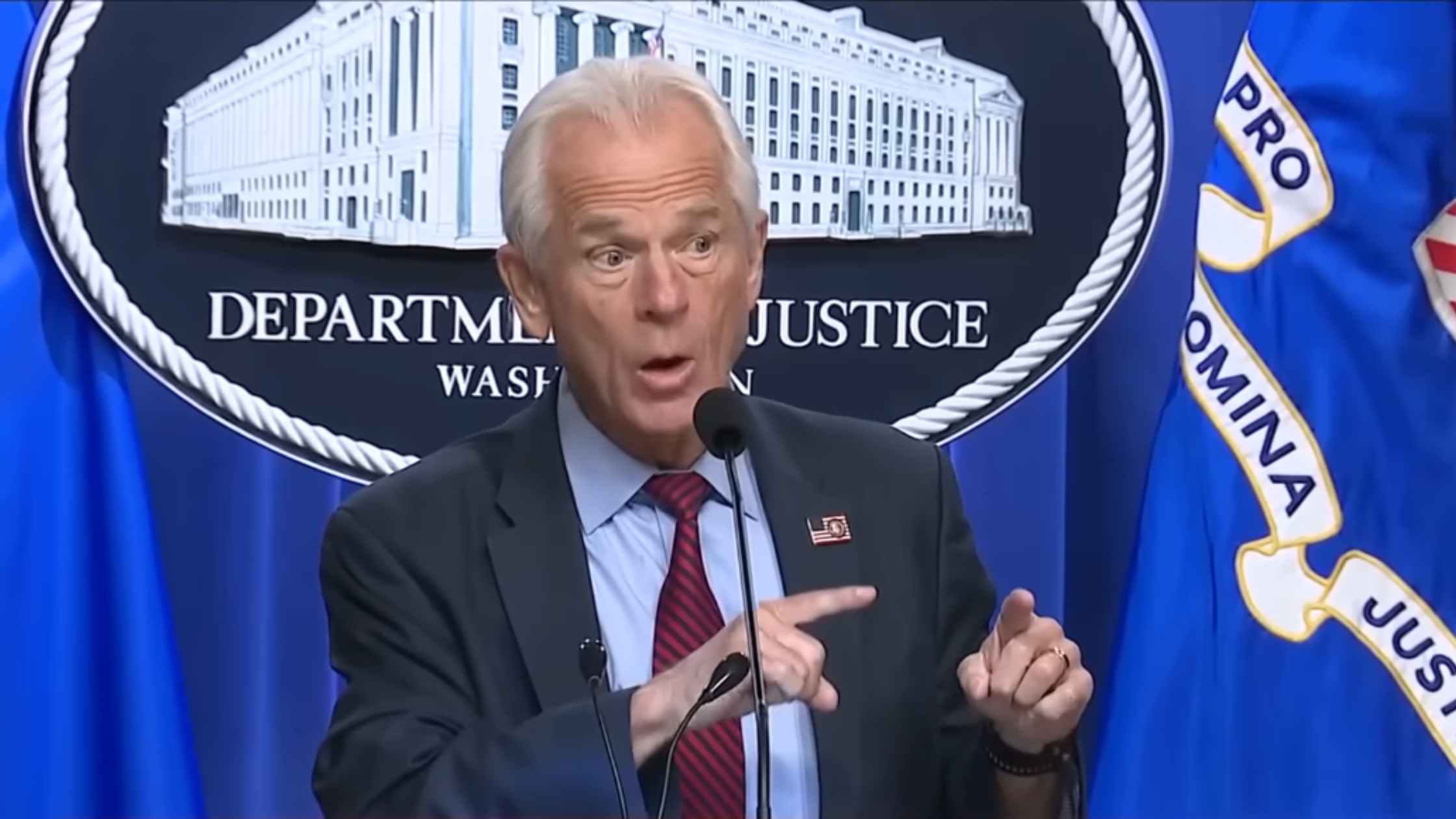
AG Todd Blanche (00:01):
All right. Good morning everybody. Today we are here to talk about our progress here at the Justice Department to hold meat packers accountable. As you all know, last November, the President tasked the department to investigate the costs and prices of beef. As a result, we prioritized investigating potential antitrust violations in US cattle and beef markets. In the beef industry, the Big Four processors control over 85% of the beef processing market. Two of the Big Four are primarily foreign owned. Multiple plant closures across the country, the current market structure and high concentration in the industry indicate anti-competitive activity.
(00:54)
Since the President's executive order, the department has been actively investigating with a review of over three million documents. Hundreds of industry participants, including ranchers, cattlemen, producers, and processors have been contacted and many interviewed as part of this ongoing investigation. More broadly, the department has also executed on the President's executive order to stop anti-competitive behavior in the broader food supply market. Later this week, we will be announcing an historic settlement that will directly affect the prices of proteins like chicken, pork, and turkey. This business model allows competitors to exchange competitively sensitive information on every aspect of the protein industry and has raised the prices on chicken, raised the prices on pork, and raised the prices on turkey.
(01:52)
The Department is also working closely with Secretary Rollins and the Department of Agriculture. We've signed a memorandum of understanding that allows us to share information aimed at protecting competition in agricultural inputs like seeds and fertilizer, but there is more work to do and we need your help. I want to remind everyone and anyone in the industry that if you have information about antitrust crimes, about price fixing, bid rigging, market allocation, or even procurement fraud, the Department of Justice wants to hear from you. Through our whistleblower rewards program, which we do in partnership with the United States Postal Inspection Service, you can be financially rewarded for coming forward with information about this behavior.
(02:43)
Just to put a fine point on it, if the information you provide helps us secure a criminal penalty in excess of $1 million, you can be entitled to recover and receive 15 to 30% of the money that we recover. So whether you're a farmer, a purchaser, a processor, you can help protect food security in America by reporting these types of violations and potentially criminal conduct. We will use every law enforcement tool available to help reduce food prices and vigorously enforce the antitrust laws to ensure every aspect of the agricultural industry competes on a fair playing field.
(03:29)
Now I would like to introduce our great Secretary of Agriculture, Secretary Brooke Rollins.
Secretary Brooke Rollins (03:35):
Thank you. Good morning, everybody. And a very hearty and vigorous thank you to our acting Attorney General. He's only been on the job for, I think, a couple of weeks at this point. And the moment I called and asked for his time and his focus and his team's effort on this issue facing our country, without hesitation, Todd, you said we're all in at the Department of Justice. And so here we are today and just couldn't be more grateful.
(04:07)
I've got a couple of larger comments to put this in context than I know my great partner, Director Peter Navarro from the White House, we've worked together a long time, has some thoughts. And then really the stars of the show are our ranchers who are here from Colorado, from Texas, from the West, from Idaho, and they'll have a couple of thoughts too. And then I think we'll take a couple questions at the end. Again, what an honor it is to be here alongside Attorney General Blanche. Thank you for your strong leadership, and of course, the incredible Peter Navarro, our director of Trade and Manufacturing Policy, also joined by several members of the ranching community.
(04:44)
Todd, Peter, and I each serve the American public in different capacities across the executive branch at the pleasure of our boss, President Donald Trump. But we are united by a single mission to protect our great American farmers and ranchers, the American way of life and the American consumer. President Trump has been the greatest champion in American history for our farmers and ranchers, from record breaking investments in rural America through the Working Family's Tax Cuts, to opening up the global market, now 18 new trade deals for our incredible American ag products, and to most recently implementing a plan to fortify the American beef industry. And these efforts couldn't be more timely for America's ranchers who are seeing a historic low herd size. This morning, I'll talk a little bit about and summarize that herd size crisis facing our ranchers, but how the ongoing investigation into our Big Four packers, what that means for the larger policy context, and certainly what it means for national security.
(05:51)
Let's begin with the herd size. As of January 1st of this year, we have about 86.2 million head of cattle and calves in America. That is the lowest since the 1950s, and this year we are looking to be slightly down again. In the past decade alone, we've lost over 17% of our cattle ranchers, more than 100,000 ranches across this country are no more.
(06:17)
The low herd size inherited by the Trump administration can be attributed to a variety of factors. The biggest one, at least from our perspective, is the radical left's ongoing assault against ranching as a way of life. For years, they used climate alarmism to wage a war on cattle in America. And when you pair that with droughts, wildfire, overregulation from previous administrations and volatile markets, this is how we have ended up here today. Growing the herd size is an immediate problem in need of solutions, and we've already begun implementing across the government and into the states how we're going to solve for that. And we'll talk more about that as we move through the week. But already on the grazing allotments, we've opened up millions of acres in the west. We unveiled our new product of the USA, which is catching like fire across the country in a good way, labeling meat and poultry and egg products as the actually born, raised, harvested, and processed in America, which is a new rule. Expanding the Grading Pilot program to include 88 facilities in 32 states, that's smaller processors, reducing holiday and overtime inspection fees for small processors. Of course, encouraging our child nutrition programs. You all have heard me say over and over, USDA spends $400 million every day on 16 nutrition programs, incentivizing those programs to purchase locally grown, processed, harvested beef. And then of course, Bobby Kennedy and I with our new dietary guidelines underscoring the importance of meat among other actions and eating real food.
(07:54)
So we are making big change to keep incentivizing the growth of our cattle herd and to get out of this current situation we're in. However, and this is the second part of what I want to talk about today, the consolidation in US meat packing has led to just four meat packers. JBS, a Brazilian owned company, Cargill, Tyson Foods, and National Beef, another Brazilian company. Those four companies monopolize about 85% of the US processing market today, but it hasn't always been that way. The rate of this four firm control has accelerated since the 1970s. According to USDA data, concentration for cattle slaughter of these four was only 25% in 1977 and jumped to 71% by 1992. As mentioned today, it is an astounding 85%.
(08:49)
Notably, these four firms now own together more than 70 subsidiary companies today. They don't own them together, but in total, there are 70 subsidiary companies that are owned by these four. This has led to a frightening landscape for cattle ranchers. Industry consolidation reduces options for our ranchers looking to sell their cattle. It weakens their negotiating power and it risks reliance upon a single buyer. Today, the concentration of larger plants opens the door to tighter coordination by the Big Four with producers and perhaps the exertion of control over them as well, giving they have limited options to sell their cattle. As ranchers face fewer options for selling their animals, the Big Four grows stronger and stronger.
(09:37)
These companies now have an unprecedented ability to wield market power and influence prices paid for cattle, definitely more so than if we had greater competition. On top of that, half of these meat packing giants, including the largest meat packer in the world, are either foreign owned or have significant foreign ownership and control,
Secretary Brooke Rollins (10:00):
... role, making them a threat not just to our cattle producers, but a threat to America itself. And as time has gone on, it becomes more and more clear that food security is truly national security. One Brazilian owned company holds roughly a quarter of the market and has a documented history of international corruption and illicit activity.
(10:23)
The brutal reality is that such foreign ownership of meat packers has been affiliated not just with corruption, but also cartels and, as recent as last week, slave labor, which is bad enough on its own, but it's also to the detriment of America's great independent ranchers and consumers. Further, when just four firms control a market, suppliers and food prices are rocked heavily when disruptions occur. The last few years have proven that the protein sector especially, and therefore our food security, is especially at risk when global pandemics, animal disease outbreaks, and facility issues like fires, labor disputes, foodborne illnesses, and cybersecurity attacks occur.
(11:04)
As an example, in 2019, a fire at a Tyson slaughter plant in Kansas resulted in a 27% drop in cattle traded on the market just that following week. And in 2021, a cyber attack on JBS plants in the US caused ripple effects and delayed production. President Trump is acutely aware of these challenges as evidenced by his Truth Social directive last November, directing the Department of Justice to investigate the Big Four meat packers for potential collusion and price manipulation. Ensuring these practices do not happen will protect both producers and consumers.
(11:42)
This also builds on our September 2025 Memorandum of Understanding with the Department of Justice Antitrust Division to identify anti-competitive behaviors with respect to agricultural inputs, as such consolidation isn't just limited to meat packing, even though that's what we're talking about today. But whether it's seeds and fertilizer and other inputs, the consolidation of agriculture in America has continued unabated for decades, and it is now time to take a very hard look and begin onshoring and reshoring, as the President has so eloquently stated, so much of what we do and produce in America. Just last week, a lot of you were at our press conference on fertilizer, where we certainly underscored the need to do that.
(12:27)
The health and diversification of all of these communities, including the packing community, is vital to our long-term national security agenda. More US-owned packers in more American regions of the country provides more opportunities for our ranchers and stronger food security for our country. This strengthens ranchers' ability to market their cattle in a way that makes the most business sense to them. When small and mid-sized processors around the country succeed, the communities they serve and the ranchers they support will also succeed.
(13:01)
In closing, I want to reiterate that these efforts are part of the Trump administration's larger plan to make America great again and making agriculture great again. When small and medium-sized packers have a chance to compete and thrive, the cattle herd regains its former strength and Americans across the country will gain. God bless our great farmers, our ranchers, our producers. God bless our incredible boss, President Trump, who's willing to bust the status quo whenever he believes it's the right thing to do for our country. And certainly there's been no greater partner alongside that effort than Peter Navarro, Director Navarro.
Director Peter Navarro (13:42):
That's the egg price slayer right there. She did some of the most amazing work, making sure that egg prices came down quickly and she's on the case. If she's on the case, then things are going to be happening that are good. And General Blanche, thanks so much for hosting this. Just within a few short weeks that General Branch has been here, we've seen a significant uptick across Justice Department, but particularly in the antitrust agency. There's a guy in back, we don't need to name him necessarily, but he's really taken no prisoners and that's what today is about. At the White House, there is no more important war on the economic front than the war on inflation or what the Democrats use as a buzzword, affordability. The irony, of course, there is that much of the inflation that we inherited originated from actions like them. One of the biggest problems we have is inflation in beef, inflation in beef. And one of the reasons has to do with just the way nature has been for the last decade or more. Drought has been a very big problem. There's not much we up here can do about that. But there are policies, for example, the withholding by the Biden vegans of literally millions, millions of acres of grazing land, and we are swiftly, swiftly moving that back in to help lower costs.
(15:36)
But the biggest thing, in my judgment, that we're suffering from, particularly in the beef market, but also General Blanche mentioned chicken and turkey and pork is industry concentration. Both General Blanche and Secretary Rollins have alluded to this 85% control. I'll give you the nerd view, as an economist who was in antitrust for a while, there's this thing that the four firms is a magic number. It's the four firm concentration ratio that's been enshrined in Justice Department doctrine for decades. And it basically says when you approach even something like 60%, you invite collusion, either explicit or tacit. And that's not only the problem we have here, it's that half of the four are Brazilian. Half of the four are Brazilian.
(16:39)
And in my tariff world, I remember vividly just recently when the President put tariffs on Brazil because of actions they were taking, which were harmful to the American people, what happened? The beef lobby, represented by the Brazilians, quietly threatened the White House, and we saw beef that should otherwise be on the counters sold in American grocery stores going where? China.
(17:23)
So it's not just price gouging and price fixing we have to worry about. It's also the influence of foreigners on our supply chain and the national security issues that are associated that. We cannot tolerate that.
(17:43)
And so General Blanche alluded to a settlement coming up this week. I can tell you that there's supposed to be a trial in Minnesota this week. It's a company called Agri Stats. What is Agri Stats? This is like the mathematician's worst nightmare in terms of monopoly behavior. Basically, what the companies in this concentrated industry were doing was individually sending in data on everything, consumers, production, everything in between. And what did that computer do? It spit back what the monopoly price should be. Justice Department said, "No more, no mas. That's not going to happen on our watch." And that case, I believe, is going to be settled well or at trial in a way which not only will take care of that problem, but implicate some of the bad actions that we've seen by the two American companies, Tysons and Cargill, and JBS on the Brazilian side along with National Beef. Although I hasten to add here that the Brazilians are far more of the problem, and it's complicated by the fact that the Brazilians, particularly JBS, hands out millions of dollars to our American political system like its candy. And the rate of return they get on that would make a Wall Street hedge fund blush. And we got to put a stop to that.
(19:32)
And you're going to hear from the ranchers at the front lines what they've suffered. I can tell you that a small herd and high concentration ratio or recipe for exactly the kind of beef inflation we getting.
(19:47)
The last thing I want to mention, General Blanche alluded to the whistleblower program. He's really understating one of the great things justice is doing. This is a big deal.
Director Peter Navarro (20:00):
The first award that was given to an insider was a million dollars for blowing the whistle on some kind of used car scheme. Think about that. And here's the reason why the whistleblower program is so important is because those are the folks who actually know where the bodies are buried, where the prices are fixed, where the shutdown of a meat packing house was really not because there was an electrical problem, it was something else. So I welcome my friends with the hats. I think that's a giveaway that they might be the ranchers in the room. And again, I want to thank you both for just kicking butt here. Thank you.
Secretary Brooke Rollins (20:50):
Thank you, Peter.
Shad Sullivan (20:54):
Well, good morning everybody. Hope your day's going well. My name is Shad Sullivan and I am an American cattle rancher. My family and I derive 100% of our income from the beef and cattle industry. First of all, I'd like to thank Jesus Christ for his favor on this nation for 250 years. America, 250. Let's go. I'd also like to thank President Trump and his administration, including the Department of Justice, USDA Secretary Brooke Rollins, for fighting on behalf of the American people and returning to the founding principles to defend liberty and freedom. For too long, farmers, ranchers, and American consumers have suffered at the hands of consolidated power. Just in the last generation, we have lost 665,000 beef cattle in operations, which is 50% down from 1980. We have also lost 86,000 farmer feeders, which is 1,000 head and below. This has been driven by years of mergers and acquisitions of multinational corporations and foreign meat conglomerates. That has created a level of economic and political power that too often escapes oversight and accountability.
(22:16)
As a result, under restrained market control by these powerful corporations has increased input costs for producers, decreased profitability, and forced many to become price takers. While at the same time, this market control drives up costs for consumers.
(22:37)
President Trump's recognition that this level of concentration has possibly led to market control, and manipulation, political leverage, and vulnerabilities in our supply chains and food security is crucial to upholding our sovereignty and safety in this nation. Restoring a fair marketplace, rebuilding a resilient American food system and protecting the food security of this nation are critical in securing an integral marketplace that strengthens rural America, supports local economies and ensures consumer affordability. Today signals that these concentrations concerns are being taken seriously. We respect the process and we applaud the Trump administration for taking steps forward to restore a fair and competitive marketplace for American producers and consumers.
(23:32)
I will reiterate that food security is national security, and I submit to you today where there is beef, there is freedom. May God bless America and thank you very much.
Secretary Brooke Rollins (23:46):
Shad, thank you. Well said. Well said. Shad is a fifth generation rancher with ranches in Colorado and Texas. Hayden, I said Idaho. Did I get that right?
Hayden (23:53):
Utah and Arizona, ma'am.
Secretary Brooke Rollins (23:54):
Utah and Arizona. I was worried I missed the state. Utah, Arizona, a sixth generation. And then the incredible Campbells right here, fifth generation Colorado ranchers too. They represent tens of thousands of some of our greatest Americans across this country. And we're just so proud to represent you and hopefully make some good change for you all moving forward. With that, we'll take questions hopefully on topic, but yes, go ahead. If you'll introduce yourself as well.
Leah Nylen (24:21):
Leah Nylen from Bloomberg. So the Justice Department had opened a meat packing investigation in 2020 and closed it last year. Can you tell us what is different about this investigation into meat packing?
AG Todd Blanche (24:35):
I mean, we open and close investigations regularly. I think that circumstances change, whether it's circumstances within the Department of Justice and priorities that we have, but also within the industry. And you just heard a lot of facts and numbers and data and statistics that explain why we're doing our investigation now, why we started it last year. And these investigations, at the risk of saying the obvious, are difficult. They take time. They take a lot of data processing of information provided by the industry, by everybody up and down the chain, and then also meetings and talking to witnesses. So I'm not going to explain or justify why a different administration shut down a different investigation, but this investigation, like we talked about, is being done, I assure you, for the right reasons, given not only what President Trump directed in the executive order, but the reality of the industry right now.
Director Peter Navarro (25:36):
I can tell you the big difference is velocity, intent, and actual action. And you're going to see in this settlement that it is going to unleash a set of forces that are going to ripple through this industry rapidly and in a way which is going to allow us to get the bottom of this. So this is a new regime. This is a new form of moving and it's at Trump's speed.
Secretary Brooke Rollins (26:05):
And just very quickly, I will say, I think that perhaps more than ever before in American history, we now realize the threat to our sovereignty, to our freedom, to our liberty as we look in total at the consolidation in America, but also perhaps the most biggest priority, the biggest priority would be the consolidation at the hands of foreign countries and foreign owned companies. And we're not here today to talk about, for example, China owning US farmland, but in 1983, China owned 2000 acres, today they own almost 300,000 acres. 20 years ago, there were 40 fertilizer companies providing nitrogen fertilizer, today there are three. Seeds the same. It is a national security issue. And at the same time, we're losing thousands of these producers every year. So I think when you take all of that in total, you take an extremely aggressive president who wants to stand by rural America, return prosperity or rural America, stand by his ranchers and his farmers, make sure that we're doing everything we can to keep that way of life alive and vibrant and vigorous. I think that would explain why we're doubling down today. Thank you. Yes, sir.
Dave Michaels (27:28):
Dave Michaels with the Wall Street Journal. You're appealing for whistleblowers today, so are you confirming it's a criminal investigation? And then you're blaming the foreign meat packers. Are you going to focus on the foreign meat packers? How are you going to charge only foreign meat packers if you have a four member cartel?
AG Todd Blanche (27:50):
I mean, I'm not going to jump to conclusions around what the results of the investigation will be. That wouldn't be fair to the folks here at the department that are working at or to the meat packers that we're investigating. The idea of whistleblowers, of people coming forward with information they have is one of the best and most efficient ways that we can solve antitrust violations criminally or otherwise. And so we just want to make sure people realize that people in this industry realize that we're putting money where our mouth is. We're not asking you to come forward and then see what happens. We're saying if you come forward, and if your information results in a finding, in a conviction and the amount of money is over a million dollars, which in this industry is not a very high bar, that you stand to recover up to 30%.
(28:40)
And so we have to incentivize people to make a very difficult choice and come forward with information if they had it. And that's what we're trying to do, but we're not standing up here announcing the results of the investigation. We're putting a finer point on what President Trump said last year in his executive order, which is this is a real problem. It's a national security problem. It's a price problem for American consumers, and it's a problem for the industry for the hardworking ranchers that have existed for five generations, five generations, six generations in this country. So that's the reason behind what we're talking about today.
Dave Michaels (29:18):
Not a result, but it was the type of investigation. I mean, you're-
AG Todd Blanche (29:22):
Can you speak up?
Dave Michaels (29:23):
Just the type of investigation. Can you confirm it's predominantly a criminal investigation at this point?
AG Todd Blanche (29:29):
I mean, these investigations, it depends. And so it depends. So yes, in the antitrust space, the criminal part of the investigation is something that is done in almost every case in parallel with the civil investigation. The facts matter, intent matters, what we find from the bad participants, if there are bad participants, what role they had. So it's not as if, "Oh, this is just civil." Or, "Oh, this is just criminal." It's an investigation. And if we find
AG Todd Blanche (30:00):
... evidence of criminal conduct and criminal intent, we'll go from there.
Secretary Brooke Rollins (30:06):
Marcia.
Marcia Brown (30:07):
Hi, Marcia Brown with Politico. You've talked a lot about how this will lower prices for consumers and help American ranchers. When do you expect consumers to feel that price relief at the grocery store and for ranchers to also experience relief from this?
Secretary Brooke Rollins (30:21):
So as we've outlined, Marcia, you've heard a hundred times, maybe not all the reporters in the room, being at a 75- year herd low, being at this point in the market, taken in total with, as I mentioned, the last administration moving cattle, doing everything they could to basically eviscerate the cattle industry, whether that was through grazing allotments or climate change, hoax, craziness, whatever it was. On top of that, you have the droughts. Even in Nebraska, the fire they just had was in rural Nebraska, so it didn't get as much press as a lot of these wildfires do, but it was the biggest fire in Nebraska history, the ninth largest in American history. And we're not really talking about it because it was in rural America, but what that does to those ranchers.
(31:10)
So all of that taken in total, combined with obviously the screwworm south of the border, we've had to keep the ports closed to make sure that stays out, which thank the Lord we've been able to against all models showing it would be here last year. But you marry that to this effort and the long- term infrastructure that we are building in order to mitigate this sort of thing from ever happening again. Marcia, I wish I had a crystal ball and I could tell you we do believe that prices are going to start coming down this summer based on opening up the allotments, putting more money into mid-size and smaller processors, incentivizing our ranchers instead of slaughtering to keep their heifers, et cetera, I'm getting way into ag stuff now. But we are hopeful that those prices will start coming down this summer, this fall. But again, this is a massive complicated policy challenge that we're working to fight every single day and solve for. So thank you. Yes, ma'am. And then we'll go to you in the front.
Leah Nylen (32:12):
Hi, Khushita Vasant from MLex. Could you talk about how close you are to filing a lawsuit and have the companies been cooperating? Have you seen delay tactics? Have they been destroying documents?
AG Todd Blanche (32:26):
So I'm not going to talk about timing because I don't have an answer. If I had an answer, I would share it with you. But just to understand that there is a lot of work that's been done and there's a lot of work to do. And we are moving as quickly as we can. And I think that you've seen antitrust investigations in the past last more than one administration sometimes. And so go on for years and years and years and years. And there's things that we can do in the department to make sure that doesn't happen here, whether it's just making sure that subpoenas are responded to on time, making sure that we have the resources that are devoted to these investigations that should be. So I will tell you we're doing that. So this is a priority and it has been a priority, but we're not in a position where I can say, hold your breath that's coming forward, but that's not to say that we're in it for the very long haul. We're not.
Leah Nylen (33:22):
Just given that two of these companies are foreign owned, there's a risk that they might be destroying documents or not playing ball. Have you seen any delay tactics or have they been just not turning in documents on time?
AG Todd Blanche (33:35):
The nature of this investigation would not allow me to talk about what we've learned in that space. So if there's a time when it's appropriate to bring charges or if there's a time when it's appropriate to make an announcement about not bringing charges or what we're doing, we'll do that. But look, these investigations, and you can look back over history and see the meaningful antitrust investigations that have been very successful to the American consumer and the American businessman, they do take time and it's not the kind of thing where we can provide updates along the way that will satisfy the folks that are saying, "Hey, President Trump issued that executive order last year." And that's one of the reasons why we thought it was appropriate to be here today, to make sure that everybody knows that this is something that we're working very hard on. Unfortunately, I can't accompany that with details about the investigation beyond what we've already said.
Leah Nylen (34:32):
Thank you.
Secretary Brooke Rollins (34:33):
Yes, please.
Director Peter Navarro (34:36):
Let's remember that meat is also chicken, pork, turkey. There's also fish as a protein. And when you do things like General Blanche and Secretary Rollins are doing in this space, these folks are now aware and they're going to be hypersensitive to any kind of things that they might pull. So you might expect at the margin, be the hardest because of the conditions, but across the meat and other issues of the ag sector, they're going to start behaving better. That's not going to forgive what they've done in the past, but these kind of actions create benefits in and of themselves as the investigation goes forward.
Secretary Brooke Rollins (35:28):
Thank you. We'll do one more. Yes, sir.
Jerry Hagstrom (35:30):
Yes. Jerry Hagstrom from the Hagstrom Report, is your goal to get these companies to break up, to create more companies? And do you want the Brazilians to sell their interests to Americans?
Secretary Brooke Rollins (35:43):
I think, Jerry, the goal is to preserve a way of life of rural America, to ensure that our food security is absolute, that the importance of being able to feed ourselves in this country and not to rely on other countries is, again, it's absolute. And back to our founder's vision 250 years ago, and that this president, I believe, has revivified in such an incredibly remarkable way is putting America first. And what that means is putting all of it first, but from my lane, making sure that we can feed and fuel and clothe ourselves. And these other countries are playing the long game. They've got a hundred-year plan and we're arguing until this president, we're arguing over who should go in what bathroom and certain things that in the long run don't necessarily solidify America and our national security. And so that's how important this is.
(36:55)
I don't want to answer those questions specifically because that's the importance of this investigation to fully understand what we're facing, what it looks like, and what we need to do to ensure that our ranchers and our farmers and our agricultural community have everything they need, and that we also are able to reverse this trajectory of smaller and smaller producers in the country. I think that the MAHA, the Make America Healthy Again Movement is such a big part of this as Americans begin to understand the importance of eating real food. Of course, the real winners in that are all Americans as we move back towards a healthier population, but also the other winners are our farmers and ranchers who will be the ones providing the real food.
(37:35)
And let me just finish with this. I was on a call on this issue about a month ago. It was with some smaller meat processors in North Dakota, and very small, one of them said, "For $60,000 low interest loan, I could add a grinder to my very small processing plant in rural North Dakota for $60,000, a loan from USDA. And what that would allow me to do is go from processing one head a week to six." And again, processing six head a week is not going to feed America, feed the world, but what it will do is feed a community. And that is the goal to get back to healthier, more locally produced food and ensuring that it is by companies and people that have America's best interest at heart. So thank you all for being here and I especially want to thank our attorney general. God bless you. Thank you.