Speaker 1 (00:00):
She had threatened her.
Speaker 2 (00:00):
You staying down?
Speaker 1 (00:00):
Mm-hmm. Thank you.
Speaker 4 (00:00):
Thank you.
Speaker 1 (00:00):
[Inaudible 00:00:27]. Right now?
Speaker 2 (00:00):
And I hate those screens. Sometimes, it doesn't do anything. Lots of stuff.
Speaker 4 (00:00):
Thanks so much.
Speaker 1 (00:00):
Sure. Yeah, that's it.
Speaker 3 (00:00):
[inaudible 00:00:39].
Speaker 2 (00:00):
What?
Speaker 3 (00:00):
[inaudible 00:00:41].
Speaker 2 (00:00):
It is what it is. It's my new T-shirt, I think, saying, "Yes, it is what it is."
Speaker 3 (00:00):
[inaudible 00:00:50].
Speaker 1 (01:21):
Okay. Leave the Times with the Daily News here.
Speaker 2 (01:22):
With the Times?
Speaker 1 (01:24):
Yes, Times.
Speaker 2 (01:27):
But if you're wide screening, probably that's what he orders. In desire to get off the desk. If you can watch on the livestream. What?
Speaker 3 (01:41):
[inaudible 00:01:45].
Speaker 1 (01:41):
Yeah, I know.
Speaker 3 (01:41):
Yeah.
Speaker 2 (01:41):
Yeah.
Speaker 5 (01:41):
[inaudible 00:01:54]. You want me to go up here?
Speaker 1 (01:41):
Yeah.
Speaker 5 (03:02):
I'll go up here, just stop hitting. [inaudible 00:02:09], you guys get photographers on the home runs.
Speaker 6 (03:02):
Times up. You got it ready.
Speaker 1 (03:02):
[inaudible 00:03:02].
Speaker 2 (03:02):
I noticed the first 10 seconds and the last 10 seconds.
Speaker 5 (03:02):
Yeah.
Speaker 2 (03:02):
You and everything in between.
Speaker 5 (03:02):
God, that's true. [inaudible 00:03:02]. I'll sit down and shut up.
Speaker 6 (03:02):
Sounds good.
Speaker 7 (03:02):
Shut up!
Speaker 5 (03:02):
Yeah, give us that.
Speaker 2 (03:02):
That's true. Obviously, horizontal photo. Do we want to shoot it vertical?
Speaker 3 (03:02):
I mean, [inaudible 00:03:02].
Speaker 4 (03:02):
I'm sorry. Yeah, sorry.
Speaker 2 (03:02):
We only got to tell you, it's going to crossed. It'll be square for us.
Speaker 5 (03:02):
Yeah. [inaudible 00:03:02].
Speaker 2 (03:03):
Two thirds. You can pose two thirds left, two thirds right, the other third being less important [inaudible 00:03:39].
Speaker 8 (03:08):
Thank you for all this, but thank you for that.
Speaker 2 (03:08):
Nice. Where you going?
Speaker 1 (03:08):
Paris and [inaudible 00:03:47]. Great.
Speaker 2 (03:08):
I'm near retiring.
Speaker 1 (03:08):
Great.
Speaker 5 (03:08):
It's all right, Charles.
Speaker 1 (03:08):
Congratulations to the hero of the day.
Speaker 3 (03:08):
[Inaudible 00:04:10].
Speaker 5 (03:08):
Oh, yes. Yes, yeah. [inaudible 00:04:17].
Speaker 1 (03:08):
So, where's the camera?
Speaker 5 (03:08):
Right there.
Speaker 1 (03:08):
Oh, great. Okay. There's a little space here if you want to try to squeeze in.
Speaker 5 (03:08):
Yeah. Do you want that or do you want the space here?
Speaker 9 (03:08):
This is better because that's like-
Speaker 5 (03:08):
Okay. Here, I think he wants to kind of crush in so he can get the PowerPoint over his shoulder.
Speaker 10 (03:08):
Okay. Worse.
Speaker 1 (03:08):
Leave room for me.
Speaker 10 (03:08):
All right.
Speaker 5 (03:08):
But yeah, that's [inaudible 00:04:35] happening. Yeah. Okay. All right.
Speaker 1 (03:08):
Yes, [inaudible 00:04:47]. I know.
Speaker 4 (03:08):
[inaudible 00:05:08]. I know.
Speaker 1 (03:08):
Literally, The New York Times. [inaudible 00:05:22].
Speaker 5 (03:08):
Right there? Okay.
Speaker 4 (03:08):
Yeah. [inaudible 00:05:27].
Speaker 1 (03:08):
It's so lucky to talk to him though, right? [inaudible 00:06:05].
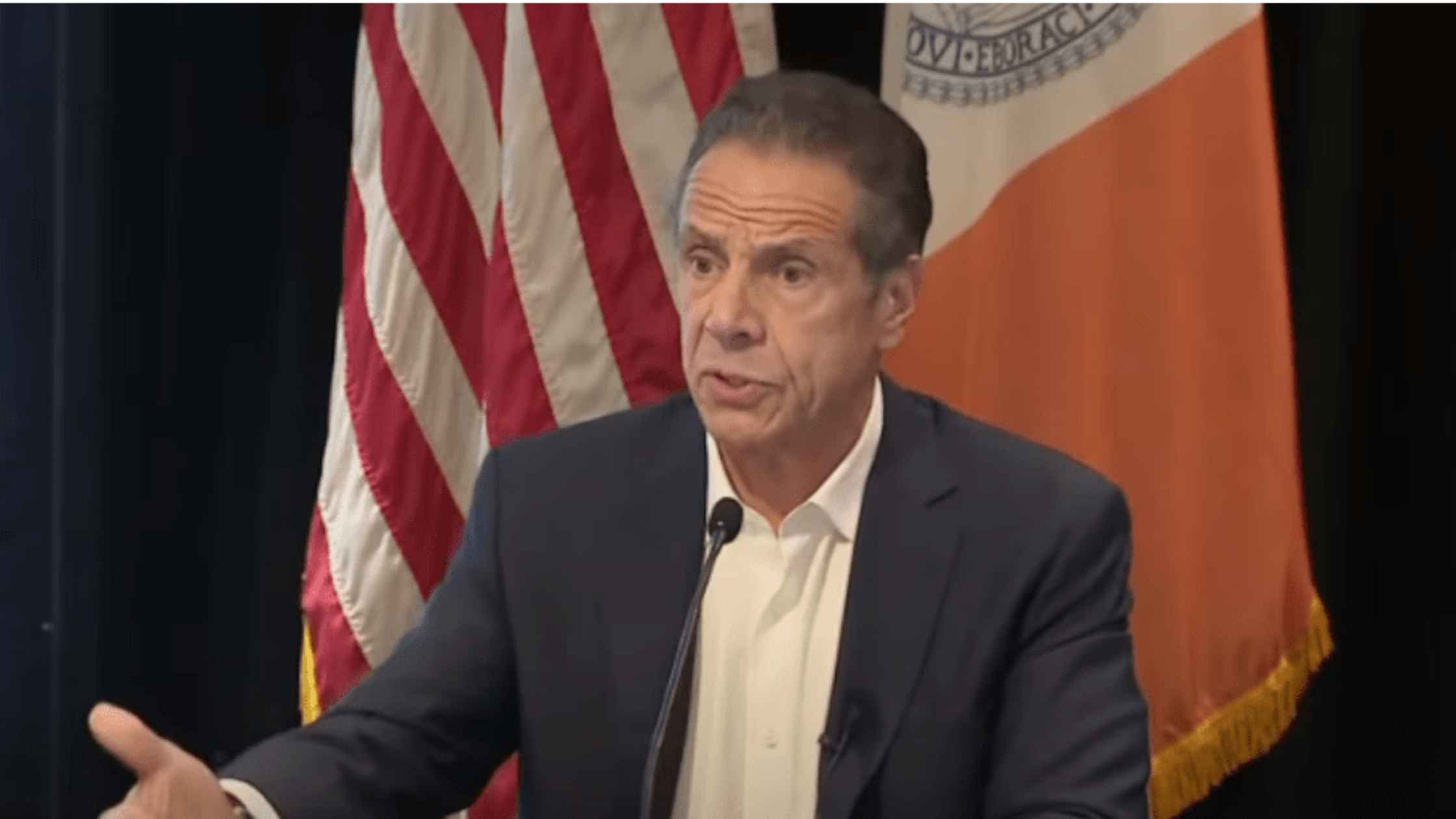
Andrew Cuomo (10:14):
Good afternoon. That's a problem. I did not take your audio. I promise. Hi. Okay? You don't need audio. [inaudible 00:10:09] matter. You don't need audio. It's all about the smile. Theme for the day, talking about, "It's all about the smile," substance matters and facts matter. Just think about that. New York, as we discussed, is a comeback capital. You look at our history. Knock us down, we get back up. We learn. We come forward.
(10:38)
And there's no doubt that today, you talk to New Yorkers, we have problems, but there are no problems that we can't solve. And as a matter of fact, there are no problems that we haven't solved before, right? The issues we're grappling with now, homelessness, public safety, et cetera, we've dealt with these issues before. And it's time to address the issues. It's time to build confidence and optimism, get businesses coming back to this city. And that's about building a new New York City.
(11:16)
But it doesn't just happen. You need a smart plan, and not just a plan, but you need the experience and the ability to get it done, right? There are a lot of proposals. The trick, the key from all I've seen on all levels, is the ability to get it done, to make government actually move, to get something completed. That is the art form in government, my friends.
(11:48)
We've been laying out a new New York City agenda. Build an affordable New York City. Build a new public safety system. Build community, which is what New York City is all about, the spirit of community, right? 180 languages in our public school system. Forging community from that diversity. Build the economy of tomorrow today. Because it's about jobs. It still is, always was. And build a new subway system. And I'll be laying out different pieces of this platform over the coming weeks.
(12:23)
Affordability, as you know, is a major issue. Working families are getting squeezed. Consumer prices have risen higher than the median household income. 50% of working-age households can't meet basic needs. The cost of goods in New York City metropolitan area rose by 56% over the past decade, which is frightening when you think about it.
(12:48)
Transportation affordability. I propose a 100% subsidy for low-income New Yorkers on both buses and subways. Okay? Low-income defined as 150% of FPL, federal poverty level. Many more people use subways than buses. In New York, it's about 3.4 million riders on subways, about 1.3 million riders on buses. And this would be a 100% subsidy, period.
(13:28)
Assemblyman Mamdani proposed 100% free buses, fast free buses for all. My question on that proposal is, first of all, what happened to subways? More people ride subways. You just leave that out. But number two, why would you subsidize the rich? I get the theory of socialism, and government provides government controls. I get that. But besides playing socialist, why should New Yorkers subsidize the bus fare for rich people? Why? Why should they pay my bus fare, right?
(14:21)
And Mr. Mamdani has talked a lot about his free bus plan, but here's what he doesn't tell you. He passed a one- year pilot on it in the assembly with Senator Mike Gianaris, who happens to be a senior member of the legislature and tends to be able to get things done. And then it ended altogether, and he couldn't get it renewed. Zohran's free bus push was relegated to the parking lot. So all of this about a one-year pilot that he couldn't even get renewed himself.
Andrew Cuomo (15:00):
… itself, and again, I come back to because it's constant throughout this discussion, why is government supposed to be subsidizing the rich? Test question. Who is the original progressive president? Who's the original president who put forth progressive agenda, known for putting forth a progressive agenda? Technically Teddy Roosevelt, but since Teddy Roosevelt is a Republican, we're going to eliminate that answer and we're going to go to who is the first Democratic president, and you win. Governor Roosevelt, then President Roosevelt, New York. When he was governor he forged the progressive government ideology that he brought to Washington. Many people forget that. I can see you're excited by that, Gloria, and you knew that also.
(16:07)
And he said, "The test of our progress is not about whether we add more to the abundance of those who have much. It's whether we provide enough of those who have little." So my opinion, the MTA should not be subsidizing fares for rich people. Food affordability, it's a major issue. No doubt. 40% of New York City adults live in households at risk for food insecurity. 20% in the Bronx. The Bronx in many categories is the borough that has more problems and problems of a greater magnitude than any other borough, and it's not even close. Highest crime rate, highest poverty rate, the Bronx, also food insecurity. 14.6 of New York City residents are food insecure. It's only getting worse.
(17:04)
My proposal is food subsidy for low-income families who are not eligible for SNAP, but who still have hardship, economic hardship, even though they're above the SNAP threshold. SNAP is a federal supplemental nutrition program, which would be from 130% to 150% and this would provide them $100 per month. The Assemblyman's proposal is government-run grocery stores, one per borough. It assumes that the government is going to efficiently be able to run these grocery stores, which by the way are very hard to run. It's a very slim margin in a grocery store, it's only about 1 to 3%. Or the government would then have to subsidize the grocery stores.
(18:07)
You open a government run grocery store, you're going to be competing with the private grocery stores, right? You're competing with the bodegas, right? Maybe put them out of business, maybe cost jobs. It'd be one per borough, which would be overwhelmed. Just imagine one store in Brooklyn and all of Brooklyn going to the one store. And most of all, the experiment has been tried and has failed. And once again, there's no income threshold. So it's a government run store and rich people can go there to shop. Why would you subsidize Rich people's purchase a food? Why would you do that? Well, that's the socialist ideology is government controls, food distribution, transportation, education. I get the theory. Why would you propose subsidizing the food for rich people?
(19:20)
This is what the Assemblyman says about it himself. Let me go back because I passed it.
Speaker 11 (19:27):
Go back.
Speaker 12 (19:28):
There we go. The guy in the back.
Andrew Cuomo (19:36):
Oh, sorry. Technical difficulty.
Speaker 12 (19:47):
It's not playing. So let's…
Andrew Cuomo (19:48):
We'll come back to that. But what he says in the clip is basically, we'll try this as a pilot and government should experiment. And if it doesn't work, c'est la vie. It was wrong. C'est la vie. It was wrong. No it's not c'est la vie when it doesn't work. Because these are families who are really struggling. This is real life for people. This is not, we'll try it. We'll experiment. One borough, if it works, great. If it doesn't work, great. This is real life and it's not c'est la vie.
(20:35)
And by the way, we don't have to experiment because we have experimented. This is not a new idea. It was done in Kansas City. Kansas City's failing government funded grocery store has earned international infamy for its empty shelves and rotten smells, right? So it has been tried and it failed. And why would you have this New York City government that struggles to fill a pothole is now going to go into the grocery store business? I mean, on what theory would you think that somehow that's what we should be doing? Government should now go into new private sector enterprise. It makes no sense. And again, why are you coming up with proposals that once again have taxpayers subsidizing rich people?
(21:29)
On wages, New York State was the first to pass $15 minimum wage. It was the highest in the United States. I was very proud as governor to do that. They then added a COLA adjustment to it, but it hasn't kept up with the cost of inflation. My proposal is a $20 minimum wage, $17 in 2026. I believe it will boost the economy. I believe 1 million workers will benefit and it will be a stimulative initiative. When I passed $15, which was the highest in the United States, everybody said, oh, it's going to be crushing for businesses. It's going to be too slow for… I said, no, it's calibrated intelligently. We had a protection against small businesses and I think it's actually going to stimulate the economy, and it did. The Assemblyman proposes $30 million, which would basically be a doubling of the minimum wage. I think that will cost jobs and I think that would bankrupt businesses. I think it's too much too fast.
(22:38)
I also think we need to cut taxes for working families. I would eliminate the New York City income tax for families making up to 250% of FPL. That's about $70,000 for a family of four. I would also cap New York City homeowners property tax at no more than 2% a year or the cost of inflation. I passed this for the rest of the state because property taxes are a crusher for a homeowner and the increase in property taxes is a crusher. And the rest of the state, I passed a 2% property tax cap. So your property tax taxes couldn't go up more than 2%. You had some areas in the state where they were going up 6%, 7%, 8% every year, and we had a 2% cap. It saved over $30 billion to homeowners. New York City refused to have the cap because they wanted the ability to raise taxes higher than 2%. I would pass the 2% property tax.
(23:53)
The Assemblyman has no tax cut for working families. Also, his ideological tax proposals that would fund his policies are either non-starters or they are frankly fraudulent. That's why one of the themes for the day was facts matters. He says his corporate tax increase would simply equalize New York City's rate with New Jersey's tax rate. Right? You've heard him say that a number of times. I'll raise the New York City corporate tax rate. It'll be the same as New Jersey. It'll be the same. Yeah. Only problem is it won't be the same. The Jersey corporate rate is 11 and a half. The assemblyman says, well then we should make New York State 11 and a half. New York State is now 7.25. Raise that to 11 and a half. Yes.
(24:55)
But what he leaves out is New York City has corporate taxes on top of the state corporate tax. So yes, you could raise the state tax to 11 and a half and the jersey tax to 11 and a half, but then you have another 12% of city taxes that you're adding on, which you have failed to mention. So it would actually be double the rate of New Jersey. And then ask corporations, do you want to stay in New York or do you want to save taxes because we just doubled your taxes by just going across the bridge?
(25:44)
Another fraud alert. Today, the Assemblyman repeated something. He said a number of times that he had to fight me in 2021 to raise taxes on the rich. I didn't want to raise taxes on the rich and he had to fight me to do that. That is a lie. And that's a harsh word, lie, but sometimes it's just a lie and that is just a lie. I proposed a tax increase in 2021. That was my proposal that was in my budget proposal that went to the legislature. The way it works is the governor makes a budget proposal, sends it to the legislature, legislature responds. It was in my budget proposal. CNBC wrote a story saying In my budget proposal, I never even heard of Assemblyman Mamdani. Two reasons because he was never there and he never did anything. But that is just untrue.
(26:52)
Also, his proposal for a statewide corporate tax but the revenues go all to New York City that is either a fraud or one of the most naive and ignorant proposals. There is no way legislators in Buffalo, Long Island are going to vote to raise the taxes on their corporations to send it to New York City. That is not going to happen. And look, I proposed and passed many New York firsts and I had more success with the legislature than any governor in modern political history. 11 budgets passed on time, hadn't been done in modern political history. I am telling you, this is a non-starter. It would be a non-starter for a governor, let alone the New York City Mayor.
(27:55)
What is the best answer to affordability? It is business development. It is opportunity. It is jobs. It is economic growth. It is not anti-business socialism. What makes New York New York? The economy businesses. We're not doing a lot of farming out there. I don't know if you noticed on the way in, there're not a lot of farms left in New York. There're buildings where people work and we want businesses to stay and we want businesses to grow and we want businesses to come because that's jobs, that's opportunity, that's growth.
(28:42)
Socialism that says we're anti-business, we're anti-corporate, what they did on the Amazon project that I had coming to Queens, thousands of jobs to open a second headquarters. Socialists were anti- business, were anti-corporate. They killed the Amazon deal, cost us thousands and thousands of jobs. How did that help? It doesn't. And this theory that you can have a socialist city in a democratic capitalist country and that is going to thrive is a non-starter. They will leave the city for any other city or any other part of the country. So it is just, yes, I understand that it's an interesting philosophical concept. It has no connection to reality.
(29:50)
In sum, what this all comes down to, I am proposing real change that will help working families, working New Yorkers. And I have the experience
Andrew Cuomo (30:00):
[inaudible 00:30:00] to actually get it done. I make government work. I've done it all my life. I've gotten big projects done. He's proposing a theory of socialism that has never worked anywhere. Go to Venezuela, go to Cuba, tell me how it worked. And he has no ability to implement it, and it would never make a positive difference in the New Yorkers who actually need help. P.S. if you want an experiment with socialism, go visit Chicago and tell me how it worked out. Questions?
Speaker 13 (30:46):
Governor's going to call on folks. Do me a favor though, as he does, [inaudible 00:30:50] your name, [inaudible 00:30:52] your name and you news organization.
Nick (30:55):
Governor, Nick [inaudible 00:30:56] from York Times. [inaudible 00:30:57] you know what I'm probably going to ask you about? Can you tell us about your conversations with President Trump when you spoke to him most recently? You spoke to him about the race. Did he involve you? [inaudible 00:31:10].
Andrew Cuomo (31:09):
Yeah, I read-
Nick (31:10):
[inaudible 00:31:11].
Andrew Cuomo (31:12):
I got it. I get the whole gossip, and the intrigue, and President Trump, et cetera. I can't remember the last time I spoke to President Trump. I did call and leave word after the assassination attempt, just expressing concern. I left word, I didn't speak to him at that time. I've never spoken to him about the mayor's race. I have spoken to him when I was governor, dozens and dozens, if not hundreds of times. We went through COVID together, I went to the White House on numerous occasions, so we've had very intimate dealings on many levels, and many difficult, contentious confrontations, as you all know, because you were there. And we've also done productive work together, I believe.
(32:23)
On the entire topic, look, if you want to play palace intrigue, you have Mayor Adams who's running, who is a wholly owned subsidiary of President Trump. You have Curtis Sliwa, who's a Republican, and President Trump is head of the Republican Party, and then you have the assemblyman, who I think politically, this is in my opinion, the Republicans would have a field day if New York City elected Mayor Mamdani, because they would use him politically. They do a poster of Mamdani the commie. They call him a commie. They run around the country and say, "The Democratic Party lost its mind. They're electing socialists, they're electing extremists." So I think politically, they would've a field day with it.
(33:24)
I also think President Trump meant what he said, and it was a quip, but he said something to the effect of, well, then I would have to take over New York City if Mamdani was elected.
(33:43)
I think there's something to that. I think he would say New York City has a crime problem, New York City has an immigration problem, New York City just elected a communist mayor who has no experience, and the federal government has to come in to help. I think it would be like Los Angeles on steroids. Well, the federal government has to come in. I think the president would like to have control of New York City. I think that's why he did what he did with Mayor Adams. Why get involved with Mayor Adams, who's charged criminally, and come in personally, and come up with this very unusual arrangement? Well, you'll drop the charges, conditioned on his cooperation with your administration. Why would you do that? Because he wants control of New York City. Why did he take over the Penn Station project? Because he wants control of New York City. Why does he want control from New York City? Because he's from New York City and New York is New York, that's why. So I think he would use Mayor Mamdani, if that were to happen, as a reason to exert much more federal authority. And again, Los Angeles on steroids, and he would point to the problems, which he could do, the inexperience, et cetera, and the politics of it. I believe that would happen.
(35:28)
For myself, as I said, I used the expression yesterday or the day before, I said, "During COVID, I had a dysfunctional relationship with the President, that was like a dysfunctional marriage." It's a joke. Every morning you get up, and it's the same person, it's the same conversation. We went through a very, very difficult time with COVID. I've had a lot of arguments, disputes, differences of opinion with President Trump about COVID, about the time when he was considering quarantine for New York, which would've been devastating, about tax policy vis-a-vis New York, about aid to New York. There's no doubt that we have had many contentious issues.
(36:34)
And for me, it's very simple. What I would do as mayor, I would defend New York 100% with everything I have learned and know, and with every ounce of strength. And I know a lot about government because I've done it all my life. I've been in the federal government, I was a cabinet secretary, I ran the state, I know the city, so my knowledge gives me an ability to be in a formidable position as an opponent for the president. But also, at the same time, I would try to work with the president where we could. He's the president, we need the federal government, there's a lot of good things he can do for the city.
(37:33)
So, I get the political desire to demonize. We're in an election, I get that, and I understand that. And nobody has had more contentious relationships with President Trump than I have. I don't think any governor in the country had more contentious relationships, but at the same time, he could be very, very helpful to New York City. So, defend anything that offends New York values, but if you can find a way to work together, and he can help New York City, then you work together. I represent all New Yorkers, and that was my position from day one with President Trump. And I said publicly as governor, "I will defend New York with my life. And you're a tough guy, I'm a tough guy, but I'll put my hand out to work together in partnership." I said that on day one, and I say that today.
Henry (38:56):
Can I clarify on that, Governor, on the… Henry with [inaudible 00:38:59]. On the underlying premise of the reporting in the New York Times that the president is thinking about weighing in, you yourself have said this needs to narrow between one of you and Mr. Mamdani for someone to reasonably have a chance. So, on the underlying premise, he's talking to your pollsters, he's talking to certain of your supporters, which was in the reporting. Would you welcome him weighing into the extent that he clears the field for someone, and I assume you hope that would be you?
Andrew Cuomo (39:27):
Yeah, my theory is, look, first you're asking, what is the political calculation of the president? You're asking the wrong guy. But I would say Eric Adams is a wholly owned subsidiary. He went to a lot of trouble to establish the mayor of New York City is under his control. So, if he put Adams in control, why wouldn't he want to keep Adams in control? Or I could see him saying, "I want the assemblyman to win, because politically, I can make a lot of points with him politically as evidence that the Democratic Party has lost its mind, and I can then exert more control over New York City, because I can say that he is unfit, and there's a crime problem, and the federal government could come in like it did on LA." So, I could argue both of those are more attractive. Or he could say, "Curtis Sliwa, who's a Republican, I'm going to try to make a Republican mayor.
Henry (40:43):
But you don't see him backing you?
Andrew Cuomo (40:45):
I think I have the least to offer. As I said, we had a contentious relationship, and I think from his political point of view… And again, you're asking the wrong guy, but if I were opining on his political point of view, the obvious political point of view, I would say I'm the last person he would want. Would you want to deal with me every day? You don't even like to deal with me in these press conferences.
Gloria (41:21):
Governor, [inaudible 00:41:26] CNN. Can you just clarify for us, when was the last time [inaudible 00:41:31], and would you welcome, or have you asked for his help in this campaign? And if so, how do you square that with your messaging that you're the only one who is equipped to defend New York City from Trump's attacks? Here, you're saying that you can work with him, and you told [inaudible 00:41:52] business leaders that you don't want to pick a fight with him. So, how do you square that messaging with your previous statements, saying you're the only one who could possibly stand up to him?
Andrew Cuomo (42:03):
No, no, let's be very clear, Gloria. I said what I said on day one as governor, when he became president, to the extent he intrudes or invades on New York priorities, I will do everything I can to defend New York. And I have, and I did, and we won many, many important battles.
(42:38)
He wanted the driver's licenses lists, so you could see all the undocumented people on the driver's license list, because when we did driver's licenses for undocumented, it shows on the Department of Motor Vehicle list, the name, and it says you're undocumented. They wanted that department of motor vehicle list so they'd have in one place who's undocumented, their address and their picture, so it would be a phenomenal vehicle for the immigration enforcement. We had a war over that, and I would not give it to them. And they withheld funds, and they kicked us out of the Trusted Traveler Program, and I went down to the White House, and I had a war with the person who was in charge of Homeland Security in the Oval Office. So, we've had many, many battles royale, and the president knows that. And that will never change. Sanctuary law, I will defend it with every ounce of strength. I also believe I'm in a much better position, and I'll be a much better advocate for New York than the assemblyman, who frankly is a rookie in all of this, and Mayor Adams, who basically signed on to team Trump. So, that's number one.
(44:25)
At the same time, if there is a way to work with the president, where New York City can be benefited, I would do that. You can't say, in my opinion, as a responsible official, either as governor or mayor, "I'm not going to work with the president because he's a Republican, and I'm going to play politics, and therefore I won't deal with him at all, just because he's a Republican." That's a reckless, irresponsible… Violates your oath of office.
Andrew Cuomo (45:01):
So I didn't take that position either as governor and I wouldn't as mayor.
Gloria (45:08):
Governor [inaudible 00:45:10] president. When did you last speak with him, and would you welcome his help if [inaudible 00:45:14]?
Andrew Cuomo (45:13):
I don't recall the last time I spoke with him. I left a message after the attempted assassination. I don't believe I spoke with him. I believe I left a message for him. And on this race, I'm running as an independent, and I'm not seeking anyone's support. I'm running as an independent, and I like my position, and I like where I am, and I'll stay where I am.
Gloria (45:42):
Do you still [inaudible 00:45:43]?
Speaker 14 (45:42):
One question. Hold on one second. Hold on. Now this is getting crazy. [inaudible 00:45:45].
Andrew Cuomo (45:45):
No. Well, I've spoken to him probably hundreds of times, right? I don't remember the last time. No.
Gloria (45:56):
Mr. Governor-
Speaker 14 (45:57):
Chris here has a question. Sorry.
Gloria (45:59):
Just to try to narrow it down. Have you spoken to Mr. Trump this year?
Andrew Cuomo (46:07):
The last contact was when I called to leave best wishes for the attempted assassination.
Gloria (46:16):
Got it. I wanted to ask a similar question to what Gloria just asked, but let me just clarify some of the question. The New York Times reported that you have spoken to Donald Trump about the news. You're saying flat out that's false.
Andrew Cuomo (46:32):
That's false.
Gloria (46:33):
That's false. Okay. Since it appears that Donald Trump is at the very least thinking about getting involved in race, what's the role you would want to try to push Eric out of [inaudible 00:46:46]?
Andrew Cuomo (46:46):
Chris, who knows? First of all, I think this is all gossip and intrigue to no end. President Trump has got a lot going on. Why he's going to get involved in a complicated New York City mayor's race, I have no idea. From his point of view, as I said, he already has Mayor Adams as a subsidiary, work on his behalf, continue control of New York City through Mayor Adams, or for political benefit, help Assemblyman Mamdani one way or the other, because I could see the political benefit to that. And I think he could then exercise more control, maybe even more control than Adams by saying, "I have to come in to help New York City. There's a crisis." But that is my political speculation about what he would do. I don't know his political calculation.
Gloria (47:53):
If he were to endorse you, would you disavow him?
Andrew Cuomo (47:56):
I would not seek his endorsement. I wouldn't accept his endorsement. And same as governor, my position has been unchanged. I will defend New York against any policy that I think hurts New York, New York State or New York City, but I will put my hand out to work in any way that he could be helpful to New York State or New York City.
Speaker 14 (48:26):
We have two more questions. One question per question, please.
Gloria (48:30):
So during the virus you had pitched yourself to voters as the one person who would stand up to Trump. So now you're taking a much softer approach. Why the shift here? And then just on [inaudible 00:48:41] you raised today and all the other agenda items, how are you paying this? I understand that Mamdani has a massive tax he wants to put on people and he wants to change [inaudible 00:48:51] but you're still proposing a lot of free buses. You're proposing adding 5,000 [inaudible 00:48:56].
Andrew Cuomo (48:55):
I gotcha. I gotcha. First, my position is entirely consistent from the time I was governor. No one has had more battles with President Trump than I have. Nobody. No more high consequence, high decibel level, high volume than I have, many on national TV on a daily basis. That has not changed. I said as governor, and I say today, if the federal government can be helpful to New York City, then you have the ethical responsibility to be in a position to accept working together. Right? You can't say, "Thumb your nose at the federal government just to play your politics." I have said that as governor. I've done it as governor, and it would be the same here. So it's exactly the same position. Are we clear on that?
Gloria (50:04):
Well, you said to Politico, "I would spent eight years in Washington, go to US Conference of Mayors," in part of laying out your anti-Trump agenda to fight against [inaudible 00:50:14].
Andrew Cuomo (50:14):
100%. And I would do that.
Gloria (50:16):
But now you're saying you can go and work with him.
Andrew Cuomo (50:20):
No, no. You have to be able to hold two separate thoughts in your head at the same time, right? One, you're going to oppose him on certain matters. I will oppose him on sanctuary city laws. I will oppose the Medicaid cuts. I would oppose cuts to SNAP, for example. And how do you oppose the president? What do you do as a mayor to oppose the president? Well, I'll sue him. Okay, that's great. Add it to the pile. There's 9,886 lawsuits, and now you're 9,887. You lobby. You go to the US Conference of Mayors. You work with other mayors, you work with the governors. You go to Congress, you develop support. You go to legislators, Republican legislators, and you develop support. And that's how you develop support to oppose whatever Medicaid cuts, et cetera. I would do that.
(51:22)
If there was an opportunity to work together on something, I would do that too. That's exactly what I did as governor. Majority of the time we were in opposition. But whenever there was an opportunity to work together, we did. During COVID, we needed supplies. He sent supplies, and I accepted the supplies. I was not going to say, "No, I'm not going to take N95 masks because you are a Republican."
Gloria (51:57):
But this messaging wasn't [inaudible 00:52:04]. You understand the question of the [inaudible 00:52:05] in general?
Andrew Cuomo (52:04):
No, it was just a more… I don't think we had this discussion in the primary at all to this extent.
Gloria (52:13):
For Univision [inaudible 00:52:15] Mariela Salgado. I want to bring back immigration again because for us it's very important. We are seeing deportations. We know that President Trump's intention was to get the criminals, but unfortunately we're seeing families [inaudible 00:52:28] separated, whether it was they were in the wrong place or maybe they missed an appointment in court. They're being separated. So you said you will defend sanctuary city. But the truth is that right now there's a very well-established relationship between New York City and ICE. What can you [inaudible 00:52:46] specifically to defend families, of members who are non-criminals, who are abiding by the law, and they are contributing to New York City?
Andrew Cuomo (52:57):
Yeah. Well, this is case in point. When it comes to immigration, we have a sanctuary city law, which I would uphold and fight for. By the way, I passed… The state has a sanctuary state law, which I did by executive order. So state sanctuary law, New York City sanctuary city policy. I would enforce them 100%. I do believe Mayor Adams has compromised his position. I do believe as part of the deal he made with the president, he has agreed to cooperate with the immigration authorities. I think he put his own personal interest ahead of the interest of New Yorkers. I think that was a violation of his oath, and I think he did a disservice to all New Yorkers. I will oppose any violation of the sanctuary city law.
(54:03)
You are also right that President Trump did say dangerous criminals. And on dangerous criminals, yes, we don't harbor criminals in New York City. And if there's a dangerous criminal who was convicted of a crime and is here illegally, we'll work with them to deport that person. But you have people here who have been working for years, paying taxes, doing jobs that nobody else wants to do, frankly, providing a service to this city. Why would you want to disrupt their families? For what purpose? They're posing no burden to anyone. As a matter of fact, they are a benefit.
Gloria (55:05):
But can you really get through the president [inaudible 00:55:06]. Do you have a relationship that you can actually get through to them on behalf of those people?
Andrew Cuomo (55:06):
Look, I will do everything that I can do. I would sue. I would lobby. I would beseech him personally. I would do everything that I could do because I think it's morally wrong. And on a human level, it is very, very disturbing. I mean, I talk to families who are just afraid to go out of the house. They're afraid to send a child to school. Workers who are afraid to drive their car because they're afraid they may get pulled over and somehow that winds up expediting them to deportation. So I would do any and all of the above.
Speaker 14 (55:57):
Thank you, everybody.
Gloria (55:57):
[inaudible 00:55:58] by the Justice Department?
Andrew Cuomo (55:57):
Yes. Yes.
Gloria (55:57):
So the city has Fair Fares, which offers a 50% discount to very low income New Yorkers, but there's historically always been a very low pickup rate. What makes you think you can do any better?
Andrew Cuomo (56:14):
I think two things. First, take Fair Fares, which is 50%. We're saying 100%. And then there's no doubt that Fair Fares, there are many more people who are eligible for Fair Fares than who've actually subscribed. And part of this is you have to advertise it. You have to promote enrollment. I think the fact that it's free is actually going to generate more attention. You know, "I get a 50% discount. What does that mean?" I don't think it ever resonated with people. I think saying to people, "You'd get a free pass. You don't pay anything," I think that's going to resonate naturally. But you'd also need to do more enrollment and advertising. I agree 100%. Thank you guys.
Gloria (57:09):
[inaudible 00:57:10] Justice Department regarding your probe and your handling of the COVID [inaudible 00:57:19]?