Top Legal AI Software Worth The Investment
Raise your firm’s productivity and maximize billable hours with these top 9 legal AI software companies that are worth the investment.

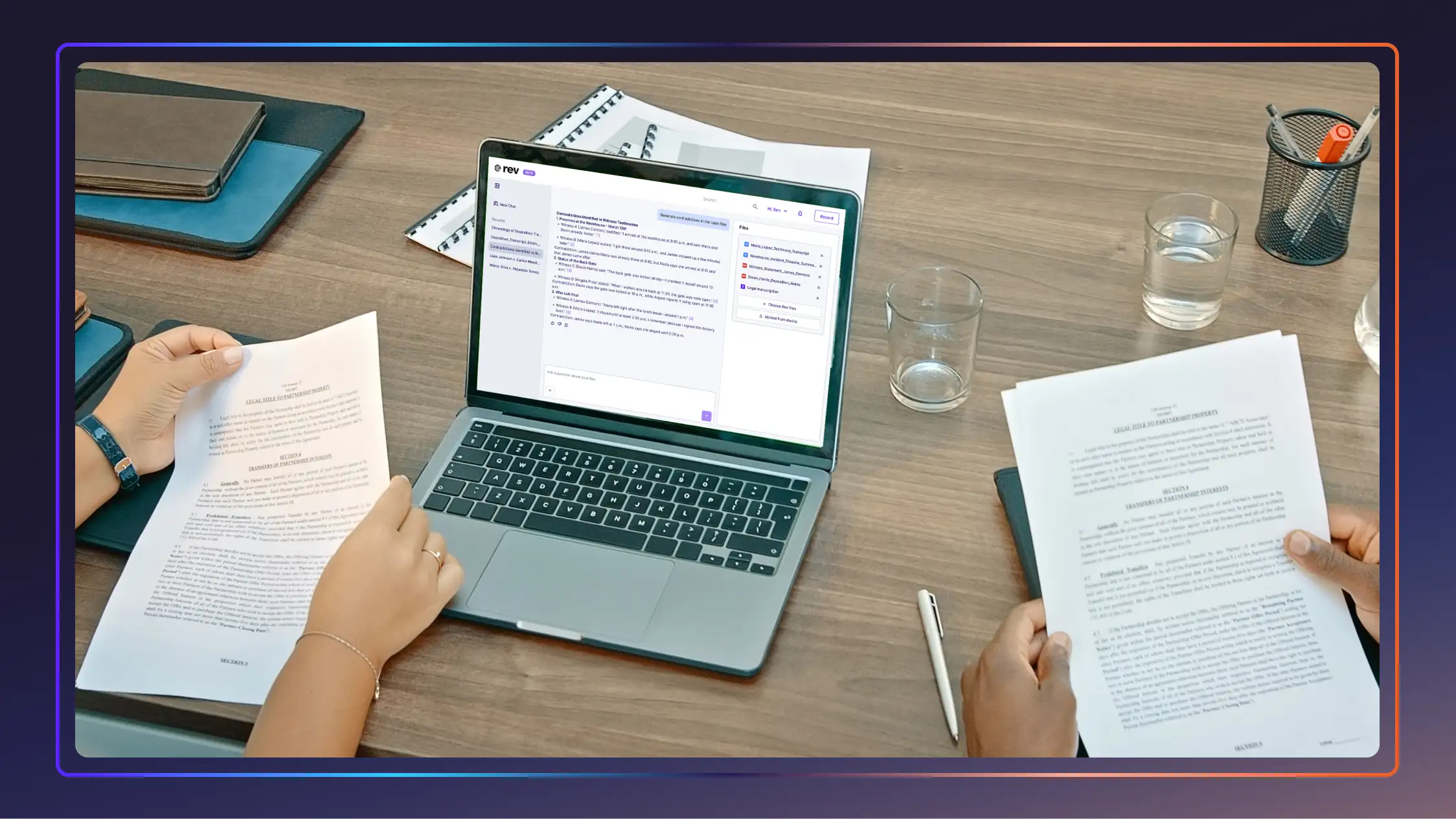
Whether you’re an attorney at a large law firm or running your own private practice, getting the most out of every hour is vital for both your productivity and finances. This is where legal AI software can make a huge difference in your practice.
While legal AI software will never replace actual legal professionals, it can make many jobs done by legal professionals much easier and, in many cases, AI can simply take more mundane tasks entirely off your plate. Using legal artificial intelligence tools for tasks like practice or case management, document and contract review, transcription, and legal research can free attorneys up to focus on more important things like strategy and client relations.
Read on for a breakdown of our favorite AI software for lawyers to help you streamline your day-to-day. We’ll discuss price, pros and cons, highlight our favorite features, and more!
1. Rev
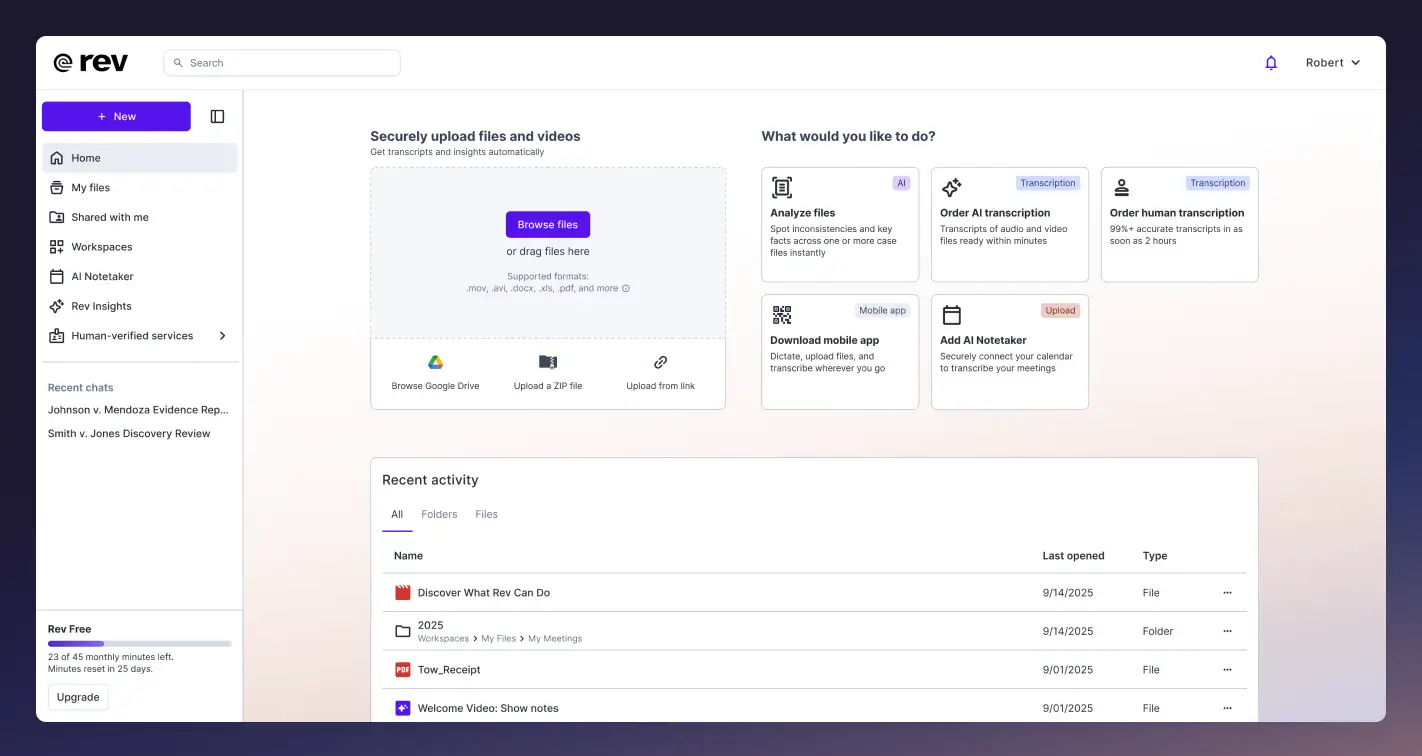
When it comes to AI tools for lawyers, it’s hard to beat Rev. Rev turns every recorded event, from witness interviews and depositions to team meetings and court proceedings, into searchable, scannable text. The platform can save a legal team hours a day by transcribing these lengthy audio and video files into useful documents that are easy to analyze, organize, and share.
Rev’s ASR leads the industry in accuracy, so you can trust our results. Rev can produce near-instantaneous draft transcriptions for quick review, with a 99% accurate draft following soon after. Our AI can also analyze and summarize every transcription and image, offering highlights and insights that can save loads of time so attorneys can focus on more important work. Learn more about the power of AI legal document review on our blog.
Rev’s AI assistant will also sit in on meetings and take notes so that attorneys can actively take part in the conversation.
Category: Transcription and multi-file analysis
Price: Plans start at $29.99/user/month
Best for: AI Transcription
Pros: Industry-leading ASR
Cons: For near-perfect accuracy, users must opt for the human transcription option.
What users say: “It helps me recall the conversation, the action that I need to take, or directives I need to give to others. It can provide me with key points I need to use on direct examination of witnesses and cross-examination of witnesses. It also allows me to get assistants up to speed on something I've covered with a client. I love having it on calls because it eliminates my taking notes and allows me to focus on the client and their issues.” -Shelley T., on G2.
2. Clio
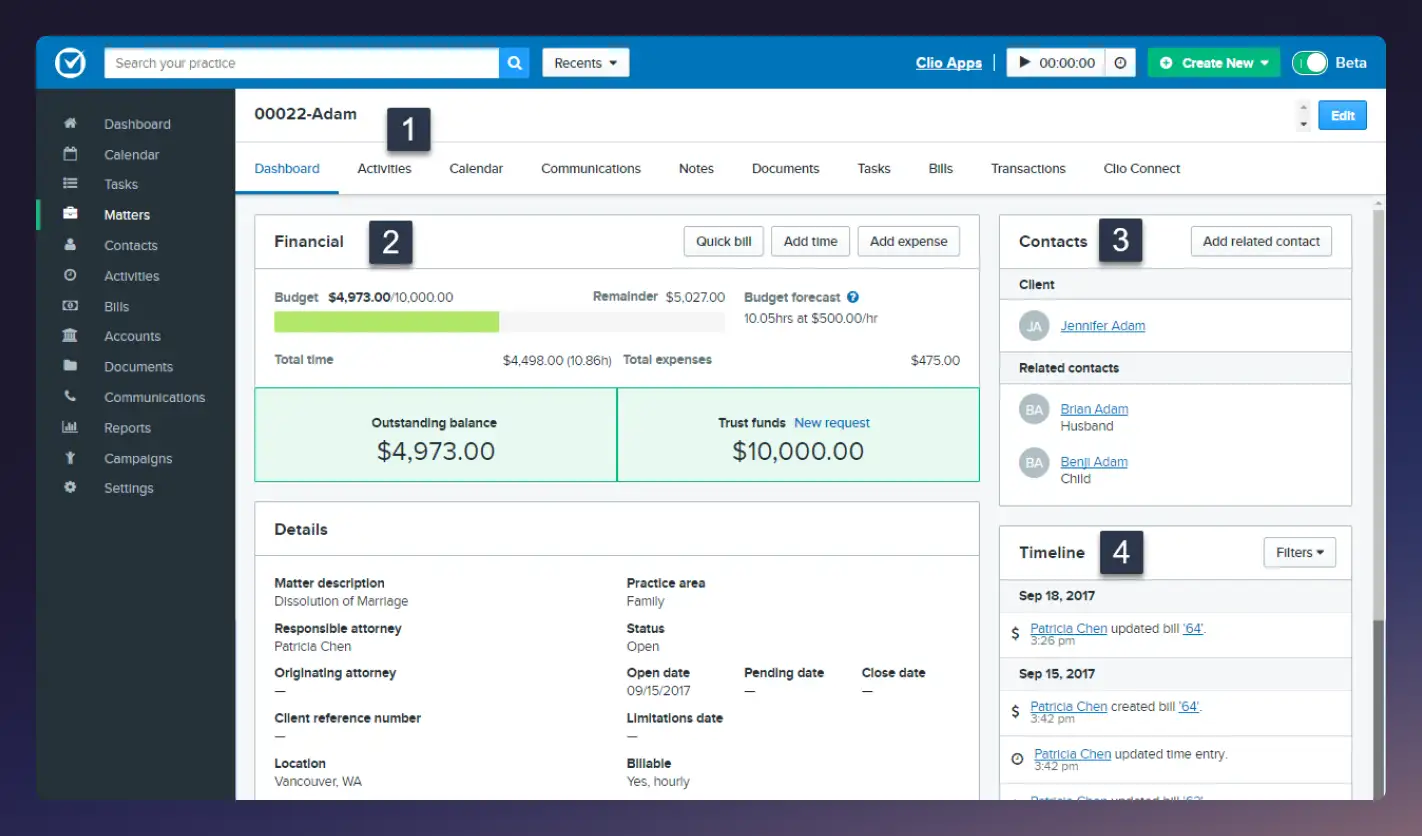
What can we say about Clio that hasn’t been said? It’s one of the most comprehensive case management software available, and its AI features have only made it more efficient. Clio’s AI can manage your documents, automate your billing and time recording, organize evidence, and act as a personal assistant. In fact, the built-in AI assistant can automatically update clients on news and updates in their cases, schedule meetings and touchpoints, and set deadlines so that everything stays on track.
However, Clio can be too complicated for small practices that don’t have time to learn all the ins and outs of its features. It’s also somewhat pricey, making it best as a mid-sized and large law firm AI software option.
Category: Firm management
Price: Plans start at $49/user/month
Best for: Practice Management
Pros: An all-in-one legal AI software
Cons: Expensive with a steep learning curve
What users say: “The capabilities are really impressive, and it seems like they continue to get better and better every day. From organizing matters by stages, practice areas, and any custom field you want to create, to automatic workflows and calendaring, there are so many features to help ease the workload.” -Abby S., on G2
3. CoCounsel Legal
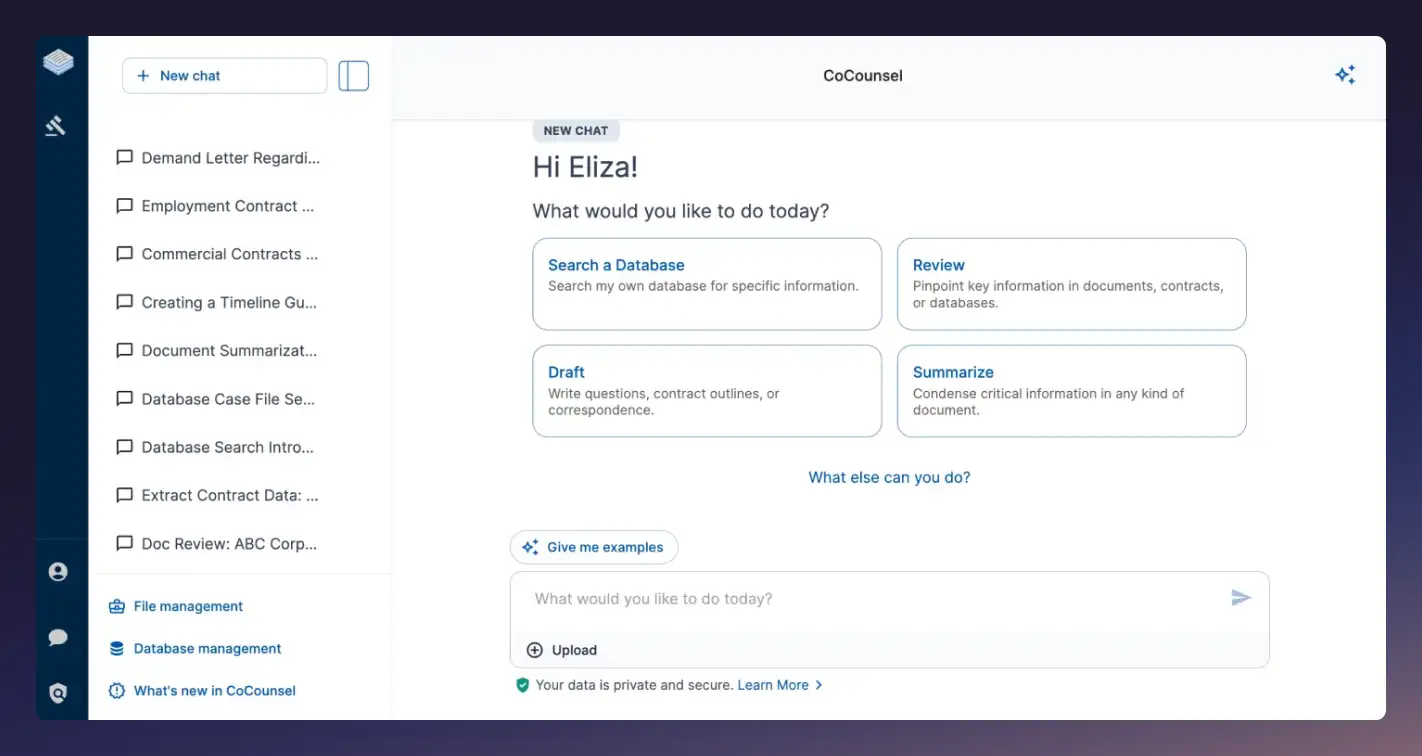
Thomson Reuters recently incorporated CoCounsel into its legal research platform, creating one of the best AI legal assistants available. With the power of Thomson Reuters behind it, CoCounsel can help attorneys conduct comprehensive legal research as part of its duties, as well as aid in document analysis and legal drafting.
From comparing documents side-by-side to creating schedules and timelines, CoCounsel does everything from a legal standpoint, which makes it rise above other AI tools for legal firms. Its hefty price tag makes it somewhat unsuitable for small firms or solo practitioners, however.
Category: AI assistant
Price: $292/user/month
Best for: Document comparison
Pros: Backed by Thomson Reuters legal research
Cons: Expensive and can be complicated to use
What users say: “The interface is user-friendly, I don't get nickel-and-dimed for every search that I do. I love that I can copy parts of cases and drop them directly in my document. I also love that the citation is correct. Customer service is outstanding!” -Martha Y, Attorney., on G2
4. LexisNexis
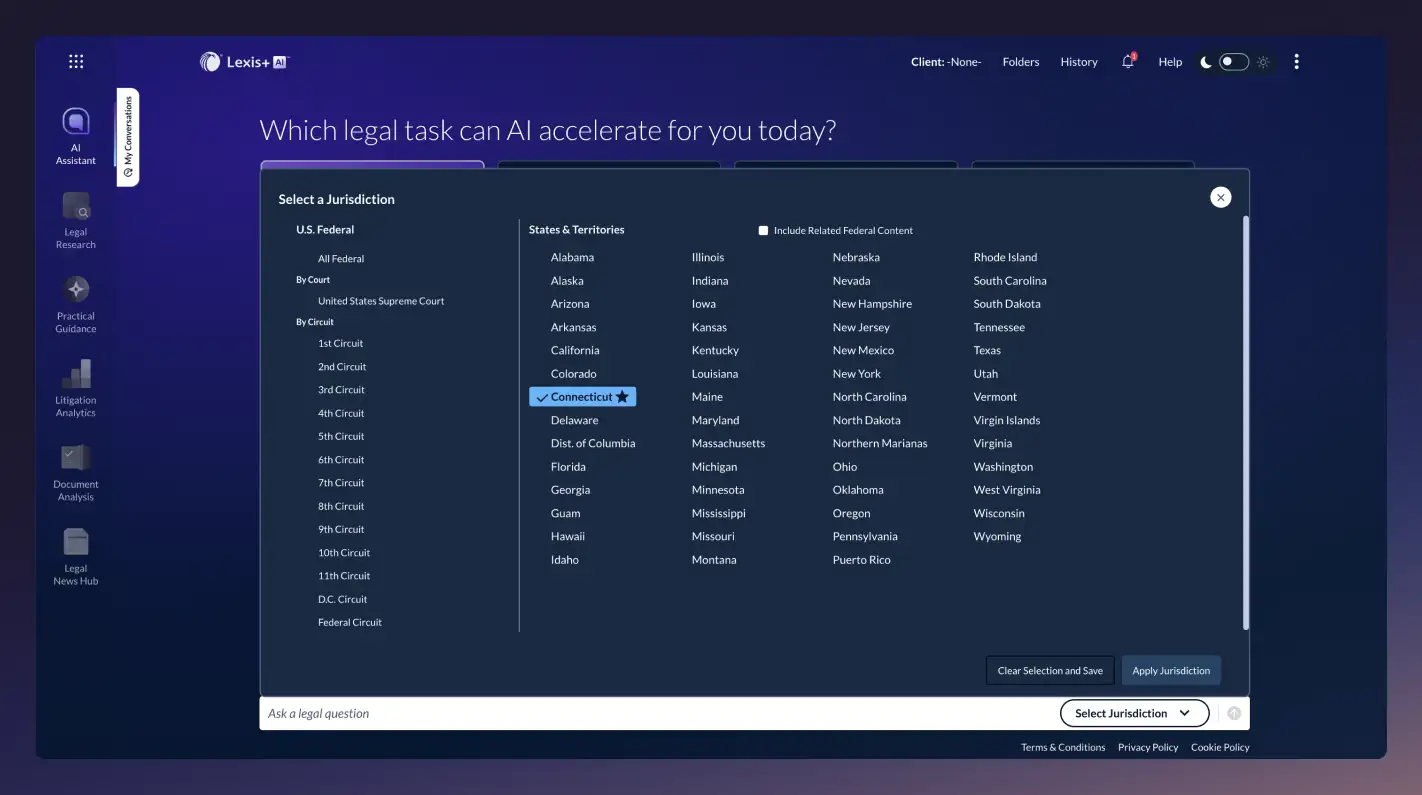
LexisNexis is one of the top legal research tools in the business, and now it features AI. It’s an AI-based legal research tool and chatbot built for legal professionals. Imagine using ChatGPT for legal research, but if ChatGPT’s output was based only on legal data.
LexisNexis is a great law firm AI software because it simplifies legal research. You can input a simple question or prompt, and the results are based on actual case law and citations. No more researching just to verify the answers from AI providers. It can also draft, summarize, and analyze legal documents, which further simplifies the day-to-day of attorneys.
Category: Legal research
Price: Call for custom pricing
Best for: Quick and accurate legal research
Pros: Its LLM is built for legal
Cons: Expensive, especially for smaller firms
What users say: “Legal research has (been) made easier. Thousands of relevant judgements can be found here.” -Vaidehi K., Civil Litigation Attorney, on G2
5. Diligen
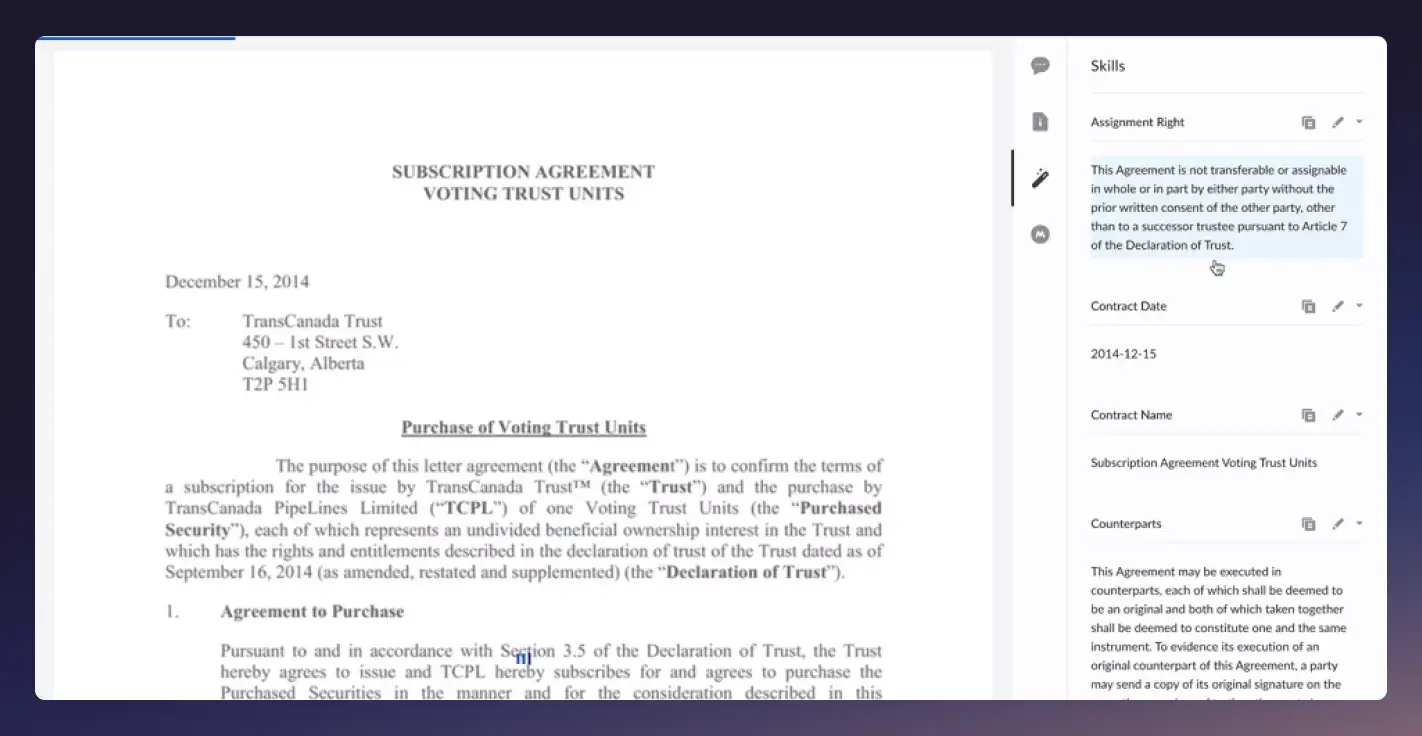
For firms that process a lot of contracts, Dilligen is a can’t-miss legal AI software. Diligen uses AI to analyze contracts and other documents for important information, inconsistencies, key clauses, and insights. Its automated process automatically highlights and extracts key data, which speeds up the due diligence process.
While it doesn’t entirely replace manual analysis, it streamlines the entire process by giving legal professionals starting points and signaling where to find information in complex documents. For the best AI for legal document analysis, using Diligen is doing your due diligence. That said, at $350 per month, Diligen might only be applicable to large and midsize firms. The setup process can be lengthy, too.
Category: Contract analysis
Price: Plans start at $350/month
Best for: Automated analysis
Pros: Speeds up the contract analysis process
Cons: Expensive
What users say: “Diligen has done an exceptional job streamlining the contract review process. The combination of machine learning technology and a great user experience makes sharing the workload between team members easier than ever.” -Chelsey Lambert, Legal Technology Specialist, from LexTech Review
6. Lex Machina
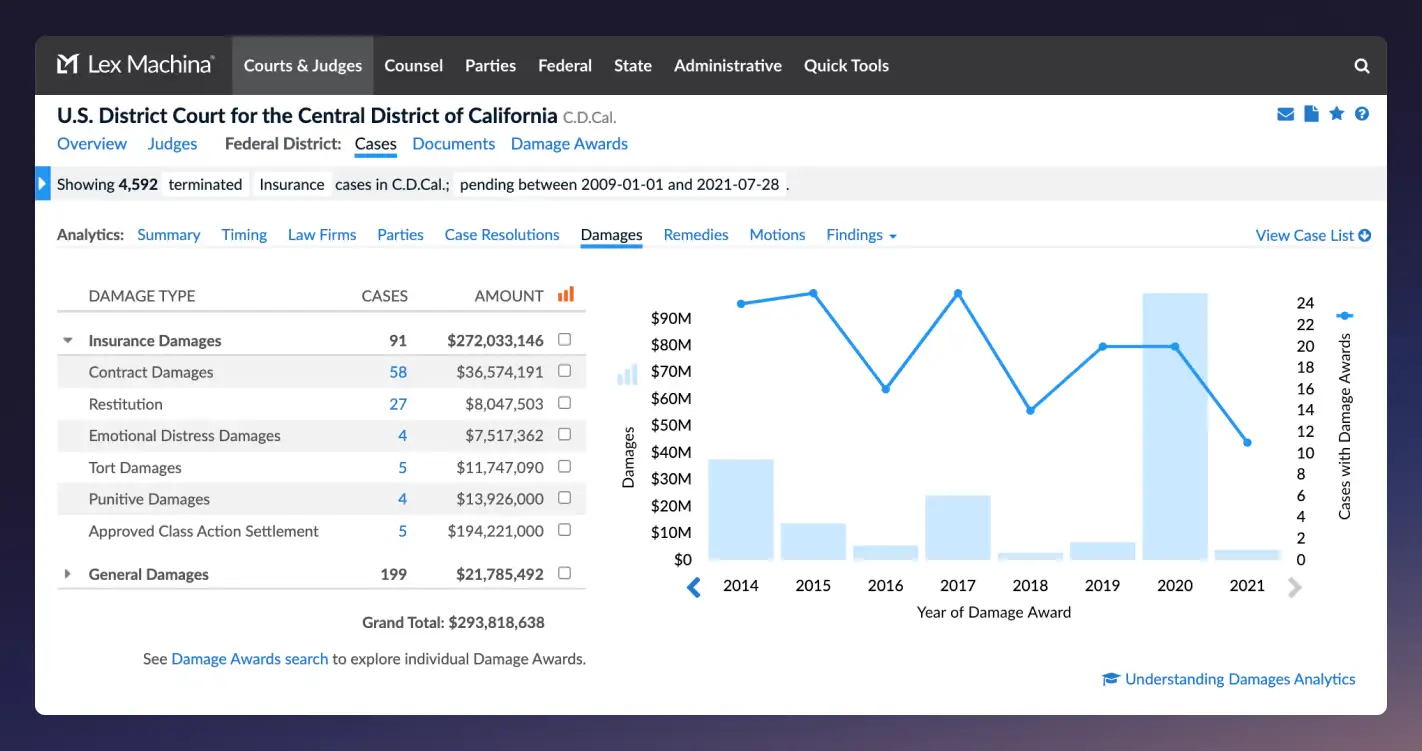
With its deep database of court documents, case studies, and legal judgements, Lex Machina is one of the leading platforms for case strategy. The legal AI software not only provides case law advice; it can also produce reports on the behavior of judges and rival firms, so you can anticipate their actions in a case and build your strategy accordingly.
Lex Machina provides a competitive edge by offering research and insights into the legal industry itself, as opposed to other analytics tools that focus only on case law. Reports are that it can be very expensive, and that the sheer amount of information it offers can be overwhelming.
Category: Legal analytics
Price: Custom pricing only
Best for: Competition intelligence
Pros: Offers reports on judge behaviors so you can build a tactical strategy
Cons: Expensive and complex
What users say: “Lex Machina is my go to for legal research. With it finding what I need is pretty easy and the insights it provides are both thorough and dependable. Plus it's cut down the hours I used to spend digging for case details, making it one of the top analytics resources available to lawyers.” -Stacie Novosel, at SoftwareFinder.com
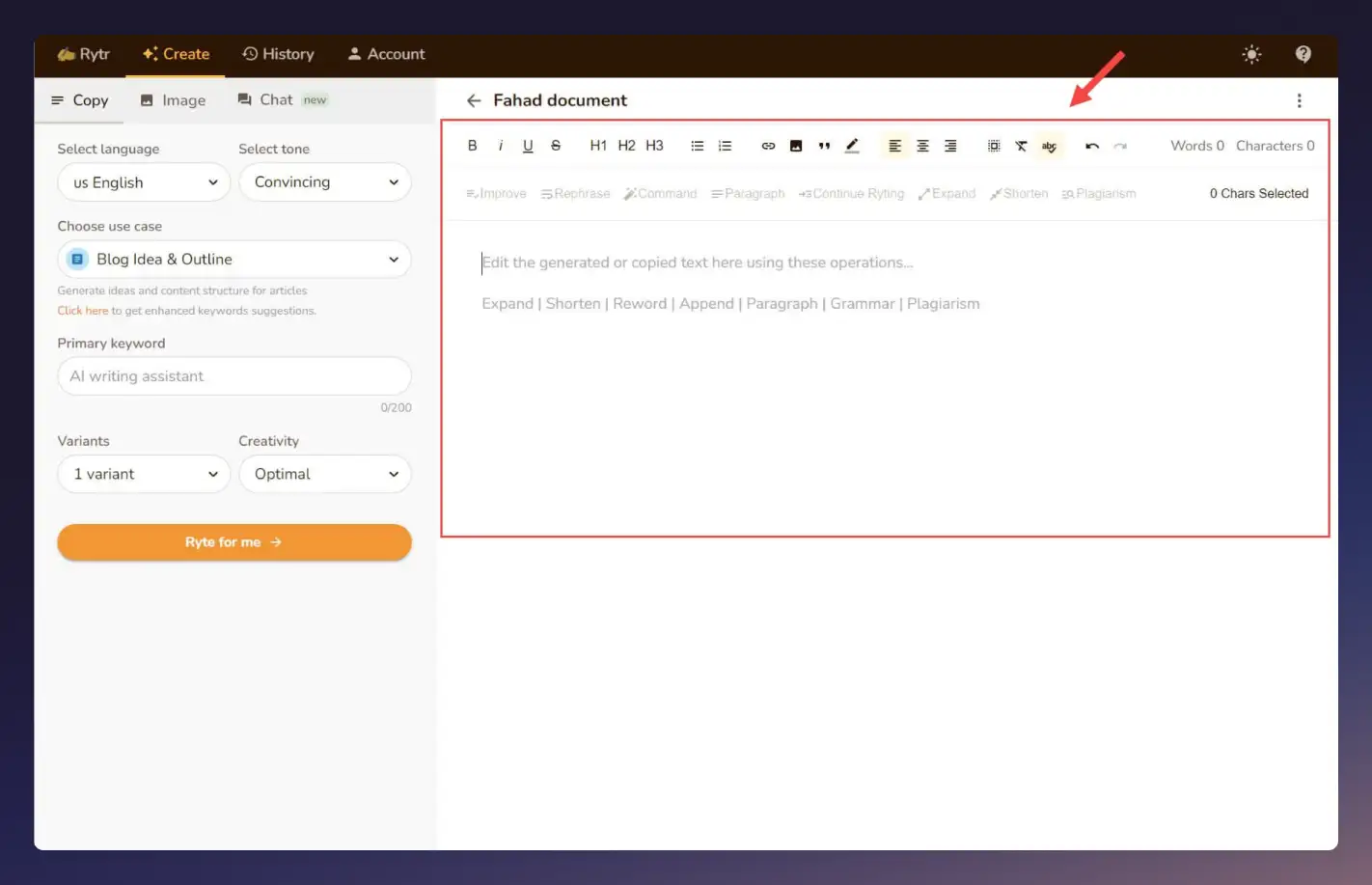
7. Rytr
What if a writing and editing platform like Grammarly were developed to understand legal writing? That’s Rytr. The AI content platform is trained using legal documents and case law so that attorneys can generate first drafts of documents that are geared for specific legal work.
Rytr comes loaded with plenty of templates so you can often plug in just a few words to generate a clean, readable document. Reviews do indicate that Rytr’s customer service isn’t great, though.
Category: Drafting
Price: Free
Best for: Drafting and editing legal documents
Pros: Understands the legal industry better than similar products.
Cons: Only suitable for first-draft documents that still need plenty of editing.
What users say: “I really like the various templates in Rytr that can be used. They're already set to go, so all you have to do is fill in the blanks with what you need, and it will give you options. I love the options feature too! I can copy and paste from multiple options to get the exact version I want when editing the content.” -Taylor A., on G2
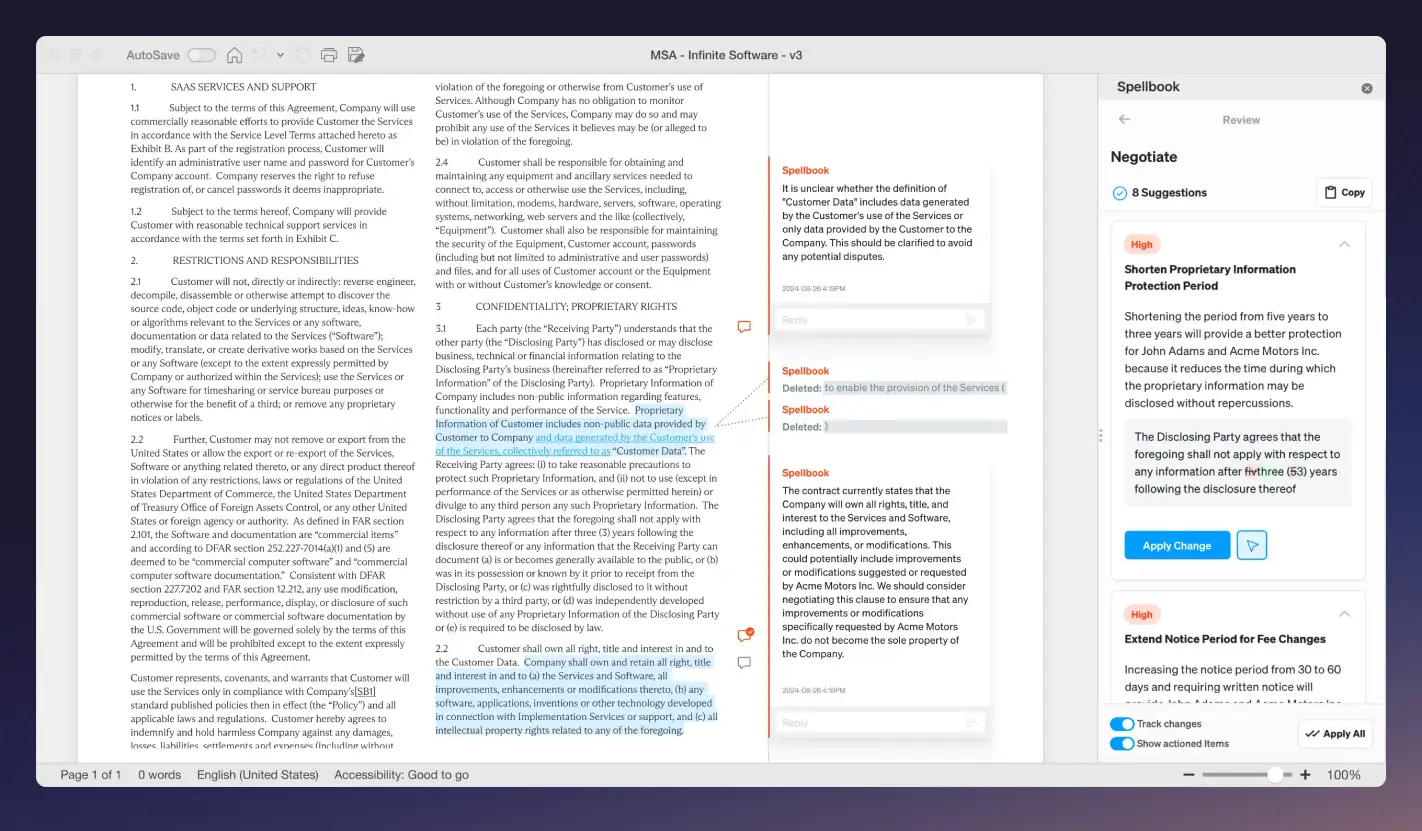
8. Spellbook
If you’re entrenched in the Microsoft ecosystem and you draft or analyze plenty of legal documents, Spellbook is your friend. It uses AI to draft, review, and analyze contracts quickly and accurately, saving plenty of billable hours for more important work.
Spellbook understands complicated legal topics better than similar AI for law firms. And because it's integrated with Microsoft Word, users don’t have to learn a whole new interface. Assuming, that is, that the user is already familiar with Word or Office. Spellbook can save a lot of drafting time by auto-generating clauses and can streamline the editing process by comparing your draft to similar documents.
Category: Drafting and analysis
Price: Plans start at $179/user/month
Best for: Document drafting
Pros: Understands the legal industry better than some other platforms
Cons: Requires Microsoft Word
What users say: “Spellbook was the first product we saw that we felt was going to be a game changer for us on contract review.” -Kyle Westaway, Founder and Managing Partner, Westaway, at Spellbook
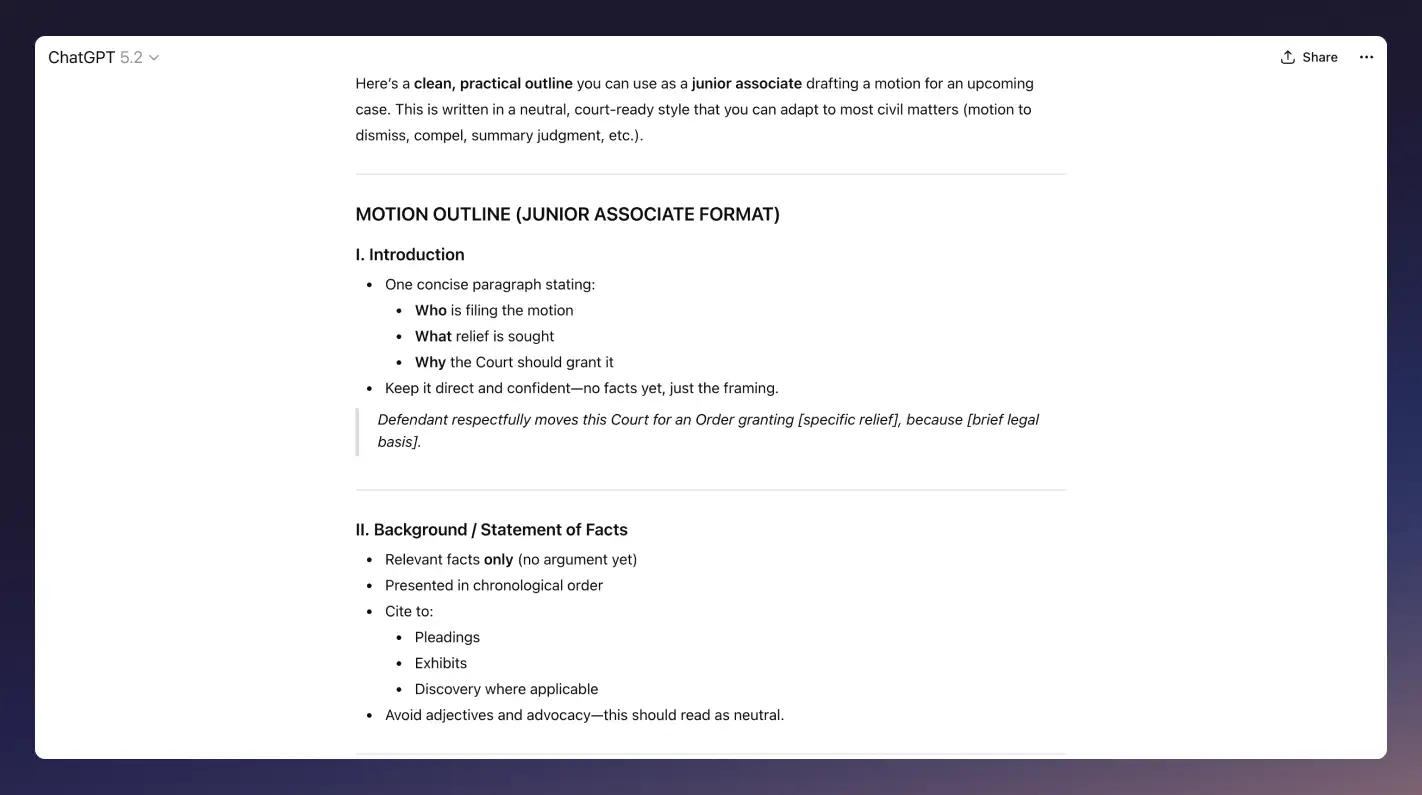
9. ChatGPT
While ChatGPT is the only platform listed here that isn’t built specifically for the legal industry, the myriad ways it’s useful to attorneys warrant its inclusion. Attorneys can use ChatGPT for general research, document analysis, summarizing lengthy content, and even idea generation. But the way to get the most bang for your buck (metaphorical, because ChatGPT has free plans) is to prompt it to create first drafts of documents.
However, the platform isn’t specific to the legal industry, so its output will need to be heavily edited, and all facts and sources cited must be thoroughly checked. Additionally, if you use the free plan, ChatGPT uses your data to train its model. You have to upgrade to a paid plan for better data security, and even with those, ChatGPT doesn’t meet the security demands of the legal industry.
Category: ChatBot
Price: Free, with paid plans ranging from $8/month to $200/month
Best for: Document drafting
Pros: Free and easy to use
Cons: Hallucination issues and lack of data privacy
What users say: “It can handle a lot of tasks, from generating creative content to answering fact based questions, translating languages, and it summarizing information to me. It is very easy to use.” -Vaidehi K., Civil Litigation Attorney, on G2
Benefits Of Legal AI Software
Legal AI software has many specific benefits, but they all ladder up to two main things: saving time and saving money. In an industry where billable hours are everything, the ability to maximize those hours on important tasks like strategy, planning, and client relations is the most important benefit AI legal software offers.
What other benefits of legal AI software help save time and money? Glad you asked! AI for law firms can:
- Streamline workflows, making your whole form more efficient
- Automate processes like invoicing and time tracking
- Draft documents
- Schedule meetings
- Send client updates
- Make research easier
- Simplify document and contract analysis
These benefits all serve to free attorneys to conduct more important work, which ultimately helps the bottom line.
How Much Does Legal AI Software Cost?
Legal AI software can cost anywhere from nothing at all to thousands of dollars per month, depending on factors like the type of platform and the number of seats. An LLM like ChatGPT is free for all to use, but a similar product that is geared toward legal work like Lexis +AI can get pricey.
Rev is THE AI for Law Firms
In the legal industry, efficiency and productivity matter. Rev helps law firms of all sizes maximize both by taking a task—like legal transcription— that used to take hours and hours of people-power off your plate. Our industry-leading ASR can turn hundreds of video and audio files into accurate, reliable text documents in mere minutes. If you’re interested in raising your productivity, you’re interested in what Rev can do.

.webp)