
U.N. Humanitarian Briefing

U.N. Humanitarian Briefing

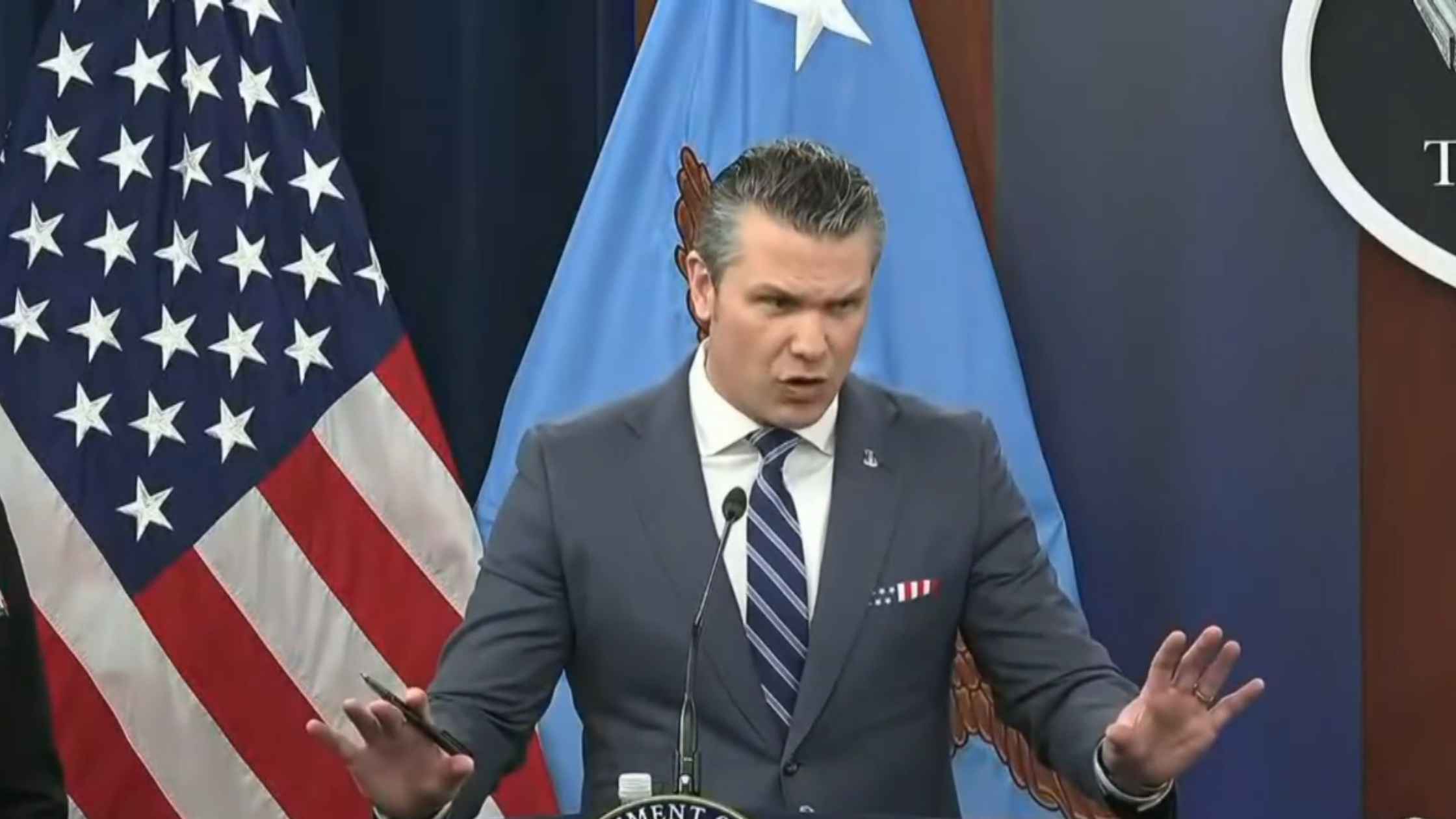
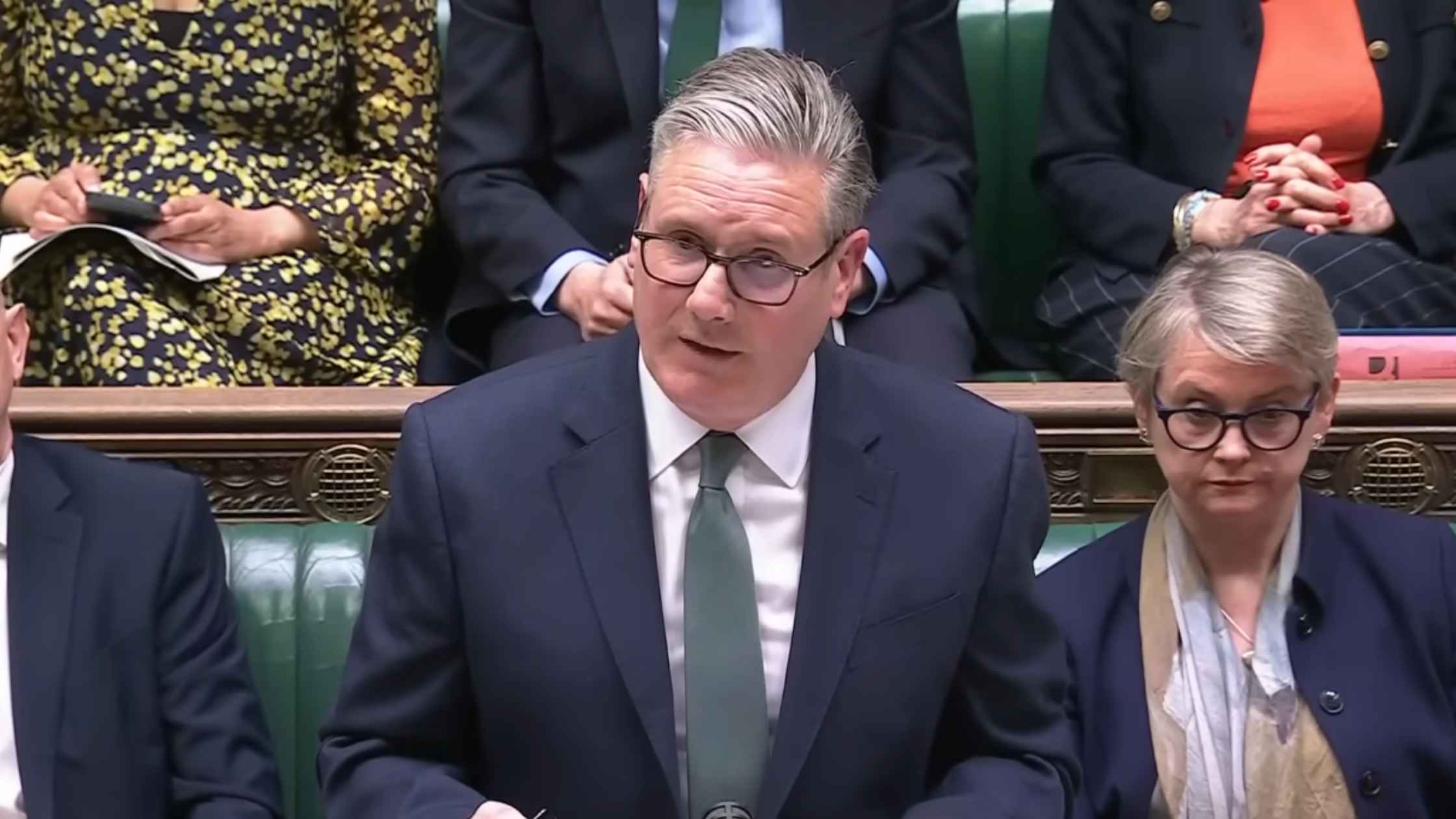
The United Nations hold a briefing in Geneva on humanitarian crises in the world. Read the transcript here.

U.N. members speak on humanitarian issues.
Hungry For More?

Luckily for you, we deliver. Subscribe to our blog today.

Thank You for Subscribing!

A confirmation email is on it’s way to your inbox.

Share this post
LinkedIn
Facebook
X logo
Pinterest
Reddit logo
Email

Copyright Disclaimer

Under Title 17 U.S.C. Section 107, allowance is made for "fair use" for purposes such as criticism, comment, news reporting, teaching, scholarship, and research. Fair use is permitted by copyright statute that might otherwise be infringing.

James (00:00):

It's a very stark image to see someone's home, the remnants of it, next to their tent. But they all explained to me how dangerous it is still to walk around. A man explained his brother had been shot two days earlier by a sniper. I met the man. I saw where he'd been shot in the hand. I met a mother who showed me her tent and showed me the shrapnel where it had ripped through and gone through the mattress, and it was only because she'd been sleeping with her baby and she'd left that tent minutes earlier that she and the baby weren't injured. So that's the life that continues for far too many families here during this ceasefire.

Michele (00:38):

Thank you, James. We've got a lot of hands up, so thanks for your time. In the front to my right here, please, if you don't mind identifying yourself for James's benefit.

Alexandre Grosbois (00:47):

Yeah, Alexandre Grosbois, AFP. Israel suspended dozens, I think it's 37, foreign humanitarian organization from accessing Gaza. Can you tell us what impact does it have on the humanitarian situation and the conditions of living there?

James (01:09):

Yeah, those bans will obviously come into effect in the coming month, but look, blocking international NGOs, blocking any humanitarian aid, much or less those critical colleagues, that means blocking lifesaving assistance. I walk through Nasser Hospital, I've seen many, many times, the impact of, say, an MSF there. So it means blocking humanitarian assistance, it means less assistance, it means less support on the ground. As you know, international humanitarian law is unequivocal, aid must reach those people. So it's an obstruction at a time when we have so, so much to do. It's impossible to overstate just how much still is required to be done here. I mean, UNICEF, we can speak to … We've been able to get 70% of our pre-positioned and pipeline suppliers have entered during the ceasefire. That's extraordinary. I'm talking thousands of trucks, just for UNICEF.

(02:13)
So we've massively increased the aid, but you need partners on the ground, and it still doesn't meet the need. And I think that tells you everything about what people here have been made to live through without food, water, medicines, without dignity. So it's fundamentally critical. And my last point, I guess I would say to that is I think it needs to be asked, when you've got key NGOs banned from delivering humanitarian aid and from bearing witness, and when foreign journalists are barred, then is the calculation that restricting scrutiny of suffering of children is going to restrict the consequences.

(02:55)
And that is the other question I think that we are very disappointed isn't being asked much more frequently. Why are international journalists still not in Gaza? It's a ceasefire. Yes, in Beit Lahia I'm in a flak jacket, no one else is. I'm not when I'm walking out here in Gaza City. I'm not in the south. I think there needs to be a lot more pressure on allowing international journalists to come in, and I say that because this is my seventh mission, and every time I see the 360 degree devastation, flattening, flattening of homes, of homes, my jaw drops. It is absolutely a staggering yesterday as it was the first time I saw it more than two years ago.

Michele (03:40):

Nick Cumming-Bruce. Go ahead.

Nick Cumming-Bruce (03:43):

Yeah, thank you. Hi, James. Good to see you. I wonder if the ceasefire has at least allowed some streamlining of medevacs of children who have been injured in this conflict and what update you can give us on that score. And at a time when there's some effort going into getting kids back into some form of education, are you at least able to access the kind of supplies you need to support that? And what are the items that are particularly priorities that you can't receive at the moment? Thank you.

James (04:21):

Thanks, Nick. To the first point, medical evacuations, that was very much our hope as well. That has not been the case. No, is the short answer. It's still more than 4,000 people, and I think around half that, around 2,000 children still require medical evacuation. So if we go back to the boy I spoke to, Abid Al-Arakhman, who I met a few days ago, he will lose the sight in that eye, and the other eye is at risk if he doesn't get medical evacuation. He's been on that list for some time now. Same with a little girl I saw in Shifa Hospital. Absolutely the same deal. Going the other way, not just medical evacuations going out. So the answer is no. No noticeable improvement both on getting children out and approvals and on receiving countries, host countries, European countries, taking those children.

(05:22)
A doctor explaining some of the most basic medical equipment that they needed for newborns at Shifa that had been banned and how some of the suppliers only come in when goodwill people will sneak in a catheter or something for a newborn. On the good side, UNICEF has set up an ICU for pediatrics in Shifa. That's the first time Shifa has ever had that in its history, a pediatric ward.

(05:45)
Education, Nick, good and bad news. Good, it's impossible to say what is the priority here. As I said earlier, water and sanitation serves every single sector. We were in a famine. Nutrition's critical. If you talk to Palestinians, the two things, it's homes and education. So education is central to their recovery. And for them, it's not about just catching up on learning. It's dignity, it's identity, and it's that better future. And by that, I mean, when I've seen water systems, sewage systems repaired, generators repaired without the parts, that's because of ingenuity. That's because of education. When I see 30 students graduating at Al-Shifa Hospital to be surgeons, that's their education. When I see teachers working with very limited supplies, that's because of education.

(06:33)
So every Palestinian knows if they are to recover, it's education. So Nick, UNICEF, we've got more than 130,000 children into temporary learning spaces. That's been a remarkable increase, but there's 700,000 children here. We need much more. And to answer your question on supplies, no. So I sit in a temporary learning space with 14-year-old girls who are immaculately dressed, many of whom have incredible English, and there's three girls to a desk and there's barely a pencil on the desk. So the most basic school supplies remain restricted. And I'm talking pencils, pens, and notebooks.

(07:13)
And that goes as well for recreation kits. Recreation kits are about play. We're talking about the most essential critical materials for children to start to recover from trauma. When I talk to trauma counselors, I say, "What are your tools?" Their tools, Nick, they say are two part. One is like breathing techniques and the other is drawing. But they don't have paper, they don't have crayons. I see children having had a piece of paper where they've written on both sides and now they're writing on a side again. So whether it comes recreation kits for trauma or whether it comes education supplies, we keep pushing, the denials keep coming.

Michele (07:54):

Thank you, James. I apologize for the noise. As you know, there's a little bit of a construction. If it gets to be too much, perhaps we can, one, ask them to stop temporarily and perhaps also raise the volume a little bit in the room. Let's go to John Zarocostas.

John Zarocostas (08:13):

Good morning, James, and happy new year. Following up on the details you gave us in the beginning of the briefing, Gaza had one eye hospital. Is that not functioning or is it repaired and functioning again? And secondly, do you have any data how many children have lost their eyesight completely or partially?

James (08:40):

Gosh. Hello, John, very good questions. I don't know the eye hospital, but we have a brilliant health colleague not far from me, I will find out and come straight back to you after this briefing. And I'm not sure if it's been desegregated that way. It's a very good question on eyesight. Certainly the two wounded children I saw in the last couple of days, both children, it links to Nick's question, both children would recover with surgery that they need, but the surgery cannot be done here. So again, we are still at a point where some basic medical supplies are blocked. And to link back to your point on eyesight, that includes also things for hearing aids and that includes things like wheelchairs. So there is a long, long way to go, but I'll come back certainly on the eye hospital and do my best, John, on numbers around eyesight, just as we try so long on things like amputations and injuries in general that will permanently incapacitate a child.

Michele (09:45):

Next up, I've got Gabriela Sotomayor online. Go ahead, Gabriela.

Gabriela Sotomayor (09:51):

Thank you. Good morning to all. Thank you, James. I don't know how to ask this question, but I will try. You mentioned that drones and everything are targeting children. So my question is, do you see a level of interest in kind of a ethnic cleansing? I mean, because children, if you kill children, they don't grow old and they are not more Palestinians there. So what is your comment on that?

James (10:32):

Gabriela, hi. Look, UNICEF is very clear on this. It's impossible for us to try and understand the intent, but it's very difficult at the moment for Palestinians to continue to start to restart their lives. All the sectors that you know, the devastation to homes is unprecedented. 85 to 90% of schools damaged or destroyed. And I mentioned earlier why education here is so, so critical if there is to be a recovery, and we can't get in notebooks and pencils. And of course, the hundred children now is remarkable, of course, because it's another hundred families grieving during a ceasefire for children killed, but of course, it's only added on top of 20,000, the reports of 20,000 girls or boys. So there are a whole range of factors. The devastation of agriculture, the devastation of a healthcare system, the famine.

(11:35)
Gabriela, there's been very good news that was talked about late last year, that for the first time, a minimum food basket, it's like three different types of food that children were getting. That's very, very good news. It's very good news. Famine is on retreat. But it simply underlines that this was always manmade. As we've said dozens of times, this was always a political decision. This was engineered. This was not a logistical problem. Once we we're allowed to get food stuffs in, once we're allowed to restart nutritional centers, once we're allowed to get enough emergency nutritional supplies in, then that's the impact it has. But understand that if you're a two or three-year-old child, all or most of your life, you've suffered nutritional deprivation and that has lifetime consequences, almost impossible to reverse. And some of those consequences are around the intellectual capacity of children. So all those things combined may push somewhere towards the answer you're looking for. Thank you.

Michele (12:48):

Thank you. I've got a question from Katrin [inaudible 00:12:51]. Go ahead, please.

Katrin (12:53):

Good morning to all. Good morning, James, and happy new year. My question is a follow-up of John's question. Regarding children who need to go under surgery, are there children supposed to leave the country and be accepted abroad and who are not allowed to fly out? Are you still waiting for authorizations for these children to leave the country with a parent?

James (13:33):

Yes, we are. And I have spoken even in this last trip to many, many children and families who either … Okay, if I think of yesterday, the child will have his leg amputated. The boy we mentioned today, Abid Al-Arakhman, he will lose sight in an eye, maybe both. The girl in Shifa Hospital may well die. All three of those are absolute candidates for medical evacuation. All three of those have so far been denied. They've been through a formal process. They have all been denied. We're probably still around 2,000 children who require medical evacuation. So we've not seen anything near like the improvement we need both in terms of getting them out, utilizing the West Bank corridor. If you need more on that, I think Ricardo can speak to it. So it's both about …

(14:27)
Medical evacuations have ebbed and flowed. For a time in the first stages of the war, many children went through Rafah. Soon as Rafah closed, we saw a 90% reduction. So the remarkable luck of a child surviving an airstrike and the horrors that brings a shrapnel and fire in their home only then to die from their wounds over weeks because they were banned from leaving. Then that changed and more children were allowed out, but because of the Rafah crossing, we weren't seeing countries open their doors, hospital doors,

James (15:00):

… or their hearts, I'm talking European countries, North America, Australia, that was not happening. We're still not seeing that to nearly enough. There are some countries, there are countries like Italy who've taken a relatively large number. There are many other Western European nations who have taken a grossly inadequate number of children who quite simply their lives would be saved, their limbs would be saved if they could make that fairly straightforward journey.

Ricardo Pires (15:31):

Yeah. Just to add to that, when I was last in Gaza, that is what really stayed with me. The amount of parents outside health clinics or temporary shelters waiving papers showing that they've done everything they could to try and get their children evacuated from Gaza, and yet things were not moving. And obviously when you have such life-threatening injuries, as James mentioned on kids across the strip, and at that time there wasn't a ceasefire, everyday counts and it was just not moving fast enough. And it's beyond just an issue of opening crossings like Rafah, as James mentioned, but also political will from UN member states and countries to absorb that demand and support Palestinian children who are fighting for their lives and yet cannot get the medical attention that they so desperately need.

Michele (16:38):

Thank you very much both. Catherine, I see your hand is still up. I don't know if you have a follow-up.

Katrin (16:43):

Yes. Thank you, Michele, for giving me the floor back. It's regarding the figure about children waiting for leaving the country or would needs to leave the country. James, you spoke about 2,000. You mentioned 2,000 children. Does it mean that 2,000 children should leave the country or how many out of them has the exit been denied, refused? Could you clarify these figures? Thank you.

James (17:19):

Yeah, thank you. Look, so medical evacuations is a WHO mandate and they have been, to be quite frank, tireless and brilliant on that. I've seen what they've done both in terms of going through the crossfire, but also in terms of the bureaucracy. So, I do want to defer to them, but I know it's more than 4,000 people have been approved in that process for medical evacuation. Then whether they are approved to actually leave by the authorities is a different matter. Of that 4,000, and I was trying to find this number, I believe it's around half. That means 2,000 children have satisfied the criteria for medical evacuation. Now, some of those will have the diseases that we see children suffer and get treated with quite easily in other countries. But the vast majority are wounds where if they're going to get treated, as I say, they lose an eye, they have an amputation, and/or they just continue to live in immense pain.

(18:17)
But it is around 2,000 who've sufficed, satisfied the criteria, and they're now waiting for the approval by the authorities to get out of Gaza and to have a third country to go to.

Michele (18:33):

Thank you very much, James. I'm looking to see if there are any further questions on this. We appreciate your time. We appreciate the stress and strain of your seventh mission in Gaza. Christian, perhaps he wants to come in on this topic since you mentioned WHO. Christian, go ahead.

Christian (18:53):

Yeah, thank you very much, James and thanks for this update. Just a few words on the evacuation process as it just came up now. And let me remind everybody, we also have a press conference with the DG today at 1:30 this afternoon. But on the topic, one thing before the conflict, before the war, we had 50 to 100 patients evacuated from the Gaza Strip on a daily basis. Let that sink in. Now, the procedure is extremely complicated. It's from starting with a medical doctor needs to refer, needs to certify the need for an evacuation. Then people need to send that recommendation to a referral committee. Finally, this referral committee approves the person and that patient list goes to WHO. This list gets submitted. That's then when people have a referral in hand, but that's the beginning of the process, unfortunately. It goes further.

(19:55)
It needs security clearance at the very end from the Israeli authorities. It needs a country to pick up and accept MEDEVAC people and patients and their companions. And these last two steps are very often where despite the referral papers in hand, despite the system in Gaza ready to go and ready to evacuate, we still cannot evacuate patients and they either do not get accepted outside or cannot leave because of the companions [inaudible 00:20:27] what have you. So, the process is extremely tiring and unfortunately deadly long. It's a lethal process nearly for some. We can't speed it up at this point.

Michele (20:44):

Thank you for coming in on that, Christian. I don't know whether you want to say a little bit more now briefly about the press conference that you mentioned or whether you'll come back later.

Christian (20:55):

If I'm on, thank you very much. I can do that right away. Yes, that's the only thing to say. We have at 1:30 today, so that's already in two and a half hours. DG press conference, y'all I will in the invitation, and it's also on, especially on health taxes today. There are two reports. You can have the reports beforehand. Many of you have already asked for it. If you haven't done so, please check with media inquiries for the reports that will be discussed today, amongst many other topics. Thank you.

Michele (21:31):

Thank you, Christian. Thank you very much to James Elder in Gaza. Thank you to Ricardo here in Geneva. And we're now going to move on to Jeremy Laurence from the human rights side, and you've got two items for us, right?

Jeremy Laurence (21:46):

Thanks, Micheli. And good morning, everyone. As you all have seen, the High Commissioner has just issued a statement or is issuing a statement imminently on Iran. We are horrified by the mounting violence directed by security forces of protestors across Iran. As reports indicate, hundreds have been killed and thousands arrested. The killing of peaceful demonstrators must stop. The labeling of protestors as terrorists to justify violence against them is unacceptable. We urge the Iranian authorities to halt immediately all forms of violence and repression against peaceful protestors and to restore full access to the internet and telecommunication services. As we saw most recently in 2022, broad sections of the Iranian population have taken to the streets demanding fundamental changes in the governance of their country. And once again, the authority's reaction is to inflict brutal force to repress legitimate demands for change. This cycle of horrific violence cannot continue.

(23:10)
The Iranian people and their demands for fairness, equality, and justice must be heard. All killings, violence against protestors and other human rights violations must be investigated in line with international human rights norms and standards, and those responsible held to account. Several hospitals are reportedly overwhelmed by the number of casualties, including children. Nationwide internet and telecommunication shutdowns are one of the main challenges to full verification. There are reports indicating that members of security forces have also been killed. It is also extremely worrying to see public statements by some judicial officials indicating the possibility of the death penalty being used against protestors through expedited judicial proceedings. The High Commissioner stresses that Iranians have the right to demonstrate peacefully. Their grievances need to be heard and addressed and not instrumentalized by anyone.

Michele (24:27):

Thank you, Jeremy. I expect there might be some questions on that. I see a couple in the room. I think Jérémy first, you can go ahead.

Jérémy Lanche (24:36):

Thank you, Jeremy. I was wondering, I know communications have been cut, but has your office been able to verify any of the figures around the casualties? And the second question would be, has your office been asking the Iranian authorities access to Iran lately?

Jeremy Laurence (25:05):

Starting with your first question, yes. We have problems verifying information, namely because two reasons. Our office doesn't have direct access to Iran. Secondly, because of the internet shutdown. Now, from what I've heard this morning is that to an extent, there has been a partial restoration of telephone services, but there's still serious issues with the internet. With respect to our office, yes, we are in touch with the Iranians over this, as we have been in the past. Similarly, with respect to the 2022 protests following the Killing of Mahsa Amini, and we will continue to engage with them. Would we like access to Iran? Of course. Yeah, we don't.

Michele (26:03):

I've got Emma Farge online. Go ahead.

Emma Farge (26:08):

Yeah. Just to repeat the question, please, from my colleague, have you verified any of the deaths yourselves? I know you have difficulties, but have you confirmed any and how many? And do you have any details of mass arrests as well? Thank you.

Jeremy Laurence (26:30):

Yes. Thanks, Emma. So, just to more or less repeat what I'd said to Jérémy is that we are getting information from various sources on the ground. These are reliable sources. The number that we're hearing is hundreds, and that's what's been reported. I cannot give you a precise verified number. That's not possible. We're just not in a position to do that. I'm afraid. Sorry. With respect to arrests, yes, there are thousands of arrests have taken place. That's what we're hearing the same. You're probably hearing the same from your sources on the ground in Iran as well. Obviously, the concern is you'll recall after the 2022 protests that there was the threat of the death penalty being imposed against those who participated in the protests. In fact, since those protests in 2022, at least 12 people have been executed directly in connection with those protests. That is our concern at this stage as well.

Michele (27:50):

Okay. So, we'll go to Alexandre in the room for AFP and then to Satoko online. Go ahead.

Alexandre (27:56):

Yeah, thank you. The United States has stated its readiness to intervene in Iran. What would be your thoughts on these threats and the potential consequences of such an intervention?

Jeremy Laurence (28:14):

First and foremost, as the High Commissioner said in his statement, there is concern that it's been instrumentalized, the protests, and it shouldn't be instrumentalized by anyone. When it comes to human rights, it's protect the right to protest peacefully. And we'll say that, you've heard us say it here hundreds of times, so nothing changes, and that should be respected by Iran. The excessive use of force in respect to the protests is a violation of international law. We would like to think the best way forward for this is dialogue, obviously, and for the people of Iran who have got legitimate grievances, for their grievances to be heard and to be able to express them peacefully in demonstrations or otherwise.

Michele (29:24):

Thank you. So, Satoko, and then we'll go to Jérémy in the room.

Satoko Adachi (29:28):

Yes. Thank you very much for doing this. You said there are reports indicating that the members of security forces have also been killed. Do you know the number of the security forces who are killed and injured? And secondly, who have been actually attacking the security forces? As you said, Iranians have the right to demonstrate peacefully. Thank you.

Jeremy Laurence (29:58):

Again, I'm afraid I'm going

Jeremy Laurence (30:00):

Going to have to disappoint you because I can't give you precise numbers, verified numbers. The Iranian authorities have said a number of their security forces have been killed during the process of the demonstrations. I can't go much more than that.

Michele (30:19):

Jamie.

Jamie (30:22):

Good morning, Jeremy. There have been reports of an opening of some phone lines out of Iran today, calls getting out. Just wondering if you could qualify that in terms of your efforts to collect information about what's going on. Has that given you an opening to get greater information flow from Iran, given that the internet situation is still very patchy?

Jeremy Laurence (30:50):

Thanks, Jamie. Yes, we've heard the same reports, that telephone services are limited, are up online. Internet, not so much so. But it's crucial to communicate mostly also to the outside world and to communicate with organizations like ours or other human rights organizations, but most importantly, for the people of Iran to be able to communicate amongst themselves.

(31:27)
I guess, many of them are frightened themselves and they want to check and know the whereabouts of their loved ones. So to that extent, it's crucially important, but much more needs to be done to ensure the internet is back online.

Michele (31:56):

Moussa, [foreign language 00:31:57].

Moussa (32:05):

Well, I had a question about the violence used by the US security forces against protestors in some US cities. And do you have any information about the situation of the-

Michele (32:21):

Moussa, sorry to interrupt. I think Jeremy will take that question, but he's got another item, so I think we'll finish up with Iran.

Moussa (32:29):

Yeah, I told you it's not for Iran.

Michele (32:32):

We can park… Yeah. Okay, thank you. Thank you so much. Okay. I'm sorry. I didn't hear. It wasn't clear to me at the beginning. Okay. Any more questions on Iran? Going once, going twice. No. I think your next item then on Sri Lanka.

Jeremy Laurence (33:03):

Thanks for your patience. A paper published by the UN Human Rights Office this morning highlights the conflict-related sexual violence in Sri Lanka remains largely unaddressed with survivors, both men and women still been denied long overdue justice. Titled, We Lost Everything, Even Hope for Justice. The brief is based on a decade of monitoring and reporting by the UN Human Rights Office and extensive consultations with survivors, local experts on gender-based violence, civil society, and others.

(33:42)
It concludes that the government of Sri Lanka must urgently follow through on its commitment to advance domestic accountability and undertake transformative reforms with specific attention to this issue. The document finds that the lack of accountability, acknowledgement, and reparations for gross human rights violations and wartime crimes have created a legacy of impunity that continues to shape the lives of survivors today. Many victims, from the conflict which ended in 2009, continue to suffer chronic physical injuries, infertility, psychological breakdowns, and suicidal thoughts.

(34:26)
Survivors and their representatives described an enduring climate of surveillance, intimidation, and harassment contributing to under-reporting, deep stigma and the near absence of effective remedies. Sexual violence in conflict constitutes a serious violation of international law, which may amount to war crimes or crimes against humanity. Sri Lanka is legally obligated under multiple international treaties and commitments to prevent, investigate, and prosecute such reparation for survivors.

(35:08)
The paper highlights how militarization and emergency legal frameworks have created an environment in which gender-based violence, including sexual violence, continued to be reported after the conflict. Beyond the shocking cruelty of the abuses, including rape, sexual mutilation, forced nudity, and public degradation described by survivors, many felt that such attacks were intended to cause lasting trauma and break down communities. As one survivor put it, "Sexual violence is a torture that never stops."

(35:51)
The paper finds that stigma extends to their families and children born of rape have been labeled and discriminated against. Communities remain fractured by silence, fear, and unresolved trauma. It calls on the government of Sri Lanka to take immediate and concrete steps to publicly acknowledge past sexual violence committed by state forces and others and to issue a formal apology.

(36:23)
It should also implement survivor-centered reforms across the security sector, judiciary, and the legal framework, establish an independent prosecution office, and ensure access to psychological and social support.

(36:39)
UN Human Rights Chief Volker Türk says, "Recognition, truth, accountability, and reparations are critical to restoring dignity to survivors and advancing reconciliation and healing in Sri Lanka."

Michele (36:53):

Thank you, Jeremy. Sexual violence is a torture that never stops. We'll just take a pause there to let that sink in. I'm going to see if there are any questions on Sri Lanka. And I see a hand up. Nick, go ahead. I assume it's on Sri Lanka?

Nick Cumming-Bruce (37:21):

Yeah, it's on Sri Lanka. Thank you. Jeremy, are we to understand that sexual violence has stopped? Can you say categorically it has stopped or is it still continuing? It's been associated very much with the police in the past as well. So are you confident that it doesn't continue? Thank you.

Jeremy Laurence (37:39):

Sexual violence. This report specifically is referring to sexual violence in relation to the conflict, Nick. So sexual violence, we have documented in the past, and in fact, the High Commissioner referred to this during his visit to Sri Lanka last year. Sexual violence is still a concern in Sri Lanka. Yes.

Michele (38:02):

Thank you. I'm looking to see if there are any more questions on Sri Lanka. If not, Moussa, perhaps you'd like to repeat your question for Jeremy, I assume. Go ahead. Gabriela, do you have a question on Sri Lanka or is it on another subject?

Gabriela Sotomayor (38:31):

I think it's on another subject.

Michele (38:34):

Okay. So let's go to Moussa and then we'll come to you. Go ahead, Moussa.

Moussa (38:36):

Merci.

Michele (38:36):

Oui.

Moussa (38:39):

Well, my question about the violence used by US security forces against protestors in some US city like Minneapolis, do you have any information about the number of detainees or NGOs? And do you have any information about the situation of the Venezuelan president who was kidnapped by the United States? Thank you.

Jeremy Laurence (39:08):

Thanks, Moussa. I'll work my way backwards if you don't mind. On the second question, I don't have anything further to add apart from what we said in the past. With respect to your first question and the violence, and I guess you're referring more specifically to Minneapolis, under international human rights law, the international use of lethal force is only permissible as a measure of last resort against an individual representing an imminent threat to life.

(39:48)
We take note of the FBI investigation and insist on the need for prompt, independent and transparent investigation into the killing of Ms. Good. We urge all authorities to take measures to deescalate tensions and refrain from incitement to violence.

Michele (40:15):

Thanks. I think Jamie wanted to come in on that. Go ahead.

Jamie (40:19):

Thank you, Jeremy. Thank you, Moussa, for the question. Following up on that, you say that the use of lethal force is only permissible as a measure of last resort against an individual representing an imminent threat to life. What is the assessment of the UN Human Rights Office about whether there was an imminent threat to life or not in this case?

Jeremy Laurence (40:46):

Jamie, that wouldn't be really for us to make a judgment call on. What we have said quite categorically is there needs to be an independent and prompt investigation into this.

Michele (41:04):

Thank you. I think Gabriela next. Go ahead.

Gabriela Sotomayor (41:08):

Yes. Thank you very much, Michele. Hi. Jeremy, my question is on Venezuela. Do you have a comment on the situation of the people inside Venezuela? Because I heard that the new president, Delcy Rodríguez, said that everyone that says something against the government will be detained.

(41:34)
Is that accurate? Do you have a comment on that? And also, what about Edmundo González who was elected president in the elections of 2024? He's the president of the country. Why Delcy Rodríguez is there? That's my questions. Those are my questions if you have comments. Thank you so much.

Jeremy Laurence (42:03):

Thanks, Gabriela. The second question I would actually point you probably to New York. I think that's more of a political question that they can take. With respect to your first question, I guess the answer is simply that the people of Venezuela should be entitled to live in peace and go about their lives with all due respect for their human rights.

(42:38)
Obviously, the people of Venezuela have struggled over years, and we would like to think that there is progress in helping them transform their lives and to avoid the misery that they've experienced for so long.

Michele (43:04):

Thank you. I don't see any other questions. Yeah, go ahead. Go ahead, Jamie.

Jamie (43:12):

Sorry, Jeremy. Could you just reread your statement in response to Moussa's question? Because it sounded like you said the international use of lethal force. I think what you meant to say was intentional. So could you clarify that for me?

Jeremy Laurence (43:30):

Thank you, Jamie. You are absolutely right if that's what I said. So under international human rights law, the intentional use of lethal force is only permissible as a measure of last resort against an individual representing an imminent threat to life. Thanks for that, Jamie.

Michele (43:54):

Gabriela, I don't know, is that an old hand or a new hand? Do you have a follow-up?

Gabriela Sotomayor (43:58):

Yes, I have a follow-up.

Michele (44:00):

Go ahead.

Gabriela Sotomayor (44:03):

Yeah. Maybe this is for OCHA, but I heard reports that in Venezuela are eight million of people in need of humanitarian assistance. And the government doesn't allow any humanitarian organization to come in, not the media, international media to come in. So if OCHA has something to say about this issue. Thank you so much.

Michele (44:41):

Thank you. Jens, go ahead.

Jens (44:45):

Thank you, Gabriela. Yes, eight million is what we have in our response plan of people who are in need of humanitarian support. At

Jens (45:00):

At the moment, there are humanitarian organizations already in Venezuela, and they are responding as I speak. And we actually have fairly good access across the country to do as we have done in the past and that we hope to continue in the course of this year. I think as I mentioned last time, these are very, of course, dramatic political developments, but the everyday living situation, humanitarian situation for these eight million people haven't changed that dramatically. So it's very important that we can stay and continue to deliver.

Michele (45:41):

Thank you, Jens. Before we let Jeremy go, perhaps he has an announcement to make about Sudan. So let's have him do that and then we'll go to Ukraine.

Jeremy Laurence (45:52):

Yes, thank you. You will have seen yesterday we issued an advisory. This is before the high commissioner heads to Sudan. He departs tomorrow. He will be in Sudan until the 18th of January. During the visit, he's scheduled to meet with authorities in Port Sudan as well as civil society representatives and the UN country team. He will also visit the Northern state, including Al Afad gathering site and engage with people displaced by the conflict in Darfur and Kordofan, and he will also meet with humanitarian partners. Thank you.

Michele (46:37):

Thank you, Jeremy. And over to Jens for the launch of the 2026 UN Coordinated Humanitarian Response Plan in Ukraine, which I believe is going on right now.

Jens (46:48):

Yes. Thank you very much. [inaudible 00:46:50]. Good morning, everyone. As we are right now this morning working to confirm the reports that we are receiving about another round of deadly Russian strikes overnight that reportedly has hit Kyiv, Kharkiv, and Odesa and possibly other locations, we are right now launching in Kyiv, the United Nations Coordinated Humanitarian Response Plan for 2026. And we are doing this, of course, in collaboration with the government. It's a plan that compliments the government's own support and with our many humanitarian partners in Ukraine. And indeed, it is livestream right now, and I can see it is ongoing. So the electricity cuts that we hear from these overnight attacks in Kyiv has apparently not yet at least hit the law. So you can follow that on UN Web TV.

(47:49)
As the war in Ukraine grinds on and soon enters its fifth year, humanitarian partners aim to reach 4.1 million people this year with lifesaving support, and that includes food, healthcare, shelter, protection, cash assistance, as well as other types of aid. Overall, an estimated 10.8 million people across Ukraine will require humanitarian assistance this year, including internally displaced people of whom there are 3.7 million and others affected by the war. To realize this plan, we and our partners are asking for 2.3 billion US dollars this year. Frontline areas and northern border regions face the highest humanitarian needs due to the shelling, destruction of civilian infrastructure, and persistent disruption to essential services that people rely on to get through winter that's power, that's heating, that's water.

(48:48)
We have particular concern, of course, of people living in territories occupied by the Russian Federation because they remain largely cut off from essential services and protection systems. As I mentioned, widespread disruptions to power and heating during extreme winter conditions, and we are talking minus 10 degrees and some places, are creating a crisis within a crisis and pushing people to the breaking point. Humanitarian assistance is delivered to compliment the national response and national and local organizations alongside their international partners, including the UN. They play a central role in this response. Often, the first to act in the most difficult and dangerous conditions. The full plan is now available online, and I will share the link in an email to you just after the briefing. Thank you.

Michele (49:44):

Thank you, Jens. Go ahead, please.

Speaker 1 (49:48):

Hi. Regarding the people living in the occupied territories by Russia, do they have access to the humanitarian aid or do you know how is their situation different from the other territories?

Jens (50:06):

It is different because these are, as you know, contested areas. For the United Nations, this is still Ukraine. For the Russian Federation, it's not Ukraine, so there are issues at that level. And at the moment, we do not have the access as United Nations as we would like to see, because as I mentioned, there's a million people there that we believe are in need of humanitarian assistance that they are currently not getting. There are some NGOs that are operating there, but not at a scale that is required.

Michele (50:45):

Thank you. Going to give that a moment to see if there are any more questions on Ukraine for Jens. So questions for Jens, Tukur? Doesn't seem like it. Thanks very much. He's relieved. And I'm hoping Claire Nullis is still online because she had an announcement to make. There she is. I see her. Good to see you, Claire. The floor is yours.

Claire Nullis (51:18):

Okay. Yeah. So good morning. Belated Happy New Year to everybody. It's just a quick announcement to say the World Meteorological Organization, tomorrow, the 14th of January, we will be issuing a press release on the consolidated global temperature figure for 2025. We're doing this in conjunction with eight dataset providers, that includes the European Union's Copernicus Climate Change Service, includes the UK's Met Office, NASA, NOAA, Japan Meteorological Agency, and well, three others. That's just to give you an indication. We're getting a lot of media inquiries about it. Copernicus for Europe have already issued their figures under embargo. And their embargo will lived at 4:00 a.m. tomorrow.

(52:21)
The WMO press release will be under embargo until 3:00 p.m. Geneva time tomorrow afternoon, and the reason for this is that we coordinate with NASA and NOAA. And so we have to be bound by their timeframe, and they will be issuing their respective releases at 9:00 a.m. US time tomorrow. Just to explain, all the data sets have slightly different methodologies, so we all have slightly different figures, which is why the WMO issues this combined press release so decision makers can have one consolidated figure to work from. So we'll try. It's been a bit of a last minute scramble just because we only got the data in late last night, but we will try and issue it under embargo ahead of time. Might not have time for translations, but certainly in English. Thanks.

Michele (53:24):

Thank you very much, Claire. I don't see any questions on that. If there's nothing further… No. If there's nothing further, well, I've got just some announcements regarding, as you know, probably those of you follow the Treaty Bodies of the Human Rights Pillar. The Committee on the Rights of the Child resumed this week. They're meeting at Palais Wilson, and they've reviewed the Maldives. I believe it's Ghana today. The review of Uganda has been canceled. Other countries under review are Pakistan, Ethiopia, Colombia, Spain, and Malaysia. So I think if there are no further questions, I know some of you are covering the WHO DG's press conference this afternoon at 1:30, and so we'll wrap it up there. Thanks very much.

Hungry For More?

Luckily for you, we deliver. Subscribe to our blog today.

Thank You for Subscribing!

A confirmation email is on it’s way to your inbox.

Share this post
LinkedIn
Facebook
X logo
Pinterest
Reddit logo
Email

Copyright Disclaimer

Under Title 17 U.S.C. Section 107, allowance is made for "fair use" for purposes such as criticism, comment, news reporting, teaching, scholarship, and research. Fair use is permitted by copyright statute that might otherwise be infringing.

Subscribe to The Rev Blog

Sign up to get Rev content delivered straight to your inbox.