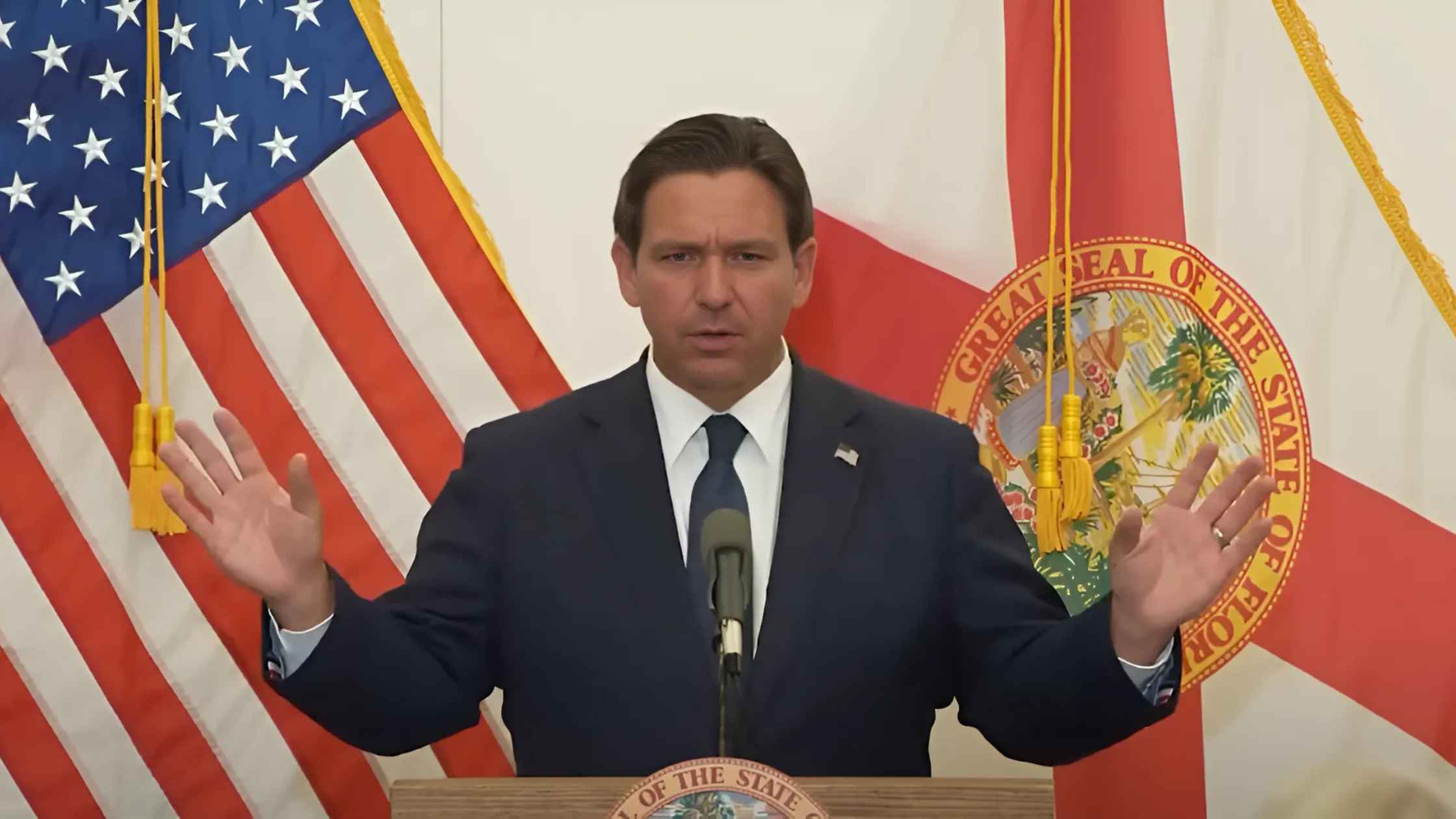
Ron DeSantis (00:06):
[inaudible 00:00:03]. We've also got our great senator from Central Florida, Jason Brodeur's with us. And then we've got Representatives Cobb, Smith, Plakin, Booth, Stark, and we have our school board member, Alicia Farrin is here as well. So I want to thank everybody.
(00:27)
So I think a lot of folks know that one of the initiatives that we've championed this year is the auditing of state agencies, but also local governments with respect to how they're taxing and spending. And we have been doing this as a matter of course at state agencies anyways, but we're employing new technology. We're having contracts reviewed by AI. We're doing the DOGE to the university system and looking under the hood there. And there's a lot there, trust me, to do it. And not just with the spending programs. Are they following the policies? I mean, for example, Florida I signed legislation years ago to eliminate DEI from our public universities and you know, there's no official. But do they go down two or three levels and start doing this or that? So we're looking at all that and it's really important.
(01:20)
And on the one hand, in Florida, we could say at the state level, why would we want to audit? I mean, after all, just look at the record that we have had. They just announced, I think, the federal government's got like a double A minus credit rating. Florida and every rating agencies is triple A across the board. We're ranked number one economy three years in a row by CNBC. We have done historic repayment, accelerated retirement of the state's debt. So 180 years as a state. If you look just since I've been governor, we've retired more than 40% and by the end of the fiscal year, we'll likely get to close to 50% of Florida's total historic debt done. We now have the lowest per capita debt of any state in the country. There's a couple that don't have any debt, but of the ones that have debt, we're the lowest per capita.
(02:21)
And if you go back 15 years ago, the average cost per Floridian, if you did debt per capita, if you just had to write a check, you would've had to have written a $1,200 check, which honestly is not that bad compared to the federal government. But today, if you had to write a check, we had to retire all the rest of the debt, it'd be $483 per person. Now put that in comparison with the federal government. If they made you write a check for the federal national debt, it'd be about $106,000 per person. And so we're doing it right. Our debt is declining in absolute terms, in per capita terms, you name it.
(03:02)
We've had basically three years in a row where the budget's been very stable. This year is spending less than last year. Last year spent less than the year before. We're still doing really important things. I mean, how many of you have seen the I-4 that we did in Polk and Osceola where we did that lane? I mean, that's been really good. That's only the beginning. I mean, there's going to be a permanent thing, but I've had people tell me it saved them a lot of time to be able to do that.
(03:32)
So we've done a lot of investment in accelerating these road projects because it's like you have something everyone needs to be done and they say, well, it'll start in 2035 and we're on it. Well, what are they supposed to do? Just sit in traffic for another 10, 15 years? So we're like, no. So we accelerated $7 billion for that. So you see the temporary I-4. They're doing things in Polk, Champions Gate, all these areas. Obviously, Central Florida is getting the most money of all that because you have obviously a lot of needs. There's rush hour traffic, then there's traffic at any time of day. And some of that stuff on I-4 can be any time of day, particularly in Polk County. So we're working on that. We made a difference. We're going to do more.
(04:18)
I was just in Tampa Bay. We're doing 275 widening there, similar to what they did on I-4 in the past, and that's going to take you up to the Howard Franklin Bridge. The old Howard Franklin Bridge that connects Tampa to St. Pete is being demolished and we have the new bridge there, and then they're going to be adding the express lanes going forward. So this is something that's really, really significant. So we did that in big way.
(04:46)
We've also done billions of dollars to raise teacher pay, which hadn't been done in a while in Florida. And obviously, the local governments and the school boards have to make those decisions. They can always put more into that. But we said, here's money. It's got to go to teacher salaries. And that's been really, really big. Many billions. This year was 1.38 billion I think we did, which is way more than had ever been done before. Proud of that.
(05:11)
We've also done more for natural resources and environmental restoration. The Indian River Lagoon, amazing progress what we've been able to do. Everglades restoration, massive, massive projects that we're doing. And then we've even gotten the Trump administration to delegate us some of the Army Corps projects that they hadn't started yet. We'll start them and we'll finish them a lot quicker. So that's great teamwork and that's bringing huge things. But we've put billions and billions of dollars into conserving our natural resources and making sure we leave Florida better for those who come after us.
(05:48)
And then we've also done things with respect to tax relief. I think we did it for two years where we did the toll rebates. So you got your tolls rebated 50% for the commuters. We made all baby items permanently tax-free. We made all disaster supplies, I think within some reasonable limits, permanently tax-free. We've done tax relief. We just eliminated the tax on business rent. We're the only state in the country to do that. Not what you want if you want to continue having a strong economy. So we did that.
(06:24)
So we've done all of that to really give, but we don't have an income tax and we'll never will as far as I'm concerned. But it's harder to cut taxes when you don't have an income. Because the income tax, you could just lower that rate. We can't. So we go, okay, here's business rent, here's that. Here's all these other things. And so we've done all that with a good stable budget. We have the second lowest per capita spending in the entire United States of America. Although I will tell you, it used to be New York had more people than Florida. Now they've got about 19 and a half million. We've got about 23 and a half. So we've got millions of more residents than they do and yet their budget's more than twice the size of our budget. And yet our roads are better, our services are better, all that stuff. So we're showing you how.
(07:15)
So we could with all those statistics, and I could just say, you know what? State of Florida, no, we are doing this. We're looking at the universities, we're looking at modernizing state. We're looking at all these things because you always want to do as good as you can do. I mean, you may be the best compared to some other states, but are you the best you can be? And that's why we're doing it. So we've done that. We're in the process of doing that. We'll be rolling out some good hopefully reforms, particularly with the universities that'll be really meaningful.
(07:43)
But the issue of the audits, and Blaze has said that our auditing of the local governments is the Florida Agency for Fiscal Oversight, FAFO, and that's kind of Florida speak for what they tried to do with DOGE in Washington. So we're doing this, but part of the reason why as much as we wanted to do state government, which is important, the local governments were really where people… Because I'd have people say, "Hey, can you cut our property taxes?" And the reality is the property taxes are determined, administered and collected at the local level. We don't have your property tax coming to Tallahassee for our budget. That's done to cities and counties. So if you have that… But what's happened over the years is you've had property values go up and there's some positives to that. If that's your house that you bought for 300,000, now it's worth 700,000 and you want to sell it, that's obviously a lot of equity. So there's some positives to that.
(08:51)
And then the real estate market was hot and prices went up around the country because we had inflation, and it was weird kind of how people were buying homes during Covid and all this. But in Florida, we had a lot of demand of people really wanting to be here. You'd have bidding wars, you'd have all this stuff. Now markets go up and down. But what was happening is people would have homes that they bought five years ago, six years ago, 10, 20 whenever and they're being told, well, actually you owe more tax because it's worth a lot more now. And they get these assessments and it's basically an unrealized gain. They're telling you, you bought a home for 300,000, now it's worth 600, 000. You didn't sell it for 600,000, but yet you have to pay tax on that instead of pay tax on the 300,000. And even with homestead, it still goes up because they allow an increase.
(09:41)
So people would say, "Why the tax?" All this stuff?. And I'm like, trust me, I'm all for it and we're working on a way to bring relief. We got to do it through the Constitution, the way Florida's government is set up, but we're working on it and we're going to have something that the voters have to approve. But that will happen. And I think people are going to want to see it. But they would point out, they'd say, "Listen, okay, I'm paying more in property tax, but the budgets are going up dramatically in some of these areas." And you have some areas that didn't even have net population growth. I think Broward had no net population growth in the last five years. The budget's up 60%. And it's like, okay, there was inflation. I get it. We had to put more money into projects that I had approved in the past, and then they're telling me I need to kick in more money because the cost of everything. And that is true. That happened, but not at that level, and yet you see that all across the state.
(10:35)
And so we really want to be a resource to look out for taxpayers. When you have a gusher of revenue coming in because Florida's doing well, people are buying homes, property values are going up, the inclination for most people in office is to take that revenue and spend it. That's what politicians do. We look at it and say, well, actually, you know what would be very beneficial for folks in Florida right now, particularly for families? Is tax relief and property tax relief. We are showing you can do meaningful things in a budget that is half the size of the state that's closest to us in population, New York, and still make a big difference. So it can be done, but we got to be friends and stewards of taxpayers.
(11:23)
So that was why this year we work with the legislature. We got this audit authority beefed up. Blaze as the CFO has a lot of authority as well for any of the local governments that receive any state funds to be able to do. So they've been doing it. We had a lot of people, local governments volunteered to have the books looked at because some of these folks want to see reform too. We had others that weren't as cooperative.
(11:50)
And so Blaze led these teams on site to do these audits, to do interviews and to review the spending practices and the taxing practices and the regulatory practices. And Orange County was one of those. There was also, he did Manatee. They did Broward. You did where?
Speaker 1 (12:10):
Pensacola.
Ron DeSantis (12:11):
Pensacola, City of Jacksonville, Hillsboro. So there was a lot, and I think it's been positive. I think there's been a lot of good things that have happened, but there have not been full cooperation with Blaze and his team. And we're here in Orange County because Orange County was not one that was fully cooperative. Now look, Orange County, it is an area that has grown some, but I think it's grown about 10% in the last five years. Which is a lot when you have a million plus people, but the budget is up 52%. In that same period of time, you went from one billion in 2020 to 1.6 billion in the most recent year. So that's a lot.
(13:06)
And look, we want to look at this because if there are ways that the services can be done closer to that 2020 number, well then all that extra revenue, that should go in your pocket as taxpayers. I mean that's what we want to do. We want to provide relief. And you see the cost of everything that have gone up in recent years, groceries, obviously home prices, all this stuff. The only thing that government, that we the people through government can control 100%, I mean the state of Florida, I can't control what Publix charges for this or that. There's all these other factors. Tax is purely controlled by we the people, in this case through our Constitution. And so you can have property tax, you can lower, you can eliminate. Particularly for Florida residents, that's all within our power to do so. If people
Ron DeSantis (14:00):
People are strapped if it's tough because of costs that we've seen over the last three or four years. The tax relief is the best way we can make a difference. The beauty of it is you've got senior citizens on fixed income whose homes are being assessed higher and higher. That's pinching them. But just think of what it does to a young family to buy a home and to not have to keep paying tax to the government for their personal residence. I mean that's a huge, huge boost.
(14:29)
So we want to be able to be helpful with that. And so, putting this under a microscope is where … And you've had a lot of … And Blaise will probably go through some of the stuff for Orange County, but you're giving money to more niche ideological causes in this county and some of the others, and the voters can decide whether that's something they want. I think most taxpayers would rather have relief than some of the stuff that's being spent on. That's just what I think from talking with people and knowing. So we've had Blaise and our team interview different employees from around county government, including several who the county said was involved in things like DEI initiatives, as well as spending decisions in the past. But some of these people were reading off a prepared script, they wouldn't fully answer the questions, and really left a lot of our folks not satisfied that they were getting all the answers that they could.
(15:36)
So there's a lot of different things to unpack here. I think Blaise has been somebody that has been a real bulldog on fiscal accountability. He started … He was a businessman. He started getting involved in politics because where he was over in the Nature Coast area, Hernando County, because their county government was spending a lot. This was in the 2000 to 2008 real estate boom. The property tax revenues are going in and they're spending it as fast as they can, and he's like, "Wait a minute. We've got to police this."
(16:09)
And so, he was really made for this job to be able to go in and do it. So he has an announcement today about next steps on this. I want to turn it over to him to make that announcement.
Blaise Ingoglia (16:20):
Thank you, governor. Good morning, everyone. Good afternoon, rather. My name is Blaise Ingoglia. I'm your chief financial officer. First, I want to thank Governor DeSantis for his leadership on this issue, not only going in and making sure governments are running lean and being accountable but also leading the charge on property tax reform. We know that housing affordability, affordability in general, is a big issue here in the State of Florida because so many people want to move here. So I applaud this governor for leading on this issue.
(16:59)
When you bring up property taxes with local governments, I think you're starting to see a trend when you see spike in real estate prices, that government takes the extra tax revenue and they expand government. They're adding programs that probably shouldn't have been added in the first place. They're expanding programs that probably should not have been there in the first place.
(17:24)
In addition, one of the things that they're doing is they're giving out raises to a lot of people in local governments. Now there is a huge disparity between what local government employees are making as compared to just everyday people like you, the private sector.
(17:41)
As the governor alluded to, I have been involved in cutting out waste, fraud, and abuse at the local level for decades. So when this opportunity arose, the governor said, "Hey, I think we should do this and make it a mainstay," something that the state will do every year, which is make sure that we go into the books and hold local governments accountable.
(18:02)
Now when it comes to waste, fraud, and abuse, I will tell you it is my opinion, and I think we have the data to back this up, is that local governments seem to be far and away the worst when it comes to this spending. Just to give you an idea, general fund budgets, the portion of the local government's budgets that are funded by property taxes, every single city or county have seen their budgets expand in between 60 to about 120%. Now that is far outpacing population and inflation growth. So we have to ask yourself, where is all this money going to?
(18:41)
Now I have been boots on the ground with the teams around the state and in Orange County also. I'm not going to go into specifics about what we found, but I'm going to tell you what we found was pretty eye-opening.
(18:55)
Now we go through a couple of phases. First is the gathering of the information. We get all the information, then we crunch the information, and then we find some of the issues that we think taxpayers would be very, very upset with that they were spending their money.
(19:11)
Now why is this important? This is important because we are going to go into 2026 and we are going to put … The legislature is going to put a tax referendum question on the ballot. Now whether that question is getting rid of property homesteaded taxes altogether, which is our goal, or if it is a large property tax cut. You are seeing it now, local governments are complaining and they are saying … They're already playing defense. They're saying that they are not going to be able to cut because they're going to have to cut essential services. They're saying that they're going to have to cut fire and they're going to have to cut police.
(19:43)
They're going to do everything they possibly can to scare everyday citizens and taxpayers into keeping the gravy train going. They never thought in a million years they were going to have this governor and this CFO basically shining the light on a lot of the wasteful spending.
(19:58)
So just to reiterate what the governor was saying, is that over the last four years, there has been about an 80,000-person population increase in Orange County, but the budget has increased about 560 million, well over half a billion dollars. So if you're looking, you could probably add a whole another city for that amount, not just $80,000.
(20:24)
So it is disproportionately out of whack where taxpayers, property taxpayers, such as yourself are footing the bill. So it shows me that they don't have to cut where they say they're going to cut. There is more than enough areas for them to cut.
(20:40)
Now I'm just going to say this right now. The first rule of government is to protect its citizens. So when you hear a local government saying that they're going to have to cut fire and cut police, they are doing nothing but trying to scare you, because those are the first things they should be cutting. Excuse me. First things they should be funding. Sorry about that. If they're building their budget, the very first thing should be fire and police. So don't buy into the rhetoric of local governments that they cannot cut.
(21:08)
So one of the things that we were doing boots on the ground when we were talking to the reviewers and auditors, as I was getting feedback, we started getting information from other counties saying and basically telling us to point in this certain direction, we got a phone call from somebody inside county government and told us that there were people inside county government that were actually changing the names of files because we were looking for a certain keyword, specifically diversity, equity, and inclusion, DEI files. They were changing the names of the files, the PDFs, the contracts, the tags on a computer system in an attempt to try to hide the information from us.
(21:55)
Now this was just a tip. We didn't know if it was credible or not, but we had to do our own diligence and we started looking. So after a while, we started crunching and compiling and looking at all this data, and we saw some anomalies that were very, very strange indeed.
(22:11)
So upon our team's arrival, we started receiving those tips that Orange County employees were possibly tampering with documents to circumvent our review of their egregious spending. So when we started questioning, what we got were some shady answers, some incomplete answers, and what the governor had alluded to, some people were just basically reading off of a script, just to give you an idea of some of the things that we found, or should I say lack of what we found.
(22:42)
So we got it. We accumulated about 1.2 million emails of everything related to diversity, equity, and inclusion. Now there were six grants that were given out for DEI programs. When we started searching, the 1.2 million, five of those grants were not alluded to in any of those emails. So I wonder what happened with those emails. So it's telling me that it is probable that we did have county employees try to hide some of this information. These grants would've also been reviewed by staff, citizen review panel, but we couldn't find any of that information.
(23:24)
In addition, some of the procurement documents that would've been sent out for these contracts, a lot of the information was missing from that also. So I started asking the question. I called up the governor, I said, "I think Orange County has something to hide. So what do we do?" which leads us to the announcement today.
(23:45)
All of that is why I as the chief financial officer today are issuing investigative subpoenas for all documents related to these grant programs. In fact, prior to us holding this press conference today, the subpoenas were signed by me and probably by now they have been handed out to county government.
(24:12)
In addition, I have issued investigative subpoenas for Orange County employees who we think were involved in the grant process, the interviews with our team, and uploading partial information, not incomplete information, to Florida DOGE. So I think it is very apparent that taxpayers deserve and have a right to know where their money is being spent.
(24:40)
Now I'm probably freaking out a lot of Orange County employees right now. My advice to you is when you are contacted and when you're going to be interviewed, do not hide the information. Be truthful with them. We know that people above you told you to go and change the information in an effort to try to hide the information from us. Don't lie to us, because if we have to, we will bring in FDLE and digital forensic units to find out exactly who did what.
(25:14)
So please be truthful with us. Be forthright. Our job is to make sure that we get rid of the spending in advance of a property tax cut. Do not put yourself in a situation where you're lying to law enforcement.
(25:29)
When I took office, I promised that I was going to be a fiscal pit bull When it comes to spending. I think we're proving here today and continue what we're doing every day that we are rooting out waste, fraud, and abuse, and I'm going to continue to hold those promises. I mean every word that I say.
(25:53)
If local governments hear my voice and if they thought me issuing subpoenas, investigative subpoenas, were just a throwaway, sort of like a threat to local governments, well, Orange County fooled around and now they're about to find out.
Speaker 2 (26:13):
Yeah. [inaudible 00:26:14].
Ron DeSantis (26:13):
Okay, Alicia.
Alicia Ferrant (26:19):
Hey, thank you so much, Governor DeSantis, for your strong leadership. We have seen so many victories just in the last how many years since you took office and under your leadership. Truly, Governor DeSantis is America's governor. I also want to say thank you to our CFO of Florida, Blaise Ingoglia. Thank you for being a pit bull, leading boldly and unapologetically.
(26:53)
So I'm Alicia Ferrant. I'm a mom of five kids. My husband and I have lived and raised our family right here in Orange County. As a taxpayer, I expect my hard-earned tax money to be spent wisely and that our local and state government would be taking our tax funds and using it for good.
(27:17)
The reality is we need accountability, and most importantly, we need integrity in our local government. God's word is very clear. Proverbs 10:9 says, "Whoever walks in integrity walks securely. But he who makes his way crooked will be found out."
(27:40)
This is one of the main reasons why I ran courageously and took a stand. Against all odds, I won a seat on the Orange County School Board where I currently serve. As a school board member, I want to put the same integrity and
Alicia Ferrant (28:00):
… Leadership that I have with my own family, and I'll tell you, a mom of five kids here in Orange County, it's not easy. My kids eat like piranhas. If any of you have kiddos, I got a 10-year-old all the way up to 21 and they eat me out of house and home. But a few years back, my husband and I, our dream was to build our own house and with a large family, we didn't have tons of money coming in, didn't have a huge budget, and honestly our budget did not meet and didn't match our dream. But one day my husband, after watching YouTube seems like all night, came to me with a hammer and some nails and said, "All right, babe, you ready? We're going to build our own house. We don't have the funds to go hire somebody. We don't have the funds to go and grab somebody else in. But what we do have is our own two hands." And that's what the American dream is all about: working hard.
(28:58)
And when we work hard and we bring in our own funds, we expect that our funds and our money is spent wisely by our own local government. We need elected officials who are regular folks, moms and dads like myself, and we need less bureaucrats who are pushing their own agenda. Again, I'm thankful for the leadership of Governor DeSantis who has chosen to hold the state of Florida to a higher standard. And I'm also proud to say that in Florida we are leading the way for the entire nation to follow. In my leadership here in Orange County, I stand with the governor as we stand for what is right. Thank you.
Blaise Ingoglia (29:51):
Got a chance to put a bow on this thing today. Thank you very much Governor. Since becoming governor, Governor DeSantis has partnered with the legislature … I'm sorry, I'm Jason Brodeur. I'm a state senator here in town. I have a couple of different counties, including Orange … governor DeSantis has partnered with the legislature to prioritize fiscal responsibility, tax relief, and efficiency in state government. In Florida, we have a long track record of keeping state government accountable to the people. We have no state income tax, we have constitutional requirements for open government, and we have the lowest number of government workers per capita in the country. The balanced budget that we passed and that the governor signed recently reduces state spending in an era where everybody else's budgets are exploding. We also, in that budget, lower per capita spending again and reduce our own state bureaucracy. We authorized the early payoff of state debt that's been mentioned. We account for significant broad-based permanent tax relief.
(30:49)
All of this can be done. I don't want to hear excuses about how constrained things are when we at the state are doing this. New reporting requirements are now throughout the budget to safeguard taxpayers, improve accountability, transparency, and oversight on our own government spending at the state level.
(31:06)
With the governor's full support we also passed legislation that reduces the administrative state with improved government oversight and accountability over agency rulemaking. So even those folks that administer all of the laws that we pass have greater oversight. One of the reasons the DOGE efforts have been so popular at the federal level is because people have a problem with unelected federal bureaucrats pushing their own agenda with your money. Under the governor's leadership, we're improving transparency and removing burdensome bureaucracy that creates barriers for citizens and businesses struggling to comply.
(31:41)
State government is clearly leading by example. It's about time local governments follow the governor's lead by offering the taxpayers relief and embracing efficiency in government. When a jurisdiction isn't on board with this, it's clear that more needs to be done. DOGE visited Orange County because of the record of overspending, promoting DEI and failing to lower property taxes despite an over 50% property and tax increase since 2020. In addition, Orange County's reckless spending, the DOGE visit raised several red flags and maybe a potential cover-up. DOGE audits are important opportunity for local governments to realize this is an opportunity for better spending. This is an opportunity for us to get better for the taxpayer. It's not an opportunity to double down on woke policies and poor spending habits.
(32:32)
Orange County has demonstrated an unwillingness to fully cooperate. These subpoenas, send a clear message to Orange County and all other local governments that think they can abdicate their responsibility to taxpayers without consequences. We are putting all these jurisdictions on notice. As the governor said, cooperation is no longer an option. We tried to play nice, didn't work. I want to thank the governor for his commitment to ensuring efficiency at all levels of government, and I want thank the DOGE team and CFO Ingoglia for their ongoing audits of local government spending practices. Thank you.
Ron DeSantis (33:09):
Well, thanks Senator. And so you have all of Seminole County and some of Volusia and some of Orange? So just orange and Seminole. No more. You had Volusia at one point. Yeah. And so what part of Orange do you have?
Blaise Ingoglia (33:23):
Maitland and Winter Park.
Ron DeSantis (33:24):
Oh, okay. It was interesting that I was talking with someone. They're like, "We're from Winter Park," and I was just talking about DOGE and there's a part of Winter Park in Seminole County. It's like, here, I have been here so many times and it's like as governor I'm like, I didn't realize that some of that was actually over there, but we appreciate what you're doing and thanks for the support on this. I just want to say there's stuff about, oh, they're going after Alligator Alcatraz. The deportations are continuing. DHS is taking people out of there and they're moving them out.
(34:04)
Our role is to provide more space for processing detention leading into the deportation. DHS determines who goes into those facilities and who goes out of those facilities based on theirs … Although we'd be willing to do it, but we are not the ones actually removing them from those facilities and sending them back to their home country. That's being done by DHS. And sometimes there's a pit stop along the way. We have, as Sheriff Grady Judd from Polk County was at our most recent immigration board hearing, said, we have way more illegal aliens that we're apprehending than DHS is able to house, process and deport in an orderly fashion. That's why we did Alligator Alcatraz. That's why we're doing the deportation depot up in Northeast Florida in Baker County right next to Jacksonville. And that is going to be, so we have thousands that can go to Alligator Alcatraz, another 1300 in Baker County for the deportation depot.
(35:08)
And then we're even working on, I'm working on more. But the reality is there's a demand, there's a need for many, many more thousands here. And so we've worked to meet that need. Ultimately DHS expands their own footprint and capacity, then maybe that need will go down. But as of right now, that need is very strong. And so I do think that they have increased the pace of the removals from there, which is on their time schedule, and then who they send in or don't send in is on their decision. We're there to provide, be a force multiplier on all that, and we will continue to do it. I think it's an important mission. You had this guy that was driving this tractor trailer and he tries to do this crazy U-turn and he killed three people in the process.
(36:02)
Come to find out he … And the media was like, why didn't the troopers detain him if he was here illegally? What happened was he came across the border illegally from India and then Biden gave him a work permit. And so Biden gave him the ability to get this commercial … Now, he still shouldn't have gotten the commercial driver's license, but that's how he was his entree into doing this. And so he went to Washington. He went to California, he got it. He didn't speak English and understand English. He had failed the test abysmally. And it's like when you have a sign that says "official use only" or "no U-turn" or things like, abide by it. And that's for anybody, but especially when you're behind the wheel of one of those big boys. I mean, that is putting people in jeopardy. And so yes, I blame the sanctuary policies of California, of course.
(36:56)
I blame the company for putting this guy behind the wheel. What you don't interview people before you hire him and put him in there? If they can't speak English, that's a problem to be able to understand your way around. But this is an individual who knew that he didn't know what was going on around him, couldn't understand all this, and then still made the decision to get behind the wheel of that and put some other people at risk. And that's wrong. And that's why once the FHP got the videos and was able to say, there's a criminal offense here. That's why we had the lieutenant governor go and extradite him back here and he's going to face justice and we're going to insist that he faces justice. Okay. Do we have any questions?
Speaker 3 (37:39):
What is your message to Orange County Mayor Jerry Demings who says there's no reason for an audit because they have an independently elected auditor in Phil Diamond and they also said after you came to visit that they opened the doors for you. So what's your message for that and also what's your advice that he does with these subpoenas?
Ron DeSantis (37:56):
Well, the CFO would not have issued the subpoenas as if all the questions were answered. I mean, this is not performative. He wants answers. And under the law, he's entitled to answers. And I know that you hadn't seen CFOs necessarily flex this muscle in the past. This has been part of their authority for a long time. We then got more authority at the state level through the Legislature and the most recent budget. So the elected representatives have spoken clearly that there's a role for state government to go in here to be on the side of taxpayers. Blaise doesn't answer to the county government, no one else in state government does. And we want to be able to get the answers that he's entitled to. So his subpoenas are justified.
(38:40)
Why people were reading off a prepared script, I have no idea. But that's what was going on. And so he's going to make sure that he gets the answers to this because ultimately, the job of all of this, whether it's us DOGEing our own state universities, or whether it's what Blaise is leading in local government is, you got to be a voice for the taxpayer and Blaise being a voice for the taxpayer.
Speaker 4 (39:05):
Alligator Alcatraz, there's now an email that's been surfacing from Kevin Guthrie that he sent to a chap, a rabbi in South Florida, which he says "In a couple of days we'll probably be down to zero individuals." Do you know about this email that Kevin Guthrie sent?
Ron DeSantis (39:15):
I think he was just referring to, they're deporting them very quickly. And that's a good thing. That's what we want. We don't determine who goes into the facility. Now obviously there's litigation that's been going on that DHS is a party to, and so that may be an influence about where they're sending people, but we're ready to help. We want to continue to help. We have to continue with this mission. It's important. And ultimately it's going to be good for the state of Florida. So the Alligator Alcatraz is just people trying to get spun up to be able to have something. I mean, you'll literally go, there'll 10 people with signs and stuff. And I'm just like, if it were me, I would find better things to do. I really would. But that's what they need something to do.
(40:06)
But the reality is we're in this more than any other state leading and we're continue to do it. And so ultimately it's DHS's decision where they want to process and stage detainees, and it's their decision about when they want to bring them out. But I think they've been having rapid removals from Alligator Alcatraz, and I think that's caused the census to go down. But again, that's not necessarily that we control in either direction
Speaker 5 (40:34):
You've been concerned about the crosswalks here, about safety and so forth, but people are concerned about the 49 lives there at the crosswalk at Pulse. The sidewalks have been painted over. Are you rethinking maybe that policy or are you still standing firm?
Ron DeSantis (40:50):
So the legislature passed a change in law recently, which said there's no street art allowed. And the Department of Transportation put out guidance recently a couple of months ago reminding everybody, and this has been addressed statewide, not just on any issue under the sun, Blue Lives Matter this. They're doing it uniformly throughout the state. I think the street art got out of hand. I think it's much better that we use crosswalks and streets for their intended purpose. And I would say on this, who approved millions of dollars for a memorial? I've approved millions of dollars for a memorial. Not painting the road, actually doing a fitting memorial. And a lot of people involved in that have misused money over the years. Why do we not have a memorial done yet you,
Speaker 3 (41:42):
[inaudible 00:41:43] removing any Orange County employees or leaders at this point over what you're finding with the DOGE efforts?
Ron DeSantis (41:48):
So the question is about removing people. I mean, look, the Constitution allows the governor to remove under certain criteria. It's not something that I do lightly.
Ron DeSantis (42:00):
People break me the kind of the goods because I'll go around and people be like, "Hey, remove this person, remove this person." Well, it's like you don't like somebody that's not necessarily fitting with the cut. So give me the goods. And so for example, we've done that when I became governor, I had promised in the campaign that we were going to bring accountability for the Parkland failures by the Broward County Sheriff. So we removed the sheriff that and the Senate eventually upheld that.
(42:27)
We did the same with some of the supervisors of elections in South Florida. And lo and behold, we now have very, very well run elections. So that was necessary. And then we have had to do from time to time, and so the question is if there's conduct that merits that, well, that goes without saying we can do that. But I think the intent is to get the people the answers.
(42:50)
We expect compliance with these subpoenas and then we will be able to go from there. But what I want is for the process, the authority that's been put in place in law, both with CFO and state government to just be respected and honored.
(43:06)
I mean, we have these debates. I get it. Look, there can be some friction. I mean, Florida politically now is like a big red peninsula with some blue dots, right? Orlando is one of the blue dots. Gainesville is one of the blue dots and that's fine, but the reality is, is when you do debate these things and put this stuff into law, the ability to conduct these audits, the ability or actually the mandate for DOT to keep the streets clear of markings or messaging or graffiti, that's just the people have spoken on that.
(43:38)
I think Brodeur and his colleagues passed that unanimously in the Florida Senate. I signed it in the law. If I sign it in the law, how could I then say, "Well, you can do this, you can do that." Because then you end up having to adjudicate. Well, that message is fine, and that's not what we're doing. We wanted to get out of that business. And I think that's right.
(43:56)
Now some of the local governments who are not necessarily on state roads, I have to see, I know Key West is coming up, Delray Beach, there may have been one or two others who basically just said, "We're not going to comply or whatever." Guys, we're going to get it done. We're going to follow the law and it's going to… So you can do it the easy way, you can do it the hard way. That's really up to you.
(44:17)
I mean, there's obviously certain parts where anytime a state does something, there's a desire to kind of virtue signal. And I think we're seeing that in some of those jurisdictions. But the reality is we have this authority. We have the DOGE authority.
(44:32)
So let's get the facts. Let's let taxpayers know. I mean, I do think just on the face of some of the things Blaise said, "You went from what a billion to a billion six for the thing, almost 600 million increase in the last five years.
(44:46)
Now there may be folks that will show, "Hey, that was absolutely necessary." Okay. Let's have that debate as Floridians, because what I would say is I would've preferred property tax relief and then mitigating that. Now like I said, the state government, we've had to put in more money for projects because the costs went up.
(45:05)
So I'm not saying that there was no increases that have been imposed through the inflation, but that's a significant increase. And especially in counties that haven't had a net population, Orange has had a net population gain, Broward has not and yet their budget went up 60%. So we want to do right by taxpayers and that's what this is all about.
Speaker 6 (45:25):
Governor, what was the law that was passed that you're referring to? You're saying that all of your-
Ron DeSantis (45:30):
So I would refer you to the DOT memo. My staff can send you the DOT memo. It cites the statute. This was implementing guidance that was published probably a couple months ago by Jared Perdue at the Florida Department of Transportation. And what it does is it says state roads, no. Then it also says local governments have to follow the state standard.
(45:52)
And so the way this kind of came up was that you had Key West saying, "We don't care. We're going to do Delray Beach, we're going to do all this stuff." And then our department's like, "No. That's not what the law says. You can't do it." But then it was like, "Well, wait a minute. There's a marking, there's a picture here, there around the state." And so there've been a bunch of them with various political viewpoints, by the way. And honestly, probably more viewpoints that are more associated with conservatives.
(46:19)
And yet the DOT said, "No. We're going to go do that." So my folks can provide that for you. It's very clear. I think everybody knows kind of where we're at with this and we're just going to abide by the law that's going to happen. Yeah. Go ahead. Blaise.
Speaker 4 (46:33):
Question for Blaze on the topic here-
Blaise Ingoglia (46:35):
Before we get to that question, just real quick. There's a couple of things I just want to answer and clarify. As far as property taxes, what I'm going to tell you is that this initiative is very, very popular with voters about rooting out waste, fraud and abuse from local government and lowering property taxes. I see a lot of heads nodding up and down.
(46:54)
And the reason being, and the question is how can you impose this on local governments? Because local governments are not giving their own taxpayers, their own constituents relief so the state has to come in and do something about it. We are the ones protecting the taxpayers. We wouldn't be in this situation if local government's budgets did not get out of hand.
(47:16)
So we view it as we are sticking up for the taxpayers where local officials are not, because even that people are complaining that their property taxes are high, we're still seeing some local governments increase budgets and increase property taxes.
(47:31)
Now, yes, some of them are cutting budgets and we thank them for that. Some of them are adopting rollback rates and not increasing their budgets, we thank them for that also. But at the end of the day, this issue is going to be on the 26th ballot and people are going to vote overwhelmingly for property tax relief.
(47:49)
I also want to answer the question that was asked about the audits saying that mayors were talking about the audits and say, "Hey, we're already doing audits." We are going one step further than an audit. An audit basically says, what an auditor does for these local governments are saying that contracts have been signed, they were procured correctly, they were signed correctly, they were paid out correctly, money went out correctly.
(48:11)
We are checking that, but we're also asking was the contract that was actually signed a good use of taxpayer dollars? And I'm going to tell you, when you find out what some of these governments are paying, the answer is going to be overwhelmingly no.
(48:24)
So Demings can say, "Auditors have checked everything. Everything checks out." He's not checking or answering the question, was the initial contract that was signed a good use of taxpayer dollars?
Speaker 4 (48:35):
Specifics about these grants in question, you talk about this $1.5 billion budget. How much these grants cost and how much would it save the taxpayers here in Orange County to get rid of them? And what are these specific programs you're [inaudible 00:48:46]
Blaise Ingoglia (48:46):
I'm going to tell you right now that I want to say those grants over the last three years total about 500,000, $600,000, which is not a lot, but it's the question of them hiding the information because they know they are going to be embarrassed that they were spending the money on the first place. But I'm going to tell you right now, that is a drop in a bucket from what we're actually finding. That is nothing compared to when the reports come out and voters see what they're actually spending the money on, then they are going to be outraged.
Speaker 7 (49:12):
Can you share some of those?
Blaise Ingoglia (49:13):
Right there.
Speaker 8 (49:14):
How many county employees?
Ron DeSantis (49:15):
I'll let him go, and I just want to, and Blaise alluded this in his original remarks. If you look at kind of salaries and benefits, federal is higher than state, but county and city are oftentimes higher than federal. Right? And so, look, I want people to do well, and I just pushed a big pay increase for Florida Highway Patrol and I want to do more next year. But I do think there's going to be, and Blaise will show a lot of examples in county and city government where some people are getting pretty significant paydays.
(49:52)
It's like, okay, you have the governor of Florida, the CFO, the Attorney General, they're at a certain level and we've kept it so I don't want any… And then a county administrator is twice that much to run a county when someone's running a state? It's like, "Wait a minute." There's some stuff there.
(50:09)
So I think some of the grants and not being honest is indicative I think of a larger issue. And I don't think it's like, "Oh, well, there's this much in grants." I will say though, across the state, I mean, there's definitely many, many millions and millions of dollars that were spent on some of the more political stuff, for sure, is what we're finding across particularly some of the bigger counties. Did you have Blaise?
Speaker 8 (50:34):
Yes.
Ron DeSantis (50:34):
Okay.
Speaker 8 (50:34):
Thank you. Mr. Ingoglia, How many county employees would you say an idea so far gave you some of those partial records, read off a script, and how far up the chain of command do you think that goes at?
Blaise Ingoglia (50:47):
So the first answer to that question is I'm not going to disclose how many investigatory subpoenas we issued today because it is part a pending investigation. But I will tell you that this may not be the end of the investigatory subpoenas. If we sit down and we have conversations and they say that their superior told them to do that, and then move into a investigatory subpoena to them and they say their superior told them to do it, we are going to continue until we find out who made the final decision to hide the information from the state.
Speaker 9 (51:21):
[inaudible 00:51:20] subpoenas, Orange County are the only county so far?
Blaise Ingoglia (51:23):
I will tell you that Orange County is the first county that we issued subpoenas to, but there are other counties that are being just as elusive that we may actually have to issue subpoenas also.
Speaker 4 (51:35):
There have similar concerns about City Hall here in Orlando. I know your team visited Orlando. Can you comment on how that audit went to the city?
Blaise Ingoglia (51:42):
When budgets go up over four or five years in between 60 to 120%, I have issues with every county, whether it is a Democrat majority county or Republican majority county. I have issues with wasteful spending. I have issues with government spending things on things that should not be spent on, and then continually asking the taxpayers for more, more, more. The taxpayers have had enough and so have I
Ron DeSantis (52:08):
Yeah. And I think you've… And you've definitely seeing some of these red counties because there were old people that have, since COVID especially fled to some of the red counties in large numbers, property values went up, gusher of revenue, and then they're spending. So that is true and I don't think it's just a partisan issue, but I mean it's frustrating on the property tax because first of all, my position is you own your home in the state of Florida, if that's your homesteaded residence, I don't think you should have to pay rent to the government. I think you should own your home.
(52:44)
And so I have a philosophical objection to taxing people on their private residence. You have investment properties, commercially, that's different. Like if I was starting society anew, I wouldn't tax any of it, but we are where we are and a lot of them do. But certainly for your primary residence as a Florida resident, homestead, that would be my position and I think we can get there. But, man, it's like if you have tax and you buy a house for $400,000, you should not then all of a sudden years later, a few years later say it's 800,000. It's an unrealized gain.
(53:21)
And so it should be whatever you paid for it and that should have been the standard all along. And that would've saved a lot of people just to do that. Instead, they add and add and add and if you guys buy stock, you hold the stock. You don't pay if it doubles in value until you actually sell it.
(53:40)
And the real estate and the homes seem to be the one example where we know that's not good tax policy, and yet that's grown into just an accepted practice where you get a new bill and someone has assessed value to your house. Property, real estate goes up and down. I mean, from 2000 to 2007, a little into '08 in Florida and, well, nationwide, it went up, right?
(54:05)
Then what happened 2007, 2008? The bubble burst and so all of a sudden you had a lot of distressed assets and you had a lot of properties of values that went down. So if you were just owning and then they're taxing you more, and then all of a sudden it's actually not worth that much, how do they justify that tax?
(54:26)
So this is something that's really important to people. I think it's the best way that we can do something as a state to provide meaningful relief. A lot of the other things that have pinched people from groceries, all these other things, that's not controlled by the government, certainly the state government.
(54:44)
I mean, I think the inflation that has been fueled in recent years federally as a different story but the one thing we can do is the tax and to give people the relief from the tax. So I think it would be good for senior citizens, I think it would be good for young families, and this is part of that process to be able to have a voice for the taxpayer, show how these resources are being the gusher of new resources that have come in, how that's being spent, but then ultimately to be able to show there's a better way, and that better way means that you actually own your own home free and clear the government. Okay. Thanks everybody.