Senator Cassidy (07:06):
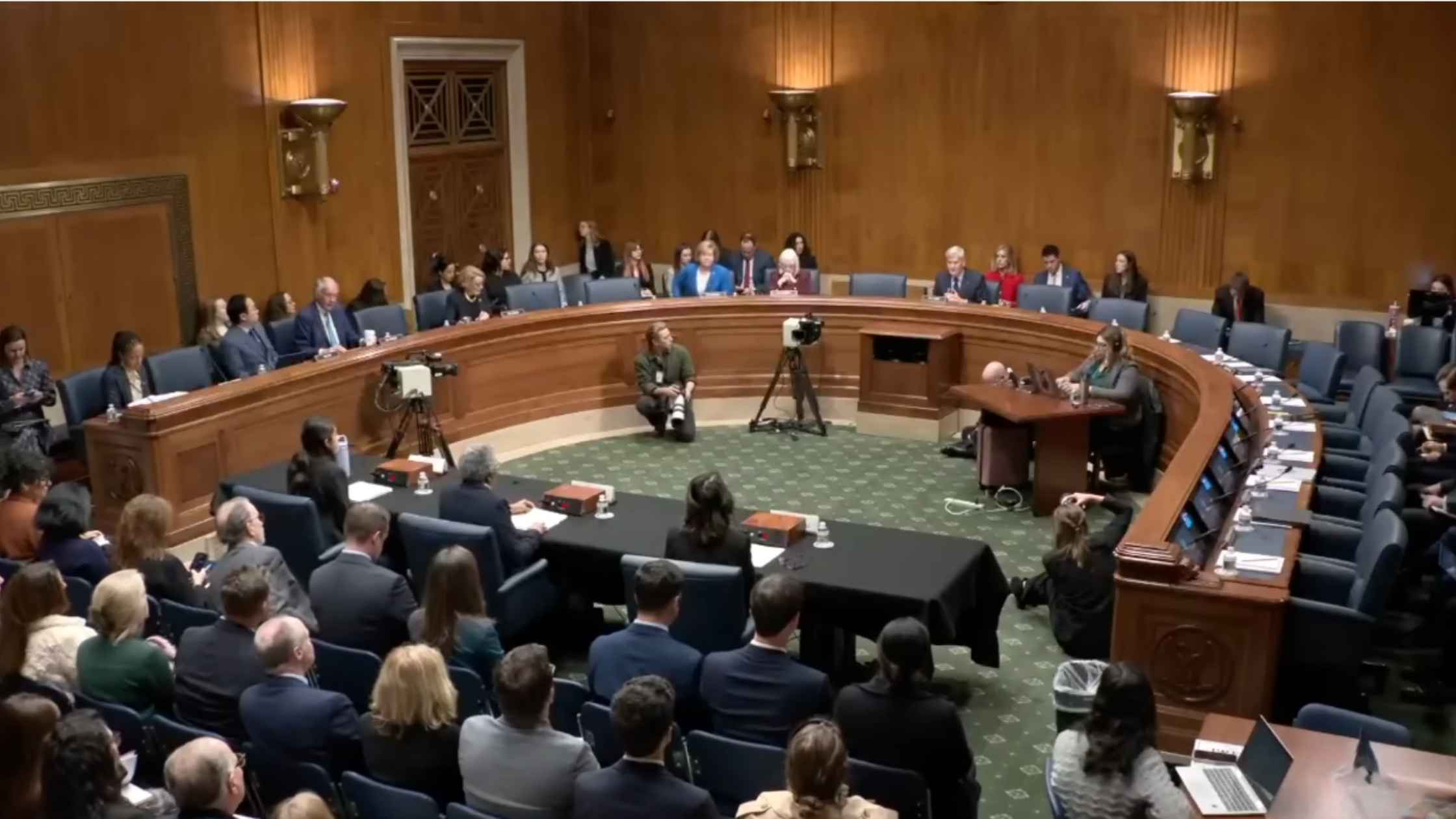
The Senate Committee on Health, Education, Labor, and Pensions will please come to order.
(07:12)
I'm a doc. When you're a doctor, you're supposed to take care of your patient. When someone is pregnant, there are two patients. Both must be considered with absolute care and concern. And scientifically and morally, there's no difference in the value of a child whether she is in her mother's arms or she is in her mother's womb. And the science is clear, life begins a conception and abortion ends that life.
(07:40)
Now, we can't dehumanize the conversation and we shouldn't normalize the ending of that life. Not normalizing a procedure whose intent is to end a life. I want to highlight the March for Life next week in Washington around the country. For decades, every January, thousands of Americans, very young and old, begin the new year by joining together to march and peacefully call attention to the sanctity and inherent value of every single life. And so for those of you who will march in the weeks ahead, thank you. We're here to represent your passion and your action to protect women and their unborn child.
(08:22)
We'll hear testimony today about the dangers of mifepristone, the chemical abortion drug. Now, these drugs are not safe, run of the mill drugs, they're certainly not safe for the unborn child, but there can also be potential complications for the mother. And so here are the facts. One study showed that nine in 10 women who take a chemical abortion drug described their pain as moderate to severe. And half of women say the experience was worse than expected. Another study found that one in 10 women taking mifepristone experienced serious adverse events, including hemorrhaging, bleeding, sepsis, overwhelming infection, or just kind of infection, but less overwhelming. These are not about statistics, it's about real women with real stories. We need to humanize this.
(09:10)
A woman named Salome described feeling like her insides were being, quote, "Torn and sliced apart," and, quote, "Seeing blood all over my legs." Like many, Salome regretted her abortion saying, quote, "I saw the most heartbreaking thing that I've seen in my entire life, I saw my child. And it was at that moment that it sunk in properly that I really have been pregnant. I've been carrying the life that I created inside of me until that very moment. I couldn't believe what I was looking at. It was the most beautiful thing that I'd ever created and I destroyed it."
(09:51)
Another woman named Shanice described the cramps as unbearable, saying that it, quote, "Felt like somebody stabbing me in my stomach." Shanice ended up going into sepsis because the abortion drugs left some of the unborn child's remains inside her. After two months hospitalization and a partial hysterectomy, she had to relearn to walk and perform normal everyday activities.
(10:13)
So how do we get here? To the point where abortion pills can be ordered online, mailed, taken with no medical supervision, and we have no safeguards against coercion? It started when the Obama administration's FDA, pursuing an agenda, removed requirements to report non-fatal adverse events, effectively no longer monitoring the drug safety. Now, who could be opposed to making sure that adverse events are reported to the FDA? We make so much out of somebody getting a vaccine and having a sore arm that lasts for a day where they got the shot, but we're not reporting when someone has sepsis.
(10:52)
Then the Biden administration removed the in person dispensing requirement, which protected women having abortions from serious medical complications. It's only through a proper medical exam that a doctor can determine the baby's gestational age, ensure the woman does not have an ectopic pregnancy, and be sure the abortion will not jeopardize future fertility.
(11:16)
Now, I'm a doc. The first rule is do no harm. The way things are working here today, it has a lot of potential to do a lot of harm. The in person requirement, I feel passionate about. Again, prescribing a drug with potential complications with no in person requirement. It means that a medical professional who's trained to spot abuse, to protect the woman from being coerced, can actually interview the patient and find out if she really willingly wishes to take this.
(11:53)
Now, under the current situation, and we'll hear these stories today, someone can order the pill and coerce the pregnant woman into taking them. It's straight to their mailbox, no questions asked, and then they coerce the woman to take it. That is wrong. We should all be concerned about that, whether you're pro life or pro choice. Think of the women, the girls in abusive relationships, being trafficked whose voice is being silent.
(12:20)
And it just struck me. I was in a Southwest Airline bathroom. I'm a gastroenterologist, sometimes I go there in my thoughts. And as I looked at the sign on the door of the bathroom, it said, "If you're being trafficked, tell the flight attendant or call this number." Now, tip of the hat to Southwest, and maybe the other airlines, I've just never noticed the sign before. They know that someone may be traveling to someplace like a Super Bowl to get trafficked, and yet we make these appropriate efforts to protect the young person in this situation, but we don't require the inpatient interview in which a physician can ask the young person, "Wait a second, do you really want this or not? And if you don't, tell me about it. Wait, you're being trafficked? We're calling the police." Why do we have it on the inside of a bathroom on an airplane, but not as a requirement for something which is mailed through, which is mailed?
(13:25)
As chairman of the help committee, I urge Secretary Kennedy and Commissioner Makary to complete the safety review of mifepristone that they both promised us during their confirmation hearings. Republican members of this committee and many other senators expect an answer. At an absolute minimum, the previous in person safeguards should be restored and it should be done immediately. By the way, it's not just Republicans who say this. A recent poll that 71% of Americans, including 67% of those who identify as pro choice, support requiring a visit for the chemical abortion drug to be prescribed.
(14:06)
Louisiana Attorney General Liz Murrill will share some real life stories of women and girls coerced or drugged with the abortion pill. She's holding those violating our state's strong pro life laws accountable and working to protect these women. Dr. Monique Wubbenhorst will provide medical expertise and further insight into the dangers that abortion pills pose to these women. And she'll dispel the false narrative that treatment for miscarriage, stillbirth, and ectopic pregnancy is the same as an abortion.
(14:36)
It's an honor to convene the HELP Committee for our first hearing of the year to discuss such an important topic. Women, families, and unborn children deserve nothing less. And with that, I recognize Ranking Member Sanders.
Senator Sanders (14:47):
Thank you, Mr. Chairman. In a few minutes, I'm going to hand the mic over to Senator Patty Murray, who has been a national leader on this subject.
(14:55)
But first, let me be as clear as I can be. This hearing is not about the safety and effectiveness of mifepristone. It is not about protecting the health and wellbeing of women. The overwhelming evidence from the scientific and medical community is clear and it is unambiguous, mifepristone is safe, it is effective, and not only has it been proven to safely end the pregnancy, it has been used by women throughout this country and the world to effectively manage a miscarriage. That's not what Bernie Sanders' position is, that's what hundreds of clinical trials and studies in prominent medical journals have found for nearly three decades. That's what the American College of Obstetricians and Gynecologists, the largest organizations of OB/GYNs, in America has found. That's not my view. It's not Patty Murray's view. That's their view. That's what the American Medical Association, representing over 270, 000 doctors have found. That's what the FDA has found for more than a quarter of a century after it approved mifepristone in the year 2000.
(16:14)
Let's be clear about what this hearing is about. It's not the safety of a drug. It is about the ongoing effort of my friends in the Republican Party to deny the women of this country the basic right to control their own bodies. That is what this hearing is about. Four years ago, six Supreme Court justices, all nominated by Republican presidents, decided to overturn Roe v. Wade, abolish the constitutional right for women to have an abortion, and give politicians in state governments all over this country the right to control a woman's body. Since this disastrous Supreme Court decision, 13 states have enacted a total abortion ban and 28 states have restricted access to mifepristone.
(17:08)
That is what this hearing is about. It's whether in the year 2026, we're going to fight to make sure that women have a right to control their bodies or whether politicians take away those rights. Senator Murray?
Senator Murray (17:20):
Well, thank you very much, Ranking Member Sanders, for letting me speak on an issue I care deeply about. The fact of the matter is medication abortion is safe and effective, and we have known that for a very long time. FDA had the data to show this when they first approved mifepristone 25 years ago, and its safety was reaffirmed when FDA approved a generic version of this last fall. We have a tremendous amount of data showing how safe this medication is. More than 160 high quality studies have been conducted, and millions of women around the world use mifepristone safely every year. With fewer complications, by the way, than Viagra or penicillin.
(18:07)
The fact of the matter is, mifepristone is one of the most studied medications we have. In fact, in October, a federal court ruled that FDA's current restrictions on mifepristone are illogical and unsupported by the evidence.
(18:23)
The only reason mifepristone is regulated as heavily as it already is because of anti-abortion politics, not because of science. And now Republicans are holding this hearing to pedal debunked junk studies by anti-abortion organizations, which have no credibility and have been forcefully condemned by actual medical organizations, to justify reinstating more burdensome requirements and ultimately ripping medication abortion off the shelves entirely.
(18:55)
We all know this hearing is not about the actual science or the facts, and it's certainly not about what is best for women's health. This hearing really is about the fact that Trump and his anti-abortion allies want to ban abortion nationwide, and medication abortion is the most common method of abortion in the US. Republicans are furious that despite their extreme abortion bans, some women are still finding ways to get the care that they need and they want to put a stop to it, whatever it takes.
(19:28)
Of course, the overwhelming majority of people in this country do not want medication abortion ripped away, and they do not want Republicans legislating their pregnancies. And I think most people are going to see right through the utter BS that is being staged here today.
(19:44)
I also have to say I'm stunned that Republicans found time to hold this sham hearing when they have yet to have held any sort of hearing holding RFK Jr. to account for undermining access to safe and effective vaccines and letting deadly diseases like measles and whooping cough rip through our communities. Wasn't he supposed to be here quarterly? Wasn't he supposed to leave the vaccine schedule alone? And isn't this committee supposed to be conducting oversight? It seems that we will have a hearing on literally anything but that.
(20:19)
I want to, Mr. Chair, ask unanimous consent to enter into the record eight statements from leading organizations on the safety of mifepristone and a letter sent by every single Senate Democrat last fall pressing FDA for answers on this new so called safety review of mifepristone. We have not yet received an answer to that letter.
Senator Cassidy (20:40):
Without objection. It's my pleasure now to introduce Louisiana Attorney General Liz Murrill. Attorney General Murrill has a distinguished career in public service and has been at the forefront of defending Louisiana's strong pro life laws and protecting women and unborn children. She'll be testifying today about how the removal of the in person dispensing requirement for mifepristone has led to horrific instances of coercion and health risk for women, and will walk us through the actions she is taking to hold those seeking to circumvent Louisiana's laws accountable. Attorney General Murrill, Louisiana is lucky to have you as our top law enforcement officer. I look forward to hearing your testimony.
(21:24)
But before you begin, I'd like to ask unanimous consent to enter into the record a letter from 17 state attorney generals in support of Attorney General Murrill's testimony and advocating against the use of SHIELD laws in connection with the chemical abortion drugs. Without objection, it's approved.
(21:42)
Ms. Murrill.
Attorney General Murrill (21:43):
Thank you, Mr. Chairman and members of the committee. The United States Supreme Court returned the issue of abortion to the people's elected representatives in Dobbs v. Jackson Women's Health Organization. That landmark decision empowered Louisiana and every other state to decide how to address the issue of abortion. Louisiana made its overwhelmingly bipartisan decision and reaffirmed its longstanding policy to the right to life of every child, born and unborn. Louisiana's protections include a prohibition on abortion, quote, "By means of an abortion inducing drug," and it likewise prohibits aiding and abetting and facilitating in the procurement, distribution, or use of such drugs. That should have been the end of it, but the Biden administration and its pro abortion partners had long been planning to circumvent Dobbs. After Dobbs, the Biden FDA promptly announced that it would remove the in person dispensing requirement for abortion pills, thereby authorizing mifepristone to be shipped nationwide by mail. This was not a medically informed decision, but a purely political one. It was not even a legal one because federal law prohibits distribution by mail. President Biden recommitted to, quote, "Doing everything in his power to protect access to abortion."
(23:08)
To that end, he issued multiple executive orders and ignoring federal law, directed HHS Secretary Xavier Becerra to identify, quote, "Ways to ensure that mifepristone is as widely accessible as possible, including when prescribed through telehealth and sent by mail." This culminated in the FDA revising the Risk Evaluation and Mitigation Strategy, REMS protocols in 2023 for mifepristone, removing data-driven restrictions that previously required in person dispensing, which for health and safety reasons mandated mifepristone, this is a quote, "Be dispensed only in certain healthcare settings, specifically clinics, medical offices, and hospitals." Its elimination facilitated widespread dispensing of mifepristone through the mail. This is medically dangerous, unethical and illegal in Louisiana and many states as well as federal law.
(24:08)
The Biden REMS revision worked as planned. Aid Access, perhaps most well known among the illegal abortion pill distribution facilitators, unabashedly credits removal of the in person dispensing for its ability to mail FDA approved abortion drugs, quote, "To people in all 50 states, even those that have banned it," unquote.
(24:31)
To be clear, removing these protections under REMS did not and could not legalize distribution of these pills by mail. So the Biden administration's objectives, as directly stated by the President, were to facilitate illegal drug distribution. Indeed, abortions have tragically increased in Louisiana and other pro life states since Dobbs because of the Biden administration's actions. Data from pro abortion advocacy groups indicate 900 illegal abortions occurred per month in Louisiana in 2025. That trend coincides with national reported data.
(25:14)
Behind these statistics is a woman or girl injured by this dangerous, illegal, and medically unsupervised distribution and use of abortion pills. A few examples from Louisiana include a woman who was coerced to abort her wanted baby, multiple elements of that by partners or parents. A pregnant woman who took pills that Margaret Carpenter from New York mailed to her at 20 weeks gestation and ended up in the emergency room while her baby was left in a dumpster. Another 20 week old pregnancy, the baby was found recovered in a toilet.
(25:51)
Activists have created an organized and dangerous scheme of drug dealing protected by politicians. These are not medical standards. There are no medical standards in any state that sanction such irresponsible actions by a medical professional. And political preferences do not justify placing women at such medical risk. These are not medical professionals and this is not healthcare.
(26:19)
SHIELD laws in some states protect providers from liability and effectively nullify laws in other states. Their purpose is to make it more difficult to sue or prosecute individuals in those states where abortion drugs are prohibited. They also make it more difficult for women coerced into abortion, taking abortion drugs, to bring their abusers to justice. The Biden FDA's removal of in person dispensing requirements had its intended effect. But for the 2023 REMS, activists could not blanket our states like Louisiana with mifepristone by mail. The 2023 REMS must be vacated. Until then, Louisiana's efforts to protect mothers and their unborn children and to hold out of-state abortion pill traffickers accountable for the harm they inflict will be all but futile.
(27:15)
Thank you, Mr. Chairman.
Senator Cassidy (27:21):
Before introducing Dr. Wubbenhorst, who will get the award for the most interesting name this entire year, I ask unanimous consent to enter into the record letters from the Louisiana Family Forum and Louisiana Right to Life. Both letters further underscore Attorney General Murrill's testimony about the harms that unfettered access to mail ordered chemical abortion drugs cause women in our state. And I now turn to Senator Banks to introduce Dr. Wubbenhorst.
Senator Banks (27:48):
Thank you, Mr. Chairman. It's my pleasure to introduce Dr. Monique Wubbenhorst, a practicing board certified OB/GYN with more than 30 years of experience in patient care, teaching, research, health policy, and global health. Dr. Wubbenhorst is a senior fellow with the DeNicola Center for Ethics and Culture at Notre Dame and an adjunct professor at the Indiana University School of Medicine. She also cares for patients at two Indiana hospitals. In her medical practice, Dr. Wubbenhorst is focused on providing OB/GYN care to impoverished women at home and abroad. She has also authored over 20 peer reviewed articles and has served on review boards for peer reviewed medical journals.
(28:35)
Dr. Wubbenhorst, thank you for being here today, and I look forward to hearing your testimony on the dangers that chemical abortion pills pose to women, especially. It's great to have a Hoosier here, who is such a staunch defender for the unborn and for women. Thank you, Mr. Chairman, for holding this hearing. I think it's really important, and I'm glad that you called this hearing. I appreciate your leadership. With that, I yield back.
Dr. Wubbenhorst (29:03):
Thank you, Senator Banks, and we're excited about Indiana Football. Go Hoosiers. So abortion is a subject of intense interest ... And excuse me, good morning, Chairman Cassidy, Ranking Member Sanders.
Senator Cassidy (29:16):
Doctor, can you pull the microphone a little bit closer to your mouth?
Dr. Wubbenhorst (29:19):
How's that?
Senator Cassidy (29:20):
Wonderful.
Dr. Wubbenhorst (29:21):
Ranking Member Sanders and members of the committee, thank you for the opportunity to be here. It is an honor. Abortion is a subject of intense interest, debate, and legislative action, and so we need to give grave consideration to its risks and purported benefits. Mifepristone is now the predominant method of abortion accounting for almost 60% of abortions in 2022, and we now have data to document and examine negative outcomes associated with the use of chemical abortion. We all know that the regimen includes both mifepristone and misoprostol, and this is associated with significant short and long-term physical and mental health harms to women. These are documented by international studies as well as studies in the United States, including studies in the Scandinavian countries, which are not pro life countries. The different risks that are associated are bleeding, infection, hemorrhage, need for transfusion, and perforation. Now, while perforation is not a risk with chemical abortion alone, an estimated 6%, or one in 17 women, will require surgical intervention. And these women are exposed to both the risks of chemical and surgical abortion.
(30:28)
In the UK, an estimated 10,000 women per year were treated in emergency rooms in 2022 and 23 for complications arising from an abortion. Another risk is undiagnosed ectopic pregnancy. There have recently been documented deaths from chemical abortion. Abortion in general, including mifepristone-misoprostol, is associated with serious psychological and social harms for women. A recent study in Canada by Dr. Auger and her colleagues found that it markedly increased the risk for inpatient psychiatric admission, the most severe form, diagnosed forms of mental health.
(31:07)
It is also associated with sex trafficking, child sex abuse, and domestic violence. I'm aware of a case of a young girl who is age 16 who came in with severe sepsis to the emergency room. When queried about what was the cause of her missed abortion, it turned out that she had been given abortion pills by her teacher who gave them to her and skipped town, presumably to do the same thing to another one of his students. And abusers have been known to force abortion pills down women's throats, put them in their drinks, and insert them into their bodies.
(31:42)
Mifepristone is not safer than Tylenol and should not be made available over the counter. Tylenol is an over-the-counter medication, it does not have a black box warning. Most problems with Tylenol are associated with accidental or deliberate overdose. Mifepristone side effects are associated with routine prescribed use.
(32:04)
Elective abortion is intentional feticide. It is not the same as care for an ectopic pregnancy, which is treatment to save a mother's life. It is not the same as care for an in utero demise where the fetus is already demised, and it is not the same as care for miscarriage.
(32:24)
Abortion in African American women is a pervasive problem. There's a remarkable racial disparity in abortion rates between African- American European women in many states. In particular, in some states, approximately the rates are three to five times of abortion in Black women compared with white women.
(32:43)
The practice of standard telemedicine is highly regulated, and therefore the prescribing of abortifacient drugs virtually should not be legitimized by calling it telemedicine. This is more properly called remote abortion. In these cases, a woman cannot have her pregnancy accurately dated.
Dr. Wubbenhorst (33:00):
The woman cannot be assessed medically. No, sorry. I would like to conclude by stating that our concern is for the woman and access to any medical intervention should never come at the expense of safety. Authorities should continue to help decrease chemical abortions harms to women, including through strengthening the REMS and enforcement of existing regulations such as the ComStock Act. Thank you very much.
Senator Cassidy (33:26):
Thank you, Dr. Wubbenhorst. And Senator Sanders will now introduce his witness.
Senator Sanders (33:31):
Thank you. I'd like to introduce Dr. Nisha Verma, who is an obstetrician and gynecologist and a fellow with Physicians for Reproductive Health. Dr. Verma practices in both Massachusetts and Georgia and has conducted research on the impacts of abortion restrictions on women with high risk pregnancies.
(33:51)
Dr. Verma, thanks very much for being with us today.
Dr. Verma (33:55):
Good morning, Chair Cassidy, ranking member Sanders, and distinguished members of the Senate Health Committee. My name is Dr. Nisha Verma, and I am a double board certified fellowship trained obstetrician and gynecologist and fellow with Physicians for Reproductive Health. I provide full spectrum care in Georgia and Massachusetts. That means that I provide everything from Pap smears and cancer screenings to delivering babies, to supporting people postpartum, to providing contraception, abortion, and miscarriage care.
(34:27)
As a doctor, I know that abortion care can be complicated for many people. I sit with that complexity every day, as do so many of my patients and their families. Holding space for complexity is important, but discomfort with abortion can't be used as an excuse to distort facts. So let's talk about the facts. The fact is the science on mifepristone's safety and effectiveness is longstanding and settled. Over the past 25 years, medication abortion using mifepristone and misoprostol has been rigorously studied and proven safe and effective in over a hundred high quality peer reviewed studies. Extensive data show that medication abortion through telehealth is equally safe and effective and provides vital access for those who live in rural areas and in the growing number of maternity care deserts in the country.
(35:22)
Medication abortion is now the most common method of abortion care in the United States, used by more than 7.5 million people since its FDA approval in 2000. The small number of studies that contradict this track record of safety are deeply flawed. In fact, two of the less than 10 have been retracted. When we look to the full body of high quality evidence, it is clear that the safety and effectiveness of mifepristone and misoprostol is not a matter of opinion or debate. It is the clear consensus of the evidence-based medical community, both here in the United States and globally. Leading professional organizations, including the American College of OBGYNs and American Medical Association affirm this fact, as does the National Academies of Sciences, Engineering and Medicine. Globally, the World Health Organization classifies mifepristone and misoprostol as essential medications among the safest and most effective treatments that should always be available.
(36:26)
In my practice, I regularly prescribe mifepristone and misoprostol because I know they are safe and allow my patients to access the highest quality care. When I prescribe these medications, I counsel my patients, ensure they understand their options, review potential side effects and risks, just as I would with any treatment, and support them in making the decisions that are right for them. Miscarriages occur in 10 to 26% of all pregnancies, and I often care for women and families experiencing the loss of a highly desired pregnancy who wish to treat their miscarriage with medication. For these patients, mifepristone, along with misoprostol, speeds up the process, reduces pain, and decreases the need for additional treatments.
(37:12)
Knowing that mifepristone and misoprostol are safe and effective for miscarriage management, I took these medications myself a few months ago after my husband and I experienced a devastating pregnancy loss. Luckily in Massachusetts, we were able to obtain these medications from our local pharmacy and complete this very emotionally difficult process safely, privately, and at home. Unfortunately, for many people, unnecessary restrictions on mifepristone make this evidence-based care unavailable and force them to undergo additional hardship during already heartbreaking experiences.
(37:50)
Mifepristone and misoprostol are safe. However, my patients do face many real, well-documented threats to their health, well-being, and lives. My patients are at risk because of restrictions on abortion care and cuts to Medicaid. They are at risk because of decreased funding to clinics that provide preventative care and cancer screenings and fears about whether they can safely go to the hospital based on their immigration status. And they are at risk because of the ever increasing crisis of maternal mortality, widespread misinformation about vaccines and disregard of science and evidence.
(38:26)
As a doctor, I have the immense privilege of sitting with patients and their families and learning about their lives. My patients remind me every day that abortion care, pregnancy, and medicine are not isolated political issues, and I chose to be here in this room today as challenging as it might be for them, to honor them. I hope moving forward, this committee will focus on addressing the many real documented dangers patients face rather than restricting access to safe, evidence-based care.
(38:57)
Thank you for having me, and I look forward to your questions.
Senator Cassidy (39:02):
Thank you. I shall begin with questions. Doctors, thank y'all very much for seeing patients. I really appreciate that.
(39:08)
Dr. Verma, you mentioned not restricting access to safe evidence-based care. Would you prescribe these drugs for someone at week 20 of her pregnancy?
Dr. Verma (39:18):
Thank you for that question. What we are seeing with some of the cases that have been highlighted-
Senator Cassidy (39:23):
No. Would you prescribe ... It's only FDA approved up to week 10. Would you prescribe these drugs for someone who was at week 20 of her pregnancy?
Dr. Verma (39:34):
I would not prescribe them in the way you're describing. What we're talking about here though-
Senator Cassidy (39:37):
Please-
Senator Sanders (39:37):
Let her answer the question, please.
Senator Cassidy (39:41):
No, no. She answered the question. It's not here to go beyond answering the question, Bernie.
(39:47)
Next, Attorney General Murrill, you spoke of, in your testimony, two women who were prescribed this medicine taking it after week 20. Did I hear that correctly?
Attorney General Murrill (40:03):
With the gestational-
Senator Cassidy (40:04):
Your microphone, please.
Attorney General Murrill (40:06):
The gestational age as determined by the doctors at the emergency room that treated these women said that the babies were approximately 20 weeks. So, yes.
Senator Cassidy (40:15):
Dr. Verma suggested that telehealth is an appropriate way to prescribe this. But again, if I listen to your testimony carefully, and I did, you don't have to have a telehealth visit. I think you spoke of just filling out a form online with no history taken. Did I hear that correctly?
Attorney General Murrill (40:35):
That's correct. It's a form that you fill out online. There is no human contact at all.
Senator Cassidy (40:40):
No human contact.
Attorney General Murrill (40:42):
No human contact. And the paperwork that comes with the pills, and we know this because we conducted a controlled buy of these pills through this process, the paperwork that you received ... We also know this through one of the cases, Rosalie Markezich's case.
Senator Cassidy (40:54):
We know this.
Attorney General Murrill (40:57):
We know this.
Senator Cassidy (40:58):
There's actually some common ground here. Dr. Verma has suggested that it should be evidence-based and that some sort of human contact is implied. And what I'm hearing from you is that it's being prescribed according to the physician who actually examined the patient post loss of the child, is that they were gestational week 20 and there had been no contact necessarily.
Attorney General Murrill (41:21):
That's correct. There's no human contact in this process.
Senator Cassidy (41:25):
Dr. Wubbenhorst, is that like standard of care? No human contact to prescribe a medication like this?
Dr. Wubbenhorst (41:32):
I would say it's not only a standard of care, but it's irresponsible. For example, if I had a pregnant woman who came in with a bladder infection and I just talked to her on the phone and prescribed an antibiotic, that would be malpractice.
Senator Cassidy (41:44):
Okay. Now, Dr. Wubbenhorst, Attorney General Murrill, very disturbing, spoke about women being coerced to take these pills. You mentioned it too. Can you comment further on that?
Dr. Wubbenhorst (42:02):
Yes. There's substantial evidence in the medical literature that many abortions are coerced. In addition to that, there are published or, yes, I would say published 19 cases where, as I mentioned in my testimony, boyfriends, abusers forced women to have an abortion. And so that's just the tip of the iceberg.
Senator Cassidy (42:28):
And Attorney General Murrill, Tony Clayton, the district attorney I think in Pointe Coupée Parish, can you describe the case? I think it was the mother that forced the young lady to take the pill and there was a complication. Can you describe-
Attorney General Murrill (42:43):
She was 16 years old and her mother who had a documented history of severe physical abuse of that same child coerced her into taking the pills because she did not want the burden of an added baby. The little girl, the young woman had been planning a gender reveal party and instead of having a gender reveal party, she was undergoing an abortion after her mother saw her take the pills and then abandoned her to abort the baby alone. She panicked and called 911. She did testify and the mother was indicted and the clinic was indicted and the doctor has been indicted. And Governor Kathy Hochul has blocked our extradition of the doctor to hold the doctor accountable for giving the pills to the mother who coerced her daughter to have an unwanted abortion.
Senator Cassidy (43:32):
... Dr. Wubbenhorst, you and Dr. Verma spoke about the in person interview as the opportunity to make sure that someone understood the implications of taking these pills and to make sure they're not being abused. If that young lady had had an in person interview, would you have been able to see that it was her mother dictating her course of action and she was being coerced?
Dr. Wubbenhorst (43:55):
Yes. One of the things that we try to do when we have these inpatient interviews is to sit down with the woman alone, apart from her mother or her boyfriend, whoever may be trying to abuse her and to ask these questions. And when I have done this, when women are in an abusive relationship or trafficking, they will say, "You're the first person who's ever asked me about this and they will disclose."
Senator Cassidy (44:17):
Okay. Thank you. Senator Sanders.
Senator Sanders (44:19):
Thank you. Let me ask Dr. Verma a simple question. Who do you think is best prepared to determine whether mifepristone is safe and effective? Do you think it is members of a state legislature? Do you think it is United States Senators or do you think it should be organizations like the American Medical Association, the American College of Obstetricians and Gynecologists and doctors and scientists who for decades have studied the issue?
Dr. Verma (44:54):
Thank you for the question. As a doctor, I know that people are capable of making these decisions for themselves. They are the experts on their own lives and can make these decisions guided by evidence, science, and what's happening in their own lives.
Senator Sanders (45:08):
Let me ask you another question. I was interested in what the Attorney General said. Very simple question. We live in a society where everybody here talks about freedom, we all believe in freedom. Who should make the decision regarding her own body? Should that be a woman? Should be the United States Senate, governors, attorney generals? Who should make that decision?
Dr. Verma (45:35):
People should be able to make decisions for themselves, supported by their families, guided by evidence and science. And I do want to highlight, again, some misinformation that we've been hearing around the source of some of the harm that we're seeing right now. A lot of the cases that we're hearing about are a direct result of abortion bans and restrictions. People are desperate because they cannot get the care that they need in their communities with their trusted clinicians and people in their communities in the way that they need. And that is why we are seeing these cases come up. It is a direct result of abortion bans and restrictions. Access makes people safer.
Senator Sanders (46:18):
Dr. Verma, can you speak for a moment about what happens when states limit access to mifepristone? Can you talk about what it means that a state like Louisiana and many others if women for whatever reason want to terminate a pregnancy and have no other options?
Dr. Verma (46:38):
Absolutely. Limiting access to mifepristone, misoprostol, medications that we know are safe and effective takes important evidence-based treatments away from people. And you mentioned Louisiana, we're seeing Louisiana has now made these medications controlled substances, and we're seeing the dramatic impact that that's having on people that need abortion care, that are experiencing miscarriages and people that are, for example, having postpartum hemorrhages. I've heard from my colleagues in the state and heard from, for example, the Department of Public Health in New Orleans has said this is very much harming people in the state.
(47:18)
So for example, when you have a patient that's having a postpartum hemorrhage, I've been in many of these situations as a doctor that provides care on labor and delivery. I need access to those medications right away. That is a life-threatening emergency. It's one of the leading causes of maternal mortality. I need to be able to access safe medications right away to save that patient's life. And so we're seeing the impact of these restrictions and things limiting access to mifepristone and misoprostol, not just on patients who need abortion care, but a whole range of care that is life-saving for them.
Senator Sanders (47:54):
If I could ask the Attorney General Murrill a brief question? If I understood you correctly, you said that over 900 women a month are turning to mifepristone. Was I correct in hearing that, in Louisiana?
Attorney General Murrill (48:08):
Those are statistics from a pro abortion advocacy group.
Senator Sanders (48:12):
But you kind of indicated you think that might be in the ballpark.
Attorney General Murrill (48:15):
It's the only data that we have.
Senator Sanders (48:18):
All right. If a woman in Louisiana turns the mifepristone because she has no other option or that's the choice, that's 10,000 women a year in Louisiana. What do you tell those women who for whatever reason, you may agree with it, I may agree with it, we may not, make a decision that for their lives they want to terminate a pregnancy? What do you say to 10,000 women in Louisiana a year? Do you think they have the right to make that choice or do they not?
Attorney General Murrill (48:46):
Senator Sanders, the policy decision of overwhelmingly bipartisan legislature in Louisiana has enacted laws to protect the women of Louisiana. And I think that the issue here that you and maybe other people don't want to talk about is that we live in a land of the rule of law and that that is the law of Louisiana. And so they can seek that care in another state.
Senator Sanders (49:13):
Sorry to cut you short here, but I just have a few seconds. In other words, essentially what you're saying, 10,000 women a year in Louisiana make a decision and that decision is overridden by the state legislature rather than their own choice. I think that's unfortunate.
Attorney General Murrill (49:31):
Senator Sanders, I would also continue to say that it is illegal, it is unethical, and it is immoral for them for anyone to send pills to someone with no medical supervision and then tell them to lie at the hospital-
Senator Sanders (49:48):
Yeah, but that happens because of the laws of your state.
Attorney General Murrill (49:50):
No, it happens because people from outside our state are sending them into our state to nullify our state laws. That's why it happens.
Senator Cassidy (49:58):
OBGYN Dr. Roger Marshall.
Senator Marshall (50:00):
Thank you. Thank you, chairman. Good morning, everybody to our witnesses. Dr. Verma, do you not have other Ponstan drugs to treat postpartum hemorrhage like Ponstan M? Or is that the only drug that's out there that works?
Dr. Verma (50:13):
We have a few medications to treat postpartum hemorrhage. And when I am in situations where someone's [inaudible 00:50:18]-
Senator Marshall (50:17):
I know what you're saying. I delivered a baby every day for 30 years. I know your situation, but there are other alternatives out there and no one here is trying to take those away. These abortion drugs, category A drugs are safe, B are probably safe, C ... What type of category drug are these prostaglandin drugs that you prescribe?
Dr. Verma (50:37):
In Louisiana, now they have been made controlled substances. And I would like to highlight when I'm in a situation with a postpartum hemorrhage, yes, there are other medications available, but-
Senator Marshall (50:45):
We'll let you answer that later on someone else's time. I'm sorry. But you would agree with me that these prostaglandin drugs are category X drugs? The answer is yes. They are category X drugs. Okay.
(50:57)
Dr. Wubbenhorst, did I get that right? Okay. I think like you, I delivered a baby every day in my life, nearly every day for 30 years, a woman comes in for her first visit and she tells you when her last menstrual cycle was. It's pretty common for them to be off. In fact, it's very common to be off about a month. It would not be unusual. Would you agree with that?
Dr. Wubbenhorst (51:20):
Yes, Dr. Marshall. And actually, I would add to that that I recently had a woman come in because she was having some bleeding and abdominal pain and she was 23 weeks and didn't know it. And that was-
Senator Marshall (51:32):
Very common. We've all had that patient in the ER with abdominal pain five minutes apart and they're getting ready to do an appendicitis under they call in the OBs. Oh my gosh, she's having a baby. I think you would also agree with me, Doctor, that the failure rate of these abortion drugs is probably around 5% at less than 10 weeks, but the failure rate of giving it to a 14-week person over the phone, the failure rate is probably 10%. Failure rate, meaning it doesn't work, right? Would an ultrasound ... Not only seeing the patient in person, but having an ultrasound at your helm there impact your decision making ... And then you and I don't prescribe these abortion drugs, but taking care of a miscarriage is similar. You and I have taken care of thousands of miscarriages. Would you add any color to that?
Dr. Wubbenhorst (52:18):
Yes. I would say that there would be a substantial change. That's because once you get into the second trimester, the risk of hemorrhage increases dramatically.
Senator Marshall (52:27):
Yeah. So my point is, you do this visit over the phone. The young lady thinks she's eight weeks ... And I have so much compassion for these young ladies. They're scared and they need help. And that's why I opened up my practice regardless of your ability to pay to say, "Look, if you ..." I had more than one patients come into my office that said they'd been to Planned Parenthood and they were being coerced into abortion. And she came to my office, said, "Is there anything else we can do, doctor? Do I have to have an abortion?" And I said, "Of course, we'll take care of you. We're going to get you hooked up with Catholic social services and we're going to get you a medical card. We're going to do whatever it takes." But my point is this, that same patient calls me from home or just goes to the pharmacy and picks this drug up.
(53:10)
They think they're 10 weeks, but they're actually 14 weeks. There's a 10% chance of this drug not working and the risk factors associated with this X-rated drug, I'm going to have to read them because I didn't realize this. 5% of the babies that go on to deliver that took this drug, 5% of them have a major, major fetal malformation, limb deformities. So it's like they're missing fingers, they're missing digits, cranial nerve palsies. Think like Bell's palsy, you can't open your eyelids, you can't smile, cranial nerve palsies, cranial facial defects, and of course premature births.
(53:55)
Doctor, I'm going to come back to you. Do you think an ultrasound seeing the patient in person is beneficial and safe and not doing so is below the standard of care?
Dr. Wubbenhorst (54:04):
I would agree with that. And I'd also add that ACOG in its committee opinion says that any pregnancy that is not dated by ultrasound is suboptimally dated.
Senator Marshall (54:11):
Yeah. Yeah. Dr. Verma, you take care of ladies with miscarriage and I'm sorry for your loss as well. One of my just worst days is taking care of a woman with a miscarriage. Do you do ultrasounds typically when a person comes to your office for a threat of miscarriage?
Dr. Verma (54:29):
I do ultrasounds in a lot of different settings, including when a patient is unsure of their last menstrual period and wants an abortion.
Senator Marshall (54:36):
And I'm sorry, I know you've kind of been coached to go offline here. But, do you do an ultrasound on every patient that comes to your office with a threat and miscarriage to figure out how far along they are?
Dr. Verma (54:47):
I do ultrasounds again in many different situations. I think that the misinformation here is that when a patient comes to me for abortion care-
Senator Marshall (54:54):
Dr. Wubbenhorst, do you do ultrasounds when patients come to your office with a threat of miscarriage?
Dr. Wubbenhorst (54:57):
Yes, sir.
Senator Marshall (54:57):
Yeah. Dr. Verma, last question. Would an ultrasound and seeing the patient in person be helpful to you in making the determination of whether you would prescribe these abortion pills?
Dr. Verma (55:08):
When a patient is unsure about their last menstrual period, we do connect them with ultrasound. What's limiting their ability to get that ultrasound is abortion bans and restrictions in their communities.
Senator Marshall (55:20):
You don't have an ultrasound in your office?
Dr. Verma (55:23):
In situations where patients are getting [inaudible 00:55:27]-
Senator Marshall (55:27):
Do you have an ultrasound in your office?
Dr. Verma (55:28):
Because you're talking about telehealth care-
Senator Marshall (55:30):
I think the answer is yes.
Dr. Verma (55:32):
So if a patient's [inaudible 00:55:32] care through telehealth we don't [inaudible 00:55:32] them-
Senator Marshall (55:32):
Telehealth, taking care of ectopic pregnancies, threatened miscarriages, prescribing abortion pills is below the standard of care. You're putting women's lives at danger.
Senator Cassidy (55:42):
Senator Murray.
Senator Murray (55:45):
Dr. Verma, do you want to finish answering your question please?
Dr. Verma (55:48):
Absolutely. So I just want to talk a little bit about telehealth care, which is an important way to improve access for people, including people in abusive relationships. We have data showing that for people that are in these abusive relationships, telehealth is a critical tool that helps them get the care that they need. And actually when we're doing telehealth, we have very strict screening processes. And so if there are signs of an ectopic pregnancy, we would connect them with further care. If we're unsure or they're unsure about their last menstrual period, we would recommend an ultrasound.
(56:22)
And I really want to highlight here what's limiting people's ability to get that additional care is abortion bans and restrictions. That is why we are seeing these cases because patients can't get that follow-up care in their communities. They're scared to go to the hospital if they need to because of fear of being criminalized. But that's what's making the care unsafe. We actually have very strict processes that guide our telehealth care just like our in person care.
Senator Murray (56:49):
Thank you very much for that response. One talking point that we're hearing a lot from anti-choice extremists has to do with the word coercion that current regulations allowing telemedicine prescribing and dispensing somehow empower abusers as opposed to empowering say the hundreds of thousands of women who seek out care that way every year.
(57:10)
So Dr. Verma, which is the problem in this scenario? Is it the availability of a safe and effective drug for abortion care or is it people who abuse or coerce women?
Dr. Verma (57:23):
Thank you for that question. I oppose reproductive coercion and abuse in any form. Any type of reproductive coercion is wrong and is something I've spent a lot of my career fighting against. I screen my patients. I find real solutions to support them. We know that abortion care and telehealth care actually helps protect people. Having all of their options helps protect people. We've seen in the data that for people that are in abusive relationships, that are denied needed abortions, they're more likely to stay in those abusive relationships and put themselves and their families and children at risk. What we need here is real solutions to support people in these relationships and people that are being coerced. Restricting care further is not a real solution, it is a distraction.
Senator Murray (58:14):
Thank you for that response. And I just have to say, I'm really tired of Republicans pretending they care about protecting women when all they mean is taking away women's ability to make decisions about their own bodies. If they really cared about protecting women, they'd care about the fact that this administration refused to release the Epstein files without an act of Congress, or they wouldn't cut grants for crime victim services for survivors of domestic violence and sexual assault. They'd actually care about the fact that this administration has elevated people who shield alleged sex traffickers like Andrew Tate, and they certainly wouldn't be trying to force rape victims to stay pregnant no matter what. So coercion is a matter of discussion here.
(58:57)
I have a question for you, Dr. Wubbenhorst. And abortion groups have shown time and again, they're going to try anything to rip away access to medication abortion, including actually in recent years, pushing this absurd lie that mifepristone is somehow "poisoning our water supply." They absurdly claim that when people self-manage abortions at home, they're somehow contaminating the environment. This is crazy. The head of policy for the anti-abortion group Students for Life told POLITICO last year, and I'm going to quote, "People need to understand they are likely drinking other people's abortions."
(59:35)
Dr. Wubbenhorst, do you agree that that's the case?
Dr. Wubbenhorst (59:39):
No, thank you for the question, Senator Murray, although I do take exception with the way you're characterizing pro life groups. But if I can finish, I don't really feel qualified to speak on this issue because I do think that there are other products that are disposed of in wastewater. Miscarriages are. Menstrual hygiene products are. I do think that it is highly problematic that a woman who received an abortion drug goes back and delivers her baby in the toilet, in her dorm room, on the floor of the shower, wherever it is. That's problematic.
Senator Murray (01:00:14):
I'm almost out of time. Let me just tell you, that is insane. That comment is insane. We all know that the push to use environmental laws to rip away mifepristone is not about the environment. The head of policy for students for life literally described it as "using the devil's own tools against them." People need to understand that right now, anti-abortion groups are pushing invasive and dehumanizing laws to block women in states where abortion is legal, from getting the care in the privacy of their own home. Republicans need to stop this, and I am just appalled that this is where they are going. Thank you.
Senator Cassidy (01:00:54):
Senator Banks.
Senator Banks (01:00:56):
Thank you, Mr. Chairman, again, for holding this hearing. I think it's really important. The Biden administration made the reckless decision to allow online pharmacies to prescribe dangerous chemical abortion drugs and to let mail order pharmacies ship them directly to women without a real consultation with a doctor. However, Mr. Chairman, I'm disappointed that the FDA under Dr. Makary's leadership hasn't moved faster to restore the in person dispensing requirement and strengthen the REMS Program for mifepristone. I hope the rumors are false, some of them are in print, that the agency is intentionally slow walking its study on mifepristone's health risk. I really hope that that's not the case. And Mr. Chairman, I was hoping that Dr. Makary would be here today so that we could ask him some of these questions directly and clear up those rumors. This is about protecting women from dangerous and even life-threatening drugs and their side effects. And Mr. Chairman, I hope that Dr. Makary and the FDA will address this important issue without further delay.
(01:01:57)
With that, I'll begin my questions. Dr. Wubbenhorst, the 2016 Obama FDA stopped requiring reporting of non-fatal complications from abortion drugs like mifepristone. Then in 2023, the Biden administration weakened the REMS Program, Risk Evaluation and Mitigation Strategies for mifepristone and allowed it to be prescribed online and delivered through the mail. Can you tell us really quickly why that combination of decisions are so dangerous?
Dr. Wubbenhorst (01:02:28):
Yeah, I think those decisions were dangerous because, number one, if we are only focusing on death, we're missing all the other outcomes and we can't be said to have been collecting data that we need. As I've mentioned in both in the US and internationally, there are studies indicating that mifepristone, misoprostol used for abortion are associated with significant side effects and risks and harms to women.
(01:02:51)
In addition to that, the lack of data on mifepristone and misoprostol leads us to come to what I think are erroneous conclusions about its safety. Mifepristone, the requirement is for prescribers of mifepristone and drug companies to report, but there's no mandatory requirement for hospitals and medical providers. There's no mandatory reporting. So we're really not seeing a huge number of those complications being reported and this is putting women at harm.
Senator Banks (01:03:26):
Doctor, this is the FDA label for mifepristone. It's dated January 2023, and that was during the Biden administration when they started weakening the safeguards and the label hasn't changed since then. Mifepristone has a black box warning. And I'm wondering if you could tell us what does a black box warning mean?
Dr. Wubbenhorst (01:03:50):
Right. So black box warning exists to warn both patients and prescribers of serious and sometimes fatal complications that are associated with the use of a drug. For example, chemotherapy drugs typically have a black box warning associated with them. This is why the comparison with Viagra and Tylenol is not correct because Viagra does not have a black box warning. Tylenol does not have a black box warning.
Senator Banks (01:04:13):
So the label says that doctors need to inform patients about mifepristone's risk. It says that doctors need to ensure that women know who to call and what to do if they experience sustained fever, severe abdominal pain, prolonged heavy bleeding or fainting.
(01:04:29)
Doctor, are online pharmacies and telehealth websites doing that?
Dr. Wubbenhorst (01:04:34):
No, they're not. I've actually visited these. Of course, I haven't bought anything, but I've actually visited these and they do not say anything about the black box box warning or the serious side effects.
Senator Banks (01:04:45):
So do you think that any drug with a black box warning should be prescribed online?
Dr. Wubbenhorst (01:04:50):
Never, and it should not be prescribed over the counter either.
Senator Banks (01:04:53):
Okay. The FDA label also says, "Serious and sometimes fatal infections and bleeding occur very rarely following spontaneous surgical and medical abortions, including following mifepristone use."
(01:05:10)
Doctor, based on all of the studies and the data that we have that you've seen, how often is "very rarely"?
Dr. Wubbenhorst (01:05:17):
Well, one of the studies that I've reviewed recently from one of the Scandinavian countries showed an infection rate of approximately 2%. So if you consider the millions of abortions ... I'm sorry, that about 60% of abortions are being done close to a million abortions every year, 2% infection rate, that is not rare.
Senator Banks (01:05:40):
So can you quantify that any further?
Dr. Wubbenhorst (01:05:43):
In terms of numbers of women-
Senator Banks (01:05:45):
How many women are impacted?
Dr. Wubbenhorst (01:05:47):
How the women are impacted?
Senator Banks (01:05:48):
How many? I mean, take a ...
Dr. Wubbenhorst (01:05:51):
Well, let's say you said 2%, about half, 500,000, so 2% of 500,000.
Senator Banks (01:05:57):
Mr. Chairman, that's so significant. We're
Senator Husted (01:06:00):
We're not acting quickly enough. And I hope that we do something about this.
(01:06:04)
Thank you again for holding this hearing, and Your Leadership, with that, I yield back.
Senator Cassidy (01:06:08):
And there's been two to my colleagues as regarding Commissioner Makary not being present. We do hope to have the commissioner before the committee very soon, and we've been speaking with the FDA to facilitate the discussion of this and other issues.
(01:06:22)
As regards Secretary Kennedy, he did promise to come back and we have requested that he come back and testify. That was something that Senator Murray mentioned.
(01:06:31)
With-
Speaker 1 (01:06:31):
[inaudible 01:06:33]?
Senator Cassidy (01:06:32):
No, it's in the process. Yeah.
(01:06:35)
And so now Senator Baldwin.
Senator Baldwin (01:06:38):
Thank you, Mr. Chairman.
(01:06:40)
This hearing is allegedly about protecting women, but what we're really talking about here is a Republican effort for a national abortion ban by any means necessary. Frankly, if my Republican colleagues truly cared about protecting women, they would ensure that women had the right to make decisions about their own bodies and access to comprehensive and affordable healthcare.
(01:07:12)
We're currently facing an ongoing healthcare crisis in this country. President Trump and Congressional Republicans' Big Ugly Bill will result in 15 million Americans losing their health insurance and cause 200 Planned Parenthood clinics to close, cutting off access to cancer screenings and reproductive healthcare. The 24 million Americans who rely on the Affordable Care Act marketplace are facing drastically increased costs fueled by the expiration of enhanced premium tax credits. And numbers released yesterday by CMS show that the Affordable Care Act enrollment is declining as a result.
(01:08:04)
Dr. Verma, you touched on this in your testimony, but how do these Republican actions to limit women's access to healthcare generally and reproductive healthcare specifically, how does that affect the patients that you see?
Dr. Verma (01:08:23):
Thank you for that question. It dramatically affects the patients that I see. In Georgia, we have a huge number of maternity care deserts, about 40% of our counties. And many of those patients can't get easy access to their prenatal care, their cancer screenings. I often see women who come in to deliver their babies who have not been able to get any prenatal care, and these cuts are making that much worse. And so we are creating a world where women can't get access to the abortion care they need.
(01:08:57)
They also, when they choose to parent, cannot safely continue their pregnancies and deliver because they can't get the healthcare that they need.
Senator Baldwin (01:09:08):
We've heard a lot today of things that are not based in evidence. Here are the facts: Mifepristone has been FDA approved for nearly 25 years. More than 100 peer-reviewed, robust clinical studies have confirmed its safety. 99% of patients who took the abortion pill had no complications. My Republican colleagues are citing studies that simply don't pass muster. These studies may not be peer-reviewed or even published in medical journals.
(01:09:49)
So Dr. Verma, could you share the difference between the over 100 studies affirming the safety of Mifristone and the so called studies that my Republican colleagues have chosen to highlight at this hearing?
Dr. Verma (01:10:06):
Thank you for that question. Absolutely.
(01:10:09)
Just as you mentioned, we have over a hundred high quality peer-reviewed studies showing Mifepristone's safety and effectiveness; less than 10, two have been retracted, to suggest that Mifepristone is not safe, one that is commonly cited and that we've heard about today. Even the CEO of the Association of Pro-Life OBGYNs admitted the paper is not a study in the traditional sense and is not proof of anything. It was a policy paper that was self-published that mislabeled serious adverse events. It included routine care as serious adverse events and really falsely made claims about everything it was saying.
(01:10:54)
And so yes, the science on this is more than settled, which really does beg the question of, what are we doing here today? Right? The science is settled. I think any person of science can compare these over a hundred studies to the less than 10, two have been retracted, all of which are deeply flawed if you look at them as a person of science; I think any person can say the science is settled. And so again, what are we doing here today?
(01:11:23)
And it may be that we are here today because people in this room feel uncomfortable with abortion. And that's okay. We can talk about that and we can have an honest conversation about that and complexity and the reasons that my patients need abortion care. But we should not pretend that this is an issue of the science.
Senator Baldwin (01:11:41):
Thank you.
Senator Cassidy (01:11:42):
I would offer that Dr. Marshall, as a practicing OB, knows something about science and he listed some side effects.
(01:11:47)
John Husted.
Senator Husted (01:11:49):
Thank you, Mr. Chairman.
(01:11:52)
Admittedly, in preparation for today's hearing, I had a lot of reflection about my start in life. I started out in foster care and was adopted, and know that my birth mother was under a lot of pressure to have an abortion. And thankfully for me, she didn't. I know that my biological father had pressured her to do so and she chose an adoption. So I fast-forward and think about the world we live in today with drugs like Mifepristone and wonder, if it existed then, would the outcome for me have been different?
(01:12:51)
I would like to think that my birth mother would have still chosen to have an adoption, but I've seen some of the horrors of men who are trying to use the drug to end pregnancies against the will of the woman that they give the drug to. And I'm going to go through a couple of examples to prove that this is a real life situation.
(01:13:16)
Example one: according to a criminal complaint filed in the US District Court in the Southern District of Texas, Christopher Cooperrider murdered his next door neighbor's unborn child who he fathered in 2025. Cooperrider obtained Mifpristone via an online pharmacy and gave her these drugs without her knowledge by lacing it in her hot chocolate.
(01:13:38)
Example two from my own state of Ohio. According to the Ohio State Medical Board, Hassan James Abbas obtained Mifpristone and Misoprostol via an out of-state telemedicine provider by providing the telemedicine platform in the name of his estranged wife. Mr. Abass allegedly obtained the prescription of Mifpristone with the intent to secretly terminate the pregnancy of a woman with whom he had engaged in a sexual relationship. Public reporting alleges that Mr. Abbas spiked the beverage with the abortion drug without the woman's knowledge, but she didn't consume the beverage. And then later, Mr. Abbas waited until she was asleep, held the woman down and forced her to consume the drug.
(01:14:25)
That's not the choice of a woman. This is not the choice of a woman controlling her own body. This is how an easily obtained drug that can terminate the life of an unborn child can be used to end that life without an individual's, the woman, consenting to it.
(01:14:55)
And so I just ask the question, I'll start with you, Attorney General Murrill, how do we stop this? But it seems to me that just requiring an in-person visit before dispensing the drug would stop this. And I want your thought on that.
Attorney General Murrill (01:15:19):
Thank you, Senator. And thank you for telling your story. I mean, it's stories like yours that have caused the overwhelming bipartisan decision of our state legislature to protect life for both born and unborn children. And that is an overwhelming policy decision of our legislature that is supported by the overwhelming majority of people in our state. So appreciate you sharing your story.
(01:15:45)
We absolutely believe that putting the in-person dispensing requirement back in place would substantially protect women. And we do have additional evidence, similar stories like you. A state senator's sister testified in our legislature about her estranged husband poisoning her food to get rid of a pregnancy that he did not want. And fortunately her baby was born. She suffers some complications from that assault on her. But you know, this is why Louisiana put those drugs on the state-controlled substances list, so that we can track who's prescribing them and make sure that they are being ... There's some accountability for the use of these medications.
(01:16:29)
The in-person requirement provides that accountability and still does not interfere with those states who wish to adopt a different policy provision [inaudible 01:16:41]-
Senator Husted (01:16:42):
Sorry, I want to be able to get to the other ... Just quickly, how do we stop this from happening?
Attorney General Murrill (01:16:47):
We prosecute those people.
Senator Husted (01:16:49):
Well ...
Dr. Wubbenhorst (01:16:50):
I think that we reinstate the REMS, or strengthen the REMS, and we enforce the Comstock Act. I think that those are two of the most effective things in order to stop telemedicine abortion.
Senator Husted (01:17:02):
Dr. Verma, quickly.
Dr. Verma (01:17:04):
And thank you for sharing your story. I do just want to assure you that I talk to all my patients about adoption and continuing pregnancy and abortion.
(01:17:12)
I think we stop this by making sure that people can get the care they need in their communities and are able to get support when they need it.
Senator Husted (01:17:21):
Thank you, Mr. Chairman.
Senator Cassidy (01:17:25):
Senator Kane.
Senator Kane (01:17:25):
[inaudible 01:17:27].
Senator Cassidy (01:17:29):
Oh, I'm sorry. Senator Hassan.
(01:17:31)
I'm sorry. I can't even read it. It's up here and I skipped it. I'm sorry.
Senator Kane (01:17:34):
[inaudible 01:17:34].
Senator Hassan (01:17:37):
Thank you, Senator Kane. That is very kind.
Senator Kane (01:17:40):
Southerner.
Senator Hassan (01:17:42):
True.
(01:17:44)
Welcome to our witnesses and thank you for being here.
(01:17:49)
You know, I have to say, Mr. Chair, this hearing has just struck me as gaslighting at the highest level. I have some questions for Dr. Verma, I'm going to get to them in just a second, but let me be clear. There is bipartisan work that we have all done together to combat sex trafficking. Those signs you saw [inaudible 01:18:13] Southwest Airlines plane, that's because we passed a law that said they have to go up in airports and on planes. That was bipartisan work we all did.
(01:18:22)
The truth of the matter is that women have been coerced before Mifepristone and they've been coerced since Mifepristone. The murder rate, the assault rate on pregnant women by their partners to end a pregnancy has been a longstanding part of human history. So to blame it on Mifepristone misses the point. To say that women shouldn't be able to get this medication through the mail misses the point that abortion bans have created maternal health and reproductive health deserts in this country, so that when you say a woman should go consult with a physician, there are women who would have to travel hours in this country, miss work, find a babysitter, if they have a car to begin with, in order to do that because of policies that have banned abortion and have cut Medicaid in particular.
(01:19:19)
That's what we are facing. There is bipartisan concern that women be able to access healthcare. There is a bipartisan understanding that reproductive care, to Dr. Verma's point, is complex. When I had a miscarriage at 12 weeks, it was painful and it was hard and it was emotional, and Mifepristone had nothing to do with it. And I didn't use Mifepristone. I had to have a DNC.
(01:19:50)
So the gaslighting here is extraordinary. So let's talk about the real issues.
(01:19:56)
Dr. Verma, Planned Parenthood provides lifesaving healthcare for millions of women. I recently heard from a constituent, Tricia, in Center Ossipee, New Hampshire, who went to Planned Parenthood to get affordable basic healthcare after she left the military. Tricia shared that without Planned Parenthood's sliding fee scale based on income, she wouldn't have been able to see an OBGYN at all.
(01:20:21)
During one of her appointments at Planned Parenthood, Tricia was tested and treated for a reproductive health condition that if left untreated could have led her to have serious health complications down the road.
(01:20:32)
Now, President Trump and Congressional Republicans stripped Planned Parenthood of critical funding last year, taking lifesaving preventive care and screenings away from women like Tricia.
(01:20:43)
Dr. Verma, what long-term health impacts could women like Tricia face as a result of President Trump defunding Planned Parenthood?
Dr. Verma (01:20:51):
Thank you for that question and for sharing your story.
(01:20:54)
I see patients like this all the time, where Planned Parenthood plays a critical role in their healthcare access for things like cancer screenings, sexually transmitted infection screenings, birth control, in addition to abortion care and miscarriage management. And not having that access point will have devastating effects on people's ability to detect signs of cervical cancer or precancer early, to have sexually transmitted infections treated, to have a lot of the preventative care that people need to stay healthy.
Senator Hassan (01:21:27):
Thank you.
(01:21:29)
I've heard from [inaudible 01:21:30] staters who took Mifepristone after the loss of a much wanted pregnancy. So Dr. Verma, I understand that there are serious health risks for women if they have a miscarriage that goes untreated. When a state restricts access to Mifepristone, what are the health impacts for women experiencing miscarriage?
Dr. Verma (01:21:49):
Absolutely. Thank you for that question.
(01:21:52)
We know based on the data that Mifepristone combined with Misoprostol for women that want medication management of their miscarriage is the ideal option. And already because of restrictions on Mifepristone, many women can't get that standard of care treatment that speeds up the process, reduces pain and decreases their need to have to have a procedure if that's something that they don't want.
Senator Hassan (01:22:16):
Hmm. Thank you.
(01:22:18)
Last question. Millions of women live in maternal care deserts where the nearest OBGYN is sometimes hours away, as I referenced in my initial comments. Women who don't have access to a specialist can access safe abortion by getting Mifepristone and follow-up care through telehealth.
(01:22:37)
Dr. Verma, how has telehealth changed access to safe reproductive care in rural areas?
Dr. Verma (01:22:44):
Thank you. It has made it more accessible. And again, like I emphasized earlier, there is a process for telehealth. There are regulations, there are strict screenings that happen. And what is really the issue here is when people need additional care, they can't get it in their communities without fear of being criminalized.
Senator Hassan (01:23:01):
Thank you very much. Thank you, Mr. Chair.
Senator Cassidy (01:23:04):
Senator Moody.
Senator Moody (01:23:07):
Thank you, Chairman Cassidy, for convening this important hearing.
(01:23:13)
As one of only a few mothers of school-aged children in the Senate, the safety and wellbeing of women and children is very important to me. I was disheartened to hear after the brave story of my colleague sharing that he was indeed adopted and that his birth mother was pressured to get an abortion, and she bravely refused and carried him to term and gave him up for adoption, that that was referred to as gaslighting.
(01:23:44)
It's very hard for me also to sit here as someone who has been in the legal worlds and seen the horrific stories that have come to light about coercive abortions, that that is gaslighting. I would ask my colleagues on the other side of the aisle to refrain from using that language because there have been very serious incidents where women and their children were harmed. And that is not gaslighting, that is fact.
(01:24:16)
And I'm also disheartened that we heard as we bring up the instance of men or even some women crushing up these abortion drugs and giving them to people surreptitiously in order to end a life, that we should tolerate this new trend in crime, in murder, because as one of my Democratic colleagues just put it after referring to these instances as gaslighting, because, and I'm quoting my Democratic colleague, "Coercion of abortions is a longstanding part of human history." That is unacceptable.
(01:24:57)
And in fact, when I was attorney general in Florida just a year or so ago, a woman in Florida got an abortion drug from out of state as part of a plot to kill her ex-boyfriend's new girlfriend's child in the womb. I mean, this stuff isn't made up.
(01:25:16)
When I was a judge in Florida, back before I was the attorney general, in my hometown, a guy got an abortion drug, put a different label on the bottle, labeled it as an antibiotic, and gave it to his former girlfriend and said, "You need to take this." And she did. And she had to testify at trial with a picture of a sonogram of that child.
(01:25:43)
This is not gaslighting, this is happening. And as states are trying after Dobbs to come up with as a people what their laws are going to be, we here in Washington have to make sure that those laws that they come up with to prevent this kind of thing, to protect their people are not circumvented.
(01:26:10)
Ms. Verma, can men get pregnant?
Dr. Verma (01:26:15):
Dr. Verma.
Senator Moody (01:26:16):
Yes. Dr. Verma.
Dr. Verma (01:26:16):
I just want to make sure we're all addressed [inaudible 01:26:18].
Senator Moody (01:26:18):
Can men get pregnant? As a doctor, give me your opinion. As a doctor, can men get pregnant?
Dr. Verma (01:26:27):
I mean-
Senator Moody (01:26:28):
I'll move on to the next witness. Doctor, can men get pregnant?
Attorney General Murrill (01:26:32):
No.
Senator Moody (01:26:34):
I know you're a lawyer, an AG, like I was an AG. Can men get pregnant?
Attorney General Murrill (01:26:38):
No.
Senator Moody (01:26:38):
Is there any reason why men should get their hands on the abortion drug?
Attorney General Murrill (01:26:43):
None.
Senator Moody (01:26:44):
And are they getting their hands on an abortion drugs?
Attorney General Murrill (01:26:48):
They are.
Senator Moody (01:26:48):
And are they getting them through the mail across state lines?
Attorney General Murrill (01:26:52):
They are.
Senator Moody (01:26:52):
Even when it is illegal and the people have decided within states that they want to prevent that.
Attorney General Murrill (01:26:58):
They are. And I would just add that that is because there is a concerted effort to prevent any accountability and any human contact. So they go to anybody who asks for them. They do not identify now in many states, the prescriber, the pharmacy, or the recipient. And so this is very dangerous. It is by design created that way in order to circumvent Dobbs.
Senator Moody (01:27:24):
Is it easy for men to get abortion drugs across state lines?
Attorney General Murrill (01:27:29):
Extraordinarily.
Senator Moody (01:27:30):
In fact, I had staff members who said, "My name is Michael. How do I get abortion drugs?" Would it surprise you to know that there are all kinds of organizations ready to satisfy that whim of a man to get abortion drugs?
Attorney General Murrill (01:27:42):
Sadly, it does not surprise me.
Senator Moody (01:27:44):
And not just in your ... I know from working with you as fellow attorneys general, I know that you value life and you want to protect life and you're doing everything you can to do that. But in your role as a prosecutor that is protecting people and is meant to, and it is your job to enforce the people's laws to protect people, are men getting these drugs and using them to surreptitiously end life in their girlfriends, wives, lovers, et cetera?
Attorney General Murrill (01:28:10):
They are. Men, and in some times, parents and women. And in two of the cases that we are in fact prosecuting, shield laws are blocking our ability to do that. And I cannot understand why any governor would refuse our extradition papers so that we can prosecute someone who coerced their child to have an abortion.
Senator Moody (01:28:33):
Chairman Cassidy, I see my time has expired. I appreciate you for facing this issue head on. Thank you, sir.
Senator Cassidy (01:28:40):
Thank you, Senator Moody.
(01:28:41)
And now Senator Kim.
Senator Kim (01:28:44):
Thank you, Chairman. Thank you to the three of you for showing up here.
(01:28:47)
Dr. Verma, I'd like to start with you. There was a phrase that you mentioned and some of my colleagues have that I'd like to just kind of dive in deeper, which is about these maternal care deserts. So if you can just explain to us, explain to the American people the challenge that we're facing with maternal care deserts.
Dr. Verma (01:29:06):
Absolutely. Thank you for that question.
(01:29:09)
So we've seen that hospitals and clinics are closing because of many of the changes that we're seeing with cuts to Medicaid, making it harder for hospitals to stay open, clinics to stay open. And it is increasing the distances that people have to travel to get to an OB/GYN. So there are some women in rural parts of the country that have to travel over a hundred miles to get to the closest OBGYN.
Senator Kim (01:29:35):
These are counties where there are no hospitals that offer obstetric services, birth centers, no obstetricians, gynecologists, certified nurse, midwives. Do you know how many counties there are?
Dr. Verma (01:29:51):
In the United States, it's about 35% of counties. In some states like Georgia, it's even more.
Senator Kim (01:29:57):
It's, exactly right, 36%. I was calculating; over 1,100 counties in the United States.
(01:30:06)
You know, for me, I'm grateful that in New Jersey, we have greater density and more access in this, but I'm trying to think through what is needed around the entire country when I'm thinking about millions of women of childbearing age that do not have this type of access. And then the conversation that we're having here, I mean, I just kind of keep thinking about like, "I hope we have a hearing on this." You know, I hope we have a hearing on just the challenges that so many women are facing and the difficulty that is going forward.
(01:30:36)
And as you were saying, am I correct that this seems like it's getting worse right now in terms of just the lack of access and hospitals closing and other issues?
Dr. Verma (01:30:45):
Absolutely. It's definitely getting worse. I took care of a patient recently who, she was a young woman, came to see me, chose to continue her pregnancy, wanted to support her in that, but she said, "I can't get to an OBGYN. There is no OBGYN in my part of the state. I don't know how I'm going to get prenatal care." That makes people less safe. Hmm.
Senator Kim (01:31:05):
And even within these areas, I mean, who are the types of women that would have the greatest struggle within these deserts? People that may not have access to transportation, other things like that, that you've, I'm sure, come across?
Dr. Verma (01:31:17):
Yeah. It's people that are already facing burdens to access the healthcare system. So people that don't have insurance or have Medicaid that is getting additionally cut, young people, people from marginalized communities that are already facing barriers, this is just exacerbating the situation for them.
Senator Kim (01:31:35):
Well, look, it's something that I think we really, as a committee, need to commit ourselves towards. If we're talking about care for women, obviously a lot of disagreements on very important issues, but I hope we can all agree upon the need for greater access to be able to reverse this trend of growing maternal care deserts.
(01:31:57)
One other implication I just wanted to throw into the mix here is just the question that comes with this undermining of FDA and the trust that I think is being eroded with these types of challenges that we're facing with.
(01:32:14)
So Dr. Verma, I guess I just wanted to ask you your thoughts of what would happen when it comes to whether drug developers and others that are seeking and closely watching this hearing right now, what happens if the American people lose trust in the FDA, if we lose trust in the FDA's ability to follow science and approve drugs based on safety and efficacy?
Dr. Verma (01:32:36):
Thank you for that question. You're absolutely right. This has implications for a whole range of things. Science and evidence need to guide medicine, not politics. What we're seeing is a political agenda that is dictating what options are available for patients. And that is not just going to affect access to abortion care and miscarriage management. It has implications for birth control, vaccines. We're already seeing the impact of vaccines. This is far-reaching when we start to let politics dictate medicine.
Senator Kim (01:33:07):
The amount of outreach that I got regarding this hearing across the board from well beyond issues related to these types of medications, just about the issues about where our country is heading towards when it comes to trust in medicine and the development, I just want to point that out because the ramifications are very far-reaching and ones that could very well affect many, many other drugs.
(01:33:32)
And with that, I'll yield back.
Senator Cassidy (01:33:37):
Senator Hawley.
(01:33:38)
I think it's science-based, by the way, that men can't have babies, but that's going to be something ...
(01:33:45)
Senator Hawley.
(01:33:45)
Don't worry about it, Senator Hawley. That was just Senator Moody.
Senator Hawley (01:33:49):
Thank you, Mr. Chairman. Since you bring it up, why don't we just start there?
(01:33:53)
Dr. Verma, I wasn't sure I understood your answer to Senator Moody a moment ago. Do you think that men can get pregnant?
Dr. Verma (01:34:01):
I hesitated there because I wasn't sure where the conversation was going or what the goal was. I mean, I do take care of patients with different identities. I take care of many women, I take care of people with different identities. And so that's where I paused. I think I wasn't sure where you were going with that.
Senator Hawley (01:34:19):
Well, the goal is just the truth. So can men get pregnant?
Dr. Verma (01:34:22):
Again, the reason I paused there is I'm not really sure what the goal of the question ... I-
Senator Hawley (01:34:27):
The goal is just to establish a biological reality. You just said a moment ago that science and evidence should control, not politics. So let's just test that proposition. Can men get pregnant?
Dr. Verma (01:34:38):
I take care of people with many identities, but ...
Senator Hawley (01:34:41):
Can men get pregnant?
Dr. Verma (01:34:42):
I take care of many women that can get pregnant, I do take care of people that don't identify as women that can get pregnant.
Senator Hawley (01:34:48):
Can men get pregnant?
Dr. Verma (01:34:50):
Again, as I'm saying-
Senator Hawley (01:34:52):
Let me just remind you what you testified to a moment ago: science and evidence should control, not politics.
Dr. Verma (01:34:56):
I-
Senator Hawley (01:34:58):
So can men get pregnant? You're a doctor, I think.
Dr. Verma (01:35:01):
I totally agree science and evidence should guide medicine. I [inaudible 01:35:05]-
Senator Hawley (01:35:05):
Do science and evidence tell us that men can get pregnant? Biological men, can they get pregnant?
Dr. Verma (01:35:09):
I also think yes-no questions like this are a political tool and don't-
Senator Hawley (01:35:13):
No, yes-no questions are about the truth, Doctor. Let's not make a mockery of this proceeding. This is about science and evidence, and I'm asking you.
(01:35:20)
You know, the United States Supreme Court just heard arguments yesterday at great length on this question. This is not a hypothetical question, this is not theoretical. It affects real people in their real lives. And you're here as an expert called by the other side as an expert, and you've been telling us that you follow-
Speaker 2 (01:35:37):
[inaudible 01:35:38] doctor.
Senator Hawley (01:35:38):
Right, you're a doctor, and you follow the science and the evidence. So I just want to know, based on the science, can men get pregnant?
Dr. Verma (01:35:45):
As I-
Senator Hawley (01:35:47):
That's a yes or no question. It really is, I think.
Dr. Verma (01:35:50):
I think you're trying to reduce the complexity of a lot more-
Senator Hawley (01:35:53):
I'm not. I'm trying to ... It's not complex. I'm trying to get to an answer and I'm trying to test, frankly, your veracity as a medical professional and as a scientist.
(01:36:03)
Can men get pregnant?
Dr. Verma (01:36:04):
I think you're also conflating-
Senator Hawley (01:36:06):
This is extraordinary.
Dr. Verma (01:36:07):
... Male-female with [inaudible 01:36:08].
Senator Hawley (01:36:08):
No, I'm not conflating male and female. They're two different things. There's biological men and there's biological women. And I want to know, can men get pregnant?
Dr. Verma (01:36:17):
What you were talking about is biological.
Senator Hawley (01:36:19):
You're not going to answer my question [inaudible 01:36:22].
Dr. Verma (01:36:22):
So when you say biological males, [inaudible 01:36:24]-
Senator Hawley (01:36:23):
This isn't hard, Doctor. Can men get pregnant? Yes or no?
Dr. Verma (01:36:29):
I would be more than happy to have a conversation with you that is not coming from a place of trying to be polarized and pushing people [inaudible 01:36:38]-
Senator Hawley (01:36:37):
I'm not trying to be polarizing. I'm trying to ask ... I think it is extraordinary that we are here and hearing about science and about women ... And for the record, it's women who get pregnant, not men.
Dr. Verma (01:36:50):
It also-
Senator Hawley (01:36:50):
And we are here about the safety of women and science that shows that this abortion drug causes adverse health events in 11% of cases. That's 22 times greater than the FDA label; another fact you haven't acknowledged. And yet you won't even acknowledge the basic reality that biological men don't get pregnant. There's a difference between biological men and biological women.
(01:37:18)
I just don't know how we can take you seriously and your claims to be a person of science if you won't level with this on this basic issue. I thought we were past all of this, frankly. I can't believe we're still here talking about this.
Dr. Verma (01:37:33):
I am a person of science and I'm also someone here who's here to represent the complex experiences of my patients. And I don't think polarized language or questions serve that goal. I don't think they serve the American people. [inaudible 01:37:48]-
Senator Hawley (01:37:47):
It is not polarizing to say that there is a scientific difference between men and women. And I want this to be clear and for the record. It is not polarizing to say that women are a biological reality and should be treated and protected as such. That is not polarizing. That is truth.
(01:38:03)
It is also, by the way, the United States Constitution, which offers unique protections to women in a variety of circumstances as women. And your refusal to recognize women as women and men as men is deeply corrosive to science, to public trust, and yes, to constitutional protections for women as women.
Dr. Verma (01:38:24):
I-
Senator Hawley (01:38:25):
And I think it's extraordinary that you would sit here and advance a political agenda that has been thoroughly discredited and rejected by the American people in this forum. And I'm glad we had this exchange because it is exceptionally clarifying. It was also in many ways quite depressing.
(01:38:41)
I see that my time is nearly expired. I just want to thank the other witnesses for being here. Thank you for protecting women and children. Thank you for your valiant efforts. Thank you for following the science. And thank you, Mr. Chairman, for this hearing.
Senator Cassidy (01:38:53):
Senator Alsobrooks.
Senator Alsobrooks (01:38:54):
Thank you so much, Mr. Chair.
(01:38:56)
I would be remiss if I didn't start by saying I heard my colleague
Sen. Alsobrooks (01:39:00):
... very passionately talk about the fact that this is about the safety of women. I want to make it clear that this administration and this secretary could care less about women, men, or children. In fact, they don't care about humans. And I want to be very clear. I could go down and delineate how that is true, but that is not the subject of today's hearing. But for the past year, we have all watched Secretary Kennedy and this administration peddle conspiracy theories and junk science to dismantle public health structures in this country, so I don't want anyone lecturing about the safety of women. These people don't care about humans.
(01:39:36)
Last week, in fact, we saw the latest example with Kennedy recklessly eliminating the CDC's recommendation for a number of critical childhood vaccinations, and very alarmingly, including the flu shot. In the midst of a flu, basically a surge in a super flu, this is the moment that this man decides to eliminate the flu shot for children as a recommendation, just like with the pediatric vaccine schedule, changing the rules on FDA-approved drugs without scientific input, legitimate evidence on safety risk or transparency will cause, we know, unnecessary fear for patients.
(01:40:16)
RFK's same playbook is being used to target mifepristone, a safe and effective medication that has been approved by the FDA for over 25 years. Now take all of the fear-mongering and mistruths that RFK spewed earlier last year about measles, mumps, and rubella vaccines, and take the fact that RFK agreed to reopen the case on mifepristone this fall, conducting its own very fake review of the evidence of safety and efficacy of this drug. That review was based in part on a study released last summer by the Ethics and Public Policy Center.
(01:40:55)
Dr. Verma, as a practicing physician, I would imagine that you read peer-reviewed research and journals fairly regularly. Is that correct?
Dr. Verma (01:41:06):
Yes, I do.
Sen. Alsobrooks (01:41:08):
And is the Ethics and Public Policy Center a peer-reviewed or rigorous medical journal?
Dr. Verma (01:41:14):
It is not. That is a policy paper that you are referring to.
Sen. Alsobrooks (01:41:18):
And in fact, EPPC's own state admission is to, and I quote, "Apply the riches of the Jewish and Christian traditions to contemporary questions of law, culture, and politics in pursuit of America's continued civic and cultural renewal." Some of their recent publications include a post entitled, "Good Riddance, Governor Walz," quote. Another one is, "Liberal women have abandoned marriage." Another one, "Ending mail-order abortion would fulfill three Trump campaign promises and the rights of women, a natural law approach." This is clearly not the work of unbiased science, but an organization with a political agenda, one based on the last publication I mentioned that promotes that women are, in their view, inferior and should submit to men. And yet their work is being cited by state attorneys general and members of this committee to roll back access to a drug that millions of women have used safely for decades.
(01:42:17)
So Dr. Verma, was EPPC's mifepristone study peer-reviewed?
Dr. Verma (01:42:23):
It was not.
Sen. Alsobrooks (01:42:25):
And did this study mix in data from miscarriage management and IUD insertion procedures that have absolutely nothing to do with abortion care?
Dr. Verma (01:42:34):
It did mix in a lot of things that were not directly related and also they were not transparent about their methods, so it's actually hard to figure out what exactly happened. Any peer-reviewed study needs to reveal their methods, their data sources. They did not do that. And so it's very unclear, the specifics, but we can tell that patients that were coming to the emergency room, for example, for routine care because they couldn't get care otherwise in their communities or patients with completely unrelated conditions were counted.
Sen. Alsobrooks (01:43:10):
And so you're right. So this study included completely unrelated conditions as complications of mifepristone, right?
Dr. Verma (01:43:17):
Absolutely.
Sen. Alsobrooks (01:43:18):
And how would the inclusion of this data undermine outcomes?
Dr. Verma (01:43:23):
It significantly over-exaggerates complication rates by, again, counting things that are not actually complications of mifepristone.
Sen. Alsobrooks (01:43:34):
Let me ask you one other question. Time is tolling. In contrast to this sham study, can you describe the body of evidence of medical reviews and published clinical trials that review the safety and efficacy of mifepristone? Sorry, so hard to say.
Dr. Verma (01:43:51):
Yes, absolutely. We have over a hundred years of high quality peer-reviewed data from multiple journals, multiple researchers. And based on that data, I want to highlight one thing quickly about the FDA label that was strategically left out, is that the label specifically says there has been no causal relationship between the use of mifepristone and misoprostol in any of the complications listed.
Sen. Alsobrooks (01:44:16):
And I'll say this last thing and go. This study from this conservative think tank is not, in RFK's words, "gold standard science". It is self-published, lacks transparency, cannot be replicated, is rife with conflicts of interest, and includes flawed data. I yield back. Thank you.
Senator Cassidy (01:44:32):
Senator Markey.
Sen. Markey (01:44:34):
Thank you, Mr. Chairman. It is very difficult for me to ignore the irony and the hypocrisy of my colleagues on the other side organizing this hearing today. While my Republican colleagues framed today's hearing on, quote, "protecting women," they don't appear to have cared about protecting women and families while they stripped healthcare from millions of people last year. Democrats warned that blocking the extension of the ACA premium tax credits would lead to skyrocketing premiums for 22 million Americans and their families, and that nearly five million people, particularly women and people of color, would lose their health insurance. But Republicans did nothing to protect women then.
(01:45:28)
When Republicans and Trump added restrictions and paperwork requirements to Medicaid, Democrats warned that could cause millions to lose their health insurance, including two million young women, but Republicans did nothing to protect those young women. When Republicans and Trump cut almost $1 trillion from Medicaid to fund tax breaks for billionaires and CEOs, I warned in my study then that those cuts would put 300 rural hospitals at risk of closure, having to cut services like labor and delivery, making childbirth more dangerous for women in our country, but Republicans did not care about women then either.
(01:46:15)
Now my Republican colleagues have spent all morning spreading dangerous lies about a medication that we have known is safe for over a quarter of a century. And why are they doing that? Because this was never about protecting women. It is about controlling women. Republicans have shown us that they will not stop until there is a national ban on abortion. And today's attacks are just another step towards that national ban. I'm proud that Massachusetts has some of the strongest abortion protections in the nation. I heard from some patients who traveled to Massachusetts for treatment, their stories are a testament to the need for abortion protections nationwide. One said she didn't want to risk another pregnancy after experiencing complications during her last pregnancy. Another said she was trying to escape a violent relationship and pregnancy would make it harder for her to leave. Another said she had been raped. People shouldn't have to travel out of state to get basic healthcare.
(01:47:22)
So, Dr. Verma, can you speak to how abortion bans impact how soon people can get care, both in states with bans and states with protections?
Dr. Verma (01:47:34):
Absolutely. Thank you for that question. So we know overall in the United States, about 90% of abortion care is happening in the first trimester, but that is being pushed actually later into pregnancy because of abortion bans and restrictions and patients not being able to get care in their communities in a timely manner because of abortion bans and restrictions. They're having to figure out how to get transportation together, get all of the resources together, find a way to get to a place where they can get the care they need.
Sen. Markey (01:48:06):
And what are the harms to people who have to travel long distances?
Dr. Verma (01:48:10):
It is a huge burden on many people, particularly people that are already facing challenges accessing the healthcare system. This adds additional burdens for them, and again, adds additional time before they can get the care that they need.
Sen. Markey (01:48:26):
Yeah. So just let me be clear. This debate is not just about mifepristone and medication abortion. This is about health and freedom and all of the healthcare system we put together to protect women. Freedom to live your life with dignity, autonomy, and control over your family's future. And it is absolutely imperative that we continue to fight for abortion rights, to give women the ability to make the key decisions for their own health, for their own future. And that is really what is at the center of this hearing today. Thank you.
Senator Cassidy (01:49:06):
Senator King.
Sen. King (01:49:08):
Thank you. You gave me an opportunity to cut in a long time ago, but I want to wait my turn. This is a very important hearing. And Dr. Wubbenhorst, your opening line in your testimony was something very similar to what Dr. Verma said. Abortion is an important subject of intense interest, debate, and legislative action among the people of the United States. That is an understatement. And you both essentially talked about it as an important issue and as a complicated one and as one on which people have very strong feelings and one in which the stories, those that have been shared today by many, are important to hear.
(01:49:47)
But I do agree with my colleagues that the hearing really is about a national abortion ban. Sharing stories is important, but this committee is a busy committee with a huge jurisdiction and there's a million hearings we could have and many I wish we were having, but we're having this hearing because of the desire of the many in the Senate majority to do a national abortion ban.
(01:50:12)
The effort to overturn Roe versus Wade was successful in the Supreme Court, and that has led many states like Louisiana and others to put very strict bans on abortion in their state laws. Attorney General, you've talked about a bipartisan consensus in Louisiana. Virginia has reached a different bipartisan consensus. I note that Louisiana legislature in the House, 27% female, and in the Senate, 12% female. And I'm not bragging about Congress, we're only 28% female. But the decision that this will be returned to elected representatives is cold comfort to a lot of women who don't see themselves represented in legislative bodies, but it is what it is. States can make their own decision, but that's not enough for advocates and that's not enough for many of my colleagues.
(01:51:06)
The fact that states, many states all over this country, are either banning or significantly restricting abortion rights is not enough. So now let's go after the primary method that is being used by women, even in states like Virginia that have said, "We trust women to make these decisions for themselves," let's go after that too. And so, again, every story is an important one to think about, but in a committee like this that could be having hearings on a million things, the fact that we're having this hearing in the aftermath of Dobbs essentially, with state legislatures, wiping out abortion rights in much of the country, now let's go after the chief method by which women in states where abortion is lawful, decide how to handle their pregnancy, to terminate a pregnancy. I just see the agenda here.
(01:52:01)
And the other thing that I notice as I'm talking about stories is there've been a lot of stories about coercion. Coercion is awful. Coercion should be prosecuted, as the attorney general said. We ought to. But it seems to me that the opposite of coercion is choice. If we're against coercion, why would we be anti-choice? I mean, I think these are words called antonyms. They're opposites. If coercion is a problem, and I credit that it is, I credit that the stories that have been told are true, they ought to be prosecuted, but it doesn't seem to me that the response to coercion is to more tightly control the choices women make about their own lives.
(01:52:46)
Mr. Chairman, I would like to introduce, with respect to the science, there was an amicus brief submitted to the Supreme Court in a case following the Fifth Circuit Court of Appeals decision in Alliance for Hippocratic Medicine versus FDA. And it's an amicus brief from ... The title of it is Brief of Over 300 Reproductive Health Researches as Amici Curiae in Support of Petitioners about the Scientific Studies on Mifepristone. I'd like to introduce it into the record.
Senator Cassidy (01:53:14):
Without objection.
Sen. King (01:53:15):
And I'd like to introduce something else in the record. Dr. Wubbenhorst, I read the beginning of your first line in your testimony, but I didn't read the end. And now I'm going to read the full line. "Abortion is an important subject of intense interest, debate, and legislative action among the people of the United States and their elected representatives," that's the part I read, but the remainder of the sentence is this, "and due consideration should be given to its risks and purported benefits." Not to its risks and benefits, not to its purported risks and purported benefits. To its risks and purported benefits. So you tell us right at the beginning that you would be in the camp that would be against abortion under any circumstances. And just on the topic of risks and purported benefits, let me introduce a second item into the record that I'm just going to read and then I'll conclude.
(01:54:13)
"Published today in ProPublica, a pregnant woman at risk of heart failure couldn't get urgent treatment. She died waiting for an abortion." And I'll just read two paragraphs. "When Ciji Graham visited a cardiologist on November 14, 2023, her heart was pounding at 192 beats per minute, a rate healthy people her age usually reached during the peak of a sprint. She was having another episode of Afib, rapid irregular heartbeat. The 34-year-old Greensboro, North Carolina police officer was risk of a stroke or heart failure. In the past, doctors had always been able to shock Graham's heart back into rhythm with a procedure called a cardioversion, but this time the treatment was just out of reach. After a pregnancy test came back positive, the cardiologist didn't offer to shock her. Graham texted her friend about the cardiologist said, 'She can't cardiovert being pregnant.'" She died of heart failure, leaving a two-year-old, because she lived in a state that would not give her cardiovascular care because she was pregnant and would not allow her to end the pregnancy so she could remain being a mother to her two-year-old son.
(01:55:25)
These stories are really important and I think women can make these decisions for themselves. Thank you, Mr. Chair. I yield back. And I'd like to introduce that article for the record.
Senator Cassidy (01:55:36):
Without objection, there was an implication that Louisiana's law was somehow influenced because of the gender makeup of our legislature. I will note the woman that the Democratic state senator who wrote the law was Katrina Jackson, and she was the driving force behind the law. Again, Democrat, and for what it's worth, African American. So just to stipulate that for the record.
(01:56:02)
And also, the health of the mother is an exception for abortion restrictions in Louisiana, and I'm sure it's elsewhere too. So in this particular case, I'm not quite sure, as a physician, what the thinking was, but I just say that for the record.
Sen. King (01:56:22):
It was a story from North Carolina and you're right about Louisiana. Rape and incest is not an exception, but the death of the mother would be an exception under Louisiana law.
Senator Cassidy (01:56:36):
Hickenlooper.
Sen. Hickenlooper (01:56:37):
Thank you, Mr. Chair. And I'd like to start, just for the record, I'd like to ask you now to consent to enter into the record letters from board-certified physicians and the American College of Obstetricians and Gynecologists, ACOG, in Colorado.
Senator Cassidy (01:56:53):
Without objection.
Sen. Hickenlooper (01:56:56):
Thank you all for being here. This is a hard issue, obviously. And, I mean, the reason that we say that healthcare decisions should be between a woman and her doctor, or so many of us say that, is because so often these are deeply painful, challenging, personal circumstances. Roughly 10 to 20% of clinically-recognized pregnancies unfortunately end up in miscarriage. Mifepristone, along with misoprostol, are gold standard interventions to manage early pregnancy loss. And Dr. Verma, you've been through this. You've had some experience with this. Are you worried that the constant attacks on this medication are going to leave millions of people who are losing a wanted pregnancy, but they'll be denied options? And please tell your own story if you can.
Dr. Verma (01:57:58):
Absolutely. We know, as I have said, that mifepristone combined with misoprostol for women that want medication management is the most effective treatment option. For many people in the country, that option is not available because of restrictions and bans on these medications. I was lucky when I had my experience to be in Massachusetts where I could access these medications, but for many people in the country, that's not the case. What we're seeing, for example, in Louisiana with the controlled substance laws is that people can't get either of these medications when they're experiencing miscarriages.
(01:58:36)
And I also want to go back to one thing. I do want to thank both of you for recognizing Senator Kane, Senator, that this is complicated. As a woman myself and someone who takes care of many women, in addition to people who don't identify as women, exchanges like the very polarized one that you saw really do a disservice to complexity and to people's lives. And I just wanted to say that I'm very happy to have these nuanced productive conversations with anyone. I really do think that serves the American people better, because this is complicated and we really need to honor that for our patients and for our fellow Americans.
Sen. Hickenlooper (01:59:16):
Right. Well, and building on that, I want to reflect back on when I was governor of Colorado, we got a grant for a five-year, very ambitious statewide effort to vastly, as much as universally possible, but vastly expand long-acting reversible contraception to as many young women that wanted it. And over an eight-year period, we reduced unintended pregnancies by almost 60%. And so this is not only a major step forward to expand more access to all forms of reproductive care and reduced teen pregnancy and reduced obviously teen abortion, but it also saves $70 million over that whole process because so often those teenage pregnancies are not ... well, they don't get sufficient medical attention and they end up with premature births, very expensive situations. How can comprehensive reproductive health, reproductive healthcare education and planning such as what we did in Colorado, how can that help increase access for all women to their rights?
Dr. Verma (02:00:35):
Thank you for that question. I absolutely support people having access to whatever birth control options are right for them and having access to the full range of healthcare helps make people healthier. I think this also ties into a lot that we've heard about reproductive coercion. We've heard stories that are terrible. I've also seen many patients who can't access birth control, can't access abortion care, and end up having to stay in abusive relationships for that reason. I could tell you many stories, which is why the issue of reproductive coercion is so important to me. And I strongly believe that making sure healthcare, all healthcare, is more accessible to people is one of the solutions, in addition to figuring out how else we can better support people.
Sen. Hickenlooper (02:01:28):
Thank you. And I'll leave us with the thought that just last week, the Wyoming State Supreme Court found unconstitutional, or their extreme bans on abortion law violated their own constitution, because after the Affordable Care Act was passed, there was a statewide initiative to say that they viewed that the Affordable Care Act as infringing on their right to decide their own healthcare. And now that has been reversed. Obviously the sentiment has changed. And as the Wyoming State Supreme Court noted last week, the abortion bans do directly violate an individual person's ability to make their own decisions regarding their health. And I think that's a big issue here, is whether people have that right to make their own decisions. I yield.
Senator Cassidy (02:02:32):
Senator Murray.
Senator Murray (02:02:35):
Well, thank you very much, Mr. Chairman, and thank you to all of our witnesses. Look, it is really clear to me that this hearing is not about science and it's certainly not about women's health. I know folks would like to try and pretend otherwise, but that's about as convincing as RFK Jr. saying he's not against vaccines. Republicans can throw a lot of rhetoric around here, but their long anti-abortion track record is too painfully clear to hide. We all know the real motivation behind this hearing. Republicans don't like abortion. They want to ban abortion nationwide, but they know that is not popular. They know the American people won't stand for that. So Republicans are doing the next worst thing and chipping away at abortion access with every tool they can in every way they can think of and hoping Americans won't notice.
(02:03:28)
But you know what? People tend to notice when their rights go away. People tend to notice when politicians force them to stay pregnant, and people tend to notice when you turn their life upside down. So we're not going to let these attacks on abortion slide, not a single one of them. We're going to call them out for what they are and we're going to keep fighting for women's reproductive freedom every single time.
Senator Cassidy (02:03:53):
Thank you, Senator Murti, Murray, I'm sorry. Just a few things to clean up. My staff was able to confirm that in North Carolina, the health of the mother is an exception in which abortion would be allowed. So just to say that. Secondly, Dr. Verma suggested that in Louisiana, if somebody's having a miscarriage, that they do not have access to these drugs. That's incorrect. Specifically, it says that if somebody is having a miscarriage, there is access to the legitimate use of these drugs in compliance with the law. So that's incorrect.
(02:04:26)
Also, by the way, there's some common ground here. There was a lot of criticism of what Dr. Wubbenhorst was quoting by Dr. Verma, but I think both sides want to have a safety review, and Commissioner Makary promised us a safety review. And so if the issue is, no, this is not accurate, well then let's do the safety review. I think there's common ground there. I think there's common ground on a couple other things, believe it or not. Specifically, it was mentioned that telemedicine would be important, but what Attorney General Murrill says, this is not telemedicine. These are people filling out forms online. Implicitly, Dr. Verma and others would agree that's not appropriate. I gather, not for Dr. Verma, but apparently for most OBs, it's standard of care to do an ultrasound if there's an issue of a miscarriage. And so that should be done. There should be some information. And I was impressed with what Dr. Marshall said about the inaccuracy of the reported last menstrual period. And so just kind of the statement online, that just seems unlikely.
(02:05:34)
Secondly, next, there was also standard of care as regards the need to have medical records. And Dr. Verma mentioned how important that was, but Attorney General Murrill pointed out that the doctor in California was coaching the patient on how to deny that she had been given a medication.
Hon. Murrill (02:05:55):
Senator, if I could just say, Aid Access's paperwork says that to everyone.
Senator Cassidy (02:05:59):
Yes.
Hon. Murrill (02:05:59):
It has a whole paragraph in it that says, "Lie to the hospital if you need help."
Senator Cassidy (02:06:05):
And so there should be common ground that that information should ... that they should not be telling patients to lie to their doctor, that that is not good. Now that said, I have no illusions that we'll find common ground on everything, but if our common ground turns out to be there should be telemedicine, actual human contact, and that people should not be told to lie to the doctors, then maybe something will come out of this despite the polarization.
(02:06:29)
With that, I ask unanimous consent to enter into the record statements and letters from Live Action, the US Conference of Catholic Bishops, Students for Life, Restoration of America Foundation, Liberty Council Action, and the American Association of Pro-Life OB/GYNs expressing concern with the harmful effects of chemical abortions, unanimous consent requested and granted. For any senator wishing to ask additional questions, questions for the records will be due 5:00 PM Wednesday, January 28th. Thank you all for being here and the committee stands adjourned.