Vivek Ramaswamy (00:21):
Thank you, guys. Love it. It's good to be back home in Cincinnati, everybody.
(00:37)
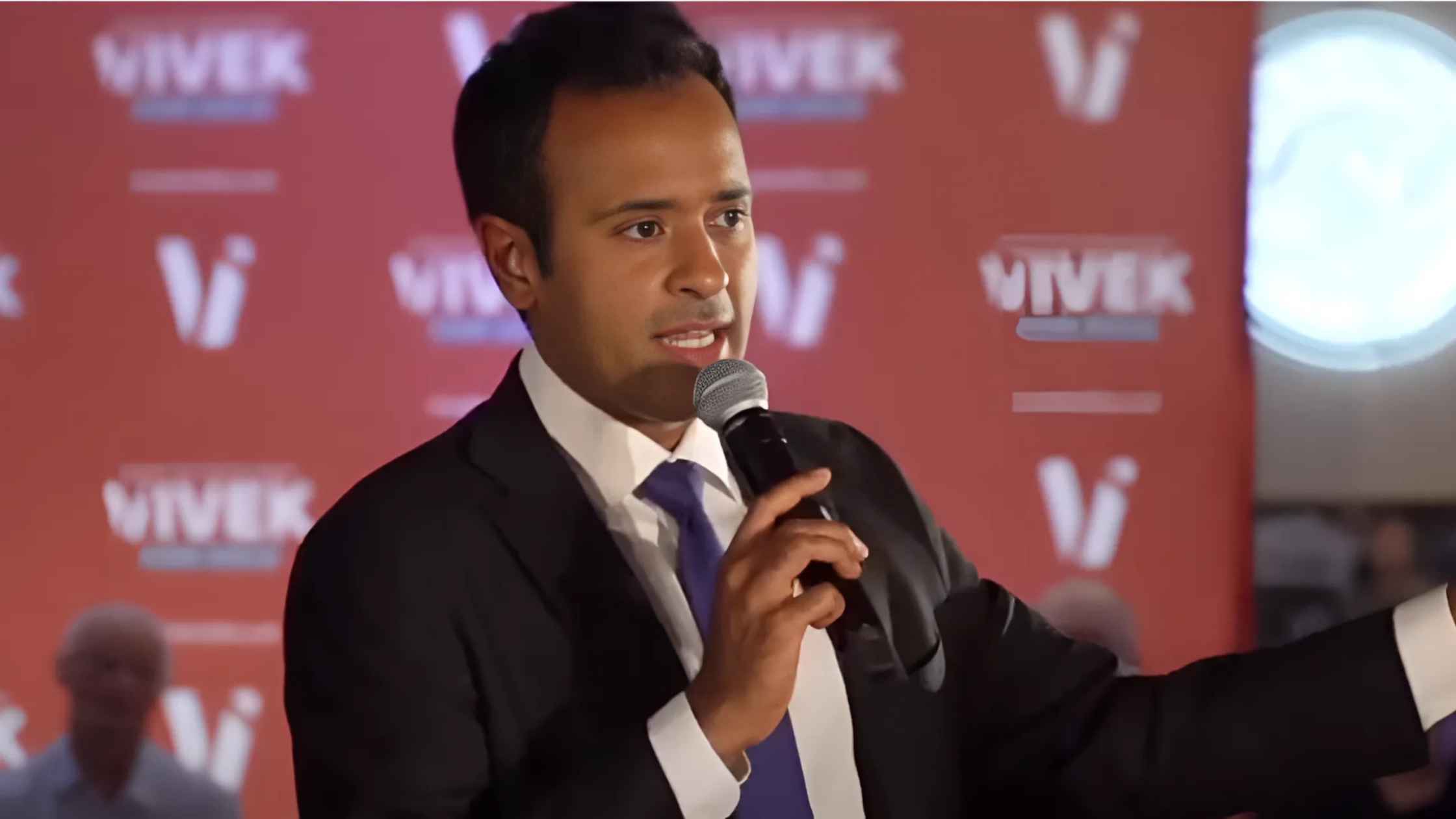
So we're having a serious discussion tonight and we're going to get right into it. You've heard me speak in other forums. You all don't need to hear me give a campaign speech tonight. That's not why we're here. We're here because less than two weeks ago, on the night of July 25th, Friday night, actually it was in the early hours of Saturday morning, there was a group of people going out in their city who were violently attacked by a violent mob in the city of Cincinnati. There have been multiple people arrested and charged since then. We're not here to talk about and re-adjudicate the events of that evening that's going on independently, but what we are here to do is to talk about how we end the epidemic of violent crimes spreading across the city and across the country. And with your help tonight, we are opening up a conversation in this city that finally puts an end to it. Thank you for coming out tonight, guys. We're very proud of you and excited for an open dialogue tonight. Thank you.
(01:38)
Now, we think about taking Cincinnati forward. We were a city that set the standard for the rest of the country. Cincinnati was known around the world as the Queen City. We were a porkopolis providing food supply chain. We were the city that people across the country used to look up to. We were the state of excellence in the United States of America. That's not the Cincinnati that we see today, sadly. We've got to be honest about a problem. You can't sweep it under the rug.
(02:09)
Some of my critics were upset with me last week, earlier this week when we called the victim, one of the victims, Holly, who was knocked out. You all saw the picture by show of hands of Holly and how she suffered? I talked to Holly as recently as yesterday. My wife is actually a throat surgeon at the cancer hospital at the James at Ohio State And so Holly had suffered some neck injuries. We wanted to be helpful. I had people criticizing me for having the gall to call one of the victims.
(02:37)
And one of the things that shocked me was three days after the attack, Holly told me that not a single elected statewide or even local elected official had called her at that point in time. And it just I think shows a little bit of out-of-touch leadership that we have to get back in touch with who we're actually here to represent.
(02:57)
As part of this visit to Cincinnati, I'm not here to just talk to the people who agree with us. I met with the Mayor earlier today, I met with the Cincinnati Police Chief earlier today, a number of officers. I learned a lot from those police officers. I met with Cincinnati business leaders today. And what we want to do is to have an open, candid dialogue. The real crime isn't noticing the assault; it is the assault and the crime itself. We've got to keep that straight. We're not going to solve a problem by sweeping it under the rug. We're going to solve it through open dialogue, through speaking out in the open.
(03:33)
And to that effect, I've actually invited somebody who I thought would be a perfect co-host for this event. I'm going to ask for him to come on stage very shortly. I'm going to ask for you to welcome him with a round of applause. He's a former vice mayor of this city, a former seven-year president of the Cincinnati chapter of the NAACP. That's Christopher Smitherman, who has been outstanding [inaudible 00:03:57]. Thank you.
Christopher Smitherman (04:04):
Thank you.
Vivek Ramaswamy (04:04):
Thank you. The official welcome, and let's have Christopher say a few words. Thank you.
Christopher Smitherman (04:11):
This is one of the most important conversations that Cincinnati has had in a long time. And leadership matters. Let's thank Vivek Ramaswamy for being here today and showing that leadership. [inaudible 00:04:26].
(04:26)
I was asked why Jim and Jack's? Why Jim and Jack's? First, let me share with you that the Ohio River is a place where African-Americans found freedom here. Route 50 is a historic point where we are standing in a ground that is so, so special because abolitionists all up and down 50 made sure that my ancestors had a safe place. So for anybody to ask why would we be at Jim and Jack's, it's one of the most American locations in the city of Cincinnati for us to be at.
(05:14)
We got here, in short, because something happened in Downtown that was so unimaginable, that we saw people being viciously attacked and a lack of leadership at City Hall to address it. What we are here to do today as leaders, just two leaders, is to give you that opportunity, that voice, that opportunity in a town hall meeting to share with us what you think the best solutions are, and for us to have a positive, an effective conversation about what we need to do next. Thank you so, so much for that. Thank you.
Vivek Ramaswamy (06:00):
Thank you, Christopher. Appreciate it.
(06:00)
So we're going to kick this off. Thank you very much, guys. So to kick this off. I want to set some ground rules at the beginning. We're here to have open dialogue. And those who may disagree with myself or Christopher or anyone else in this room, you're free to speak time permitting. We're going to ask you to be respectful rather than disruptive. And conversely, if somebody who does disagree with the majority of people in this room asks a question that disagrees with us, we're going to be respectful of them and give them a chance to be heard as well. That's ultimately how we come together. Not through agreeing on everything, but being able to talk to each other. That's our goal for tonight.
(06:36)
The questions are not scripted. We're going to have a microphone going around just peacefully, calmly. Make it known if you want to ask a question and there's people roving around with microphones. We had way more people show up tonight than we had capacity for. I want to thank the folks outside. I think we have overflow capacity for those of you able to hear us.
(06:54)
But the first question is an exception to that, which is one that we did plan to take today. It's more than a question, a sharing of an experience from somebody who I thought we all do need to hear from. We're talking about violent crime and we're talking about the spread of crime in Cincinnati and what we're going to do to combat it. We have to understand what the real world effects of that crime really are. And with that, I want to call Sarah Heringer. I can't see you with the lights where you are, Sarah. But there you are, Sarah. You want to stand up? And I want the entire room to listen to Sarah and your story. Sounds like many of them already know you, Sarah. Thank you. Sarah.
(07:36)
Actually, you want to come on up for the first question? Join us up here. For the first one, we'll take it from the floor. We're going to call Sarah to the stage because I heard Sarah's story for the first time when I read about it. She and I had a chance to meet more recently. And Sarah, it's good to see you in person for the first time. Thank you for being here.
Sarah Heringer (07:53):
Thank you.
Vivek Ramaswamy (07:55):
And the floor is yours.
Sarah Heringer (07:56):
Thank you.
Vivek Ramaswamy (07:56):
Please.
Sarah Heringer (07:58):
I have notes. First of all, thank you Vivek and Mr. Smitherman and for hosting this and inviting me to speak, and also providing a platform for this conversation to happen because it's very important.
(08:16)
For those of you who don't know me, my name is Sarah Heringer, and on June 4th, my husband Patrick was murdered in our home while protecting me from a violent man who should have never been on the streets. Patrick was a decorated war hero. He served two combat tours and was awarded two bronze stars, and at least a dozen other military honors, which I honestly didn't have any idea about until after he died because that's the kind of man he was. He never considered himself a hero because he came home when the men who served beside him, did not. He was humble. And when he returned to his hometown of Cincinnati, he made it his mission to serve his community just as fiercely as he served his country.
(09:01)
For 10 years, Patrick helped make the city healthier, fitter, and more resilient. He didn't just run a gym, he created a refuge, a place where people found friendship, consistency and support. Hundreds of people called him coach, mentor, and friend. He was a pillar of this city, someone you could count on always.
(09:29)
And yet, despite everything he gave when he needed protection, this city gave him nothing. Not even the most basic safety. He was killed in his own home because of how this city is run. Because of the decisions made by people who had the power to protect us and didn't. He served the city and the city failed him.
(09:59)
And I want you to imagine this. You're asleep, you wake up to a man standing over your bed with a weapon. Now ask yourself, how did he get there? Because someone made a decision, because someone signed a paper, because someone did nothing. That's what leadership looks like in Cincinnati. Negligence, silence and cowardice.
(10:33)
And this just isn't about me. I am not the only widow. Patrick is not the only body. Every week there's another family in mourning, another press conference, another round of thoughts and prayers. But no one answers the only question that really matters, which is: why was this allowed to happen? You can't claim to be a leader and hide from responsibility. You can't claim public service and refuse to speak the truth. And this isn't about left or right, this is about right or wrong. And Patrick deserved to grow old, he deserved to live out the life that we were building together, and I deserved to keep my husband.
(11:17)
I was uprooted from my home, the place where I lived through the worst night of my life, and that loss echoes through everything. And every day I run a business here, I serve this community, I show up and I carry the loss of my life partner while those in charge carry on like nothing happened. Not one admission of failure, not even the courage to say his name. Instead, they expect us to move on, to go quiet, to stop asking questions. But I won't let them because what happened to Patrick was preventable. And their refusal to name it, own it, or change it, that's not leadership. That's complicity.
(12:06)
We need leaders who don't flinch in the face of horror. We need watchdogs, not lapdogs. And we need people who don't just say the words public safety, but prove it with every decision they make because what happened to me could happen to you, to your sister, to your son, to your mother. And when it does, they'll say the same things to you that they've been saying to me. "We're sorry." But I don't want their sorry. I want accountability. I want courage. I want truth. And if they can't give us that, we will replace them.
(12:50)
I'm not here to just wait. I'm here to fight. And I will not stop until the people who let this happen are held accountable. I'm not standing here to endorse anyone but I will say this: the leadership I've experienced here today has acted far differently than the current administration that is responsible for running our city's wellbeing. They didn't have to make space for this conversation, but they did. They didn't have to ask the hard questions, but they are. And that alone sets them apart because we don't need any more statements. We need leaders who act, leaders who tell the truth, leaders who hold power accountable even when it is their own. And if the people in office now can't or won't do that, we will replace them.
(13:52)
We're not asking, we're not waiting, and we're done being told to sit down, we're done being blamed, and we're done watching the city die at the hands of cowards. We need leaders and we know the difference now, don't we? Yes.
(14:20)
So let me be clear about what this moment demands because now it's not time to posture off people's pain. We need transparency in every public safety initiative, what it is, what it costs, what it's actually producing. Clear, measurable outcomes so we can see what's working and what's not. A line-by-line breakdown of how our safety dollars are being spent, and a dedicated fugitive apprehension unit to pursue violent offenders still at large in Hamilton County. And a real answer to this question: why don't violent criminals fear the law in this city?
Audience (15:05):
Damn right.
Sarah Heringer (15:07):
And we're asking you, Vivek, Mr. Smitherman, and anyone else who claims to lead, we don't need more statements, we need action, we need proof. And if you're serious about protecting the city, show us how you'll close those gaps. Give us timelines, give us accountability, give us results. Because if the goal is public safety, then prove it with policy, with structure, with action that we can see. That's what this moment demands. Nothing less. Thank you for letting me share my story.
Vivek Ramaswamy (15:46):
[inaudible 00:15:46] your microphone off when you're not speaking [inaudible 00:15:47].
(15:47)
I want people to understand when … I mean, Sarah, that was a powerful story and for you to be able to share that story, I want people to understand what this takes is Sarah's not alone, unfortunately. There are many people like Sarah, but she's alone. In the month of June she lost the love of her life. She's here at the start of August still mustering the courage to be able to make sure she's speaking about it so nothing like that happens again. The perpetrator was in an ankle monitor at the time? Think about preventable. It's unconscionable that we have a system that is now allowing repeat violent offenders in one way or another right back on the street to commit more crime. That has to stop.
(16:57)
And you want to ultimately talk, you've put a challenge to leaders like us for what are we practically going to do? I think a big part of the solution starts right there. When you know somebody is a violent offender, somebody who's been a repeat offender, somebody who has made their way through the justice system and then shows up in front of a court yet again, you're not just going to let them out on a $40 or a $400 bond somehow expecting that they're somehow going to behave better the next time around. Those are the kinds of practices that we're going to have to change as we're going to talk about over the course of this evening. You've issued a challenge, Sarah, and we're going to step up and live up to those specifics. So thank you for kicking us off with your story.
(17:32)
With that said, why don't we go around the room? We want to hear from you, and that's the purpose tonight. Christopher and I will respond as candidly as we can. So the microphone's around the room, we have a little trouble seeing you, but wave your hand and we'll take the first question. Right back here, sir.
Speaker 1 (17:51):
The fact that you have called for the Christian vote or actually touted and asked for the Christian vote, can you explain the rationale behind this?
Vivek Ramaswamy (17:58):
Sure. I want every vote. I want every vote for people who share our values.
(18:03)
Now, the reason why I think it's particularly important for people of faith, including the Christian faith, right? I went to St. X high school and I think have a few Bombers in here? And we have a few friends from Elder too, all right? So we're on the west side tonight, so [inaudible 00:18:24] friends through competition.
(18:25)
But I will say most of us in this country share those same values in common. A respect for life. Let's start with that today. A respect for all life. The fact that thou shalt not kill is a universal value that I think describes all of our beliefs in this room and most of our beliefs, in fact almost all of our beliefs in this country. And so for those who share those same values that this country was founded on. Those who share the values that respect life, liberty, and the pursuit of happiness, which I believe are the Christian values on which this nation and our civilization was indeed founded.
(19:02)
Then yes, I do believe that I'm right to ask for your vote not because I need it, I want it, but because we need leaders who are going to act with the spine, as Sarah said not just with our words. That's all I can give you now. But once we get in there in 18 months to also be able to serve with actual action, with a spine, not sweeping these issues under the rug, but confronting them through actual action. That's my commitment I'll give you. Thank you. I appreciate you.
(19:29)
Sir. I can actually get to him easier than-
Speaker 2 (19:31):
I give glory to the most high God, who made the heavens and the Earth. That his chosen people from Abraham, Isaac, and Jacob, I speak.
(19:51)
Now, you guys act like this is a new thing. This thing is not new what you saw. I'm not on either side. I'm on the most high side. But you have to understand how our people feel, because we were brought here in slave ships over 400 years ago. And we were treated like animals, like cattle, hung on trees. Family separated. Our heritage taken from us that we didn't know who we were as a people.
(20:41)
Now I say, you act like this is a new thing. This violence that you see out here, well, look over the 400 years of all the violence that was perpetrated on our people. Over the 400
Robert (21:00):
… 400 years, look what you did to our people. But yet, you know it's not over with. No, it's not over with. That's the thing. You want to sweep our history under the table, but you don't sweep the, I would not be Jews with the Hitler pain under the table. All the things that you did to the other races of people, you don't sweep that under the table. But when it comes down to the black Negroes, we can always sweep what happened to us under the table. So, I'm telling you right now, the most high is looking at all of this. That's why according to Deuteronomy chapter 28, chapter 29, and chapter 30 for all you ministers, you need to read it because we are living in revelation times and they tell you what was done to my people are going to happen to you.
Vivek Ramaswamy (22:14):
Robert, look, I want to thank you for one thing out the gate is that I said this at the start. I don't think anybody think I planted Robert's question. We didn't plan the questions tonight. We have promised an open and candid conversation. Sometimes, that makes us uncomfortable. I felt a little uncomfortable as you asked that question, but that's what you should expect of your leaders to be able to engage with you. So, let me say a couple words.
(22:40)
First of all, the pride of this city. Christopher, you mentioned it at the outset. Cincinnati was the end of the Underground Railroad. Have we been perfect for all of our national history? Of course, we're not perfect. In fact, we're destined to never be perfect because we're not a nation comprised of gods. We're a nation comprised of human beings and we're a nation founded on a set of ideals. So, that means you'll always be imperfect because nobody ever criticizes China or Iran or whatever for hypocrisy because to be a hypocritical nation, you had to have ideals in the first place. So, here's what I'll tell you, Robert. I'm not going to say America was perfect for every chapter of our national history, of course not. We're a nation founded on ideals. We're a nation founded on human beings who will always fall short of those ideals. But I would rather live in a country that has ideals and falls short of them than to live in a country with no ideals at all. And this is… And Alan, I'll give you a chance to respond in a moment.
(23:38)
Do I think we should sweep the parts of our history that make us uncomfortable under the rug? No. Just as I don't think we should sweep last week's history under the rug. No, we have to confront what is true, not just when it makes us comfortable, but precisely when it does not. But the question is how we move forward. Because the only part that lands with me a little bit differently is when you say our people, when I hear that, I'm thinking about our people as everybody in this room. I see black, white, brown, man, woman, these are our people.
(24:19)
America is our people, Ohio is our people, Cincinnati is our people, and I believe it is the God-given right of every person to be able to live a life free of violence, to be able to speak their mind in the open without fear of retaliation. And may I even say, if you're a hard-working American to go into your city, whether you're black or white, without fear of actually being assaulted or battered, that ought to be the birthright of every American. That's what I want for our people, Robert, and I appreciate you asking that question. Let me just give a few other people a chance. We'll come back to you for… Why don't you give me… We'll be very brief and then I want to give some other people a chance.
Robert (24:55):
… It short. Let me say this. It tell you in the scriptures that the people who put us in captivity was going to have a perpetual hatred against us. It says in the scriptures that they would not pity the young or the old. Who do I listen to? I listen to the most high. I don't listen to man because man is not who saves me. So, it tells you in the scriptures of perpetual hatred, and that's what I see every day. You can go on YouTube all around the nation and what do you see? Our people getting crucified, but nobody steps up and say anything about it. But when something happens like this, it's a big uproar. Well, to my understanding, the gentleman was the one who cast the first storm and I think you have a stand your ground loud here in Ohio saying that you can defend yourself even with a weapon. And anybody with you, anybody with you can defend also. I'm done.
Vivek Ramaswamy (26:09):
Thank you, Robert. I appreciate it. All I will say is on the matter of history, we're leaving the facts of last week where I kept a promise I'm going to make it. We're going to leave that to the court system to adjudicate. We all saw what we saw on the internet, but what I will say to you is we had a first question about the Christian backdrop of support. The next question of quoting scripture, I will say that the ultimate grace over a long period of time lies in our ability to forgive and to move on, as well, firmly. And I think that's what it's going to take to bring our country and our people together. Christopher, you want to say a word as we get over here to the next question? We'll come to you sir, right after Christopher.
Christopher Smitherman (26:51):
I just want to respond to Robert, who's a friend, to share with you that African-Americans have always had a very high standard. African-Americans in our country have always had a very high standard. Our people, even in poverty, operated at the highest level of dignity. An example would be the Tuskegee Airmen. And so, what I want to share with all of you is what happened 10 or 12 days ago was not our best moment. It was not. We cannot operate eye for an eye and tooth for a tooth. It is not how we operate. Punching people in the face and knocking Holly out, Holly did not deserve what happened to her. Those men cooperating with a WWE and jumping off on them and slamming their bodies into them was not our best moment. It wasn't our best moment as Americans, it wasn't our best moment as a people. We must own that.
(28:20)
And so, I just want to say to my friend, Robert, that this country has never been perfect for our people. I acknowledge the pain. This is why we chose this location here by the Ohio River, where our people came over that river for freedom. And let me share with you, brother, white abolitionists all up and down 50 took care of us and made sure that we have freedom with great sacrifice. My point to you is this, in this moment, in this moment, I want to give a voice paying it forward for those white abolitionists who took care of us. It's now for us in this moment to be able to look at humanity and say what happened in downtown Cincinnati was wrong, and we don't want to accept it. We don't want to make an excuse for it. We don't want to find a way to say, "Somebody did something to me that caused me to hurt people the way they did." Violence is never the answer. Thank you.
Guy Harper (29:45):
My name is Guy Harper and I do not agree with this man's sentiments whatsoever. I'm also not an African American. I'm a Black American. Elon Musk is an African-American and he's white. The Democratic Party were the primary slave owners. They were the KKK, they were Jim Crow. Blacks vote in essence for the party they enslaved their ancestors. How did this happen? Lyndon B. Johnson, who was Kennedy's Vice President, said, and I'm quoting, "I'll have niggers voting Democrat for the next 200 years," and only 60 years in. The problem with their cities, you can hire all the police officers you want. It's a systemic problem. It's a spiritual problem. There are 75% of black babies are born out of wedlock. There are no fathers in the home. There's no discipline. You can hire all the police officers you want. It's not when you change anything. It's a systemic problem. It's a spiritual problem.
(30:53)
The Democratic Party, there are Marxists and Communists, they want to destabilize the United States of America nor any democratic one city in America, Detroit, LA, New York, Philadelphia. You will see the same thing, the same thing wherever you go in America. And a Democratic runs a city, it's a systemic problem. So, more police and the Republican Party has to unveil the schemes of the Democratic Party. The Republican Party is weak in doing that. We have to unveil the schemes of what the Democratic Party is doing.
(31:38)
That's how you get change. President Trump got 25% of black male vote in this election, the so-called racist because people are waking up to the schemes of the Democratic Party. And as long as you have fatherlessness, women having children out of wedlock, this crime still will continue. It's not the police on the streets, it's in the home is where it starts, people.
Vivek Ramaswamy (32:09):
That's courage man. How about this? We got a conversation going, so I'll tell you there's a root cause problem. You hit the heart of it and you know who's to blame for this? It's not black, it's not white, it's the government. It started with Lenin V. Johnson. You're right, the great society. The greatest misnomer made for the history of mankind in American policy was actually what caused a new generation of kind of slavery, suckling at the teeth of the government, paying a single mother more money, not to have a man in the house than to have a man in the house, to be married to Uncle Sam instead of to be married to the man who's sitting right there in our house. And that's created a new culture of dependence, a new culture of substituting virtue in the household. So, I got to say, man, that was brave of you to speak from the heart. The truth is, I don't care about whether you call it the Democrat Party or what you want to call it.
(33:10)
Now, what I want to call upon is for our side, what I think of in this election, I'm running as a Republican in the election, that's fine, but the other side's lost their way. Now, it's up to us to level up, to man up and actually say, "What do we actually stand for?" See, the other side might give us their own version of poison. We're going to stand for truth. We're done obsessing with the failures of the other side. We won in November of last year. Now, it's up to us and stay, "What do we stand for?" We stand for the fact that the nuclear family is the greatest form of governance known to the history of mankind. We stand for the Church that the US Constitution is the greatest form of governance that we've discovered and secured, grant full of freedom known to history. Let's go back to you man and continue this conversation. We'll come over here after that, all right, to this side of the room. We'll go to this gentleman and then microphones, let's bring it. Okay, we'll go over there and then bring it around over here.
Third Questioner (34:02):
Not to take a whole lot of time. Great job with DOGE and everything you did there, was good to see what you did there.
Vivek Ramaswamy (34:07):
Thank you.
Third Questioner (34:08):
I had a personal experience in Cincinnati. I had a stepson that was caught at 3:00 in the morning and he was a white kid. He got caught with a loaded, stolen nine millimeter and $13,000 where he was down there waiting on drugs. And when he got busted, I thought this good, he's going to do some time, he's going to be on probation, things are going to happen to change this kid's life. And those judges down there led him out of jail after 20 days. They near gave back the gun. They gave him back all his money and then they said, well, I gave him a felony, but they put him on probation and he was on probation for a month and a half.
(34:53)
How do you get caught as a 17-year-old kid in a parking garage at 4:00 AM with a stolen gun and $13,000 and two Cincinnati cops are all up on a segway and he's completely done in three and a half months. Why are we giving these people ankle bracelets? Why are we allowing them? Is it a problem that corporations are running our jails? Is it a problem that we don't have enough jail space? It's not a black and white issue. This is a crime and judges not holding people accountable. How do we going to get judges accountable for allowing these people [inaudible 00:35:31].
Vivek Ramaswamy (35:34):
So, I'll take this very practical. I'll be brief because I want to get into many questions. These are great questions tonight. We want to get to as many of these as possible. So, I met with Cincinnati police earlier today. We had a very candid conversation. It included the police chief and what I will tell you is the number one issue that came up of agreement is that a lot of these judges do need to at least be held accountable through transparency. So, there's been a push in the past to say, if you're a judge, at least we need public record telling you exactly which cases, here was the bond, with these cases, here was the sentencing, and these cases, here was the decision.
(36:12)
And yet, there's been an objection to even that level of transparency. My view is you may agree or you may disagree, but as the public, especially with this wave of crime, we have a right to at least know what decisions our judges are actually making. And I'll tell you that is one priority for me as governor to make sure you, as the public, get that level of transparency from these judges that if they're letting people back on the streets, at least you ought to be able to know it, to be able to vote them out and actually hold them accountable. That much I need you not too much to ask. Thank you. Thank you.
Alex (36:46):
Hi. Thanks for being here. My name's Alex. To play off a little bit of what I think it was Robert down here and over here is the guy in hat, because I think he's right. It's not about more police, it is about our attitudes. And if you have people talking like Robert, then we're never going to get anywhere because it's not an issue. That's not… I think we can all agree that what happened was racially motivated. So, what is your plan to fix that? If it's not more police, if it's an attitude adjustment, then what is the fix?
Vivek Ramaswamy (37:25):
Sure. You going to go first then I'll go next.
Christopher Smitherman (37:28):
First, let me say that we want to hear Robert's voice. It's incredibly important that we do that and that we acknowledge his feelings, that we discuss them in public forums like this and not ostracize him because these are real conversations happening in the African-American community, period. Now, having said that, the gentleman in the hat is right, that we have families that are broken down, that we have men that are making babies and are not taking care of them. Those are real things that are happening and we can talk at it and we have a government that has systems in place to keep men from being with those women in those spaces. So, those are all real. Now, ma'am, we have to have a certain level of police presence, period. We have to have a reality. We are 200 officers down right now in the City of Cincinnati, and we have to resolve that issue.
(38:40)
We've gone through a defund the police, reimagine the police, sending counselors out. All of that is nonsense. Nonsense. African-American families want the police more than anybody. The notion that African-Americans don't want to call 911 and have someone respond to their home is absolutely absurd. What all of us want are well-trained officers who approach us respectfully, sorted out, de-escalating with their language and using force as the last option. Once we get all of that, it's time to allow our officers to do proactive policing and hold people accountable. And judges like Judge Ruhmann, who's sitting right here, no one can ever say that Judge Ruhmann will not give you the time that you earn.
Vivek Ramaswamy (39:45):
And I'll add to that is that it's not either-or. The heart of your question is you say police aren't going to fix anything. Of course, nothing is going to fix everything. But that's not an argument for not doing the basics that we need to do, as well. You empower law enforcement to be able to do the job that they swore and oath to perform without fear of looking over their shoulder for being unjustifiably sued or whatever. Then you're going to absolutely deter crime and that's a good thing. Does that mean you've gotten to the root cause of that crime yet? No. We still have to do that hard work, as well. That starts with the education system. Think about how many kids are not in school when they are committing those crimes. 13, 14, 15, 16-year-olds, unconscionable. That's a failure of our schools. What's holding Cincinnati schools back?
(40:27)
What happened? We've seen a decline since the COVID-19 school closures. See, I went to public schools through eighth grade. I went to St. X for high school. Let me tell you, Cincinnati public schools were closed for nearly a year and a half during that pandemic. While St. X managed to stay open for all but five days, and I wouldn't be doing my job if I didn't say this, all right. Never again are we going to bend the knee to a fake Anthony Fauci knockoff who allowed our public schools to be closed, while our private schools managed to remain open. That, too, it's not unrelated to the issue of problem when kids don't show up to school. Now, we have a chronic absenteeism problem in our schools. They find other things to do when they're truant from school. Back in the day, then if you go back to a judge, you were truant. That alone was a basis for holding, who accountable?
(41:13)
The parent accountable. So, we need to bring back accountability at every level from police being able to do their jobs and communities accountable to being able to follow the law all the way accountability back into the family. So, it's never, we're going to propose a lot of solutions tonight. It's never going to be that one doesn't solve everything because no solution solves everything. It's not a silver bullet answer, but we have to look at every solution is contributing to help us get to a better place. That's what we're going to do in Cincinnati and do in Ohio. We'll come over here, where we have the next question. Right over here.
Jill Amy (41:46):
Hi, my name is Jill Amy. Wonder if you or Sarah could elaborate on the TCAP and reform program where the courts and the services receive money when judges keep felony 4 and felony
Felicia Zimmerman (42:00):
… felony five offenses out of prison and I read about it from you, so thank you so much. I was appalled to find out that we're making money by keeping felony offenders out of prison.
Vivek Ramaswamy (42:14):
So you're standing right next to Sarah. Why don't we give the mic to Sarah and let her be heard here on this.
Sarah (42:23):
There are probably a lot of judges in here that could actually speak to this better than I can, but I did do research and found out that Hamilton County gets $6 million every year to basically keep felons out of jail based off of a risk assessment that they recently also switched to the felon being part of their own risk assessment and taking an assessment to figure out how they are graded. Hamilton County also has more money than any of the counties in Ohio given to this program and so I am not an expert at that, I'm not even an investigative journalist. This is just something that I've come across and so yes, I do think it raises concern when there is money to be had by keeping criminals on the street.
Vivek Ramaswamy (43:19):
And this is where we, as leaders, can make a difference. I mean, you want to get to the bottom of a problem, it doesn't hurt to start to follow the money. We talked earlier you pay somebody more not to have a man in the house? Well, you could create incentive structure to see the fatherlessness rate go up. Same thing if you pay county more money not to have a felon in prison, you're going to create an incentive structure that has fewer of those felons remaining in prison. So thank you, Sarah, for your work and leadership. Come back over here. All right, let's do it.
Felicia Zimmerman (43:47):
Thank you. My name is Felicia Zimmerman. I'm 49. I'm a lifelong resident of the city. I've had two teenage sons shot and killed in the city of Cincinnati. My son Bubba was killed in 2017. The detectives didn't pursue his killer despite considerable evidence, including a confession by way of rap video. My son Christopher was shot in the thigh when he was 11 and survived. The police never caught who shot him then. Then in 2021, soon after turning 17, he was shot and robbed. There were four young men involved. The shooter was fresh out of juvenile jail for shooting and paralyzing someone.
(44:38)
He received 18 to 23 years and will be out before he's my age. There were also two brothers involved. One was the spotter and one physically attacked my son. Both received less than five years. The driver wasn't even charged. I was able to look up the criminal history of two of the fathers of those men that killed my son Christopher and their rap sheets were a mile long, a cycle of crimes committed with little to no consequences and it's no wonder why the cycle continued through their children. For four years, my husband and I showed up to every hearing, regardless of its importance. We begged the prosecutor and the judge for stricter penalties and our cries were ignored. The system is broken from the bottom to the top and I'm here tonight and search of solutions so no one else has to get up here and say what I've just said.
Vivek Ramaswamy (45:43):
Thank you for sharing your story. It's unconscionable. As a mother, I'm a father of two sons and we're expecting a daughter early next year and I have to tell you as a parent, there's nothing that hurts my heart more than hearing you face that loss. Not once but twice. I'm sorry and I know you've heard that and you don't need to hear it again. You need to see action, but what I will tell you is there's a million reasons why I could tell you why a governor can't be somebody, this is a state and local problem, enough. At the end of the day, you kick the ball, blame somebody else. You talk to the police, you blame the police. The police blames the judge. The judge blames the backdrop of politics and then the state government, you go to them, they blame the municipalities, enough. I'll give you this word, all right? Two years from now, a year and a half from now, I view you as holding me accountable.
(46:40)
Ultimately, if it's in this state, if it's in a city of this state, ultimately I don't care. We can talk about how we can work with localities, what kind of pressure we're able to apply, there's things we can do. But starting in January of 2027, all I can tell you until then is we're sorry. And starting then, hold me accountable to make sure that we are actually finally ending this wave of violent crime so no other mother has to suffer what you have, and I want to thank you again for being here and sharing your story. Thank you very much. I appreciate you. Thank you.
Christopher Smitherman (47:14):
I just want to thank you for having the courage to come forth with your story. I'm a father of five children, lost my wife to breast cancer, but never could imagine the loss of a child. It's a different level, and so we extend our deepest condolences and the prevention around it is what makes it so painful. There's a woman in our community by the name of Hope Dudley. If you don't know who Hope Dudley is, you should know who Hope Dudley is. She's a woman like an abolitionist for women and families like you who's been working in Hamilton County, in the city of Cincinnati and fighting for victims to get justice. There's one thing that she's been asking for and I hope Hope Dudley hears me putting a voice to her name. She's been asking to place cards of people who have committed crimes into all of our Hamilton County jail systems so that as they're playing cards, somebody might say, this is a cold case and I want to find out something about it and I'm going to cooperate.
(48:22)
Do you know that Hamilton County will not allow those cards in the jail system? This was a major change because the cards were there and now they're gone. These are the basic steps when we talk about solutions that would make Hope Dudley and all the women that she represents and their families and their children, all these cold cases, meaning we need more detectives that are finding out who did what when and hold those people accountable. Mothers and families are still grieving like their murder happened yesterday and we have a system that we're not funding to make sure that those families get the justice and it's not about Black, it's not about white, it's not about Asian Indian, it's not about Latino. This is about getting justice for our families, for people who have taken their loved ones away. So I will stand, work with Vivek, anything that he needs to support this, but to share with you a step we can do right now is demand that Hope Dudley gets those cards into the system that she's been asking for for the last two years. Thank you.
Kelsey Riley (49:43):
Hello, good evening. My name is Kelsey Riley. I am an attorney downtown at Keating Muething in Cleveland, and I just have some questions generally about I live downtown. It's crazy. I went to the music festival. There were barely any police downtown during the festival, and so two-prong question for you guys. What specific policy changes are you or did you propose to the current leadership when you met with them today, Vivek, about how to actually reduce violent crime in this current city as it stands? And then my second prompt to that question is, what incentive is there, do you think, for businesses to stay in downtown Cincinnati when their workers are scared to walk to lunch, or scared to even live downtown? I commute two minutes to work. It's great, but I'm ready to get out of Cincinnati immediately. I'm ready to move specifically to the West Side, so my problem is, do you see my issue? Those are my two questions. Thank you.
Vivek Ramaswamy (50:36):
Yeah. Look, let me address the second one first. Your question is what incentive would you have to remain in the city of Cincinnati, I would not judge you harshly if right now you decided to move to the West Side rather than in the city, but what incentive do you have? In 2025, help is on the way with Cory Bowman. Where is he? Standing right there. I'm proud of you, man, for all you've done. And in 2026, the reinforcements are on the way when we actually make it to lead this state back to greatness statewide.
(51:13)
So that's what I'll leave you there. On the first question, look, I'll be honest with you, I made a promise to the folks who were somewhat maybe reluctant to meet with me, that includes the mayor and includes other city officials we met with today. I told them, and I keep the promise that my conversation with them was going to be private in that room so we could be very candid and we were indeed very candid with one another. I'll leave it at that. But what I will share with you is my insights coming out of it for what specific policies can I share with all of you coming out of those conversations. It's a growing list, but it's common sense. None of this stuff is rocket science. Rocket science is rocket science.
(51:51)
And I say that, by the way, we're the state that put the first man on the moon, Neil Armstrong, born, raised, living in Ohio when he became the first man in human history to walk on the moon. That's hard. Right, that's a natural problem. This is not a rocket science. These are basic man-made problems with man-made solutions. Number one, if you have a violent offender who's a known repeat offender, fix the bail and bond reform program to be able to actually keep them in prison. Keep them incarcerated. Number two, make sure that our jails are not the top form of psychiatric healthcare by reopening psychiatric hospitals to be able to treat those who actually need serious mental health.
(52:27)
Number three, empower police officers to actually do the job they swore an oath of office to actually do and put more people into the police force to be able to actually close those gaps that we have in the city of Cincinnati and elsewhere. Increase punishments where required and to be able to actually have a culture that celebrates the enforcement of the rule of law rather than to villainize it with a tone that we set at the top. That's not an exhaustive list of solutions, but if we do those five things alone, we're going to have put a meaningful dent in the unacceptable rise in crime, and I will say this with due respect to some who may disagree with me on this, I know disagree with me on this. I'm going to go to the facts. In Cincinnati alone… See the reason that event less than two weeks ago, that brutal assault by a violent mob triggered such a reaction, wasn't that it was a one-off.
(53:21)
Because I think if it was a one-off, it wouldn't have mattered for a national attention perspective. It matters to every victim, but it wouldn't have mattered for national attention. It matters because it already exposed where people are already seeing every day. I've got friends from Greater Cincinnati, I was born and raised here, texting me for the last several weeks. They're afraid to go into the city. I have a cousin who works in the emergency room at Cincinnati Children's. Her shift is 5:00 PM to 1:00 AM. When she leaves, she tells me she runs red lights through certain parts of the city because she can't take the risk of feeling like she can actually stop. Okay, so you think about that is the experience that people already feel when something happens like Holly getting knocked out. It taps into that deeper truth, that deeper actual lived reality and we have to have the courage to confront that with practical solutions so we're not missing knowledge, right?
(54:10)
Getting to Mars, getting to Jupiter one day, those are hard problems to solve. We might be missing the knowledge in some of those areas. We're not missing the knowledge. What we're missing is courage. See Americans, we're smart people. We have the knowledge we need to get done what we need to get done. The question is do we have the courage to actually see it through? That's where leadership comes in and as I said in 2025, help is on the way in Cincinnati, and in 2026 help is on the way in the state of Ohio. Thank you.
Christopher Smitherman (54:43):
Ma'am. Before you sit down, let me just say to you that elections have consequences. We are in the middle of an election cycle. We've had a mayor who decided that knowing that we had a Reds game where you live, knowing that we had the music festival and other events, probably one of the biggest weekends of Cincinnati, decided to go to a mayor's event and then go on a vacation and then come back and lecture us about what we all weren't doing well. We have an election and there are consequences today. We have a man here who said, Cory Bowman, he's running for mayor, but we have many people that are running for city council that are in this room. Here's what I want to leave you with. The 9x system is not about voting for nine, the 9x system, if you're voting, you want to vote for five and leave the other four alone because what happens is our votes are competing against the people that we ultimately want to get elected.
(55:53)
How do we have a President Pro Tem that puts out a message that says that the people who were assaulted we're begging for it, and still have their job today? Sparks needs to go. The President Pro Tem, all of us collectively, no matter your race, your gender, no matter where you live in our 52 neighborhoods, should be demanding that that is not the standard and she should resign even though she only has a few months left. We don't need that kind of leadership in the city of Cincinnati. So I leave you with elections have consequences. Let's make sure that in November your vote is heard, and that we rock the vote in November. Thank you so much.
Vivek Ramaswamy (56:49):
Here and here. We'll go back here. We'll go back here and then we'll come up to the front row here.
Speaker 3 (56:56):
We've heard talk about some very heartbreaking stories and we've heard some very general ideas on solutions and it's going to take some time to do these. I've got a suggestion for something that could be done right away. I wish I could say this is original. It's not at all. It comes from the sheriff of Broward County in Florida. He said, "If you hit a cop, you're going to go to the hospital, then you go to the jail. If you spit on a cop, you're going to go to the hospital and you're going to go to jail. You can point a gun or other weapon at a cop, your family can pick up your remains at the morgue. If you attack a group of people, come as a group of people and attack a car, you're very likely to be run over." Institute those as a policy, could be done right away, and solve some problems right away.
Christopher Smitherman (57:48):
What do you think? That's some pretty practical stuff. One of the things that we always want to make sure that we're doing, those of you who own real estate, right? Location, location, location. When you're dealing with a professional police department, I chaired law and public safety for the city of Cincinnati for many, many years. It comes back to training, training and training. We have to spend the dollars to train our officers how to deal with all kinds of situations that they might encounter, and de-escalate. I don't want to make men feel uncomfortable here, but I'm going to take a risk and say something.
Vivek Ramaswamy (58:26):
Go for it.
Christopher Smitherman (58:27):
Our female officers do a great job de-escalating situations in the city of Cincinnati, it's just the way that they approach. They might put the handcuffs on, they might put them in the back of the cruiser. They might take them down to the justice center, but they do it with respect.
(58:46)
My point to you is that 99% of the time, if we're engaging with our professional law enforcement in a way that is dignified and respectful, most of the time those people will respond. Now, those that won't, we have to not get in a position that on Monday morning we're questioning that officer who made a split-second decision about their life. You got a weapon. You're getting out of a car. You drop the gun, you pick the gun up, and our officer is chasing you, expect that deadly force is going to be used. We must elect people that will support law enforcement when they are making the hardest decision. Am I going to go home with my wife or my husband or my family or is the person with the gun going to go home? I'm saying the police officer deserves to go home.
Kevin Farmer (59:57):
My name is Kevin Farmer and I am actually one of the official candidates on the ballot for the November 4th election. Thank you. Thank you. Records show I'm a Republican too, by the way. All jokes aside, Ms. Sarah said something that was very deep that we need politicians like watchdogs because technically if I'm elected, anybody in Cincinnati is my boss. You're my boss. I will be working for you. So what I'm implementing, what I'm saying, what I'm understanding is there's no oversight when it comes down to the responsibility of your employee. So what I want to implement is the third shift policy. I want to be able to work 11 to 7 to see what is going on with our police, our fire, and engineers, because we know that after 2:00 PM, that's when crime starts, don't it? You see, the transparency is you can't find your employee until election time and I'm not willing to be here just on election time.
(01:00:59)
I'm willing to be here all the time because my thing is open transparency means I have to suit up with a body cam too. I have to be like Casana, right? Casana. You get to see it all the time. You get to stream it, you get to have access to me because at the end you'll be able to see what I see because when I'm doing the work, I got another eight might not be working. We need that watchdog, Ms. Sarah. I need to tell my bosses, they ain't working as hard, what we going to do? I'm willing to let them know that the employee ain't coming to work, ain't doing they job. They don't want to work 11 to 7. Who's worked third shift up here, people work third shift? I know that graveyard shift. You love it or you hate it, but my thing is right now to the problem has solved itself. That's what I'm willing to implement as city council member Kevin Farmer, a third shift policy until we solve this problem with our crime.
Vivek Ramaswamy (01:01:59):
Thank you. Thank you, Kevin. Thank you so much. We go there. We'll go there. We got questions up. Why don't you go back there, right? Go right there and then we'll come over here. Okay. Bring it over here to you, sir, after that.
Rosemary Oglesby-Henry (01:02:16):
Hello, my name is Rosemary Oglesby-Henry. I am the CEO and founder of a local non-profit Rosemary's Babies Company that provides support for teen parents and families in Greater Cincinnati. This week, over the last couple of weeks while we were dealing with so much violence in Greater Cincinnati, one of my young parents' children was run over by a car. Three children under the age of five, one of those children won't be able to walk. Then in my program, I decided to talk to our young parents and I asked those young parents, how many of them have a friend or know somebody that
Rosemary Oglesby-Henry (01:03:00):
There was a teen that was shot and killed. Every one of those parents said yes. In fact, my own son, that I never exposed to any violence because I believed in the American dream, and I tried to pull him up out of there. This year has seen more than a dozen of his friends within that same victim system. And so what it led me to ask, especially when this young father, he's 16 and he's so bright and he's so fun, and when I asked all my teens, "Do they have a gun?" Several of them did. And when I asked them why, they said that they did not feel protected. And I have a problem with that because you come from a two-parent home and you live in a nice area and we have the police. But what I'm trying to figure out is why do they feel that they need to protect themselves? Because they get a threat on Facebook.
(01:03:57)
And the automatic is where I used to fight. I grew up in Avondale, y'all. Now, when somebody threatens them, they're fearful that they're going to take their lives. And so my question for the kids that I talk to within my organization that I not only preach to protect your children and protect your person and protect your babies, but I also teach about causes and consequences. So if you do pull that gun to protect yourself, you might end up doing life, and you lose the chance to see your baby grow up, and they end up in the same cycle as you. So we need to do more of that. But my question is also this. How do we retrain families, the media, government, and even our leaders to start speaking positive life instead of fueling violence and fueling hate so that these kids feel the need to protect themselves and go get a gun? That's my problem.
Vivek Ramaswamy (01:04:58):
Thank you for sharing that heart-rending account of what one family's kids being run over by a car. When you roll that log over now, you see what crawls out. What crawls out of that isn't pretty. And so what's really going on in the country? And I don't want to move us too far past just what's in front of us here in Cincinnati, but what we see in Cincinnati is a microcosm of a deeper problem that you put your finger on is that we aren't going through a kind of identity crisis. We've lost our way. It's a spiritual crisis. It's a crisis of meaning. What's our country? You look at your iPhone, do what it tells you to do on a given day, live your life going through the motions, programmed by the algorithms that actually cause our brain to rot and stop us from being able to think independently, commit acts of violence, live in a culture of fear. A mental health epidemic that's raging like wildfire with addiction, fentanyl usage, opioid addiction on the rise.
(01:05:59)
Yeah, there's a deep epidemic. It's a cultural epidemic of fear, of a mental health epidemic, of a loss of spiritual purpose and meaning that we've got to bring back. And everything else we're talking about, I believe with you, is a symptom of that deeper void. And to our friends on the left, I will say for a while they had a prescription for what fills that. It is a kind of victimhood culture, race, gender, sexuality, climate. Maybe it's not my fault… It's not my responsibility. It's what somebody else did to me. And then what is somebody else going to do to fix it? To your question, there's a different answer to that question. It isn't what you expect somebody else to do. It's what we expect all of us to do, not just some elected official in this deeper sense for our culture. We've got to fill that spiritual void, that moral void, with the real thing. Individual, family, nation, and God beats race, gender, sexuality, and climate.
(01:06:57)
If we have the courage to stand for what's right, for what's true, to bring back the self-confidence in our young people, to get the cell phones out of the classroom, to be able to actually at a young age… I mean, some people might say this is unrelated. "What's he talking about?" Make sure kids show up to school, say the Pledge of Allegiance every morning with a moment of silence to be able to go along with it, to ground ourselves in our actual sense of purpose and identity and who we are, to restore the family unit as the ultimate place of accountability, the best form of governance, better than any form of government known to the history of man. That's what we ultimately are going to have to do to get to the root cause of all of this. I think the revival of faith, or at least belief in something higher in our country, is a good thing that we shouldn't hide from, fills that spiritual vacuum.
(01:07:44)
But in the meantime, that's going to be a long project, and we're not giving up on it just because it's a long project, but it's like what I said to the woman's question earlier. We can walk and chew gum at the same time. We're going to work on that for the long run while scoring the easy wins that are sitting in front of our eyes for the short run. That can't be a substitute for saying that we're going to put more cops on the street, a substitute for saying we're actually going to empower them to be able to do their jobs, a substitute for judicial system reform that allows violent criminals to actually remain in prison rather than being released. So it's not either/or; it's not one of these or the other. There is a deeper moral, spiritual crisis of purpose and meaning.
(01:08:22)
We're going to have to fill that through true leadership, not the fake stuff that just tells people what they're looking to hear. We're not victims; we're victors, right? That's who we are at our core, but that's part of what we're going to have to have as a cultural reawakening in our country, starting with our state. We're going to work on that in parallel with fixing the common sense reforms that are actually going to at least prevent those preventable crimes from happening right here in Cincinnati. So thank you. I appreciate that question. All right, we'll come around to you, sir.
Chuck Collins (01:08:52):
I'm Chuck Collins. I live in Madisonville. The $64,000 question--there's been a lot of pain shared here tonight. I'll acknowledge those women that share; it took guts to do that. That took courage. That's put faces to this problem. But the thing is, how do we finance that? Property taxes are going through the roof. We're not getting anything for that. Right now, Hamilton County has to farm out to Claremont County, Butler County, Warden County because the jail is over capacity. How do we fix that?
Vivek Ramaswamy (01:09:27):
You want to take it first, and then I'll go next? All right, sounds good.
Christopher Smitherman (01:09:32):
We have these big conversations, and I'm going to bring up an old wound and tell you it's part of the problem. We decided to build a streetcar. Let me roll with it, because there was a conversation about the capital expenditure of building the streetcar. Listen to these words, but counsel faked us and kept us away from the operation once you build it. They had an attitude that if you build it, they will come. And we built something in downtown Cincinnati in one of our 52 neighborhoods that we could not afford.
Vivek Ramaswamy (01:10:22):
And that we didn't need.
Christopher Smitherman (01:10:24):
And we didn't need. And now we're spending five or $6 million per year to operate the choo-choo train while people aren't riding it. And you come from Madisonville, in one of the 52 neighborhoods where the train will never come near you ever, but your community is suffering because you need the resources to deal with the real problems that Cincinnati has. We have to do a better job as citizens to hold our local officials accountable on these nonsensical capital projects that make no sense, that ultimately now have operate forever because the federal government gave us money, put handcuffs on us, and said, "We're going to take that money back away from you if you don't continue to operate the streetcar." I'm saying to you, it was the wrong project. We didn't need it. The bank is right. We wasted money, and there are other projects that I can identify, like selling our railroad, which made no sense at all.
(01:11:30)
How do we sell a railroad that's generating $36 million in perpetuity to us? We own 300 miles of land all the way from here to Tennessee. Our forefathers put that in our hands, and this mayor squandered it. These are the things that we have to look at and understand that all 52 neighborhoods have to come together. White and black, young and old, and make sure that our local officials, like the young lady that's here living in OTR, who's a lawyer, who's trying to decide whether she's going to continue to live downtown, and might not ever ride the streetcar out of fear. But we're all in our 52 neighborhood paying for it. These are things that we have to change in our city.
Vivek Ramaswamy (01:12:19):
I want to say, I think we're going to come up to our last question, but I got to address this one. We're going to take our last question after this, but this is what you're going to hear about for the next year and a half. Because I want to be the first to own up to this because it's my position on this. Property taxes are way too high in this state. It is your land, not the government's. We're going to bring it down. I want Ohio to be a state that the Patriots across this country who work hard actually move into; we're actually going to take the income tax rate down to zero as well. It's your money, not the government's. And so I believe that's actually going to make us stronger. The number one objection you're going to hear over the next year is, "Oh, isn't that going to leave our social services or other local services stranded?"
(01:13:01)
The problem, I want every one of you, and not just the people who are here, but the people who aren't here, your neighbors too, to remember. It's that when you feed that beast and just throw money at the problem, they create new problems that actually shouldn't have existed in the first place. So what we need is a culture of accountability. It's not about more money or less money. It is about how is the money we have already allocated actually being spent. Right now the answer is poorly. The schools that we're spending the most money on per student are performing the worst per student.
Speaker 4 (01:13:34):
Why is that?
Vivek Ramaswamy (01:13:35):
So what I think about is actually… Well, why is that? That's a deeper question; it comes down to an achievement crisis without the application of standards in our education system, and we're going to change that in 2026. But one thing is going to… Here's the problem with… Property taxes are going up, and yet crime is going up at the same time while educational achievement is going down. So we need a new model.
(01:13:55)
That's why I'm running for governor. I do believe it's going to take somebody outside of yesterday's politics, I believe a new generation of leadership in our state, somebody who isn't cut from yesterday's mold of either Republican or Democrat, but somebody who is willing to say, as an entrepreneur, as a businessman, "We're going to make sure that Ohio's taxpayers get the bang for their buck, for public safety, for economic prosperity, for a world-class education for their kids." And it's not a bad thing when we cut the tax rate of what you're paying, it's actually a good thing because you keep what you earn while your government's actually accountable rather than building more rail projects in the inner cities across the state that nobody actually uses. Thank you very much. I appreciate that question. We'll go right here for the last question, sir. I had a bias. You're wearing that shirt; I couldn't…
Speaker 5 (01:14:42):
Thank you so much. I drove all the way down from the Dayton, Ohio area.
Vivek Ramaswamy (01:14:46):
Well, thank you.
Speaker 5 (01:14:48):
And it was wild seeing this situation on Fox News. This lady getting knocked out, and it's like I'm sitting there going, "This is not Cincinnati, is it? Are you kidding me?" People up in my area enjoy coming down to Cincinnati for a football game. Cincinnati Bengals, go to the Montgomery Inn where you're at, the rib boathouse, have some ribs, walk around from the hotel, and it's just like New York. I'm sitting on the fence. "Do I go to New York for the Macy's Day parade after seeing what I saw in New York three weeks ago, with a long gun walking down the street?" It's a snowball effect. If you guys don't get this under control. Hotels will start losing employees. Taxi drivers won't be able to drive people around. Uber drivers won't be able to drive people around. People won't be able to feel safe from these small towns, an hour out of Cincinnati, to drive down here to go to a ballgame. What you're thinking of… How do we control this economic tsunami? It's going to hit Cincinnati if this is not under control.
Vivek Ramaswamy (01:16:06):
Why don't you give the last one, and I'll close it out.
Christopher Smitherman (01:16:08):
Well, part of it is leadership, and I think that's what you're speaking on. And so we can't have a mayor, a city manager, which is the CEO of the city of Cincinnati, a police chief absent from covering the people, and that's what you've been watching on Fox News. People that are blaming everybody in the room except themselves. A basic counseling move when you sit down with a licensed counselor is own it. Where has the mayor, the manager, our police chief owned what happened in downtown? If we don't change this in the next election, everything you've described is going to happen, but it's going to take courage for people not to look at party, not to look at race, not to look at gender, not to look at hairstyle for us to elect people that will represent us and that will hold each other accountable in a system.
(01:17:16)
I am baffled that the president pro tem can write a message that those who were assaulted, begged for it. And still have their job, as I stand here at Jim and Jack's. That is unacceptable. If we put leadership in place that affirms the perception that we're safe, the young lady in the back who lives in OTR will stay, that you and Dayton will come, and we'll go on a date, but if we don't deal with safety issues in our city as number one, we're done. It is the number one issue, and we cannot elect anybody who has a position of defund, re-imagine our police department. I'm not saying that police is the only answer, but right now when we're 200 down, it's one of the answers. We must make sure that we hire the best, we do the best training of them, and then most importantly, I'll end with this. We allow our police officers to do their job.
Vivek Ramaswamy (01:18:36):
As we wrap this up tonight, I want to say how proud I am of Cincinnati tonight. Coming out tonight, thank you all. Give yourselves a round of applause for coming out here and having an open, honest dialogue and conversation. Give our co-host Christopher Smitherman a round of applause as well. I love that. We're going to be doing more together. And I think we're going to actually, if you're open to this, Christopher, we're going to actually do this in getting it right in Cincinnati. The beautiful thing about Ohio is we're actually a state of cities. Think about Georgia, which is a comparable state. They've got Atlanta, but it's one city. The beauty of our state is we've got cities like Cincinnati, got Dayton, where you came from, Toledo, Columbus, Cleveland, Akron, Youngstown, you name it.
(01:19:23)
That's one of the advantages of our state, and so I haven't asked Christopher this yet, but I enjoyed this tonight. Maybe we should do this in the cities across the state as well, to be able to use Cincinnati as an example. Get it right here, nail it in Cincinnati and scale it across the state. What do you say?
Christopher Smitherman (01:19:41):
Sounds like a plan.
Vivek Ramaswamy (01:19:41):
That sounds like a plan. All right, let's do that. Thank you. And that's what we wanted. Open dialogue with the culture of respect. I'll close on this point. Right, I think the true mark of a successful country, particularly in the United States, is are people brave enough to be able to say in public what they will otherwise say in private? And for the last decade, if we're being honest, there's been a big gap. You think about the last decade; there's probably been the biggest gap between what people are willing to say in private versus what they're willing to say in public. What we're talking about today, this is considered in some circles to be politically incorrect, forbidden territory, urban crime, and there's a lot of underlying issues that even came up in this discussion, including tough issues relating to race, relating to history. We're not going to solve those problems by hiding from them. We're going to solve them by confronting those problems directly.
(01:20:38)
Speak in your mind in the open, say it with a spine, say it with vigor, but say it with respect. And part of respect means that you respect your neighbor enough to tell them what you actually think. Not some fake woke-washed or other-washed version of it. That's what brings us together. That's what makes us American. That's what makes our country, I believe, the greatest country known to the history of man--that we're actually able to do it. And what I love about Cincinnati, because this is not a unique conversation to this city. It's not even a unique conversation to our state. Look at what's happening in cities from New York to Sacramento, coast to coast, sea to shining sea. What you have is Cincinnati has an opportunity to set an example for what's possible for Ohio, what's possible for the United States. What I love about this city, you go 100-mile radius of where we are.
(01:21:26)
I was born and raised here, in Evendale is where we grew up for most, right off I-75. You go 100-mile radius of where we are right now. You don't have a cross-section of Cincinnati. You've got a cross-section of the country, and I think that if there's one town that ought to set an example for how we fight this epidemic of violent crime or how we actually restore respectful, open dialogue, it might as well be us. We were that city. We were that state for most of our history. I want to lead us to be that state again, and so… Anyway, my commitment to all of you is in leading this state, we're going to stand for what is true. We're not going to apologize for our principles. We'll not waver from our principles. We will stand for law enforcement. We will stand for the ability to do their jobs.
(01:22:11)
We will stand for ending this wave of violent crime in our cities without apologizing for it, but we will do it in a way that… And I'll make you this promise tonight, and I'm going to ask you to hold me to this promise. It's not about Republicans or Democrats; this is not about left versus right. This is about up versus down; this is about right versus wrong. This is about common sense, and I don't care what you are, what your party is, what your race is, what your religion is, what your previous political statements have been. If you care about giving your kids a world-class education, if you care about restoring safety on the streets and bringing back law and order to the cities in our state, if you care about giving your kids the same shot at the American dream that this city gave to me and to my family. Then we will work with you to lead Cincinnati, to lead the state of Ohio to greater heights than we have ever seen. We are not a state in decline. We are a state still on our way up, where we will look our kids in the eye and mean it when we tell them, "You get ahead in the city of Cincinnati, you get ahead in the state of Ohio, and you get ahead in the United States of America with your own hard work, your own commitment, your own dedication, and you don't have to fear for violence as you do it." Thank you guys for coming out tonight. God bless you and our great state of Ohio. Thank you, guys.
(01:23:33)
Good to see you. Thank you for being here. Good job.
Christopher Smitherman (01:23:46):
Thank you. You were great.
Vivek Ramaswamy (01:23:46):
Thank you.
Christopher Smitherman (01:23:46):
You were awesome. You were awesome.
Vivek Ramaswamy (01:23:46):
We have got to do this more.
Christopher Smitherman (01:23:46):
Absolutely.
Vivek Ramaswamy (01:23:46):
That's great. That's great.
Christopher Smitherman (01:23:46):
We'll do more.
Vivek Ramaswamy (01:23:46):
Yeah, absolutely. I think…