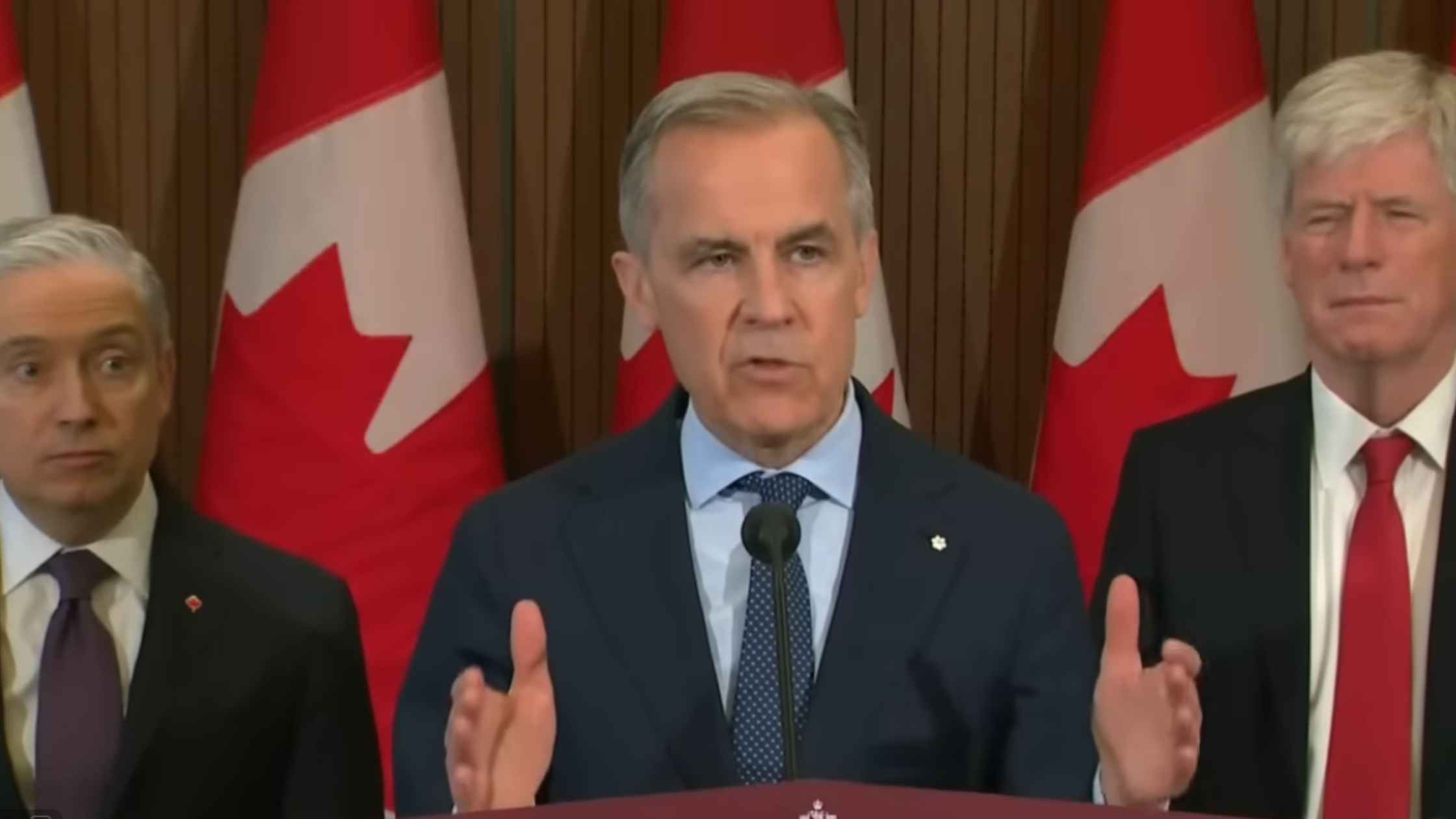


Mayor Keith Wilson (00:03):
Well, thank you all for coming. I'm not sure there's been a joint statement quite like this in Oregon, but I'm very glad and I'm hopeful for the shared purpose. Fellow mayors, our joint …
Speaker 1 (00:23):
Portland Mayor Keith Wilson signed a letter vowing to pursue legal action. Let's listen in.
Mayor Keith Wilson (00:28):
It asks for clarity and a return to precedent in the role of our armed forces and our federal law enforcement. It speaks to the progress we've made in public safety and prosperity, and our commitment to our immigrant communities. The Oregon National Guard who will come to our cities are our friends and neighbors. They are here when wildfires rage or floods destroy or overseas conflicts require their protection. That's their job, not this. When these volunteers answered the call to service, they made a solemn promise to their communities and to the nation that the federal administration is now dishonoring. The justification for their presence in our cities is either a misunderstanding or a lie. I hope it is a misunderstanding that we can soon resolve. Oregon is always welcomed anyone who comes with blueprints or textbooks, stethoscopes, or to lend a helping hand. Our community is uncertain and scared of those who come instead with rifles, with boots, with body armor. Even when those who carry them come from our own communities, in my moments of doubt, I worry that Portland will go it alone as we have in the past. When I look around the room today, I know we are more together than we have ever been. We're together because the mayors in this room do not measure ourselves by who is the most loud or inflammatory. We measure ourselves by our ability to make friends and to build bridges. We measure ourselves by the love of our communities and our commitment to service. I'm so deeply grateful to join my fellow mayors today and humbled by their commitments to finding common purpose in these uncertain times. By joining together, we can accomplish far more and protect our communities far better than we ever could alone. Thank you. I'd like to introduce Beaverton Mayor Lacey Beaty.
Mayor Lacey Beaty (02:56):
Thanks man.
Mayor Keith Wilson (02:57):
Yeah.
Mayor Lacey Beaty (03:00):
All right. Good afternoon. I am Lacey Beaty, the very lucky mayor of Beaverton and one of Portland's closest neighbors. I'm here today not only as a friend to Portland, but as a proud U.S. Army combat veteran and a 20-year spouse to an active duty national guard officer. Over the weekend, our elected officials, federal, state, and local, came out jointly to counter the false narrative being betrayed by officials in Washington. On Sunday, it was good to hear that the president reflected on his call with Governor Kotek questioning, "Am I watching things on television that are different from what's happening on the ground? My people tell me differently." We stand here today to tell the President he's listening to the wrong people. The President cannot watch footage from over a half a decade ago and believe this is the Portland that we're standing in today. Over the weekend, our leaders have countered that narrative, sharing true footage of what it's like to live here.
(03:58)
Here in Oregon, police work in partnerships with neighborhoods, not just protecting homes and businesses, but also the right to peaceful expression. In the years since the footage was filmed, we have worked hard to build trust in our communities. Bringing the military doesn't just drive a wedge through our society, but is a misuse of that purpose. As a U.S. Army veteran who has served in combat, not only do I know what a war zone looks like. I can assure you Portland is not that. But I also know firsthand the role of the military and it is not to police our neighborhoods. National Guard units are brave and dedicated, but their training and missions are designed for emergencies and disasters. Not for community policing. Public safety requires us to listen and hear our communities, to build bridges and not erect them. We need Washington to partner and invest in things that will continue to strengthen our society.
(04:57)
Our mission today is simple. Listen to the truth from a combat veteran, one who knows how our military should be deployed, there is no lawful case for deploying military here in Portland. This is a place of safety, not built through fear and force, but through trust and partnership and proven solutions. Mayors, we're the boots on the ground, the level of government closest to our people, listen to the people who knows our community the best, and they're those of us standing here today. Thank you. It is my pleasure to now introduce the mayor of Hillsboro, Beach Pace.
Mayor Beach Pace (05:37):
Hello, everyone. My name is Beach Pace. I get to be the mayor of Hillsboro. I'm also a West Point graduate and also a veteran. I can only concur with what Mayor Wilson and Mayor Beaty said. I'm here to stand in solidarity with Portland. I'd now like to introduce Mayor Melinda Wenzel of the city of Forest Grove.
Mayor Melinda Wenzel (05:59):
Good afternoon. My name's Melinda Wenzel. I'm the mayor of Forest Grove, and also a public school teacher for the last 24 years. Today, we come together with a clear and unified message. We reject the unprecedented militarization of law and immigration enforcement. This is not who we are or what our community needs. As mayors and local leaders, we see the daily impact of federal operations that do not reflect the values or standards we hold. We call for immediate accountability. Federal law enforcement must meet or exceed the operational standards we demand of our local officers. That includes clear identification, the mandatory use of body worn cameras, and transparent, justifiable use of force protocols. This is not just about policy. It is about people. The current trajectory of militarized enforcement disproportionately harms historically marginalized communities. We owe them better. We owe our cities better, and we will continue to push for a future where safety is not built on force, but on fairness, dignity, and trust. Thank you. I would now like to introduce Gladstone mayor, Mayor Milch.
Mayor Michael Milch (07:29):
Good afternoon. I'm Michael Milch, the mayor of Gladstone. I took an oath to defend the Constitution of the United States, so I affirm the foundational American belief that domestic civilian affairs should be managed by domestic civilian authorities whenever possible. There is a tradition in American law and political thought with roots that can be traced back to medieval England that opposes any kind of military interference in civilian affairs outside of emergencies. This tradition recognizes the fundamental danger of turning an army inward to face its own country's citizens. Courts have noted that military enforcement of civil law relieves the protection of vital Fourth and Fifth Amendment rights in the hands of persons who are not trained to uphold those rights. It may also chill the exercise of fundamental rights, such as the rights to speak freely and to vote and create an atmosphere of fear and hostility.
(08:35)
The Greater Portland area that we serve is a welcoming place of opportunity, hope, and understanding, a community that cares about one another, and it will stand by one another even in the most trying times. We want everyone in our communities, no matter their immigration status, to be treated with the dignity, humanity,
Speaker 2 (09:00):
… and respect that they deserve. Thank you. I'd like to introduce my good friend, Mayor Joe Buck of Lake Oswego.
Speaker 3 (09:10):
Thank you.
Mayor Joe Buck (09:13):
Good afternoon, everyone. My name is Joe Buck, I'm the Mayor of Lake Oswego. I served in the U.S. Coast Guard during 9/11 in an urban environment, and I saw firsthand the impact, a more militarized presence had on our neighbors there. During this painful and dark time in our nation's history, we were on one hand united by an immense tragedy, while on the other being taught to fear those around us. I also witnessed just how absurd it was for people untrained in policing to be performing these duties. Guns were accidentally discharged and retired service members coming to the base to buy cigarettes were having guns drawn on them when they couldn't produce ID. I maintain immense respect for the men and women who serve in the military and National Guard and like I witnessed myself being used as props to feign safety is actually not safe for anyone.
(10:09)
The mayors and other leaders coming here today together is nothing new. Every week we're working together for the health and safety of our region, collaborating across jurisdictions and political parties to ensure a just and prosperous future for every resident. We know the strength of our communities lies in resilient neighbors looking out for one another. While the federal government may command troops, the Portland region stands united to command its own destiny. And we do it bound by an honor to the law and the basic freedoms that give each one of us a shared dignity in justice. The democratic principles we all live by are worth defending and we will do it united and our own local self-determination. Thank you. And now my pleasure to introduce my friend, the Mayor of Milwaukee, Lisa Beatty.
Mayor Lisa Beatty (11:05):
As said, I am Lisa Beatty, Mayor of the City of Milwaukee, a neighbor immediately to the south of Portland. I really want to thank Mayor Wilson for bringing all the mayors together for this message. I take great comfort in the fact that we've pulled together as a region and joined from east, west, north and south across the Portland area. I'm not as eloquent as some of my fellow mayors, so I am going to venture a little bit off and tell a personal story. And I hope I can tell this without breaking down. My father, I'm not a veteran, unlike many of the mayors up here who have served our country, I'm not a veteran, but my father died this past week and he had served 42 years in the National Guard and the Army Reserves. He retired as a colonel from the Army Reserves.
(12:03)
I didn't know a lot about what that meant. I knew he went away for a couple of weeks every year he called it drill, and I thought it was this physical labor and maybe it was at some point, but he just referred to it as drill. He did some assignments to the Pentagon. He did some of these big military exercises in Europe and in Southern California. It was only when I was in high school. I actually with a sibling accompanied him on one of his summer trips, his two-week summer stints and I, as the oldest, had to entertain my little sister while he was busy during the day. And I finally asked him, I said, "What are you doing over there on the base anyway?" He wasn't carrying around anything that was a weapon or tactical gear. He was carrying around binders. And he said, " Oh, this year I'm teaching riot control." And that was a shock to me. I was like, "What does my dad know about riot control?" And it was a learning moment for me to find out that there was a whole side of my father that I didn't know.
(13:17)
So sometimes, unfortunately, there's a need in America for armed forces equipped to perform riot control. Luckily, we have not had that need in several decades. We certainly do not have that need today in Washington, D.C. in Chicago or in Portland. I know my father would say that if he were with us today, he understood the importance of keeping trust and good relations between the military and civilians in our country. He understood that calling out the military for frivolous reasons threatens that trust. Federal law enforcement actions are already frightening people of color in our communities, both foreign and U.S. born. This will only further deteriorate trust in the federal government. Calling out military forces also likely serves as a deterrent to younger adults for serving in the National Guard and the Reserves. It is ridiculous to take young adults away from their families for a fabricated reason. And will we have them when we truly need them? Please let the National Guard members stay home and continue their work and family lives. They are not needed here. And I will introduce my friend, Mayor of Sherwood, Tim Rosener.
Mayor Tim Rosener (14:33):
Thank you, Mayor Beatty. And thank you, Mayor Wilson for bringing us all together. And just thank you to all my fellow mayors that are up here today to join in this joint statement. So I'm the Mayor of Sherwood, and I'm also a U.S. Air Force veteran, and I was a member of the Reserves for many years. I'd like to begin by just saying our city is not a war zone. Portland is a vibrant community with strong neighborhoods and thriving businesses and engaged citizens. Yes, we have protests, but they're overwhelmingly peaceful. They reflect on the democratic values this nation was built on. But when elephants fight, the grass loses. If Washington turns Portland into a stage for political battles. It's our families, our businesses and communities that pay the price. Our local law enforcement officers are doing their very best jobs, enforcing laws as appropriate. We do not need federal troops patrolling our streets to do that for us. As we navigate this chilling moment or challenging moment, I should say. We must do this civilly.
(15:42)
This means talking to each other, listening to each other, and working through disagreements without violence. And as a final note, I want to remind everyone, the men and women in uniform sent here are our neighbors, our co-workers, and our friends. Not to mention some of us for family, they're citizen soldiers following orders you can respect and support them while also opposing the actions of the Trump administration. Those two things are not mutually exclusive. Portland is strong, united and fully capable of managing our own community with respect, dignity, and peace. And I would like to introduce the Mayor of Tualatin, Frank Bubenik.
Mayor Frank Bubenik (16:25):
Good afternoon, I'm Frank Bubenik, the Mayor of Tualatin. I'm also an army veteran, having served in the Military Police Corps as an officer in both active and reserve functions. We gather today to affirm a simple truth. There is no need for federal military intervention in our peaceful region. The joint statement signed by the region's Mayor sends a clear message. The Portland metro area is safe, thriving, and fully capable of governing itself. Let me be clear. Our communities are peaceful. We are not in crisis. We are not under siege. We're a vibrant, economically robust region contributing over $200 billion annually to our nation's prosperity.
(17:10)
Our streets are safe, our neighborhoods are strong, and our local law enforcement maintains the highest standards of professionalism and accountability. The federal government's pushed for militarized enforcement has no place here because it is simply not needed. We have effective community policing, violence prevention programs, and evidence-driven crime reduction strategies. Our officers wear body cameras, follow strict protocols and have built-to-trust relationships that make our communities truly safe. Our immigrant neighbors who represent 15% of our workforce and contribute $12.4 billion to our economy are not threats requiring a military response. They are nurses caring for our sick,
Mayor Frank Bubenik (18:00):
… entrepreneurs creating jobs, STEM workers driving innovation, and families strengthening our community. Federal militarization does not enhance safety in peaceful areas. It creates problems where none exists. It inflames tensions, undermines local authority, and threatens the constitutional rights of law-abiding citizens to assemble, speak freely, and express their views. We don't need federal agents patrolling our peaceful streets. What we need is respect for our local governments, recognition of our community's peaceful nature, and protection of our constitutional rights that make America great. The Portland Metro area stands united. We are peaceful, we are strong, and we'll protect our community from unnecessary federal overreach. With that, I'd like to accuse my friend of the adjacent city of West Linn, Mayor Rory.
Speaker 4 (19:01):
Thank you, everybody. I'm Rory Bialostosky, the Mayor of West Linn. This is the first major press conference I've been to. And the fact that we are all here shows the significance in the extraordinary nature of this moment. And I want to recognize Mayor Wilson's leadership in bringing us all together. And really, he's an outsider coming into City Hall nine months ago. And he's led with extraordinary humility to get the city through this, and keep people calm, and bring us as mayors together. Portland is the lifeblood of our collective region, our economy. And the city under Mayor Wilson's leadership has turned the corner in its recovery after the pandemic. And the last thing that Portland needs right now are federal troops on the ground, creating the possibility of confrontation.
(19:49)
This militarization further divides our communities. It puts our own community members, who are National Guard members, in the situation where they're confronting protesters from their own communities. It's a bad situation. And Mayor Wilson's leading on ending unsheltered homelessness, and addiction, and cleaning up our streets. And the militarization that's taking place simply distracts from that important effort. I'd much rather be here talking about that and the success that the city's had in those fronts. And as a region and country, we need to tone down the rhetoric. Using language like full force is authorized, is not helpful, stirs people up and scares people. And so, I stand with Mayor Wilson and all my colleagues here against the unnecessary militarization of our region. Thank you, everybody. Oh, excuse me, I got to introduce the next speaker, who's my good friend from my neighboring city, Mayor Shawn O'Neill from the City of Wilsonville.
Speaker 5 (20:50):
Thank you. I want to thank Mayor Wilson for the opportunity to speak today, your thoughtful remarks and those remarks of my fellow mayors. As mayor of Wilsonville, I believe real public safety requires state, and local leadership, trust, and a firm commitment of upholding constitutional rights, especially the First, Fourth, Fifth, 10th, and 14th Amendments. Federal militarization erodes those principles and endangers all of us, most especially historically marginalized communities. That's why I'm deeply concerned by President Trump's decision to deploy Oregon National Guard troops into communities without the consent of state and local leaders. The Oregon National Guard has a long and proud history of service to our state. Time and again, they've stepped up when Oregon needed the most, during natural disasters, including wildfires, floods, and various emergencies. They protected lives, rebuilt communities, and stood with us in moments of crisis.
(22:11)
Oregonians know the Guard as neighbors who serve with courage, humility, and care. Deploying them into communities for political purposes, without the partnership of state and local leaders, undermines the trust and the history of service that the Guard has built over generations. This kind of federal militarization threatens to divide communities, rather than keep them safe. I want to be clear, my criticism is directed at President Trump's decision, not at the men and women of the Oregon National Guard. These are Oregonians, our coworkers, our neighbors, our family members. They serve with honor, and they deserve our respect and gratitude, not blame for political decisions made far from the communities they serve and protect.
(23:14)
In Wilsonville, we talk about the Wilsonville way, building trust, working together, and ensuring everyone belongs. That's not just a slogan. It's a way of governing that depends on collaboration, accountability, and a respect for democratic institutions and values. It also depends on the checks and balances of our democratic system, the safeguards that prevent any one branch or level of government from overreaching its authority. When decisions come from the ground up, we build strong communities. Excuse me. When they're imposed from the top down, especially by threat of force, we risk weakening the very fabric of our democracy. The real issue here is not just public safety. It is about how power is exercised in a democracy.
(24:20)
Our system depends on respecting state and local authority, constitutional rights, and the voices of the people, no matter who sits in the White House or what party they belong to. We must reject any slide towards authoritarianism, whether it comes from the left or the right. Public safety is strongest when communities work together, not when they're treated like occupied territory. Excuse me. I joined my fellow mayors across this region in urging the Trump administration to reconsider this action. Our communities need solutions that build trust, protect rights, and keep people safe, not decisions that undermine local leadership, democratic principles, and the proud legacy of service the Oregon National Guard represents. I now want to introduce Mayor of the City of Wood Village, Jairo Rios-Campos.
Speaker 6 (25:28):
Thank you. Good afternoon, everybody. My name is Jairo Rios-Campos, and I'm the Mayor of Wood Village. Jairo for non-Spanish speakers. And as you can tell, there's a common theme up here, and I stand with my fellow mayors. I would like to just leave you with a quote that Dr. Martin Luther King said. "Remember, reminding us injustice anywhere is a threat to justice everywhere." So, please let us stand together. Thank you. And I'm introducing Kaarin Knudson, the City of Eugene.
Kaarin Knudson (26:13):
Good afternoon, everyone. I want to begin by thanking Mayor Wilson, thanking our servicemen and women, thanking the mayors who are also veterans standing behind me, and all of the mayors for their collaboration, and connection to the needs of community. My name is Kaarin Knudson and I have the privilege of being the mayor of the City of Eugene. And I'm here with you today because while this conversation is focused on the City of Portland and the needs of this community, it is also much larger than the City of Portland. It's reaches to every city within our state and every city within our country. And one thing that we know for sure is that Oregonians are clear that they do not want or need federal troops deployed in our cities or on our streets, and that's in Portland or anywhere else. I came from Eugene today
Kaarin Knudson (27:00):
… to add my voice. There is no emergency, no insurrection and no disaster taking place in Portland. We are instead celebrating what feels like the first real day of autumn. Mayors know our city and our cities best. We are on the ground every day. And the federal resources that could help us to meet the full range of Americans' needs have been receding and not advancing. It is these resources and these needs of the American people that I would wish our attention to be on. Federal funding for healthcare, affordable housing and infrastructure are the actions that would most help our cities and our entire country to rise to the occasion, the true occasion of the 21st century. This intervention and the federalization of the National Guard in Portland will not help us with any of those important goals.
(27:51)
Our cities are where about 80% of Americans live. Our cities need partners that are reliable and accountable, not threatening or performative. I want to reiterate that our state and its cities are beautiful, safe places to call home, and that we are serious about the community-based, transparent work being done at the local level, with local law enforcement professionals supporting public safety every day.
(28:17)
You probably know downtown Eugene as a pretty charming place anchored by the Saturday market and the Lane County farmers Market and our cultural and performing arts institutions. It is also a place whereby every metric, every statistic related to public safety and quality of life issues are improving by double digits. And that is what measurable and meaningful looks like on the ground in communities. It is the work that we need to focus on, and it is one of the things that makes being an elected official and a public servant such a remarkable opportunity.
(28:50)
This is the work that we are doing in Eugene real-time, working on how we can help people to meet the needs that they have in their daily lives, to increase the quality of life in our communities, and that is where our community's attention and focus is needed.
(29:03)
I know every mayor here is dedicated to serving and supporting our communities in similarly effective ways every single day, and we will stick together in this work and all of the work that we have before us. And so while I always begin by saying it as a deep privilege to be the mayor of Eugene, it is also my responsibility to be here today and to join and stand with Portland's leaders, Portland Metro mayors, Oregon's leaders, and a statewide coalition of institutions and stakeholders who oppose the deployment of federal troops in Portland and would like the administration to immediately reconsider this decision. Thank you. I think I'm handing it back to Mayor Wilson.
Speaker 7 (29:42):
We'll go ahead and open it up for some media questions. Let us know which outlet you're from and which mayor you're directing your questions to. Anything from press? All right, go ahead.
Speaker 8 (29:56):
All right folks, you've been listening to a coalition of Portland Metro area mayors for the most part, with the exception of the Mayor of Eugene, kind of standing shoulder to shoulder with Portland Mayor Keith Wilson right there just outlining their opposition essentially to having any kind of federal troops in the Rose City.
Speaker 9 (30:16):
Yeah, correct. Some very poignant remarks from some of the mayors. In fact, I want to refer back to Mayor Lacey Beaty with Beaverton. She's former military herself, says she's familiar with what a war zone, with what combat looks like. She says that is not happening in Portland, that is why she is also opposing federal troops coming out this way saying it's not an appropriate use of military. They're not here to police communities. So Mayor Wilson, along with almost a dozen mayors there speaking out against federal troops coming to Portland.
Speaker 8 (30:45):
One thing Mayor Wilson said toward the beginning of his remarks that I thought was pretty profound was we don't measure ourselves by who was loud or inflammatory. Let's go ahead and dip back in.
Mayor Keith Wilson (30:57):
… we need help with those things to continue the good work that we've been doing in our cities.
Speaker 7 (31:03):
Right. Go ahead.
Joe (31:04):
I'm Joe with Point 6 for Mayor Wilson. You said you've heard reports that troops could be here on the ground by Thursday. You haven't have anything confirmed, but do you have a plan should that in fact happen on Thursday?
Mayor Keith Wilson (31:16):
The governor and the Attorney General are working and have put forward a lawsuit to block the deployment, so they're going to work right now, so that is the key topic that we're working on right now. So our job is to just, first of all, ensure it doesn't occur and then we'll address that when it does get closer and make those decisions then.
Speaker 7 (31:39):
All right, last question. Go ahead.
Speaker 10 (31:41):
I got a question for Mayor Wilson. Can you just speak to how you're feeling about kind of flying blind? It seems like nobody, even Chief Day earlier today was talking about how he hasn't been able to communicate with the guard what they're planning to do necessarily. It seems like it's going to be a mystery until they get here.
Mayor Keith Wilson (31:59):
All right. First of all, I want to just thank all the reporters here for just showing up and being part of the media. You are deeply respected. The question is, are we flying blind? This deployment isn't something we've asked for. The federal government is days away from closing. We have a deployment that if it occurred, has no mission. We have soldiers that wouldn't even earn pay.
(32:28)
So as far as flying blind, I would say it's completely the opposite. But all the mayors here are to ensure we're not flying blind as a group of elected officials throughout Oregon, we are together. We are together like I haven't seen before. And that was really the goal of today, is to make sure that the Portland mayor doesn't stand alone, but he stands in community and asking for advice and support from fellow mayors, because we all need one another right now more than ever. If there's any questions for any of the other mayors, I'd like to [inaudible 00:33:04].
Speaker 9 (33:04):
And while the mayors of Oregon have been holding their news conference, Oregon Governor Tina Kotec is also addressing this issue.