


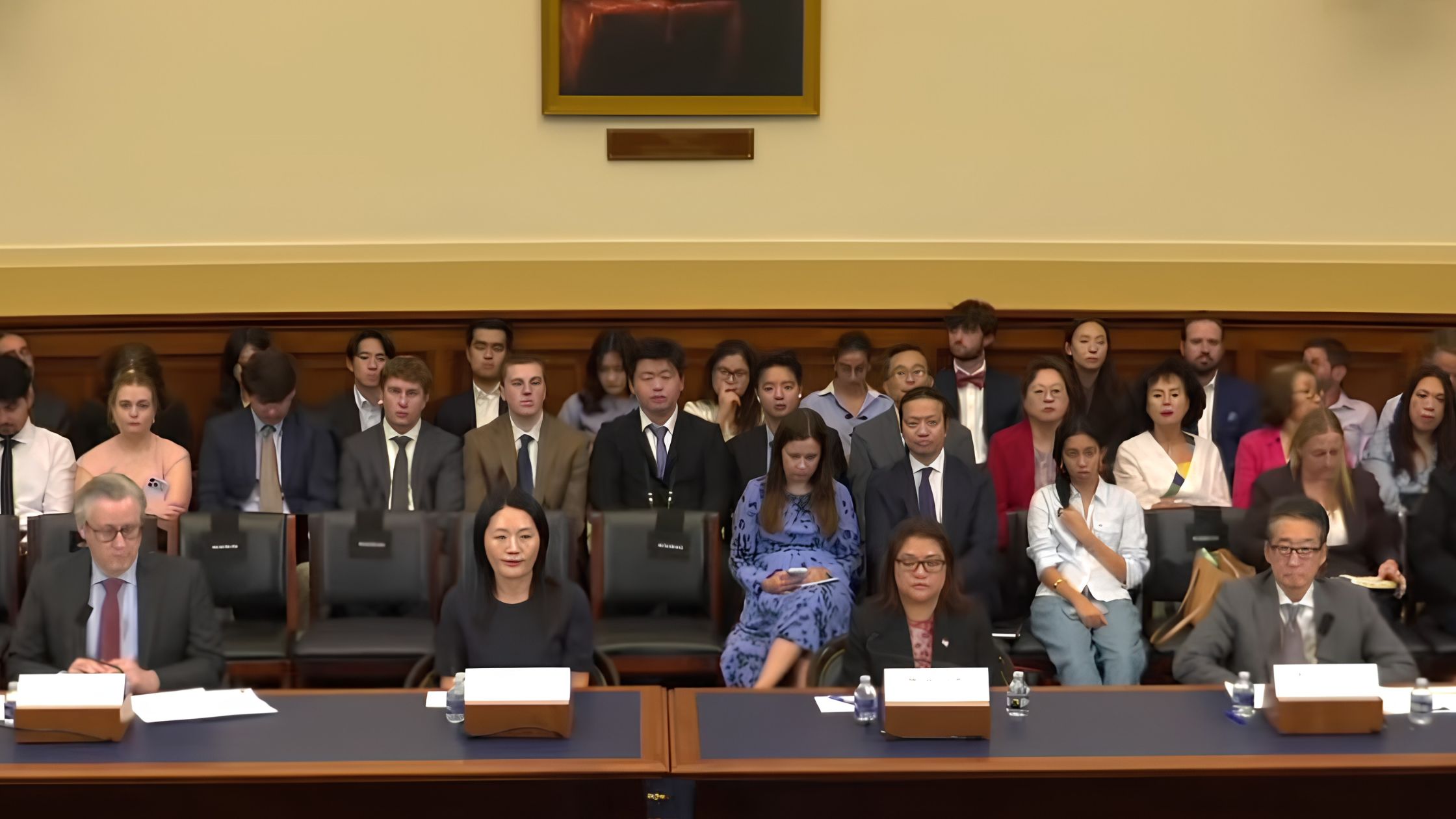
Representative Kim (21:46):
The subcommittee on East Asia and the Pacific will come to order. This hearing will explore how China's coercion is expanding outside of its own borders to directly impact Americans, as well as the continued negative human rights situation in North Korea. So let me now recognize myself for an opening statement.
(22:10)
Good afternoon, and I want to welcome everyone to today's hearing, Lives Not Leveraged: The Long Arm of China and North Korea's Repression. Just last week, the State Department elevated its travel advisory for China, warning Americans of the growing threat of arbitrary detention. This warning reflects the urgency of our work today. Congress has long championed the rights of persecuted minorities inside the People's Republic of China, but now we must confront a broader danger; the Chinese Communist Party's rising threats against the American citizens and residents, both abroad and right here at home. If you travel to China, Beijing may take you hostage as leverage in diplomatic negotiations.
Representative Kim (23:00):
It's leveraged in diplomatic negotiations. And if you are an American belonging to a minority group persecuted by China, you may be subject to the CCP's Transnational Repression. Today, we'll hear from the victims of the brutal regimes in Beijing and Pyongyang to determine how the United States can better protect those in the crosshairs. We are joined today by Ms. Sylvia Zin, the wife of wrongfully detained American researcher, Min Zin, who had been a vocal critic of the Burmese military junta. In June, Mr. Zin was on a regular visit to China for an academic conference, but Beijing wanted to send a message to those whose research inconvenienced them and detained Mr. Zin ahead of the upcoming Trump-Xi Summit. Notably, the last time the leaders of our two countries met, Pastor Ezra Jin of Zion Church in China was freed by the CCP afterwards. So I hope to see Min Zin free soon.
(24:10)
And I thank President Trump for his ongoing efforts to bring wrongfully detained Americans home. We must never allow foreign adversaries to use hostage as leverage. We cannot forget that China's aggression also reaches inside our borders. The so-called ethnic unity and progress law enacted this spring enshrines Beijing's practices of bullying the Uyghurs, the Tibetans, Falun Gong practitioners, and other minority groups on American soil. This is a direct assault on US sovereignty. We look forward to Ms. Zin's testimony. Our second witness, Ms. Deborah Choi, will shed light on the brutality of the North Korean regime. After escaping North Korea in 2004, Ms. Choi arrived to the United States in 2006 as part of the first group of refugees under the North Korean Human Rights Act of 2004. Today, she's living the American dream as a business owner, supporting fellow refugees who have fled the North Korean dictatorship. Her testimony highlights the vital need to reauthorize the North Korean Human Rights Act through my legislation, which extends these protections through 2030.
(25:33)
So thank you Ms. Choi for joining us. Finally, we welcome Mr. Peter Mattis, president of the Jamestown Foundation. Thank you for being with us. And Dr. Victor Cha, President and Korea chair of the Center for Strategic and International Studies, Geopolitics and Foreign Policy Department. Thank you for joining us. We look forward to the expertise you all bring and the policy recommendations you have for us today. Sunlight is the best disinfectant. By exposing those murderous regimes repressing their citizens and targeting our own, we take a vital step toward breaking their reach. So let me now recognize the ranking member from California, Representative Ami Bera, for his opening statement.
Representative Ami Bera (26:27):
Thank you, Chairwoman Kim, and thank you for holding this hearing to examine human rights abuses perpetrated by the People's Republic of China and the North Korean regime. In addition to our witnesses from the academic and policy communities, Mr. Mattis and Dr. Cha, we are honored to have two witnesses who can speak from their own lived experience. Ms. Zin, thank you for being here to share your family's experience and speak on behalf of your husband's wrongful detention. And Ms. Choi, thank you for being willing to share your story of escaping North Korea and rebuilding your life here in the United States.
(27:05)
I care deeply about the human rights situation in the PRC and the Korean Peninsula. I was proud to co-lead the North Korean Human Rights Reauthorization Act of 2025 alongside Chairwoman Kim to reauthorize and update the North Korean Human Rights Act. Ms. Choi, I understand that you are among the early group of North Korean defectors resettled in the United States under this law, which is a powerful testament to the importance of America's commitment to this issue. Chairwoman Kim and I were also proud to advance the Uyghur Policy Act to combat forced labor and human rights abuses against the minority groups in Xinjiang. And earlier this Congress, I also led a bipartisan resolution condemning PRC harassment and intimidation of scholars and diaspora groups in the United States.
(27:58)
For years, PRC authorities and their proxies have targeted human rights advocates, ethnic and religious minorities, journalists, critics of the Chinese Communist Party, both inside China and around the world. We increasingly are seeing these tactics impact US citizens and the wrongful detention of Min Zin and Youlin Chen demonstrates the serious risks Americans can face when their work is deemed sensitive by Beijing. US efforts to assist victims of oppression must be complimented by reaching those who remain inside closed societies. For decades, the US has contributed to programs that operated as an important lifeline for people seeking reliable information about their country and the world around it.
(28:47)
Radio Free Asia has played a vital role in reporting on the abuses that the PRC and the DPRK have tried to conceal. Its Uyghur service was among the early outlets to report on the crackdown on the Muslim minority populations in Xinjiang, which exposed the forced internment of roughly 1.8 million people. This reporting forced international attention to these abuses and former secretary Mike Pompeo formally declared the PRC's actions against the Uyghurs constituted a genocide.
(29:21)
Human rights are not separate from our national security interests. They're central to our values and our ability to counter authoritarian coercion, but confronting these abuses also requires exposing them and free flows of vital information are vital to that effort. That is why I'm concerned about the administration's decision to deprioritize human rights and reduce support of programs that advance these interests. While the administration downgrades human rights in our bilateral engagements with Beijing and Pyongyang, it also enacted cuts to programs of critical value, including Radio Free Asia.
(30:01)
These changes are further compounded by signals that issues of longstanding importance could become bargaining chips in pursuit of engagement with autocrats. Most recently, the administration cut this year's Ulchi Freedom Shield exercise with our key ally, South Korea, short in an attempt to bring North Korea to the negotiating table. As we approach the upcoming Trump-Xi meeting in Washington next week and at a time when the president has signaled his desire to restart leader level talks with Kim Jong Un, I urge the administration to keep these abuses and the US citizens affected by them at the forefront of its engagement. I look forward to hearing the diverse perspectives of our panel today. Thank you and I yield back.
Representative Kim (30:51):
Thank you. Other members of the committee are reminded that opening statements may be submitted for the record and we're pleased to have a distinguished panel of witnesses before us today on this very important topic. First, Mr. Peter Mattis, the president of the Jamestown Foundation, Ms. Deborah Choi yet again, the North Korean refugee and human rights activist, Ms. Sylvia Zin, the wife of a US citizen wrongfully detained in China, and Dr. Victor Cha, President and Korea chair of the Geopolitics and Foreign Policy Department at the Center for Strategic and International Studies. This committee recognizes the importance of the issues before us and we are very grateful to have you here to speak with us today. Your full statements will be made part of the record and I'll ask each of you to keep your spoken remarks to five minutes in order to allow members to ask questions. So let me now recognize Mr. Mattis for an opening statement.
Mr. Peter Mattis (31:53):
Thank you very much, Chairwoman Kim, Ranking Member Bera for holding this hearing today. As you know, concern with human rights in the PRC has really been the basis of a foundation for a bipartisan consensus on China, a sense that we have to do something. And I saw this in action when I was a staff director at the Congressional Executive Commission on China and we were sanctioned for expressing our concerns and that the members, both on the Senate and the House, Republican, Democrat, led the way with.
(32:24)
We've long held in the United States that all individuals have rights to life, liberty, and the pursuits of happiness. And it's bad enough that the PRC takes away those rights, damages those rights, even those that they have ratified by treaty from their own citizens, but now they're doing it increasingly abroad and in the United States and to Americans. And I would just point out that what we call transnational repression is really just a fancy way of saying a foreign government is committing criminal acts against our people on our soil. As you put it, Congresswoman Kim, it's a fundamental violation of our sovereignty.
(33:02)
It's one thing to be concerned with human rights of 1.3 billion Chinese people that this is a very human concern, but when it concerns our citizens, when it concerns Americans who, by their choice or by the choice of a family member, have become Americans, this is something that is more fundamental and we believe that no citizen belongs to a government, a political party without their choice. What we have in the Hong Kong National Security Law, what we have in the Ethnic Unity and Progress Promotion Law are the natural extension of CCP ambitions and security concepts, that they want to lead a society that is controlled and led by the Chinese Communist Party that should be economically, socially, and culturally unified.
(33:47)
It's not enough, for example, to control Hong Kong politically. It's not enough to control Macau or the Xinjiang or autonomous region or East Turkistan politically or even Inner Mongolia or Sichuan or Guangdong because all of these things that we see outside, on the periphery, have been done to the Chinese people and we can't see these as being distinct actions or distinct from each other. They also have a concept of security that is defined by the absence of threats and they can never prove a negative so they keep pushing out and out and out. It also means that any ideas that they put forward that might challenge the party's ability to rule or complicate the party's ability to rule are those threats.
(34:27)
So this is really about preemption in the world of ideas. That's why there's no community too small, whether it's a large one in California or New York or even a few individuals, say, in Nebraska or some less populated state that they don't feel like they have a right to and a need to pay attention to. It's also worth noting that the Ethnic Unity and Progress Promotion Law creates obligations, like so many of the other national security laws, of citizens, of PRC companies that they are supposed to protect and promote and also punish those who would violate that. And by the way, that would include most of us by having this conversation that we're violating these laws.
(35:09)
And it's important to recognize that what someone like Min Zin has done was legal, open, protected activity outside of the PRC that has nothing to do with breaking any PRC law. The Hong Kongers that are in some cases US citizens that have bounties on their heads are people whose activities that were legal at the time were retrospectively made illegal. So there is not a limit, necessarily, to what the party is willing to do. We also have no proportional or symmetric response to this. We are not going to take people hostage just because of their government. And that means that we should be thinking about disproportionate. I prefer that word to asymmetric because asymmetric usually implies weak, whereas disproportionate means we are taking actions that are important.
(35:55)
Congress, I think, needs to consider reversing the reporting requirements. We've given the administration many different sanctions authorities, but because they're required to report to Congress, many officials don't want to do it. In fact, as long as these situations pertain, the reporting requirements really should say, "We've given you this authority. You haven't used it 60 days of the situation. You need to come report why this authority has not been used and to not let an administration hide behind classification." There are a few specific measures about designating the PRC a state sponsor of wrongful detention, raising the travel advisory and adding to the wrongful detention measure, specific warnings about academic exchanges. But instead of targeting, say, the Yunnan State Security Department, what about Yunnan state owned enterprises to make sure that there are consequences that are felt not by people who will never travel to the United States or use a US dollar.
(36:50)
And finally, we need to think of things that can ratchet the effect that every time they do something, we push and we pressure, such as publishing, say, every time someone like Min Zin is wrongfully detained, that we publish the financial details of a central committee member, of their family's wealth, of their foreign passports, and all of the signs of the lack of faith that the CCP's leaders have in their own party. And similarly, we have presidential drawdown authorities for Taiwan. We have all of these measures that we could do to ratchet that pressure. Thank you very much.
Representative Kim (37:19):
Thank you very much. I now recognize Ms. Choi for an opening statement.
Ms. Deborah Choi (37:33):
Subcommittee, thank you so much for giving me the opportunity to testify today. I have submitted longer written statements for the record, but so today I'll briefly share several experiences that explain why North Korean human rights remain deeply personal to me. My name is Deborah Choi and I was born and raised in North Korea. I escaped in 2004 and came to the United States in May 2006 as one of the first groups of North Korean refugees admitted under the North Korean Human Rights Act.
(38:13)
Today, I'm a United States citizen and the mother of two children, but 20 years after arriving in America, North Korea has never left my heart. One of my earliest memories is from when I was about five years old, I accidentally scribbled on a picture of Kim Il Sung in a book and tore part of the page. When my father saw it, he became terrified and angry and he beat me and told me that, because of this one small thing you did, our entire family could be finished.
(38:54)
At the time, I couldn't understand why he did that and I felt so much resentment toward him. And even to this day, I can never forget the terrifying look in my father's eyes as he beat me. That is the kind of fear North Koreans grow up with. Years later, I was forced, with hundreds of other people, including children, to watch a public execution. I saw people were tied to wooden post when I got there and someone next to me told me that the families of those get executed were placed in front of the crowd so they could see their loved ones get killed. Then when the gunshot came, I covered my eyes, but I still remember looking through my fingers and I saw the blood coming from their bodies.
(39:54)
I remember thinking I will never do anything the government tells me not to do. I do not want to die like that, in front of our families. That was my decision not to make any movements. That is how fear creates obedience and that's how the regime prevent its people to think differently. In 2004, something happened that changed my life. I secretly watched a South Korean drama with my friends. We locked the door outside and covered the windows with the thick blankets when we were watching it. I could not believe what I saw.
(40:33)
Young people were the same age like us could speak, travel, love, dress freely as they wanted and live lives completely different from us. At first, I thought it was a fake and propaganda to deceive us, but eventually I realized that it was a real life they live in and I began to think it's a world like that would exist. I want to experience it once, at least once, before I die. That made defect the country not after long, like three months later, I crossed the Tumen River in China. And in China, I became a victim of, as soon as I crossed the border, I became a victim of human trafficking.
(41:23)
I was in my early 20s and I was caught by traffickers and taken to Beijing and sold to a man I had never met and whose language I could not speak. I was sexually assaulted by him and lived under his control for approximately a year and a half, and it was the most painful and difficult times of my life. Another North Korean woman crossed the river with me. She had a child and was extremely thin from hunger. The traffickers threatened to send her back to North Korea because they think she wasn't very valuable. She cried and begged them, "Sell me anywhere. Just do not send me back to North Korea." That night, the traffickers take turns to sexually assaulted her. She couldn't say a word and got abused all night. She was terrified that if she resisted, they might send her back to North Korea.
(42:25)
They didn't do that to me because I was virgin and they believed that they could sell me for a much higher price because of that. So the next day they sold her to a rural farm and I still cannot forget the sadness on her face when she was out of the car and staring at me for the last time. I never seen her again after. This is why forced repatriation from China is not simply an immigration issue. If you are caught and sent back to North Korea, what waits you is suffering worse than that? And traffickers know that fear can be used against them.
(43:10)
After many sufferings in China in May 2006, by what I believe was God's miracle and grace, I entered the United States as a North Korean refugee under the North Korean Human Rights Act. Adjusting to life in United States wasn't easy either, but after what I had endured and survived in North Korean China, it felt like nothing. So today I respectfully ask Congress to do three things. Please continue making human rights central to North Korea policy. Please continue to opposing the forced repatriation of North Korean escapees from China, and please continue supporting outside information reaching the North Korean people. I hope one day the people of North Korea will have the same freedom like me. Thank you for listening to my story. Thank you.
Representative Kim (44:10):
Thank you, Ms. Choi. Let me now recognize Ms. Zin for an opening statement.
Ms. Sylvia Zin (44:18):
Chairwoman Kim, Ranking Member Bera, thank you for inviting me to testify before the subcommittee regarding the wrongful detention in China of my husband Min Zin, an American Academic. I'm grateful for the opportunity to tell his story, but truth be told, I wish I did not need to be here today. I'm a stay at home mother to our 14-year-old daughter, Sue. The last time I had to do any kind of public speaking was in high school, but I will try my best to be the voice for my husband today. I want to start by thanking Secretary of State Marco Rubio, who, on August 20th, officially designated Min Zin as wrongfully detained, a step that was reassured me and my daughter that our government is fighting by my side for his release. We are incredibly grateful to both him and President Trump for all that they've done to prioritize my husband's case.
(45:12)
My family's nightmare began on June 3rd, when my husband flew into Kunming, China from our current home in Thailand. Min Zin traveled at an invitation of a university to participate in an academic workshop. It was not his first time visiting China. He attended an academic conference in Shanghai last year without incident, so I had no reason to be anxious about this trip. We could not have imagined what would come next. When Min Zin landed in Kunming, he texted me and his colleagues, but when we didn't hear from him for the next six hours after his arrival, we became alarmed and began trying to reach him, his host from the university, the hotel and immigration, but we got nothing. Terrified, we sprang into action. Within 24 hours of him missing-
Ms. Sylvia Zin (46:00):
... we sprang into action. Within 24 hours of him missing, we alerted the US officials in China and D.C. The day after his disappearance, we had an even more cause for concern. I received a call from a Chinese number, which I immediately answered. The person on the line told me Min Zin was in custody and the Ministry of State Security in Yunnan was conducting an investigation. When I tried to clarify what this meant, the line went dead. Panicked, I immediately informed the US officials of this call. The following day, we learned that my husband had been detained under investigation for endangering national security. I was in a state of absolute shock. My husband of 15 years is a UC Berkeley scholar and an executive director of the Institute for Strategy and Policy, ISP, Myanmar, a think tank that conducts open source research on Burma. Min Zin's lifelong work is entirely dedicated to independent academic freedom. My husband's sudden detention has upended our lives. When my daughter learned of her father's detention, she asked me what would happen. As heartbreaking as it was, I could not give her an exact answer. I could only reassure her that I will do everything in my power to protect her and to bring him home. Every month we anxiously await his counselor visits because they reassure us that he's alive. Even though they often raise more questions than answers, we've learned that he was initially being interrogated every day for four to six hours and is held in a small cell where the light stays on for 24/7. Over a hundred days into his detention, my husband has not been granted access to his Chinese lawyers and I have no idea where he is being held. I'm trying to be strong for our daughter, but I'm constantly wondering if he's okay and how to get him back home to us.
(48:08)
I'm deeply hopeful that President Trump will raise my husband's case with President Xi Jinping during the summit next week. Knowing the president's historic record on bringing wrongfully detained Americans home has reassured me that he will also be able to secure the swift release of Min Zin and other wrongfully detained American citizens, such as Dr. Youlin Chen. Thank you again for inviting me here today and for all that you've done to advocate for my husband's immediate and unconditional release. I humbly ask that you continue to use your voice for my husband's case. Thank you.
Representative Kim (48:46):
Thank you, Mrs. Zin. I now recognize Dr. Victor Cha for your opening statement.
Dr. Victor Cha (48:52):
Well, thank you, Chairperson Kim, Ranking Member Bera. Thank you for those two very powerful testimonies as well. I'm going to speak on the topic of China and North Korea human rights abuses and transnational repression. I'll focus on three areas, in particular repatriation of refugees across the border, companies using forced labor embedded in special economic zones, and then how China and North Korea are both helping Russia and the war in Ukraine using forced labor.
(49:22)
China's been actively engaged in the sweeping up enforceable repatriation of North Koreans who enter its territory pursuant to a 1986 bilateral agreement. Since the late 1990s, Beijing has forcibly returned tens of thousands of refugees to North Korea. As a signatory to the 1951 UN Refugee Convention and the 1967 Protocol, China is obligated to recognize a political refugee who flees their country because of fear of political persecution, but China's consistently refused to recognize North Koreans as refugees and instead classifies them as illegal economic migrants that require deportation.
(50:05)
In 2023, the UN secretary general referred this issue to the UN Office of the High Commissioner for Human Rights instead of the High Commissioner for Refugees because of China's sizable funding for refugee programs around the world, which has made the UNHCR hesitant to pressure Beijing. China likes to defend its policy by comparing it with US deportation policy with regard to Mexico, but this is absurd because Mexico doesn't torture or execute citizens whom the United States sends back.
(50:41)
Beyond China's forced repatriation of refugees, the collusion on transnational repression is embedded in their supply chains. An ongoing CSIS project examines the hidden links between North Korean forced labor and international supply chains. This points to a systematic division of labor between the North Korean state entities and Chinese entities operating in North Korean special economic zones. Factories are formally registered under a North Korean trading company, but the actual operations function as a joint venture with the PRC. The Chinese side exercises control over all of the funding, raw materials, production, equipment, and final export destination while the North Korean state is responsible for providing the labor. And much of this labor is coerced labor from workers who are held in detention facilities and political prison camps. Their workday starts at 5:30 AM. It goes until dark. They receive no cash wages, and food is weaponized. These products enter global supply chains under Chinese brands or with the Made in China label.
(51:53)
Allow me now to talk about the link between the Ukraine war and North Korean human rights abuses. The most significant development for North Korea coming out of the pandemic lockdown in 2023 has been the growing military cooperation with Russia. It is estimated that North Korea may have provided over 15 million rounds of ammunition, deployed 20,000 troops with reports of 30 to 50,000 more expected to be deployed in the near future. CSIS estimates that North Korea may have profited roughly $14 billion so far from this burgeoning relationship with Russia.
(52:28)
The Yelabuga Special Economic Zone drone factory uses Iranian designs, Chinese production equipment, and North Korean labor. It is literally the CRINK in action. The work is trafficked to Yelabuga belonged to three broad groups, Russian domestic youth, foreign workers, and North Korean laborers. The domestic youth and foreign workers are brought there under the pretense of being trained for the hospitality industry, hotels, and the North Korean workers are there as basically a state trafficking enterprise project up to 12,000. The money that North Korea receives from this forced labor enables its nuclear and ballistic missile program. Technicians sent to Yelabuga will return to North Korea with invaluable lessons from working at a mass production drone assembly line.
(53:15)
Finally, let me close with two points. The first that has been mentioned already, Congress needs to reauthorize the North Korean Human Rights Act, which has been languishing since September 2022. I know Chairperson Kim, Ranking Member Bera, Senators Kaine and Sullivan have been working very hard on this, and we appreciate all of your work there. Second, thank you for providing a platform for calling for the release of Min Zin, as my colleague on this panel has already talked about. No American citizen should be unlawfully detained in China while attending an academic conference. And I agree that this issue should be on the agenda of the summit meeting between President Trump and Xi next week. Thank you very much.
Representative Kim (53:56):
Thank you to all of our witnesses for your powerful testimony and especially Ms. Choi and Mrs. Zin for sharing your personal heartfelt testimonies. Thank you.
(54:07)
We're going to go into a questioning session, so let me now first recognize myself. We cannot tolerate the behavior of a hostile foreign power that treats Americans like pawns to be traded. So we must look for ways to deter that behavior, but we're in a very difficult position. The CCP has no qualms about taking hostages. Meanwhile, we're not going to take the hostages for good reason. Mr. Mattis, the State Department recently added new language in the China Travel Advisory, as I mentioned in my opening statement, to reflect that threat, but the level of the travel advisory is still a two, which means exercise increased caution. Should the State Department raise the travel advisory to three, which means reconsider travel?
Mr. Peter Mattis (55:10):
I think the answer probably is yes, but more importantly, I think it's useful for those travel advisories to explicitly give examples, like what happened to Min Zin, what has happened to Dr. Chen, what has happened to many others, of what are those risks? Why are those risks? Because one of the reasons we discovered the human rights abuses against Uyghurs in Xinjiang and the forced labor problem was because due diligence investigators were being arrested and detained. So if anyone is involved in research, in information of any kind that might be detrimental to the Chinese state, it's worth explaining all of the different ways in which that kind of information has actually been considered a threat to state security going back decades.
(55:57)
We may remember an Australian stern who was detained almost 20 years ago simply because he was trading effectively. These are what we consider crimes, what we consider issues, are not what the CCP considers problems. I think we would actually do better by detailing all of those instances that we know of so that people can have a clear sense of just how vast that scope of problems are.
Representative Kim (56:22):
Very good recommendation there. I hope our State Department is watching our hearing and hearing that advice. I was just having dinner with some of our friends in my district in California, and they were telling me, "Should we travel to China?" Because they have a trip coming up, and I had given them exactly what you just said, specifying what's happening, and hopefully they will heed my advice. I did tell them, however, if there are people watching and still traveling to China or North Korea, we ask them to let the State Department know because we have the American Overseas Protection Program. We just need to know. You just can't do it on your own.
(57:07)
So with that, Ms. Choi, you came to United States in 2006, as you said, because the North Korea Human Rights Act of 2004 provided the opportunity for you to do so. So we have a duty in Congress to ensure that important legislation continues and the key programs that are included are remaining in effect for years to come.
(57:36)
Mr. Cha, you just talked about the importance of doing so. So can you tell us about the impact of the North Korea Human Rights Act of 2004 that has had on North Koreans and on countering regime propaganda?
Dr. Victor Cha (57:56):
Great. Thank you for the question. I think the original passage of the North Korean Human Rights Act was really a watershed, not just here in the United States, but in Asia and globally, as the United States was the only country at the time that had legislation of this nature that started a refugee resettlement program outside of South Korea, that provided funding for broadcasting going into North Korea. We learned from all the defector accounts that nearly a hundred percent of them have had access to foreign news broadcasts. That was a very important reason for them. So it really was a seminal moment, and the reauthorization of the act at every interval with full bipartisan support was something that I think gave a lot of energy to the movement. So it's actually been absolutely critical.
Representative Kim (58:54):
Thank you. I want to come back to you, Ms. Choi. Can you talk about how your experience of fleeing North Korea changed between the time when you left in 2006 to today? Because I know you talk and work with a lot of recently arriving North Korean refugees. Based on their experiences, can you see the difference between when you came and then those who are just arriving recently?
Ms. Deborah Choi (59:27):
Yeah. When I first came... Yes, I'm sorry. When I first came in the United States 2006, because obviously I was the first case, well, the government did take care of us. They gave us six months of housing and free English class every week and some emergency funds, $100 a week, and that was it. I mean, I really appreciate it and thankful for the efforts to help us, but I really hoping, because as I was early 20s, I really wanted to study and pursue career, I mean the education in college, but I couldn't get access to anything for college. But now, I think there are a lot of options, I guess several options to help the college tuition. Some organizations, for example, the Bush Institution, they help some North Korean scholarship to North Korean refugees who want to pursue education in colleges. So I see some more resources now than back then.
Representative Kim (01:01:04):
Thank you.
Ms. Deborah Choi (01:01:05):
Yes.
Representative Kim (01:01:05):
In the interest of time, I know my time has gone on way too long, so let me now recognize Ranking Member Ami Bera to ask his questions, and hopefully we'll give some time to share your stories at the end. Okay? Thanks. Go ahead.
Representative Ami Bera (01:01:20):
Thank you again, Chairwoman. Again, Ms. Choi, Mrs. Zin, thank you for sharing your stories.
(01:01:29)
I want to touch on something that I've been concerned about, and I think Mr. Mattis, Dr. Cha, you touched on it a little bit, the transnational repression angle of this. It's a little bit more vague, but you can have a US citizen or someone who's studying here legally in the United States. I do worry about, within the PRC, targeting of their relatives that are left back home in a very coercive way to get them to either not exercise their full rights as Americans, perhaps sometimes act in a negative way to their own stated belief system.
(01:02:15)
Maybe I'll start with you, Dr. Cha. I think it's hard for us to track how prevalent that is, but it is something that I worry about the course of nature as folks, relatives are targeted. So Dr. Cha, if you'd want to expand on that.
Dr. Victor Cha (01:02:30):
No, I agree with you entirely, Congressman Bera, that this effort at transnational oppression goes beyond simply actions taken directly against a particular target, but it's a way of getting at people who are outside the country that creates a self-censorship effect among all of them. So this is clearly a problem. As my colleague said here, and as you said in your remarks, this is not a tit-for-tat game. The United States does not, will not, do the same sort of thing in response. So this is quite a problem, as you say.
Representative Ami Bera (01:03:11):
I certainly worry about it being on the intelligence committee. Again, I'm not suggesting that this has happened, but certainly it is something that we're concerned about where you have an academic or someone, again, here doing legitimate research, working legitimately for one of our technology companies or something. But again, because of that repression, that coerciveness, the threats against their relatives back home, are compelled to do something against their natural instinct. Mr. Mattis, looks like, do you want to expand on this?
Mr. Peter Mattis (01:03:44):
Well, I think we need to understand that the Chinese Communist Party and ruling government of the People's Republic of China does not see their people as citizens who have individual choices. They see them as resources that can be exploited. What's worse is that when you see the Ethnic Unity and Progress Law, when you see issues associated with race and united front and community organizations, you can see that in Xi Jinping's own words, that he thinks that anybody who is descended from Chinese talk, regardless when they left China, even if it was in the Qing dynasty or even if it was before, that simply they are Chinese and therefore they are a resource for us.
(01:04:27)
As a result, the party considers all of these things to be legitimate reasons. Is there information that the party thinks that they should have access to? Is there somebody living abroad that they think should move back to the PRC? Is there information that should be stolen? Is there someone who should be intimidated? Do we need to mobilize protestors to prevent activists from exercising the rights protected freedoms inside the United States? But it's that fundamental difference on how they see their people, that they are simply resources to be tapped and exploited, not citizens who participate.
Representative Ami Bera (01:05:03):
Ms. Choi, let me ask you a question. In your telling of your story, you talked about how you saw a South Korean soap opera and realize that there was life outside of North Korea, what life was like. I know in my time in Congress, we have seen the impact of folks inside North Korea for the first time seeing that there was something different than what they had lived their whole life. I also know Kim Jong Un and his regime have tried to crack down on the smuggling of zip drives and other methods to expose and empower the North Korean people. What was the impact of, again, seeing that there was something different that your life could be different?
Ms. Deborah Choi (01:05:56):
It was totally shocking, because before watching the South Korean drama, I really believed what the regime brainwashed us and I believed the propaganda, and the South Korean poor country and the United States is a sworn enemy, bad country. But after I saw the drama, it was shocking. As a young adult back then, it's mind-blowing. It was totally shocking. Once you know the truth, I couldn't stop thinking. I couldn't stop eating. All your mind is over there, the new world. And then once you know it, you got to find a way to see it, experience it. That's what I was in my mind, was that soap.
Representative Ami Bera (01:06:44):
Thank you.
Ms. Deborah Choi (01:06:45):
Yes.
Representative Ami Bera (01:06:45):
I yield back.
Representative Kim (01:06:46):
All right. Thank you. Let me now recognize the gentleman from Guam, Representative Moylan.
Congressman James Moylan (01:06:52):
Thank you, Madam Chair, and thank you to our panel. The PRC's methods are what we see as an approach of carrot and stick. The PRC builds rapport which pays Americans, that's the carrot, they offer reward, and enacts transactional repression and human rights violations on persons, families, family members in the PRC, both domestically and abroad, regardless of citizenship. That's the stick, the threat of punishment. So Washington must respond to the PRC's carrot and stick approach to influencing US policy, technology, and society. We need to utilize a range of our tools, sanctions, diplomacy, and rhetoric that deters PRC from influencing US institutions. What complicates our situation is that the North Korean situation, that complicates our situation in East Asia. PRC and DPRK cooperate on human rights repression, making this not only a human rights issue, but also a security and diplomacy issue.
(01:08:04)
Mr. Mattis, in your testimony, you mentioned that the US is in a difficult situation in responding to these acts because we don't have the option to proportionately respond, nor could we easily de-link these incidents from the broader US-PRC relationship. You recommended a list of actions that Congress can take despite these restrictions. In your view, what are the most effective tools to directly pressure the CCP on releasing wrongfully detained Americans while maintaining peace in the Pacific?
Mr. Peter Mattis (01:08:41):
Ultimately, if we're going to affect Beijing's thinking and Beijing's justification for doing it, we're going to have to hold at risk things that the party holds dear or that the party wants. And that means that we know that they clearly don't care about their citizens' dignity, well-being, health, happiness, but they do care about-
Mr. Peter Mattis (01:09:00):
... wellbeing, health, happiness, but they do care about access to technology. They do care about access to the US dollar. They do care about being able to operate in a global way business.
(01:09:11)
And that means, as I mentioned in my response, that rather than if we were thinking of sanctioning an entity associated with the United States Security Department or the United Public Security Department, that if you wanted to affect that government and you wanted it targeted, you would need to go after the state-owned enterprises. You would need to go after resources because they are combined and they are linked together by the party, by state ownership, and you have to affect those things. And we have to do it actively, predictably.
(01:09:48)
One of the underpinning logics of deterrence is that the response has to be known, meaning we will respond, absolutely. It's the question of the scale. How far will we go?
(01:10:00)
The unpredictability of the impact that makes people think that they should hold off. And right now, because we've tended to delink human rights rather than to link it to other areas the way that the PRC would do it to us, we reduce our leverage and we sort of sweep it under the rug and rather than taking seriously the very human concern of the wellbeing of 1.4 billion Chinese people and the millions of Chinese that are often US citizens or permanent residents inside our borders.
Congressman James Moylan (01:10:31):
Thank you. You mentioned strength and that's exactly what Guam, the US territories is about. We're the most Western soil, we're showing peace through strength and that's displaying strong military power to preserve peace. But thank you for that. Ms. Choi, you mentioned three ideas, three key points, and just a few minutes here. How do you think the US can best support North Korean refugees? As you mentioned, your three points, please expand.
Ms. Deborah Choi (01:11:10):
How to invest the North Korean refugees? Okay. Yes. So the reauthorizing the North Korean Human Rights Act is very important, very personal for me. So I want my fellow North Korean refugees have access to the same opportunity to come to the free country, especially in United States, pursue their dreams. So make those rules, and yes, very important. And then continue to send the information, outside information to inside North Korea. So that's very, very important. So let them know the truth. Once they know the truth, you can't stop them.
Congressman James Moylan (01:11:59):
Thank you very much. Thank you to the panel. Thank you, Madam Chair.
Madam Chair (01:12:01):
Thank you. I now recognize the gentleman from Maryland, Mr. Representative Olszewski.
Mr. Olszewski (01:12:07):
Thank you to Chairwoman Kim and Ranking Member Bera. Thank you also to all of our witnesses for being here today. This conversation is an important one as North Korea and China aren't just repressing their own people. These regimes, regimes that imprison, intimidate and silence people at home are also exporting those tactics abroad, and partnering with other authoritarian governments in ways that puts American interests and our troops at risk.
(01:12:35)
Look at North Korea and Russia. Kim Jong Un has sent Putin artillery, missiles, and thousands of troops for his illegal war against Ukraine. In return, North Korea is receiving economic assistance in military technology from Russia that could accelerate its nuclear and missile programs that make the regime more dangerous to the US and to our allies. Now look at China and Iran. US officials say Iran obtained high resolution satellite imagery from Chinese entities both before and after its attack on a US base in Jordan that killed three American troops and wounded four more.
(01:13:15)
This was not the first time the US has raised concerns about Chinese companies supporting Iran. A month earlier, the administration sanctioned three Chinese satellite firms for supplying Iran with exactly this kind of targeting data on American forces. The bottom line is that Chinese entities are providing capabilities that Iran can use to locate, monitor, and kill US forces. And yet we've watched as President Trump goes out of his way to personally praise these leaders. What an incredible disconnect.
(01:13:52)
Trump has scaled back our joint military exercises with South Korea, citing his very good relationship and great chemistry with Kim Jong Un, who he has called very talented. He's called Xi a great leader. And just this weekend when asked whether he would raise the Chinese satellite imagery issue with Xii, Trump avoided the question and said he has behaved reasonably well, even as Beijing's networks help target our troops.
(01:14:19)
Diplomacy with adversaries is necessary, but diplomacy cannot ignore reality. Kim Jong Un should not get a pass for being very good to the president while his troops die for Putin. Xi should not get a pass for a friendly summit while Chinese companies feed Iran coordinates to kill Americans.
(01:14:40)
We must judge these regimes by what they do, not by how nice they are to President Trump. Dr. Shah, you've written and spoken about the growing alignment among China, Russia, Iran, and North Korea, the so-called CRINK grouping. It's my view that we cannot continue to treat each of these relationships as a separate issue. I think that misses the bigger picture. Can you talk a little bit more about the deepening cooperation among these countries and how that should shape the way Washington approaches Beijing, including at the upcoming summit?
Dr. Victor Cha (01:15:11):
Sure. Thank you so much for the question. I think initially this really came onto the radar screen when we saw essentially parallel efforts by China, Iran, and North Korea in their support of Russia and the war in Ukraine. But I think as your comments suggested, we are seeing more and more coordination among these groups. The point that you mentioned particularly about satellite imagery, it's pretty clear that these Chinese companies, supposedly private companies, are very much tied into providing high resolution imagery for tracking targets for US bases. And this is just the beginning. I mean, China has a low constellation orbit of satellites that they plan to grow exponentially, which makes the situation even more dangerous whether they're providing that imagery to Iran, to Russia, or even to North Korea.
Mr. Olszewski (01:16:05):
I appreciate that. And both for you and Mr. Mattis, do you think that President Trump should make this an explicit issue in his upcoming meeting with President Xi, and how can the US effectively balance our diplomacy with Xi while also holding China accountable for these companies and institutions enabling these kinds of actions?
Dr. Victor Cha (01:16:24):
So very quickly, I'll just say if there was going to be a conversation on Iran, I can't imagine that that would not include this issue.
Mr. Peter Mattis (01:16:34):
The coordination among these countries is absolutely an issue of concern, and it goes back many, many years and it's had an impact on US interests for many, many years. Almost, I think 15 years ago, 12 anyways, the National Security and Counterintelligence Center released information to the press saying that the coordination between China and Russia was disrupting US intelligence operations around the world. This wasn't something about the reported losses in China, but this is something that is bigger and that they had made a mindset shift to work with each other in ways that were not the limited, the way that we still often perceive them as being, that there's a mindset shift and this is something that is fundamental to the way that Russia exercises power, Beijing exercises power and their other proxies.
Mr. Olszewski (01:17:20):
Appreciate all that. My time's expired. I yield back.
Madam Chair (01:17:27):
I now recognize myself for five minutes... A more comprehensive strategic partnership with Russia. Jong Yang has supplied Russia with foot soldiers and Moscow has given North Korea advanced technology for its military. So how does this partnership change the strategic situation on the peninsula?
Ms. Deborah Choi (01:18:12):
I mean, Russia and China keep side with the North Korea to, I think they're teaming up. It's been a long time history to defeat the United States and then make the North Korea stronger and then they're just keeping their gate to destroy the Kim's regime. So it makes Kim Jong Un more confident and the country just keep that abuse to its people, continue to let them do that. So it's very bad. I feel so sad for that.
Madam Chair (01:18:56):
Thank you very much. I now recognize Representative Barr for five minutes.
Mr. Barr (01:19:04):
Thank you, Madam Chair. Ms. Zin, our thoughts are with you, your family for the wrongful detention of your husband, Min Zin. We are praying for his release and we also are very encouraged that the Secretary of State, Marco Rubio, has officially designated your husband as wrongfully detained by the Ministry of Security in China. And we are encouraging the administration to prioritize his release in the upcoming summit during his time in office. As you noted, President Trump has secured the release of more than 100 Americans detained or held hostage abroad. And we're hopeful that the summit next week will yield the release of your husband, an American researcher, an academic who was lured to China and then arrested, unjustifiably detained. Given your husband's experience, an American wrongfully detained in communist China, what advice would you give a typical American that is considering traveling to China? Is it safe for Americans to travel to mainland China?
Ms. Sylvia Zin (01:20:38):
Thank you for the question. Well, I am not involved with the policies and all of that, so I cannot say is it safe for everybody. But as I can say that as a wife who is at home and who doesn't know what happened to her husband, I can say I don't want what happened to me to happen to any other families.
Mr. Barr (01:21:02):
Well, I applaud your courage. Thank you for speaking out to shine a light on this very serious concern. And to Mr. Mattis, unfortunately, like in the case of Mr. Zin, it is Beijing's strategy to use American citizens as hostages for leverage against us. How can the United States pursue the cases of Americans wrongfully detained in China without incentivizing Beijing to detain more Americans for leverage? And do you believe it is safe for Americans to travel to China?
Mr. Peter Mattis (01:21:38):
Well, take the easy question first, which is the last one. It might be safe for some Americans, it's certainly not safe for me. It's certainly not safe for anyone making this discussion on the panel. And I would say many of the staff who have worked in Congress in places like the House Foreign Affairs Committee, the Congressional Executive Commission on China, USCC and many others.
(01:22:01)
So that part I think is clear, but if we're not going to incentivize, I think one of the tools that had been done previously is that every single time US officials at a given level, say an office director or deputy assistant secretary across the US government ever met with a PRC counterpart, they used to have a list of the first 10 names that were important to us. And that means every single meeting the Chinese had with us, whether it was commerce, treasury, the White House, the State Department, defense, they got that list of names.
(01:22:33)
Didn't matter whether it was the secretary or at the office director. I think that's a practice that we should have, that every single time we raise the names, we raise the issue to people. The second is that, again, we have to look at other ways to put pressure on them that are not about hostages. That means, again, if you can't apply visa sanctions in a meaningful way to someone who's not going to travel to the United States, who the PRC would not allow to travel to the United States.
(01:23:01)
So if you're going to apply sanctions, you have to think about where would this actually have an effect, whether it's an economic one, whether it's a travel sanction, are there other things that we can change? As I said, they persistently bother us about armed sales to Taiwan. Is it something where we say, "Well, look, we can ship $5 million of munitions the first week that an American is wrongfully detained, the second week we make it $10 million."
Mr. Barr (01:23:28):
I like those ideas, reclaiming my time because I don't have much time. Dr. Cha, question for you. The Chinese satellite companies that provided imaging that helped Iran target US troops, also the Chinese entities that assisted the Yelabuga drone manufacturing facility in Russia that manufactures drones, are these Chinese entities on the Chinese military industrial complex sanctions list at treasury? And if not, why not?
Dr. Victor Cha (01:24:08):
So I don't think we have a good sense of which companies are involved in Yelabuga, the drone factory, but as far as I know, these satellite imagery companies have been sanctioned and if there are companies that will be named in the Yelabuga case, they should be sanctioned. They should be on the sanctions list.
Mr. Barr (01:24:25):
Yeah, I think my time has expired, but I think that's really, really important work for OFAC and the Treasury Department to make sure we are sanctioning, we're imposing full blocking sanctions on these Chinese entities that are facilitating drone manufacturing, helping Russia's illegal war against Ukraine, and then obviously these Chinese satellite companies that are helping Iran target American troops, and we'll be making sure that we continue to monitor that from treasury. I yield back.
Madam Chair (01:25:03):
I now recognize Representative Bera for five minutes.
Representative Ami Bera (01:25:07):
Thank you, Madam Chairwoman. Just had a couple follow-up questions. Mr. Choi, your testimony of the power of truth, the power of information is quite powerful and certainly that's backed up by, again, over the decades of trying to get information into the North Korean citizenry and the impact it had and why the North Korean regime was so adamant at cracking down and keeping information out does suggest the power of truth.
(01:25:41)
Dr. Cha, staying out of the politics, but one of our best tools in my time in Congress generally has been a nonpartisan issue, is tools like Radio Free Asia, tools that get the truth out and the information. Obviously through budget cuts and programming cuts, we don't have as much of that. Can you talk about the impact of programs like that, Radio Free Asia and the truth?
Dr. Victor Cha (01:26:11):
Yes, absolutely. Voice of America, Radio Free Asia have been instrumental in opening the eyes of North Koreans to the world outside. There's no denying that. Every piece of empirical evidence that we have seen has attested to that fact. All the defective testimony we've seen have said that, some of our own work looking, talking to folks, North Koreans have also confirmed that. So that's an absolutely critical part of any sort of engagement with the North Korean people.
Representative Ami Bera (01:26:43):
Certainly a commitment from my end and hopefully as we go into the next Congress is we start thinking about not necessarily rebuilding what we had before, but taking the best parts of what we had before, understanding, again, the power of dramas, the power of the internet and so forth. And not just on North Korea, but also throughout some of the repressed populations around the world and rebuilding those tools, doing that certainly with friends and allies that share similar values of freedom, of democracy, of human rights.
(01:27:19)
Mr. Mattis, I won't use the term asymmetrical because as I think both you and Dr. Cha said, we're not a tit-for-tat. We hold ourselves to a higher standard of values, but understanding that our adversaries are using different tools, taking in our citizens in an unlawful manner. You touched on while we can do some targeted sanctions and so forth, visa restrictions for folks that are never going to travel here are probably ineffective.
(01:27:54)
I think in your opening testimony, you did say, again in a society that is as private and secretive as the CCP is in China, exposing some of their financial records, exposing... Would that be an effective tool? Again, I think what we're trying to do is coax Beijing to hold itself to a higher standard and think of itself in a different way, use different tools, but in a society that doesn't see the Chinese as citizens, but rather part of a bigger party, would that be effective? Would that get people to think twice?
Mr. Peter Mattis (01:28:37):
Well, we already know that the exposure of information, that kind of leadership families, of the wealth of the passports angers them in a way that you can tell that we've touched something sensitive, because more than 13 or 14 years ago were the first reports that the New York Times did, that Bloomberg did by reporters like Mike Forsyth, by David Barbosa exposing the leadership wealth.
(01:29:05)
And that was the beginning of an incredible amount of pressure put on news organizations to make sure that those kinds of reports were not done again and that they might be booted. So this is one of those things where when you're exposing the corruption that is there, it's one thing to think that you have corruption or that the world is unfair. It's something different to have the empirical proof and that's what we can provide. And it's important, I think there's another point to the question that you asked Ms. Choi, that no matter how, say Victor or I speak a language, if we were to speak Korean, she would always be able to reach North Koreans in a way that we never could, and similarly for Chinese.
(01:29:52)
And so these organizations are also important to provide that information, not simply as a... In a sense, anyone can do the research. You can do it at CSIS, you can do it at Jamestown, you can do it elsewhere, but it's the transmission of it, the way to communicate it, that is something that can only be done by someone who has lived in that system.
Representative Ami Bera (01:30:12):
Great. Thank you. And thank you again for being witnesses here and for sharing your stories.
Madam Chair (01:30:22):
I thank the witness for their valuable testimony and the members for their questions. The members of the subcommittee may have some additional questions for the witness, and we will ask you to respond to these in writing. Pursuant to committee rules, all members may have five days to submit statements, questions, and extraneous materials for the record subject to the length limitations. Without objection, the committee stands adjourned.
Speaker 1 (01:30:54):
Thank you, ma'am. Great job.
Madam Chair (01:30:54):
Thank you.