


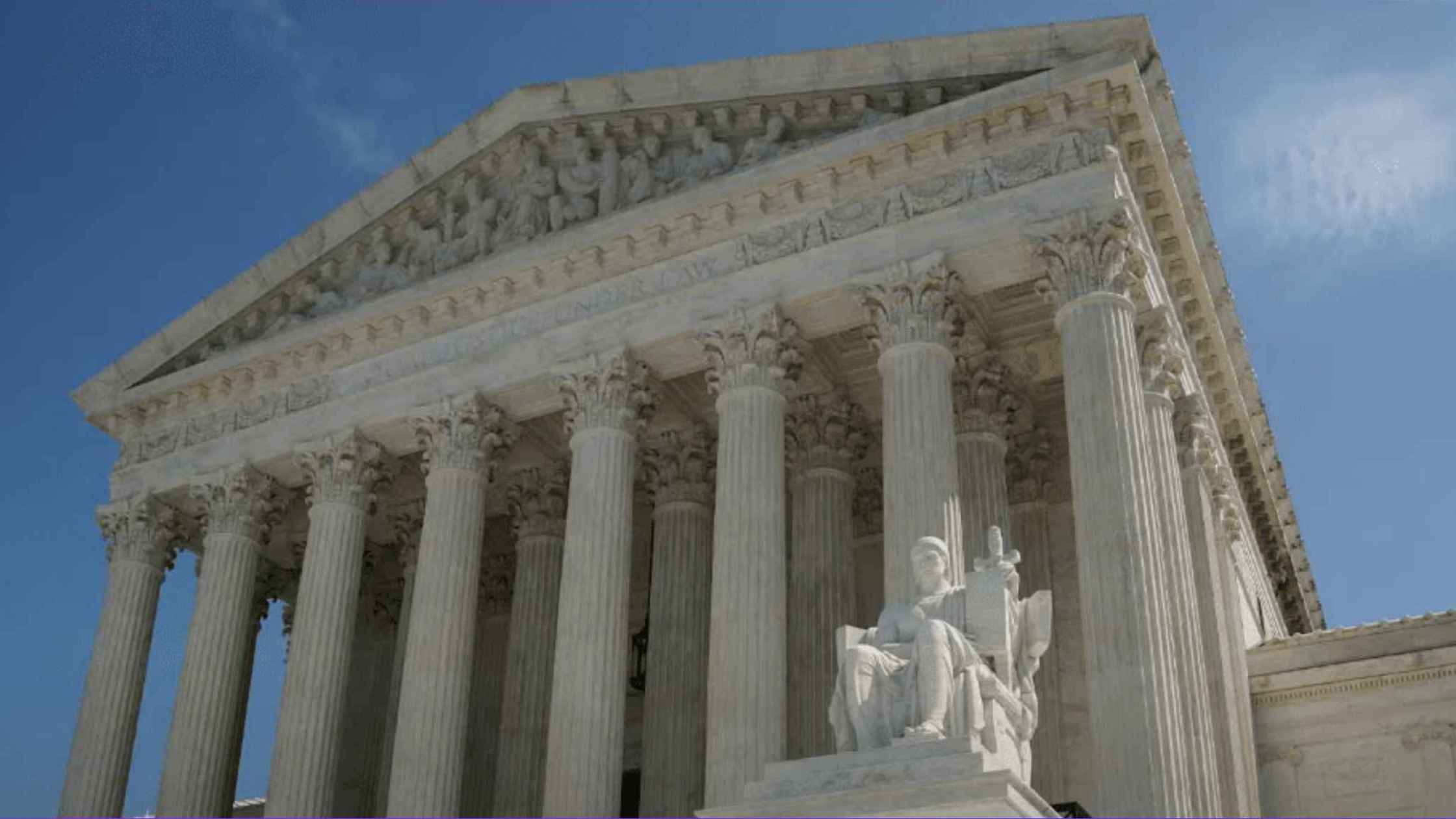
Speaker 4 (02:04):
Be seated.
Speaker 1 (02:05):
We will hear argument first this morning in case 25112, Chatrie versus United States. Mr. Unikowsky?
Mr. Unikowsky (02:13):
Mr. Chief Justice, and may it please the court. The government conducted a search of petitioner's location history, and the warrant that purported to authorize that search violated the Fourth Amendment. The government conducted a search. The court should hold that people have a property interest in their data, in their accounts on the cloud. Location history has the core attributes of property. Petitioner had a right to exclude, to control, and to destroy. Additionally, petitioner had a reasonable expectation of privacy in his location history, given both its sensitive and revealing nature and the fact that it was stored in his password protected account. The warrant violated the Fourth Amendment. The warrant authorized the government to direct Google to search every single person's account to find those people who were within the geofence.
(02:59)
That is a general warrant. Even if the search materialized only when the data was found and exposed to the police, the warrant would still be unconstitutional because there was not probable cause to search the virtual private papers of every single person within the geofence merely because of their proximity to the crime. Finally, at step two and step three, the search violated the Fourth Amendment because the warrant gave the ... police unlimited discretion to decide who to search while casting Google into the role of magistrate. I welcome the court's questions.
Speaker 2 (03:35):
How exactly did the warrant violate petitioner's Fourth Amendment rights at step one?
Mr. Unikowsky (03:45):
So at step one, we understand this warrant to have authored-
Speaker 2 (03:48):
I thought it was anonymized at step one.
Mr. Unikowsky (03:51):
That's true. So from our perspective at step one, we believe that there was a search of every single account. And alternatively, at a minimum, there was a search of the accounts of all the people whose data was exposed to Google. But either way, we view that as a search that the warrant authorized. But let me specifically answer your question about anonymity. We view the anonymity in this case as both irrelevant to the Fourth Amendment analysis and also rather illusory. So first of all, I don't think anonymity matters because I think a search is a search, even if you don't know the target of the search. If you go to a bank and you break open a safety deposit box... I'm sorry, Your Honor. Do you have a question?
Speaker 1 (04:25):
No.
Mr. Unikowsky (04:25):
If you go to the bank and break open a safety deposit box, even if you don't know who owns the box, if you inspect the papers, I still think that counts as a search. As well as a practical matter, anonymity is somewhat illusory because one's movements within the geofence often functions as a kind of fingerprint. You can figure out who the person is based on a fairly small amount of movements. In this very case, our expert was able to identify three purportedly anonymous people via a close analysis of their movements, as well as some public records.
Justice Kagan (04:50):
So wonder if your-
Speaker 1 (04:50):
If you don't want the government to have your location history, you just flip that off. You don't have to have that feature on your phone. So what's the issue?
Mr. Unikowsky (05:03):
I take the point that you can flip it off, but I guess I just don't agree that one should have to flip off one's location history as well as other cloud services to avoid government surveillance. I mean, by the same token, you don't have to send email. You can flick that off as well, but that doesn't imply that you're implicitly consenting to the government searching one's email.
Speaker 1 (05:20):
Well, not implicitly consenting, but the only reason the government has access to this information is because you've decided to make it public to the extent it can be accessed by people any number of ways. In other words, people can use that information, not simply law enforcement.
Mr. Unikowsky (05:39):
Well, I guess I'd-
Speaker 1 (05:40):
It's like if you don't want them to peer into your window, you can close your window or the shades.
Mr. Unikowsky (05:45):
I take the point, Your Honor, but I guess I'd respectfully disagree with that assessment for a couple of reasons. So first of all, I think you could say the same thing about sending mail. If you don't want the government to look in your mail, you don't have to send it and give it to the postal service, or the same thing with the safety deposit box. But I think that one should be permitted to hand over data to a third party without assuming the government is going to look at it. Especially since it's true in this case, petitioner was convicted of the crime, but geofence warrants mostly ensnare innocent people. In this case, you had 19 people within the geofence whose data was exposed, as well as two other devices whose actual identity was exposed. And Google received 9,000 of these warrants in 2019. So I don't think an innocent person should have to shut off these services as a condition of not being supposed [inaudible 00:06:25]-
Justice Kagan (06:25):
Do the numbers make a difference? Would it matter if only 1% of users enabled location history?
Mr. Unikowsky (06:31):
I don't think it should matter. The government has made a point about the fact that only one-third enabled it, but I actually don't think those matters really are significant. Because if you view a person as having a property interest in the data, in other words, if you treat one's account as kind of a virtual safety deposit box, then I don't think it matters how many people have these virtual safety deposit boxes. Even if it's only one, if the legal relationship to the data is similar to the legal relationship between someone who sends a package-
Justice Alito (06:59):
Mr. Unikowsky, it's not a question of shutting it off. It's a question of turning it on. And according to the government, your client had to go through multiple steps in order to turn it on. So he voluntarily disclosed to Google the information about where he was going to be.
Mr. Unikowsky (07:22):
So, if I could make two points about the voluntariness argument that the government advances. So first of all, I actually don't think it should matter for Fourth Amendment purposes that there was voluntariness because it's quite common for people to consent to putting their data in the cloud in the sense of every time you send an email or you send a document, have a Google calendar entry, all those things, you're consenting it to sending it in encrypted fashion from your phone to the cloud. But I don't think that the consent merely to have your data stored in this virtual storage locker in and of itself is consent to disclose the government.
Justice Alito (07:52):
Well, he not only turned it on, but had he read his contract with Google, he could see that Google retained the right to turn this information over to law enforcement if it thought that that was appropriate.
Mr. Unikowsky (08:06):
That is the same provision that exists for everything that you store in Google servers, including email and documents, and everything else. So it seems to me if you're going to accept that argument, and that is really the end of the Fourth Amendment for any private document you're storing with Google.
Justice Kagan (08:18):
Suppose Google put that warning in red, and it flashed a lot, and it was totally noticeable. We can give this to the government. Would that make a difference?
Mr. Unikowsky (08:29):
If there is a flash and warning saying that we reserve the right to give for any reason whatsoever, I think that might be more pertinent to the property theory than the privacy theory. Because on the privacy theory, the court said in the Bird case that terms of use aren't necessarily dispositive. They should look at sort of general expectations. I mean, maybe if it was like really flashing and saying, "We are the government's partner. We give data to the government all the time." Maybe that would result in a different analysis based on one's reasonable expectations. Under the property theory, it might be relevant because one of our arguments here is that the terms of the bailment are that Google could possess this information, but couldn't necessarily turn it over. There was a strict privacy policy, so it wouldn't turn it over to advertisements.
Speaker 3 (09:06):
And that privacy policy, the terms of service, pretty much, and I'm paraphrasing here, we will respond to lawful requests from the government. I don't know whether one even needs to say such a thing. I mean, it's anybody who gets a warrant and a lawful warrant has to comply with it, a bank, a doctor, a lawyer, anybody. So it doesn't seem to me to add a great deal to the analysis. And are the terms of service here materially different than they are for email and for Google documents?
Mr. Unikowsky (09:41):
So the first point, I agree, and actually, the US Postal Service has the same provision in their terms of use. We'll comply with search warrants, but I think a search warrant is still needed there. And on the second point, no. The general language that the government will... Excuse me, that Google will comply with search warrants and that Google will reveal aggregated information, like what's the most search term of last year? It turns out it's YouTube, that type of disclosure, that applies to all data that's stored at Google, not just location is-
Speaker 3 (10:07):
So if we were to rule that there was a voluntary exposure here to Google that allows the government unfettered access to it, that ruling would pertain equally to email.
Mr. Unikowsky (10:20):
That's correct. Essentially, all of your data on the cloud, which is kind of all of your data, if you use a computer, would be exposed to government searches without a warrant.
Justice Kagan (10:27):
So where do you think voluntariness matters and where not? What you're suggesting is really that's the wrong question here. When is it the right question, and what is it the wrong question?
Mr. Unikowsky (10:38):
So I think there might be a voluntariness issue when it's very clear from the interaction that you really are consenting to the other person doing whatever they want with it, such as when you give information to someone, knowing that the someone is going to use it as a business record. So I think that the Miller case, for example, we're certainly not disputing the holding of Miller. And in the Miller case, the court explained that if you put a check into the stream of commerce, so you give it to a vendor and then the vendor gives it to their bank and then their bank gives it to your bank, and it becomes their business record. You can't control it. They keep it for their purposes. You can't delete it. You have voluntarily put something into the stream of commerce, and you've sort of given up control over it in the relevant sense.
(11:17)
And so on that fact pattern, the court said that you have relinquished an expectation of privacy. And there's a similar holding in the Smith case. The court said that when you give your phone number to the phone company, you know it's their record. They're putting it on your phone bill. They're using it for all kinds of business purposes. It's exactly like it used to be when you just talked to a telephone operator. And in that case, you're not just giving someone information like you're mailing something, but you're giving consent for them to treat it as theirs. And that's the fact pattern that I think the court has said that the voluntariness of that transfer of property is sufficient to say that you've given up your reasonable expectation of privacy as well as your property interest.
Justice Alito (11:51):
Mr. Unikowsky, I'm struggling to understand why we are hearing this case, other than the fact that at least four of us voted to take it. 14 of the 15 judges on the En banc Fourth Circuit voted to affirm; nine relied on the good-faith exception. Unless you think that we're going to say something that convinces, that unless you think we are going to say no reasonable officer could believe that this was a valid warrant, or we're going to say something that will convince the judges on the Fourth Circuit to reach that conclusion, what you're asking for is an advisory opinion. That's number one. This involves a Google feature that doesn't exist any longer. That's number two. It involves a warrant that is structured in a particular way. That's number three. I mean, we are all free to write law review articles on this fascinating subject, but that seems to be what you're asking for. Asking for basically a law review article on a subject that is largely unexplored by our precedents.
Mr. Unikowsky (13:14):
So let me tick through each of those points, Your Honor. So first of all, as to the good faith exception, the court did not grant certiorari on that question, and so we didn't brief it. So all we'd ask for in this case is if the court finds a Fourth Amendment violation to reverse and send it back to the Fourth Circuit to consider the good faith issue in view of this court's guidance. Now, I admit it's going to be hard for us on the facts of this case to say that the officer acted maliciously or that the legal issues are obvious. I think if there's anything obvious from the briefs in this case is that they're not obvious, we would make a different argument. We'd say that the Leon good-faith exception applies to fact-bound challenges to probable cause determinations in a particular case and shouldn't apply where we're challenging a new and fundamentally different type of warrant.
(13:53)
And if you look at Leon, there's some language in there that says that the exclusionary rule, even in cases of warrants, should be considered on a case-by-case basis. An exclusion is warranted in the unusual context where it would advance the purposes of the exclusionary rule. So we'd just like a chance to make that case in the Fourth Circuit with the benefit of the court's guidance. In terms of the issue that Google has discontinued the sensor vault and has put the data onto people's phones, first of all, this was fully ventilated at the certiorari stage. I don't think that there's any surprises that are in the merits briefs in this case. I think this is an important subject because lots of providers store data, not just Google. There's something like 30 amicus briefs or 29 amicus briefs in this case, including by many of the titans of the tech world. And so I think a lot of people think that this case will have implications beyond these particular facts. So we'd urge the court to decide the question on which it grant certiorari.
Justice Alito (14:41):
Well, we can affirm on any ground that would support the judgment and was raised below. And the good faith exception qualifies on all those points. So the fact that the court did not grant certiorari on the good faith exception does not preclude any of us from relying on that.
Mr. Unikowsky (15:00):
I'm not sure I agree. We would. I mean, the court specifically declined certiorari on that question, so we didn't brief it. And we raised in our cert petition that we'd like the chance to argue that the questions are intertwined, and in view of a holding on the Fourth Amendment issue, we'd like to litigate the good faith issue. The court didn't grant certiorari; we didn't brief it. The government did have a section of the respondent's brief addressing the good faith exception, but, adhering to the court's decision not to grant certiorari, we didn't respond in the reply brief except to ask for a remand.
Justice Alito (15:27):
Well, that was your choice.
Mr. Unikowsky (15:28):
The court did not grant certiorari, and we were reluctant to brief a question on which the court specifically declined to answer-
Justice Alito (15:33):
Well, you're an experienced advocate. You understand that we can affirm on an issue that was raised below and would support the judgment.
Mr. Unikowsky (15:41):
Look, I'm happy to argue the issue from the podium, Your Honor. I'll just say one word about it. I think that the premise of Leon is that it's not necessary to apply the exclusionary rule in a case of a fact-bound challenge to a probable cause determination in a particular case because probable cause is litigated all the time outside the context of warrants. Whereas in an issue like this, a challenge to a fundamental new type of warrant, I do think litigants need an adequate incentive to litigate the constitutionality of such warrants. And the only way that'll happen is through the exclusionary rule. And there is some language in the Davis case that adverts to holding that in cases where you need an adequate incentive to litigate an issue, the court would consider applying the-
Justice Jackson (16:17):
And Mr. Unikowsky, isn't there also a pretty significant split even within the Fourth Circuit over the issue of whether or not there was a search in this context? I mean, my understanding is that the Fourth Circuit split evenly, seven to seven, on that pretty significant issue.
Mr. Unikowsky (16:37):
That is correct. It was seven, seven with one judge declining to reach the issue. So obviously, there's some important issues that go well beyond the particular facts of this case, and there's also some important issues in terms of the constitutionality of the warrant that go well beyond the facts of this case.
Justice Sotomayor (16:50):
Counsel, I just want to button down some of your answers. The privacy policy that the person is giving consent to would affect you, said internet, but it would also affect Google photos, which have to do with what photos you take and store in your device, correct?
Mr. Unikowsky (17:12):
Correct.
Justice Sotomayor (17:13):
Google documents, what documents you store?
Mr. Unikowsky (17:16):
Correct.
Justice Sotomayor (17:17):
Google Calendar, your entire calendar. If this is consent, that means the government can seek those documents for any reason, not just the commission of a crime or no reason, correct?
Mr. Unikowsky (17:31):
Correct. It would not be a search, so no search warrant would be required.
Justice Sotomayor (17:35):
So that means the government, a police officer, randomly who decides, "I don't like that person. Let me just go look at their life to see if I can find the crime." That would be okay?
Mr. Unikowsky (17:47):
There might be some constraints under the Stored Communications Act, but as far as the Fourth Amendment is concerned, no.
Justice Sotomayor (17:51):
Right. Right. But that's not at issue here.
Mr. Unikowsky (17:52):
Correct.
Justice Sotomayor (17:53):
All right. And that wouldn't be for other things?
Mr. Unikowsky (17:56):
Correct.
Justice Sotomayor (17:56):
For some of these things like calendar entries.
Mr. Unikowsky (17:59):
So there might be a question as to whether calendar entries are protected as a statutory matter, but again, we're here under the Fourth Amendment, and so that's-
Justice Sotomayor (18:06):
And we can't ignore today that the district court made findings that the consentier was not necessarily voluntary.
Mr. Unikowsky (18:14):
There are findings that at midnight, when you're saying, "Yes, I'm in," to try to get your phone to work correctly, that may not be a consent to the government searching-
Justice Sotomayor (18:20):
And there's certainly Google documents that show that it's very hard, and if not opaque, to figure out how to turn these things off, correct?
Mr. Unikowsky (18:29):
Yes.
Justice Sotomayor (18:30):
Now, let's go to your general warrant theory. I understood at the founding a general warrant was, I have a crime, and a magistrate permitting you to go willy-nilly anywhere you want to anyone you want to search them. I thought that was the purpose of a general warrant, correct?
Mr. Unikowsky (18:51):
Yes.
Justice Sotomayor (18:52):
That's not what this does. This identifies a place, a crime, a limited timeframe, but a timeframe. So it's not a general warrant in its historical sense. Why isn't this closer to the warrants that we've permitted with beepers, where we don't have a person or necessarily a place in mind, but we have a location and general things? Why isn't that more consonant with Berger, Zucker, Caro, those lines of cases, and that didn't identify a person, but it identified a crime, a place, and the nature of the unlawful conduct that we were looking for?
Mr. Unikowsky (19:43):
Sure. So let me say a few words as to why I think this should be considered a general warrant, and then a few words about why the warrant was defective, even if you disagree with me on the first few words I say. So first of all, I think the right way to think about the search is to say, one, that Google, because it received a search warrant, was acting as the agent of the government, and two, that Google really did search every single person's virtual private safety deposit box. So as to the first part of that, this court has said that when a third party is acting with the encouragement, endorsement, or participation of the government in executing a search warrant, that third party is-
Justice Sotomayor (20:17):
Could I pause you there?
Mr. Unikowsky (20:18):
Yes.
Justice Sotomayor (20:19):
It wasn't Google doing it. It was a filter doing it.
Mr. Unikowsky (20:21):
Well, it was-
Justice Sotomayor (20:23):
I mean, the filter is not the government. It's not even Google. It's a mechanical item that sorts. So how could that be a search? Seems to me that the only search would be handing it over to the government.
Mr. Unikowsky (20:41):
So let me say a few-
Justice Sotomayor (20:42):
Step one, basically.
Mr. Unikowsky (20:43):
Sure. Let me say a few words about that and then say why, even if the search is the handing over, the warrant is still defective. So, as to the first part, you're absolutely right. There's not a human being sifting through 500 million people's accounts that would take an extremely long time. At the end of the day, it was a piece of software that was going through every account, piercing from our perspective, every virtual safety deposit box, and checking inside to see whether the person was there that day. So I still think that when you're using software to search someone's phone, which is how any kind of digital search operates today, that's still a type of search because it's using a tool in order to detect information. And it's true that it's a tool. It's not the human being that's looking at it, but it's still a human effort to pierce a private area in order to find something that's there.
Justice Kagan (21:25):
Would that mean all database searches are searches for Fourth Amendment purposes?
Mr. Unikowsky (21:29):
Absolutely not, Your Honor. That is not our position. I think this is a unique case because Google's sensor really is structured like a row of virtual safety deposit boxes, individual accounts. It's indexed by account, which means you have to put in your own credentials to get to your account, and that doesn't get you to anyone else's. So it's exactly like a bank with safety deposit boxes, except it's in the cloud.
Justice Kagan (21:49):
So does everything depend on how a company organizes its information?
Mr. Unikowsky (21:53):
I don't think everything depends on that. I think that this is a unique case because the fact that Google organizes its data that way is not some kind of arbitrary engineering decision. It really is essential to the security of a system with lots of private accounts to index them by account. So the technologist amicus brief, I think, has a good analogy here. It says that it's not arbitrary that a hotel divides different people into different rooms as opposed to stacking all of the bunk beds in the lobby, like a hotel, which divides people into different places. It's logical to have walls between them. And in this case, there's virtual walls as opposed to physical walls. But I don't think that the fact that Google could have constructed its system in a completely different and, from our perspective, inappropriate way, should affect the analysis, but just... I'm sorry.
Justice Barrett (22:33):
I'm sorry, finish, please.
Mr. Unikowsky (22:34):
No, please go ahead.
Justice Barrett (22:35):
I was just going to say, this seems very complicated from the user's point of view. Frankly, I have no idea how my data is stored and whether it's in these virtual lockers or not. And I guess one question that I have for you is, I'm struggling to decide how to think about this case. One way to think about this case is that, listen, our physical intrusion cases, our property cases require a physical intrusion. And Cat set us off on this course that when we're talking about technology, we think about it in terms of reasonable expectations of privacy. And I am frankly a little bit nervous. And I mean, I think the government makes this point well, I'm a little bit nervous because this is very complicated, right? Figuring out how bailments apply, what the property interest in this data is. Why not just think about this from the perspective of reasonable expectation of privacy?
Mr. Unikowsky (23:21):
That would be fine with us, Your Honor. We've offered two alternative paths. Different members of the court have articulated the relevant test differently. I mean, in Carpenter, the court relied on reasonable expectations of privacy. We think there's two different sources here of the reasonable expectation. One is the fact that it was stored in the password-protected account. This court has said that property issues are instructive as to the reasonable expectations, even if not dispositive. So if you think it matters that this was in his password-protected account, you can say that that's pertinent to the privacy inquiry without getting into this trespass and bailment law, as well as the sensitivity of the data, which was at issue [inaudible 00:23:54]-
Justice Barrett (23:54):
Okay. Well, this is pretty... So I think Carpenter, we haven't talked about Carpenter yet, is pretty on point, but this is different from Carpenter. Putting aside that this was in a password-protected account, taking down to the fact that Google had the right to use this for advertising purposes, right? I mean, this was a few hours, and it was a public location and nobody has a reasonable expectation of privacy in their public observable movements. So does that make this different from Carpenter?
Mr. Unikowsky (24:20):
So I still think that even though the stretch of time was lower than in Carpenter, there is still a reasonable expectation of privacy for a few reasons. First of all, I don't think it's just the two hours. I think it's the forever. It's the comprehensiveness and the ability of the government to get access to really any two hour stretch anywhere it wants to at any point in the past. I think it's quite different from a case like Knotts, where the police were following someone on a highway, and they put a beeper just to enhance the quality of the visual surveillance. And so this court in Carpenter framed the question as, are police doing what they could have done in the past, or is this a fundamental increase in the ability of law enforcement to conduct surveillance? And here I think it is. I mean, the government has this tool.
(24:59)
It can go any point in the past, at any stretch of time. It could figure out where all the people, rather than just one person, in a particular place, and it can follow that person around. We see in this case of the nine people who are of greatest interest to the government, at step one, it followed those people around outside the geofence at step two. And I think that all of those considerations create significant privacy implications, even though it's true, the initial geofence was just an hour.
Justice Barrett (25:21):
But you can't raise the Fourth Amendment issues or the Fourth Amendment rights of the other people who might be captured in the geofence. So we're really just talking about your client's Fourth Amendment rights, right? I mean, because you keep pointing out, well, this swept in a lot of innocent people, sure, but really it's your client's Fourth Amendment rights that we care about here.
Mr. Unikowsky (25:37):
That's true. I just think broadly speaking, when we're considering the privacy implications of the rule and reasonable expectations of privacy, I just think it's relevant what the court's rule how it's going to affect third parties. I understand it's just petitioner's rights at stake, but even staying laser focused on petitioner, this was a law enforcement tool that allowed the government to determine where petitioner himself was at any point in the past.
Justice Jackson (25:58):
Mr. Unikowsky?
Mr. Unikowsky (25:59):
Yes, Your Honor.
Justice Jackson (26:00):
Oh, sorry. Are you done?
Justice Barrett (26:01):
Only in public places, though.
Mr. Unikowsky (26:03):
Well, the government has taken the position in its brief that even if you're on your own house and a geofence warrant is used, the government has a footnote suggesting that there wouldn't be a constitutional violation either. Obviously, this case did involve a bank. I can acknowledge that. Although just one other word, because of the error bars, because of the confidence intervals in some of these estimates, actually, those confidence intervals may have encompassed people's homes. And in fact, three of the people within the geofence went to their houses and were possibly identified by our expert. Yes, Your Honor.
Justice Jackson (26:30):
So I wanted to invite you to finish your answer to Justice Sotomayor when you said you tried to defend the general warrant analysis, and then you said, even if you don't agree with that, I have another point. But before you do that, let me just hone in for a second on the general warrant analysis. If we take Justice Barrett's point that this is really about reasonable expectation of privacy, what about the initial sorting intrudes on anyone's reasonable expectation of privacy?
Mr. Unikowsky (27:02):
I guess I just think that if I have information in a physical storage safety deposit box, I guess I think that my expectation is that no one's going to look inside for any reason. Even if a tool is used, like the Kilo tool, the thermo vision, for any reason, if I have stuff inside, people won't look at it in order to conduct a law enforcement investigation. And I understand the intrusion at step one was fairly limited. It was just a computer zipping past all these accounts, just checking quickly whether they were in a particular place. But cases like Jones say that even a very small trespass is enough, but I see my red light is on. If I could just answer Your Honor's second question.
Speaker 3 (27:37):
Well, why don't you wait till we get back to that? It seems to me that the exigent circumstances exception could well expand if you're right. I mean, obviously, you have situations where you know somebody in this particular crowd has snatched a child or was involved with somebody who snatched a child. In those situations, I suppose you agree that you don't have to go through a warrant process, but can access the information under exigent circumstances?
Mr. Unikowsky (28:07):
I do. The court made that very clear in Carpenter. I mean, this warrant was sought several weeks after the crime, and so any exigent circumstances, I think, argument would've gone away. Our position today is not intended to undermine any well-recognized exception of the warrant.
Speaker 3 (28:18):
Well, my question is whether intended or not, whether it could be used to expand it a great deal. I mean, what's exigent can be expanded if in fact it makes sense, which when you don't have this much access, doesn't do any good to say, "Okay, you have to search to, to find out who all these people are, but if the push of a button, you can find out who they are that might give you more opportunities to avail yourself with the exception." I don't know which way that cuts, but it does seem to me that it might undermine privacy interests further or cut the other way in sense of giving you more opportunities to perhaps catch people who are planted a bomb or whatever.
Mr. Unikowsky (29:03):
Look, if there's an ongoing emergency with a bomb, I mean, we're not going to argue against the use of these law enforcement tools, even if there might be a significant amount of privacy violations. And so yeah, I mean, this can be a potentially useful tool in the case of a bonafide exigent circumstances. We're certainly not challenging that, Your Honor.
Speaker 3 (29:18):
Justice Thomas, anything further? Justice Alito?
Justice Alito (29:23):
Justice Kagan asked you whether this would apply to all searches, all digital searches. Let me go back to the pre-digital era. It's not at all uncommon... It was not all uncommon for a grand jury to issue a subpoena requiring a company to turn over a category of particularly described documents, but that for the company to find those documents required to search through a vast store of hard copy documents. What's the difference between this situation and that situation?
Mr. Unikowsky (30:11):
So I don't think a grand jury subpoena or any kind of subpoena would've been constitutionally permissible in this case.
Justice Alito (30:17):
Well, I know you say that, but what is our test for determining when a grand jury subpoena violates the Fourth Amendment?
Mr. Unikowsky (30:24):
So I think there's two circumstances when it does. One is when the holder of the documents are really a bailee of someone else's documents. So one example would be a grand jury subpoena directed at the postal service or FedEx asking it to open every single package or piece of mail to find a piece of data or-
Justice Alito (30:40):
When it's the company's own documents.
Mr. Unikowsky (30:42):
Right. So of course, as we've said, we don't think that's this case, but when it's the company's own documents, I just go back to the test in Carpenter, which is there is a narrow category of cases in which a person will have a reasonable expectation of privacy in business records held by a company and in that category of cases, the subpoena is unconstitutional.
Justice Alito (30:59):
Well,
Justice Alito (31:00):
I'm sorry, go ahead.
Mr. Unikowsky (31:01):
No, no, please.
Justice Alito (31:01):
Well, in Carpenter, what seemed to be a very important feature, I think maybe a dispositive feature, was that the information that was sought was information that the user of the cell phone had no choice but to disclose because the cell phone tower location is an indispensable feature of actually using your phone. That is not the situation here.
Mr. Unikowsky (31:33):
I take the point that it's possible to function in society without having location history enabled, although it's actually quite hard to function without having anything in the cloud. I'd say virtually everyone in this room has at least something in the-
Justice Alito (31:44):
Well, but we're not talking about everything in the cloud. We're talking about location history-
Mr. Unikowsky (31:48):
Right. It's actually quite-
Justice Alito (31:50):
... on an Android phone where you have to take a number of steps in order to disclose it. You have to choose to disclose it.
Mr. Unikowsky (31:59):
I take the point that you have to click, "Yes, I'm in," order to enable location history on your Android phone or any other type of phone. But first of all, if you agree with us that this is a personal record and not a business record, that argument just doesn't matter because you make the choice to enable email or put documents or photographs into the cloud, you're choosing to send that photograph, but that choice shouldn't undermine the Fourth Amendment protection, just like your choice to put something in the mail.
Justice Alito (32:22):
Well, you think this is not a commercial record? Why do you think Google compiles this? It keeps this information. It does it so it can sell advertisements.
Mr. Unikowsky (32:30):
No, Google itself takes the position that these are not business records. I understand it's just a third party's view, but it's unusual for a company to refuse to say that something's its own records. Unlike with CSLI, you have total... As Your Honor said, you can turn it on, you can turn it off, you can delete all of it anytime you want, you can delete part of it. It's really unlike something like CSLI in which you have the business keeping the records for its own purposes.
Justice Sotomayor (32:53):
Counsel... I'm sorry, are you through?
Mr. Unikowsky (32:56):
Yeah, [inaudible 00:32:57]. I'm sorry.
Justice Sotomayor (32:58):
I want to go back to Justice Barrett's... If you're not through, Sam... I thought you were through.
Justice Alito (33:03):
Go ahead.
Justice Sotomayor (33:03):
To go back to Justice Barrett's question. When the police are searching or asking for a search result, there's no way to predict whether they're going to invade your privacy, correct?
Mr. Unikowsky (33:19):
That's right. Searches are determined ex ante.
Justice Sotomayor (33:21):
Regrettably, because people take their phone now everywhere, including, I suspect some people, to the bathroom. You really have no idea what information, private information, because it'll follow you to a brothel. It'll follow you to a cannabis shop. It'll follow you to just about anywhere where there's a reasonable expectation of privacy, correct?
Mr. Unikowsky (33:47):
Yes.
Justice Sotomayor (33:48):
And so it really doesn't matter. I don't think the time is important, correct?
Mr. Unikowsky (33:56):
I agree with that.
Justice Sotomayor (33:57):
So whether it's a minute that you're searching for or six weeks, it's not the time that's at issue. It's whether or not private information in which you have a reasonable expectation of privacy will be sought, correct?
Mr. Unikowsky (34:15):
Yes.
Justice Sotomayor (34:15):
That's why Justice Scalia said it didn't matter for Fourth Amendment purposes to search the heat waves emanating from your house because though it's not giving out private information, you can't know in advance what it's going to disclose, correct?
Mr. Unikowsky (34:37):
Yes.
Justice Sotomayor (34:37):
All right. Now, let's go to that more important part of the question that Justice Barrett asked, which is, we didn't answer this question in Carpenter, but I don't see how its logic may time the defining characteristic. Could you explain why not?
Mr. Unikowsky (34:57):
Sure.
Justice Sotomayor (34:58):
It seemed to me that particularity has nothing to do with time. It has to do with the relationship of time to the circumstance that justifies the need.
Mr. Unikowsky (35:09):
Right. So there's two questions about time, one of whether there's a search at all, and then the second question of whether the warrant was sufficiently particularized. So as to the first question, I don't think the time period should matter as to the search because I don't think the court should be in the business of drawing lines between seven days and two days and 24 hours, especially since the government gets to choose the time interval. So two hours at a place selected by the government really can reveal a lot.
Justice Sotomayor (35:32):
Sure, but the government in setting forth the warrant has to give a reason for why that two hours is reasonable. Correct?
Mr. Unikowsky (35:39):
Of course. So that gets to the question of particularization and that goes to the warrant. And I would like to say a few words about what the court should do if it doesn't agree with me that this is a general warrant in which all tens of millions of people were searched. We still think there is a Fourth Amendment violation because there wasn't probable cause to search all 19 people within the geofence merely because of their proximity to the crime. I get the fact that a time period was-
Justice Sotomayor (36:02):
Well, Google itself said that to them, and I don't know why we would say it's okay to rely on Google to do that. They moved it from 19 to nine, wasn't it?
Mr. Unikowsky (36:13):
That was at step two, Your Honor.
Justice Sotomayor (36:14):
Oh, step two? Okay.
Mr. Unikowsky (36:15):
Yes. But at step one, 19 people's information was exposed merely because they were near the scene of the crime. And so I don't think that the... I understand that the warrant specified a time period, but the particularity requirement in the Fourth Amendment requires particularity as to what is searched. And certainly, I don't think there's particularization here when the warrant just said, "Whatever unspecified number of people are in the proximity of the crime, those are the people to be searched." I don't think that's particularized description of what is to be searched. And I think there's a probable cause problem here because the fact that someone's near the crime doesn't create probable cause to search their diary. And we view this as the functional equivalent of a search of their diary.
Chief Justice Roberts (36:52):
Justice Kagan?
Justice Kagan (36:54):
Can I ask you to explain that a little bit more? Because you were saying that this was the answer if we rejected your categorical argument. Is that correct?
Mr. Unikowsky (37:03):
If you reject our argument that there's been a search of millions of people, then yes.
Justice Kagan (37:06):
Yeah. But functionally, isn't that argument going to be the same? In other words, it's going to prevent the government from doing this kind of search in order to get these 19 people?
Mr. Unikowsky (37:17):
Not necessarily. So a narrower argument would be that if there's probable cause to really believe that every single person in the geofence has relevant information, then that's a stronger case for the government. So that might come up, for example, suppose there's a murder in the woods and it's 3:00 AM and there's one criminal and one victim, and you draw a circle around that, and there really is probable cause to think that every single person in that circle is either the murder or the victim, then maybe the government can say there's probable cause that every person whose data is exposed to the government in that case will have relevant evidence. That's not the case here where the geofence encompassed the bank and the church. And in fact, most of the 19 people were just sitting at church the whole time. So that would be a narrower way to invalidate this warrant that wouldn't necessarily impugn all geofence warrants like this one.
Justice Kagan (38:01):
Thank you.
Chief Justice Roberts (38:02):
Justice Gorsuch.
Justice Gorsuch (38:04):
So if in this case the geofence had encompassed just the bank perhaps?
Mr. Unikowsky (38:09):
Right. So I mean, as the court knows, we still think there's a general warrant. We still think that everyone's storage lockers is being searched, and we also think there's a-
Justice Gorsuch (38:16):
There might be probable cause to think that everybody in the bank might have some information?
Mr. Unikowsky (38:21):
Right. That's right. If you can draw a small enough geofence at a small enough time interval that everyone there either committed the robbery or witnessed it, then you might say there's probable cause that everyone has relevant information. I still would say there's a particularity requirement. I'd still talk about a general warrant, but yes, that defect in the warrant wouldn't exist in that.
Justice Gorsuch (38:38):
Right. And Google can track you down to several feet, right?
Mr. Unikowsky (38:43):
That's right. Correct. Three meters, Your Honor.
Justice Gorsuch (38:45):
Yeah. And then in terms of the timing and on the search side that we've discussed, the fact that the government peaks in your mail for just a quick second or looks through your safety deposit box or your hotel room or your diary for just a minute, that's a search, right, under either property or a reasonable expectation?
Mr. Unikowsky (39:08):
That's correct.
Justice Gorsuch (39:09):
Talk with me for a minute about the Stored Communications Act and the government's responses to your arguments.
Mr. Unikowsky (39:16):
Sure. So we believe that a warrant was required under the Stored Communications Act. We didn't file a motion to suppress on that ground because oppression isn't an available remedy, but that may be pertinent to the question of a reasonable expectation of privacy because people have an expectation the government will get a warrant if there's a statute that requires the government to get a warrant and there's also a private cause of action on the table. The government takes the position that possibly the Stored Communications Act doesn't require a warrant because the cell phone is a tracking device. I mean, if that's true, then anything that's transmitted from the cell phone into storage, your email, if you're sending it from your phone or a photo or anything else, all of that would be information transmitted by a tracking device and none of that would be protected. So I don't think that's a tenable way of getting around the Stored Communications Act.
(39:59)
And so precisely because Congress has acted and from our perspective required a warrant, and in fact, in this case, a warrant was obtained, albeit one, that we don't think complies with the Fourth Amendment, I think that weakens the force of the government's argument that we should defer to Congress because Congress has actually said that a warrant is needed here. And implicitly, we think that the Stored Communications Act requires a warrant that complies with the Constitution, and in this case, in our view, it did not.
Justice Gorsuch (40:22):
How about the question of whether it's content versus a record?
Mr. Unikowsky (40:26):
So the government hasn't disputed that this is content. It's not metadata, it's not a record, because the content at issue here, it's not just something about a communication like, "I was in this place when I sent this email."
Justice Gorsuch (40:36):
It is the location.
Mr. Unikowsky (40:38):
The reason you're transmitting this to Google is for it to store where you were in order to create your timeline. So this is content and the government actually doesn't dispute that in [inaudible 00:40:45].
Justice Gorsuch (40:45):
And talk to me about Virginia and other similar statutory laws in this area.
Mr. Unikowsky (40:49):
So Virginia has a statute, the Virginia Computer Crimes Act that defines data on a computer network to be a form of property. It creates criminal liability for trespasses. It also creates civil liability for malicious trespasses. And so we view the question of whether a property interest exists to be one of federal law, like the court held in the Tyler v. Hennepin case, the court should consider a common law rule, not state by state, but I think state law is a pertinent input into that ultimate federal question. And the fact that Virginia and many other states have explicitly recognized data as a type of property and have created statutory torts for trespass on that data is I think pertinent to the Fourth Amendment question here.
Justice Gorsuch (41:26):
Okay. We could bypass the search question if we just resolve the case in your favor on one of the particularity grounds, right?
Mr. Unikowsky (41:36):
The government would say that if it's not a search at all, it didn't need a warrant in the first place.
Justice Gorsuch (41:39):
Well, if we assumed it were a search without deciding, we could just decide it on particularity grounds. And you've talked quite a lot about step one particularity problems you see. Can you talk about the particular problems you see at step two or step three?
Mr. Unikowsky (41:53):
Sure. So I think the problem at step two and step three is that the government conducted these follow-up searches, right? So they got an extra hour's worth of information about nine people and then they de identified the people, but the warrant did not identify those people with particularity. It didn't even identify a means for the government to find those people. All it said was the police are going to figure out the really suspicious people and they're going to do those extra searches.
(42:15)
So the government says that the original warrant was a sufficient basis to de-anonymize and get the two hours from everybody in the geofence. So that's wrong for a couple of reasons. One is it's just clearly not probable cause to get two hours of information, including data outside the geofence merely because someone was sitting in church within an hour of the crime. And second, even though geofence warrant itself doesn't authorize that, it doesn't say the police can go ahead and collect data from everybody.
(42:41)
All it says is that once the police winnows down the 19 or however many there are to some smaller number, then it can collect additional data, but that's not particularized because it doesn't say how to identify those people.
Justice Gorsuch (42:54):
Would that be a narrow basis on which to resolve this case?
Mr. Unikowsky (42:57):
That would be a very narrow basis. I mean, I would caution the court that if the court resolves the case on that basis, then in future cases, the government can cure the problem here by just obtaining another warrant before step two, which may be the answer, but that would be a particularly narrow way of resolving the case. Obviously we have concerns with step one as well, and so we believe that's unconstitutional.
Justice Gorsuch (43:16):
Thank you.
Chief Justice Roberts (43:17):
Justice Kavanaugh?
Justice Kavanaugh (43:20):
Assuming it's a search for purposes of this question and that I don't buy your general warrant argument, how can you overcome Zurcher for purposes of your argument that it's not sufficiently particularized, et cetera?
Mr. Unikowsky (43:40):
Okay. So I view Zurcher as answering a very different question in this case. So Zurcher holds that the Fourth Amendment permits a search of a premises of someone who is not implicated in the crime at all as long as there's probable cause to believe that there's evidence on those premises that will be pertinent to the criminal investigation.
Justice Kavanaugh (43:57):
And here we have that?
Mr. Unikowsky (43:59):
We do.
Justice Kavanaugh (43:59):
Okay. Keep going.
Mr. Unikowsky (44:00):
But what we understand to have happened here is more like a search of 19 separate safety deposit boxes rather than one single place, the Stanford University office, like in Zurcher. So I guess here would be a relevant physical-
Justice Kavanaugh (44:13):
Why do you characterize it that way? It doesn't seem that way to me. It's search of one place, similar.
Mr. Unikowsky (44:19):
Well, the argument the government would make is that the expansive entirety of Google servers are a single place. I think that's a pretty dangerous holding because if the court were to reach that-
Justice Kavanaugh (44:28):
We're talking about a warrant that's sufficiently particular here. So it is a search for purposes of this question, but it really just boils down to, I think, "Is the warrant sufficiently particular?"
Mr. Unikowsky (44:40):
Right. So if the court considers Google-
Justice Kavanaugh (44:42):
We have probable cause, you admitted that correctly, and it's just then, "Is it sufficiently particular?" And it seems like Detective Hilton here really went through a lot of the steps that should be applauded in terms of narrowing this down, going through multiple steps. I guess I'm trying to figure out why this was bad police work to get a warrant. A lot of Fourth Amendment cases we say, "Get a warrant." Well, they got a warrant. And then you're saying it's not sufficiently particular, but it went multiple steps. How many names were ultimately given to the detective?
Mr. Unikowsky (45:26):
Well, it was three devices, Your Honor.
Justice Kavanaugh (45:27):
Three names. So in the end, three names. You were talking about millions and millions, but it was three names in the end.
Mr. Unikowsky (45:34):
So first of all, I'm not casting any aspersions whatsoever on Detective Hilton. There's no sign of any kind of malice whatsoever. That's not our argument today. Okay. We do think that the warrant was defective. And if I could just make a couple of points about your questioning. So first of all, I understand a warrant was obtained here, but the court should be realistic about how much protection the warrant requirement really provides in a case like this. Sorry, Your Honor.
Justice Kavanaugh (45:57):
Well, that's what the Fourth Amendment says. So keep going.
Mr. Unikowsky (46:00):
Right. So the warrant requirement-
Justice Kavanaugh (46:01):
The Fourth Amendment's a floor, not a ceiling of protection and the warrant requirement, we have to stick with the words of the Fourth Amendment and the history of it.
Mr. Unikowsky (46:08):
Absolutely. All I was going to say is that the government obtained a warrant merely because someone was holding a cell phone near the scene of a crime. And if that's enough to obtain a warrant, it's going to be obtainable in a wide number of cases. That's not just a factual quirk about this case. That's many cases in which this type of warrant is obtained. But I'm happy to stick with [inaudible 00:46:22]-
Justice Kavanaugh (46:22):
It's geographically and temporarily limited though, the warrant-
Mr. Unikowsky (46:27):
Yes, but the Fourth Amendment-
Justice Kavanaugh (46:28):
... in a way that the magistrate, a third party, not the executive, not the law enforcement, will neutrally review and oversee. And lots of times judges will force the warrant to be narrowed, right?
Mr. Unikowsky (46:42):
Your Honor, the Fourth Amendment requires particularity asking the place to be searched. In this case, the geofence was not the place to be searched. The place to be searched was these Google accounts.
Justice Kavanaugh (46:51):
So suppose we have a murder and all the police know is that the murder was at a particular restaurant. And so the search is for the request is for everyone who dined at that restaurant in a two-hour period and for the names of those people. Thoughts?
Mr. Unikowsky (47:14):
So if the court doesn't buy the argument about a general warrant, then it is possible that you might say that there's probable cause that people who are actually witnesses to the crime, they were at the restaurant when the crime was committed. You might say there's probable cause to believe that there's relevant evidence in all of those people's accounts. Here, we don't have that. So first of all, I view this as a search of-
Justice Kavanaugh (47:34):
Well, let me ask also the hypothetical or maybe... All you know is the murder was in the restaurant and the search warrant or subpoena, the search warrant is to the restaurant for the list of people... to the restaurant, for the list of people who were in there in a two-hour period.
Mr. Unikowsky (47:51):
That is perfectly fine. A subpoena or even a search warrant could be issued search on-
Justice Kavanaugh (47:56):
And that's different from this how?
Mr. Unikowsky (47:57):
That's right, because we view that as not a search of one entity's property like one single piece of paper containing a list. We view this more as a search of 19 different people's private papers. Ultimately, the question is the Fourth Amendment [inaudible 00:48:10]-
Justice Kavanaugh (48:09):
You're only got three names, but Well And you agree with Searcher though? There's nothing from Zurcher you're asking, including the footnote... there's nothing from Zurcher here you're asking us to depart from?
Mr. Unikowsky (48:21):
Correct.
Justice Kavanaugh (48:21):
Okay. And this is just more practicalities, but the local government amicus brief and the 31 state's amicus brief, which has a huge spectrum of attorneys general on that amicus brief, which I think warrants note, talk about the practical consequences of not being able to solve murders. A lot of huge percentage of murders are never solved, for example, and violent crimes. I just want you to respond to that.
Mr. Unikowsky (48:49):
Sure. So first of all, we're not suggesting that all law enforcement techniques that allow the police to determine everyone within a particular area are inherently unconstitutional. We think this particular technique of serving geofence warrants on Google and requiring searches of a sensor vault, we do think there's a constitutional violation there. But there's many other law enforcement techniques that deploy modern technology that would not present the same types of issues. And the other point is that-
Justice Kavanaugh (49:12):
Such as?
Mr. Unikowsky (49:13):
So we haven't taken a position on the constitutionality of tower dumps. That presents a very different set of issues because that cannot be conceptualized as the search of lots of virtual storage lockers. There are other Fourth Amendment arguments on the table there, but I don't think anything the court says in this case would impugn the constitutionality of tower dumps. Similarly, I don't think anything the court says in this case would impugn the constitutionality of things like taking security videos, CCTV, and using those to identify suspects.
(49:37)
So there are a lot of other law enforcement techniques that are available to solve crimes in which you know where the crime happened, but you don't know who it is. And we're not challenging those. We're just challenging this one unique particular type of method. And the other thing is, Professor Kerr's brief points out that there's actually quite a lot of geofence warrants that have been issued. Like the district court says there was 9,000 geofence requests issued to Google in 2019, and there's actually a fairly small number of reported cases involving motions to suppress.
(50:04)
So it seems empirically that most geofence warrants just ensnare innocent people because I guess maybe criminals turn off their phones when they go commit bank robberies most of the time. And so the law enforcement benefits of this particular technique, I think it's easy to overstate, even though obviously in this case-
Justice Kavanaugh (50:19):
Well, the local government brief disagrees with you on that, and they have specific cases, but I'll leave it there. Thank you.
Mr. Unikowsky (50:26):
I think our side has some philosophical diversity from the amicae as well. So I think both sides have a lot of people with different views on this.
Justice Kavanaugh (50:33):
Thank you.
Chief Justice Roberts (50:33):
Justice Barrett.
Justice Barrett (50:34):
Mr.Unikowsky, would there have been a Fourth Amendment problem if the police had purchased this data from Google?
Mr. Unikowsky (50:41):
I don't think the police could have theoretically done that.
Justice Barrett (50:44):
Why?
Mr. Unikowsky (50:45):
Because Google's policy is that it doesn't sell this data. It has a pretty strict privacy policy where it doesn't give the data away unless-
Justice Barrett (50:50):
But it could. I mean, I'm just looking at the policy and it says that, "Google may share non-personally identifiable information publicly and with our partners, advertisers, publishers, rights holders, specific partners to collect information from your browser or device for advertising purposes."
Mr. Unikowsky (51:09):
Right. So Google shares aggregated information like how many people searched for the word YouTube last year and things like that.
Justice Barrett (51:17):
But doesn't it share location information too? I mean, I feel like I get ads when I'm in particular places. I need to check my location services settings plainly. Not that I'm going to commit crimes, but it seems to me like Google-
Justice Sotomayor (51:30):
I suggest you have IT do it.
Justice Barrett (51:34):
It does seem to me like Google does give your information away.
Mr. Unikowsky (51:39):
I don't think it does. I think there are other... That's Google's-
Justice Barrett (51:39):
Okay. Well, maybe it doesn't as a practical matter, but that policy, as I read it, does permit Google to do it.
Mr. Unikowsky (51:45):
I don't think it does. So there's declarations in the record that says that Google doesn't do it, and the privacy policy says that it's not going to share individual data with advertisers. I think what you read is not a reference to location history. I'm not sure what... I don't think it is, Your Honor. There's a declaration in the record and there's live testimony and there's a statement in the privacy policy that Google does not share individual data with advertisers. It just doesn't do that. An advertiser cannot go to Google and say-
Justice Barrett (52:11):
Okay, what if it did? What if it violated its own privacy policy and allowed the police to purchase it? Isn't that a problem between the person who has the Google account and Google? Would that be a Fourth Amendment problem?
Mr. Unikowsky (52:23):
It might not be a Fourth Amendment problem because there's the private search doctrine. Even if someone unscrupulously but privately takes someone's data and illegally gives it to the government, you might call that a private search that the government-
Justice Barrett (52:33):
I guess what I'm getting at is, doesn't Google have some right? I mean, Google can dip in and dip out, at least under the policy as it existed at the time this search or this possible arguable search occurred.
Mr. Unikowsky (52:44):
We view this as just like FedEx. So if you look at the FedEx privacy policy, FedEx says it reserves the right to inspect packages when it needs to do that, but I don't think that means that the government doesn't need a search warrant to inspect packages. In the same way that if you stay at a hotel, the hotel reserves the right to have a housekeeping service come into your room and maybe the housekeeper will see your personal possessions, but that in and of itself is not consent to have the government do that.
(53:05)
So likewise, yes, Google does reserve the right to analyze your data. If you went to a lot of ski hills, you might see a ski ad on YouTube, but I don't think that in and of itself meant you've waived Fourth Amendment protection with respect to the government seizing it without a warrant. I mean, if Google sold it, I don't think Google's even capable of that. If Google just voluntarily handed the data to the government, that might be a little bit more like the Jacobson case, but I don't think that's what we have here.
Justice Barrett (53:28):
Thanks.
Justice Alito (53:29):
Justice Jackson.
Justice Jackson (53:31):
So I guess I see you as making maximalist arguments about this in ways that I'm trying to understand if they're necessary to get to the point where you want to go. I thought the key issue was what makes a warrant for a search of this nature sufficiently particularized. That's one way to put it. And so first of all, we've got Google responding in steps. We have this warrant request. The officer, according to your brief, identifies a geographic area based on where the crime took place and the time. "We have a bank robbery at X time. So what I'd like..." Says the law enforcement officer, "... is the location history data for 30 minutes before to 30 minutes after a 150- meter radius around the bank." Is that right? Is that how it starts?
Mr. Unikowsky (54:33):
Yes.
Justice Jackson (54:33):
Okay. And as Justice Kavanaugh points out, at the end of the day, they end up with three names, but we have a lot of steps in between under Google's iterative process for giving the officer this information. So I guess what I don't understand is why you aren't arguing something about needing more probable cause as each one of these steps goes along. Yes.
Mr. Unikowsky (54:59):
I do think that that is one of the arguments we're advancing today, that the government did not obtain a fresh warrant before it conducted the step two search, and the initial warrant did not authorize all of the two hours of information to be obtained from everyone within the geofence. Yes.
Justice Jackson (55:18):
Okay. So fine, but why isn't there probable cause? You seem to be fighting the premise that at the beginning, when the search is drawn, when the fence is drawn 150 meters around the bank, 30 minutes before and 30 minutes after, and 19 accounts are identified, setting aside your general warrant point, you seem to be suggesting or you're arguing that there isn't probable cause to do anything more at that point. That something about the 19... They have to know something about a particular account. I don't understand that. Why isn't it enough to begin with to just ask as the magistrate, "Is your fence reasonable? Is the 30 minutes before and 30 minutes after... Is 150 mile radius?" Why isn't the step one probable cause inquiry just, "Do we have a reasonable scope to begin with?" I would think that we would just ask that and that the answer in this case would be, "Yes."
Mr. Unikowsky (56:20):
Well, except for that very last step, I don't disagree. I think the answer in this case would be, "No."
Justice Jackson (56:24):
So what's wrong with... Is that too wide? Is that too big? Why is that too big under these circumstances?
Mr. Unikowsky (56:30):
Well, the problem is that we view what happened at step one even before the de anonymization happened. We view that as a search of people's private papers.
Justice Jackson (56:38):
No, I understand. You said in response to Justice Kavanaugh, it's not the whole location. Justice Kavanaugh says this is Zurcher, which I think has some force to it, that we have a location and there are maybe 18 people in this 19 person search who are going to be innocent, who didn't know anything about this, but just happened to be there in that time. But Zurcher seems to say that's fine as long as you have probable cause to believe that there is a crime that's being committed in this location at this point. You say, "No, it's each person's individual count." If we disagree with that, and we think this is Zurcher, then why is 150 meters or 30 minutes before or 30 minutes after unreasonable at step one?
Mr. Unikowsky (57:22):
Okay. If you think it's just like zurcher, I still think it's unreasonable at step one because I think the geofence warrant covers people who are just sitting in the church the whole time. And I think that a geofence warrant that encompasses not just the bank, but also a church and a church parking lot 30 minutes before and 30 minutes after-
Justice Jackson (57:38):
Well, we can't eliminate those. We don't know anything about those people. This is a reverse warrant, says Professor Kerr. You're allowed to have the radius encompass people who aren't necessarily the bank robber if you're trying to find the bank robber and there's probable cause to believe he was there 30 minutes before or 30 minutes after. You don't eventually get those people's names. That's the point I'll get to. But for step one, I don't understand why there's a problem.
Mr. Unikowsky (58:04):
I guess that's the question, whether it's okay under the Fourth Amendment to say, "Well, we don't know which of those people it is, so we're just going to search all of them to try to find the suspect." Because that's essentially what happened here.
Justice Jackson (58:13):
Okay. So isn't the real problem, if you're looking at it as I am, that the point that you made with Justice Gorsuch, that we don't understand how the police went from the nine to the 19, that the next step in opening it up and looking for more information, there has to be some rational basis or probable cause to believe that these particular accounts we need to have more information for. And that's not in this record, right?
Mr. Unikowsky (58:41):
That is certainly true, Your Honor. The warrant just told the police, basically, "Find the people that seem most suspicious to you." And the police initially selected all 19, Google pushed back. The police selected nine. But the warrant itself doesn't provide any criteria and-
Justice Jackson (58:54):
If it did, would it be more particularized and isn't that what we should be saying in this opinion, for example?
Mr. Unikowsky (59:01):
Well, that would be a different way to achieve to rule that the 4th Amendment was violated. That would be a very narrow resolution of this case. But yes, I do think that that alone is a sufficient basis to invalidate this warrant, even if the court disagrees with our broader arguments.
Justice Jackson (59:14):
Thank you.
Chief Justice Roberts (59:15):
Thank you, counsel. Mr. Fagan?
Mr. Fagan (59:22):
Thank you, Mr. Chief Justice. I may please the court. As I think Justice Jackson was just getting at, petitioner here is asking for an unprecedented transformation of the Fourth Amendment into an impregnable fortress around records of his public movements that he affirmatively consented to allow Google to create, maintain, and use. In doing so, he would make that fortress so impregnable that not even a judge's warrant for even a moment of the public location of someone who, again, affirmatively opted to allow Google to have those records and to access them would be available to law enforcement. That's a debilitating and counterintuitive reading of the Fourth Amendment that would impede the investigation of kidnappings, robberies, shootings, and other crimes, and would implicate any number of practices that I think opposing counsel just waved his hands about, like tower dumps.
(01:00:29)
Frankly, Mr. Chief Justice, I don't know how he concedes exigent circumstances because under this court's recent decision, just this term and case against Montana, we need reasonable cause to believe that there's a necessary search. And under his view, this would be a search of everyone who has location history stored with Google. And I think he would have to say that we don't have reasonable cause as to each one of those people. And the way he's trying to achieve that counterintuitive result, I think rests on two fundamental misconceptions that have been emphasized this morning. One is that this is like uploading your own content to a storage locker.
(01:01:13)
Even Google doesn't treat it that way. If you look at joint appendix 55, you'll see that Google separates out user created content from other kinds of content. The second main misconception here, if I might just continue for one second, is that this would implicate all sorts of other types of data in which the court has found more of a reasonable expectation of privacy, like email. Location history is different. I'm sorry, Justice Thomas.
Justice Thomas (01:01:46):
Mr. Fagan, would you address Justice Alito's point as to this being an advisory opinion?
Mr. Fagan (01:01:54):
Frankly, Your Honor, we attempted to warn the court about that in our
Mr. Fagan (01:02:00):
... brief in opposition. If the court wishes to dismiss the case as improvidently granted, we'd be fine with that. I do think there's really no chance the opinion here would make the officer's actions here unreasonable. Petitioner's suggesting now some new warrant requirement exception to the good faith exception. I don't really understand how that would work or what the contours of it would be. And what does it mean to have a new kind of warrant?
(01:02:38)
At bottom, we just don't think there's anything that's going to happen here other than an affirmance. So you would essentially have something that looks like an advisory opinion. I suppose the court could say that the theoretical chance that something might happen is enough to keep this case alive, but I don't think that makes a great deal of sense.
Speaker 5 (01:02:58):
Additionally, the policy, Google's policy has changed. And would you compare that policy to this and the effect of that change?
Mr. Fagan (01:03:10):
Do you mean the pushing out of location history so it's now stored on the phones?
Speaker 5 (01:03:14):
Exactly.
Mr. Fagan (01:03:14):
Well, I don't know that it would make a fourth amendment difference if Google were still able to comply with these warrants, but Google has represented to us that as of 2023 and that change that it made, it is no longer able to comply with the warrants and that makes the difference.
(01:03:33)
I'm sorry, Your Honor. But otherwise, if this were information that were exposed to Google, Google, I think it's an important feature of the warrant here that Google is actually the one doing the filtering on the Google's accounts. As to any account except for the 19 that were additionally returned, and of course they were all anonymized and they were truly anonymized. Their expert, if you look at page 288 of the Court of Appeals Joint Appendix, admits he wasn't able to specifically identify even the three people he was talking about.
(01:04:05)
But as to everyone else, other than the 19, they might as well not have existed from the government's perspective. And even Google didn't really learn very much about them other than that they were not within this 150 meter radius circle during that particular hour. I question whether that is an invasion of their reasonable privacy expectations. I think clearly not under this court's decision in Knotts. That's a public place. These were public movements.
Speaker 1 (01:04:35):
Counsel, if I could interrupt.
Mr. Fagan (01:04:38):
Sorry.
Speaker 1 (01:04:39):
One of the central concerns that's been voiced, of course, is what's to prevent the government from using this to find out the identities of everybody at a particular church, a particular political organization. What are the restraints that would prevent that from becoming a problem?
Mr. Fagan (01:04:56):