


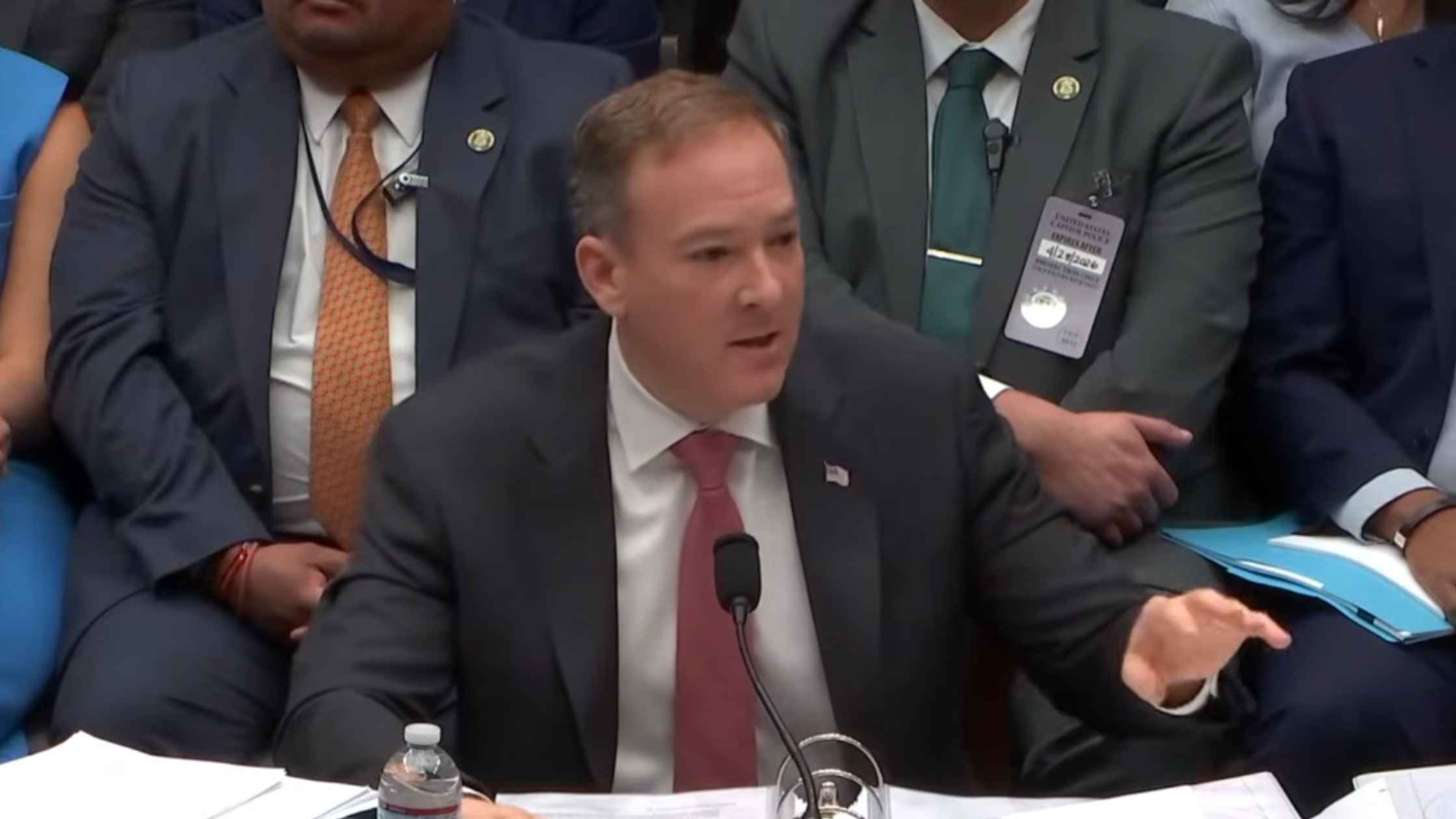
Congressman Morgan Griffith (20:45):
Subcommittee will come to order, but before we begin, I want to note for the record that I am filling in for subcommittee chairman Gary Palmer. Gary had a conflict arise in scheduling and was unable to attend this morning's hearing. I now recognize myself for five minutes. Today we will consider President Trump's fiscal year 2027 budget request for the U.S. Environmental Protection Agency. I'm glad to welcome back Environmental Protection Agency Administrator Lee Zeldin, who I and many of us remember fondly from serving with him in the House and working with him in his capacity as administrator.
(21:25)
Administrator, when you testified before this committee last year to discuss EPA's budget request for fiscal year 2026, I noted that you faced a difficult but important job as the EPA administrator. I believe that you've done an excellent job as administrator. The people across my district have been excited to see the direction that you and President Trump have steered the EPA under your Great American Comeback initiative. Thank you and President Trump for returning the EPA to its rightful role of protecting human health and cleaning up the environment, not as an anti- jobs agency.
(22:01)
It is refreshing to see the Trump administration take a measured and thoughtful approach to regulation and enforcement, unlike under the previous administration where the agency operated as a center for pushing uncompromising ideologies. The EPA under Trump has closely followed its enabling statutes and not stretched the meaning of the law for the benefit of overzealous activists. I commend you for taking a pragmatic approach to regulatory actions that closely uphold the laws the EPA is charged with enforcing. The EPA has done great work over this past year from cleaning up sewage spills in California to expediting superfund site closures and to clarifying Clean Air Act guidance.
(22:46)
You were tasked with undoing the regulatory overreach of the Biden-Harris administration and refocusing EPA's work, and I believe you're off to a good start. Also, I would like to take a moment to personally thank you and President Trump for prioritizing the rollback of blatantly anti-coal regulations that were churned out and what seemed to me to be almost a monthly basis by the Biden-Harris EPA. Under your leadership, EPA finalized a repeal of the Obama administration's 2009 so called greenhouse gas endangerment finding under the Clean Air Act, which led to a series of costly regulations that limited consumer choices. And as I pointed out at the time that originally started coming out, I didn't understand how you could do one side of the science and not the other side of the science. There was no balance, counterbalance. It was just one side of the story.
(23:37)
Over the past year, the EPA has also worked to improve permitting guidance under the Clean Air Act. EPA has prioritized actions to safeguard drinking water, including proposing to require monitoring of microplastics, PFAS, and pharmaceuticals under the Safe Drinking Water Act. Administrator, you have also been successful in reigning in the wasteful Green New Deal and DEI initiatives that characterized the Biden administration. For fiscal year 2027, President Trump is requesting 4.2 billion in new budget authority for the EPA. This budget proposal would provide more than 2.5 billion for EPA environmental management programs, as well as almost 750 million in grant assistance for states and tribes, more than 500 million for science and technology activities, and 290 million for superfund site cleanup.
(24:28)
Despite what our friends across the aisle may say, this is a significant amount of taxpayer dollars. It is important to remember the EPA received a very large 100 billion in appropriations for fiscal years 2022 through 2026 from the Infrastructure Investment and Jobs Act and the Inflation Reduction Act. Such heavy funding levels or high funding levels over 10 times the average historical EPA appropriation was intended to be a one time once in a generation supplement with much of the increased funding for specific water infrastructure and cleanup programs. These appropriations were never, never intended to be the new normal for EPA funding. This budget request is fiscally responsible and focuses on infrastructure and distinct cleanup goals.
(25:21)
The EPA's budget request will continue to support EPA's core programs and is in line with limited legal authority and cooperative federalism framework that Congress envisioned for the EPA. It is important for Congress to examine how the laws it enacts are working and whether they need to be amended or even repealed. When I was chairman in the Environment Subcommittee, we began reviewing all of EPA's statutory authorities. Chairman Palmer has continued with this important work by holding hearings and markups on reauthorizations for the Toxic Substances Control Act, the brownfield laws, the Safe Drinking Water Act, and by considering amendments to the Clean Air Act and the federal waste and recycling laws.
(26:08)
Thank you again for coming before us today, Administrator Zeldin. I look forward to hearing about your priorities for the EPA and how Congress can help ensure that we have clean air, clean water, and good jobs. With that, I yield back and now recognize my colleague, the ranking member, Mr. Tonko from New York for his five-minute opening statement.
Congressman Paul Tonko (26:29):
Thank you, Mr. Chair. And Administrator Zeldin, welcome. Welcome back to the subcommittee. Fiscal year 2027 budget request proposes a more than 52% cut to EPA. This includes a 91% reduction to categorical grants that states rely upon to support implementation of environmental laws. The EPA's budget claims it will empower states through cooperative federalism, but we all know what this really is. It's cost shifting, requiring states to find more revenue to carry out federal requirements at a time when costs for Medicaid, nutrition assistance and other programs are being passed on to those state budgets. This budget request also claims to return primary responsibility for water infrastructure to state and local governments.
(27:16)
And it includes a nearly 90% reduction to the state revolving funds, over $2.5 billion, which local governments rely upon to finance water system projects. This budget completely fails to recognize that the federal government is currently responsible for a whopping 4% of water systems capital and operating expenses. 96% of water utility expenses are paid for by non-federal sources, primarily customers. If the federal government further reduces its financial commitment, people inevitably will see their water bills go up, especially as systems work to reduce risks from lead, PFAS, and other public health issues.
(28:01)
It is an understatement to say that I am concerned by the direction of the EPA, and I believe the American people are right to be concerned also. Let's just look at the agency's track record on protecting people from dangerous chemicals. The Trump administration's first MAHA Commission report correctly identified industry capture of EPA's chemical safety program as a problem. Today, there are several political appointees running EPA's chemical safety program who previously worked for the chemical industry, and I suspect they will return to lucrative jobs working for the industry at the end of this administration. And why do I suspect this?
(28:42)
Because some of these very same people also worked in the chemical safety office during the first Trump administration and then went on to work on behalf of chemical manufacturers during the Biden administration. With such strong past financial ties and the high likelihood that their future incomes will come from the companies they are charged with regulating today, can there be any doubt why people are suspicious that this EPA may not put the health and safety of regular Americans over those of the interest of powerful chemical and pesticide manufacturers. This is to say nothing of the industry representatives and industry paid consultants who have been appointed to EPA's science advisory bodies.
(29:24)
Inevitably, empowering people with such obvious and deep financial connections to regulated industries erodes public confidence in the agency's willingness to be an effective regulator. And this is a problem that can be found across program offices. Last year, Administrator Zeldin, you announced a major deregulatory agenda despite analysis that the rules targeted for repeal were estimated to save thousands of American lives and billions of dollars each year. Time and time again, we have seen that to effectuate this agenda, EPA has has needed to change its cost-benefit rules and ignore agency and independent analyses that have not agreed with the administrator's predetermined outcomes.
(30:09)
In January, EPA announced it would stop considering the value of lives saved from putting limits on air pollution. EPA ignored its own analysis that a rollback of limits on mercury pollution threatens public health that imposes costs on Americans. EPA also ignored its analysis of the revocation of the endangerment finding, which found that the cost of the action would indeed outweigh any savings. President Trump has issued sweeping exemptions to entire industries from complying with hazardous air pollution standards, which were granted with no transparency and seemingly no analysis of how they might harm public health.
(30:52)
And to repeal vehicle standards, EPA's analysis found that elimination of these standards would increase consumer costs and gas prices, adding another $3 billion per year in fuel costs by 2035 for American drivers. And you can bet that EPA took a rosy estimate of future gas prices. It certainly did not account for President Trump's illegal war with Iran, which has now raised average gas prices to over $4.10 per gallon. This deregulatory agenda is giving Americans the privilege of paying more to have worse health outcomes because apparently in the Trump administration, the only costs worth considering are how much environmental protections will affect polluting corporation's bottom lines.
(31:35)
EPA's budget cuts and deregulatory actions will result in more pollution while reducing our scientific capacity to understand just how pollution will impact Americans' health and wellbeing. I find that unacceptable, and I believe most Americans would agree. With that, Mr. Chairman, I thank you and yield back.
Congressman Morgan Griffith (31:54):
Gentleman yields back. Now recognize the chairman of the full committee, Mr. Guthrie, for his five-minute opening statement.
Congressman Brett Guthrie (00:00):
Congressman Brett Guthrie (32:00):
Good morning and thank you Chairman Griffith for holding this hearing and for being here today. Welcome back, Administrator Zeldin. Great to have you here. We look forward to hearing about your plans for Environmental Protection Agency over the next fiscal year. But first, I want to commend you and your team for restoring EPA to its core mission to protect human health, and the environment within the statutory authority in the mandates provided by Congress. As a former member of Congress, you respect the Constitution, including Article 1. The Biden administration and the Obama administration before it both pushed laws like to Clean Air Act far beyond what Congress had intended, and blindly pursued a hostile regulatory agenda to shut down the fossil fuel energy producers and critical manufacturers. You have reigned in the EPA within bounds of the law while ensuring it fulfills its statutory duty. You have also been laser focused on making sure taxpayer dollars are invested wisely, and have worked hard to end wasteful spending on the Green New Deal and DEI programs.
(33:05)
EPA's budget request strikes a balance between building on historic investments and core programs, and responding to current environmental and economic challenges. We especially appreciate the budget request focusing on improving permitting, and the cooperative federalism framework that respects the role of states, tribes, and local communities. Restoring public confidence in EPA's science activities and positioning EPA to both support and benefit from the rise of the AI economy and a strong domestic manufacturing base. We need for the United States to be a leader in innovation, freedom and economic prosperity, to compete effectively with China, and to maintain a healthy environment for our constituents. We appreciate your hard work and willingness to serve in this very important role. We appreciate you being here on Capitol Hill, your old home, and welcoming you to the committee and look forward to working with you, and I yield back.
Congressman Morgan Griffith (34:00):
Gentleman yields back. Now recognize the ranking member of the full committee, Mr. Pallone of New Jersey for his five-minute opening statement.
Mr. Pallone (34:06):
Thank you, Mr. Chairman. President Trump's budget, in my opinion, is an insult to the American people. In every opportunity, this budget undercuts public health, affordability, and sensible environmental protections to line the pockets of Trump's corporate polluter friends. The budget would cut funding for the Environmental Protection Agency by more than 50%, the largest cut in EPA's history. This would hamstrung EPA's ability to fulfill its core mission of protecting human health in the environment. And despite claims to the contrary, it fails to deliver on the Trump administration's promise to make America healthy again. The budget eliminates nearly all state categorical grants, all but ending the cooperative federalism that has made EPA so successful in cleaning up toxic pollution and providing healthier futures for Americans. EPA is deserting the states to deal with serious climate and pollution issues on their own, while EPA focuses on giving polluters free passes to poison our communities with reckless abandon.
(35:06)
The budget also takes a sledgehammer to the clean water and the drinking water state revolving funds, which are the primary funding sources for water infrastructure projects. At a time when communities are experiencing aging infrastructure and rising water costs and are fearful of threats of contamination, these funds are critical to ensure all communities have access to safe, affordable water. And the Trump administration clearly doesn't recognize this value, especially when you consider EPA's plans to rescind and delay the historic PFAS drinking water standards that were put in place during the Biden administration to protect public health. Now, under Administrators Zeldin, the EPA is going in a dangerously wrong direction. At every turn, Administrator Zeldin has demonstrated that he is at the beck and call of special interests, providing broad exemptions and handouts to his polluter friends. He has eliminated EPA's climate and clean air work, turned his back on environmental justice communities, and looked the other way as bad actors poison communities across the United States.
(36:05)
What is potentially most egregious is EPA's shockingly irresponsible rollback of the landmark endangerment finding, which that rollback, in my opinion, has no basis in law, science, or reality, especially in 2026. EPA is abandoning its responsibility to protect human health and the environment from the harm of air pollution, replacing it with nothing. Ensuring the climate crisis gets far worse puts the health of Americans in jeopardy. It'll result in even higher food and electricity than we're also seeing due to the Republican affordability crisis. And it'll put home-ownership even further out of reach as unchecked pollution wrecks havoc on property values, insurance rates, and jobs. It will also cause cascading consequences across all sectors of our economy. And at a time when Trump's reckless war of choice with Iran has already caused gas prices to skyrocket, EPA eliminated all clean vehicle standards and incentives, increasing costs on families and businesses when they can least afford it, the fact that EPA conveniently ignores.
(37:09)
Simultaneously, the Zeldin EPA has slashed critical protections by leaving radioactive coal ash in unlined ponds and communities, reversing limits on cancer causing ethylene oxide pollution in cities, and allowing the chemical industry to burn plastic. From the agency tasks with protecting our public health and safety, these rollbacks cater to the whims of polluting interests while American communities pay the price. And finally, the effectiveness of the agency hinges on EPA having the career staff necessary to fulfill its mission. They're the backbone of the agency. Yet Administrator Zeldin's actions to indiscriminately fire hundreds of employees and retaliate against those who raise concerns about the mismanagement of EPA show a blatant disregard for the clinical work career staff conduct on behalf of the American people every day. He's created such a toxic and hostile environment for career staff that EPA has lost about a quarter of its staff since Trump assumed office, and that doesn't make the government more efficient, it simply decimates EPA's ability to effectively do its job.
(38:14)
So in my opinion, EPA's mission is to protect human health and the environment, and that should be its north star. Yet at every turn, Administrator Zeldin has placed polluter's favors over the needs of the people the agency is tasked with protecting. The agency should be taking action to protect our air, water, and public health. But unfortunately, it seems the administrator's legacy will be selling the health of Americans to the highest bidder. And with that, Mr. Chairman, I yield back the balance of my time.
Congressman Morgan Griffith (38:42):
Gentleman yields back. We now conclude with member opening statements. The chair would like to remind members that pursuant to committee rules, all members' opening statements will be made a part of the record. We want to thank our witness for taking his time to testify before the subcommittee today. Although it is not the practice of this subcommittee to swear in witnesses, I would remind our witness that knowingly and willfully making material false statements to the legislative branch is against the law under Title 18, Section 1001 of the United States Code. You will have an opportunity to give an opening statement followed by questions from members. And our witness today is Lee Zeldin, former member of the house and administrator of the US Environmental Protection Agency. Per committee custom, our witness will have the opportunity for a five-minute opening statement followed by a round of questions from members.
(39:27)
The light is on the timer in front of you and will turn from green to yellow when you have one minute left. I now recognize you, Administrator Zeldin, for your five-minute opening statement.
Administrator Zeldin (39:37):
Well, thank you, Chairman Griffith, Ranking Member Tonko, Chairman Guthrie, Ranking Member Pallone, members of the committee. I appreciate the opportunity to appear before you today to discuss the President's fiscal year 27 budget request for the US Environmental Protection Agency. From day one, I have made it clear that we are going to fix the mess that we inherited and reaffirm our commitment to cooperative federalism, understanding that the best solutions are found outside of Washington. Last year, EPA political and career leadership worked to reorganize the agency workforce to better support EPA's mission, fulfill statutory obligations, protect human health and the environment, and power the great American comeback. This past January, at the one-year mark of President Trump's term in office, I announced 500 top environmental wins from during that first year. These actions directly advance our agency's core mission. EPA environmental accomplishments these past 15 months include the signing of the historic agreement with the Mexican government to end the decades long Tijuana River sewage crisis.
(40:47)
Highlights also include responding to the Potomac River interceptor collapse, accelerated enforcement efforts to stop foreigners from profiting off sending poisons and pollution to the United States, and unlocking billions of dollars in funding to reduce lead and drinking water. Our commitment to gold standard science at EPA guided our decision to bolster scientists in our national program offices and established the office of applied science and environmental solutions. We inherited a backlog of chemicals and pesticides from the Biden administration. The Office of Chemical Safety and Pollution Prevention has worked tirelessly to bring down this backlog while keeping pace with new incoming reviews. With the addition of new technologies and scientists, our team of dedicated career and political staff has made tremendous strides. At the same time, I announced last March, the largest deregulatory action in our nation's history. This announcement consisted of 31 actions to apply common sense, unleash US energy dominance, and strengthen the American economy.
(41:58)
In February of this year, we proudly announced the elimination of the 2009 endangerment finding. This has been the source of 16 years of consumer choice restrictions, and trillions of dollars in regulatory costs for Americans. The Trump EPA believes growing our economy, bringing down costs, and protecting the environment, is all achievable and we are proving it every day. President Trump is committed to rebuilding baseload power, including coal, which is vital to our national security, and to the wallets of taxpaying Americans. The Biden EPA tried hard to strangulate coal out of existence and we are urgently reversing that damage. Meanwhile, I fulfilled a commitment that I made during my confirmation to visit all 50 states as EPA Administrator, and I completed that effort in just nine and a half months. I heard from many of your constituents about the hardships burdensome regulations cause. Faithfully abiding by the Supreme Court's decision in Sackett, we are working to finalize a clear, durable waters of the United States rule.
(43:06)
We're reigning in federal overreach and gutting the prior administration's so called Good Neighbor rule, which was used on an ill-advised expansion of federal jurisdiction. The good news is that EPAs, once again, working closely with our state partners on their state implementation plans. We are committed to advancing cooperative federalism and recognize the important responsibility EPA shares with our state agency partners to ensure clean air for all Americans. The Trump EPA is serious about ensuring future generations inherit clean air, land, and water, and the foundation for healthy lives. That is why I recently announced alongside HHS Secretary Robert F. Kennedy Jr., the EPA is adding micro plastics and pharmaceuticals to our contaminant candidate list for the first time ever. The president's FY27 budget will continue to make EPA efficient and effective stewards of American's hard-earned taxpayer dollars, and fulfill all our statutory obligations and our core mission.
(44:08)
This budget proposal captures significant efficiencies, and a return focused on what Congress has directed us to do, demonstrating our commitment to a leaner, more efficient, and accountable EPA focused on environmental work that directly benefits the American people. I look forward to answering your questions. Thank you.
Congressman Morgan Griffith (44:30):
Thank you very much, administrator. We will now begin questioning. I'd ask that members not begin a new question to our witness as their five minutes is about to expire. So if you look up at the clock and you only have about 15 seconds, you can make a statement, but please don't ask a question. You've got plenty of time to do that as a written question for the record. And that being said, I will now recognize myself for five minutes. And first, I would like to offer for introduction the list that Administrator Zeldin mentioned in his opening statement of the more than 500 things done in the first year of the EPA's accomplishments under the Trump administration, and that has been offered to my colleagues. Without objection, we'll add that to the committee document list. Hearing none. All right. Now also we heard comments about how the budget slashes EPA funds.
(45:25)
I mentioned this in my opening where I said that the monies that came from the Inflation Reduction Act and the Infrastructure Act were meant to be a one-time shot in the arm for special projects. No matter how that money was spent, it was never intended to be a new norm at the EPA for spending. Is that your understanding as well, administrator?
Administrator Zeldin (45:48):
A budget that was an annual operating budget of about $10 billion a year, EPA in 2024 obligated and spent over $60 billion. It was more money than they knew how to spend. It was money that was disseminated to left-wing NGOs. It was given out to former Biden and Obama officials, Democratic donors. They created entities that at times would go through up to four pass-throughs where each of them were taking their own cut to administer the dollar. By design, when Congressional and Democrats put forth the Inflation Expansion Act, they were using it to raid the taxpayer till to be able to pay off those people who had supported them through the years. Fortunately, the era of tossing gold bars off the Titanic, that's the word that the Biden administration was using to describe how they were spending the money, those days are done. We are being responsible steward of taxpayer dollars without any apology or regret, even though I know that makes a lot of your colleagues on the other side of the aisle quite sad.
Congressman Morgan Griffith (46:51):
And you feel that the budget requests from the administration is one that's appropriate for the EPA to be able to get its core functions done, is that correct?
Administrator Zeldin (46:58):
Not only will we be able to fulfill all of our statutory obligations, we will be able to do more with less. We inherited backlogs of over 14,000 pesticide reviews, 500 in new chemicals, 175 small refinery exemptions, blown deadlines on setting numbers for renewable volume obligations, hundreds of state implementation plans. The core statutory obligations set by this body were ignored by our predecessors. And guess what? All of those backlogs are either eliminated, or greatly reduced since we came in, doing more with less. Wild concept.
Congressman Morgan Griffith (47:35):
Congratulations. All right. Let me move to some stuff important to my district. Under the Biden EPA, the Coal Ash Rule was one size fits all in its approach and unfortunately had the effect of discouraging beneficial reuse of coal combustion residuals in concrete and drywall. Why should the encapsulation and recycling of coal ash be encouraged?
Administrator Zeldin (47:54):
It's important for anyone who cares about the environment. There are good, as you referenced, it's called beneficial reuse. It is putting to good use what is being produced by these plants. While plants have enacted, for example, the 2012 Mercury and Air Toxic Standards, which were strict, and we see them continuing to improve their environmental technology rather than trying to get rid of coal altogether through a combination of regulations, coal combustion, residual, steam electric, ELG, clean power plan 2.0, and more, they were trying to send this message to coal miners that they should just learn the code. Well, this is reliable, durable, baseload power, that is important to provide to American families, and we are reversing that damage in earnest. And one of the ways to do it is to understand the benefits of beneficial reuse and to make sure that we are supporting it, not suffocating it.
Congressman Morgan Griffith (48:58):
Yeah. And Virginia Tech in my district is studying how to recover rare earth elements from coal ash, which could strengthen domestic supplies. Now, it's not an easy thing to do, but it would strengthen our domestic supplies of rare earth. How would the previous Coal Ash Rule have restricted these uses?
Administrator Zeldin (49:17):
Well, for one, the goal was, and then as we saw coming in, the effective implementation of these 2023 and 2024 rules that were put forth by the Biden administration was leading to coal plants all across the country to announce that they were closing altogether. That was by design. There are people who serve in this body who will talk about a source like wind as if it is a substitute for baseload power. They just don't care that you have many states across this country that rely on coal in order to heat homes. When you're going through a winter like we just went through where so many families for so long were so cold, rather than ramping up baseload power, they're trying to get rid of it, and we don't play along with that and we're proud of it.
Congressman Morgan Griffith (50:11):
I appreciate that. My time is up. I yield back, and I'll recognize the ranking member of the subcommittee, Mr. Tonko, for his five minutes of questioning.
Congressman Paul Tonko (50:17):
Thank you, Mr. Chair. Administrator Zeldin, last June, hundreds of current and former EPA employees signed an open letter to you raising their concerns about the way you've mismanaged the EPA, undermined science, and harmed communities across our country. EPA emails from that time show that EPA's Office of General Counsel advised that, and I quote, "The letter is likely protected speech under the First Amendment," and that again further, "The agency should not take any personnel actions against employees who signed the letter or take any other action against them that may be viewed as retaliatory or that may have a chilling effect on other employees taking similar action." Likewise, the director of EPA's Ethics Office wrote that the employees are simply exercising their First Amendment rights, and in another email wrote that, and I quote, "There is no ethics concern." Mr. Chair, I asked unanimous consent to enter in the record emails conveying legal guidance and assessments on July 1st and July 2nd of 2025, as well as an E&E news article published on July 3rd of 2025.
Congressman Morgan Griffith (51:27):
All right. I'll have the team take a quick look at it, but it shouldn't be a problem. We'll add it to the committee document list.
Congressman Paul Tonko (51:33):
I thank you. Despite the view of EPA's Office of General Counsel, that these employees were exercising their rights and should not be punished, you placed nearly 150 employees on paid administrative leave for roughly two months, and investigated them before most were finally allowed to return to work. So Administrators Zeldin, why did you retaliate against EPA employees speaking out against your leadership at EPA despite clear opinions from the General Counsel's Office and Ethics Office that these employees were exercising their constitutional rights?
Administrator Zeldin (52:06):
Well, obviously I'll disagree with a lot of the premise of your question. What I instructed my team to do was to conduct an investigation. They conducted an investigation. There was personnel all across the agency that recommended different actions for personnel following the investigation. There were then deciding officials that acted on the recommendation of those people from across the agency, and then different areas of discipline were then followed through with. It was following an investigation. It was done on the advice of counsel, but I would imagine that you know that, and deciding not to include that, but that's okay.
Congressman Paul Tonko (52:47):
Well, but did you consult with the Ethics Office or the General Counsel's Office before taking the action?
Administrator Zeldin (52:55):
The action that I took was instructing our team to conduct an investigation.
Congressman Paul Tonko (53:01):
Well, how much did EPA spend paying the employees that you put on leave instead of allowing them to continue their work as they should have been allowed to do?
Administrator Zeldin (53:11):
We're going to conduct the investigation, and then you're going to have a recommendation that comes from across the agency and their decisions on those recommendations. It's a process that I would do again.
Congressman Paul Tonko (53:23):
Well, if you could get back to the committee in terms of the amount paid, the employees that were put on leave. Not only did you violate the law and the rights of these employees, you wasted taxpayer dollars and deprived the public of the work of these employees. Now, with the TSCA program, the new chemicals program, there is a significant backlog of chemicals under review. I know you said that you inherited this backlog from the Biden administration. The Biden administration would say they inherited it from the first Trump administration. We can go back and forth pointing fingers all day, but would like to talk about where we go from here. EPA's budget request was developed with the intention to reduce this backlog. You tell us how important TSCA's fee collection authority is to having the personnel and resources necessary for this office to do the work.
Administrator Zeldin (54:12):
It's very important for the Office of Chemical Safety to have the personnel as well as the IT advancements in order to be able to do their work. When we went through a reorganization, we added scientists. We added personnel to that office to get through that backlog. We also were implementing a congressional appropriation from March of 2025 of $17 million to update the IT inside of that office, which was a very important appropriation by Congress, because when the system would go down for days, that will end up resulting in a lot of lost time. Congress obviously faces decisions to make between now and the end of September as it relates to an expiring fee. As far as what we're doing inside of the Office of Chemical Safety, it's been to increase bandwidth since the moment that we have come in, both with scientists, personnel, and IT.
Congressman Paul Tonko (55:10):
Reclaiming my time, I have other questions on timeline and transparency that I'll get via the subcommittee to your office. And with that, I thank you, Mr. Chair. I yield back.
Congressman Morgan Griffith (55:20):
Thank you, sir. Gentleman yields back. Now recognize the chairman of the full committee, gentleman from Kentucky.
Congressman Brett Guthrie (55:26):
Thank you, Mr. Chairman. Thanks for being here, Administrators Zeldin. And I think when you first came to Congress, we connected because I went to college in New York. I remember talking about Long Island. I went to, not on Long Island, but down river at West Point, from Mr. Tonko just a little bit. And when I was there, the Hudson River was polluted, it was being cleaned up. First time I ever remember, I guess, knowing of Robert Kennedy Jr., other than his father, this famous name is cleaning up the Hudson River. And so I ask these questions to know that we should never be in that situation ever again. But I know we have AI coming, we have a surge in need of energy. So can you discuss how reforms... Now we're not changing the standard of the Clean Air Act, how we implement it. So can you discuss how reforms of the Clean Air Act and the Toxic Substance Control Act will help the United States support advanced manufacturing and domestic energy?
Administrator Zeldin (56:17):
Well, first off, Chairman, thank you for being here. I just wanted to point out that the work on the Hudson River PCB Superfund Site has been a very important effort of EPA. I'm actually surprised that the ranking member didn't ask about it, but I appreciate the chairman from Kentucky asking about it. And in early January of '25, EPA came in, obviously inheriting many years of hard work. Secretary Kennedy deserves a ton of credit. Their recent review, the five-year review concluded that the levels of PCBs in water and fish are going down. We have seen new stories in recent weeks where people are catching fish and eating it. The water quality has greatly improved, and that work continues. But as far as priorities of yours under the Clean Air Act, where do you want me to start?
Congressman Brett Guthrie (57:13):
Well, we want a situation that's nothing like that, but what do you think we need to do so we can get the permitting done quicker? Not changing any standards, get the permitting done quicker so we can compete with China?
Administrator Zeldin (57:24):
So I know Congress is considering a number of different actions and looking at modernizing the Clean Air Act, Clean Water Act, Endangered Species Act, NEPA. I commend the efforts of this committee as it relates to that permitting. I would say that a good permitting bill will result in a permitting process that takes less time, costs less money, and has more certainty. If it sacrifices any one of those three, you can easily turn a good bill bad. We, through the White House Council of Environmental Quality, have a list of recommendations as it relates to each of these laws I cited. EPA has additional ideas on top of that. I believe that we have provided that list. We can provide that again to any members of your caucus who are asking for it and involved in this process. There are many ways that you can modernize these landmark laws that have been on the books for a long time, to have a permitting process that takes less time, costs less money, and has more certainty, and we'd like to help.
Congressman Brett Guthrie (58:29):
So one of the things that drives our economy's automotive industry, and last year we repealed the mandates from the electric vehicle mandates. Also, you repealed... Can you explain, I'll just ask you this straight up. Can you explain how the repeal of the endangerment finding helps consumers, supports manufacturers, and complies with the Clean Air Act?
Administrator Zeldin (58:52):
For one, it's going to result in $2,400 per new vehicle with savings. But this is a combination. As you pointed out, there are multiple actions that have been taking Congress. Through the Congressional Review Act, got rid of the electric vehicle mandate in California. And I absolutely commend those of you in this body who were leaders in that effort to make sure that that happened. We've seen an announcement from Secretary Duffy with the President and the Oval Office as it relates to cafe standards. As it relates to 2009 endangerment finding, this was not just a decision to rescind a 2009 endangerment finding, but also all greenhouse gas emission standards on light, medium, and heavy duty vehicles that followed, and all off-cycle credits, including the Obama Climate Participation Trophy to manufacturers to create an incentive to have that annoying start-stop feature in vehicles, which is gone as well, which by the way, seems to be the aspect that Americans have related to the most and they've been most passionate about and supporting the action.
(59:58)
We believe that Americans should be able to buy whatever vehicle they want. And when manufacturers are able to make the vehicles that customers want, as opposed to those vehicles that politicians and bureaucrats demand, you end up with a market where you don't have vehicles that are created to just sit on lots like we're seeing with electric vehicles. So applying common sense, following the law, and being able to pursue these efficiencies and empowering consumer choice is a great win that Americans voted for November 2024 and President Trump, and Republicans in Congress have been delivering on.
Congressman Brett Guthrie (01:00:37):
Time has expired. Now I yield back.
Congressman Morgan Griffith (01:00:38):
Gentleman yields back. Now recognize the ranking member of the full committee, Mr. Pallone for his five minutes of questioning.
Mr. Pallone (01:00:43):
Thank you, Mr. Chairman. EPA's mission is to protect human health in the environment. In its 2027 budget request, EPA says the agency is, I quote, "Taking action to ensure cleaner, healthier air, improves quality of life for all Americans, especially children who are particularly vulnerable to air pollutants and advances administration's priorities set forth in the Make America Healthy Again Initiative." So Administrator Zeldin, yes or no, please. Do you agree that it is an important part of your job to protect the health and safety of children?
Administrator Zeldin (01:01:15):
Absolutely.
Mr. Pallone (01:01:16):
Thank you. And I agree too. But unfortunately, in my opinion, under your leadership, EPA has taken actions that will increase our children's risk of exposure to harmful toxins. And last March, EPA set up an inbox for companies to request exemptions from critical Clean Air Act safeguards that protect Americans from pollution. And while the Trump administration provided no transparency into this process, an organization attained some of these requests through FOIA. And the documents show that 71 coal plants in 24 states will not be required to comply with the updated Mercury and Air Toxic Standards that were set to go into effect next year. And because of this polluter giveaway, the people living near those power plants will be exposed to higher levels of mercury, arsenic, and other toxic pollution, that can cause heart and lung disease, cancer, and brain damage, and children are especially vulnerable. Every single company that requested an exemption from a suite of Clean Air Act Section 112 standards, and even some facilities that didn't ask, were given a two-year free pass to poison our air under this initiative.
(01:02:24)
So let me ask you, administrator, were the potential health impacts on those living in the communities around those facilities evaluated, particularly with regard to children? And if so, who performed those evaluations and what risks and benefits were considered, if you will?
Administrator Zeldin (01:02:41):
Under the Clean Air Act, decisions on Section 112 presidential exemptions are made by the President. EPA's role was to accept the submissions and transmit them to the White House consistent with this statute. The White House has publicly posted the proclamations and annexes listing the sources that received exemptions, including actions on April 8th, July 17th, October 24th, and November 21st of 2025.
Mr. Pallone (01:03:05):
So the law provides that the President can grant exemptions. That's true, but they must be based on merit. So did President Trump or someone in the White House review and evaluate each exemption request?
Administrator Zeldin (01:03:20):
As I pointed out, the role of EPA was to accept the submission and transmit them to the White House.
Mr. Pallone (01:03:26):
So you just accepted it, okay. Does allowing more mercury, arsenic, or other toxic pollution make Americans healthy, in your opinion?
Administrator Zeldin (01:03:34):
Fortunately, since the 2012 mercury neurotoxic standards that were put into place, very strict standards that were put into place, there were substantial reductions. Fortunately, because these are toxins and reducing them is an important goal that EPA has been leading the way on.
Mr. Pallone (01:03:53):
Well, look, I think that poisoning our air and water makes Americans sicker. And based on EPA's own data, facilities
Mr. Pallone (01:04:00):
Facilities that were given these waivers saw the biggest jump in pollution last year. So there's no question that there was more pollution as a result of these waivers. But I think the whole process was an enormous giveaway to polluters with zero consideration for the Americans whose health will suffer. And frankly, I think it's shameful.
Administrator Zeldin (01:04:24):
There's more pollution even though it hadn't even gone into effect yet. Is that your position? You just stated that [inaudible 01:04:30].
Mr. Pallone (01:04:33):
My position is that I see every effort being made to increase pollution as a result of these exemptions. And I believe it's being done by the president or you, or at least as you enabler because of what the president tells you to do, to help polluters as giveaways to the corporations that pollute.
(01:04:52)
But look, I have to ask one more question, and this is a local issue, administrator. So let me just mention it. Earlier this month, I sent EPA a letter about a suspected cancer cluster in Keyport, New Jersey, which is in my district, demanding that the agency work with other federal and state partners to secure the site and address the ongoing contamination. And corporate polluters have been let off the hook for too long in this area and the community is paying the price. And I think this matter deserves the full attention and force of our public health and environmental agencies.
(01:05:25)
So Region 2 administrator, I do want to say it, has been cooperative. He met with my staff last Friday to discuss this cancer cluster and possible remediation of the landfill that we believe may be causing it. So I just wanted to mention it to you and ask you to prioritize this issue as we proceed with the Region 2 administrator to address remediation and the health concerns. If I can ask for your commitment.
Administrator Zeldin (01:05:52):
And you're asking about Aeromarine Landfill?
Mr. Pallone (01:05:54):
Yes, exactly.
Administrator Zeldin (01:05:55):
Absolutely. We're very well aware of it. The Region 2 administrator has briefed me on it. I know how much of a priority it is. This is an issue that New Jersey DEP has been on the lead on enforcement at the landfill. They have not asked for our assistance, but we stand ready to help.
August Pfluger (01:06:16):
Gentleman's time has expired.
Mr. Pallone (01:06:17):
Yeah. I just wanted to say they've been working with us and I appreciate that. Thank you.
August Pfluger (01:06:21):
The gentleman's time has expired. The chair now recognizes myself for five minutes. Director, thank you for being here. Thank you for your service in righting the ship. My colleagues across the aisle claim that this EPA's deregulatory actions are killing Americans couldn't be more false. The truth is actually the opposite. And what kills Americans is unaffordable energy and a unreliable electric grid. And that's exactly what the previous administration's EPA was delivering. The Biden EPA imposed trillions of dollars in regulatory costs based on widely inflated benefit calculations assigning speculative dollar values to statistical lives while ignoring the real world consequences of making energy unaffordable. 25 million American households have reported going without food or medicine to pay their energy bills. That is the human cost of regulatory excess.
(01:07:10)
This EPA is doing what the agency is supposed to, rigorous, honest cost benefit analysis, not rubber-stamping regulations that strangle reliable energy production while claiming to save lives on a spreadsheet. Affordable, reliable energy is the foundation of American health and safety. And Administrator Zeldin, your reforms are protecting Americans not by speculating about benefits, but by delivering them.
(01:07:31)
And I'll get to Loper Bright. It's shameful that some of our colleagues have no idea what Loper Bright actually is and what it does. Thank you for the words that you had yesterday at a hearing here on Capitol Hill. And Loper Bright happened because of left wing EPA overreach. That's exactly why we are here. And I'd like to ask you, how do you respond to the claim that faithfully reading the Clean Air Act as written somehow harms public health, and what actual authorities did Congress provide that this administration is now properly executing to benefit health?
Administrator Zeldin (01:08:03):
Thank you for asking. For a long time, the Chevron doctrine was in place. This got challenged. For those who aren't familiar with the Chevron doctrine, basically agency heads were looking at federal statute and would get creative. The statute wouldn't say that an agency head can't do something. So they'd say, "Well, I guess that means that we can." We saw that used inside of the 2009 endangerment finding. If you read the endangerment finding throughout it, you'll see that discretion being used just because it doesn't say we can't, well, I guess that means we can. Well, the Supreme Court weighed in in Loper Bright and said, "You can't do that anymore." That you have to follow the best reading of statute.
(01:08:42)
The major questions doctrine, which was also put forth by the Supreme Court in recent years in their cases also say that an agency can impose trillions of dollars of regulation on their own. That's something that should have a debate and a vote in Congress. And what does that all mean when a member might be upset that we repealed the 2009 endangerment finding? Well, if you want an agency like EPA to impose trillions of dollars of regulations and regulate the heck out of greenhouse gas emissions, it's really simple. Introduce a bill, debate it, get it passed, change the law, and we'll follow the law. The commitment that I made when I was nominated, the commitment that I reiterate here today is I will follow the best reading of the law, period.
August Pfluger (01:09:29):
Thank you for that. And I'll ask, can you provide an update regarding what actions the EPA is considering on the reconsideration of OOOOb/c, which cost hundreds of billions of dollars in excess and is another example of left-wing overreach?
Administrator Zeldin (01:09:44):
Absolutely. This has been a multiple phased process. We delayed a compliance deadline to allow us to fix the flaws with the OOOOb/c regulation. We just announced that second phase of the reconsideration. We're about to announce a third phase. As soon as this week, we'll be putting out updated guidance to make sure that those who look at OOOOb/c and have to comply with OOOOb/c understand exactly what that rule means and how the agency interprets it. This is a really important topic for a lot of our country, a lot of our economy. We want more reliable base load power. We want to leash energy dominance and OOOOb/c is a vehicle that was used to cause a lot of harm to much of this country, including a lot of Texas.
August Pfluger (01:10:41):
And it ignores the facts that between 2011 and 2020, methane emission intensity has dropped 70% just in the Permian Basin while production of oil and gas has increased 320%. So it ignores those facts. I appreciate the work you've done, Administrator, to revisit and improve certain aspects of the AIM Act implementation and I've heard constructive feedback from stakeholders in Texas on those efforts. And at the same time, some have raised concerns about the HFC management rule, particularly in compliance challenges, that it creates for refrigeration in grocery stores and other places. Can you give us an idea whether the agency is considering near term reconsideration or adjustments of the HFC management rule? I'm sorry, I only have 10 seconds left.
Administrator Zeldin (01:11:24):
So on April 17th, EPA sent over a proposal to OMB. We are continuing to work through fixing the technology transition rule. The impacts will fix... By us addressing this, the negative impacts of the technology transition rule on grocery stores, on the semiconducting industry, on residents across our country, we are going to fix it to the maximum extent allowed under the law.
August Pfluger (01:11:54):
Thank you, Director. My time has expired. The chair now recognizes the gentleman from California, Mr. Ruiz.
Raul Ruiz (01:11:59):
Thank you, Mr. Chairman. Administrator, in July, you provided a clear example of what the federal government can do in helping to clean up the Tijuana River. You traveled to San Diego, saw the crisis firsthand, coordinated across agencies with the International Boundary Water Commission and the State Department, and secured a binding agreement with Mexico that delivered real infrastructure upgrades, including expansion of the South Bay International Wastewater Treatment Plant. Do you consider it the responsibility for the EPA to help address these types of binational water pollutions?
Administrator Zeldin (01:12:40):
Absolutely. This has been a very important focus of our agency. I look forward to, by the way, coming to New River, appreciate the [inaudible 01:12:49].
Raul Ruiz (01:12:49):
Well, that's what we're going to talk about. So you have heard of the New River because the same model is what we need for the New River.
Administrator Zeldin (01:12:58):
Yeah, I understand.
Raul Ruiz (01:12:58):
The New River begins south of Mexicali, carrying raw sewage, industrial waste, pesticides, and heavy metals north across the border into Calexico, and it doesn't stop there. It continues for 60 miles through Imperial County before finally emptying into the Salton Sea, carrying everything it collected along the way. The New River is considered the most polluted waterway in North America. The New River is governed by the same 1944 Water Treaty and IBWC framework as the Tijuana River with the same diplomatic tools available. The difference is not legal authority or technical capacity, but attention and urgency.
(01:13:41)
Administrator Zeldin, the EPA under the Biden and Trump administrations have invested significantly in addressing the Tijuana River crisis, including a federal record of decision, expanded treatment capacity and binational coordination. The New River presents a comparable, if not more severe transboundary pollution challenge as the Tijuana River. At the Calexico crossing, for example, fecal coliform levels have reached nearly 70,000 times the federal treaty limit, yet communities along the river, overwhelmingly low income, have not received comparable action or coordination.
(01:14:21)
There has been reports by CBP agents who take shifts by the river or who have gone into the river of complaining of flu-like symptoms, blurred vision, severe headaches, rashes, open sores, and those that have fallen into the river complained of UTIs and even skin itching, just itching all over the body. Some students who live near there have been complaining of shortness of breath, some even calling 911s from the classroom.
(01:14:51)
So they're asking for the same approach and same urgency that you've already used with the Tijuana River, federal leadership, interagency coordination, accountability with Mexico and rural infrastructure solutions. So in June of this year, soon, there will be the binational summary of the water characterization study, which is going to come out. Do you commit to looking at that and having that same urgency and giving your input to the coordinated organizations?
Administrator Zeldin (01:15:24):
I'm happy to. And I know that on May 11th, Region 9 leadership is planning a visit to meet with you and your staff. I believe that there's even discussion of a follow-up visit for the May 11th trip. So the urgency, we're not going to wait till June and wait for the report. I believe that we're coming to visit here in the next couple of weeks.
Raul Ruiz (01:15:45):
That's excellent. And that's very good to hear because from your input to the study, we're going to need an MOU and we're going to need it quickly. And from the MOU, then we can negotiate a Minute. Will you participate in this coordination to develop this Minute as soon as possible?
Administrator Zeldin (01:16:09):
No, I've heard you and others loud and clear. There was an assemblyman who I met with in San Diego, who I believe is an assemblyman in the New River area, who was advocating passionately as well. So this is something that I'm grateful that you're raising here and we know that it's important to your constituents. I believe that the model that has worked to approach MOU and Minute in Tijuana is a focus that can work in New River, and we look forward to working with you on it.
Raul Ruiz (01:16:39):
Great. One last thing. As I mentioned earlier, there's been a lot of investment that helped get the Tijuana River started. This is the moment when federal investment is vital to match the scale of this crisis, but this administration is proposing to cut the Clean Water State Revolving Fund by nearly 90% or $2. 6 billion. That's the lowest level since the Reagan era, the same era when we first vowed to clean it up. So this is exactly why the Clean Water State Revolving Fund exists and we need to preserve it.
Administrator Zeldin (01:17:13):
If I may respond, I know that the time is running. Is that okay, Chairman?
August Pfluger (01:17:18):
Yes, please.
Administrator Zeldin (01:17:18):
Okay. There are good examples across the country to use as it relates to the state revolving fund. I would just offer, as it relates to these cross-boundary issues that the investment that is desperately needed is on the Mexico side. We're seeing that in Tijuana and factoring in population growth. That was part of what we negotiated to get Mexico to commit money that was previously obligated. And while I look forward to learning more about New River, which I know is important to you as you're bringing it up here, if it's anything like what we're experiencing with the situation in the San Diego area, the investment that's needed is going to be massive infrastructure investment on the Mexico side, which is why this is more internationalist.
Raul Ruiz (01:18:03):
They contribute 140 million to the Tijuana River. The US contributed over 600 million. So that's the intent is to have both countries clean up this mess.
Congressman Morgan Griffith (01:18:15):
And I will have to... I appreciate the colloquy, but I do have to call it in. I will also note for the record that there are two New Rivers and that we are not speaking about the beautiful pristine recreation driving New River that runs through North Carolina, Virginia and West Virginia. And now recognize the gentleman from Pennsylvania, Dr. Joyce, for his five minutes of questioning.
Ed Joyce (01:18:37):
Thank you, Chairman, for holding this important hearing and to Administrator Zeldin for testifying with us today. Under your leadership, Administrator Zeldin, the EPA has returned to science-based decision-making rather than advancing ideological conclusion that ultimately put our nation's energy supply and critical supply chains at risk. Thank you. Thank you for that strong direction you have provided from the top of the agency on down. And I look forward to continuing to work with you and this committee as we look to bring America back to scientifically sound regulatory regime.
(01:19:13)
In order to highlight the incredible steps that the EPA has taken in such a short period of time, I ask for unanimous consent to enter into the accounting of the EPA environmental achievements during the first year of the Trump administration that was released on January 20th, 2026 into the record.
Congressman Morgan Griffith (01:19:32):
It's in the record. Thank you.
Ed Joyce (01:19:34):
Focusing now on some recent actions that have been taken by the EPA. Administrator Zeldin, what is the legal basis that the EPA relies on when requiring the reallocation of small refinery exemptions?
Administrator Zeldin (01:19:49):
So the way that the process works under the law following congressional action that was taken a couple of decades ago, the Department of Energy produces a document that is utilized to ensure and applied equally across the board. We do not have any individual adjudication. It is not based off of people calling me up from the Hill and trying to get special treatment for one over the other, but I will say that it's something that can be reformed through congressional legislation that I look forward to working with you on.
(01:20:31)
You have some small refineries that do not get approval at all. Some got partial, some got full, and it was through an application of the DOE study, the DOE math, and to be done fairly across the board. But I'll say it's based on congressional statute from a couple decades ago, and I have plenty of thoughts for anybody who wants to talk about that entire process with SREs. We inherited a backlog of 175. Fortunately, we got rid of all of it. We've received some new applications since, and the transparent approach that we'll continue to pursue is consistent with the one that we pursued last year.
Ed Joyce (01:21:14):
Based on the EPA's understanding of the relevant statute regarding the renewable fuel standard, would congressional action be necessary to prevent such reallocation?
Administrator Zeldin (01:21:24):
Yes.
Ed Joyce (01:21:27):
Administrator Zeldin, for several years I've raised concern about the impact of EPA rules governing ethylene oxide and how that is utilized for the sterilization of medical devices. Thank you for your recent announcement that the EPA will reconsider and revise these rules to reflect the available science and protect the safety of medical device chain in the sterilization process. Moving forward, how can EPA ensure that regulations are based on gold standard science so that we can avoid the disruptions that come with unrealistic regulations?
Administrator Zeldin (01:22:03):
So there's been uncertainty associated with the IRIS value for a long time, well recognized, including uncertainties related to the choice of dose response model used to produce the IRIS value and other uncertainties in the underlying data. EPA is requesting comment on newer studies and methods that may influence the agency's understanding of EtO's carcinogenic potency. It's consistent with Executive Order 14303, Restoring Gold Standard Science. EPA is committed to the highest standards of scientific integrity and reliance on the best available scientific information.
(01:22:43)
So the process is one where we created an office of implied science and environmental solutions. We're integrating science and research more directly with program offices. We are empowering the dedicated career staffers of this agency who are experienced, they take their jobs seriously and they do a fantastic job and it's been an honor to be able to work alongside them. We also want to make sure that we are providing radical transparency to the American public on the studies that were used.
(01:23:15)
And lastly, what I found too often in the past was that if you get a wide range of studies and there's some anomaly of a study where maybe because the sample size was too small or the exposure level was 100 times reality, that study would get dismissed as an anomaly. The thing is, is that you have people who are concerned moms and dads in this country who know of that study. They might go to the EPA's webpage looking for an answer on that study. They're looking for that study, but because it might be pushed to the side as an anomaly, you don't see it discussed at all.
(01:23:51)
I think that the agency could do a much better job, not just talking about the best available gold standard science that's being relied upon, but also be acknowledging the studies that you might feel as an agency aren't the most reliable because that might be the study that that member of the public is looking for. So gold standard science isn't just an internal process, it's also about communication with the public.
Ed Joyce (01:24:15):
My time has expired, but Administrator Zeldin, I want to once again express my support for the work that you have already done. Thank you, Mr. Chairman, and I yield back.
Congressman Morgan Griffith (01:24:24):
Gentlemen yields back, now recognize the gentle lady from California, Ms. Barragan.
Nanette Barragan (01:24:28):
Thank you, Mr. Chairman. EPA administrator in my district, the EPA's risk management program inspected a chlorine transfer facility, JCI Jones Chemical in 2015 and in 2017, and they found serious safety problems, including corroded equipment handling hazardous chemicals. When the EPA returned in 2024, it found many of the same issues again, but they were not treated as repeat violations because they occurred more than five years apart and the penalty was just a few thousand dollars. EPA has also acknowledged that it does not inspect every RMP facility more frequently than once every five years. The question, Administrator, is can the EPA increase the frequency of inspections at facilities with a history of violations like JCI so these problems are identified and enforced as repeat violations?
Administrator Zeldin (01:25:27):
The work of the Office of Enforcement and Compliance is important. We take seriously any matters that are raised to us from members of Congress. We are happy to look at any of these cases strictly on the merits. And while we won't be able to communicate publicly about any ongoing enforcement matters, if there is a belief that something needs to be inspected, to looked at, to be enforced against or working with our agency to comply on, we will make sure that we mobilize those in the agency.
Nanette Barragan (01:25:58):
Sir, I don't mean to cut you off. I'm trying to get an answer to my question. My question is really about not waiting five years for the EPA to come back when there's a repeat violator. So I'm trying to ask if maybe you as administrator think that if the EPA could increase the frequency of the inspections when you have a facility that's having repeated violations. Do you think that's-
Administrator Zeldin (01:26:20):
Yeah, I never said anything about waiting five years. I'm talking about at the end of this hearing-
Nanette Barragan (01:26:23):
I understand. I'm asking-
Administrator Zeldin (01:26:24):
... if you want to have a member of your staff talk to someone on my team and we can look into it.
Nanette Barragan (01:26:28):
Okay.
Administrator Zeldin (01:26:29):
By the way, we might have an update now.
Nanette Barragan (01:26:31):
I'm asking as a general rule if you have a repeat violator, whether it's a good idea for the EPA not to wait five years to come back. I mean, it's a simple, easy question. It's not a trick question.
Administrator Zeldin (01:26:37):
Yeah, of course. And I said, I've never said anything about waiting five years.
Nanette Barragan (01:26:41):
Yeah. Okay. Well, I hope the EPA will look at doing that when there's repeat violators. So moving on, last week a hydrogen sulfide leak at an industrial facility in West Virginia killed two workers and has sent dozens more people to the hospital. The US Chemical Safety Board, an independent agency that investigates chemical disasters, has already announced it is investigating the incident. Do you support the investigation by the Chemical Safety Board into the fatal chemical release in West Virginia?
Administrator Zeldin (01:27:13):
Well, we have been involved in this process already. Based on catalyst refiners' self-reported tier two emergency and hazardous chemical inventory submissions from '25 and '26, the chemicals and their quantities included in the self-reported submission did not trigger applicable thresholds under the risk management plan rule. OSHA is leading an onsite investigation.
Nanette Barragan (01:27:36):
Sir, I'm going to interrupt you because I'm trying to get a very specific answer about the Chemical Safety Board. Not your involvement, the Chemical Safety Board. They announced they're doing an investigation into the incident. I'm asking if you support the Chemical Safety Board doing an investigation. It's a yes or no.
Administrator Zeldin (01:27:52):
Yeah. Well, you cut me off right when I was saying that OSHA is leading the onsite investigation. EPA is coordinating with OSHA to determine whether or not the facility was complying with regulations.
Nanette Barragan (01:28:05):
So you don't support the investigation by the Chemical Safety Board then?
Administrator Zeldin (01:28:09):
I'm not saying that at all.
Nanette Barragan (01:28:09):
I mean, I'm trying to get an answer to that question. This is not that hard.
Administrator Zeldin (01:28:14):
I'm telling you what the process is that we're following.
Nanette Barragan (01:28:16):
Okay. Well, I'm asking you a question. And the question is, do you support the Chemical Safety Board investigation? Either you don't or you do. I understand OSHA's doing something.
Administrator Zeldin (01:28:25):
I don't understand why you would think I wouldn't support that.
Nanette Barragan (01:28:27):
Well, that's what I'm saying. So you do support it?
Administrator Zeldin (01:28:30):
Sure.
Nanette Barragan (01:28:30):
Okay, great.
Administrator Zeldin (01:28:31):
I guess the problem is that I was-
Nanette Barragan (01:28:32):
That's so easy. This is not a trick question.
Administrator Zeldin (01:28:34):
So i thought you were maybe interested in what was going on beyond the grandstanding, but go ahead.
Nanette Barragan (01:28:39):
You're the grandstanding. You're the one reading prepared statements instead of answering questions, sir.
Administrator Zeldin (01:28:44):
I'm telling you the process that's going on. I'm telling you more about what we know and you don't want to know about it.
Nanette Barragan (01:28:46):
You just said you support the Chemical Safety Board's funding... I mean, rather the Chemical Safety Board's investigation. The president's proposal, the budget proposal, is to eliminate the Chemical Safety Board funding. Do you support that? Do you support eliminating-
Administrator Zeldin (01:29:05):
Every single aspect of the fiscal year '27 budget that I'm here talking about, I am supportive.
Nanette Barragan (01:29:12):
So do you support the Chemical Safety Board's elimination?
Administrator Zeldin (01:29:15):
Every single aspect of what the president is proposing in his FY 27 budget proposal.
Nanette Barragan (01:29:20):
So I'm going to reclaim my time because it's clear the administrator is just killing time instead of... What he just said is contradictory. On the one hand, he supports the Chemical Safety Board investigation. On the other hand, he supports eliminating the-
Administrator Zeldin (01:29:35):
Actually, when you cut me off when I was talking about an OSHA process that's going on right now-
Nanette Barragan (01:29:36):
It's my time, sir. It's not your time. It's not your time. Even though this chairman doesn't want to enforce it, I will.
Congressman Morgan Griffith (01:29:42):
Everybody settle down.
Nanette Barragan (01:29:43):
You just contradicted yourself. And it's very rude. It's very rude to even have the chairman-
Administrator Zeldin (01:29:48):
I'm telling you the actual process that's going on right now.
Nanette Barragan (01:29:49):
... even have the chairman have the witness stop what he's saying. He's clearly contradicting himself.
Administrator Zeldin (01:29:54):
Why don't you care about the actual process that's going on?
Nanette Barragan (01:29:54):
And he looks like a fool in doing so. And in that, you won't even stop so that I could be heard. It's not appreciated. And with that, I'm going to yield back my time.
Congressman Morgan Griffith (01:30:05):
The lady yields back.
Nanette Barragan (01:30:06):
And hopefully the EPA administrator can take the smirk off his face and worry about people's health and safety.
Administrator Zeldin (01:30:13):
Okay. You didn't say anything about OSHA.
Congressman Morgan Griffith (01:30:18):
No, no, no.
Administrator Zeldin (01:30:18):
The actual process that's going on right now.
Congressman Morgan Griffith (01:30:18):
Gentleman from Ohio, Mr. Latta is recognized for his time.
Bob Latta (01:30:21):
Well, thank you very much, Mr. Chairman, and we really appreciate you coming back to the House. You were one of our members for a good number of years. Also, I want to thank you coming to my district with the US trade representative over at the Ford plant. But one of the things I'd like to start with is on the permitting question. I chair the energy subcommittee and one of the things that we've talked about in this committee, the full committee, that we have to have more energy produced in this country. Everybody admits that we have to get there, but permitting is going to have to be one of the top things we get done. You can't mention energy unless we mention permitting. And I see that one of the goals in the EPA's fiscal year 2027 budget proposal is to advance permitting reform. And I was wondering if you'd talk about some of what EPA has taken steps to streamline these, especially on the air permits and how will EPA further improve the process under the proposed 2027 budget?
Administrator Zeldin (01:31:19):
The EPA has the power to really slow things down. EPA also has the power to speed things up. And we found many ways that the agency was working at gum up the works all across the entire country. We are involved in EIS and NEPA reviews. We work closely with states. We create an office of state air partnership on not just state implementation plans, but also to work closely with these state air offices where they are taking the responsibility with air permits. We're working with local authorities on water permits. We have projects that are on Superfund sites and brownfield sites.
(01:31:56)
We work with members of Congress, as all of you are working through in this committee, permitting reform legislation as it relates to modernizing the Clean Air Act and Clean Water Act and ESA, NEPA, and more. So our work is robust internally within the agency, working with states and local governments, working with all of you. And we enjoy that aspect of the work and we want to continue to pursue more wins.
Bob Latta (01:32:21):
Well, I appreciate that. And also, as we look about from permitting, how we can move things along also with AI. And I was just wondering, especially with the EPA and what you're all looking at with AI and working with other federal departments and agencies as we try to get these projects going, it's a lot of times a little bit faster because you can use the AI to get it done.
Administrator Zeldin (01:32:46):
Absolutely. There are projects breaking ground all across the country right now. You could visit data center groundbreakings that are billions of dollars projects here in West Memphis, Arkansas, or you could go out to Cheyenne, Wyoming and see a new data center that's getting built, or Idaho Falls, Idaho. These projects are all across the country. A lot of them are generating their own power. A lot of them are structuring deals that are providing net benefits to local rate payers. And it's very important too that they lean into water reuse. There are so many different program offices within the agency where we can make sure that these projects are done as well for the environment as possible and making sure that we're providing net benefits to rate payers.
(01:33:39)
There's certainly many ways that these projects can go sideways and you have to also understand that not all states are equal. I mentioned the West Memphis, Arkansas example, which is a $4 billion Google project that broke ground last summer. They're working with the state of Arkansas and Entergy. They are able to rely on nuclear power. Well, not all states have access to nuclear power. In that case, they're providing a net benefit to the energy rate payer of over $1 billion. So bringing that experience across the board with the way the deals are structured, where they're cited on the permitting front to get this stuff built quicker, working with these local permitting authorities and more, there are many ways that the agency can assist.
Bob Latta (01:34:19):
Well, also going on advanced recycling technologies, how does EPA view advanced non-mechanical recycling technologies within its regulatory and budget framework?
Administrator Zeldin (01:34:30):
This is something that we need to be leaning into more as a country. I visited not too long ago, the Baytown facility where advanced recycling is being done, appears to be exceptionally in Texas. There's a lot of advanced recycling projects that are getting ramped up in Europe, they're getting ramped up in Asia. And we have not for years been heading in the right direction as far as advanced recycling, but now there's an opportunity to turn it around.
(01:35:02)
And there's a way through advanced recycling where you can take plastic, instead of sending it to a landfill, you can now break it down to its raw chemical compound. And I think that's a heck of a lot better than sending this plastic to a landfill, to instead put it to good use. So much of recycling's future is in advanced recycling. There's an opportunity to ramp up across the entire country. And I think it would be great to follow the lead of what we're seeing in places like Texas and Baytown as a model of what could be expanded.
Bob Latta (01:35:35):
I think, Mr. Chairman, my time's expired. I yield back.
Congressman Morgan Griffith (01:35:39):
Thank the gentlemen for yielding back and now recognize the gentleman from Florida, Mr. Soto, for his five minutes of questioning.
Darren Soto (01:35:44):
Thank you, Mr. Chairman. And thank you, Mr. Administrator, for being here. In fast growing central Florida, we have faced many environmental challenges. We have water supply challenges, potential Florida offshore drilling and intensifying hurricanes.
Speaker 1 (01:36:00):
... hurricanes. I was surprised when you had made the fiscal argument for the budget since Trump's billionaire tax breaks have caused the federal deficit to go to $2 trillion a year while we're seeing cuts to healthcare and infrastructure.
(01:36:13)
Let's just say for a moment that Congress does fund the drinking water state revolving fund, the clean water state revolving fund and the Water Research Development Act and WIFIA at elevated levels like we saw before in a new infrastructure law. I do want to stress that the federal government's been a key partner with Florida and that money has been spent in a bipartisan way because we have such a fast growth. So if we were... Let's say we bumped up the state revolving fund and others, would you have the capacity and the ability to be able to fund that to help out with some of this demand?
Administrator Zeldin (01:36:50):
Sure. And what we experienced last year was that the bump up that Congress put in was primarily congressionally directed spending. There are also a lot of set asides. The state revolving fund hasn't truly been a revolving fund. I'm not opining on those decisions made by members of Congress when you advocate for what you believe to be important infrastructure projects for your district. It should just be noted that when you turn a loan into a grant and give it to a recipient, you pull out of the SRF, it's not revolving anymore. But whatever Congress chooses to appropriate, it's our job to follow the law and make sure that money is spent.
Speaker 1 (01:37:34):
And Mr. [inaudible 01:37:35] Schrader, I agree with you on that, that the state revolving fund should actually revolve and not just turn into a grant program. That's why we also have to fund WRDA. You know from being a member of the House and standing up for Long Island, that Congress has its own role to play, so I appreciate you mentioning that.
(01:37:50)
There's a lot of bipartisan opposition in Florida to expanding offshore oil drilling to the Gulf. I know normally this is a Department of Interior issue, but it did go before the vote of the Endangered Species Committee, which you serve on. I do want to stress tourism, agriculture are top industries and there's a potential of whales and manatees and sea turtles potentially at danger because of this decision. So given the bipartisan opposition, what rationale did you use for a yes vote and what compromise do you think could be made to try to help save these species?
Administrator Zeldin (01:38:35):
So as you referenced, there was a recent meeting of the Endangered Species Act. The Endangered Species Committee, they refer to it as the God Squad, pretty wild name. But EPA is committed to boosting American energy production and promoting economic growth by reducing regulatory burdens and prioritizing efficient permitting processes while protecting water quality. EPA is aware of ongoing litigation that's related to the order and the agency is unable to further comment on pending litigation.
Speaker 1 (01:39:05):
Okay. Well, as you know that historically there's been a oil drilling in the Western part of the Gulf and not on the Eastern part. So I hope you'd keep that in mind. Some of our US senators also oppose it as well as a lot of the delegation because as opposed to some of these other Gulf states, Florida is definitely more of a tourism agriculture state than an energy producing state. So I appreciate you keeping an open mind on it and obviously you may have to resolve that in litigation. We also get hit by a ton of hurricanes in Florida, unfortunately. More than New York back in the day I know. And so as we look at things like the greenhouse gas endangerment finding, do you believe that greenhouse gas has caused climate change, intensifies hurricanes and it's just not the EPA's role to be involved in it? Or do you not believe in that causality?
Administrator Zeldin (01:39:55):
You said as it relates to the 2009 endangerment finding. The decision to repeal the 2009 endangerment finding and all the greenhouse gas emission standards and light, medium and heavy duty vehicles that followed was based on a review of section 202 of the Clean Air Act. It was a legal decision that was made.
Speaker 1 (01:40:12):
I understand. But is it your personal belief that greenhouse gases do still cause some kind of climate change and can affect weather?
Administrator Zeldin (01:40:20):
The climate has always been changing. I've acknowledged that as real. The hoax of course to it is when you have members of Congress who say that the world's about to end in 12 years and here we are four years and nine months away from that date, and I'm pretty confident the world isn't about to end.
Speaker 1 (01:40:39):
Well, Mr. Administrator, I hope you'd keep in mind, especially EPA's role in resiliency to help a lot of these coastal communities and central communities like I have that certainly would appreciate those dollars should we fund them. Thanks. And I yield back.
Congressman Morgan Griffith (01:40:53):
Gentlemen yields back. Now recognize the gentleman from Georgia, Mr. Carter, for his five minutes of questions.
Mr. Carter (01:40:58):
Administrator Zeldin, thank you for being here and appreciate all your work in trying to bring about common sense and workability in the way that the EPA approaches the regulatory agenda. That's something that we've worked on on this committee for many years and will continue to work on. It's so very important.
(01:41:15)
One of the regulations that's been devastating for our nation and for the growth of our nation in manufacturing has been the unworkable PM 2.5 standard, the particulate matter. As you know, the Biden administration made some significant changes to this and it's caused a lot of businesses not to be able to locate in areas that they'd like to locate in. And it's something that we're trying to address here in this committee. This made it more difficult to create jobs, to build cutting edge factories and to lead the world in development of new products that we know that we need to be doing that we need to do. Can you provide us with a update on where the agency stands to revisit and revise this rule?
Administrator Zeldin (01:41:59):
The Trump administration is no longer defending the unlawful 2024 Biden PM 2.4 NAAQS rule. This was a necessary decision that we made because the previous administration's actions were discretionary and didn't align with the statutory obligations of the Clean Air Act. EPA is remaining hopeful that the DC Circuit will soon release a decision on that.
Mr. Carter (01:42:26):
What about the NAAQS review process? Are y'all doing anything to ensure that any new standards allow manufacturing to thrive while protecting the environment? I mean, that's one of the most aggravating things to me in Congress is to hear the other side of the aisle say, "We don't care about the environment." Man, I was born and raised on the Georgia coast and lived there all my life. I love the environment. Don't tell me I don't love the environment and want to protect it.
Administrator Zeldin (01:42:54):
It's been important for us, one, to handle this backlog of state implementation plan requests that we inherited, to make sure that we are getting through that. That's why we created the Office of State Air Partnership as part of last year's reorganization. What we saw in the last administration was a very large rejection of state implementation plans in favor of a one size fits all federal implementation plan.
(01:43:20)
And furthermore, what we see is states being penalized for what have been international sources of air pollution. The state of Arizona, the state of Utah have already benefited from decisions that we made by pulling down the 179B guidance a year ago. And we're looking at other non-attainment zones where an area is being crushed, penalized for pollution that is caused by international sources, and that's not right. We have plenty of ideas on NAAQS reform. I know that this is something that you have plenty of ideas on as well. A number of the proposals that we know that you're advocating for, EPA has included in our list of priorities in modernizing the Clean Air Act, and we look forward to working with you further on that.
Mr. Carter (01:44:08):
And one of those that you are alluding to is the CLEAR Act that I have. And of course, that'll make some statutory reforms to the NAAQS process and to make it more workable for manufacturers. And one example of that is to take the review from 10 years to five years and to the baseline that was lowered by the Biden administration from 12 down to nine. And the impact that prescribed burns. Right now in South Georgia, we've got wildfires that we're dealing with, and the particulate matter obviously is going to be higher during those times and we need to take into consideration those things. Would you agree that reforms like this are common sense and would help EPA to conduct a more efficient NAAQS process?
Administrator Zeldin (01:44:59):
Yes, definitely. When you combine the PM 2.5 level with the exceptional events rulemaking, with the regional haze rulemaking, you have Western governors who have reached out to me, by the way, on both sides of the aisle, concerned that they are unable to do prescribed burns because they're worried that they're going to put a community into a non-attainment issue. That they will not be able to meet federal standards and they're going to be penalized because of it. And we do not believe that the best reading of the Clean Air Act, by the best reading of statute put forth by this committee, is calling on the agency to be putting these Western governors in a situation where they just have to allow their communities to burn down.
Mr. Carter (01:45:43):
Well, I don't have enough time to go to [inaudible 01:45:46] and ask you about that, but I do appreciate the fact that in your briefing that you elaborated in your budget. You elaborated on how you're going to be ensuring that section six evaluations rely on the gold standard science and reflect real world risk. So thank you for the detail that you brought in that in your budget and appreciate it. Thank you.
Congressman Morgan Griffith (01:46:07):
Gentlemen yields back. Now recognize the gentleman of Massachusetts, Mr. Auchincloss for his five minutes of questioning.
Mr. Auchincloss (01:46:12):
Good morning, Administrator. Thanks for being here. When you were here last year, you and I spoke about PFAS contamination. I represent Massachusetts, you formerly represented New York. It's a problem in both states, yes?
Administrator Zeldin (01:46:26):
Oh, absolutely.
Mr. Auchincloss (01:46:28):
I recall that I was pressing you last year on the budget that would cut funding by $2.5 billion for the clean water and drinking water state revolving loan funds. It's about 90%, which is used by municipal water supplies to remediate PFAS. And I was pressing you on that proposed cut because I don't know how we're going to remediate PFAS with a 90% cut to the principal program that mitigates it. And you responded that we were going to do it through technology.
(01:46:58)
And so I reached out to your staff and I do want to compliment your staff. They came to my office, two of your top administrators, and I had them huddle up with the top technologist in the PFAS remediation space. And we talked about it for an hour. It was a good meeting. And administrator, there's no technology to remediate or mitigate PFAS at 10% the cost at the same efficacy. It doesn't exist. Electrochemical oxidation, incineration is not there. So again, you're proposing to cut, again, this cycle, 90%. I've now talked to your top staffers. I've talked to the top technologists. The technology isn't there. So how do we get rid of PFAS in municipal water supplies? You agree it's a problem. I agree it's a problem. It affects your state. It affects my state with 90% fewer dollars.
Administrator Zeldin (01:47:51):
So it's your position that there's no PFAS destruction technologies that merit any conversation here?
Mr. Auchincloss (01:47:58):
There's tons. What I am saying is at the point of production, yes. For dredge at landfills, yes. I'm talking about municipal water supplies to get to four to eight parts per trillion. I mean, it was your staff and the top technologists, they were in my office, they were talking about this. It isn't there. So if you are a town in New York right now, one of the towns that you championed when you were a congressman for PFAS dollars, what are they going to do with 90% fewer dollars to get rid of PFAS?
Administrator Zeldin (01:48:27):
Well, first off, as I referenced earlier, what we don't do in our proposed budget is factor in how much you are going to want to raid the SRF for earmarks. That's a decision for you to decide to make. Now, I'm not weighing in on the merits and I'm going to opine on what you choose to advocate for your district on. But at the same time, the president's FY27 budget proposal is not going to propose your earmarks for you. We're also not going to-
Mr. Auchincloss (01:48:55):
So wait, your plan-
Administrator Zeldin (01:48:56):
Set asides.
Mr. Auchincloss (01:48:56):
Your EPA plan for clean water is to hope that members of Congress-
Administrator Zeldin (01:49:00):
I'm not hoping that members of Congress are going to rate it. I know that members of Congress are going to rate it and they've been doing it for a long time. There's a reason why the revolving fund is not revolving is because there are members who take money out of the revolving fund and they give it as earmarks to members of their district. And by the way, there are a lot of fantastic examples of how members, I'm sure, of this committee have secured these earmarks for their district. The problem is-
Mr. Auchincloss (01:49:28):
Administrator, I've gotten about 40 million back from my district.
Administrator Zeldin (01:49:30):
Revolving fund anymore and that's the issue.
Mr. Auchincloss (01:49:31):
For clean water.
Administrator Zeldin (01:49:33):
If you want it to revolve, you can make sure it's properly funded by getting rid of the congressionally directed spending. If Congress chooses not to-
Mr. Auchincloss (01:49:40):
Administrator-
Administrator Zeldin (01:49:41):
You're going to continue to have this problem.
Mr. Auchincloss (01:49:42):
You're in charge of the EPA budget. You're not in charge of earmarks and hope is not a strategy. I'm asking you, the technology does not exist. I agree there's promising technology out there. What is your plan to use technology with 90% fewer dollars to remediate PFAS in places like New York that are struggling with the effects on endocrinology and cancer from high contents of PFAS in the water supply?
Administrator Zeldin (01:50:03):
Just in the way you're asking the question, you're saying that there are a whole bunch of technologies, but you're saying that right now on this date, because you believe that there aren't enough technologies today, that there's nothing you could do about some water system that is going to try to remediate four years from now.
Mr. Auchincloss (01:50:21):
Name one that can operate at a municipal water scale. We can talk about landfills. We can talk about at point of production.
Administrator Zeldin (01:50:26):
Where should we start?
Mr. Auchincloss (01:50:26):
Name a single technology that can operate at municipal water supply for 90%.
Administrator Zeldin (01:50:30):
Want me to name companies or do you want me to name technology?
Mr. Auchincloss (01:50:32):
A single technology.
Administrator Zeldin (01:50:33):
Okay. You have mechanochemical degradation, gasification.
Mr. Auchincloss (01:50:41):
Yeah, not 90% cheaper.
Administrator Zeldin (01:50:42):
All super critical water oxidation, micro-
Mr. Auchincloss (01:50:45):
Not 90% cheaper. Not 90% cheaper.
Administrator Zeldin (01:50:50):
[inaudible 01:50:52] treatment, land filling, underground injection.
Mr. Auchincloss (01:50:52):
Administrator, all of these things cost more money. They all cost more money because they're early incipient technologies. None of them are 90% cheaper. There is no plan from the EPA to protect the state that you championed when you're a member of Congress.
Administrator Zeldin (01:51:03):
You want me to keep going on technologies and companies? By the way, they're leaning into research and development on top of it. So you have a compliance date that is years from now on PFOA and PFOS.
Mr. Auchincloss (01:51:14):
How are they doing that when you got rid of the office of research and development?
Administrator Zeldin (01:51:18):
Go ahead. And what happened next? We stood up a Office of Applied Science and Environmental Solutions. We added scientists inside of all sorts of program offices across the agency to integrate their research that-
Mr. Auchincloss (01:51:32):
You haven't given a single solution to cities and towns in New York-
Administrator Zeldin (01:51:36):
[inaudible 01:51:36] technology.
Mr. Auchincloss (01:51:36):
To deal with PFAS.
Administrator Zeldin (01:51:38):
Clean Earth, Veolia in North America.
Mr. Auchincloss (01:51:40):