Speaker 1 (00:00):
[inaudible 00:12:05].
Speaker 3 (23:52):
[inaudible 00:16:01].
(23:52)
How are you?
(23:52)
[inaudible 00:17:07].
(23:52)
Yeah, exactly. I think that's what I [inaudible 00:17:48].
(23:52)
How are you? [inaudible 00:20:39].
(23:52)
Initially it was 40 pages [inaudible 00:24:16] yeah, it was like five or 10 page factual attestation of everything she pled guilty to [inaudible 00:24:24] from 31 to 30, I was like, "Great."
Todd Blanche (24:59):
Good morning.
Speaker 3 (24:59):
Morning.
(24:59)
Morning.
Todd Blanche (25:03):
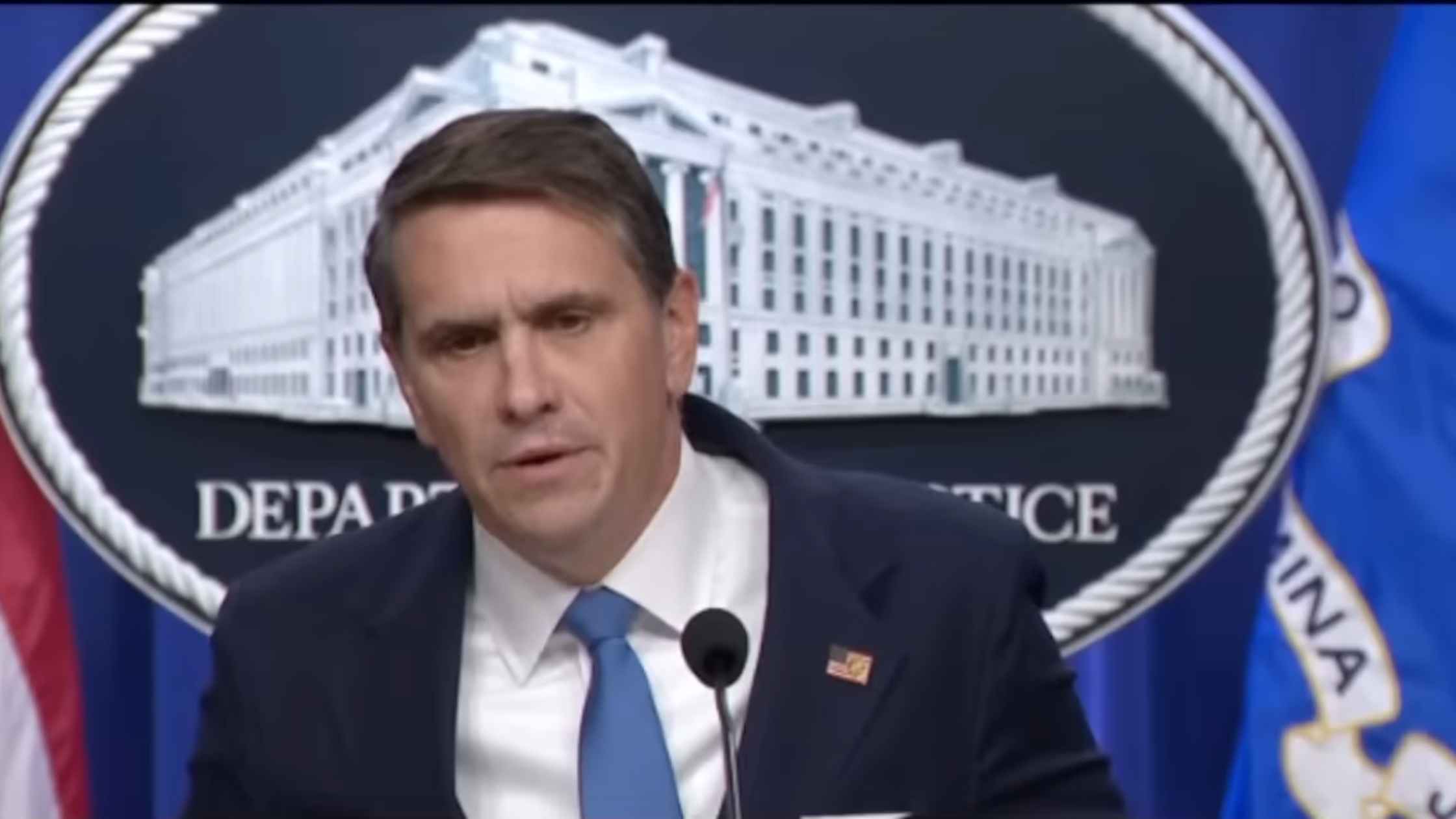
President Trump signed the Epstein Files Transparency Act into law on November 19th, 2025, directing the Department of Justice to produce all documents, files, records, videos, and images related to the investigations and prosecutions of Jeffrey Epstein and Ghislaine Maxwell. I'm here today to talk about the department's compliance with its production obligations under the act. Around, I think right now and continuing throughout the day today, as the indexing and uploading completes, we are producing responsive materials under the act. We are also releasing today a letter we are transmitting to Congress and various internal protocols associated with our review.
(25:52)
I want to take a moment to thank the professionals at the Department of Justice who met twice daily, sometimes more, for the last 75 days to get to where we are today. The leadership teams from the Office of the Attorney General, from the Deputy Attorney General's office, the Associate Attorney General's Office, the Criminal Division, the National Security Division, the FBI, the Southern District of Florida, the Southern District of New York, and the Northern District of New York all gave up many hours every single day on top of their other, of course, full-time obligations to fulfill the President Trump's promise of transparency to the American people.
(26:35)
I also want to thank the more than 500 lawyers and professionals across all those divisions that I just mentioned and others who worked long days, nights, weekends, Christmas, New Year's Eve, New Year's Day, nights, weekends, and holidays to complete this production. These highly trained reviewers spend their careers putting bad guys in jail and effectuating the mission of the department. And to a person, they work tirelessly to protect victims and comply with the act since its passage. So thank you to all of them. Today, we are producing more than three million pages, including more than 2,000 videos and 180,000 images. In total, that means that the department produced approximately three and a half million pages in compliance with the act. Just a quick note about the videos and images. The 2,000 videos and 180,000 images are not all videos and images taken by Mr. Epstein or someone around him. They include large quantities of commercial pornography and images that were seized from Epstein's devices, but which he did not take or that someone around him did not take. Some of the videos though, and some of the images do appear to be taken by Mr. Epstein or by others around him.
(28:07)
Now, I want to talk for a few minutes about the department's document identification and review protocols. It consisted of multiple layers of review and quality control designed to ensure compliance under the act and protect victims. On top of the review protocols that the department had in place, the United States Attorney's Office for the Southern District of New York employed an additional review protocol to ensure compliance with a court order requiring United States Attorney, J. Clayton, to certify that with respect to certain materials, a large quantity of the materials, a rigorous process was undertaken to protect victims against any clearly unwarranted invasion of their personal privacy. The department's collection effort resulted in more than six million pages being identified as potentially responsive, including department and FBI emails, interview summaries, images, videos, and various other materials collected and generated during the various investigations and prosecutions that the act covered.
(29:14)
We erred on the side of over collection of materials from various sources to best ensure maximum transparency and compliance, which necessarily means that the number of responsive pages is significantly smaller than the total number of pages initially collected. That's why I mentioned a moment ago, we're releasing more than three million pages today and not the six million pages that we collected.
(29:42)
I want to address what we didn't produce. The categories of documents withheld include those permitted under the act to be withheld, files that contain personally identifying information of victims or victim's personal and medical files and similar files, the disclosure of which would constitute a clearly unwarranted invasion of personal privacy. Any depiction of CSAM or child pornography was obviously excluded. Anything that would jeopardize an active federal investigation. And finally, anything that depicts or contain images of death, physical abuse or injury, also not produced. Although the act allows for withholding for items necessary to keep secret in the interest of national security or foreign policy, no files are being withheld or redacted on that basis. Further, as we previously stated in our December 19th letter of last year, the department withheld or redacted files covered by various privileges as we always do, including deliberative process privilege, work product privilege, and attorney-client privilege.
(30:52)
As you all know, under the act, the department must subsequently submit to the House and Senate committees on the judiciary a report listing all categories of records released and withheld, a summary of redactions made, including the legal basis for such redactions, and a list of all government officials and politically exposed persons named or referenced in the act. We will do so in due course as required under the act.
(31:17)
I want to talk for just a moment about the redactions that will be obvious to anyone who reviews the materials that we just produced today. In addition to the documentary redactions, which includes personal identifying information, victim information, and other privileges, there is extensive redactions to images and videos. To protect victims, we redacted every woman depicted in any image or video with the exception of Ms. Maxwell. We did not redact images of any men, unless it was impossible to redact the woman without also redacting the man. To this end
Speaker 4 (32:00):
... though. And to ensure transparency, if any member of Congress wishes to review any portions of the response of production in any unredacted form, they're welcome to make arrangements with the department to do so, and we're happy to do that. I want to talk for a minute about something that is important.
(32:20)
Every single day of the year, the Department of Justice investigates and prosecutes those who abuse and traffic young women and children. Just last year, the FBI located over 2,700 victims of child exploitation. The Department of Justice found and terminated 3.8 million dark web pedophile accounts.
(32:46)
In August, we charged 11 defendants for extensive sex trafficking in Los Angeles of illegal immigrants and underage women. Last month, we charged five men who were engaged in a sadistic sextortion network of deranged young men abusing women. Over the past several months, last summer and into the fall, we executed Operation Restore Justice, rescuing 205 child victims and arresting 293 offenders.
(33:15)
I point this out because I take umbrage at the suggestion, which is totally false that the Attorney General or this department does not take child exploitation or sex trafficking seriously or that we somehow do not want to protect victims. We do. There are some select members of Congress and some in the public eye, including those most critical of our efforts of full transparency under the act who remain silent as to all the work that we have done and continue to do every day in this space.
(33:50)
While quickly pointing a finger at the Attorney General or this department because we were careful in our review of millions of pages of documents over the past two months, the Attorney General, the Director of the FBI, and our partners throughout this administration work hard every single day to protect the most vulnerable among us.
(34:12)
With the protection of this magnitude, mistakes are inevitable. We, of course, want to immediately correct any redaction errors that our team may have made, and so the department has established an email inbox for victims to reach us directly to correct redactions and any concerns when appropriate. That's been in existence since December and we've been doing that since then.
(34:37)
Finally, a very small portion of the documents collected pursuant to the act include materials that a law firm produced to the SDNY in 2019 pursuant to a grand jury subpoena. This was during the criminal investigation of Ms. Maxwell. We determined it would be prudent to seek an order from the court in the Southern District of New York seeking production of these materials subject to the protective order in that civil lawsuit.
(35:03)
To that end, the department has filed that motion with the appropriate judge and the SDNY, and if that motion is granted, we'll release those materials with appropriate redactions immediately. Today's release marks the end of a very comprehensive document identification and review process to ensure transparency to the American people and compliance with the act. The department has engaged in an unprecedented and extensive effort to do so.
(35:32)
After submitting the final report to Congress as required under the act and publishing the written justifications for redactions in the federal register, the department's obligations under the act will be completed. I'm happy to take any questions anybody has about that.
Speaker 5 (35:52):
Todd, I'd like to ask you about this and I have a Minnesota question for you. On the Epstein release today, it was recently made public that Ghislaine Maxwell claims more than two dozen men signed secret agreements with the federal government not to be prosecuted. What is your reaction to that and what does that mean for her case?
Speaker 4 (36:14):
I read an article that described... I wasn't aware that it was actual men that she's claiming. I thought it was accomplices, which I'm not sure if that's a reference to some of the financial institutions or other individuals that-
Speaker 5 (36:30):
25.
Speaker 4 (36:30):
So yes, I don't have a reaction to her filing. I can tell you that we reviewed, as I just described, every single piece of paper that we have associated with these investigations, Mr. Epstein and Ms. Maxwell. And to the extent that such arrangements exist, I'm not aware of them.
Speaker 5 (36:53):
And onto Minnesota, if I may ask you real quick, that's in the topic, in the headlines right now. There's new video of a man believed to be Alex Pretty, who's spitting, who's kicking out a taillight of a law enforcement vehicle.
(37:07)
Does that change the perception of a potential DOJ investigation? Is there going to be a civil rights investigation into his death? Where does that land now that that video's out? Then I have a quick follow up on that.
Speaker 4 (37:20):
So look, I don't think a single video should change any perception the Department of Justice may or may not have about that tragic occurrence last Saturday. We've said repeatedly over the past week that, of course, this is something that we're investigating and we are. That's what we would always do in circumstances like this.
(37:42)
And so there's an investigation that's ongoing, which I'm not going to talk about. But just look, the problem is an initial reaction to a particular video, one or another. You're talking about one that happened apparently some days ahead of last Saturday. It's an investigation. So an investigation necessarily means just that. It means talking to witnesses. It means looking at documentary evidence, sending subpoenas if you have to.
(38:11)
And the Department of Justice Civil Rights Division has the best experts in the world at this. They've been doing it for decades. And so I expect that investigation will proceed with those parameters in mind.
Speaker 5 (38:25):
Are you looking at a nexus of left wing groups? This DOJ said that that's something that you guys were concerned about. Are you following money? Are you looking at a potential that all of this may be related somewhere?
Speaker 4 (38:39):
Yes.
Speaker 6 (38:41):
Thank you, Mr. Deputy Attorney General. You said in your remarks that you've withheld some documents because of ongoing investigations. I've done this long enough to know you can't comment on ongoing investigations, but can you say a little bit more, because as you know, the department has been criticized for not bringing charges against more people. Are there still open investigations related to Jeffrey Epstein?
Speaker 4 (39:04):
So what I was laying out in my comments is what the statute talks about, about what we can withhold and the reasons we can withhold it. I wasn't pointing to any particular... I wasn't trying to be coy or otherwise suggest there's some investigation. As you all know, Jay Clayton in New York is in charge of any potential investigations and I'm not going to comment beyond that on that.
Speaker 6 (39:32):
You were referring to Clayton?
Speaker 4 (39:33):
Excuse me?
Speaker 6 (39:33):
You were referring to Clayton's investigation?
Speaker 4 (39:35):
I wasn't referring to anything. I was just saying that Congress, in their wisdom, allowed us to withhold documents if there were ongoing criminal investigations. That's one of the four reasons I wanted to make clear with respect to any national security information that we were not withholding... There's not some tranche of super secret documents about Jeffrey Epstein that we're withholding or actually not withholding anything based upon NDI.
Speaker 7 (40:02):
Deputy Attorney General, thank you for your time. Two questions for you. Number one, pushing politics aside and everyone else aside, some of the victims of Epstein have expressed frustration with the entire process. I want to give you the opportunity to speak directly to them.
Speaker 4 (40:19):
Well, I don't know what you're speaking to. If there's frustration with "the entire process," same here. You have a situation where for many, many years, nobody even breathed the word about Jeffrey Epstein and then all of a sudden it was all anybody would talk about going into the last spring and summer culminating in the passage of the Transparency Act.
(40:40)
And President Trump has said for years what I think everybody will find to be exactly true, which is detailing his relationship and lack thereof with Mr. Epstein and what he thought about Mr. Epstein and notwithstanding what the department has been saying for a very long time, we're still where we are today.
(41:00)
Listen, victims of Mr. Epstein have gone through unspeakable pain and there's nobody that should say anything differently. And to the extent that there's frustration, I understand where that comes from, just from what we know about Mr. Epstein. I hope that the work that the men and women within this department have done over the past two months, hopefully, is able to bring closure.
(41:31)
I think that what we told our reviewers is that that was the goal. There's this mantra out there that, "Oh, the Department of Justice is supposed to protect Donald J. Trump." And that's what we were telling. That's not true. That was never the case. And we are always concerned about the victims.
(41:50)
When we said that we were not legally allowed to release documents, that's a fact. That was true. It remains true today. And then with the Acts' passage, we are able now and directed to release documents, which is what we are doing. So hopefully, some of those frustrations are now eased. Listen, any victim that wants to speak with the department has done so, hopefully. If not, they should.
(42:19)
The prosecutors from this case in New York have given hundreds, if not thousands of hours to working with victims. And that's what we do every day, and that's what we did in this case as well.
Speaker 7 (42:30):
Very quickly. Can you assure the American public that President Trump, like every other prominent person whose name came up in relation to the Epstein files, that all documents, photos, and anything relevant to him connected to the case are being released?
Speaker 4 (42:48):
Yes, I can assure that we complied with the statute, we complied with the Act and there is no... We did not protect President Trump. We didn't protect or not protect anybody. I think that there's a hunger or a thirst for information that I do not think will be satisfied by the review of these documents. And there's nothing I can do about that.
(43:12)
But President Trump, of all the people in Washington DC and around this country that have said for years, the same consistent message about Jeffrey Epstein is President Trump. And so there's not been a change of course or anything, and certainly, his direction to the American people... Sorry, his direction to the Department of Justice was to be as transparent, release the files, be as transparent as we can, and that's exactly what we did.
Speaker 6 (43:40):
I want to clarify your remarks on the Alex Pretty killing. Are you saying that the Justice Department has opened a civil rights investigation into his death?
Speaker 4 (43:47):
Yes. Look, and I know there's been a lot of discussion among the media around that, but just think about what that means. All that that means is that DHS, as the secretary has said, is conducting an investigation as they should and as they do every time there's a tragic event like this.
(44:06)
And the FBI in their role, which is a separate role from DHS, is also looking into it and conducting an investigation. And that shouldn't be treated as making news. We've said that for a week and it remains as true today as it was last Sunday when I said it.
Speaker 8 (44:26):
Two questions for you, one on topic and one separate. On topic, do you have any information that you could just share because three million documents is a lot for people who are watching this at home. Are there any new names or new public people in positions of power who you're going to found in these filings?
Speaker 4 (44:45):
I don't have anything to share about what's new or not new and there's... No, I don't have anything to share about that.
Speaker 8 (44:52):
And to follow up on that, do you have a reaction to the arrest of Don Lemon overnight?
Speaker 4 (44:56):
Do I have a reaction to what?
Speaker 8 (44:57):
To Don Lemon's arrest overnight?
Speaker 4 (44:59):
Do I have a reaction to it? I don't know what that means. What are you looking for me to do? Jump up and down? No, I don't have a reaction to it. I don't know that the charges are unsealed yet. So no, I can't. I'm not going to comment on that.
Speaker 9 (45:13):
Thank you. You said this is the end of your review of the Epstein files. So just to clarify, is the public going to learn the identities of the men who abuse the girls with the information that you're releasing? And if not, why not? And then I have a quick follow up.
Speaker 4 (45:32):
You just baked in an assumption into your question that I have never said, and I don't know to be true. Is the public going to learn about men that abuse these girls? What does that mean? I don't understand what that means.
Speaker 9 (45:45):
Well, I mean the men who abuse the young women through Epstein.
Speaker 4 (45:54):
We said in July, and it remains as true today as it was in July. If we had information, we meaning the Department of Justice, about men who abused women, we would prosecute them. We talked about the work that we're doing. That's why I said that.
(46:11)
I said this earlier, there's this built-in assumption that somehow there's this hidden tranche of information of men that we know about that we're covering up or that we're choosing not to prosecute. That is not the case. I don't know whether there are men out there that abuse these women.
(46:27)
If we learn about information and evidence that allows us to prosecute them, you better believe we will, but I don't think that the public or you all are going to uncover men within the Epstein files that abuse women, unfortunately.
Speaker 9 (46:44):
Okay. And just to follow up, on the investigation into Federal Chairman Jerome Powell, what's the status of that investigation? Now that President Trump has nominated a new Fed chair, is the Justice Department looking to bring a close to the investigation into Chairman Powell's as soon as possible?
Speaker 4 (47:05):
I don't have a comment on that on the subpoenas that were issued. I don't think the timing of President Trump's decision to nominate somebody is a controlling factor in any investigation.
Speaker 10 (47:19):
Hi, I just wanted to follow up on Alana's question. So you're saying that the shooting investigation of Alex Pretty is now a civil rights investigation. You're implying that that's always been the case. Can you also say, what about the shooting of Renee Goode? Why or why not is that a civil rights investigation?
Speaker 4 (47:41):
I didn't say it was always a case. I said it's the same thing that we said as of last Sunday, with respect to last weekend. There are thousands, unfortunately, of law enforcement events every year where somebody is shot. The Civil Rights Division of the Department of Justice
Todd Blanche (48:00):
... this does not investigate every one of those shootings. There has to be circumstances or facts, or maybe unknown facts, but certainly circumstances that warrant an investigation. So when I talked about last weekend and when others have talked about this week, the fact that President Trump has said repeatedly, "Of course, this is something we're going to investigate." That's what I meant about what we're doing. It doesn't mean that every time that there's a federal officer-related shooting, that that's something civil rights takes up. It depends on the circumstances.
Speaker 11 (48:35):
Follow up on that. Can you just-
Todd Blanche (48:35):
Go ahead.
Speaker 11 (48:37):
I know you can't be specific about details of the investigation, but can you just characterize the scope of the Pretti investigation, what kinds of things that they'll be looking for, and who is involved?
Todd Blanche (48:47):
Well, I mean, it's an investigation. So what do we think we're looking at? We're looking at everything that would shed light on what happened that day and in the days and weeks leading up to what happened. And that's like any investigation that the Department of Justice and the FBI does every day. It means we're looking at videos, talking to witnesses, trying to understand what happened. I mean, you're talking about an incredibly tragic morning, and then trying to unwind and investigate that is it takes a lot of time. I'm not going to prejudice what they're doing or not doing by laying any markers, but I expect that the folks that are doing this are the most experienced in this space and are doing that.
Speaker 12 (49:32):
Yeah. So, to follow up on that, how would a civil rights investigation work with DHS taking the lead, which is what was said over the weekend? And are prosecutors in Minnesota? I mean, who is involved in this? We know that there's a lot of frustration within the department, both in Minnesota and the Civil Rights Division, that they feel they are not being brought in, and they are the experts here. So just to follow up, how would this work with DHS taking the lead, and who is from DOJ involved in this investigation?
Todd Blanche (50:02):
I don't think that... Look, I think anytime there's a... Every single federal agency, including DHS, has a process that they use when there's something like this that happens, an internal review, investigation, however you want to call it, that's what DHS was doing as they do every single time something like this happened. There was nothing unique to these facts. There might have been an outsized focus on it because of what happened, but DHS was doing an investigation. I don't know that that will stop. I don't expect that investigation to stop because we're investigating. And of course, we're coordinating with them. We're not working against them, but there's, I suppose, potentially separate goals or potential goals in the two investigations. I mean, DHS is conducting an investigation, and then the FBI conducts an investigation. It's not as if one goes one way and one goes the other, but they are their own investigations.
Speaker 12 (50:55):
Very clearly, you said on Sunday that HSI is leading the investigation, and you did not want to overstep and say anything. Was that not true anymore, or was that true at the time?
Todd Blanche (51:05):
I don't think it's fair to say whether it's true anymore, okay? And I don't think it's also... I don't want to say who's lead or not lead. I don't even really know what that means in the course of an investigation. The FBI is investigating. They are for sure coordinating with Secretary Noem and her folks as well. And I expect DHS is also continuing their investigation to some extent, and there's outsized focus on this. This happens, like I said, thousands of times a year, and it is tragic every single time it happens, and it's tragic this time, like it's tragic every other time. And so there's a process that has to be allowed to play out internally with these law enforcement organizations and certainly with the FBI as well, to allow this investigation to go on.
Speaker 13 (51:50):
You've talked about the expectations surrounding the Epstein files. Do you agree that the DOJ itself, senior officials at the DOJ, played up those expectations for the first half of this year? I'm just sort of trying to understand what responsibility does the Justice Department have for the criticism that has come over the handling of the Epstein files?
Todd Blanche (52:12):
I'm not commenting on criticism. People can criticize all they want. My point was just to make plain that when it comes to what we've been doing the past two months, and why we weren't able to complete the review of over six million pages. Okay. So you're talking about two Eiffel Towers of pages in 30 days in a way that made sure we complied with the act. So the act had multiple requirements. Get it done in 30 days, and you better not release any victim information. All right. So there's a lot of statutory construction. There's a lot of case law that exists that says that if those two are in conflict, we obviously are not violating the 30 day requirement by taking our time to comply with the act. And so my comments were directed at this idea that because we didn't review the six plus million pages within 30 days, somehow the attorney general doesn't care about victims or is further doing damage to victims because of that, because exactly the opposite is true when it comes to the attorney general.
Speaker 14 (53:20):
Sir, I have questions on Epstein and Minnesota, first on Minnesota. For transparency, would you commit to releasing the body cam video from federal officers that was involved in that shooting and their names at a point when the investigation can allow that, would you make that public? And I did not hear clarity on whether Renee Good's case is also in a civil rights realm.
Todd Blanche (53:46):
I'm not committing to anything with respect to that investigation. That would be completely unfair to the investigation itself for me to stand here and commit to something for any reason. It just it depends. It depends on what happens with the investigation, and that's a decision that was made by the folks that are working the investigation. As it relates to Ms. Good, like I said before, there's investigations that happen all the time with respect to shootings like what happened last Saturday, and cases are handled differently by this department, depending on the circumstances.
Speaker 14 (54:24):
Sir, on Epstein, sir, if I may just ask one on that, please. You mentioned a letter to Congress. How and to whom did you notify the White House about the production that you're announcing today before you came out and spoke to us?
Todd Blanche (54:37):
How did I do what?
Speaker 14 (54:38):
Notify the White House. What was your interface with the White House? You said there's a letter to Congress. Who did you update at the White House about this?
Todd Blanche (54:46):
Well, I don't know. I don't really understand the question. You mean who did I update the-
Speaker 14 (54:52):
Did you provide them an explanation of what today's release would be?
Todd Blanche (54:57):
Look, my team has certain communications with the White House. Let me just be clear. They had nothing to do with this review. They had no oversight over this review. They did not tell this department how to do our review, what to look for, what to redact, what to not redact. They absolutely knew that I was doing this press conference today and that we're releasing the materials today, but there's no oversight by the White House into the process that we've undertaken over the past 60 days.
Speaker 15 (55:27):
I wanted to ask a question about the evidence in the Alex Pretti investigation. Early on, our reporting showed that the only type of evidence that the FBI initially had in its possession that it was processing for ballistics and DNA, et cetera, was Pretti's firearm. It did not have the two firearms that were used to shoot Pretti. Those were in the hands of the HSI, and also there were concerns about chain of custody, things not being properly bagged and tagged, et cetera. Where are the guns now? Are they in the FBI's possession and being reviewed at one of their labs? And who has the phone that Pretti was using and filming? And is that going to be reviewed by the FBI?
Todd Blanche (56:08):
I don't know. I don't have an answer to those questions. Look, I think that there's... Secretary Noem has been clear with the American people, but also with the Department of Justice that we're doing this together, we're coordinating. And so I'm not following in the weeds about who actually has possession of the firearms that were discharged.
Speaker 15 (56:31):
But wouldn't that be something the FBI would need in order to conduct a thorough investigation into a color of... This is obviously a color of law-
Todd Blanche (56:36):
When I said I didn't know, I wasn't being critical of the question. I was just simply saying I don't know.
Speaker 15 (56:41):
[inaudible 00:56:42].
Speaker 16 (56:42):
On the Fulton County seizure of ballots, local officials there, election officials say those materials were set to become public by February 9th, and that the Justice Department could have simply asked for them. Why was it necessary to conduct a search warrant? And do you expect the affidavit in that search warrant matter to become public anytime soon, or do you have any comment or explanation as to why that was necessary?
Todd Blanche (57:07):
Listen, I'm not going to comment on... It's a criminal investigation. I will not comment on it. I will say that it should be no surprise to many in this room or anybody watching that election integrity is extraordinarily important to this administration, always has been, and always will be. And so the fact that President Trump and this administration are investigating to make sure that... Well, are investigating issues around elections to make sure that we do have completely fair and appropriate elections should not be surprising, but I can't comment on any criminal investigations. Yeah.
Speaker 17 (57:44):
To follow up on that regarding Fulton County, can you explain Tulsi Gabbard's role in the DOJ activity-
Todd Blanche (57:50):
Please speak up a little bit, please.
Speaker 17 (57:51):
Could you please explain Tulsi Gabbard's role in DOJ activity regarding the Fulton County search?
Todd Blanche (57:57):
What do you mean her role?
Speaker 17 (57:59):
It was reported that-
Todd Blanche (58:02):
She happened to be present in Atlanta. I mean, yes, I saw the same photos you did. I mean, she doesn't work for the Department of Justice or the FBI. She's an extraordinarily important part of this administration. This administration coordinates everything we do as a group. And so I think her presence shouldn't be... This shouldn't be questioned, of course, and that's a big part of her job. And so the fact that she was present in Atlanta that day is just something that shouldn't surprise anybody.
Speaker 18 (58:37):
Sorry, I think we're over time-
Speaker 19 (58:37):
Sean Maxwell?
Todd Blanche (58:37):
All right, just two more. Go ahead.
Speaker 17 (58:38):
Just following up on that. So are you saying that Gabbard's appearance in that area had nothing to do with the Justice Department action [inaudible 00:58:47]-
Todd Blanche (58:47):
I most certainly did not say that. No, I did not say that. I said that exactly the opposite. I said this administration works closely together in all kinds of different areas. And so I'm not sure if they're surprised that the administration is working together on things like election integrity, but if there is surprise, let me unequivocally state, we are working together as an administration on election integrity type issues. And so that's all I can say about that. All right, one more.
Speaker 16 (59:19):
Can you clarify who at the Justice Department is involved in the Pretti investigation? Is it the Civil Rights Division? Is it the US Attorney's Office in Minnesota?
Todd Blanche (59:33):
I want to choose words carefully about involved. Investigations like this are led by law enforcement, so that's the FBI. There's coordination with the Civil Rights with Harmeet Dillon's group, and there's trial attorneys there that have... This is their lives. They've done this for decades. And so to the extent there's questions during an investigation that require a trial attorney to weigh in, or if you need a civil rights attorney to draft a search warrant or help with an investigative process, I expect the civil rights division here at Maine Justice will be part of that effort. But I don't want to overstate what's happening. I don't want the takeaway to be that there's some massive civil rights investigation that's happening. This is what I would describe as a standard investigation by the FBI when there's circumstances like what we saw last Saturday, and that investigation, to the extent it needs to involve lawyers at the civil rights division, it will involve those. All right. Thanks a lot, everybody. I appreciate it.
Speaker 20 (01:00:38):
[inaudible 01:00:39] at the same time of investigation.
Speaker 17 (01:00:41):
Do you have comment on the career prosecutors that are resigning in Minneapolis?