Mayor Bowser (00:00):
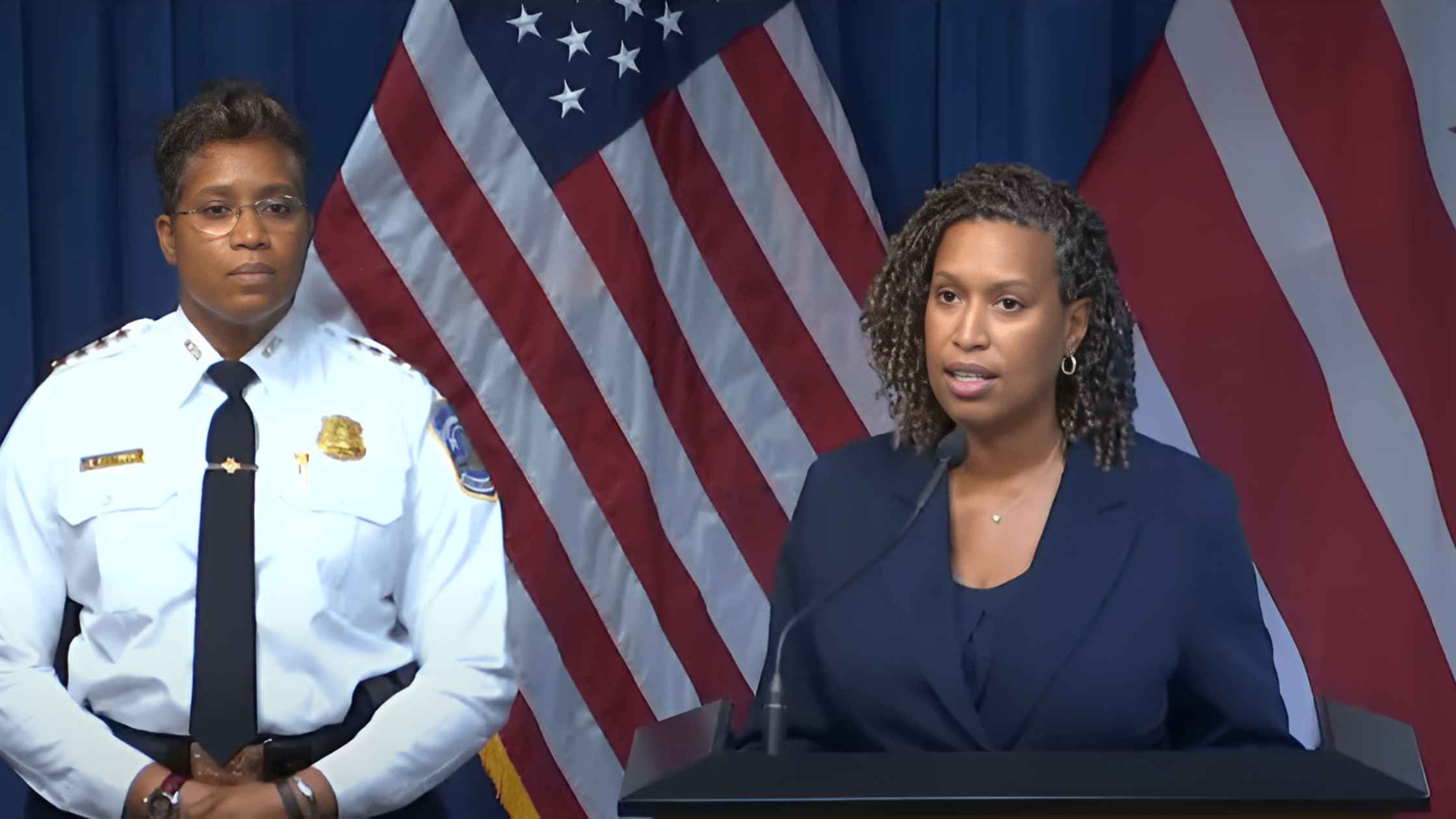
… and then we'll be able to take a few questions. Let me start by saying this, Washington DC is a beautiful city, magnificent city. We're home to 700,000 Washingtonians. We welcome millions of visitors every year from around our nation and around the world. We have the nation's premier park system, fantastic public schools, including a free and robust pre- K program starting at age three. We have a tremendous public transportation system and we have hardworking people here who are raising families, starting businesses, and hiring workers, so it's very important to me that for all who live here and visit here, just know how beautiful our city is and how proud we are of all that we've accomplished here. We're unique in other ways as well. Though we pay taxes, in fact, we pay more than most states per capita, we're not a state. We don't control the DC National Guard. We don't have senators or full autonomy. Limited home rule gives the federal government the ability to intrude on our autonomy in many ways.
(01:31)
I've said before, and I'll repeat that I believe that the President's view of DC is shaped by his COVID era experience during his first term. And it is true that those were more challenging times related to some issues. It is also true that we experienced a crime spike post-COVID, but we worked quickly to put laws in place and tactics that got violent offenders off our streets and gave our police officers more tools, which is why we have seen a huge decrease in crime because of those efforts. We have been able to reverse that 2023 crime spike. This year crime isn't just down from 2023, it's also down from 2019 before the pandemic. And we're at a 30-year violent crime low. We're not satisfied. We haven't taken our foot off the gas, and we continue to look for ways to make our city safer.
(02:52)
We know, however, as most have heard from the President's press conference, that he has prerogatives in DC unlike anywhere else in the country, including his authority given by our Home Rule Charter to require the mayor to require me to supply services of the Metropolitan Police Department. And he also has control and the ability to deploy the National Guard. But let me be clear, as our Home Rule Charter is also clear, and the President's executive order restates, Chief Pamela Smith is the chief of the Metropolitan Police Department, and its 3,100 members work under her direction. The Home Rule Charter requires the mayor to provide the services of NPD during special conditions of an emergency, and we will follow the law. Though there's a question about the subjectivity of that declaration. In fact, the chief has already provided a high level liaison and point of contact with the federal government and made those initial contacts. The executive order is also clear that the President has dedicated his authority to make requests of us to Attorney General Pam Bondi.
(04:31)
I have reached out to Attorney General Bondi in hope to schedule a meeting soon. My message to… Kids are going to start school on August 25th, and we will work with the federal government to do the things that they should do for our city, including making sure that we have the judges that we need, including making sure that all federal parks are supported, not just with law enforcement, but with other clean and safe activities. And including making sure that our economy is supported by rational federal actions as it relates to the federal workforce, federal workers, and federal property in the District of Columbia. With that, I want to ask Chief Smith to talk about her interactions with the federal forces, federal police and law enforcement that have been engaged in the district over the last several days in the strategy that she thinks would be important while we have additional federal police officers.
Pamela Smith, (06:47):
Thank you, Madam Mayor. I'm Pamela Smith, the Chief of Police of the Metropolitan Police Department, and as the mayor stated, we have a responsibility to support the executive order, and one of the roles that I have is to ensure that we work very collaboratively with our federal partners. I know that most of us know in this room and those of you that are watching on television, that the efforts of the federal law enforcement officers began in our city on Thursday night. I met with the director of the US Marshal, who has been at that point overseeing the operational component of how the federal resources will be allocated and deployed around our city. With that conversation, it was very, very important for me to ensure that not only do we work collaboratively with our federal partners, but we offer up areas across our city where we can work with them in areas where we know that we want to reduce crime. And so that was the effort on yesterday. We spent roughly about an hour just planning and talking through what that's going to look like.
(07:52)
On the heels of the announcement from the President today regarding the executive order and my directive from the mayor is that we will begin more intense planning efforts after I leave this press conference. I've also met with one of the other liaisons that had been assigned to work with the US Marshal, along with myself regarding the efforts around the city for how we will allocate resources. What I will say is this, our relationship with our federal partners is not new. We do this on a daily basis. We are very, very much in tune to having federal law enforcement officers working with us on our capital area regional task force. Our federal partners work with us, especially on some of our warrant executions. They work very, very closely with us, with our violent crime suppression division, and it is my intent and my police department's intent to continue those efforts. What you will see is an enhanced presence.
(08:52)
The second thing that's really important to me, and I'm speaking directly to our community, is that we have a relationship with our community that is very important to us, our community members, and so having our Metropolitan Police Department working alongside of our federal partners who have come into the city to really help us assess and deal with the crime, some of the crime spikes that we have, we will work alongside them, but intentionally, we want to make sure that our community understands that we are there. We're going to be boots on the ground. If you see something, again, say something. We value those relationships, our community members, and I want to say thank you for all the work that you've done with the Metropolitan Police Department up to this point. Those relationships are very, very important to us, and we want to continue to build up on that and continue to enhance that. I'll turn it back over to Mayor Bowser now.
Mayor Bowser (09:46):
We'll take a few questions and I'm joined by members of my public safety team, including Deputy Mayor Appiah and Chief John Donnelly. Yes, please identify yourself.
Speaker 1 (09:56):
Mayor Bowser, it's Campbell Robertson from the New York Times. Do you think this was inevitable or do you think there are things that the city could have done with council to prevent the state recovery?
Mayor Bowser (10:10):
I don't know. I can't answer that question. And I think that's a question that you're familiar with the rhetoric about the city and how long it goes back, and we also know that we're not experiencing a spike in crime, but a decrease in crime.
Tom (10:31):
Mayor, [inaudible 00:10:33]. You and the chief are talking about partnerships to the federal partners who are coming in. The President is talking about a takeover of the city's police department. Where did the chief fit in with Terry Cole, who's the new Federal Commissioner of the DC Police Department?
Mayor Bowser (10:54):
Nothing about our organizational chart has changed, and nothing in
Mayor Bowser (11:00):
The executive order would indicate otherwise. So, the chief of police reports through the deputy mayor to the mayor of the District of Columbia and the two people I think that were identified in the presser report to Attorney General Bondi. The executive order makes clear that all requests for MPD services, the president delegates to Attorney General Bondi.
Speaker 2 (11:30):
So, Terry Cole-
Mayor Bowser (11:30):
I don't recall the names. Yes.
Speaker 2 (11:33):
… [inaudible 00:11:34] the Metropolitan Police Department. Where does he fit in that?
Mayor Bowser (11:38):
That's a question for the attorney general, I think. Yep?
Speaker 3 (11:41):
Mayor, to what extent are you planning to cooperate in this new framework or is the city planning anything to prevent this from happening, including any legal avenues?
Mayor Bowser (11:53):
Well, I think all legal … I think you probably saw the attorney general for the district, Brian Schwalb's statement about reviewing all legal matters. And I think those matters are under review.
(12:06)
The plain language, however, of the Home Rule Charter indicates that there is a declared emergency. It authorizes the president to make those requests and it says the mayor shall comply with those requests. Yep?
Speaker 4 (12:32):
I'm Mariel with DC News Now. Are there any concerns that with this rhetoric then we have MPD, the National Guard, possible other law enforcement agencies on the ground, that there will be confusion about who's in charge, who these officers answer to and how people should respond if approached by any of these law enforcement?
Mayor Bowser (12:51):
Well, we should note, and we have been advised and we will continue to make this clear that this is needed in our city, that all law enforcement be identifiable by a uniform, a badge, a jacket, so that people know that they are law enforcement.
(13:14)
And the chief, in her coordination with the command on the federal side, will make clear the protocols for response. And if there's any additional information we need to get out to the public, we will. But the main point is this, everybody should follow the law, the police and the community. And that's the case now, it was the case last week, and it was the case the week before that. So, nothing has changed about that. Yep?
Sam (13:49):
Hi, Lionel Donovan, WUSA9, would you be able to respond to a statement that came out from DC Police Union? They come out recently saying that they stand with the president and that they have also seen that crime is out of control and they're also calling for the president to go even further and repeal some of the legislation that DC Council passed in 2020?
Mayor Bowser (14:10):
I'm afraid I haven't seen that statement yet, so I don't want to comment on it. We have worked very closely with the DC Police Union. Some issues they've advanced, I've totally agreed with, others I haven't.
(14:25)
One thing that we are squarely supportive of is making sure that our department can recruit more officers and get to a number that I think we need. We've worked cooperatively with them on recruitment and retention activities, on some other changes to the law that were very objectionable to the union and our members, and we will continue to do that. Yeah?
Speaker 5 (14:53):
Peace and blessings, Madam Mayor. So in what way, if any, does this change your strategy in terms of your relationship with the president? You've been pretty cooperative, pretty diplomatic, but he's saying one thing about crime, you're stating facts, and he's still infringing on your role as mayor. So, as far as your relationship and your strategy, what do you intend to do as far as engaging with him at this point?
Mayor Bowser (15:24):
Well, we engage with all officials that impact the district and that includes the president. So, I don't expect that that would change from our part.
Speaker 5 (15:34):
But as far as, if I may follow up-
Mayor Bowser (15:37):
Sure.
Speaker 5 (15:40):
… are you going to go what some might consider a bit harder and pushing back against what he's trying to do? Will your tenor change or intensify?
Mayor Bowser (15:49):
My tenor will be appropriate for what I think is important for the district. And what's important for the district is that we can take care of our citizens. And if people are concerned about our president's ability to have the MPD Police Department be responsive to the Department of Justice, the time to address that is when we're talking about statehood for DC.
(16:20)
If people are concerned about the president being able to move the National Guard into our city, the time to do that would've been when the Congress had a bill that it could have given control of the DC National Guard to DC. So, there are things that when a city is not a state and not fully autonomous and doesn't have senators, that the federal government can do. Yeah?
Speaker 6 (16:45):
Madam Mayor, Jim Puzzanghera from the Boston Globe. Just to follow on his question, you at times in President Trump's first term were more confrontational with him, especially in 2020. You've tried to be more cooperative this time. Any second thoughts about that approach? Are you planning any sort of defiance, symbolic or whatever, in light of this?
Mayor Bowser (17:09):
Well, I would refer you to the law, Home Rule Charter. He referred to it. I would refer you to the executive order. And so, everything that we have said maintains my authority given by the Home Rule Charter. Yep?
Speaker 7 (17:31):
Josh Chapin, Channel 7. I just want to be clear also that this ramp up, this emergency we're talking about is a brief period, like a 30-day period. Am I right?
Mayor Bowser (17:41):
The Charter gives him the ability to do it for 30 days? Yes.
Speaker 7 (17:48):
So, that means cooperating with whatever he wants to do?
Mayor Bowser (17:54):
Well, it means that we follow the law, that the MPD follows the law as well, as well as all of the federal officials who are here.
(18:06)
It's also important just, and we will do this in our communications with them, understand what they're looking to see. So, the fact that we have more law enforcement and presence in neighborhoods, that may be positive if it's a positive action. So, that's what the executive order says. Yep, Mark?
Speaker 8 (18:37):
A couple quick questions. One, do you know will the National Guard be armed?
Mayor Bowser (18:40):
I don't know.
Speaker 8 (18:41):
And then what if the attorney general directs the chief or police to redirect sources to do something that you and the chief disagree with, for instance, redirect resources from east of the river to the federal enclave or something like that? You say you're going to follow the law and you say you want to be cooperative. What if you get a directive from the White House or the attorney general that you just steadfastly don't agree with and think it's the wrong move and would jeopardize public safety in other neighborhoods, will you comply?
Mayor Bowser (19:16):
I don't have any reason to think that at this point, Mark, so I don't want to speculate about that. The executive order as is the Home Rule Charter is pretty clear that the requests have to be related to federal purposes.
Speaker 8 (19:36):
And then can I ask, the president threatened to use not just the National Guard, but military, to bring the United States military, federal troops into the District of Columbia, if needed. Can you respond to that threat?
(19:47)
I mean, we're in uncharted waters already. A lot of people are seeing this as the first step in an assault on home rule, which the president has threatened. He's been making these threats since last year and now he's carrying through with them. There's no reason to believe he won't go further. What do you say to the president about his threats to bring the military, not just the National Guard, but the military-
Mayor Bowser (20:12):
And I think I speak for all Americans, we don't believe it's legal to use the American military against American citizens on American soil. I'm not a lawyer, but I think that's a fairly widely held fact.
(20:33)
But we've seen them move, I think, the active military into California. So, it's a question. We've seen active military on the borders of DC some years ago, and we don't believe that our military should be used against American citizens. Yes?
Speaker 9 (20:53):
Mayor Bowser, can you talk a little bit about the communication that you did receive before this morning? Did you know what this announcement was going to be before today? And can you just talk about the communication writ large before today?
(21:07)
And secondarily, what do you say to DC residents who wanted to hear more from you, specifically in the last five days being forthright, speaking to press and media, can you just talk about-
Mayor Bowser (21:18):
DC residents know I'm forthright. That's not a question. DC residents know that. And this press corps should know. I speak to you all the time, so you should know that as well.
(21:29)
And your question was, when … I did not know that the request of MPD would be made. I believed that they would announce that they were going to call up the National Guard. I had one brief phone call related to the National Guard issue over the weekend.
Speaker 10 (21:54):
Madam Mayor?
Mayor Bowser (21:54):
Yes.
Speaker 10 (21:55):
Can you tell us-
Mayor Bowser (21:56):
Can you identify yourself?
Speaker 10 (21:57):
Brian Todd from CNN.
Mayor Bowser (21:58):
Okay.
Speaker 10 (21:59):
Can you tell us what your main
Speaker 11 (22:00):
… challenges are going to be. You have Chief Smith and the D.C. Police working with federal officials. And are you concerned that any federal official overseeing the D.C. Police Department is not going to know the city as well as Chief Smith and your officers?
Mayor Bowser (22:14):
Chief Smith oversees the MPD and all of the requests and coordination for the federal request, I don't really have a doubt that that is going to… Among those officials who are law enforcement officials, who have experience working together, I don't have a big concern about that communication and coordination happening.
(22:40)
Who hasn't? Yep.
Emma Uber (22:42):
Hi, Emma Uber with The Washington Post. During the news conference this morning, President Trump spoke about how he wanted to empower D.C. police to hit back harder. Are you aware of any changes in the works to MPD's use of force policies? And does that kind of rhetoric… How do you feel about that kind of rhetoric?
Mayor Bowser (23:02):
Our police officers are highly professional, well-trained officers that we support with training throughout their careers. We are proud of where our department has come from in terms of their level of professionalism. So they're trained in constitutional policing and that is our expectation.
(23:27)
Yes. Hold on. You've asked a question. One more.
Owen Hayes (23:29):
Owen Hayes, NBC News, just to follow up on that a bit.
Mayor Bowser (23:32):
Yep.
Owen Hayes (23:32):
So will they still be fully subject to local regulations when it comes to use of force, body cameras while under federal control, MPD officers?
Mayor Bowser (23:43):
MPD reports to the chief of police and they are subject to D.C. local laws as well as federal laws.
Owen Hayes (23:53):
And that'll continue even under this plan?
Mayor Bowser (23:55):
Yes.
(23:57)
Yes.
Emiliana Wood (23:59):
Emiliana Wood, News Nation. You said earlier that they did not tell you about this announcement before it happened today. Did the White House or the president bring up their concerns with crime before last week?
Mayor Bowser (24:11):
The President talks about crime all the time.
Emiliana Wood (24:14):
Specifically in D.C.?
Mayor Bowser (24:15):
Yes. Have you not heard the president from the campaign trail? In every conversation I had with him, we're always briefing the president on our progress. In fact, my first meeting with him after he was elected the second time, we went over the crime trends, we went over how we're decreases. So the president is read in on our efforts.
(24:44)
Who hasn't had a… Yep. Over here.
Ashraf Khalil (24:47):
Ashraf Khalil with The Associated Press. A lot of this seems to be perceptions of what constitutes an emergency. The White House and the administration says there's an obvious emergency. Your administration with numbers of the council says there is not an emergency here. How do you solve that? Is there an arbitration option? Where does it go from here? Because it feels like… Do you agree that it comes down to what constitutes an emergency and what's next?
Mayor Bowser (25:18):
Well, what I would point you to is the home rule charter that gives the president the ability to determine the conditions of an emergency. Now, we could contest that, but the authority is pretty broad. And so, if you wanted to say the most outrageous thing, one might say… Well, I won't say that. It could be something very small. I am not saying that that's what he's doing, but it could be. And if he deems it and he puts the meat around it and the argument around what he thinks is an emergency, when we think of emergencies, it usually involves surges in crime or crime that's not being responsive or tools that we have that we can't use in the normal course. When we use an emergency, that's what it's for.
(26:12)
Yep.
Speaker 12 (26:13):
[inaudible 00:26:13], ABC News National. Wanted to see if you could respond directly to some of what the president said this morning. Do you agree or have any thoughts on the picture he is painting? He said that there are, quote, "bloodthirsty criminals," end quote, or "Robing mobs of wild youth," end quote. He also said that "D.C. police can do whatever the hell they want," end quote. Are you okay with that? [inaudible 00:26:35] does that mean? Do you have any response to him or the White House talking about the D.C. crime stats?
Mayor Bowser (26:39):
I think I've already addressed all of those questions.
(26:42)
Anything else? Yep.
Scott Gelman (26:44):
Scott Gelman with WTOP. You described… This morning was described as a federal takeover of MPD. It sounds like you're describing this as Chief Smith is still in charge and everything will run through the department. What will this look like on a day-to-day basis as it relates to what has transpired here? What can people expect to see? Is this an instance where you all work collaboratively for big events and this is something comparable to them or-
Mayor Bowser (27:08):
No, I don't… It's not like that. It's not like the special events task force where we work together. And I think, I don't want to minimize what was said, and I don't want to minimize the intrusion on our autonomy, because it is very different than working a special event. So that is not what we're trying to do. But I think the chief, and I'll turn to her in a second to talk to you about what she thinks is going to be most helpful to MPD.
Pamela Smith, (27:41):
I want to believe I answered the question a little bit earlier, but I think what's helpful to us is that we come together and we look at data, we look at intelligence when it comes to crime across our city, violent crimes as well as property crimes. And so, there are other things that the federal government is also very useful for… Useful in supporting us, and that is, in the city, is warrants, right? The execution of warrants, the U.S. Marshals holds those. This will be an opportunity for us to come together and collaborate on being able to go out and execute warrants.
(28:15)
As we think about over the past… Came in two years ago, five years prior, we looked at some of our data where we saw an increase in violent crime in certain areas across our city. We designated those areas as our Homicide Reduction Partnership Plan with some of our federal officers. What we'll do in that space is we'll enhance that presence.
(28:37)
The other thing is that most of you know we have a nightlife task force. U Street, we have a lot of tourists, residents, individuals who come into our city on a Thursday night, Friday night or Saturday night and enjoy the nightlife culture. We will also be able to utilize that enhanced presence in and around that area and any other crime trends that we might see that will go forth. We have our drug-free zones where we also align our federal partners in those spaces as well as our juvenile curfew zones.
Scott Gelman (29:10):
May I just follow up quickly, Chief? So again, this morning it's being described as a federal takeover. You all are describing it as an opportunity to enhance the crime prevention strategies you have in place. To the community who's confused about the discrepancies, where does it fall?
Pamela Smith, (29:26):
Well, I just articulated to you where it falls. And what I mean by that is that, with respect to the two federal partners who will be working alongside me, the operations and the administrative liaison, we have a meeting scheduled for today right after this meeting, and we will be able to create an operational plan for our city that will continue to keep our city safe.
Speaker 11 (29:47):
Chief Smith, I just have one question.
Pamela Smith, (29:49):
We just broke the rule. Maybe somebody else haven't asked a question already. Okay. Is that it? Okay. All right.
Speaker 11 (29:55):
I just have one question because you just bring up data a lot. We've talked about how the data has come from the MPD saying that crime has been going down. However, this morning, Trump did cite a report where a sergeant was accused of messing with the crime numbers. So would you be able to respond to some of what Trump said directly this morning?
Pamela Smith, (30:13):
Well, I cannot respond to any internal investigations, and I think, as you know, we do not talk about personnel actions with regards to our personnel.
(30:21)
Sam. Sam.
Sam (30:22):
No problem. A two-part question.
Pamela Smith, (30:23):
For me?
Sam (30:24):
Yes.
Pamela Smith, (30:25):
Okay.
Sam (30:26):
And this is in regards to the youth. What is your professional assessment of how MPD has handled the so-called youth takeovers? And I guess the second part of my question might be more appropriate for the mayor, but-
Pamela Smith, (30:38):
Well, can I answer the first question? Then you can ask the mayor the second question. I think when it comes to the juveniles, and I've said this, I'm very passionate about young people who are going to do great things in our city, and we have a lot of young people who are moving in that trajectory and in that space.
(30:56)
The problem is we have a small subset of young people who do not. And I've said to parents, you need to know where your children are. We've talked about this over and over again. The mayor has enacted an executive order so that I, as the chief, can designate juvenile curfew zones around our city so that we can still give young people the opportunity to be able to be in those spaces based on what the laws and the regulations state. But we won't allow the disruptive behavior.
(31:22)
And we've seen that time and time again. We've looked at intelligence, we've looked at data. Sometimes we look at things that are on social media to help guide our decisions. We want young people to be safe in our city. We want them to be able to enjoy the activities of our city. But we're not going to tolerate that kind of criminal activity that we've seen in the past. The juvenile curfew zone that was enacted, we've seen a decrease in our juvenile participation in those locations.
Sam (31:48):
No doubt. And Madam Mayor.
Mayor Bowser (31:49):
Yes.
Sam (31:50):
If I may, how effective would it be to federalize crimes that youth commit? Because we keep hearing that from the U.S. attorney for D.C., but how effective would that be as a crime prevention strategy in your opinion?
Mayor Bowser (32:09):
Well, we had a meeting with the U.S. Attorney, Jeanine Pirro, last week, and she does have a lot of interest in juvenile crimes and how her office can be more engaged. What I committed to her then was having some conversations around the laws that she's concerned about with members of the council and seeing if there's any possibility of an omnibus to change that.
(32:45)
With regard to who prosecutes or what crime she can prosecute, that's not a local law change. That would be a congressional change.
Sam (00:00):
Speaker 13 (33:00):
… am I hearing you correctly in saying that you would embrace the change in the free laws, the IRA …
Mayor Bowser (33:06):
I have a position on at least two or three of those I can refer you to.
Speaker 13 (33:11):
You wouldn't mind articulating them real quick?
Mayor Bowser (33:13):
I would, because I'm going to get them mixed up in my head right now, but I will be happy to share that with you.
(33:21)
Okay, I'll take a few more. Yep.
Speaker 14 (33:23):
Mayor, and along with those laws that Sam was just talking about earlier today, we also heard a focus on DC's bail system being a cashless bail system. Was that part of your discussion?
Mayor Bowser (33:36):
It's the first time I ever heard that come up in a situation with DC. DC has had a no cash, whatever you call it, cashless bail, I think since the mid '90s. So that's not anything new to our system. We do. And you know that I was very, very focused in the last two years on having the counsel pass laws that would allow judges to hold violent offenders, those accused of a violent offense pretrial. And I believe that provision has led to our very substantial decrease in shootings and homicides.
(34:26)
Yep.
Speaker 15 (34:27):
I wonder if you could specifically speak to some of the concerns that US Attorney Bureau has raised about her perception of lenient sentencing for youth charged with violent crimes. Do you think that's an issue and as she suggested, potentially charging in some instances, prosecuting youth as adults, is that a potential solution or do you agree with that?
Mayor Bowser (34:47):
Well, the US attorney has the ability to prosecute youth for some crimes as adults, and I think she's interested in expanding that and possibly lowering the age. What I committed to her to do is look at all of the, what's allowable in the law now, the types of crimes working with the council and working on some changes.
Speaker 15 (35:13):
So do you agree with her though, that that needs to be expanded or do you think that is an unhelpful solution?
Mayor Bowser (35:16):
I don't want to say right now because that could mean a lot of things. We want to really analyze what we think would keep us safer, the link to crime. I will say this, and some of you are new to covering us and covering these issues, but I have been in my tenure of service very pro-accountability. I am an accountability mayor. If you commit a crime in the district with a gun, there has to be accountability. And that's if you are an adult or if you are a juvenile. I don't think we always have that accountability.
(36:04)
I think what was missing from the press conference a little bit earlier, however, is what people also don't know about the district. Our prosecutors are not local. They don't get elected by anybody here. They don't report to any of us. They are … All right, I'll take just a few more. Mark?
Mark (36:58):
Mayor Bowser, the President made numerous threats about homeless encampments and dealing with people in the district who are experiencing homelessness. Can you talk about what preparations that you're making, that your administration is making to facilitate this and what this, have you had any of those conversations with the White House, what that's going to look like and where these people would go if they would be FD12 and … ?
Mayor Bowser (37:27):
We really haven't gotten any more detail about the words that he said. It wasn't referenced in the executive order that came down. So we're going to work, and I believe and he had a previous executive order that also identified Attorney General Bondi as a point of contact as it relates to homelessness and such. So we'll follow up with her.
(37:57)
Okay. Last two questions. Yes.
Tom (37:59):
Thank you, mayor. I want to go back again to the Federal Commissioner of the Metropolitan Police Department. It sounds like the chief has described this person Terry Cole as an advisor, as a liaison, as some … The President people were saying that person is Terry Cole is going to be in charge of the police department.
Mayor Bowser (38:20):
I can't really comment on that, Tom. I can only tell you what's in the executive order and that's what controls.
(38:28)
Yep.
Madi Koesler (38:29):
Will DMHHS be coordinating with law enforcement?
Mayor Bowser (38:32):
Can you identify yourself?
Madi Koesler (38:34):
Hi, I'm with Street Sense Media.
Mayor Bowser (38:35):
Okay, what's your name?
Madi Koesler (38:36):
Madi Koesler.
Mayor Bowser (38:37):
Okay, thanks Madi.
Madi Koesler (38:38):
Yeah. Will DMHSS be coordinating with law enforcement when it comes to increasing [inaudible 00:38:43] clearings Trump has asked for, and then if AG Bondi directs local law enforcement to arrest and remove people experiencing homelessness out of DC, will Chief Smith comply?
Mayor Bowser (38:53):
Well, let me just say what MPD needs to be focused on and it's violent crime. We simply, like our force when the chief deploys every day and every night is focused on people who are committing crimes in the district. So I'll leave it at that.
Speaker 16 (39:12):
Mayor, one more if I could.
Mayor Bowser (39:13):
Okay.
Speaker 16 (39:14):
You testified to Congress after the 2020 racial justice protests when there was concern that Trump might take control over MPD at that time, that that would be a complete disaster, is that you were worried that you're going to lose control of the city. Can you reflect on this moment today? Do you feel that you're at risk of losing control of the city? Are you worried this is going to be a complete disaster?
Mayor Bowser (39:42):
I'm going to work every day to make sure it's not a complete disaster. Let me put it that way. And I think that with Chief Smith's leadership and her expertise in both the federal space and the local space, we are going to do our level best, as the chief talked about, to maintain the trust that DC residents have in us. What could be a disaster is if …
(40:13)
… work every day to get this emergency put to an end, I'll call it the so-called emergency, and continue to do our work. And at the same time, make sure that … These are the law enforcement officers who are, they're leaving their homes, their towns, maybe doing double shifts. If our National Guard are deployed, they're leaving their primary mission to come. We don't want their time to be wasted. We want to be strategic and work with them.
(41:22)
But I'll end by saying this. If we know the tools that are available to the district if we are experiencing a surge in crime and I've put them in place before it includes curfews, I've asked the Council to pass emergency legislation, I've asked the Congress for additional funds. We've done all of those things. So there's nobody here and certainly nobody who works for me, who wants to tolerate any level of crime. And I know it's frustrating sometimes to hear if I say our crime numbers have gone down, yet you've been a victim of crime. It doesn't matter to you if crime has gone down if you were a victim, or you know someone who is a victim. So we understand that. We work every day to stop crime.
(42:29)
Thank you everybody.