
The Workplace Investigation Process: From Intake To Findings
Learn how to conduct a workplace investigation the right way, from intake to creating a defensible finding, and how legal tech like Rev can help.



A workplace complaint rarely arrives as a neat set of facts. One employee may report harassment. Another may dispute what was said. A manager may have emails that add context, while a witness remembers the same conversation differently.
A workplace investigation is the structured process an organization uses to sort through those accounts, gather relevant evidence, determine what most likely happened, and decide what should happen next. Done well, the process creates more than an answer. It creates a record showing how the organization reached that answer.
That matters if the decision is later challenged by an employee, regulator, or attorney. Here’s what you need to know about workplace investigations and how Rev can help.
When Is A Workplace Investigation Needed?
A workplace investigation is often needed when an employer receives a complaint or becomes aware of conduct that could violate company policy, employment law, or workplace standards.
Common triggers include harassment, discrimination, retaliation, workplace violence, theft, fraud, conflicts of interest, policy violations, data misuse, and serious employee misconduct.
However, not every disagreement requires a formal HR investigation. HR’s response should match the seriousness of the allegation and the potential risk involved.
Types Of Workplace Investigations
Some of the most common types of workplace investigations include:
- Harassment investigations: Examine allegations of sexual harassment, discrimination, bullying, or other prohibited conduct.
- Discrimination investigations: Review claims that employment decisions were influenced by protected characteristics (these often fall under EEOC jurisdiction, which has it’s own set of requirements).
- Retaliation investigations: Determine whether an employee experienced negative treatment after reporting misconduct or participating in an investigation.
- Employee misconduct investigations: Cover policy violations ranging from inappropriate behavior to falsifying records.
- Fraud, theft, or financial misconduct investigations: Review suspected misuse of company property, expenses, accounts, or confidential information.
- Workplace violence investigations: Address threats, physical altercations, stalking, intimidation, or other safety concerns.
- Data and confidentiality investigations: Examine improper access, disclosure, or use of sensitive company or employee information.
Whatever the allegation, the same principle applies: investigate the facts rather than building a case for a conclusion you have already reached.
How To Conduct A Workplace Investigation Process In 7 Steps
There is no single investigation procedure that works for every complaint. The people involved, evidence available, company policies, applicable laws, and the seriousness of the allegations can all change the approach.
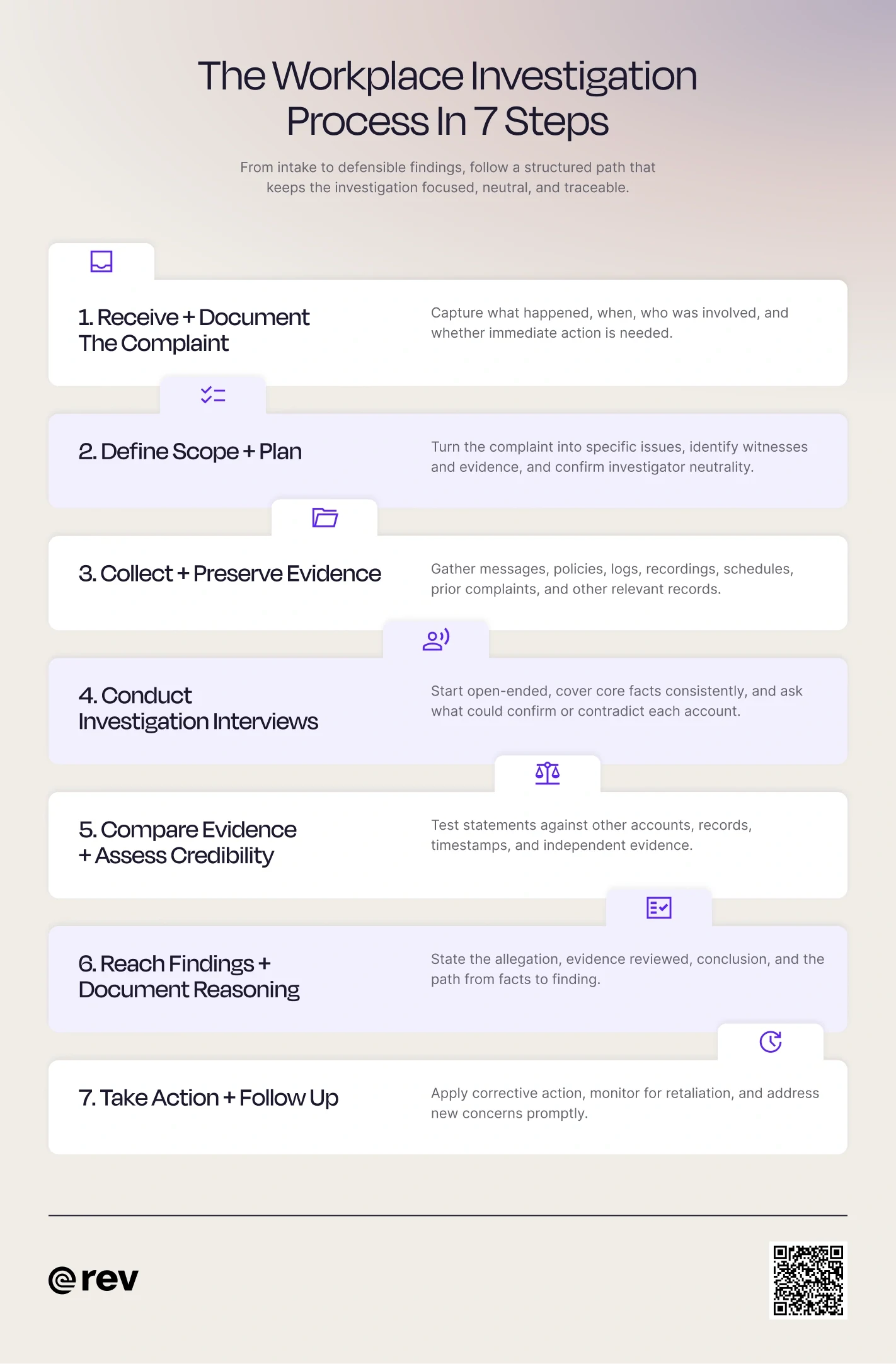
Still, the most effective investigations usually follow these seven steps:
1. Document The Complaint
Start by capturing what was reported, when it allegedly happened, who may have been involved, and what evidence may exist.
Avoid requiring the employee to present a perfectly organized case before taking the concern seriously. Complaints may arrive verbally, in writing, anonymously, through a manager, or even during an unrelated conversation. If you need help determining how to format your report, try out our downloadable investigation report template or our incident report templates separated out by industry.
Once you’ve documented the complaint, determine whether immediate action is necessary. A safety concern, ongoing harassment, or risk that evidence could disappear may require action before the full investigation begins.
2. Define The Scope & Investigation Plan
Turn the initial complaint into specific issues to investigate. Identify the relevant policies, potential witnesses, likely evidence sources, and person(s) responsible for the investigation. Consider whether the investigator has any relationship or conflict that could call their neutrality into question.
Scope matters because investigations can easily drift. New allegations may justify expanding the investigation, but that decision should be deliberate and documented.
3. Collect and Preserve Relevant Evidence
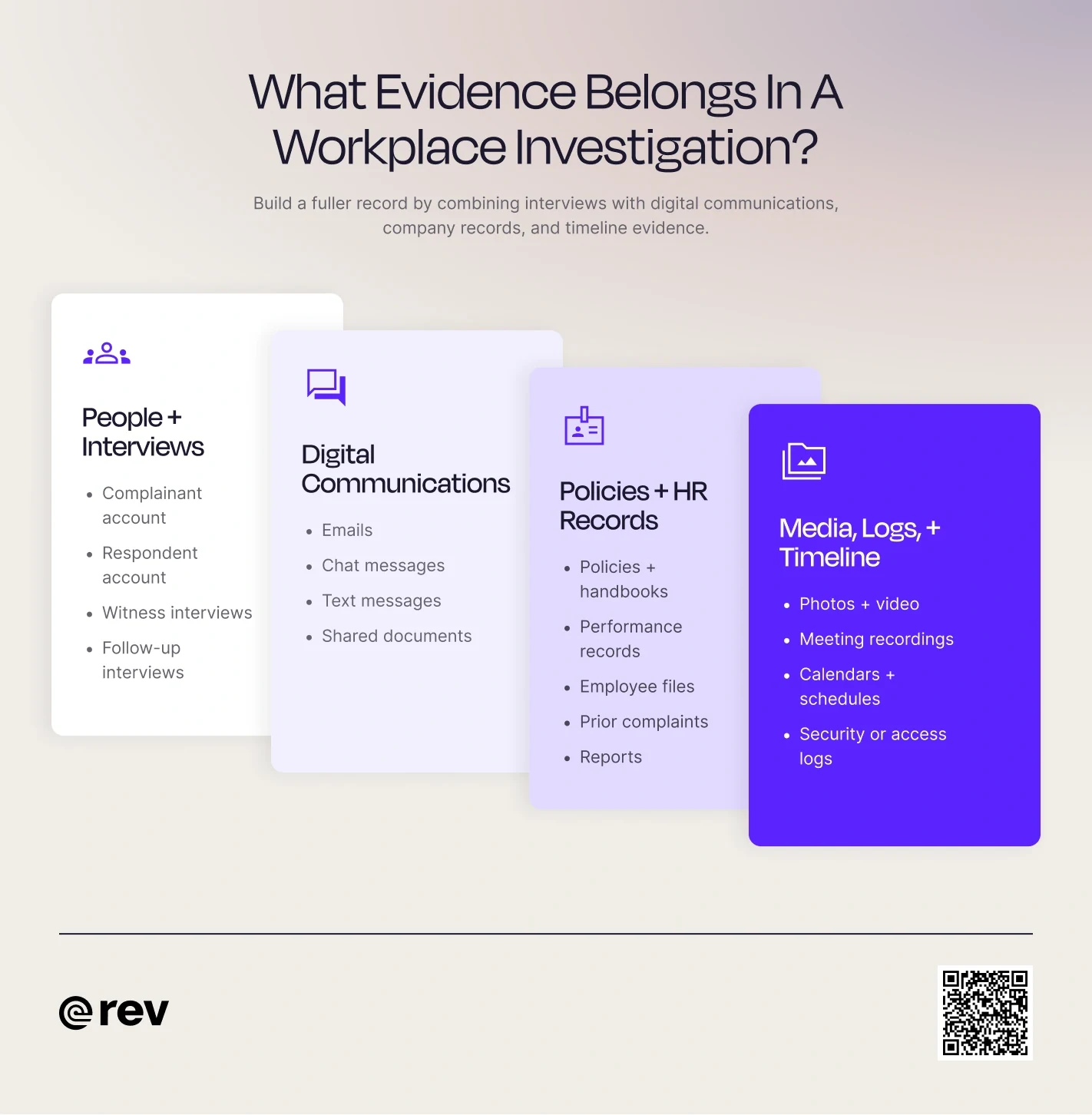
Gather evidence before memories fade, messages disappear, or documents are changed. Depending on the employment investigation, that could include:
- Emails and chat messages
- Text messages
- Policies and employee handbooks
- Performance records
- Security or access logs
- Photos or video
- Meeting recordings and transcripts
- Calendars and schedules
- Prior complaints
- Employee files
- Relevant documents or reports
Document where each item came from and which version was reviewed.
Digital evidence deserves particular attention. Modern workplace conduct often happens across email, Slack, Microsoft Teams, shared documents, video meetings, and other systems. Treating interviews as the entire evidentiary record can leave important gaps.
4. Conduct Workplace Investigation Interviews
Interviews usually include the complainant, respondent, and witnesses with relevant firsthand knowledge.
Start with open-ended questions. Let people explain events in their own words before narrowing the conversation with clarifying questions. Ask who else may have relevant information and what records could confirm or contradict the account. Michael Corwin, a workplace violence prevention consultant, recommends working from topics rather than reading mechanically from a script:
“Don’t write out in advance a list of questions. Work from topics so that you’re actually listening to the witness or party instead of focusing on the next question. And let the witness or party do the talking…The entire point of a witness interview is to get information from that person, and letting them talk as much as they want is the best way to do that.”
Consistency is still important. Cover the same core facts with relevant interviewees so accounts can later be compared fairly.
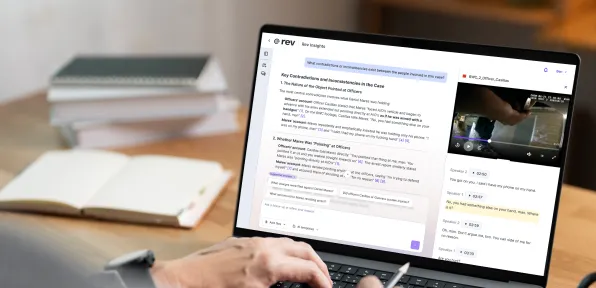
When allowed, recording interviews can also create a more complete record than handwritten notes alone. With Rev, interviews can be turned into searchable, speaker-labeled investigative transcripts. Instead of replaying hours of audio, investigators can search names, events, dates, or phrases and return to the original recording when context matters.
5. Compare Evidence & Assess Credibility
Now start connecting the pieces. Compare interview statements with one another and with emails, documents, timestamps, videos, and other evidence. Look for facts that are universally agreed upon, directly contradicted, unsupported, or still unclear.
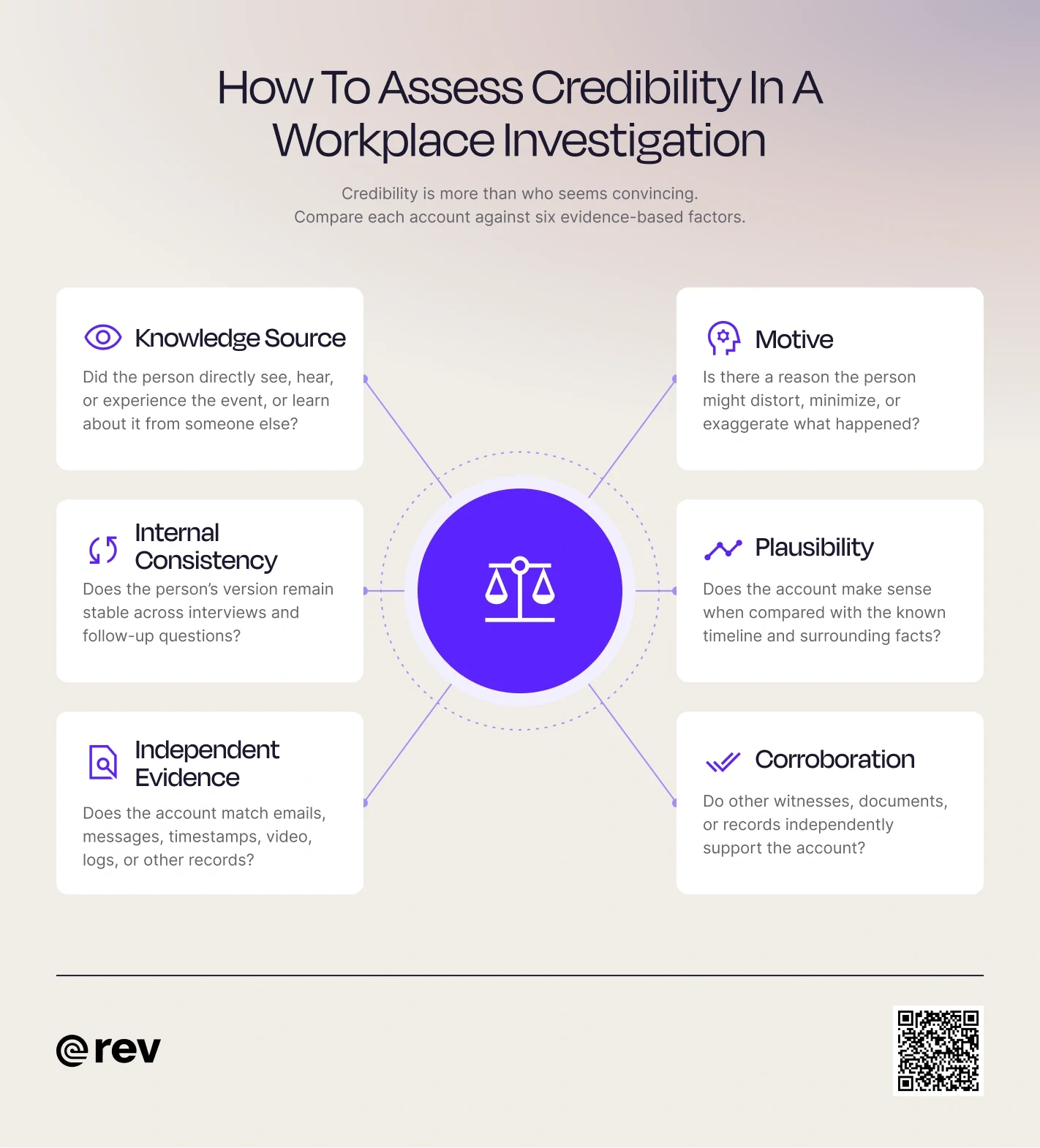
A credibility assessment should not simply ask which employee seemed more convincing. Consider factors such as:
- Firsthand versus secondhand knowledge
- Consistency within the person's account
- Consistency with independent evidence
- Plausibility
- Motive to misrepresent events
- Corroborating witnesses or records
Tools such as Rev's multi-file analysis can make this stage faster by helping teams search and compare information across all their files at once, making it easier to find the statement or inconsistency that helps to close the investigation.
6. Reach Findings & Document The Reasoning
A useful report allows a reviewer who was never involved in the case to understand the path from complaint to conclusion.
That means, for each allegation, state what was investigated, who did the investigating, what evidence was considered, and what conclusion the evidence supports. Always avoid vague statements or listing any findings that cannot be traced back to the investigation.
“Employers should avoid vague notes like ‘employee was interviewed and allegations were unfounded,’” explains Thomas Ricotta, Founder and Employment Attorney at Ricotta & Marks.
“A strong investigation file allows someone who wasn't involved in the investigation to understand exactly how the employer reached its decision.”
Depending on company policy and applicable law, findings might be described as proven, unproven, inconclusive, or using another defined standard. Make sure to do your research on laws in your area before documenting your findings.
7. Take Action & Follow Up
A workplace investigation does not end when the report is finished.
Management, HR, or counsel may need to determine appropriate corrective action. That could include discipline, training, policy changes, changes in reporting relationships, additional monitoring, or other measures. The response should be consistent with how similar situations have been handled.
Follow-up matters here too. Check back in with those involved after the investigation concludes to make sure no retaliation or other harassment has taken place.
Workplace Investigation Risks & Potential Problems
Even a well-intentioned investigation can create new problems when the process is inconsistent.
Confirmation bias is one of the biggest risks. If management decides what happened first and investigates second, interview questions and evidence collection may unconsciously support that conclusion. Poor documentation creates another problem. Missing interview notes, unexplained gaps, and inconsistent records make it harder to explain how a decision was reached.
Confidentiality also has limits. Information should generally be restricted to people with a legitimate need to know, but employers should be careful about promising complete secrecy. Even the EEOC frames confidentiality as protection provided “to the extent possible.”
Privilege, union rights, privacy laws, recording-consent laws, retention obligations, and state employment laws can also affect how an investigation should be conducted. For sensitive or high-risk matters, get your legal team involved early on.
Finally, watch for retaliation. Even the best investigations can create risk if a complainant or witness later faces inconsistent discipline, scheduling changes, exclusion, or other adverse treatment because they participated.
Investigative Technology To Consider
Technology should make the record easier to understand, not replace investigator judgment. A few tools may help:
- Rev: Transcribe permitted employee and witness interviews, search recordings, compare information across files, and return findings to the source material.
- HR Acuity: Manage employee-relations cases, investigations, documentation, and reporting in a dedicated HR case-management system.
- Everlaw or Relativity: Review and organize larger collections of emails, documents, and other electronic evidence when an investigation involves substantial data.
- Microsoft Purview: Support organizations that need to identify, preserve, and review information across Microsoft environments.
- Secure hotline or reporting software: Give employees another channel for raising concerns, including anonymous reporting where appropriate.
The best stack depends on the investigation. A ten-minute workplace dispute does not need the same infrastructure as a multi-country harassment investigation involving dozens of interviews and thousands of digital records.
Build Findings You Can Trace Back To The Record
A defensible workplace investigation is not the one with the most paperwork. It is the one where another person can follow the process from allegation to evidence to conclusion.
That starts with a clear scope, neutral interviews, complete evidence, and careful documentation. When interviews make up a large part of the record, searchable transcripts can make it much easier to compare accounts and verify what someone actually said.
Rev turns recorded interviews and other case material into searchable information your team can review without repeatedly scrubbing through audio and video. That leaves investigators more time to do the part technology cannot: weigh the evidence and make a sound judgment.

.webp)
.webp)
.webp)
.webp)