Courtroom Accessibility For A Just Legal System
Learn about modern approaches to courtroom access and the law, from ADA requirements to digital tools like transcripts and court records.


A fair legal system assumes that court proceedings are open to anyone who needs access. But true accessibility isn’t just about removing physical barriers. It also means ensuring that litigants, attorneys, jurors, and the public can fully understand what’s happening and follow the official record.
The definition of access is also expanding as courtrooms adopt more digital tools. Recorded proceedings, electronic exhibits, and searchable transcripts have become central to presenting and reviewing cases. When these materials aren’t clear or accessible, critical details can be missed — affecting comprehension, changing case outcomes, and damaging trust.
In this context, courtroom accessibility is about clarity, usability, and reliable access to the record. Here’s what complete access to justice means today, and how technology is changing the process.
What Is Courtroom Accessibility?
Courtroom accessibility is the ability for all participants to fully understand and navigate court proceedings and the official record, regardless of physical ability, language proficiency, or sensory limitations. As legal workflows evolve, this increasingly depends on how well courts manage both in-person and digital experiences.
“Real access to courtrooms is not just about having a physical courtroom to go to,” says Alan Heimlich, president of Heimlich Law. “Technology that permits real-time updates to a pending case, electronic filing and submission of documents, and virtual hearings all provide greater access and benefits to all parties to litigation, whether they are in a physical courtroom or attending virtually.”
In other words, access involves more than just ramps and assistive devices (though those are important too). In a truly accessible courtroom, spoken testimony is clearly captured and shared, evidence can be easily viewed and understood, and all digital assets are available in formats that allow all parties to review and act on what occurred.
Types Of Accessibility In Court
To understand access, you have to get a handle on the various types of courtroom accessibility in play. Physical access, communication support, language services, and the clarity of court records all influence how individuals with disabilities can follow the proceedings.
Physical Accessibility In Courtrooms
Physical accessibility addresses the design and layout of court facilities to ensure that individuals with mobility challenges can enter and participate in proceedings without barriers. Common court accommodations for disabilities include ramps, elevators, accessible seating areas, and clearly marked pathways that comply with the standards set by the Americans with Disabilities Act (ADA).
Most modern courthouses are designed with these requirements in mind, but there is still room for improvement, particularly in older buildings. Limited seating options, obstructed sightlines, or difficult navigation within the courtroom can make participation in the judicial system difficult for many individuals.
Auditory Accessibility And Assistive Listening Systems
Auditory accessibility means that all participants can clearly hear and follow what is said during court proceedings. Many courtrooms are required to provide assistive listening systems, microphones, and other devices that meet ADA assistive listening system requirements, ensuring all dialogue is clear for everyone present.
Simply meeting these technical requirements is not always sufficient though, especially in larger courtrooms or during cases with multiple speakers. Inconsistent audio quality can make it difficult for participants to follow proceedings in real time.
When audio is unclear, the impact isn’t limited to the courtroom. Incomplete or unreliable transcripts can make it harder for everyone to review testimony and verify important details. Alongside high-quality microphones and recording systems, accurate transcription tools like Rev can make a major difference in clearly capturing and preserving critical dialogue.
Language Access And Interpretation Services
Courts must regularly support participants who speak different languages or rely on alternative forms of communication. From 2020 to 2024, California’s superior courts alone reported more than 2.5 million interpretations. Providing comprehensive access in this area requires removing language barriers and addressing how spoken testimony, legal terminology, and procedural instructions are conveyed.
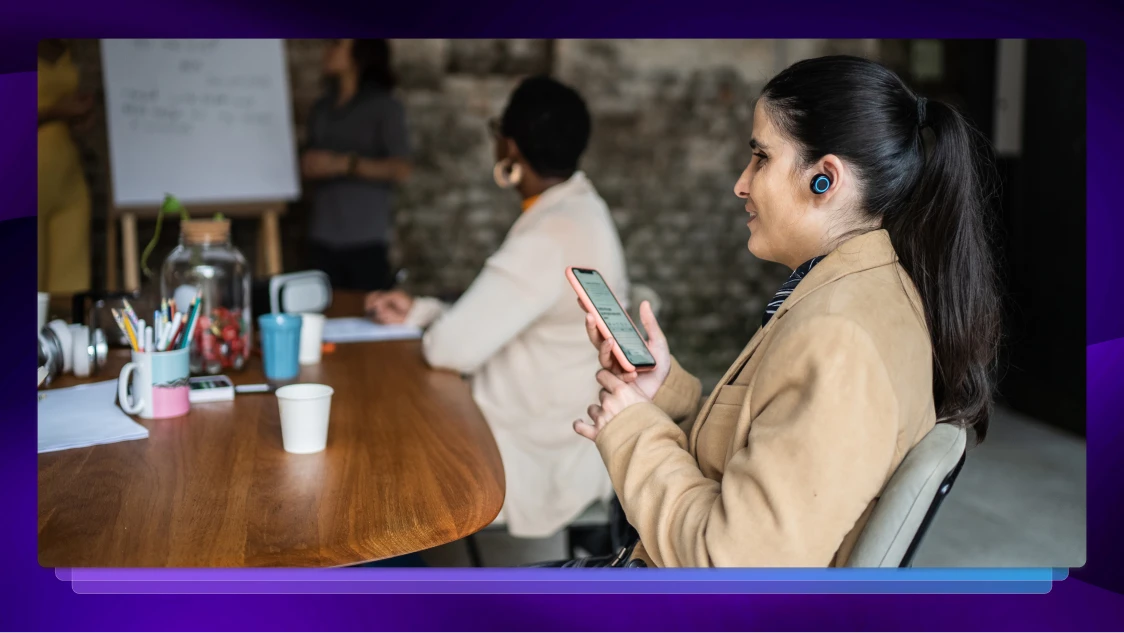
Courts often provide spoken language interpreters, translated materials, and American Sign Language (ASL) interpreters to support individuals with limited English proficiency or hearing impairments. Communication Access Realtime Translation (CART) captions are also commonly used to convert spoken language into live text for individuals who are deaf or hard of hearing.
Execution in this area varies by the court and its available resources. When qualified interpreters for less common languages are hard to come by, some participants may still have trouble following the proceedings. Technology can help bridge this gap by expanding access to translated records, captioned media, and multilingual transcripts that enable clear review even after the proceedings.
Accessible Presentation Of Evidence And Court Records
As essential as physical, auditory, and language access are, these efforts fall short if participants can’t effectively see and engage with the information during court proceedings (and even after court concludes).
This includes how exhibits are displayed in the courtroom — enlarging visuals or presenting digital evidence — and documenting proceedings through transcripts, captions, and translated records.
Thanks to digital tools, attorneys can now present evidence more dynamically, helping judges and juries follow complex arguments more easily. Recorded depositions and courtroom proceedings, along with legal transcripts, also help ensure that what unfolds in court can be accurately reviewed after the fact.
Still, poorly formatted exhibits, inconsistent transcription quality, or inaccessible file formats can limit how well participants interact with the record. Key details can easily be missed without searchable, well-documented materials, so ensuring that evidence and court records are clear and easy to navigate is essential to making courtroom information usable for everyone
Cognitive And Sensory Accessibility In Court Design
Courtroom environments and processes can present a different type of access barrier, limiting participants’ ability to concentrate and process information. Cognitive and sensory accessibility measures seek to reduce these barriers by reducing unnecessary noise, minimizing visual distractions, and structuring proceedings to make information easier to absorb. This is sometimes referred to as a “quiet court design process.”
These considerations are especially important for participants with cognitive disabilities or sensory sensitivities, or those who are simply unfamiliar with legal settings. Complex court language, quick exchanges, and overstimulating environments can make it difficult to keep up with proceedings or understand key details.
While some courts have begun to incorporate more intentional design and communication methods, many are still catching up. Clearer presentation of information and careful courtroom design are key to building an environment where participants can more easily focus and engage with the legal process.
Accessibility Laws For The Court
Guidance for courtroom accessibility comes from a mix of federal laws, judicial standards, and technical guidelines. These frameworks set baseline requirements for physical access, communication support, and record availability.
Foundational laws and standards include:
- Americans with Disabilities Act – Title II: Requires state and local courts to provide equal access to services, including physical accommodations and assistive technologies.
- Section 504 of the Rehabilitation Act of 1973: Prohibits disability discrimination in programs that receive federal funding, which includes most court systems.
- Title VI of the Civil Rights Act of 1964: Requires courts to provide meaningful language access for those with limited English proficiency (LEP).
- Section 508 of the Rehabilitation Act: This 2017 addition sets accessibility requirements for digital content and electronic records in federal courts and agencies.
- Court Interpreters Act (28 U.S.C. § 1827): Governs the use of interpreters in federal courts for non-English speakers and individuals with hearing impairments.
- U.S. Access Board Courthouse Design Guidelines: Provide detailed standards (not regulations) for accessible building design, including courtroom layouts, circulation, and public spaces.
- Web Content Accessibility Guidelines (WCAG): Widely adopted standards for making sure court websites, e-filing systems, and digital records are accessible.
While these laws and standards provide important guidance, implementation varies by jurisdiction.
How Technology Bridges The Courtroom Accessibility Gap
Given the expanding (and increasingly digital) definition of courtroom accessibility, it’s clear that technology plays an important role in meeting modern standards. Digital tools for court reporters and lawyers alike can help make proceedings more structured and easier to follow.
“Technology is changing the way juries process information,” explains David Gammill, trial attorney and founder at Gammill Law Accident & Injury Lawyers. “Juries respond better to visual evidence than to long explanations, so if it allows you to tell a clearer story, it can be fundamental. You just have to know how to use it.”
E-Depositions, a Rev customer based in Nevada, is just one example of how impactful these tools can be. Rev’s transcription services have helped the company deliver affordable court reporting in underserved areas, get accurate transcripts to attorneys quickly, and provide rough drafts immediately after depositions.
More broadly, technology can have the greatest impact on courtroom accessibility by making the record itself easier to understand and use. Accurate transcripts, captioned media, and translated multilingual evidence make testimony easier to review, while searchable transcripts allow attorneys and clients to quickly locate and verify key details.
As these tools become faster and more accurate, they help ensure that what happens in the courtroom can be clearly understood long after proceedings have ended.
Best Practices To Improve Courtroom Accessibility
Making courtrooms more fully accessible involves multiple players. Court administrators, legal teams, and technology providers each must work together to ensure proceedings are clear and usable for everyone.
Here are a few steps each player can take to do their part.
How Courts Can Improve Their Accessibility
Here are a few things court admins and others working in the justice system can do to boost their accessibility services:
- Regularly audit courtroom spaces for compliance with ADA regulations and design recommendations
- Maintain and test assistive listening systems and audio equipment.
- Ensure sign language interpreters and translation services are available.
- Standardize digital filing systems and accessible document formats.
- Capture clear audio and video for recorded proceedings.
- Keep websites up to date and compliant with WCAG standards.
How Law Firms and Legal Teams Can Improve Their Accessibility
When presenting your case, it’s crucial to make sure you’re presenting it in a way that everyone can understand, regardless of their ability level. Try out these tips to improve your accessibility:
- Present evidence in clear, visually accessible formats (e.g., enlarged text, highlighted exhibits).
- Use plain language when possible to avoid confusion during proceedings.
- Ensure digital exhibits are well-organized and easy to navigate.
- Leverage transcripts and recorded materials to review testimony and support case strategy.
- Confirm that shared materials (e.g., filings, exhibits) are accessible to all parties.
How Legal Vendors Can Improve Their Accessibility
When working with the justice system, you can’t afford to have any missteps. And that includes digital accessibility. If you’re a legal vendor or court partner, consider these tips to improve the accessibility of your services:
- Deliver accurate, high-quality transcripts and captioned media.
- Support searchable, well-structured records for easy review.
- Ensure compatibility with common court systems and workflows.
- Focus on data security, reliability, and turnaround time.
A Quick Courtroom Accessibility Checklist
Need to meet accessibility standards fast? Use this checklist to make sure you’re in compliance:
How Courtroom Access Will Change In The Future
Courtroom accessibility and technology adoption will be closely intertwined in the years ahead, especially when it comes to artificial intelligence. AI capabilities shift the focus from simply digitizing processes to improving how information is organized and shared.
A Rev survey about AI in the courts reveals strong support for these types of use cases. More than half of respondents (53%) see benefits in using AI to improve case organization, speed up resolutions, and reduce costs. A majority (55%) also supports AI transcription when paired with human oversight. In other words, people prefer tools that improve access to the record without sacrificing accountability.
At the same time, only 10% of respondents support AI in sentencing decisions, drawing a firm line between administrative (and accessibility-supporting) tasks and those that require critical thinking.
Recent guidance from the U.S. Courts also calls for careful oversight, transparency, and limits when delegating core judicial functions to AI. The goal is to use technology to help expand access to information without replacing the human judgment that underpins the legal system.
Making Courtrooms Accessible For Everyone
Creating more accessible courtrooms means ensuring every participant can not only join the proceedings but also clearly understand and act on the information presented. As things continue to move more digital, access to transcripts, recorded testimony, and evidence will be even more critical for building and reviewing cases.
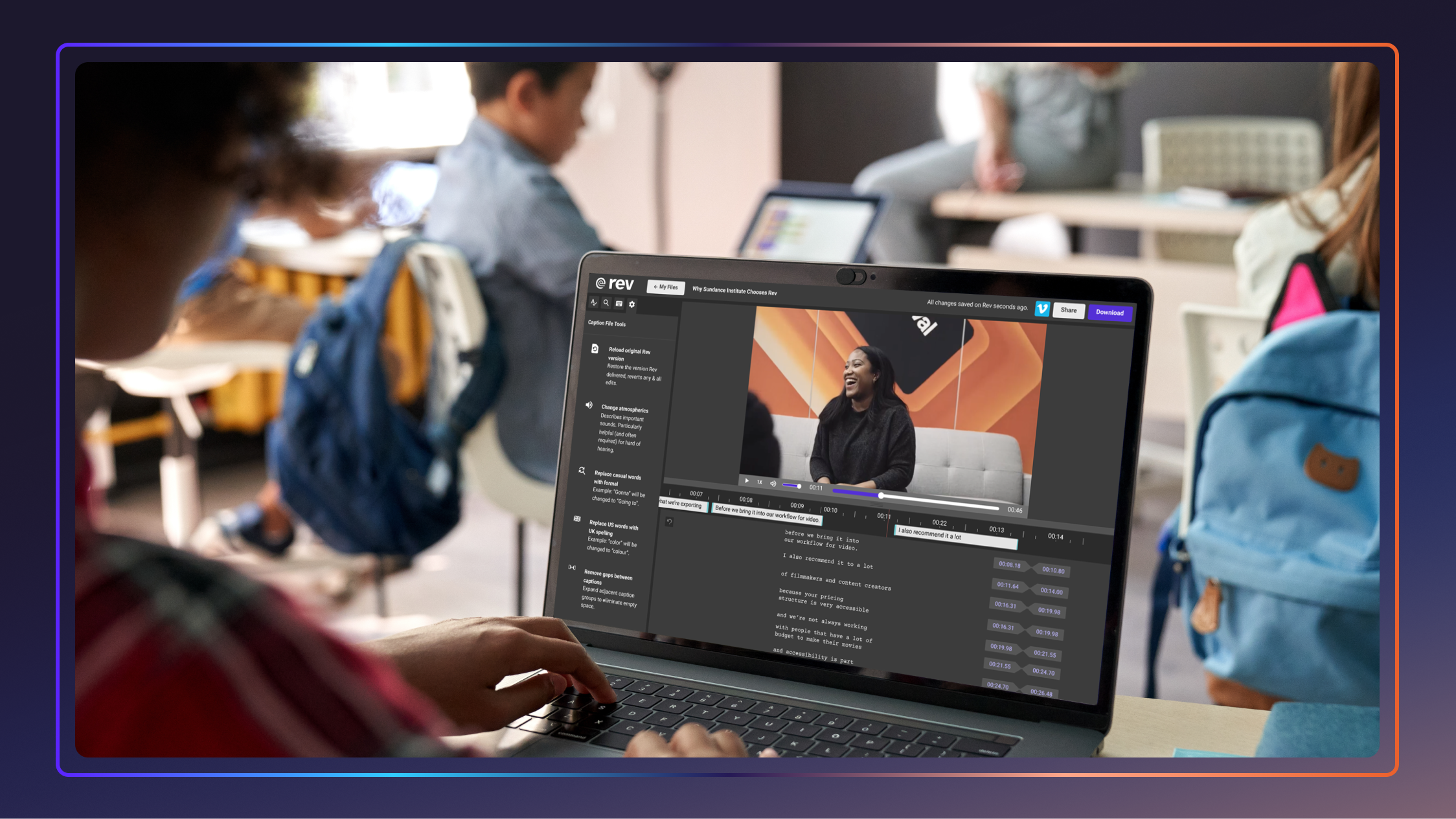
Rev helps legal teams turn recorded proceedings and digital evidence into clear, searchable transcripts, captions, and translated records. We handle the tedious work, so your team can more easily review testimony and keep the most important details visible for everyone who needs to see them.
Ready to give it a try?