Senator Jim Risch (00:43):
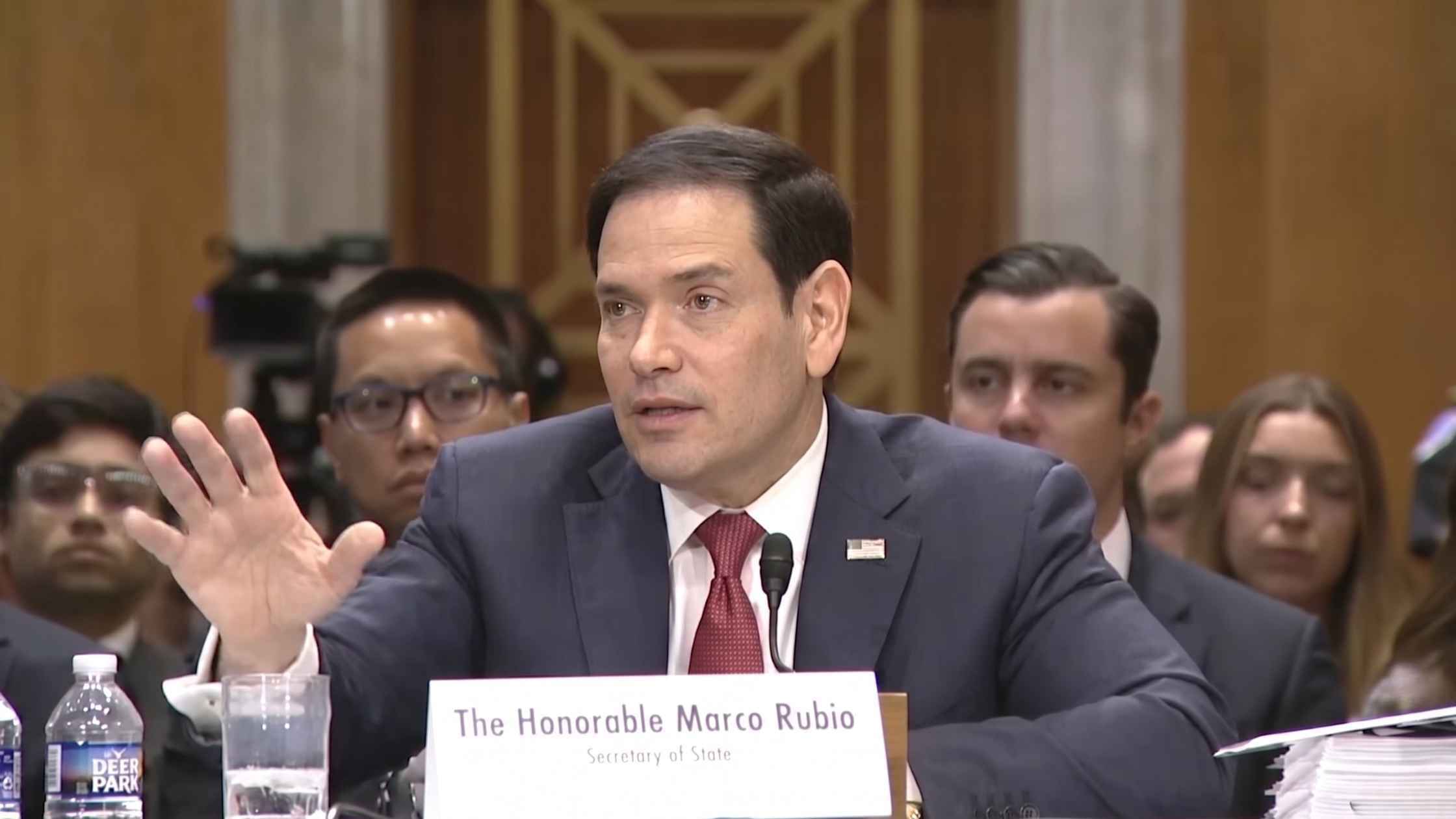
The United States Senate Foreign Relations Committee will come to order. It wasn't orderly to begin with, but it's orderly now thanks to our good crew. And we welcome here, as always, our Secretary of State, Marco Rubio, a distinguished alumni of this committee, and I know he's always glad to come back here and visit with us. Marco, we haven't had this kind of excitement since you've been here last time. I know you think this is the way it is every time, but it's not. So in any event, we're glad to have you.
(01:17)
For the information of the committee, the secretary has four hearings in these two days so we have negotiated a hard stop at 12:30. To that end, we'll use the usual array of the way we do things here, and that is first of all, I will make an opening statement and then I'll yield to Senator Shaheen, and then we'll turn the floor over to Senator Rubio. Then we'll do a five-minute round of questions based on arrival time.
(01:52)
So with that, Secretary, it's good to see you here again. Though you're not on the Hill often, a lot has changed obviously since the last time you testified on the president's International Affairs Budget last year. The department has undergone a major reorganization making it operate more efficiently and more in line with America's interests as we discussed before you even took the job, and that's being executed, I think, quite well. At long last, foreign governments are being encouraged and, when necessary, pushed to live up to their responsibilities to respond to the needs of their own citizens. America will stand up by our allies and provide lifesaving assistance to people in their hour of need, but we are not the world's ATM. And so the department is testing new ways of providing strategic assistance and breaking the cycle of dependence on aid. Renewed emphasis on trade over aid will help the American people and lift up countries around the world. This is American generosity and ingenuity in action.
(03:01)
Through this budget, the administration is holding UN organizations to account, badly, badly overdue, and alongside Ambassador Waltz, making sure American values are leading in international organizations. You've made securing the Western Hemisphere a top policy and budget priority and have successfully reduced illegal immigration at the southern border to the lowest level in half a century. That has not gone unnoticed. You've helped curb the trafficking of illegal fentanyl into the United States, saving countless lives. The budget prioritizes countering China's unfair trade practices, expanding military and malign influence operations around the world, which pose some of the greatest threats in modern history to the American people. At the same time, you've been working to ensure these efforts are strategic, targeted, effective, and we appreciate that.
(03:52)
The administration has also taken care to ensure taxpayer dollars don't go to those who are able but unwilling to pay for their own defense. Through concerted effort by you and your colleagues, our NATO allies have increased their defense spending and have committed to reach the 5% by 2035. This is a major change from the way you and I used to deal with this for the decade or more before this. Together, we need to create a next-generation NATO that is stronger, more interoperable, and takes advantage of the industrial potential of American and European economies. We also must continue to coordinate with our European partners as they take greater responsibility for supporting Ukraine, and work with our partners to deny Russia's strategic gains.
(04:39)
The administration has prioritized efforts to end conflicts in Africa, which undermined decades of investment in economic growth and global health security. All is not well there. The latest Ebola outbreak in Eastern Congo now affecting the entire region highlights how conflict and humanitarian crises abroad threaten the health and security of the American people here at home. I know the department is working hard to protect us from this threat and I look forward to hearing how the budget supports these efforts.
(05:10)
And of course, the administration has taken decisive action to protect American citizens from the threat posed by Iranian nuclear capabilities and ambitions. On behalf of the American people, thank you for your hard work on that. You and I have been through this before and we know how difficult it is. Change is hard, but it is also necessary. Your efforts to make the State Department more responsive to the needs of Americans will help us all meet the challenges of the 21st century. I look forward to discussing how the budget will further those efforts.
(05:41)
With that, I will turn it over to the distinguished ranking member, Senator Shaheen.
Senator Jeanne Shaheen (05:47):
Well, thank you, Mr. Chairman. Good morning, Secretary Rubio.
(05:53)
Mr. Secretary, you were a senator. You sat on this committee. You sat on the Intelligence Committee. You know as well as anyone that effective American foreign policy requires a strong partnership with Congress. Allies need to know that our commitments can stand the test of time, and that only happens if Congress is brought into the discussion. Congress cannot be a partner if it's kept in the dark.
(06:20)
I have a long list of unanswered requests sitting on your department's desk. And Mr. Chairman, I'd like to ask that these letters be submitted for the record.
Senator Jim Risch (06:31):
They'll be submitted.
Senator Jeanne Shaheen (06:32):
Thank you. I've requested a briefing on changes to U.S. force posture in Europe, and after 33 days, we still have no response. We've requested a briefing from the Iran war on displacement. After 90 days, we still have no response. We've asked for a briefing on Ukraine on a number of issues. After 180 days, we still have no response. We've asked for a briefing on lifting Milorad Dodik's sanctions, and after 225 days, we still have no response. We've asked for a briefing for the U.S. Agency for Global Media. No response after 344 days. The Romanian visa program termination, we've followed up five times over 435 days and we've still gotten no response.
(07:28)
In January, when you were before this committee, I asked if you would report to this committee once an audit system was in place to track Venezuelan oil revenues. You said, and I quote, "Oh, absolutely. Yeah." We are still waiting. And when you do notify Congress, it's to inform us of decisions you have already made. That is not consultation, as you well know. That is not advice and consent. Congress has been clear on a bipartisan basis. We do not want to cede ground to China, yet this administration is closing consulates and cutting funding in the Indo-Pacific.
(08:08)
The same pattern extends to global health. USAID supported Ebola detection and prevention activities in DRC and Uganda for years. And we can see in this poster, even Elon Musk admitted that, "One of the things we accidentally canceled very briefly was Ebola prevention." Well, those programs were dismantled, and today we have to screen for Ebola at Dulles Airport rather than in the DRC and Uganda more than 7,000 miles away.
(08:47)
You're asking for a 44% reduction in the State Department budget. That includes eliminating funding to the World Health Organization. It includes eliminating all disease-specific funds in the middle of an Ebola crisis that's affecting Americans. Yet no one from your department can explain to us why this is a good idea. You sent Congress one notification saying you needed $19 billion to close out USAID. Then you sent another saying you needed some of that money to respond to disease outbreaks. Congress has asked for an explanation and we still have not received one.
(09:26)
The same pattern extends to our alliances. I just returned from a bipartisan delegation to the Arctic. We are on the verge of losing the very alliances that we have built for decades because the president manufactured a crisis over Greenland. And nowhere is that clearer than with Russia. In 2017, you wrote, as a senator, that Vladimir Putin "will never be a trusted ally or a reliable constructive partner." But since taking office, you, the president, the vice president, Steve Witkoff, not one of you has been to Ukraine, and yet your envoys talk to Putin on a regular basis. The president has invited him, given him the red carpet treatment on American soil, but yet you won't come up here and brief Congress on any of it, and decisions Congress has made on Russia have been systematically undermined.
(10:22)
Congress passed support for Ukraine. The administration has slow-walked it. And instead of sanctioning Russia, the administration issued oil licenses that have sent billions to Moscow. Congress has asked what this approach has produced. Russia has conducted five times more drone strikes on Ukraine since 2024. More U.S. businesses are being directly targeted than at any point in this conflict and Russia is providing targeting intelligence to help Iran hit our facilities and personnel in the Middle East while we're helping them fund this war.
(11:03)
When I talk to my constituents, they asked for economic relief at home, not regime change in Havana or Caracas or Tehran. Instead, you sent Congress a war powers notification saying we are not in active hostilities with Iran while the U.S. was conducting strikes against Iran and Iran was bombing U.S. embassies and bases throughout the Middle East. That was not consultation. It was an attempt to avoid answering to this committee and this Congress about this war.
(11:35)
Congress has asked basic questions about the war. Why are roughly half of our Patriot interceptor stockpiles gone? Why does the Strait of Hormuz remain closed? Why is gas up $1.50? Why did 13 American service members lose their lives in this war? Congress deserves to know why and Americans deserve to know why.
(11:56)
Mr. Secretary, you would not have stood for this kind of stonewalling by the administration when you were a senator and you certainly shouldn't stand for it as Secretary of State and National Security Advisor.
(12:09)
Thank you, Mr. Chairman.
Senator Jim Risch (12:10):
Thank you, Senator. We'll now proceed to a round of five-minute questions.
Speaker 1 (12:14):
Opening statement.
Senator Jim Risch (12:15):
I'm sorry. We'll try. Did you want to do ... We talked about that.
Secretary Marco Rubio (12:20):
Do you want one?
Senator Jim Risch (12:21):
We actually talked about that, but he thought that questioning might be easier. Why don't you go ahead and give it?
Secretary Marco Rubio (12:25):
I have it in writing. You want me to read it?
Senator Jim Risch (12:27):
Yeah. Give us your best shot.
Secretary Marco Rubio (12:28):
Okay. Well, thank you for having me here. There'll be a lot to talk about today and I just want to remind everybody, our foreign policy is one that's solely focused on the national interests of the United States of America, on the defense of our country, both its military defense and our security, but also our economic security and the vibrancy of our economy, our sovereignty, and our future. We believe that America should lead the world, and I believe that we are and it will have a very good story to tell about that. American leadership, however, should always be on behalf of the American interests.
(13:01)
I say this because I think over a period of time in our foreign policy, we lost focus on that. The reality of it is that our foreign policy first and foremost must always be what is in the national interests of the United States of America. And determining the national interests oftentimes requires us to make pragmatic decisions. Sometimes in foreign policy, the choices are not between a good choice and a bad choice. It's between two less than ideal choices, and you're trying to figure out which one of these two choices is the one that is best for the United States and least harmful to our interests? And that plays out every single day.
(13:33)
That said, we remain the world's sole global superpower, the most powerful country on earth. We have the largest economy. We have the most formidable and powerful military ever known to man, by the way. Our dollar remains the reserve currency of the world. Our language is used extensively throughout the world to transact all sorts of business and many of our engagements. But all of this means very little if that power is not used to protect the people who built it, the people who it is meant to protect. I also remind everybody the United States government is not a charity. We are not here to play social worker. We are here to win. We are here to win on behalf of the American people and on behalf of the national interests, to win for our country, to win for the people of America, to win for the things that are important for our future, and that's what we exist to do. The State Department exists to carry out the foreign policy of the United States, both in diplomacy and in aid in a way that furthers the national interests and helps the American people, and it's guided every decision that's been made since January of 2025. I'll give you a perfect example is in our own Western Hemisphere, an area that this committee and many of its members long argued, as I did, has long been neglected and not paid attention to. We now have in this hemisphere a coalition of friendly countries, over a dozen, who have aligned to work on not just the issues of security that we all have in common, but also economic prosperity that go hand in hand. It's an amazing story that basically other than Nicaragua, other than Cuba, obviously, other than Venezuela because it remains with some challenges, and of course Brazil, although they're in the midst of an election cycle, and to some extent the current government in Columbia as well, at least the president's been problematic, but generally speaking, it is now a region filled with American allies, American-friendly leaders, and an America-friendly direction. Now, obviously we have to operationalize that into action after 20 years of neglect in which China and other global powers have intruded in our Western Hemisphere to the detriment not just of American national interests, but to the detriment, in our view, of the people of those countries as well.
(15:27)
So these are important achievements and one that I'm very happy about. I'm also happy about the way we've transformed foreign aid. In any transition, there will be bumps in the road, but largely speaking, if you think about how those programs that existed in the past were failing us, the old model had to be replaced. And the foreign assistance that remains is being brought under the strategic direction of the State Department. So we're not just providing money, we are also seeking outcomes. It's not just how much money you spend on a program. It's whether you're getting outcomes from it, but it's also being guided with our strategic view in mind. And that means that we are able to provide aid not just all over the world, but specifically targeted at those most in need and those places around the world most important to the national interests of the United States. That will remain our guiding principle. That's been our guiding principle in our reforms.
(16:16)
So I mean, we can get into a lot of these details in our questions. The bottom line is that all this and more is a reflection of this belief that I outlined at the outset, and that is that foreign policy cannot be separated from economic policy, from border policy, from energy policy, from any of these other spheres that are critical to our national interests. A country that cannot build ships or produce medicine or control immigration or access vital resources cannot defend its people, cannot defend its interests, and cannot defend its way of life. So our foreign policy continues to be reoriented around the real foundations of national strength. This budget is yet another step, I believe, in that direction.
(16:57)
Obviously, the appropriators here will have a huge say on the outcome of what that budget ultimately looks like, as we don't anticipate that for the first time in modern history, Congress will just take up our budget and pass it. We think it'll go through some substantial reforms along the way and we look forward to engaging you like we did last year to produce what we think is a very good spending bill at that time.
(17:17)
So anyways, I look forward to your questions. At least that's what it says here. I'm not sure if I really look forward to your questions. I look forward to probably half your questions. Thank you.
Senator Jim Risch (17:26):
Thank you, Secretary Rubio. We will now do a round of questions, five-minute questions based on order of attendance, and I'm going to start, and I'm going to say thank you for the work you've done with respect to Iran. All of us that have worked on this for years know how frustrating that is, how difficult it is to work with this regime who've sponsored terrorism, kidnapping, and killed thousands of Americans for the last 47 years. Thank you for doing something about it. I know you and the president are doing all you can to ensure that this comes to a close sooner rather than later.
(18:02)
I wonder if you could give us at least a brief update on where we are.
Secretary Marco Rubio (18:04):
Yeah. Well, first, let me remind everybody that while I've not been before this committee since, I believe, February when we briefed on the Venezuela operation, I have appeared on multiple occasions here, both in my role as National Security Advisor and Secretary of State in both all Senate briefings, multiple times, Gang of Eight briefings, Gang of Sixteen briefings. So we've talked about this topic with some of you in those settings in the past where you've heard from us.
(18:29)
Let me just lay the predicate here, okay? Iran's desire to build a nuclear weapon was going to be built, was going to be effectuated behind a conventional shield. They were going to build for themselves so many missiles, so many drones, so many conventional weapons, including a navy, that at that point there's nothing you could do about it. What they tried to do is they were going to try to build a conventional shield and hide behind that conventional shield and basically say to the world, "If you come and do anything about our nuclear program, we will overwhelm you with missiles, we will overwhelm you with drones, and we will overwhelm you with our navy and you will not win. You will not be able to do anything about it." They were seeking that point of immunity, which is why the president chose to act to deny them that point of immunity.
(19:12)
Operation Epic Fury, some of you didn't like it, some of you did. It was highly successful in achieving its military objectives, which is dramatically reducing the defense industrial base of Iran. The ability to build these missiles and to build these drones, especially the missiles program, substantially degraded. A substantial percentage, and I'll leave the exact numbers to the Department of War because I'm not a general and I'm not here to speak as a military planner, but a substantial degradation in the number of launchers that they have as well.
(19:40)
They still have a lot of drones because these are easy to make. We all know it's not an Iran challenge. This is a global challenge, and it's playing out every single day around the world. I mean, Mexican cartels are using UAVs against each other, and we should imagine at some point may even use it against our interests. So this is a pervasive problem around the world. The economics of it are something we have to solve for. But nonetheless, even their drone-building capability has been eroded.
(20:05)
Today there is no Iranian navy. There is no such thing. There's a bunch of Boston Whalers with machine guns on them, but there is no navy. There is no Iranian navy. It lies at the bottom of the ocean and we'll assume, within a number of years, be prime fishing spots because they'll turn into reefs. So my whole point is that the Iranian conventional shield has been substantially eroded.
(20:29)
Now, in the aftermath of that, two things have happened. The first is they entered into a ceasefire. They agreed, we agreed to stop. But part of that agreement was that they would reopen the straits. They did not. At which point the president decided, and I think appropriately, we can't have a world in which only Iranian ships get through the straits. And so if they're going to shut down the straits for everybody, we're going to shut down the straits for them. And we have done that through a very effective blockade, and by the way, through the seizure of sanctioned ships in the Indo-Pacific as well. The cost to Iran every single day in lost revenue is in the hundreds of millions of dollars that they are losing in lost revenue that they're not generating as a result of that.
(21:10)
Now, we are in talks. And I say, "Talks" because talks with Iran are not like talks with Switzerland. They're very different. They require the use of intermediators, unfortunately, but there is the prospect before us, which could happen today, it could happen tomorrow, it could happen next week, that for the first time, certainly in my memory, they have agreed to negotiate aspects of their nuclear program that just a month ago or just a year ago they were refusing to even mention, much less enter into discussions about. That is not a guarantee that ultimately will lead to a deal that's acceptable to the Senate or acceptable to the American people, but we'll be able to engage them in a process to truly test the proposition of how far they're willing to go.
(21:51)
Complicating that process, unfortunately, is their internal regime is somewhat fractured in the sense of it takes days to get responses from their system. We can go into more depth in your follow-up questions, but we're hopeful that something like that could happen in which the straits would reopen, we would enter into a period of negotiations on very specific topics, delineated negotiations, in the hope of reaching an outcome that's acceptable to us and something that they would be able to do as well. If it doesn't work out, then obviously we still have a problem with respect to their nuclear ambitions, but what they won't have is the conventional shield to hide behind any longer.
Senator Jim Risch (22:28):
Thank you, Secretary. I'm going to ask one more question. Hopefully this will shorten as we go around. There'll be more questions obviously on that topic.
(22:37)
But I know you just got back from China not long ago. Could you give us a quick update on the state of U.S.-China, really?
Secretary Marco Rubio (22:44):
Yeah, look, I mean, China and the United States are the two largest economies in the world, the two most powerful militaries in the world. The Chinese government and the U.S. government have to speak. I mean, there's really ... It's not a choice here. We have to have some measure of communication if for nothing else in order to deescalate potential points of conflict that could lead to something broader.
(23:03)
There are obviously very significant irritants in our relationship with China. Some of these are long-term problems that we know we're going to have to address. And so what we're trying to do is manage a period of strategic stability while recognizing that there are areas of our relationship in which we are going to have struggles, not just for years, but perhaps for decades. We recognize this. But I think as much as anything else, we have to recognize that the United States and China have to be able to have points of dialogue and speak to one another, as I said, if for no other reason than to be able to have a communication channel. I think in our meetings it was abundantly clear which are the areas that we do not have strong alignment or agreement on. We understand that there are areas in which long term we're going to have some real challenges, whether it's supply chains.
(23:47)
Put it to you this way. Let's leave China aside for a moment. The United States, and I would argue the world, cannot depend on one country for 90% of anything, especially 90% of things that are critical to our economies from our weapons systems to our pharmaceuticals. We just can't live in a world in which we rely on anybody for 90% of what we get in one sole source that could be cut off at any time as a leverage against us or punishment or in a time of conflict.
(24:13)
And so we are actively searching and have plans in place and we're implementing these to diversify where we get critical minerals, where we get our supply chain, secure that supply chain, and obviously the Chinese would like to retain their monopoly position in some of these. This is going to be a long-term issue that we're going to have to continue to confront and work on. Work on that continues even while we are engaged in the ability to dialogue and speak to them because we have to. It's responsible and we truly have no choice but to be able to do that. It's to their benefit at ours, and I would argue to the benefit of the world, that these two countries are able to speak to one another.
Senator Jim Risch (24:46):
Thank you, Secretary. And I think your comments about the supply chain and the critical minerals and everything else that's in the bottleneck, these are things that are relatively new to us. They've always been there, but COVID underscored that. And then of course the Ukraine war brought it out even more, and appreciate your remarks. I think everybody at this diocese knows we are, as a nation, looking at that.
(25:09)
With that, Senator Shaheen.
Senator Jeanne Shaheen (25:11):
Thank you, Mr. Chairman.
(25:13)
Mr. Secretary, at this budget hearing last year, you testified that no one had died as a result of foreign aid cuts. Sadly, I think we're seeing in real time that that's not true today. There are more than 1,000 cases, more than 200 Ebola-related deaths. And as we know, one of the entities that is a critical global health tool is Gavi, particularly during a disease outbreak. It plays a role in distributing Ebola vaccines and it has committed up to $40 million to develop a vaccine for the current Ebola strain that has no vaccine right now.
(25:53)
So, how are you making sure that Secretary Kennedy, who has been sitting on those funds for months now, is going to release them so that they can go to help develop a vaccine to address the Ebola outbreak?
Secretary Marco Rubio (26:07):
Yeah. Well, a couple points on Gavi. I would say that the president had asked that we allow Secretary Kennedy to play a leading role on the Gavi decision because of his strongly held views with regards to vaccine safety and he wanted them to conduct some reforms. I actually talked to Senator Schatz about this last week as well, and so the State Department's going to be reengaging. I'm not here to tell you we're going to yank this thing and we're not going to listen to his points of view, but the State Department a few weeks ago made the decision that we were going to reengage on this issue of Gavi, respecting what HHS views on it are as well and we want to take their input, but we'd like to get this issue resolved and an outcome that's acceptable, both to Congress and also to our goals on global health.
(26:50)
So it is an issue. As I said, I wouldn't use the word defer, but we have certainly allowed him to play a leading role in determining what we're going to do next, but right now we're sort of at a stage where we are going to reengage because we need to drive this to an outcome.
Senator Jeanne Shaheen (27:06):
I couldn't agree more. And so do you commit to using the $2 billion that Congress has appropriated for global health to actually help fund global health security?
Secretary Marco Rubio (27:16):
Well, we do fund global health security beyond Gavi, by the way. And we can talk about that. We can talk about the compacts, I think 32, that we've now entered into with countries all over the world. We have a new agreement to the UN as well that they're very happy with. The Global Fund, we've hit our cap. We are at our 33%. We've actually been able to attract additional donors from around the world to contribute to it. On this specific item, I would say we intend to get this resolved. We want to get this resolved. It's an important part of our matrix.
Senator Jeanne Shaheen (27:47):
Good. Thank you. We will follow up, and I hope you will share with this committee as soon as you get it resolved.
(27:54)
I want to go to Russian oil sanctions and general licenses because President Trump gave Russia a lifeline, allowing it to sell oil globally through licenses issued by the Treasury Department. While I think the administration should have known that the Iran war would make Russian oil more desirable, they decided to remove the stigma on that oil and give an extra windfall of cash to Putin.
(28:21)
So, can you let us know whether you believe or whether you will support extending that license when it comes back up mid-June?
Secretary Marco Rubio (28:34):
Yeah, a couple points. First of all, two things have happened. One is that actually, the U.S., U.S. production and U.S. playing a role in the global energy supply has increased. I think we had our largest amount of exports from the United States we've ever seen. So we've also benefited from this and our energy dominance has really come into play.
(28:56)
The Russian waivers were a decision, these are ... The underlying policy remains on the sanctions. What has changed is these time-limited extensions to sort of try to alleviate the global-
Senator Jeanne Shaheen (29:07):
Right. I understand.
Secretary Marco Rubio (29:07):
Right. The problem we're facing too is there's a contagion potential and that is that at some point we can do strategic reserves, we can do some of the other things that we've done to sort of alleviate global supply, but at some point you have to ensure ... And this is not so much for us at the end of the day. Our economy's not in need of it, but there are other economies around the world that have benefited from this. So these are time-limited extensions that ultimately at some point will expire.
Senator Jeanne Shaheen (29:30):
We've certainly benefited China and Russia's economy.
Secretary Marco Rubio (29:33):
Well, China doesn't ... I mean, China refines oil. They import a lot, but they refine oil and they-
Senator Jeanne Shaheen (29:37):
But they also benefit from Russian oil. But my question for you is, can you commit not to extend the general license again when it expires on June 17th?
Secretary Marco Rubio (29:47):
Well, that ultimately is a decision that's made by Treasury, but I will tell you, it depends on the circumstances at the time. We would like to end it as soon as we possibly can because the underlying policy of this country has been to sanction their oil. These are time-limited waivers for the purpose of opening up more global supply.
Senator Jeanne Shaheen (30:03):
I understand that, but if we continue to extend them, they're not time-limited.
(30:07)
I want to get a final question in on Food for Peace because, as you know, the closure of the Strait of Hormuz has deepened the humanitarian needs in food-insecure countries, such as Sudan, South Sudan. And yet in your opening statement, you said that our aid targets those who are most in need, but I think it's very concerning that the country selection process for Food for Peace, which I understand is led by the Department of State, includes only two priority countries from World Food Program hunger hotspots. That's Haiti and the Democratic Republic of the Congo.
(30:43)
So, the question I have is, why are we adding countries that aren't facing acute food insecurity, like El Salvador, Guatemala, and Rwanda? Why are we not helping countries who are facing acute, well, famine in some cases, Sudan, Gaza, Afghanistan, Nigeria, Syria, Somalia? These are all countries that have humanitarian crises, and yet we're helping countries that don't have acute food insecurity.
Secretary Marco Rubio (31:13):
Yeah. Well, so a couple points. First of all, on Gaza, we have spent hundreds of millions of dollars, including after the ceasefire, and providing through the World Food Program and other entities and we continue to do so. I think if we're not the world's largest donor, I'd be surprised because it's a massive amount of money that we've provided through those mechanisms of various means.
(31:32)
On the point of Sudan in particular, the complication in Sudan, which I wish were different ... And we're very involved in this. I mean, I had a meeting on Sudan yesterday. The problem in Sudan has largely not been our unwillingness to provide funds. We are willing to step forward and we have the flexibility through what we've been able to do with foreign aid to surge up that. It's been distribution. It's been the ability to get that.
(31:52)
So as an example, in these conversations we're having between the warring sides, one of the things we're trying to identify is for safe spots where people can go receive humanitarian assistance, where we can actually have the outside groups, the NGOs, the international organizations that we contract with have the ability to go in and actually deliver the food without having their trucks hijacked or blown up or their workers killed. That's been the fundamental challenge in Sudan is distribution. The distribution is being threatened because we don't have conditions on the ground that allow for it. And so to allocate money towards something that we can't distribute is unwise until we have that in place. That's deeply tied to the ability to have a peace deal, which I can tell you has been very frustrating.
(32:31)
On the one hand with Sudan, we had a donor conference in Berlin in April-
Senator Jeanne Shaheen (32:35):
I don't want to interrupt you, Mr. Secretary, but I'm out of time and it doesn't explain why we are providing food for countries that are not insecure. I appreciate the challenges in Sudan. We have those challenges in many places, but because we have dismantled the distribution network when we eliminated USAID, we've exacerbated those challenges in countries around the world and we are not providing the help based on humanitarian needs, and that's my ...
Senator Shaheen (33:00):
They're not providing the help based on humanitarian needs and that's my concern. Thank you, Mr. Chairman.
Senator Risch (33:08):
Senator Ricketts.
Senator Ricketts (33:09):
Thank you very much, Mr. Chairman and Mr. Secretary of State. Thank you for being here. I really appreciate it. Good to see you. Communist China is trying to win the AI race and they will use it, for example, to dominate our military if they're able to do that, in so many other ways. A world where communist China is dominant in AI is very bad for the United States and for the entire world. That's why it's critical that us and our allies cannot lose this race. Semiconductor supply chains, particularly semiconductor manufacturing equipment, SMEs, are critical to winning this competition. It's one area that Beijing is spending billions and billions of dollars to be able to produce chips in China and they've failed to be able to produce those high end chips so far. President Trump understands this better than anyone because the Trump administration was the first to utilize export controls on SMEs to slow down communist China's advanced chip making industry.
(34:09)
Since that time, key allies and partners have also imposed controls on SMEs to China. However, their controls have not been as restrictive as US controls and this has allowed certain foreign countries to backfill the Chinese market with critical dual use tools.
(34:26)
Secretary Rubio, do you agree that export controls on SMEs are critical to maintaining our technological advantage over communist China?
Secretary Marco Rubio (34:34):
It is. It's actually where it's most critical is in the high end. The areas that are not legacy that are broader and that allow for that. I think on the broader point of AI, we share your view. One of the initiatives that I think Jacob Helberg has done a great job with at the State Department is Pax Silica, in which we've signed up all these countries around the world, I think we're up to 13 or 14 including ourselves and others who hope to join as well, in which we can create this global consortium for all of the elements of the AI supply needs. It's not just the innovation, it's obviously access to the minerals and the critical elements necessary in order to produce these chips and all the things that it will take to lead the world in AI. I think it is safe to say the United States right now is a global leader on AI.
(35:16)
I think it is also wise to say that that lead is not irreversible. It has to be sustained. And there will be a real challenge in sustaining it and we're going to have to stay focused on it. The good news is I do think we have a system of global alliances that view it the way we do. And we want to lead on it because it's not just about leading the technology in AI. It's about also leading in the standards that will govern how AI is used. I don't want to monopolize this conversation on this point, but it's one that I think the Senate should think about because I know we're starting to think about it. AI will have very positive impacts on our economy and societies. It will also have some detriments. There will be white collar jobs in this country that will be impacted.
(36:02)
I think we have to start thinking not simply about the impact that AI will have on those jobs, but the societal pressures that that will create, not just in the United States, but in economies all over the world. Much like industrialization and automation did, it will make the worker more efficient and more valuable, but it will eliminate some jobs and those jobs will have to be replaced with new jobs or new skills. That's not just an economic issue. That is a political issue. That over time could destabilize societies all over the world. So we have to start thinking about AI in those terms as well.
Senator Ricketts (36:36):
You mentioned our allies. Shouldn't they have to follow the same sort of standards US companies do when we're limiting the semi-manufacturing equipment that's going to communist China?
Secretary Marco Rubio (36:45):
And that's our hope is that we can create people, that we can create a coalition of nations that understand the danger in this. And they're running through the same, some are better than others, but they're running through the same problems that we run into and that is companies ultimately want to sell to the markets and China is a large market. But I agree. And that's one of the goals behind Pax Silica is to create unanimity or consensus behind that thinking.
Senator Ricketts (37:08):
Well, Mr. Secretary, that's why I recently introduced the Match Act with Senators Kim, Risch and Schumer to level of playing field. This bill would provide the State Department with the leverage in ongoing negotiations with our allies to align those controls. And if an agreement cannot be reached, it would ensure that foreign companies cannot sell the very choke point technologies that we have restricted. So I hope you'll support that as we move forward on it. One other thing I just want to hit before my time runs out here is that I was the co-sponsor of a bill to create the US Foundation for National Security and Counter-Terrorism. This is a foundation that would be a public-private partnership. It would help counter traffickers and insurgents operating in ungoverned spaces around the developing world, such as Africa. The State Department, however, has not for over a year and a half now launched this foundation. And I'd encourage you to work expeditiously to implement it.
(38:02)
I think this is something that as we're talking about, especially the continent of Africa, can be very helpful to making sure that we're not only helping conserve the environment and helping animals, it's bad for terrorists. Thank you, Mr. Chairman.
Secretary Marco Rubio (38:13):
Thank you.
Senator Ricketts (38:14):
And look at that. I kept it in my time.
Senator Risch (38:16):
Good job. Can you do as well, Senator Murphy?
Senator Murphy (38:18):
I'll do my best. Thank you, Mr. Chairman. Thank you, Mr. Secretary, for being with us today. Despite the differences that existed between Republicans and Democrats prior to this administration on how to approach Iran's nuclear program, the theory was basically the same, that we were going to impose significant harm on the Iranian economy in order to force them to the table to negotiate. What is happening now is fundamentally different. This war and the administration's decision to blockade has now held the entire world economy and the US economy hostage to the ability to negotiate an agreement with Iran. This is why the entire country is seized by the question of when there will be an agreement. Because apparently until there is an agreement, the Strait of Hormuz remains closed. There is a cost to the Iranian economy, but now there is a devastating cost to the US economy.
(39:24)
It has been indecipherable, the information coming from the administration, especially in the past several weeks, as we get signals that a deal is imminent, the president said yesterday he's bored by the negotiations, he doesn't care whether we get a deal-
Speaker 2 (39:42):
[inaudible 00:39:41] for a picture.
Senator Murphy (39:42):
I think it's really important for us to understand what your bottom lines are, what you're asking for in this negotiation, what commitments you need Iran to make in order for you to release the blockade. And we hope for them to release the blockade as well. So give us a little insight into what your bottom lines are. What is going to get the strait reopened? Because this is kind of the only question that matters for American consumers right now and every day we get wildly different signals from the president as to whether he even is engaged in this question as to whether the strait is going to reopen.
Secretary Marco Rubio (40:25):
Yeah. I think your question gets right to the heart of the matter. So I think that's a good question. Let me first bifurcate two things. The only reason there's a blockade, the only reason why there's a US blockade is because Iran has closed the... They're firing on commercial ships and they've mined large segments of Hormuz's international waters. And so the blockade is only against Iranian ships and it's very simple. The notion is if no one's ships are going to get out, then Iran's ships aren't going to get out either. We can't live in a world in which they get to close the straits and tell everybody, "Pay us a toll or we'll blow you up," but their ships get to go out unfettered. So that's the reason why there's a blockade. There wouldn't have been a blockade if Iran had agreed to do what they said they would do when the ceasefire kicked in, which is they were going to open the straits.
(41:07)
So let me just focus on the straits for a moment. Number one, what they're doing is unlawful and illegal. There isn't a country on earth other than Iran and maybe Oman that flirted with it, who's in favor of what Iran is doing in the straits. The Chinese are against it. The Russians are against it. Everyone is against it. The whole world is against it. So condition number one is they have to reopen the straits. And reopening the straits means the following. Ships can sail through international waters the way they can do through other choke points around the world without being fired upon, without paying a toll. That's condition number one.
Senator Murphy (41:36):
But the strait is closed because of our decision to invade Iran. This is a consequence of our military action. So I guess I'm not interested in litigating that question. We all know why the strait is closed, because you took military action against Iran and we knew ahead of time that that would be their likely response. The question is, how are we going to get it reopened? Are you going to drive a bargain that is so tough and so hard that the strait remains closed? So how are we going to get it open?
Secretary Marco Rubio (42:06):
Well, the first thing, that is a predicate to anything else happening. The straits have to be reopened. So the way to think about it is this. If Iran wants to be able to move its oil again through the strait, they will have to reopen the straits. If they refuse to do so, then we have other options available to us, but we would prefer to negotiate the opening of this, which means the following-
Senator Murphy (42:22):
Tell us about the negotiations. What do you need from them in order to get the strait reopened? We need the strait reopen tomorrow.
Secretary Marco Rubio (42:27):
Well, what needs to happen is very simple. They need to announce that they will no longer fire on commercial ships that are going through or threaten to fire on ships because in many cases, ships just won't move. They won't go, not because they got fired on, but because of the risk of being fired upon. And so they have to announce very clearly, "The straits are now open. We're not charging a toll." We will help remove the mines that they put in there and they will not fire on ship [inaudible 00:42:49]-
Senator Murphy (42:49):
But the president says they also need to make commitments on their nuclear program. That's what I'm asking.
Secretary Marco Rubio (42:54):
Oh, I see what you're saying.
Senator Murphy (42:54):
What commitments do they need to make in order for the strait to be reopened and for our blockade to end?
Secretary Marco Rubio (42:58):
Well, the second thing they have to agree to as part of this is, in addition to the straits, that's the predicate that opens the door to phase two. Phase two is they have to commit to very specific negotiations on highly enriched, disposition of the highly enriched uranium that still is buried deep in a mountain somewhere. They have to agree on negotiating severe and long-term limitations and or cancellation of enrichment activity in their country.
Senator Murphy (43:25):
In the second phase of negotiations.
Secretary Marco Rubio (43:27):
Well, obviously these are highly technical matters. So I don't think you could work those out in five days. That would require a team of experts to meet over a 30, 60, 90-day period and work out the details, but they have to commit to their willingness to do that. For example, they have to commit to say, "We will dispose of the enriched uranium." And the question now is, what are the mechanisms by which we do so? That can be negotiated.
Senator Murphy (43:48):
Final question. In order to get to that second phase, are you willing to release sanctions or release frozen money that the United States is withholding from Iran?
Secretary Marco Rubio (43:57):
Right now, everything that's been discussed with them is that any sanctions relief... Now remember, sanctions come... There's international sanctions, there's congressional sanctions, there's executive sanctions. So some we can release and some we cannot, but any sanctions relief is condition based, which means it has to be in return for the reason why those sanctions were put in place in the first place, which is their nuclear program. So yeah, look, Iran is being sanctioned because they enrich uranium. Iran is being sanctioned because they have highly enriched uranium. Iran is being sanctioned because of their nuclear activities. If they agree to give up those things, there will be sanctions relief associated with their commitment and compliance with those agreements.
Senator Murphy (44:32):
Relief just in exchange for reopening the strait.
Secretary Marco Rubio (44:36):
No, that's not been discussed. That's not been offered.
Senator Risch (44:41):
Senator Hagerty.
Senator Hagerty (44:42):
Thank you, Mr. Chairman. And Secretary Rubio, it's good to see you here. I want to commend you and the administration for actually implementing a foreign policy that advances America's interest. Thank you. If we could, I'd like to start with the Philippines area that we know very well. It's the geographic center of the Indo-Pacific region. It's an area that is along critical sea lanes where tremendous amount of world trade and energy commerce actually move. A strong alliance with the Philippines clearly is in US national security interest. It leads and supports our freedom of navigation. It also helps us deliver regional stability along the South China Sea, very critical area, particularly in the face of a very aggressive posture that the Chinese have adopted. I want to recognize my colleague, Senator Kane, who's worked with me to put in place the Philippines Enhanced Resilience Act. That's $500 million of FMF grants.
(45:34)
It's a billion dollars of loan and loan guarantees per year to strengthen the Philippines and the United States Alliance to make us more interoperable and more capable. Mr. Secretary, I'd just like to get your comments, your vision on the role of the Philippines and the United States Alliance.
Secretary Marco Rubio (45:49):
Actually, I spoke to President Marcos on Sunday and have had multiple engagements with them at a personal level. We've had visits. A couple good points here. The first is we've actually entered into agreement with them, in which I believe it's an old US military facility inside the Philippines that will now serve as sort of a, I think it's a 4,000 acre-
Senator Hagerty (46:08):
I'm very familiar with the area.
Secretary Marco Rubio (46:09):
Yeah, you know it. And that we'll be able to do a lot of our activities together with regards to our joint interest in developing on AI and high-tech and diversifying and helping diversify their economy. The second is to continue with our defense commitments that we've made to them and the ability to interoperate, join exercises, which we've done now multiple times over the last year. Obviously, we're very concerned with Scarborough. We've seen in recent days and we've demarched and made a very clear note. This issue came up during the first meeting with the Chinese. It's come up in every engagement I've had with the Chinese and it's come up again now very recently through diplomatic channels, and that is we're very concerned about recent activity once again near Scarborough and the buildup of infrastructure that appears to be exerting territorial claims that we have long argued are not valid.
(46:59)
This is one of those irritants in the long term that I think we'll continue to have to manage. But I view the Philippines as a critical partner. And I think over the last, I would say, couple of years, our relationship with them, particularly under their new administration, has dramatically improved our ability to work with the Philippines jointly on a number of topics of interest.
Senator Hagerty (47:16):
Well, I want to commend you. The 4,000 acre Luzon corridor is anchored by the Subic Bay Project, which when I was ambassador to Japan worked very hard to get that back for America. And I see that as a tremendous opportunity for us to deepen our economic ties, and of course that has, as you mentioned earlier, a tremendous national security.
Secretary Marco Rubio (47:33):
Yeah. Can I just add one point? There is some desire during their chairmanship this year of ASEAN to reach a sort of code of conduct understanding in the Indo-Pacific. And while I understand that desire, I just want you to know, and perhaps many of you can help us in making this point, a bad code of conduct agreement is worse than no code of conduct agreement at all. And I think that's very important because they are under, weathering constant pressure in the region to agree to a code of conduct in the region that I think would be detrimental, would set a precedent that I think is very dangerous in the law. So we'd love to see one, but it has to be a good one. We don't think that's possible in the current conditions. And a bad one is worse than none at all.
Senator Hagerty (48:16):
Your point is very well taken. Look forward to working with your team, Mr. Secretary, to advance that. Can I turn to another issue of concern? And again, it's a joint concern. Senator Kane and I both worked on this and that is the actions that have been taken by countries that have been perceived as our allies against US business interest and against US investments in our country. Particularly, I'd like to point to the example of Vulcan Materials. That's a situation where a US company put billions of dollars of investment into the Yucatan Peninsula, both in port facilities and in quarrying operations, only to be confiscated by the Mexican government. Then the Mexican government came back in arrears, by the way, retroactively tried to justify this taking as some sort of environmental move. Sadly, we had to fight pretty hard the previous administration to not allow this to happen.
(49:04)
And I think it's going to take more bipartisan effort. Certainly you'll have it from here in Congress to push back on any government's effort to try to confiscate American corporate property. What that will do is have the effect of minimizing or basically reducing the incentive or deincentivizing our foreign investment in other countries, which again, I think hurts the mission that you're on. I'd love to get your perspective on how the state department will stand up for American investments overseas.
Secretary Marco Rubio (49:32):
We do every day. And in fact, one of the great benefits of our reorganization is that it has empowered the regional bureaus. You used to have set-aside economic bureaus that would do these things separately from the missions in the field. And having been a former ambassador, perhaps you experienced that. We've now empowered the regional bureaus and through it by extension the embassies to play a leading role in economic diplomacy. And so I would argue that virtually every engagement I have with a foreign leader involves some economic component to it. And I would say if you talk to our [inaudible 00:50:02] and our ambassadors around the world, I would say more than 50% of their engagements now have to do with economic matters and they involve one of two things. Either A, finding creative opportunities. In essence, the host country will say to them, "We have these areas, these industries of investment." And the embassies will take an active role working with the bureau to identify American companies who could potentially go down there and see if there's an opportunity for them.
(50:23)
And the second is what you just pointed to and that is protecting existing American investments because the point we make with everyone we interact with is you can't ask for American investment into your countries when you have a history of expropriating, of takings. And in some cases it's a local official that's trying to extort an American business and say, "Hey, I'm the sheriff," or "I'm the local police officer. If you don't pay us, your workers won't show up to work tomorrow." We have problems like that as well around the world that involve the local level and it's become a leading part of our diplomacy and it's happening at the embassy level, which is where I think it really needs to be led.
Senator Hagerty (51:01):
That's where your field generals are. And I applaud the seat change and you know you've got support on a bipartisan basis here in the Congress to move this forward. Thank you, Mr. Secretary.
Senator Risch (51:08):
Thank you, Senator Hagerty. Senator Kane.
Senator Kane (51:10):
Thank you, Mr. Chair, and thanks to Senator Hagerty for mentioning our work together in Philippines and Mexico. Mr. Secretary, you won't be surprised that I'm going to ask you about the Western Hemisphere. You and I traded the gavel and the ranking on the Western Hemisphere Subcommittee when you were on this committee and that was good, productive work. I want to ask you about Operation Southern Spear, the operation to strike boats in the Pacific and the Caribbean that dozens of operations have now killed more than 200 people. Have you been involved as Secretary of State or National Security Advisor in discussion about the targeting criteria that are used to decide which boats we should strike?
Secretary Marco Rubio (51:47):
No, but not because I've avoided it, but because those are largely legal decisions, right? So you have-
Senator Kane (51:52):
But if you haven't been involved in a discussion as the national security advisor, are you aware of what the targeting criteria are?
Secretary Marco Rubio (51:59):
Yeah. They go through, so every strike has a legal officer on the deck that has to make a determination about whether the call is legal or not. And this is done by the Department of War, the way it's been done in other theaters around the world.
Senator Kane (52:10):
Here's what I want to ask you about. So you're generally aware of the targeting criteria. I know what the targeting criteria are because of briefings I've had in this committee and the Armed Services Committee. It's all been in classified and I'm not allowed to discuss the targeting criteria because they've only been shared and classified. But I don't think I'm prohibited from describing things that aren't targeting criteria. So I'll give you an obvious example. Everyone on the boat is right-handed. That's not a targeting criteria. It would be ridiculous.
Secretary Marco Rubio (52:39):
Everyone on the boat is what? I didn't-
Senator Kane (52:40):
Everybody on the boat is right-handed. That's not a targeting criteria. It's obviously not a targeting criteria. It would be improper for it to be a targeting criteria. Here's one that's not so obvious and that surprised me. There's evidence of narcotics on the boat. That is not a targeting criteria. I have been briefed on Southern Spear since the first operation on September two and most recently within the last couple of weeks and I've asked again and again, have the targeting criteria changed? No, they have not. What are their criteria? Here's what they are. I can't describe it here. But the presence of narcotics on the boat has never been a targeting criteria. Would you have any ability to explain? And the administration could have picked that as a targeting criteria. They chose items that were targets that authorized the use of the US military to sink boats and kill people, but they have not used the presence of narcotics on the boat as one of the targeting criteria.
(53:39)
And I would suggest to my colleagues, if you go look at the individual files of all the strikes, and I've looked at the first 46, they are consistent with what I've just said about something that's not on the list of targeting criteria. Why would the administration not include the presence of narcotics on the boat as a targeting criteria-
Secretary Marco Rubio (53:59):
Well, look-
Senator Kane (54:00):
... in Operation Southern Spear?
Secretary Marco Rubio (54:01):
As you just outlined, I can't discuss the specifics of the targeting criteria, but I can tell you the one thing that is obvious is that the targeting criteria is not single source. In essence, there are multiple checks. There are-
Senator Kane (54:12):
There are three elements to the targeting criteria.
Secretary Marco Rubio (54:14):
Right. And all of it informed and infused by intelligence collection. In essence, they have to have true links. I can tell you they do walk away from strikes. There are multiple times that I've been aware. I'm not aware of every strike because it's not reported on a regular basis, it's delegated, but there have been strikes that they've walked away from because it doesn't meet the criteria or because there's doubts.
Senator Kane (54:31):
I'm not saying that the strikes that I've reviewed don't meet the targeting criteria, but I'm saying how odd it is, especially since the administration always announced this is against narco traffickers, we've attacked narco traffickers. How odd it is that the presence of narcotics on a boat is not one of the targeting criteria. And I would encourage my colleagues, get the same briefing I've gotten, take a look at the strike files. You'll be as surprised as I am. Here's the second question. Again, in your dual role, Secretary of State and National Security Advisor, the administration's operation Southern Spear, we could agree with it or not, but the administration presented a legal opinion from the DOJ that we could review. Absolute Resolve. The effort against Maduro. The administration presented a legal rationale that we could review. Now, we could review both in classified. They've not been made public.
(55:25)
We're 92 days into a war against Iran and the administration will not let Congress look at the OLC legal opinion justifying the war. Intel committee members, SFRC members, Armed Services Committee members, rank and file members, the administration will not make it available to us. Now you can imagine A, we're the oversight committee, B, you're here asking for a budget. And in the Armed Services Committee, they're asking for a trillion five, an increase of 40% of our last year's budget, but won't let us see the legal opinion. And Mr. Secretary, you know what kind of thinking we do. If you've showed us the legal rationale for two wars and you won't show us the legal rationale for the third, is there something in the rationale they don't want us to see? Is there a dissenting opinion that says it's not legal? Are there conditions like you can't strike civilian infrastructure like schools and bridges?
(56:20)
Are there factual assertions like the war will be over in two days, or Iran will never close the Straits of Hormuz? By not sharing the legal opinion with the Article One Oversight Branch, you give us the opinion that there's something in there you don't want us to see. Could you use your influence as the president's chief national security advisor, Secretary of State, NSA to get the administration to share the Iran War legal opinion with Congress?
Secretary Marco Rubio (56:48):
Well, look, first of all, obviously the Department of State does not develop the legal opinion. That's [inaudible 00:56:53] the legal counsel.
Senator Kane (56:54):
But you're the Chief National-
Secretary Marco Rubio (56:55):
So I think what you're asking is why haven't the office of legal counsel provided it? They don't work for the national security.
Senator Kane (56:59):
I'm actually asking-
Secretary Marco Rubio (57:00):
They don't work for me.
Senator Kane (57:01):
... will you use your influence as [inaudible 00:57:03] National Security Advisor?
Secretary Marco Rubio (57:04):
Here's what I'll do. I can certainly inquire as to why it has not been available. I don't think there's a reason why. I am not aware that... In fact, my understanding is they have provided documentation to the committee and-
Senator Kane (57:16):
Not the opinion.
Secretary Marco Rubio (57:16):
... as part of the war.
Senator Kane (57:17):
Not the opinion. And-
Secretary Marco Rubio (57:18):
Well, that's different.
Senator Kane (57:18):
And you wouldn't accept that [inaudible 00:57:21].
Secretary Marco Rubio (57:20):
All right. Well, let me take that back and ask the office of legal counsel. But it's certainly, they provided the legal rationale for the strike. You're asking for the actual written opinion the way it was in the others-
Senator Kane (57:29):
Which they provided us in Southern Spear and Absolute Resolve.
Secretary Marco Rubio (57:31):
All right. I'll take that back.
Senator Kane (57:32):
Thanks, Mr. Chairman.
Senator Risch (57:34):
Thank you. Senator Lee.
Senator Lee (57:37):
Thank you, Mr. Chairman. Thanks, Secretary Rubio for being-
Secretary Marco Rubio (57:39):
You look like Ricketts. I apologize. It just threw me off a second.
Senator Lee (57:43):
Well, look, bald is beautiful.
Senator Risch (57:44):
It's a new [inaudible 00:57:46].
Senator Lee (57:46):
We can't help that. But thanks for all of your efforts. You are a very effective spokesperson for not only President Trump and the administration, but for the United States. And I'm grateful for that. I was wondering at the outset, if you could talk to us a little bit about the fractured Iranian regime and how that might be making negotiations more difficult. One of the things I've wondered, for example, whether the diplomatic Iranian channels are cross-wise at odds with or working hand in glove with the IRGC, which is itself causing a lot of these ceasefire violations, or is it all coordinated chaos to try to undermine and tip the scales in favor of Iran in the negotiations?
Secretary Marco Rubio (58:32):
Yeah, that's a great question. Let me try to give this answer to you in a way that's not boring or wonky because it's been a shift. The original supreme leader, the one that was there is no longer with us. His son takes over. Nobody hears from him for a month by all reports, open source reporting. I think you've all seen it. He was severely injured in the same strike and so forth.
Senator Lee (58:54):
Are you confident he's still alive, by the way?
Secretary Marco Rubio (58:56):
Yeah, I think there's indications that... In fact, we've not heard from him publicly. We haven't seen him publicly. And I would imagine given what's happened to multiple leaders in that system being very public is probably not something that's recommended for them internally. But that said, I think there are indications out there that he is increasingly engaging at some level, although all of his communications have been in writing and through intermediaries. So the way to think about it is the following. You have the supreme leader and understand that at the end of the day, the supreme leader and their system is, there really is no analogy to it in our system or anybody else's system. It is a theological office. It is the head of the Islamic Republic in the sense of the ultimate decision maker and every major decision has to be run by them.
(59:44)
They are advised by a council. It's not clear if it's six people or eight people, but there is a council made up of both IRGC and other elements of the regime that surround that supreme leader. And ultimately that council has to sign off on anything. And then there are the people you see on TV, like Araghchi, who's out there every single day, and Ghalibaf, who's the speaker of the Majlis, who's been playing a pretty prominent role, and they are the ones that they have sent to negotiations and so forth. It is our view of the system as we understand it and as it's been expressed to us both by the intermediaries and by Iran directly that what Araghchi and Ghalibaf bring or take from us, they then have to run back to this council and ultimately get guidance from them. And that process oftentimes take three to five days to get a response.
(01:00:32)
Now, some of it is logistical. They're operating probably using couriers and things of this nature. Part of it is internal fissures on exactly what they should agree to or not agree to. I think the second point that needs to be driven in this regard is that there is evidence that there are communications issues within the regime as well. So for example, it's pretty clear that at the outset of hostilities and the conflict, they had delegated decision making to field commanders. And so oftentimes, field commanders had delegated authority to act on a, let's say a pre-operational planning that I already put in place. And so unlike our system where perhaps you know that the president or the secretary of war is directly making orders and decisions, or the chairman of the joint chiefs, in their system, a lot of decision making at the tactical level, like which ships to hit and so forth, are being made at the commander level. So that's-
Senator Lee (01:01:22):
That's why from the outset it can look like fire ready aim, but it's part of the design of the system, perhaps?
Secretary Marco Rubio (01:01:27):
Well, I think it was a design of the system in the sense of regime survival and the ability to operate in case there was decapitation strikes or people were removed. But let's go back to the essence of the negotiations. What's complicated them is you ultimately are negotiating with people who then have to negotiate within their own system to see what they're allowed to give and what they're allowed to agree to. What is abundantly clear is that Iran is facing severe internal... All the problems Iran had before this conflict, not only are still there, but they're worse. All the things that led to the protest, all of these are worse than they were before. And I think there's definitely elements within that regime that understand it and then there are other elements of it that are more immune to it and perhaps more resistant to making agreements.
(01:02:09)
And so what we are working through is in many cases is delays in getting the responses to people. And this is why you see reporting about there might be a deal in the next few days. Because internally it takes time to get responses from them sometimes upward to five or six days.
Senator Lee (01:02:22):
Undoubtedly they're using that to their advantage, sort of like the car dealer where the salesman has to go talk to his manager, make you wait and think about it for a while.
Secretary Marco Rubio (01:02:31):
Even more complicated than that. Yeah.
Senator Lee (01:02:33):
Even more complicated than that. One more question. I think we could benefit from hearing from you about the need to zero out funding for a couple of entities, including the National Endowment for Democracy and US ADF. Can you tell us about that?
Secretary Marco Rubio (01:02:46):
Well, look, these programs I think have served a purpose in the past and obviously there's a congressional role to play here. Right? At the end of the day, these programs have had, especially the National Endowment for Democracy has had support in Congress in the past. And look, I was here for 16 years. I understand that you're going to pass an appropriations bill and the appropriations bill is going to have things in it that we don't have in ours. That's just the way it is. And we understand it, we'll make it work. But we are concerned or have been concerned in the past about organizations that have lost their purpose and what they're advancing. At the end of the day, look, we have a lot of resources. The United States is the richest country in the world. We have the largest government budget in the world, but we don't have unlimited resources.
(01:03:28)
We still have to be able to strategically spend our money. And the State Department, when I took over, a lot of people are like, "Oh, that's a mess." State Department's not that big. The majority of our employees are local hires overseas. We have foreign service officers, career civil servants, but compared to some of these other agencies that are out there, we're not that large and yet we have a global footprint. We're really, other than, I would say beyond the Department of War, we're the only ones that are present almost everywhere on the planet. So we have limited resources and we have to be able to allocate those resources in ways that are driven by the core mission of advancing our national security. And oftentimes that will mean that things we have paid for in the past, we can't continue to fund because there are other things.
(01:04:10)
It might be good, but there might be something else that's more important and even better. Other cases, we may still spend money on a purpose, but we want to be driven not just by... We don't want to be judged just by how much money we're spending on something. We also want outcomes for it. We want to show outcomes. That's been the goal behind these MOUs, these compacts with the 32 countries that we've entered into in a way, is we're not just trying to solve the disease problem this year. We're trying to build the local capacity so that five years from now, they won't need aid anymore because their local systems can handle it. I'm saying five years. Some countries may take 10 years. But nonetheless, that's the goal and it's been very well received.
Senator Lee (01:04:46):
Thank you.
Senator Risch (01:04:46):
Thank you, Senator Lee. Senator Merkley.
Senator Merkley (01:04:48):
Well, thank you, Mr. Chairman and Mr. Secretary. Good to see you. As Senator Shaheen noted, you've expressed that no one died as a result of the sudden shutdown of AID. I did ask you last time you were here about that and I won't repeat all that, but I want to note that the folks who study this at the Schools of Public Health, Harvard Chan School, the Boston University School of Public Health estimate that over 500,000 children have died from that sudden shutdown. I want to put a note on that. If you were to walk across this country, you'd see one dead child equivalent every roughly 30 feet. That's the level of carnage. I know you disagree with that, but many experts who are in this field, that is their estimate. And I hope you'll ponder that as we strive to rebuild our programs related to malaria, tuberculosis, AIDS, HIV, nutrition, and certainly infectious diseases like Ebola.
(01:05:52)
I wanted to turn though to Taiwan. It's an area that you and I worked on quite a bit together when you were here, including the Taiwan Relations Reinforcement Act and the Transnational Repression Policy Act of the Hong Kong-
Senator Merkley (01:06:00):
Relations Reinforcement Act and the Transnational Repression Policy Act, the Hong Kong Economic and Trade Office Certification Act. I'm very concerned about the president's comments on his recent trip. He noted that armed sales to Taiwan are a "Very good negotiating chip." And when he was asked about how much he talked about armed sales with China, he said, "We discussed armed sales in great detail."
(01:06:29)
The six assurances included that armed sales to Taiwan would never be a negotiating chip. Our concern is that the president now has kind of accentuated the armed sales by not approving, not putting the stamp of approval and completing the armed sale that Congress has already funded and that this sets the stage for China to very much proceed to pursue more aggressively their effort to incorporate Taiwan into the broader framework of China, including extinguishing Taiwan's democracy. So I'd just like to hear your thoughts. Hopefully there's a path here that will re-accentuate our support for Taiwan's democracy.
Secretary Marco Rubio (01:07:21):
Thank you. That's important question. So let me first say on Taiwan and I, actually, I think I made this point myself either on the trip in China or thereafter, when we returned. There's been no change to US policy towards Taiwan. I think there's obviously the Chinese side would like to see a change in the verbiage, but no change has been made in that regard. The second point I would make is I believe in December ... I know in December of this year we did approve an armed sales, I think $11 billion. I think it's the single largest armed sale ever. It was a huge sale to Taiwan. This was just last December. I think it's more than the totality of the four years under the Biden administration. And I would recall that there were a six-year period of time under the Obama administration where there were no sales to Taiwan.
(01:08:04)
There was a second pending sale, which I think is the one you're referring to. It's the $14 billion one and that remains under review, but we just did one in December. So I don't think, and I'm not saying you're saying this, but I don't think it's fair to say that the US is not providing help. We just had a massive arms sales and it was so big and so noticeable that the Chinese became very aggressive about it in some of the incursions they undertook as a result of it. And as I said, it was more in one sale than we did in the entirety of the Biden administration, if I'm correct, and I think I am on that point. But the most important thing to understand is we want to see the status quo preserved as is at this moment. That's our policy. That's what we've said. That's what we continue to say. It's a very, as you know, a very delicate relationship to balance, but our policy on Taiwan has not changed and it did not change on this trip.
Senator Merkley (01:08:55):
Another issue that you and I worked on was the Uyghur Force Labor Prevention Act, and it's really been the most effective strategy for saying that products produced by slave labor will not be admitted into the United States. And we've turned down a lot of products from China, but then they're transshipped often just into Canada. It would be a far more effective policy if Mexico, Canada, and Europe were to join us. Is that an objective you can pursue in your role?
Secretary Marco Rubio (01:09:24):
It is. And as you said, it's an enforcement challenge. I think the initial enforcement was easier because it was more straightforward. I think the transshipment issue makes it harder because it requires more paperwork, more due diligence. And frankly, in many cases, some of it is obscured. But I want to make this point. There's clearly a humanitarian aspect to it. There's clearly a humane aspect to forced labor, which is horrifying. Separate but related, there's an economic aspect to it. It is also, I mean, unfair competition for our companies to have to compete against someone who has free labor, basically compelled and forced labor.
(01:09:55)
So we've made the argument on two fronts, not just is this immoral and horrific, but it's also an enormous economic disadvantage, not just for us, but for companies all over the world. As you can imagine, depending on the country, some are more willing to lean in on these issues than others. I think just yesterday, last week, the foreign minister of China was visiting Canada, and where they sort of announced or at least put out the prospect of how Canada can export more to China next year. That was the carrot.
(01:10:32)
What we don't know in those, and I'm not blaming Canada, I'm just saying in general, they do this all over the world. There's a stick associated with it. I would imagine that China's putting, I know that they put tremendous amount of pressures on countries around the world not to comply with restrictions like the ones we put. I agree. We got Canada and Mexico to agree, given our current trade arrangements, that would make it far more effective. To date, we have not been successful at convincing them that they should do that because, among other things, I think they fear retribution, but we certainly will continue to raise it because we think it harms them.
Senator Jim Risch (01:11:03):
Senator Barrasso.
Senator Barrasso (01:11:04):
Thanks Mr. Chairman. Mr. Secretary, great to see you again. You opened by talking about American leadership and American interests. And later this month the G7 is going to be meeting in France and then next month, NATO meeting in Turkey. Just overview, what are the priorities you're going to go into those meetings with?
Secretary Marco Rubio (01:11:23):
G7?
Senator Barrasso (01:11:24):
G7 and NATO, yeah. Coming up next month in this. Yeah.
Secretary Marco Rubio (01:11:26):
Well, NATO would be a fun meeting. Let's start with the G7 one. The G7 forum this year has largely been focused, obviously because of the straits. So when I went to the foreign ministers meeting in March, a lot of the conversations in April were about the straits. And the one point we've made is, and what's interesting is a lot of the countries involved there, even though it's not a military forum per se, the UK and France are members of it. They've put together this initiative, which they say they will send mine sweepers and escort ships, but they will do so once hostilities is ended. Kind of a catch-22. On the one hand, I mean, why do you need naval escorts if no one's shooting at the ships? That said, I don't diminish the utility of it because I would imagine the first few ships to go through are going to like to be escorted.
(01:12:10)
So I think that's going to be a key feature of that conversation. I think there's a shared interest in all of these countries on rare earth minerals and supply chains, generally. I think there is a growing global consensus and we had a great, maybe a few of you had attended part of it. We had a great ministerial here earlier this year on rare earths and supply chains that brought in dozens of countries and all the G7 countries were represented at it. And so I think that's going to be a feature here is how do we diversify the global supply chain on anything from rare earths to pharmaceuticals? There's growing consensus, so I think that point will be quite dominant. And then given the makeup of who's in the G7, the Russia-Ukraine conflict will always come up because obviously, it directly impacts at least three or four of those members who are on the continent.
(01:12:58)
So we will also, and I don't recall exactly who the French have invited, but in addition to the G7, they'll always invite two or three other countries to attend. I believe Ukraine has been invited. If I'm not mistaken, there's usually a couple other countries that they'll invite that are not members of G7. But I think those issues will dominate, depending on where we are with the straits, and then clearly the critical minerals and supply chains has been a key focus of G7 actions. The last point is I think there's been an interest in, and I think Canada deserves credit for this. The Canadians have really taken a lead, and we've been very supportive of this, in highlighting places like Haiti. And as a result of these G7 meetings, we've actually had a number of countries in the G7, including Japan, step up and contribute to the effort there.
Senator Barrasso (01:13:44):
And the reason I mentioned NATO, there's an article in The Hill, and Mr. Chairman, I asked you unanimous consent that we put this in the record. It says, "Sweden is now America's most valuable tech ally." You're talking about working together with other countries. It goes on to say, this is just last week, "Sweden joined NATO. They've now signed the bilateral defense cooperation agreement." They said, "In March, Sweden became the first European Union member state to sign the Pax Silica Declaration, Washington's flagship initiative to secure global AI and semiconductor supply chains." And now the Technology Prosperity Deal. I want to know how you've accomplished so much and is this a model for US relationships going forward with NATO?
Secretary Marco Rubio (01:14:24):
Yeah. The interesting thing about Sweden is because they, and Finland to the equal extent, is because they were not members of NATO for many, many years, they had a self-sufficiency in their defenses. And so now that they've joined, they've actually added to the equation. I'm not here to beat up on any specific country, but generally speaking, the countries you added to NATO were countries that needed from NATO. Sweden and Finland have actually contributed because they brought their own defense industry, their own advanced technologies. So they've been a great partner. They've been an extraordinary partner.
(01:14:53)
We were just there because we had the NATO foreign ministers meeting in Sweden and it was phenomenal. And I think that Sweden is a great ally and a country that we're continuing to find a lot of synergy and cooperation with, especially on the field of technology, but also on defense. I mean, they have their own defense industrial base, which is an impressive defense industrial base. I wish every country in NATO had what they have, but I understand why Sweden has it.
Senator Barrasso (01:15:14):
The number of travels that a number of members have done in bipartisan ways, we found out as we go around Europe that most countries will say they've been too dependent on the United States for military, too dependent on Russia for energy and too dependent on China for materials. This administration has really made these nations step up to do what they need to do in terms of putting the money forward in defense. So I want to know what the next concrete steps we can do in terms of making some of the pledges of moving from 2% to 5%, making sure that they deploy the military capabilities.
Secretary Marco Rubio (01:15:44):
Yeah. Well, I mean, look, some countries are on track to do that. Others are not. Let me just speak about it in general terms. There's a real challenge. On the one hand, they've made these pledges that they're going to increase their defense spending and their defense capability. It actually has to be on defense. That's the first thing. You can't say that pensions for former soldiers and sailors is part of your 5% or your 3.5. I mean, that can't happen. But the bigger challenge that much of Europe face is, many countries in NATO face is their economies are not growing and in order to spend more money on defense, they're going to either have to raise taxes or cut social programs. And part of the reality of NATO, whether we like to hear it or not, is that many of the countries in Europe were able to build these very robust social safety nets because they didn't have to spend it on defense because NATO in the United States was providing it for it.
(01:16:32)
So they're going to have to deal with that reality. The second point is, and this is not an anti-NATO statement, but it is the reality. The United States has global obligations. At the same time as I'm in NATO, I have to speak to the Indo-Pacific countries who are also worried about what's our force posture there going to be. We obviously are involved in the Middle East. We have counter-terrorism issues with regards to Africa. We have growing mill to mill cooperation in our own Western hemisphere, especially taking on these transnational terrorist organizations and the like. And we don't have unlimited military resources. Even though we have a very large budget, they're not unlimited.
(01:17:07)
And so we have to be able to allocate our resources and our personnel in ways that make sense and it has to come at the expense of something. And so I think that's the reality that we have shared with our NATO partners from the very beginning of this administration and have been consulting every step along the way. But these countries will have to step up. They, at a minimum, have to be able to conventionally defend their own sovereign national territory, for the most part.
Senator Barrasso (01:17:30):
Okay. Thank you, Mr. Chairman.
Senator Jim Risch (01:17:31):
Senator Van Hollen, you're next.
Senator Van Hollen (01:17:36):
Thank you. Thank you, Mr. Chairman and welcome, Mr. Secretary. This is your first public hearing since President Trump and Israeli Prime Minister Netanyahu launched an illegal war against Iran. Netanyahu said he's been waiting 40 years to do this. Turns out he finally found a president who was both stupid and reckless enough to join him. The war has killed 14 American service members, wounded hundreds more and killed thousands of civilians. It's driving up the price of gas, food, and much more. Trump obviously doesn't care. He called high gas prices peanuts and said, "I don't think about Americans' financial situation." That's from the President of the United States. And all for what? President told us 91 days ago that we had "won" the war in Iran. Last year he told the country, "Iran's key enrichment facilities have been completely and totally obliterated." Was that false? Let's face it, Mr. Secretary, the Trump foreign policy has become a dumpster fire. This is the same president who's more interested in flattering Vladimir Putin than in protecting Ukrainian sovereignty. The president who lifted restrictions on the transfer of sophisticated US chips to China, but came back from his trip there with nothing but ballroom envy. Tweeted about that the other day. This is the president who brought on Elon Musk to take a chainsaw to aid, which has enabled the current Ebola outbreak in the DRC. We've also witnessed corrupt crypto deals with the UAE royal family that have enriched the Trump family at the expense of our national security. We've seen an administration engage in extra judicial killings in the Caribbean, hijacked Venezuelan oil, threatened to invade Greenland and weaken the NATO Alliance.
(01:19:31)
Here at home, a Reagan-appointed judge said that you and former Secretary Noem abused your powers when you locked up and still seek to deport students for protesting the destruction of Gaza. The Reagan-appointed judge said you did that, "Primarily on account of their First Amendment protected political speech." Speaking of Gaza, the so called Board of Peace seems to have run aground. Meanwhile, while Senator Rubio once proclaimed that the US must "Work to ensure that refugees who flee war, torture and persecution are provided safe environments to live and thrive in," now as Secretary of State in this administration, you have capped refugees at a record low of 17,500 and white South Africans, Afrikaners, have comprised roughly 99% of those slots, Mr. Secretary, a race- based refugee system.
(01:20:32)
At the same time, the president's preventing Cuban political refugees from entering the United States, even as you've imposed a near oil blockade on that repressive regime. The stated goal is to change the government there, but the only real change is humanitarian crisis inflicted on millions of people, not members of the regime. And in that regard, Mr. Secretary, I have a question for you regarding the designation of Cuba as a state sponsor of terrorism. On the very first week, at least of this administration, you reinstated the administration reinstated that. And in a recent January 26 EO, you made statements suggesting connections to Hezbollah and Hamas. The previous administration did a thorough review with the intelligence community and concluded that there was no evidence that Cuba was engaged in ongoing state sponsor of terrorism. Did you find new evidence to support that conclusion?
Secretary Marco Rubio (01:21:35):
Well, first of all, let me just say that's your question, but you made this long statement, of which I disagree with most of it. We won't have time to address every point that you made, so let's stick to Cuba specific because that's the question that you asked. Cuba has sponsored terrorism and been supported groups. For example, virtually every left wing radical, violent terrorist group in the Western hemisphere has, at some point, relied on support from Cuba. The ELN, the FARC, the FARC dissidents, including them, have been involved there. We also know, for example, that Cuba continues to host a pretty substantial collection intelligence sites on behalf of the Chinese and the Russians. But you look at the region and you look at all of these leftist Marxist terrorist organizations, all of them, in many cases got funding from-
Senator Van Hollen (01:22:14):
Mr. Secretary, I can move on. I noticed you did not answer my question, because my question specifically related to whether there was new evidence, new evidence to support that conclusion. I can just tell you-
Secretary Marco Rubio (01:22:25):
Why would I need new evidence?
Senator Van Hollen (01:22:26):
Because you're claiming that they're a state sponsored terrorism, suggesting-
Secretary Marco Rubio (01:22:30):
They do.
Senator Van Hollen (01:22:30):
They're ongoingly involved in that. My final question to you, Mr. Secretary, relates to the Al Aqsa Mosque complex. There have been reports that the United States is working with Israel to take away the kingdom of Jordan's custodianship over the Al Aqsa Mosque complex in East Jerusalem. Can you confirm today that there's no-
Secretary Marco Rubio (01:22:50):
[inaudible 01:22:50]. I'm not even aware of those reports.
Senator Van Hollen (01:22:51):
There are reports, so I was hoping you could confirm-
Secretary Marco Rubio (01:22:53):
Is that like a media report or?
Senator Van Hollen (01:22:54):
There have been several media reports.
Secretary Marco Rubio (01:22:56):
Well, you know the media's always accurate.
Senator Van Hollen (01:22:57):
No, they're not. And that's why I'm [inaudible 01:22:59]-
Secretary Marco Rubio (01:22:59):
Yeah, no, I've never even heard that. That's the first time I even hear anybody discuss that.
Senator Van Hollen (01:23:02):
All right. Well, I'm glad to hear that.
Secretary Marco Rubio (01:23:03):
But we have a great relationship with Jordan and we're very helpful. I've just never heard that before. I don't know what article you're referring to, just give it to me. I'll look at it.
Senator Van Hollen (01:23:10):
I'm happy to.
Secretary Marco Rubio (01:23:11):
Is it a credible website?
Senator Van Hollen (01:23:13):
I'm glad to hear you say, Mr. Secretary, there's no truth.
Secretary Marco Rubio (01:23:15):
I've never heard that discussed by anybody.
Senator Van Hollen (01:23:17):
Okay. Thank you.
Senator Jim Risch (01:23:20):
[inaudible 01:23:20]. Senator Paul, you're up next. Oops, I'm sorry. Senator Daines was here earlier. I apologize, Senator. Senator Daines.
Senator Daines (01:23:27):
Chairman, thank you. Rankin Member Shaheen, good to see you as well. One of the underreported successes for your diplomacy in this administration is what's happened to the peace agreement, a landmark agreement between Armenia and Azerbaijan. I know Secretary, you just were in the region most recently. A major step forward for a region long beset by conflict, nearly 40 years of a hot war. And through your leadership and President Trump's leadership, you've brought true peace to an area of the world sandwiched in between Russia and Iran.
(01:24:08)
It was creative thinking that led the establishment of the Trump Route for International Peace and Prosperity as a solution to some of the stickier issues in that negotiation. The program promises to be a boon, not only for Armenia and Azerbaijan, but also many neighboring countries. As Brzezinski once said, talking the global chessboard, his book that, "Central Asia is the wine bottle and Azerbaijan's the cork. You uncork the wine bottle, suddenly you've got oil and gas and critical minerals flowing back towards the West, instead of to Russia to China and to Iran." Mr. Secretary, can you tell us a little bit about how you plan to implement the TRIPP framework agreements and deliver major economic benefit to both the United States and a very historically troubled region?
Secretary Marco Rubio (01:25:03):
Thanks. Actually, as you said, I was there last week, what was it? Tuesday maybe? We signed the TRIPP agreement between the US and Armenia, and this is, you described it as a corridor, which look, I know it's the anchor of a peace agreement with Armenia and Azerbaijan and that's critical, but it's much more than just the anchor of a peace agreement. It really has the opportunity to revolutionize Armenia's strategic location and become a central hub for trade in the region. It solves the issue of access that Azerbaijan cared about and it was an irritant in their relationship, but it does much more than that. It has the ability to transform the Armenian economy in a very powerful way. Here's the other thing that it's done. For a long period of time, our relations with Armenia were quite stagnant and in many cases, I would argue almost non-existent.
(01:25:50)
It has also reinvigorated that relationship between our two countries and allow us to explore opportunities in all sorts of other fields. So we're involved in that very heavily now. We just literally just signed the agreement and it will allow us to drive and hopefully incentivize US private sector investment in this corridor to the benefit of American companies and American interests, but also to the benefit of Armenia, Azerbaijan and other regional countries. I would also argue, by the way, and just to point out, and I don't mean this again, I think this is pretty well understood in the open source reporting, the Russians are less than happy about our engagement there.
(01:26:25)
I think there's evidence that they would like the current president to lose his election as a result of this growing relationship with the United States. To be clear, we're not there to infringe on Armenian sovereignty. We're not asking them not to be friends with other countries. We just want to be able to have a relationship with them that's built not just on peace. Peace is important, but that's just the beginning. It's the economic opportunities that it provides. There are American companies and American workers that will benefit from it, but the Armenian people will be the ultimate beneficiaries of this corridor opening.
Senator Daines (01:26:54):
Yeah. It's remarkable. And we were there together, in fact, last August at the White House when President President Aliyev of Azerbaijan, Prime Minister Pashinyan of Armenia came to sign that agreement with President Trump's leadership. To think a Shiite Muslim country, Azerbaijan, and Armenia, one of the oldest Christian countries in the world, came together to sign a peace agreement was truly a breakthrough. And so it's an under-reported story, in my opinion, Mr. Secretary. I think we need to get the story out here. This is a critical geopolitical problem that has been definitely remedied by the leadership of this-
Secretary Marco Rubio (01:27:25):
Yeah. I mean, the key, Senator Daines, is going to be execution. Like you can sign an agreement, you can have the things in place. We now have to make sure we are focused on driving it and ensuring that to the extent American companies can contribute to the infrastructure, to the railway, to the highway, to everything that needs to happen in order for that corridor to open, and then the spinoff effect of it as well. We don't need to dominate it. We're not asking for an American monopoly economic, but we do want our companies to get a fair shake in there. And by the way, partnering with Armenian companies, in many cases, so it becomes mutually beneficial.
Senator Daines (01:27:55):
I agree with you. Before my time is, I want to bring up one very important final point. As you well know, I've been spending a lot of time over the past few years working with our friends in Central Asia, across the Caspian there with the five central Asian countries. Things are progressing well, thanks to your engagement and encouragement and President Trump's. And we're seeing a lot of fruit from last year's C5+1 summit it was right here in Washington. That being said, there is still a major hurdle to strengthen our ties. One of the key irritants to our friends in Azerbaijan and in Central Asia is the infamous Jackson-Vanik trade restrictions. These are Soviet era relic restrictions. In fact, Senator Murphy and I are the co-leads on the repeal. It's long past due that we get this changed. Mr. Secretary, is removing these restrictions a priority for you and your department? And removing them have a significant impact on our relations with Central Asia?
Secretary Marco Rubio (01:28:49):
Yeah, it's a detriment. We'd like to see it removed and I think you should talk to the chairman and the ranking member about putting it on the agenda with you guys. They're right there. You tell them.
Speaker 3 (01:28:58):
It's Finance.
Secretary Marco Rubio (01:28:59):
Oh, it's finance.
Speaker 3 (01:28:59):
The Finance Committee.
Secretary Marco Rubio (01:29:00):
You don't have jurisdiction over there?
Senator Daines (01:29:01):
It is.
Senator Jim Risch (01:29:02):