
Rep. Tim Burchett (19:02):
The Subcommittee on Delivering on Government Efficiencies will come to order. I want to welcome everyone. Without objection, the chair may declare a recess at any time and I recognize myself for the purpose of making an opening statement. Before I do so, I'm probably out of order here, but I have some friends of mine from the Tennessee State Senate. I spent 12 years in that body and they actually do a lot of great things for the great state of Tennessee. So thank you all gentlemen and lady for being here. You're very welcome.
(19:31)
Good morning. We're here to find out about how a once proud American institution fell victim to ideological capture and how to rescue it. The Smithsonian Institution's National Museum of American History was opened in 1964 to instill in Americans and foreign visitors alike an appreciation of this nation's distinctive heritage and to celebrate its singular story as a beacon of freedom and opportunity. But the museum has strayed, I believe, from the original purpose for which it exists and receives federal taxpayer support.
(20:04)
I feel like it's become infected by a woke ideology that seeped into public displays, educational materials and planning documents. The American story is the birth and growth of a great nation founded on powerful ideals in which we aim to fully achieve. But in the museum's current telling, history is just an ongoing power struggle between oppressors and the oppressed. Only the oppressed are celebrated, especially illegal immigrants.
(20:29)
The museum promotes educational curricula that recommends teachers to avoid using the terms illegal alien and illegal immigrant while instructing them how to use the terms gender fluidity and gender-nonconforming. It hosts staff discussion groups on how museums can be used to foster social action against white privilege and heteropatriarchy. A museum display even accuses Mickey Mouse of having racist origins.
(20:58)
The many examples of politicization of the museum are well documented in the comprehensive report the White House Domestic Policy Council recently issued on July 4th, the nation's 250th anniversary. The report makes clear that the museum's woke exhibits and materials reflect a broader vision held by the museum leadership, particularly its director, Dr. Anthea Hartig, who is here today with us. Dr. Hartig proudly takes credit for changing the museum's mission statement, which no longer uses the term American history or refers to the infinite richness of that history. The museum is now guided by an interpretive plan that ensures all topics focus on the core issues of our time. And do we want to guess what they are? Race and identity, gender and sexuality, environmental change, immigration and migrations and economic inequality top of the list.
(21:52)
Also, a center for restorative justice at the museum created under Dr. Hartig's watch hosted a decolonization working group to investigate historical harms that result in ongoing systematic oppression. To remove any doubt about her intentions, Dr. Hartig, in her own words, states that she views history as a prime tool of social justice. Here's a brief telling video. The director of Museum of American History in her public remarks repeatedly implies Americans are illegitimately occupying their own country.
Dr. Anthea Hartig (22:34):
Before we begin, let us pause to acknowledge with gratitude the Native peoples on whose land we gather today. These are the ancestral homelands of the Piscataway people joined by the Nacotchtank and the Pamunkey tribes and of course their descendants. We acknowledge the Native peoples more broadly of the Americas. Wherever you are, at this moment, give thanks to the first people on this land we live, love, struggle and work. At this moment, give thanks to the first peoples on whose land we're honored to live, love, struggle and work.
(23:14)
Wherever we're viewing this, let us acknowledge and give our respect and gratitude to Native peoples for the opportunity to work and live in their territories. Wherever we are today, let us acknowledge and give our respect and gratitude for the opportunity to work and live in their territories. And we're deeply grateful and want to acknowledge and give our respects and gratitude to them and to their ancestors for the opportunity to work in this territory.
(23:43)
Let us join in acknowledging the layered complexities of our place. Give our respect and gratitude to Native local peoples and the opportunity to live and to work and to study in their territories. So wherever you are at this moment, give thanks to the first peoples on whose land we're honored to live, love, struggle, work, preserve, care and do our work. We give our respect and our gratitude to all of them for the opportunity to work and to live in their territories.
Rep. Tim Burchett (24:19):
With that, I yield to Ranking Member Stansbury for opening remarks.
Rep. Melanie Stansbury (24:25):
Thank you, Mr. Chairman. Today we are here because one of the greatest cultural and historical institutions in the world is under attack and is the target of an ongoing campaign to politicize America's independent scientific and cultural institutions by this administration. Let me be clear. The Smithsonian institution does not belong to the president. It does not belong to a political party. It belongs to the American people. For nearly 180 years, the Smithsonian has served as our nation's museum, our nation's research institution and our nation's archive. It preserves more than 150 million artifacts and specimens. It welcomes millions of visitors every year from every single congressional district represented by the people in this room. It supports world-class scientific research. It educates future generations of American leaders and it tells the story of who we are as a people as Americans. A story that is not perfect. A story that is steeped in yes, history, tradition, pain and triumph.
(25:42)
That has always been the Smithsonian's mission; to preserve our history, to advance knowledge and to help the American people understand ourselves using evidence, scholarship, science and the truth. The mission has never depended on whether history is convenient, whether it's comfortable or whether you like it or not. It has always depended on whether or not history is accurate. But what we have seen since January of last year when the Trump administration took office is that this administration has launched an unprecedented effort to interfere in how American history is told, researched, interpreted, presented and taught, not just in the Smithsonian, but in our schools, in our institutes of higher education and through and across the federal government.
(26:36)
In March of last year, the president signed an executive order called Restoring Truth and Sanity to American History, directing the administration to review the exhibit of our beloved museums and federal historic sites and monuments for what it characterized as improper ideology. If that does not send a chill through your spine, I do not know what does. And they assigned the vice president, JD Vance, because of his assigned role as the vice president as the Board of Regents for the responsibility of advancing these objectives.
(27:15)
But I want to be clear, this order wasn't simply about exhibits. It was about exercising political control over historical scholarship. And what we saw earlier this month, which was just referenced by the chairman, is that this White House issued 162-page report attacking the Smithsonian American history accusing museum leadership of extreme political activism and calls for sweeping changes, calling out individual leaders by name. That is not policy. That is a political witch hunt. The federal government is responsible for overseeing this independent institution and this should concern every single member of this committee regardless of party, because when politicians begin deciding what facts are acceptable, scholarship ceases to be scholarship, it becomes propaganda.
(28:14)
Now, we have seen this throughout American history. A lot of people are talking about the roots of what is happening in this country right now is existing in other countries, in other places, in other authoritarian governments, but we have seen this here in America with the Lost Cause in the 1920s and the attempt to rewrite American history and to whitewash the Confederacy and slavery. We saw this in McCarthyism here in this country when a president in a Congress went after American historians, actors and cultural institutions to rewrite the history of this country. We have seen it during this administration as they had frozen grant funding to institutions across the country. They have erased the history of our American service members on DOD websites, erasing the contributions of Black, of Hispanic, of Native American, of women, of LGBTQ+ people who have served this great nation in the uniform.
(29:23)
Now history, if you are a student of history, which is what the Smithsonian is all about, teaches us why this is so dangerous. And I do not think that it is a mistake that the majority's witnesses in front of us in addition to the director are associated with the architecture of Project 2025 because it was articulated in that document and the institutions and the individuals who are sitting in the White House right now making these decisions that they want to rewrite the history of this country and take away the resources and leadership of people who have fought, marched and served this country for generations so that they could lead in this moment and keep moving our country forward. And they understand that when you remove books, when you rewrite textbooks, when you pressure museums, when you silence scholars, you can do so to articulate power.
(30:24)
Now, this is why today I am introducing the Smithsonian Integrity and Historical Independence Act. It bars any federal official, including those in the White House who are trying to do this, from trying to interfere in the independent institutions of this country and the historic interpretation of our nation's history and it reasserts our congressional authority over this independent agency. Now, we have seen this over and over again during this administration, that they are trying to take over the independent entities and to-
Rep. Melanie Stansbury (31:00):
... trying to take over the independent entities and to assert executive control that even the Supreme Court just ruled a few weeks ago they do not have with the Federal Reserve. And once again, they are trying to do it again here in the Smithsonian. But I want to be clear, we will fight. We will stop them. We will push back in the courts. We will push back here in Congress and we will push back in our communities all across the country. And we refuse to let historians, artists, scholars, and people who love these institutions with their entire hearts to be punished by an administration that is trying to exercise political history, political control and rewrite American history. So with that, Mr. Chairman, I will yield back, but I am disappointed after all of the bipartisan work that we've done in this committee to see this subcommittee used once again as a political tool for this administration. And with that, I yield back.
Rep. Tim Burchett (32:05):
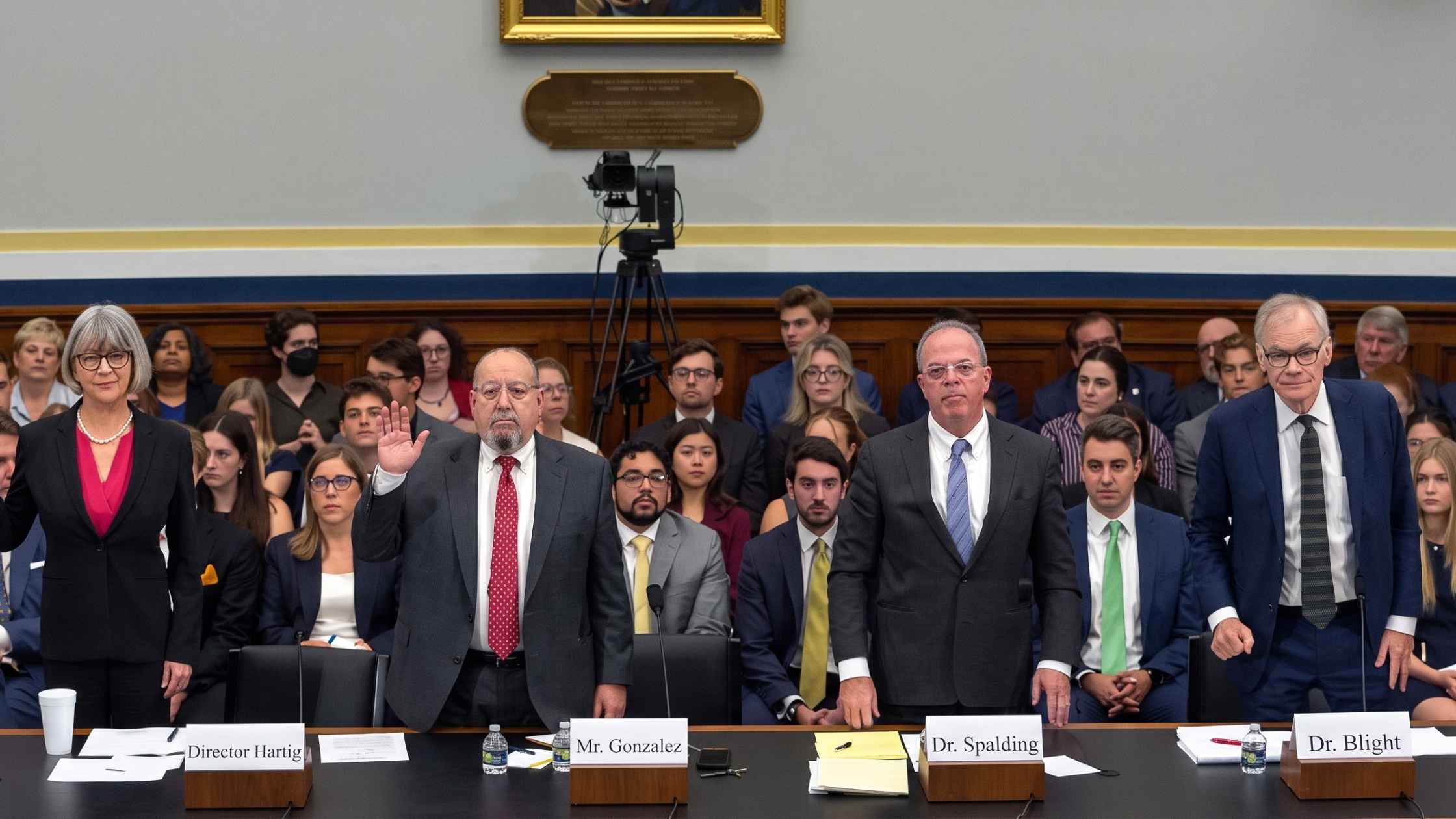
Thank you for your heartfelt comments. Without objection, Representative Carlos Gimenez of Florida, Mr. Frost of Florida, my buddy Kweisi Mfume of Maryland and Ariana Presley of Massachusetts are waived on the subcommittee for the purpose of questioning witnesses today's hearing and others might come in as well. Today, I'd like to welcome our witnesses. First, we have Dr. Anthea Hartig. Dr. Hartig serves as the director of the National Museum of American History at the Smithsonian Institution. Next, we have Mike Gonzalez. Mr. Gonzalez serves as the E Pluribus Unum Senior Fellow for the Catherine and Shelby Cullom Davis Institute for National Security and Foreign Policy at the Heritage Foundation. Next we have Dr. Matthew Spalding. Dr. Spalding serves as the Kirby Professor in Constitutional Government and Dean of the Van Andel Graduate School of Government at Hillsdale College's Washington DC campus. Last we have Dr. David Blight. Dr. Blight serves as Sterling Professor of History at Yale University.
(33:06)
And I thank you all for joining us and I look forward to your testimony. Pursuant to committee rule 9G the witnesses will please stand and raise their right hand. Do you solemnly swear or affirm that the testimony that you're about to give is the truth, the whole truth, and nothing but the truth so help you God?
Dr. Anthea Hartig (33:27):
I do.
Mr. Gonzalez (33:27):
I do.
Dr. Spalding (33:27):
I do.
Dr. David Blight (33:29):
I do.
Rep. Tim Burchett (33:29):
Let the record show the witness has answered in the affirmative and thank you all. Y'all may take a seat. We appreciate y'all being here today and look forward to your testimony. Let me remind the witnesses that we have read your written statement and it'll appear in the full hearing record. Please limit your oral statements to five minutes. If you go over, I'll tap the gavel so you'll know. As a reminder, please press the button on the microphone in front of you so that it is on and the members can hear you. When you begin to speak, the light in front of you will turn green. After four minutes, the light will turn yellow. When the red light comes on, your five minutes have expired and we would like you to please wrap it up. I now recognize Dr. Hartig for her opening statement. Thank you, ma'am.
Dr. Anthea Hartig (34:20):
Thank you, sir. Chairman Burchett, Ranking Member Stansbury and members of the committee, thank you for the opportunity to testify today. I know this committee has questions about the National Museum of American History and I welcome the chance to answer them. As an historian, I have spent my career studying, teaching and preserving the history of the United States. My family has served this nation since the Revolutionary War and I was raised with a deep sense of obligation to it and the democratic ideals that the country asks each generation to build and to uphold. Since 2019, I have been honored to serve as the Elizabeth MacMillan Star-Spangled Banner. It is a true honor to serve alongside my devoted fellow public servants who staff the museum and I am immensely proud of our work.
(35:27)
Congress created the Smithsonian Institution in 1846 with an aspirational mission of diffusion and knowledge. Can you imagine the increase in diffusion of knowledge? It is an independent trust instrumentality outside the executive branch of government and is governed by a board of regions that includes all three branches of government and nine citizen regents appointed by a joint resolution of Congress. The Smithsonian takes the concerns raised in the White House Domestic Policy Council's report seriously. And as we continue to fact check the report, we unwaveringly attest that it does not fairly or accurately characterize the full body of work at the museum. There is always room for improvement, but I also know the beauty and the inspiration and the expertise that lies in our collections, our exhibits and our programming.
(36:24)
When a family walks through the doors of the museum free of charge, as two million people did last year, they find the desk on which Thomas Jefferson drafted the Declaration of Independence, Horatio Greenough's magnificent statue of George Washington, Abraham Lincoln's top hat from the night he was assassinated, the Greensboro lunch counter, the gowns of the first ladies and the stories of Americans in uniform. They find the inventions that change the world and the ordinary Americans who built it. I have watched 10- year olds with their families stand in front of the Star-Spangled Banner with their hands over their hearts. No one told them to. That is the National Museum of American History at its most powerful patriotism, not instructed but inspired. Our work is governed by the Smithsonian standards of scholarship, accuracy, independence and non partisanship. The museum does not take sides in America's political debates. We preserve and document the evidence of American life in all of its breadth so that the public can encounter the past and draw their own conclusions. We are also always learning when visitors, scholars, members of Congress, veterans and teachers, volunteers tell us we've gotten something wrong or only half right. We take it seriously and we make the changes when the evidence supports them. And when historians talk about reframing a traditional narrative, we don't mean erasing it. We mean adding the evidence, the voices, the objects that earlier tellings left out so that more Americans can see themselves reflected in the national story. We honor the declaration, the revolution, the constitution, our national symbols, and we tell the truth about the times that the country fell short of its own founding ideals. Telling our story fully is a form of respect for the American people and a commitment to constantly being in pursuit of a more perfect union. I hope that you will judge this museum the way that the American people do by what's on its walls and what's in its care. Please accept our sincere invitation. Walk the building with me. Stand in awe in front of the Star-Spangled Banner. I believe what you will find, madams and sirs is not an institution that has forgotten its country, but one that loves it enough to tell the full sweep of history, our triumphs and our struggles. I love the United States of America. I consider it the privilege of my career to help preserve its treasures and serve the American people. I'm grateful for the chance to answer your questions today. Thank you.
Rep. Tim Burchett (39:26):
Thank you. I now recognize Mr. Gonzalez for his opening statement.
Mr. Gonzalez (39:31):
Chairman, ranking member, members of this committee, thank you for the opportunity to testify. Following election day 2024, Thomas Frank published an op-ed in the New York Times suitably titled The Elites Headed Coming. Here's what Frank, who's a liberal, wrote. "Everyone has a moment when he first realized that Donald Trump, my will return, and here is mine. It was back in March during a visit to the Smithsonian's National Portrait Gallery when I happened to read a text beside an old painting. He described the whispered advance of the United States as settler colonialism. I knew instantly where this nation was going. Some curator at one of our most exalted institutions had decided to use morally loaded academic keyword to address a visitor to the museum, say a family from the Midwest, and teach them a lesson about American wickedness." End quote. Teaching lessons about American wickedness is now the mission of the Smithsonian.
(40:29)
It is the intent of the leadership and is precisely what they trained the staff to do. Secretary Lonnie Bunch III, Anthea Hartig, the director of the National Museum of American History and one of today's witnesses and other museum leaders have commandeered the world's largest museum complex and admit that they intend to use it as a tool of societal transformation. This is not why Americans entrusted these institutions to them. Culture is not passed in the bloodstream. National museums are repositories of a nation's collective inheritance so that it could be transmitted to future generations. However, the Smithsonian's leadership has subverted this mission under Dr. Hartig. History Museum has erased two words from the mission statement. The first is history itself. The word history had to go because Dr. Hartig preferred the museum to be, quote, "very future-facing." The other word that disappeared in the new mission statement was America itself.
(41:24)
Director Hartig said the term America should include, quote, "the entirety of the Americas," not just our part of North America. She also said that loving America is complicated. Dr. Hartig, the director of the National Museum of American History, has deconstructed the museum's mission statement to borrow terms of the postmodernists who clearly guide her work. We're here today, as you said, because on July 4th, the White House released a devastating report focusing on Anthea Hartig's museum and the agenda that she pushes. Read the report and you will find that it is not just postmodernism that guides the leadership to see the world in terms of power dynamics, who has dominance and how to rest it from them by dismantling the American narrative. This is deeply Marxist and Gramscian. In fact, the action toolkit that leadership used to indoctrinate staff at the Smithsonian for years even quotes approvingly from the works of the Frankfurt School's critical theorist, Herbert Marcuse.
(42:24)
You can understand why Bunch began his tenure by tying the institution to two ideological and destructive movements, the 1619 Project and Black Lives Matter. BLM's main leader had made clear in 2019 that the group's goal was to, quote, "keep dismantling the organizing principle of this society," unquote. Yet in July 2020, as the country was burning, Lonnie Bunch wrote that he saw a moment of promise and possibility. Bunch said that the Smithsonian would legitimize the 1619 project except that historians from both sides of the spectrum decried the shoddy scholarship and inaccuracies of the 1619 project. For ideological reasons, Lonnie Bunch put the Smithsonian's reputation at serious risk and Director Hartig endorsed all of it pledging to, quote, "work to reframe the traditional celebratory narrative of US history, unquote, to force a, quote, "national reckoning." National reckoning from a history museum? This erasure of American culture must end now. As Stanley Kurtz wrote last week, "You can say that the economy and foreign policy are more important than these cultural battles. Over the long haul, however, that is simply not true," unquote. You need to clean house and relieve all Smithsonian leadership of their duties. Also, the authorized, the yet to be built Latino and women's museums, which will no doubt become two more incubators of anti-American grievances. We can see this in the precursor exhibits that they've had. Loving America is not complicated. Dr. Hartig is wrong. I implore you to do your jobs. Thank you for your attention.
Rep. Tim Burchett (44:11):
Thank you, sir. Dr. Spalding.
Dr. Spalding (44:16):
Thank you, Chairman Burchett, Ranking Member Stansbury, members of the committee. The National Museum of American History is one of the country's greatest treasures. Contains some of the most iconic artifacts of American history. Jefferson's writing desk, Washington's uniform, the great American flag that inspired the national anthem. But it no longer provides the story that makes those objects intelligible. Indeed, the National Museum of American History is no longer the nation's museum of American History. The White House Domestic Policy Report Saving America's Story catalogs in great detail. Over 160 pages and 522 footnotes. The many controversial and objectionable displays at the museum, but those details are evidence of a larger transgression.
(45:01)
The real crime here premeditated and followed through is that America's story, the well-established narrative of main characters and key events long at the center of American self-understanding has been so reframed, jettisoned, discentered, deconstructed and problematized that it no longer exists in any recognizable form. America's story has been replaced by an altogether new and controversial approach defined by postmodern theories that see history as processes of oppressive power struggles and use history as a tool to encourage social transformation. Now that might be an interesting abstract discourse for the faculty lounge, but it shouldn't be the rubric for the nation's Smithsonian Museum. The report concludes rightly in my opinion that the museum has become subject to institutional capture.
(45:53)
That is the big picture of the forest we should not miss for all the trees, but don't take my word for it. The current director has said that the National Museum of American History, we work to reframe the traditional salivatory narrative of US history. The Center for Restorative History at the museum described its work as systemic intervention instead of intended to transform the national historical narrative and restructure institutional priorities. The museum's mission has been changed. Its previous mission was to explore the infinite richest complexity of American history to help people understand the past. Its new mission is to empower people to create a more just and compassionate future by exploring the complexity of our past. As was noted, American and history are both gone, replaced by our past and understanding is replaced by empowerment. This is not a history based on established facts and known reality. Indeed, it is not history at all.
(46:53)
This is the very definition of an ideology, a systematic framework for interpreting society, challenging the social order and instigating political and social action. This is not the purpose of the National Museum of American History. It is not the mission of the Smithsonian. It is not Congress's legislative intent and it is not what taxpayers should be subsidizing to the tune of a billion dollars a year. A National Museum of American History should tell the American national story. It should present the facts of history, what actually happened as accurately as possible and with minimal present day bias. Americans history belongs neither to liberals nor conservatives. It belongs as we noted to the American people. It should be told warts and all so that visitors understand the basic chronological narrative and see how the nation got to where it is today. Nothing integral to that history should be erased or whitewashed, but social transformation should not be the objective.
(47:57)
The National Museum of American History should tell the story of a nation and a people driven to overcome injustice and live up to its heritage. A story of imperfection, but also overwhelming accomplishment of tragedies, but also great triumphs, of hardship, but also heroism. Over the course of our history, Americans have made choices, taken actions, sacrificed, corrected flaws, made a more perfect union and struggled to live up to those principles. The outcome was never foreknown, but there remains a certain nobility about it. A healthy attachment to this country is neither blind to its flaws nor fanatical in believing that America is a source of all good. Nevertheless, each generation should be equipped with the knowledge of America's principles and history, a reverence for their liberties and reflective love of their country.
(48:51)
That patriotism must be strong enough and unsentimental enough to coexist with criticism, dissent, disappointment and opposition. But it is love all the same. Without the civic foundation supplied by reflective patriotism of self-governing people, a republic will perish. A museum focused on claims of systematic oppression teaches national self-loathing. Why should taxpayers subsidize a museum that teaches contempt for their country and refrains its past to serve ideological purposes? Such a museum is not worthy of a great country, should not receive the imprimatur of Congress and is unfit to shape the minds and hearts of the American people. Thank you.
Rep. Tim Burchett (49:30):
Thank you Dr. Spalding. Dr. Blight.
Dr. David Blight (49:34):
Thank you, Mr. Chairman and Madam Ranking Member and members of the committee. It's a very special privilege as a historian to have this opportunity to defend one's craft. As historians way often dwell in the past and professionally we should. But in the spring of 2025 with President Trump's executive order destroying truth and sanity to American history and now with the White House's report saving America's story, the present has come storming into our work lives with vengeance and we welcome the challenge. The present is inherently interwoven with the past. The White House now believes it should pronounce on the nature of history and the presentation of the nation's treasures at the Smithsonian. The recent report by the White House Domestic Policy Council is nothing less than a declaration of political war on the historian's profession as well as on the freedom and curiosity of anyone who reads or visits museums.
(50:40)
In other words, President Trump has declared war on free minds and free education. Historians are not voices of the state. We are keepers of memory. And at our best, we're storytellers with trained imaginations. And yet they declare with such certainty what forms of, and these are the words of the report, heritage, destiny, subtle truths, and indeed stories that the Smithsonian should instill one of the report's favorite verbs in the minds of the public. Historians are now fighting back in the interest of scholarly history well told for the broadest possible public. Ours is a beautiful and ancient craft essential for any society's need for self-understanding. We are equipped with a host of modern methods, but guided ethically by very old rules that no authoritarian political project ought to be allowed to profane. As historian, a historian reads, listens, searches, measures, imagines his or her way into and through all manner of evidence, facts, sometimes clear, sometimes slanted every which way. We examine, read, accumulate, sift, study these modes of evidence with hopefully empathy and humility. Then we rise up from all our data and our sources and all manner of context and fashion all this into a story, into narrative in order to inspire and take our audiences somewhere. And once we get them there, we are bound by our craft to make an argument about why this all happened and why it matters. People often comment on how Trumpism would like to return us to some version of the 1950s when America was great. In this report, they have transparently done just that. The report is rooted explicitly in the Cold War of the 1950s. In the founding of the National Museum of American History, its legislation and dedication speeches. The founding words and sentiments understandably breathed the rhetoric of Cold War Triumphalism. How could it have been otherwise?
(53:07)
The report offers no context for what might have invoked such expressions. The Soviet achievement of the hydrogen bomb, Sputnik, the Korean War, the Cuban Missile Crisis, the March on Washington and the assassination of President Kennedy. Had the Domestic Policy Council consulted trained historians, they might have provided some context. They might also have consulted Edward R. Murrow's famous commentary in 1954, the year after the museum was conceived on Joseph McCarthy and his assaults on free speech. "We can deny our heritage and our history," said Murrow, "but we cannot escape responsibility for the result." Erase McCarthyism and it will come back. Erase any other 50 difficult aspects of American history. They will come back. Triumphalist history cannot tolerate nuance, ambiguity, complexity, but they are lifeblood for real historians. Also in a deep Cold War context, James Baldwin wrote in an essay entitled also 1962, As Much Truth as One Can Bear, that the problem with the way Americans Approach History is that, quoting him, "Words are mostly used to cover the sleeper but not to wake him up." We do not write woke history, whatever that is, but we do try to awaken citizens. In recent decades, we sowed the wind with new kinds of history. Here comes the whirlwind. If we're not careful, we will end up with what the great writer Toni Morrison called status history and it will create what she called sanctioned ignorance. That's what's at risk. Thank you.
Rep. Tim Burchett (55:11):
Thank you, sir. Without objection, Representative Don Beyer of Virginia is waived on the subcommittee for purpose of questioning witness today's hearing. And is Mr. Burlston, he not here? Okay. I now recognize myself for five minutes of questions. Chairlady Hartig, is that what we call you? Or director?
Dr. Anthea Hartig (55:39):
Doctor.
Rep. Tim Burchett (55:40):
Director or doctor? Your doctor? Okay, you got director up there, doctor. I'll call you doctor.
Dr. Anthea Hartig (55:43):
I am a director and a doctor. Your choice.
Rep. Tim Burchett (55:43):
You earned it. I'll give you the title. How about that?
Dr. Anthea Hartig (55:46):
Yeah.
Rep. Tim Burchett (55:47):
One time I made the mistake of calling a coach Mr. And he reminded me he was coach. So you earned that title and you get it. I do appreciate your constant land acknowledgements that were in the film. I'm wondering, have you ever planned on deeding any of your personal property or property of the Smithsonian to any of these tribes?
Dr. Anthea Hartig (56:11):
I don't believe that's pertinent to the conversation, sir.
Rep. Tim Burchett (56:17):
Well, I mean, you say that every time you open your meetings apparently. And I was just curious of that acknowledgement if that was something you were planning on doing. Should the American History Museum be the site that focuses in on what we have in common? The shared national heritage of great ideals and revolutionary events or focus on what you deemed the issue of the day, which are race, identity, gender and sexuality? Ma'am?
Dr. Anthea Hartig (56:50):
Yes, sir. At the National Museum of American History, we strive to create a museum where our visitors will be inspired by the collections, programs and exhibitions, and they will choose what they each will do to keep our American democracy strong and vibrant and they'll play that chosen part with passion. That is our hope.
Rep. Tim Burchett (57:12):
Okay. I do think that most Americans would disagree with you on what the most important issues are. How do the museum determine those core issues of the day?
Dr. Anthea Hartig (57:26):
So the Smithsonian and the museum are committed to rigorous, fact-based museum quality experiences and to tell the full and rich story of America in a way that enlightens and welcomes every visitor. We use historical evidence, competing perspectives, and acknowledge enduring debates so that visitors can understand how we've wrestled with democracy and citizenship and liberty and national identity. So in our work to document the stories of all Americans throughout time, we really do hope that everyone who comes in can see themselves reflected.
Rep. Tim Burchett (58:08):
Okay. Gender and sexuality are highlighted by your museum. The poster behind me shows an exhibit called Entertainment Nation on display now. Do you think these exhibits behind me are appropriate for children?
Dr. Anthea Hartig (58:27):
So I recognize some of the images from Entertainment Nation and from I think some other sources, but let me, I think, tell you what I think is most important about-
Rep. Tim Burchett (58:42):
Ma'am, I mean, you have pictures of bondage. You have some overtly sexual things up there. You have transgendered folks. I assume that's what they are. I don't care who it is. I don't care who it is. Not a fan. I can tell you that. But in another exhibit, a six-year-old girl asked why she doesn't have male genitalia. Do you really think that content is appropriate for children? I mean, do you think little girls have penises? I mean, let's get to the basics of this. Do you think that's appropriate?
Dr. Anthea Hartig (59:23):
So sir, I believe the exhibition and project you're referring to is Girlhood, it's complicated, which was a temporary exhibit in our museum that closed I believe in 2020.
Rep. Tim Burchett (59:34):
Ma'am, I didn't ask you that. I asked you, do you think is it appropriate?
Dr. Anthea Hartig (59:37):
So in that exhibit, sir, with permission of the author, we shared a 13-year-old's diary, which I believe is what you're discussing. And in that diary, they wrote about sleepovers and Latin class and math exams. And also their-
Rep. Tim Burchett (59:52):
Ma'am, do you think that's appropriate? I appreciate this. We're limited on time. Ma'am, do you think that's appropriate? Do you think that is appropriate for a child to see? Yes or no?
Dr. Anthea Hartig (01:00:01):
I understand your question, sir.
Rep. Tim Burchett (01:00:02):
No, you don't. You're not answering. You're just running on, ma'am. And I appreciate your hospitality, but the reality is you are not answering the questions. You are funded by taxpayers and the taxpayers would like to know, is that appropriate?
Dr. Anthea Hartig (01:00:15):
So sir, Girlhood, it's complicated, was not designed for children. It had a label in the beginning of the exhibition that shared with parents about some of the topics that would be covered. And we do that with exhibitions that we think need that help. So parents then can come and look at objects.
Rep. Tim Burchett (01:00:36):
Thank you, ma'am. I understand you're not going to answer and I'm going to run out of time. But given some of your previous comments, including America was founded based on the supremacy of white men, loving America is very complicated. America's 250th anniversary is worth problemizing. Do you think you should continue leading the National Museum of American History?
Dr. Anthea Hartig (01:01:01):
It's the honor of my career to serve as the Elizabeth MacMillan director of the National Museum of American.
Rep. Tim Burchett (01:01:06):
Thank you, ma'am. We're out of time.
Dr. Anthea Hartig (01:01:07):
Thank you, sir.
Rep. Tim Burchett (01:01:08):
All right the next, Mr. Lynch from Massachusetts.
Mr. Lynch (01:01:11):
Thank you, Mr. Chairman. First of all, I want to thank the witnesses for attending and to help the committee with its work. I'd like to level set this hearing though. So I'm going to ask you in this discussion about our history, Dr. Hartig, who won the 2020 presidential election? Please, I only have so much time. Is that a tough question?
Dr. Anthea Hartig (01:01:39):
Good morning, sir. No, it's not a tough question. Joseph R. Biden won the election.
Mr. Lynch (01:01:45):
Mr. Gonzalez?
Dr. Anthea Hartig (01:01:46):
Yeah.
Mr. Gonzalez (01:01:47):
Biden was president from 2021 to 2020-
Mr. Lynch (01:01:51):
Who won the election, sir? I'm just trying to test where you're coming from.
Mr. Gonzalez (01:01:56):
Biden won the election.
Mr. Lynch (01:01:58):
Excuse me?
Mr. Gonzalez (01:01:59):
Biden won the election.
Mr. Lynch (01:02:00):
Okay. Dr. Spalding?
Dr. Spalding (01:02:02):
Joseph Biden.
Mr. Lynch (01:02:03):
Thank you. Dr.-
Mr. Lynch (01:02:00):
... Okay. Dr. Spalding?
Dr. Spalding (01:02:02):
Joseph Blythe.
Mr. Lynch (01:02:03):
Thank you. Dr. Blight?
Dr. Blight (01:02:04):
Joe Biden, and I'm all there.
Mr. Lynch (01:02:06):
Okay, great. Thank you. So, you're all keenly interested in preserving American history. I heard from all of you that you care about the facts, the evidence, the narrative. As an Irish Catholic from Boston, I was in the third grade when John F. Kennedy was assassinated, and the nuns in our school made sure we understood everything about JFK's life.
(01:02:41)
A lot of people don't realize he's the only president to ever receive the Purple Heart because of his heroism in the Solomon Islands during the Second World War. And importantly, he and Jacqueline Kennedy were the principal founders of the Kennedy Center for the Performing Arts. And much of the drive came from Jacqueline, to be honest with you, but the president and the First Lady raised all the funding for the Kennedy Center for the Performing Arts.
(01:03:23)
And in his life and at the end of his life, President Kennedy sacrificed everything, everything for this country. And you know where I'm going with this. The current president came in having nothing to do with the establishment of that institution and put his name above John F. Kennedy's on the Kennedy Center for the Performing Arts.
(01:03:55)
As an Irish Catholic from South Boston, that was stolen valor. That was stolen valor. He had nothing to do with that. And it was distortion of history. To someone who visited that for the first time, they would not know. They would not know the history of that building, and the fact that it's the only building in the United States capital that honors Kennedy's memory and his legacy. Kennedy sacrificed everything. He inspired me to get into politics. Dr. Blight, let me ask you, is distorting that and that stolen valor, renaming that building, changing the history of that building with no basis for doing so; is that a distortion of our history as well?
Dr. Blight (01:04:51):
Of course it is. Erase it... Sorry. Of course it is. Erase it and it will come back. On that day, I was in Mr. Barron's ninth grade civics class, when he went to the door to get the information that Kennedy had been shot and he addressed the class to tell us the president was dead. I will never forget that. And what a great museum does, what a good class does, what a historic site does is it simply inspires a sense of history, why the past matters. You could not have been in a schoolroom that day and not had a sense of history. It certainly was part of mine.
Mr. Lynch (01:05:31):
Right. Thank you. I understand sometimes political correctness can act as censorship or it can distort the history and the way we view the world. And I understand that. I understand it. And I understand some of the pushback is about perhaps the censorship that is present in political correctness. But then the facts are the facts. Dear God, the president continually goes back to 2020 election to say that he won it, and we should stand together and reject that crap. Thank you. I yield back.
Mr. Burchett - Chair (01:06:25):
Thank you, sir. Yield to Mr. Cloud from Texas.
Mr. Cloud (01:06:30):
Thank you, Mr. Chairman. Director Hartig, I've visited, as I have many times, the Museum of American History. And what I think I find most troubling is the fact that you can do a lot with real history. And what's concerning is the distortion, I think, of the truth and in the context. And just for example, the American democracy, a great leap of faith, this exhibit, you turn the corner and the first thing you see is this. It's a wall and the two words, of course, that pop out are privilege and slavery.
(01:07:15)
Now, is that a part of American history? Sure. Should it be covered up? No. But what makes America unique and exceptional isn't, for example, the fact that slavery was a part of our history. It was a part of almost every nation's history. What makes America unique is the fact that we worked to overcome it and we're leaning on the world stage in getting rid of it. And as I walked through, you mentioned as you walk through the doors, you'll see Thomas Jefferson's desk, you'll see Abraham Lincoln's top hat.
(01:07:45)
And those are in the museum, yes. But that is not what you see when you walk in. What you see is exhibits to social reform. You'll see displays in the end caps or the glass displays on the side of pictures of drag show or pro abortion language and all these different kind of things.
(01:08:06)
I'm curious, I was really surprised as we're celebrating the 250th anniversary of our nation; how did we come up with the 250th anniversary? What are we celebrating in the 250th anniversary?
Dr. Anthea Hartig (01:08:23):
Thank you, sir. And thank you for your visit. And we've hosted, I think since January, 25 senators and house representatives [inaudible 01:08:31]-
Mr. Cloud (01:08:31):
Ma'am, I know your intention today is to filibuster the entire time. There's a particular document that was signed on July 4th, 1776 for which we celebrate. Could you?
Dr. Anthea Hartig (01:08:41):
Absolutely, sir. So when you come into the museum right now since they-
Mr. Cloud (01:08:45):
That would be the Declaration of Independence, ma'am.
Dr. Anthea Hartig (01:08:46):
Yes, sir. And so when you-
Mr. Cloud (01:08:47):
I was surprised to find that in the Museum of American History on the 250th year of our anniversary, there's not an exhibit for the Declaration of Independence. Now, sure there's Jefferson's desk and it takes up a very small space, but you would think, I went through the museum looking for the words We The People. And you would think when you walked in, that would be the biggest, boldest thing, especially on the 250th anniversary. The idea of E Pluribus Unum, where out of many become one. That's what makes America unique. And yet your take seems to be to take the uniqueness, the unity of American and to try to divide us up into different things.
(01:09:31)
Who made the decision not to have a display for the Declaration of Independence on our 250th anniversary?
Dr. Anthea Hartig (01:09:37):
So sir, I'm going to go maybe back a few beats and answer I think your first question of the four. So the Declaration of Independence, of course, signed and ratified on July 4th in 1776 in Philadelphia appears on a full wall and the price of freedom, our history of the military on our third floor Eastern wing. It's a blow-up size.
Mr. Cloud (01:10:00):
Yeah, it's a standard exhibit.
Dr. Anthea Hartig (01:10:00):
And then it's in the... It's in the... If I may, sir.
Mr. Cloud (01:10:03):
It's there in the back, but you have to walk through a bunch of junk to get there.
Dr. Anthea Hartig (01:10:05):
No, not exactly.
Mr. Cloud (01:10:06):
As a matter of fact, right now, you would think-
Dr. Anthea Hartig (01:10:09):
I'm happy to answer your question, sir.
Mr. Cloud (01:10:10):
This would've been a great time to pull out all the artifacts. I thought, let me look and try to find something on John Adams. And I'm not saying it's not there, but it's hard to find. John Adams, John Jay, Caesar Rodney. We can talk about Crispus Attucks, Phillis Wheatley, the Poet Laureate of the American Revolution, all these different kind of things. What would you say is the most influential book in American history?
Dr. Anthea Hartig (01:10:29):
So if I may go back to your second question-
Mr. Cloud (01:10:32):
What would you say is the most influential book in American History?
Dr. Anthea Hartig (01:10:34):
May I go back to your second question?
Mr. Cloud (01:10:35):
You can answer the one I just asked you.
Dr. Anthea Hartig (01:10:37):
Well, as a historian, it's probably hard to choose which is the most influential book in the United States history, but I can tell you what's the most influential document. And that is the Declaration of Independence, which appears in different ways at least four or five times in-
Mr. Cloud (01:10:54):
Most influential book. The founders quoted one book more than any other book.
Dr. Anthea Hartig (01:10:58):
The founders were very well-read. And as you know, Thomas Jefferson's library became the core of the Library of Congress.
Mr. Cloud (01:11:04):
Yes. And that book would've been the Bible. Secondly would've been Common Sense by Thomas Paine. I went to the bookstore, I couldn't find Common Sense in the bookstore. I did find these books. Here's George Takei, It Rhymes With Takei, a book in which he talks about one young man lusting after another. I'm not sure why this is in our American History Museum in the kids section, mind you. That you think is important to have it in the American History Museum?
Dr. Anthea Hartig (01:11:36):
So George Takei, as you know, the actor from Star Trek was incarcerated during World War II as the result of Executive Order 9066. And his children's book I think is a beautiful story.
Mr. Cloud (01:11:48):
Who made the decision to put that in there but not Common Sense?
Dr. Anthea Hartig (01:11:50):
Especially with Senator Alan Simpson. Thank you, sir.
Mr. Burchett - Chair (01:11:54):
Mr. Subramanyam.
Mr. Subramanyam (01:12:05):
Thank you, Mr. Chair. So we're here for a hearing entitled Rewriting American History: Examining the Smithsonian's Efforts to Reshape the Past. And this was in response to a Domestic Policy Council report. The Domestic Policy Council is a part of the White House. And what's interesting is that I was looking back, this seems to be one of the only Domestic Policy Council standalone reports this year. In fact, perhaps this administration. The only one I could find was the last one they did on the national report on paper straws.
(01:12:39)
And so this is how our domestic policy council is spending its time in a time where we have higher costs across the board where we have a war going on in the Middle East and where we have people hurting every single day, losing their access to healthcare, losing their access to food assistance because this domestic policy council recommended it be cut. That's where we are right now.
(01:13:02)
And I think it's really important... Mr. Gonzalez, I want to go back to a quote. You quoted Stanley Kurtz in your opening, saying, "You can say that the economy and foreign policy are more important than these cultural battles over the long haul." That's simply not true. Do you stand by that, that these cultural battles are more important than our economy and our foreign policy?
Mr. Gonzalez (01:13:24):
Oh, absolutely. Yes. I think it was Lincoln who said no soldier, no foreign soldier-
Mr. Subramanyam (01:13:28):
So you think that-
Mr. Gonzalez (01:13:30):
... Expect to get drink from the Mississippi-
Mr. Subramanyam (01:13:30):
... So you think that this particular hearing on where the Smithsonian is putting Thomas Jefferson's desk is more important than people facing higher utility costs?
Mr. Gonzalez (01:13:42):
That's not what the report is focused on.
Mr. Subramanyam (01:13:43):
Well, that's what you just said. That's what-
Mr. Gonzalez (01:13:44):
No, no, no, no, no. The report is not-
Mr. Subramanyam (01:13:45):
You said the cultural battles are more important-
Mr. Gonzalez (01:13:47):
Yes.
Mr. Subramanyam (01:13:48):
... To you and more important than the higher costs of living that Americans are facing today.
Mr. Gonzalez (01:13:54):
Over the long term they are. And it's not about where Thomas Jefferson's desk is.
Mr. Subramanyam (01:13:59):
I think the president would agree with you. I think this administration would agree with you and that's how they've acted. And so let's just talk about the report since everyone wants to be here to talk about it, it seems.
(01:14:08)
The report actually had a lot of things that weren't true. For instance, the opening of it talked about how the Smithsonian wasn't speaking enough about America 250, but I looked at the Smithsonian's website and the first thing it talked about was America 250. Director Hartig, did the Smithsonian talk about America 250?
Dr. Anthea Hartig (01:14:30):
Yes, sir. We've been planning for years to celebrate the semi-quincentennial and it's an honor to do so.
Mr. Subramanyam (01:14:36):
And the report complained that Thomas Jefferson's writing desk and George Washington's uniform were not on prominent display. Were they on display at the American History Museum?
Dr. Anthea Hartig (01:14:46):
Yes, sir. And then we're honored that Jefferson's writing desk went over to the Smithsonian Castle to be part of Secretary Bunch's American Aspirations Exhibition.
Mr. Subramanyam (01:14:55):
And then it said it didn't have quotes from the Declaration of Independence. I guess they were nitpicking about one specific sentence. Are quotes from the Declaration of Independence on full display at the museum?
Dr. Anthea Hartig (01:15:08):
Yes, sir.
Mr. Subramanyam (01:15:09):
Okay. So it seems like it wasn't a very good report either, but I looked back and by their admission, it was a months long report involving multiple staff.
(01:15:17)
Mr. Gonzalez, how much money do you think that report costs the American taxpayers? Because you're at the Heritage Foundation, so I know you care a lot about American taxpayers.
Mr. Gonzalez (01:15:25):
I have no idea.
Mr. Subramanyam (01:15:26):
You didn't ask about how much the report actually costs?
Mr. Gonzalez (01:15:29):
I think it would be hard to assess.
Mr. Subramanyam (01:15:30):
It'd be hard to assess. Okay.
Mr. Gonzalez (01:15:31):
Even all the input that went into the report, how much it costs.
Mr. Subramanyam (01:15:33):
I asked AI and they said probably millions, potentially.
Mr. Gonzalez (01:15:37):
Okay. Yeah, probably.
Mr. Subramanyam (01:15:37):
Yeah. So because of staff time, because of outside-
Mr. Gonzalez (01:15:39):
I would advise against using AI, however.
Mr. Subramanyam (01:15:41):
Yeah. Okay. Had ask somebody because he didn't have the answer to it.
Mr. Gonzalez (01:15:45):
Yeah, it hallucinates a lot.
Mr. Subramanyam (01:15:46):
Yeah. Sounds good. Well, the other thing is, do you think there should be mentions of Trump's impeachment at the museum?
Mr. Gonzalez (01:15:54):
Sure. I mean, yeah, it happened. It's history.
Mr. Subramanyam (01:15:57):
Do you think there should be a wing of the museum dedicated to President Trump?
Mr. Gonzalez (01:16:02):
I have no idea. I'm not a curator. I don't know whether there should be a wing dedicated to President Trump.
Mr. Subramanyam (01:16:07):
Dr. Spalding, do you think there should be a wing of the museum dedicated to President Trump?
Dr. Spalding (01:16:11):
I don't think there should be a wing dedicated to any one president.
Mr. Subramanyam (01:16:14):
Okay. Interesting. Even George Washington?
Dr. Spalding (01:16:17):
I think in the context of what he did in terms of the American Revolution, the revolution, that kind of thing. Yes.
Mr. Subramanyam (01:16:21):
I think what's actually happening, it's not that you don't want ideology in the museum, it's that you want your ideology in the museum and you want the museum to reflect your values, your specific views on things and not the views of what actually happened, which was the facts. And so that's what we want is we want the facts in the museum. We want people to come away with patriotism because they will if you show them the facts of this great country. And so-
Dr. Spalding (01:16:43):
I completely agree.
Mr. Subramanyam (01:16:44):
... I applaud for everything that's happened in this first 250 years of America. The good and the bad, the bad wouldn't have led to as good as what we've gotten.
Dr. Spalding (01:16:51):
A hundred percent.
Mr. Subramanyam (01:16:51):
And I look forward to the next 250 years, and I look forward to teaching my kids and grandkids the facts. I yield back.
Dr. Spalding (01:16:56):
We agree.
Mr. Burchett - Chair (01:16:56):
Great. Thank you, sir. Ms. Mace from South Carolina.
Ms. Mace (01:17:02):
Thank you, Mr. Chairman.
(01:17:03)
Dr. Hartig, how many children visited the National Museum of American History last year?
Dr. Anthea Hartig (01:17:10):
Hi, good morning, ma'am. Since we-
Ms. Mace (01:17:12):
Answer the question. How many kids?
Dr. Anthea Hartig (01:17:13):
Good morning, ma'am. Since we don't charge, we-
Ms. Mace (01:17:17):
Are you the director of the museum?
Dr. Anthea Hartig (01:17:19):
I am, ma'am.
Ms. Mace (01:17:19):
Okay. And you don't know how many people visited the museum last year?
Dr. Anthea Hartig (01:17:22):
Two million.
Ms. Mace (01:17:23):
How many of those were children?
Dr. Anthea Hartig (01:17:26):
Ma'am, I don't know those exact figures-
Ms. Mace (01:17:26):
Don't even know. Okay.
Dr. Anthea Hartig (01:17:28):
... For you, but I'm happy to check that-
Ms. Mace (01:17:28):
Do you agree that educating children about American history is a core duty of the museum? Yes or no?
Dr. Anthea Hartig (01:17:33):
Absolutely.
Ms. Mace (01:17:34):
And are images of sexual fetishes appropriate for children? Yes or no?
Dr. Anthea Hartig (01:17:40):
So ma'am-
Ms. Mace (01:17:41):
It's a simple yes or no.
Dr. Anthea Hartig (01:17:42):
I understand.
Ms. Mace (01:17:43):
Is sexual imagery, provocative sexual imagery appropriate for kids? Yes or no?
Dr. Anthea Hartig (01:17:50):
Ma'am, we strive to represent all Americans, in the fullness of American-
Ms. Mace (01:17:54):
You strive to represent queer pedophiles, indoctrination, grooming of kids at an American history museum. And it sounds like you're proud of it. You won't answer the questions, probably because you're ashamed. And as a woman, I really can't believe you will sit here today and you can't even admit that sexual imagery, like this behind me, they tell me, my staff tells me this little trinket around the penis, this is BDSM, in a setting where children are walking through. That's disgusting. What kind of message are you trying to send to kids with BDSM imagery? What are you trying to tell kids? Are you sexualizing children? Is that what your motive is for the museum? Why?
Dr. Anthea Hartig (01:18:41):
So that specific two-piece-
Ms. Mace (01:18:43):
Do you know how many kids get raped by adults every year in this country? This kind of thing when you are dressing men up as women, drag queens, you're putting this kind of crap in front of kids, sexualizes them and makes them more vulnerable to people that want to rape them or abuse them. Or when we have men and women settings that want to do harm to women.
(01:19:08)
You talked about the Girlhood exhibit and you didn't want to answer the chairman's questions earlier, but it was a diary featuring a six-year-old. A six-year-old that reads, "Everybody was talking about getting boobs and their period. I pray to God every night for my penis to grow."
(01:19:23)
Dr. Hartig, can you tell me, look me in the eye and tell me that that belongs in an exhibit for kids.
Dr. Anthea Hartig (01:19:29):
Ma'am, Girlhood (It's complicated), was not an exhibit designed for children, and the diary-
Ms. Mace (01:19:34):
I know, you had the little disclaimer thing, which is sort of a-
Dr. Anthea Hartig (01:19:37):
Right. The diary was of a 13-year-old going through puberty.
Ms. Mace (01:19:40):
Okay. Do you think that's an appropriate thing to put in an American history museum where there are children walking through? We're talking about American history.
Dr. Anthea Hartig (01:19:49):
Right. So Girlhood (It's complicated), it's for-
Ms. Mace (01:19:51):
Okay. I'm moving on because you just... I don't know how much money you spent on getting prepped for this hearing. They did a good job because you're filibustering and not answering a single question from a single Republican today.
(01:20:02)
Do you believe that men can become women?
Dr. Anthea Hartig (01:20:05):
Ma'am, as the director of the museum, that's not relevant in this case.
Ms. Mace (01:20:09):
It's very relevant. You've got men dressed up as women and you have them on displays in front of kids. Do you think men can become women? Yes or no?
Dr. Anthea Hartig (01:20:18):
So RuPaul's Drag Race, which is the upper-
Ms. Mace (01:20:21):
It's a man. RuPaul is a man who dresses like a woman, literally.
Dr. Anthea Hartig (01:20:25):
Right. Correct.
Ms. Mace (01:20:26):
What is a woman, Dr. Hartig?
Dr. Anthea Hartig (01:20:30):
As a director and as a historian, it's not my opportunity-
Ms. Mace (01:20:33):
You sexualized the American History Museum. So this is a fair question. What is a woman?
Dr. Anthea Hartig (01:20:39):
So at the museum-
Ms. Mace (01:20:40):
What is a woman?
Dr. Anthea Hartig (01:20:42):
... We strive to represent and not categorize all Americans.
Ms. Mace (01:20:46):
Okay. I have another question for you. There's a glossary at the museum that informs visitors that while American culture traditionally recognizes two genders, other countries recognize three or more. So enlighten me this morning. How many genders are there?
Dr. Anthea Hartig (01:21:04):
Ma'am, which glossary?
Ms. Mace (01:21:06):
Okay. This a display and it has a glossary that says other countries recognize three or more genders. So I would like you to enlighten me today. You're the director of the American History Museum who has sexualized things in front of kids. I want to know, I want to ask you how many genders are there?
Dr. Anthea Hartig (01:21:23):
So first of all, I'm happy to get back to you about the glossary-
Ms. Mace (01:21:26):
How many genders are there? And what are they?
Dr. Anthea Hartig (01:21:30):
I'm not sure which glossary you're speaking of.
Ms. Mace (01:21:32):
Of course. I know that you don't. You knew exactly what this hearing was about today. One of your exhibits at the American History Museum says sometimes gender isn't revealed at birth. So when is gender revealed? When was your gender revealed to you, Dr. Hartig?
Dr. Anthea Hartig (01:21:50):
So I don't really think that's relevant to the conversation.
Ms. Mace (01:21:52):
It is relevant. You have a display at the American History Museum talking about gender isn't always revealed at birth. So when was your gender revealed?
Dr. Anthea Hartig (01:22:02):
So since I am a PhD and...
Ms. Mace (01:22:06):
I wasn't done yet, but I'll yield back, Mr. Chairman. Thank you.
Dr. Anthea Hartig (01:22:10):
Thank you, Ms. Mace.
Mr. Burchett - Chair (01:22:14):
Mr. Walkinshaw.
Mr. Walkinshaw (01:22:16):
Thank you, Mr. Chairman. I'm actually glad we're having this hearing today of the subcommittee on government efficiency, because finally we have abandoned the pretense that this subcommittee has anything to do with government efficiency. Just like Elon Musk's doge wasn't about efficiency, it was an ideological purge of the federal government. This assault on the Smithsonian has nothing to do with efficiency. It's an ideological effort, to quote Mr. Gonzalez, "A cultural battle."
(01:22:49)
But let's go ahead and talk about rewriting history. Let's talk about it. Because that's what the Trump administration is doing as we speak. It's Jackie Robinson. Before he stepped onto Ebbetts Field, he wore the uniform of the United States Army. He broke Major League Baseball's color barrier in 1947. He didn't just transform a sport, he challenged one of the last great institutions of legalized segregation in America. He helped move our country closer to the promise that talent and character matter more than the color of your skin. I guess for President Trump's Department of Defense, he was part of the DEI problem we've heard about today because he got erased, removed from the website, canceled, restored only after public outcry.
(01:23:40)
The Tuskegee Airmen flew more than 15,000 combat missions during World War II, escorting American bombers over Europe. They didn't just help defeat Nazi Germany, they helped to dismantle segregation in the U.S. Armed Forces. Somehow they're also part of the DEI problem we've heard about today because they were erased. The Air Force removed a documentary on the Tuskegee Airmen from their course instruction.
(01:24:13)
Navajo code talkers, young Navajo Marines developed an unbreakable battlefield code that Japanese forces couldn't crack. It helped American forces win some of the toughest battles in the Pacific, save countless American lives. Also, apparently part of the DEI problem because they got erased.
(01:24:38)
Now, the Trump administration and my Republican colleagues are focusing their anti-DEI erasure efforts on the Smithsonian. Last week they released this report we've discussed today saying the museum has been captured by quote "extreme political activism." It's pretty extreme deleting Jackie Robinson.
(01:25:03)
Why the report? Because the museum tells the full American story. It examines slavery alongside liberty. It discusses immigration alongside citizenship. It recognizes the struggle for civil rights alongside our founding ideals, and yes, the flaws of our founders.
(01:25:25)
But according to this administration, that's not patriotic. They erased Jackie Robinson. They erased the Tuskegee Airmen. They erased the Navajo code talkers. And now they want to take their big orange eraser to a proud American institution, the Smithsonian. We should reject this effort to erase our history because in America, the truth has always been our strength. It's not a weakness, Mr. Gonzalez and Dr. Spalding.
(01:26:05)
Dr. Blight, can you tell us the damage that is done when history, Jackie Robinson, Navajo code talkers, Tuskegee Airmen is erased from websites, from course instructions, how does that hurt America?
Dr. Blight (01:26:24):
Well, if you want inspiration from history, you can't start any better than this. Delete Jackie Robinson and he'll come back. His name was Hank Aaron. His name was Frank Robinson. His name was Bob Gibson and I could name a thousand more. Good luck trying to delete anything that people really care about in our history. They're going to find out about it. And the fact that you can even delete it is something they can take because they have some faith in institutions like the Smithsonian, which they love and want to go to. We'll bring that story to them. What's lost is curiosity, understanding.
(01:27:06)
Our job as historians is to understand the dead. Sorry, you become relevant when you're dead. But the reason we want to understand the dead is so that we can really understand the living, and to delete the dead because somehow they don't fit a category that we like in the present is to soil the present.
Mr. Walkinshaw (01:27:34):
Thank you. I yield back.
Mr. Burchett - Chair (01:27:39):
Mr. Gill from Texas, you're recognized.
Mr. Gill (01:27:42):
Thank you, Mr. Chairman, and thank you for holding this hearing and to the witnesses for taking the time to travel all the way out here. Director Hartig, thank you for being here.
(01:27:54)
Would you say that the goal of history, even if it's not properly carried out, would you say that the goal of history is to be objective?
Dr. Anthea Hartig (01:28:08):
Thank you, sir, for the question. I think that there are many goals of history and certainly as you collect, as we do, examine evidence, create scholarship, interest-
Mr. Gill (01:28:19):
Is objectivity one of the goals of history?
Dr. Anthea Hartig (01:28:21):
We strive to be objective and nonpartisan and not based on any idea.
Mr. Gill (01:28:25):
So it's one of the goals. Doesn't that seem a little bit concerning? It certainly does to me because as part of this white supremacy document that your organization has promoted, objectivity is a core and defining aspect of white supremacy culture. Do you think that it's the goal of the Smithsonian institution to promote white supremacy culture?
Dr. Anthea Hartig (01:28:50):
Sir, do you mind sharing with me which document?
Mr. Gill (01:28:53):
White supremacy culture, right here. This is part of the MASS Action Toolkit that your organization has promoted for several years now under your leadership. Are you promoting a white supremacy culture at the Smithsonian?
Dr. Anthea Hartig (01:29:14):
Am I promoting a white...
Mr. Gill (01:29:16):
Ma'am, is this a difficult question?
Dr. Anthea Hartig (01:29:19):
No, sir. I'm just thinking about the MASS Action Toolkit. We didn't develop it. But back to your question, no, we're not promoting any ideology.
Mr. Gill (01:29:28):
Does it concern you that your goal is objectivity, one of your goals is objectivity and your MASS Action Toolkit references objectivity as a defining characteristic of white supremacy culture?
Dr. Anthea Hartig (01:29:40):
It's not our toolkit.
Mr. Gill (01:29:42):
It is your toolkit. You've been promoting it for quite some time.
Dr. Anthea Hartig (01:29:47):
We did not come up with the toolkit, sir.
Mr. Gill (01:29:48):
But you've been promoting it.
Dr. Anthea Hartig (01:29:51):
It is used as a reference, I believe probably in 2019, 2020, 2021.
Mr. Gill (01:29:55):
Yes. Under your leadership, it has been used as a reference.
(01:29:59)
Is Mickey Mouse racist?
Dr. Anthea Hartig (01:30:01):
Mickey Mouse is not racist.
Mr. Gill (01:30:02):
It's not racist. According to the Smithsonian institution, one of your exhibits referenced Mickey Mouse as representing "vestiges of longstanding traditions of blackface minstrelsy." Would you describe that as racist?
Dr. Anthea Hartig (01:30:18):
No. The historical trajectory of the origins of Mickey Mouse tie directly to-
Mr. Gill (01:30:26):
So Mickey Mouse is rooted in racism. Is that your testimony?
Dr. Anthea Hartig (01:30:29):
No, sir. It's rooted in minstrelsy.
Mr. Gill (01:30:31):
Minstrelsy. And you don't think the blackface minstrelsy is racist?
Dr. Anthea Hartig (01:30:35):
It had certain unobvious racial overtones that have been well documented in our-
Mr. Gill (01:30:39):
Do you think that that's problematic that Mickey Mouse also has those racial overtones?
Dr. Anthea Hartig (01:30:44):
It's not for me to determine what's problematic, it's determined to me what's accurate.
Mr. Gill (01:30:49):
Is that right?
Dr. Anthea Hartig (01:30:49):
Yes.
Mr. Gill (01:30:50):
Is it important to be polite?
Dr. Anthea Hartig (01:30:53):
Excuse me, sir?
Mr. Gill (01:30:53):
Is it important to be polite?
Dr. Anthea Hartig (01:30:56):
Yes, sir.
Mr. Gill (01:30:57):
It's also interesting because the same MASS Action Toolkit that your organization has been promoting references politeness as a defining characteristic of white supremacy culture. Ma'am, are you a white supremacist?
Dr. Anthea Hartig (01:31:14):
No, sir.
Mr. Gill (01:31:14):
You're not? Can you help me square why your organization says that being polite is part of being a white supremacist?
Dr. Anthea Hartig (01:31:24):
I'm not exactly familiar with that passage of the MASS Action Toolkit, which is not-
Mr. Gill (01:31:29):
I can show you, the passage is right here.
Dr. Anthea Hartig (01:31:31):
... One that we developed. I don't... Pardon me?
Mr. Gill (01:31:33):
I said I just read you the passage from it.
Dr. Anthea Hartig (01:31:37):
And then your question was, sir?
Mr. Gill (01:31:39):
We're going to move on. What is Latina Power?
Dr. Anthea Hartig (01:31:44):
What is Latino Power?
Mr. Gill (01:31:45):
Latina Power.
Dr. Anthea Hartig (01:31:47):
Latina Power would be the forces derived from being a Latina.
Mr. Gill (01:31:54):
Do you think that it's appropriate for the Smithsonian institution to sell Latina Power paraphernalia, hats, mugs, other things that say Latina Power?
Dr. Anthea Hartig (01:32:06):
I believe that the merchandiser store sells, tries to reflect-
Mr. Gill (01:32:12):
I'm asking you if it's appropriate.
Dr. Anthea Hartig (01:32:13):
... Tries to reflect the richness of the communities.
Mr. Gill (01:32:17):
So your testimony is that it is appropriate?
Dr. Anthea Hartig (01:32:19):
Those are your words, sir.
Mr. Gill (01:32:21):
I'm asking you, is it appropriate to sell Latina Power paraphernalia? It's a yes or no question.
Dr. Anthea Hartig (01:32:26):
I don't have control over what is sold in our stores.
Mr. Gill (01:32:28):
I'm asking you if it's appropriate. I didn't ask you if you have control over it. Is it appropriate?
Dr. Anthea Hartig (01:32:32):
I understood you, sir. Yeah.
Mr. Gill (01:32:33):
Yes or no?
Dr. Anthea Hartig (01:32:34):
Again, we strive to represent all Americans and including in our merchandise.
Mr. Gill (01:32:37):
Is it appropriate? Yes or no?
Dr. Anthea Hartig (01:32:39):
We strive to represent all Americans in our museums, including in our merchandise.
Mr. Gill (01:32:44):
Is that right?
Dr. Anthea Hartig (01:32:45):
Yes.
Mr. Gill (01:32:45):
My time's up.
Dr. Anthea Hartig (01:32:45):
Thank you, sir.
Mr. Burchett - Chair (01:32:46):
Thank you, sir. Mr. Mfume from Maryland.
Mr. Mfume (01:32:51):
Chairman, UC request.
Mr. Burchett - Chair (01:32:53):
Yes.
Mr. Mfume (01:32:53):
Ask unanimous consent to enter into the record a Newsweek article from March 19th, 2025 titled Jackie Robinson's Army...
Speaker 1 (01:33:02):
... Jackie Robinson's army history deleted by Pentagon.
Mr. Chairman (01:33:06):
So ordered. Anything else? Mr. Mfume, you're recognized.
Mr. Mfume (01:33:11):
Mr. Chairman, thank you very much. I only have five minutes, so I'm going to try to make the most out of it by making some very clear points. Black people across this country are outraged at what is happening now with these efforts to do away with the African American Museum and all of the Smithsonian.
(01:33:32)
They're outraged because they've lived too many years, been through too many struggles, suffered too many bruises, and clearly have very, very, very little to show for that sojourn here in this country. I want to be real clear about this. If you erase it, we will replace it. It's that damn simple. We don't seem to learn. If anything, we should be looking at history to learn, and to make sure that we are taking advantage of what we've learned.
(01:34:06)
It was Abraham Lincoln in 1848 who addressed his countrymen in Edwardsville, Illinois. And he said, and I quote, "When you have succeeded in dehumanizing the Negro, when you have put him down and made it but for him to be, but as the beast of the field, when you have extinguished his soul in this world and placed him where the ray of hope is blown out, as in the darkness of the damned, are you quite sure," he asked, "that the demon you have roused will not one day turn and rend you."
(01:34:47)
He said, "What constitutes the bulwark of our freedom and our independence? It is not," said Lincoln, "our crown embattlements. It is not our armies and our navies. It is not our bristling seacoast. For all those things are not our reliance against tyranny because they can all be turned against us without having made us weaker for the struggle. Our reliance," he said, "as Americans, is in the love of liberty, which God has planted deep within all of us, regardless of how we look and where we come from."
(01:35:23)
He said, "Our reliance is in the spirit of freedom, which prides itself as the heritage of all men in all lands, everywhere." And then he admonished, "Destroy that spirit and you would have planted the seeds of despotism at your own doorstep. Ignore," he said, "the chains of human and you prepare one day for your own limbs to wear them. Accustomed," he said, "to trample on the rights of other people and you would have lost the creative genius of your own American independence, and as such would, become the fit subjects of the first cunning tyrant who rises among you."
(01:36:10)
Sound familiar? History taught us and still teaches us that we can't keep making the same mistakes. So I know this is a big discussion about a lot of aspects about the museum, but I'm here as a Black man who grew up in segregation, who wasn't allowed to go certain places, who drank from a water fountain that said, "Colored," who found his mother and his father unable to do anything other than basic day work.
(01:36:41)
And if for no one else, if for them and their spirit and all the other nameless and faceless Black men in this country, and Black women, who made their bodies bridges, that some of us could get to the university, that some of us could get to a good job, that some of us could get to the United States if for no other reason. I want this to go out loud and clear and I'm not speaking just on behalf of myself. I know that I speak on behalf of so many people who are not here today. We will not let you destroy that museum.
(01:37:15)
No matter how long it takes, how many battles are required, how much effort is needed, we will not allow that to happen, unless you find a way to kill all of us and walk over our bodies to change history. That history is too sacred, it is too precious, and it will not be erased, because, as I said, if you attempt to erase it, we will continue to replace it over and over and over again. I yield back, Mr. Chairman.
Mr. Chairman (01:37:49):
Thank you, Mr. Mfume. Mr. Burlison, you're recognized.
Mr. Cloud (01:37:53):
Thank you, Mr. Chairman. Director Hartig, what do you believe is the core purpose of the National Museum of History, of American History?
Dr. Anthea Hartig (01:38:05):
Thank you, sir, and good morning. The beauty I think of the museum is to truly take the over two million objects we have with the best scholarship- around them-
Mr. Cloud (01:38:18):
What is the core purpose? What is your mission? What's the core purpose?
Dr. Anthea Hartig (01:38:20):
... and to tell the richest story of America's past that we can. Our mission is to empower people to create a more just and compassionate future by preserving, sharing, and exploring the complexities of our past.
Mr. Cloud (01:38:31):
Okay. In your 2024 presentation, you said, "The museum changed its mission in part to help people get out of, quote, unquote, 'America First mentality.'" So my question is what's specifically wrong about the American first mentality?
Dr. Anthea Hartig (01:38:51):
So, we changed the mission, like most organizations and corporations do when I came, that we had an expired strategic plan and we created a new mission. The-
Mr. Cloud (01:39:03):
Okay. Is your contention that you just changed it because you just needed to change it under your direction?
Dr. Anthea Hartig (01:39:09):
No, most directors-
Mr. Cloud (01:39:10):
I'm asking specifically, you made the statement that you have to get out of the, quote, unquote, "America First mentality." What did you mean by that?
Dr. Anthea Hartig (01:39:19):
I'm not sure which of my public appearances you're referring to, sir.
Mr. Cloud (01:39:26):
Director Hartig, let me ask you, are you America First?
Dr. Anthea Hartig (01:39:29):
I'm a very proud American.
Mr. Cloud (01:39:30):
That's great to hear. Do you love America?
Dr. Anthea Hartig (01:39:33):
I love this country unconditionally.
Mr. Cloud (01:39:36):
That's great to hear. At one point you stated that, "Loving America is very complicated." Let me ask you this. Recently, we had visitors all over the globe for the World Cup. What I think is the common thread that we saw across all social media platforms was astonishment and amazement of things that preconceived ideas that they had about this country.
(01:40:05)
Some of those preconceived ideas were that Americans were dangerous, that everywhere they