
Senator Hawley (00:00):
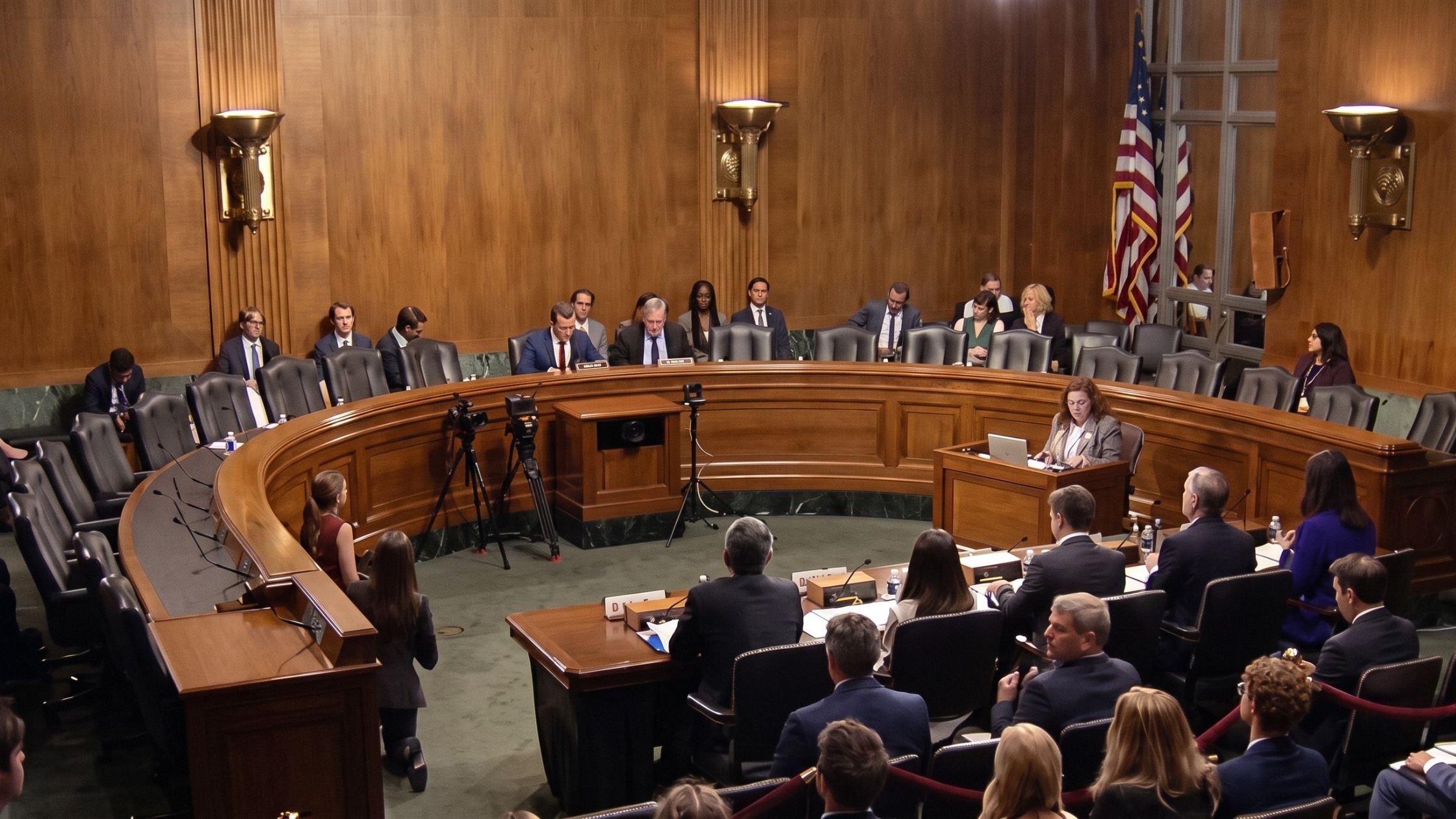
I'd like to welcome everyone to this hearing today entitled Your Data, Their Profit: The Consumer Cost of AI Surveillance Pricing. This is a hearing of the Senate Judiciary Committee's Subcommittee on Crime and Counter-Terrorism, which I am delighted to chair and to work with my colleague, the ranking member, Senator Durbin. I want to thank especially all of our witnesses for being here as well as everybody else who is in the room and those who are joining us online.
(00:26)
Hardly a day goes by in this town without some booster of AI talking about how it's going to transform the American economy for the better. The question is, whose betterment will this transformation lead to? I noticed that one of the nation's largest newspapers, The Wall Street Journal, has a headline today saying that the AI boom is transforming the American economy beyond recognition. The question is, are the American people going to be left behind in this transformation?
(00:52)
And we're here today to talk about one of the effects of this AI boom, the partnership between the AI industry and some of the biggest corporations in America to effectively scam consumers out of every last dollar they have in order to buy products that they need and rely on. What if I told you that a store like Staples, for example, charge more online based on your IP address or on your proximity to arrival? What if I told you that Target's shopping app tracked your location real time in order to charge you as much as $150 more for a vacuum the moment that you enter their store? What if I told you that Lyft has charged 55 separate riders in my home state of Missouri 29 different prices for the same exact route at the same exact time with a difference of $37 between the different fairs? These are all documented cases, documented cases of what we are now calling AI surveillance pricing.
(02:02)
That is really, in a nutshell, when the corporations work with the AI companies to harvest your personal data. And I'm talking about your home address, how many children you have, your internet browsing history, everything they can get their hands on and feed that data through their complicated algorithms, which of course are totally opaque and unavailable to you in order to force you to pay the absolute maximum amount of money they can get out of your pocket for every single product that they can offer to you. This is one of the biggest scams in American history, this marriage between the AI industry and these mega corporations. And they're trying to pull it off against every American consumer. AI surveillance pricing is the unholy trinity of everything Americans hate, spying on people, ripping them off, and taking away jobs.
(02:57)
Let me just talk about each of those briefly in term. First, spying on people. Did you know that your neighborhood grocery store is amassing your data and tracking your purchases all for their profit? For example, take Kroger. Kroger is not just a grocery store, though it is certainly that, one of the largest. It is a data selling mega corporation. Kroger's loyalty program has a treasure trove of data on you if you're one of their customers. One Kroger customer got a copy of his shopping profile recently. You want to guess how long it was? 62 pages. 62 pages of personalized data on this one person based on his shopping history. Last year, Kroger earned over $500 million from selling. Yes, selling the data that it harvests from its loyal customers and giving it to other corporations. Do you know that accounts for 33% of its net income last year? A-third of its income came from selling the personal data of its own customers. Let me just say that again. Kroger made half a billion dollars by tracking its customers in store and online and then selling that to other people.
(04:12)
Second, ripping off consumers. AI weaponizes your data against you for profit. And I'll give you an example. On Delta's second quarter 2025 earnings call, Delta's former president, Glen Hauenstein, revealed its partnership, Delta's that is, with an outfit called Fetcher, which is a company that specializes in AI surveillance pricing. Now, after that earnings call, Bloomberg uncovered a Fetcher white paper that describes using AI with airlines to replace simple, flat fares with a complicated pricing scheme that will vary the fare based on what they believe individual customers are willing to pay. Fetcher went on this company to say that it's time for the airlines to enter an exploitation phase of AI technology. Think about that. These companies are salivating at the prospect of using AI technology and your personal data to exploit you and they're not even pretending otherwise.
(05:10)
Finally, taking away jobs. This practice of surveillance pricing is making its way to brick and mortar stores. It's not just online. Here's an example of that. Kroger and Walmart and other retailers are rapidly introducing digital shelf labels all across their stores. We'll give you an example over my shoulder here of a picture. Here's a digital shelf label. These are appearing everywhere across the United States. These labels can be used because they can be changed instantaneously. They can be used to implement AI surveillance pricing in the store, not just online. Now, of course, this will end up costing jobs in the store certainly, but think about where all of this is heading. Delta's former president, I mentioned a moment ago, really put it best when he said that the goal is, the goal of the industry, the goal of all of these industries, these mega corporations and the AI industry that's working with them, the goal is to charge what they call personalized prices, as if it's a benefit to you. Personalized prices.
(06:13)
Here's what he said, "This is a full re-engineering of how we price and how we will be pricing in the future. We will have a price that's available on that flight, on that time to you, the individual." Let me just translate. In other words, they're going to figure out how they can rip you off one person at a time. They're not going to charge you the same fare they charge your neighbor. They're not going to charge you the same fare as the guy sitting next to you in the seat. They're going to figure out how they can bilk you out of every dime they're willing to pay every time you step on an airline. And it's not just going to be them. It's going to be the grocery stores and everybody else until we figure out how to bring transparency, how to bring honesty and some protections for the American consumer. That's what we're here today to talk about. With that, I turn to Senator Durbin.
Senator Durbin (06:57):
Thanks, Senator Hawley. I can't add much to that. It's a pretty great presentation. I appreciate that very much. I read recently, I'm trying to find it again through AI, that Amazon made more money on data than they made on merchandise sales. In other words, more money on their consumers' personal information than they did on selling to their consumers. Hard to imagine, but after you hear this explanation from Senator Hawley, it may not be impossible. It's possible.
(07:27)
I would just add for a little consideration here something else when it comes to payments and privacy. Every click we make on the internet leaves a trail of personal data. We know that. That data is collected, tracked, and sold. Congress can address it. And there's another thing Congress can do right now for the cost for consumers and small businesses is to pass the Credit Card Competition Act, a bipartisan bill I sponsor with Senator Marshall of Kansas. This bill would bring down the cost of swipe fees the Visa and MasterCard take out of every purchase we make with a credit card. You don't know it. Your retailer does. For some small businesses, these swipe fees become their second or third largest expense, and many have been forced to raise prices as a result. Americans pay the highest swipe fees in the world. The Credit Card Competition Act would bring these down, leading to savings for businesses and lower prices for consumers.
(08:28)
I look forward to hearing the witnesses today. And Ms. Caron, welcome from Illinois.
Senator Hawley (08:34):
Thank you very much, Senator Durbin.
(08:36)
It's the practice of this subcommittee to swear in our witnesses before we hear testimony. So if you would, if you would rise and raise your right hand and then take the following oath with me.
(08:46)
Do you swear that the testimony you're about to give is the truth, the whole truth, and nothing but the truth, so help you God?
Witnesses (08:50):
I do.
Senator Hawley (08:51):
Very good. Well, let me now introduce each of you in turn, and we'll just start down here at the dias with Dr. Owens. After I introduce you, I'll give you an opportunity to make an opening statement if you'd like. First up is Ms. Lindsay Owens. Ms. Owens is the president and CEO of Groundwork Collaborative, which is a think tank that has done tremendous work in this space.
(09:09)
Ms. Owens, the floor is yours.
Lindsay Owens (09:11):
Thank you so much. Chairman Hawley, Ranking Member Durbin, members of the subcommittee. Thank you for inviting me to testify. I'm here today to discuss a hidden practice that is coming for every line in the household budget, from groceries to gas, to concert tickets and even airfares. It's called surveillance pricing. And it's what happens when corporations charge different prices for the same item based on your personal information. It's also a subject in my forthcoming book, Gouged: The End of a Fair Price and What That Means for Your Wallet.
(09:46)
With surveillance pricing, big tech has reinvented the ripoff. Personalized pricing isn't new. Sellers used to haggle with customers, sizing them up to decide how much to charge them. That changed with the invention of the price tag in the late 19th century. And since then, American consumers have operated under a basic assumption, that every customer would be charged the same price for the same item.
(10:13)
Prices were historically set quite simply by what's known as a cost plus model. A company takes the cost of producing the good, adds a profit margin on top, that's it. But more recently, executives and consultants have pushed firms to move in a different direction, urging companies instead to capture the full extent of what customers are willing to pay. Today, companies deploy a dizzying array of tactics designed to extract that maximum profit from each and every transaction. They tack on hidden fees, collude on price hikes with their competitors, and deploy AI-powered pricing experiments on unsuspecting shoppers. This new squeeze on your wallet is made possible by both corporate consolidation and technological advances. After all, it is pretty hard to charge or to overcharge a customer who can walk across the street and get a better deal.
(11:13)
And new capabilities, including the rise of AI, have turned pricing into a highly engineered science. The most powerful weapon in this arsenal is surveillance pricing. Companies can now purchase, track, and analyze your personal data at a previously unimaginable scale and clip. They catalog your location, your purchase history, and even your cursor movements to better predict exactly how much they can charge you. Even nominally beneficial programs like loyalty rewards can be used to harvest your information, turning customers into guinea pigs in sophisticated pricing experiments.
(11:52)
Imagine you're the parent of a sick child. It's midnight. You ask Walmart's AI shopping assistant, Sparky, to suggest a thermometer and some Tylenol. Sparky knows that your purchase is urgent, potentially leveraging that vulnerability to overcharge you. As agentic commerce reshapes how we shop online, with AI agents starting to gain access to our habits, our purchases, and our personal conversations, the risk of being ripped off is only poised to grow.
(12:25)
This isn't just a hypothetical. Target app hikes the price when it knows you're in the store. DoorDash is developing technology to tailor recommendations based on how hungry you think it thinks you are. Travel sites like Expedia have charged users from high cost cities more for identical hotel rooms. And Kroger's loyalty program uses your data to predict exactly how much money you make. A 2025 Federal Trade Commission report confirms that companies are already deploying surveillance pricing in major industries. But surveillance pricing isn't just unfair. It erodes transparency and predictability and makes it harder for families to budget, let alone comparison shop. As we do more of our shopping online and on our phones, we have no idea if we're being charged a different price than our neighbor.
(13:15)
I'm often asked what consumers can do to protect themselves, but uncovering surveillance pricing requires comparing prices across users, devices, and locations all at once. That is a tough task for veteran researchers, yet alone ordinary consumers. The answer can't be to teach everyone how to beat the machine. We must set rules of the road so the machine plays fair. Clear and transparent prices are essential for a functioning capitalist economy.
(13:47)
The good news is momentum is on the side of shoppers. This year alone, more than 40 bills in 24 states, red and blue alike, have been introduced and passed to curtail surveillance pricing. More than three-fourths of Americans support banning the practice entirely. It's not too late to preserve fair pricing in America. We can start by pricing products again rather than people. Thank you and I look forward to your questions.
Senator Hawley (14:14):
Thank you very much. Next is Mr. Robert Hedges. Mr. Hedges formerly served as Visa's chief data officer. He now works as a digital fellow at the MIT Initiative on the Digital Economy.
(14:25)
Mr. Hedges, nice to have you. The floor is yours.
Robert Hedges (14:30):
Thank you, Chairman Hawley, Ranking Member Durbin, for the opportunity to be here today and talk about this very important topic.
(14:37)
Yesterday I submitted detailed testimony on how surveillance pricing works, the supporting data flows in tech stack, the major data ecosystem players, the history of patents and corporate acquisitions in the space, how to quantify the consumer harm, and a set of opportunities to best reign it in. In the available time this afternoon, I'd like to do three things. One, quickly explain how surveillance pricing works. Secondly, and very importantly, identify the key consumer behavior data elements and how they're collected and actually used. And then finally, spotlight what should be the priority policies solution.
(15:15)
First, how surveillance pricing works. Retailers and digital platforms collect data about consumers from many sources, including shopping history, web browsing activities, locational data, inferred purchase intent, device type, battery life, mouse clicks, loyalty programs, and payment card activity. And they assemble and analyze it into a detailed view of consumer's priorities. Data is assembled in what is called an identity graph, mapping all the data that is collected about you into a single consumer profile. These detailed profiles know or infer your behavior, preferences, health conditions, relationship status, presence of children, countless other behavioral attributes. Your consumer profile can then be managed to produce signals about what a consumer might want. Signals project your future shopping needs, your brand loyalty, your typical shopping behavior, your sense of urgency to make a purchase, and your willingness to pay. That's the expression, your willingness to pay, AKA price sensitivity. The signals are used by marketers, advertisers, digital marketplaces, and retailers to inform their pricing strategy.
(16:27)
As you would imagine, consumer behavior-based signals are valuable. The use of signals can increase the effectiveness of targeted advertising, strengthen the conversion rate on marketing leads, and form marketing messages to encourage purchase and support surveillance pricing models. So what are those data elements? The inputs used by surveillance pricing models are quite specific. Willingness to pay is the data science and marketing analytics term used to characterize a consumer's price sensitivity. A high willingness to pay means the consumer's less price sensitive, really wants to purchase the product, has a strong, urgent need, or simply declines to negotiate. A high willingness to pay suggests a consumer's desire for a product or service is not going to dampen by a higher price.In contrast, a low willingness to pay suggests price sensitivity. A consumer who has low willingness to pay is going to carefully comparison shop, look for better deals, ask for a discount, or simply leave the unpurchased item in their shopping cart.
(17:26)
Signals regarding consumer's relative willingness to pay can be inferred using a variety of sources of consumer data. The relevant data can be sorted in several categories. Location, the zip code or internet address serving as a proxy for your income and buying power. Time of day, the time of day that your research search or shopping is occurring, reflecting how much though and reflection you may be putting into the purchase. Purchase history, your account status, such as your purchase history with a retailer, your loyalty program participation, all measures of your commitment to a specific brand or product category.
(18:02)
Digital access, your type of phone or computer, its operating system and the fingerprint it leaves behind, which can help identify you. Shopping intent or referral source, the shopping search path that brought you to the desired product, such as a direct Google search for a specific model item, or coming from a coupon aggregator site where everyone's looking for a better deal. Shopping behavior queues, your trackable digital behaviors such as how long you linger on a website, how often you return, the speed with which you maneuver through an online product catalog. And finally, the rate at which you abandon products in your digital shopping cart all provide a measure of the consumer's sense of urgency.
(18:45)
And finally, comparison shopping behavior. The number of product detail pages or PDPs that you open on a shopping journey signals active comparison shopping. Opening multiple PDPs indicates the consumer may be actively comparing products and features. These are all consumer behavior cues from which the willingness to pay can be inferred. Willingness to pay then becomes a variable in developing pricing strategies and tactics and has been implemented across a wide range of retail and hospitality categories, including groceries, household goods, apparel, airlines, and hotels. Some of the technology to capture consumer behavior is relatively intuitive and straightforward. Other solutions are complex and highly technical. To track real-time consumer shopping behavior and derive their willingness to pay, retailers and digital platforms use an integrated stack of front-end data capture and real-time consumer profile integration strategies.
(19:44)
No consumer would willingly supply personal data to third parties to be used against them. If a consumer was informed the data was being collected on them, their shopping and purchase patterns to be used in pricing models that sought to maximize retailer's profitability, the consumer would most certainly say no, which is probably why consumers are never asked. A formal requirement to secure consumer approval to collect and use consumer shopping behavior data in pricing models would probably kill the practice.
(20:15)
Among the options to address the practice of surveillance pricing, the explicit regulation of consumer behavior data collection and the conditions for its use is the highest impact policy action. Three specific steps should be pursued. First, implement focus regulation to change how consumer behavior data is allowed to be collected, mandating simple and clear disclosures about data collection and its use. Second, establish use case specific consumer consent requirements for collecting the data. Make a consumer's informed consent be a requirement for using the data in pricing models. And finally, third, require retailers and digital platforms to inform the consumers that their pricing will not be derived from consumer behavior data unless a consumer agrees to it. A consumer would only be subjected to the collection of their behavior data for use in pricing models if they had affirmatively opted in for such a program.
(21:14)
Unfettered access to consumer behavior data in the absence of requirements to obtain informed consumer consent before using it is the problem here. Our policy response should address the root cause of the surveillance pricing head on.
(21:29)
Thank you for giving me the opportunity to contribute to today's discussion.
Senator Hawley (21:32):
Thank you. Next is Mr. Lee Hepner. Mr. Hepner is an antitrust lawyer and senior legal counsel for the American Economic Liberties Project.
(21:40)
Mr. Hepner, floor is yours.
Mr. Lee Hepner (21:42):
Thank you, Chair Hawley. Thank you, Chair Hawley, Ranking Member Durbin, and members of the subcommittee. Thank you for inviting me to testify today.
(21:51)
My name is Lee Hepner. I am senior legal counsel at the American Economic Liberties Project. Over the past several years, I have studied and written about emerging technology platforms and the rise of surveillance pricing. As my colleagues have stated, surveillance pricing is the targeting of different prices at individual consumers or granular consumer segments based on their private personal information. Everything from your precise location to your social and professional networks, your shopping history, your marital status, inferences about your physical health and financial status, your online browsing habits, even the way your cursor moves on your computer screen. These technologies are designed to estimate the highest price any given consumer is willing to pay at any given time.
(22:38)
They also serve to erode any notion of a fair and predictable price. The Price is Right, the longest running game show in American history was based on this idea that a common price was one thing that buyers and sellers should all know about a market. We have built our society based on the same idea that prices for the same goods and services should be relatively equal to all comers. The compilation of dossiers of data on every single person in America and their use to organize surveillance pricing represents a break from this fundamental conception of fairness.
(23:13)
Now, fairness is a term that is pervasive in our laws, many more than a century old, that govern prices to ensure they are transparent, predictable, and competitive. We have passed laws to make sure that one party cannot exploit its power or superior access to information to discriminate against weaker market participants. However, there is now a lack of clarity and laws that evolved during a period of history when individualized price discrimination was though impossible. Companies have interpreted that lack of clarity as a green light to entrench surveillance pricing.
(23:48)
In my written testimony, I survey how antitrust law and general consumer protection statutes, particularly at the state level, are beginning to address surveillance pricing. In antitrust cases against big tech firms, courts have acknowledged that superior access to data-
Mr. Lee Hepner (24:00):
... [inaudible 00:24:00] firms. Courts have acknowledged that superior access to data can itself be a competitive restraint, closing off markets to new competitors. In the consumer protection context, laws exist to prevent deceptive, fraudulent, or misleading practices. There is a robust body of law addressing "fake discounts" which deceive consumers and induce purchasing based on false higher prices that no one actually pays.
(24:27)
Surveillance pricing erodes that idea of a comparison price or really any prevailing market price. Pending class action litigation against JetBlue and the Washington Post brought by private citizens is working its way through the courts in an attempt to limit surveillance pricing. In the Washington Post case, various subscribers paid wildly different prices, 50 cents per week, 99 cents per month, $20 per year. One subscriber saw their subscription price jump 300% in one year, all without explanation. The case alleges that those price differences were based in part on the personal data accessed across subscribers' Amazon profiles and across the internet.
(25:07)
In a marketplace where every price is different or where prices are subject to constant and continuous adjustment, there is a credible argument that every price is misleading or deceptive because the concept of a standard price ceases to exist. Now, will any court accept this reasonable interpretation when the prevailing standard is that anything goes? I have my doubts and it may take some time.
(25:31)
We've seen cases against Target and Farmers Insurance settled before providing any further legal clarity. It may take years for other cases to resolve. Congress should not wait. It must act to update our laws in this new technological and legal regime. Congress should ban the use of personal data to price goods or services with narrowly tailored exceptions. Several states and some cities have explored such legislation to protect consumers, to protect businesses, and to restore predictable and transparent pricing where surveillance pricing threatens to destroy it.
(26:05)
Good legislation would not prohibit senior, student or veterans' discounts, it would allow loyalty programs, but ensure that any benefits are consistently offered to all participants in the loyalty program. A nation leading model was rigorously vetted and passed the Colorado State Legislator before being vetoed earlier this year. In this Congress, the One Fair Price Act by Senator Gallego also gets it right. The polling and economic literature is very clear, surveillance pricing is good for corporate profits and bad for consumers, but this is not just about cost. It is about morality and power.
(26:41)
I'll close with a quote about airline pricing. "Selective price gouging, non-cost justified discounts for big customers, and secret rebates seem to favor the large organized interests with competitive alternatives at the expense of the unorganized, uneducated, or captive passenger. These tactics are 'contrary to basic American precepts of justice.'" That quote is from the Heritage Foundation's mandate for leadership in 1980, the guidebook used by the Reagan administration.
(27:13)
Surveillance pricing erodes that "basic American precept of justice." We are happy to work with members of the judiciary committee to address this issue. And again, thank you for holding this hearing to discuss this critical issue. Thank you.
Senator Hawley (27:25):
Thank you. Next up is Ms. Hillary Caron. Ms. Caron serves as policy counsel to the United Food and Commercial Workers International Union. Did you say that she's from the state of Illinois? Deerfield, Illinois. We're glad to have you and the floor is yours.
Hillary Caron (27:40):
Thank you. Good afternoon, Chairman Hawley, Ranking Member Durbin and members of the subcommittee. Thank you for the opportunity to testify today.
(27:48)
The United Food and Commercial Workers International Union is the largest private sector union in the US. We represent 1.2 million members in grocery stores, meat packing, retail, healthcare, and more. We represent workers all along the food supply chain, including more than 800,000 grocery workers. Today, I will focus on surveillance pricing and electronic shelf labels or ESLs in the grocery industry specifically.
(28:12)
Our members see the impact of these technologies in the stores firsthand, both as workers and as consumers who shop for their own families on a budget. Food prices have gone up more than 30% since 2020. While several factors can contribute to higher prices, some are controlled and can be manipulated by the retailers themselves. Emerging technologies enable companies to set prices based on consumer data collected through loyalty programs, online tracking, and data brokers to extract maximum profits.
(28:42)
ESLs are the technology that allows surveillance pricing, dynamic pricing, surge pricing, and a whole range of predatory practices to migrate from apps and online into the brick and mortar stores. ESLs are digital price tags that can be changed remotely and in real time. Grocers began using them in the US in 2018 and they're quickly expanding. Walmart announced that it will bring ESLs to all of its stores nationwide by the end of this year. The companies claim the devices won't be used for surveillance or surge pricing and will only be used for discounts. But why would a corporation invest in outfitting its stores with expensive equipment, in some cases, $400,000 per store or upwards of a billion dollars in total for a large chain if it doesn't increase its profit margin? I invite you to read the full quotes in my written testimony, but I will just highlight one executive from an ESL manufacturer who stated that ESLs are gaining popularity because "retailers are looking for ways to improve their profitability and they allow stores to dynamically change prices anytime you want." On their own, ESLs are merely a piece of hardware to display prices. The problem is that they're not used on their own. They're connected to stores' inventory systems, point of sale systems, and pricing systems, which use consumer data and AI to set prices in a way that maximizes profit.
(30:04)
They can even be connected to cameras and sensors that track you as you move through the store, capturing how long you look at an item and showing you personalized ads. Traditionally, grocery prices change weekly, but ESLs raise the likelihood of prices changing daily or even multiple times a day. Hanging paper price tags on store shelves for thousands of items takes time and effectively functions as a speed bump. ESLs remove that speed bump. Families expect predictable pricing, but with ESLs, they will have to look out for constantly changing prices that make it difficult to shop on a budget.
(30:40)
UFCW members see the impact of this new technology firsthand. Haley, who was pregnant herself, talked about getting emotional while she was filling an online order that included baby formula. "If we didn't have that particular formula in stock at the dependable price listed that the family budgeted for, the family may not have been able to get the product to be able to feed their baby. I imagine the new parents driving from store to store to be able to find the correct formula that fits their budget. Then as a mom to be, I pictured myself doing the same thing."
(31:11)
Another worker, Jenny, said, "High prices are already taking a toll, but at least our customers know that the price of milk on Monday won't change on Tuesday. That allows them to budget and plan. But with electronic shelf labels controlled from some AI command center in another state, that's a recipe for chaos as prices could change by the second."
(31:33)
The ESL manufacturers in the retail industry say that with the time saved hanging paper price tags, employees can spend more time doing more pleasant customer-facing tasks. But that's not what we've seen in the stores. For example, one of our members in Georgia reported that three employees who were hired for the scan team, the workers who changed the price tags, were permanently moved to the overnight shift, which is not the kind of work they want to be doing.
(31:59)
Consumers want predictability. They want lawmakers to put people first. In a national poll, 67% of Americans were in favor of banning ESLs and surveillance pricing in grocery stores with support across party lines. 65% think that ESLs will cause grocery prices to increase, and 72% said they don't have faith in grocery stores using the technology responsibly. Groceries are a necessity, not a luxury. Companies shouldn't be able to use your online history, your past purchases, or your location information to charge you a higher price for the food your family needs to live.
(32:34)
We're pleased to see several states considering legislation to address ESLs. New Jersey's new law, the Fair Price Protection Act, is the strongest effort to date. It's the first of its kind to ban surveillance pricing and ESLs in grocery stores. And at the federal level, UFCW applauds Senators Luján and Merkley for introducing the Stop Price Gouging in Grocery Stores Act, which would do what it says in the bill name. UFCW believes that limits on surveillance pricing and electronic shelf labels will ensure that new technology supports workers and consumers and addresses the affordability issues working families face. Thank you. And I welcome your questions.
Senator Hawley (33:10):
Thank you very much. And finally, Professor John Zhang. Dr. Zhang is a professor of marketing at the University of Pennsylvania Wharton School. Professor Zhang, thank you for coming. The floor is yours.
Professr John Zhang (33:25):
Chair Hawley, Ranking Member Durbin, distinguished members of the subcommittee, I'm deeply honored to appear before you today. More than 40 years ago, I was drawn to this country by its promise of freedom and opportunity. Two PhDs later, I achieved my own American dream becoming a professor at one of the nation's finest business schools. Today, that dream feels renewed. I feel a bit like a Mr. Smith going to Washington, both awed by this institution and proud to be here.
(34:01)
I also thank you for the opportunity to address this timely issue. I testified today, of course, in my personal capacity with the full sensitivity to all the concerns surrounding personalized pricing that all the panelists have just voiced. My purpose is to offer a broad economic perspective on its use and when firms legally acquire that ability to balance the picture. And I checked with AI this morning, I won't be the punching bag here today.
(34:38)
I originally came from China and have spent more than three decades studying and teaching pricing. I would like to think that I know a little about pricing and also a little about surveillance. In my view, the term surveillance pricing is a misleading, unnecessarily prejudicial label for personalized pricing. Personalized pricing is not intrinsically sinister when viewed through the lens of economics. It is not only about your data and then their profit, it also affects the consumer access, market competition, and the social welfare.
(35:20)
The basic reason why firms use personalized pricing is that consumers differ. Some are willing to pay more, others are more price sensitive. If a firm is allowed to charge only one price, if this is a trade-off, a high price earns more margin, but exclude many consumers. A low price reaches more consumers but sacrifice margin. Because of this trade-off, a uniform price is not always a fair. It may benefit the less price sensitive, often higher income consumers, but it can be too high for price sensitive and often lower income consumers who may buy less or be priced out entirely.
(36:12)
For instance, just the example about the Monday versus Tuesday pricing in a supermarket, you can imagine that that kind of a pricing will give the customer a chance to buy at a lower price than on Tuesday. And because of this trade-off, uniform pricing is not always fair, and not only that, and society also loses when mutually beneficial transaction do not happen. Economists call this a dead weight loss. If a consumer is willing to pay $4 for something that costs $2 to produce, but the firm charges $5, the sale does not occur and the social value is lost. However, if firms are allowed to charge multiple prices, they will charge a lower price to more price sensitive consumers and access expand.
(37:12)
Yes, less price sensitive consumers may sometimes pay more. However, firms don't always gain from personalized pricing. Research shows that it can intensify competition, reduce profits. The firms that are most likely to benefit from personalized pricing are those with the higher quality products, stronger brands, and the more loyal customers. In general, if markets are competitive and information is accurate, personalized pricing can benefit consumers and the society.
(37:49)
Airlines offer a useful example. After deregulation in 1978, airlines developed yield management. It is one of the most sophisticated pricing systems in modern business. Passengers on the same flight often pay different prices, yet over the past three decades, average US domestic fares have fallen by nearly 40% after inflation while the passenger volume has increased tremendously. Flying is no longer only for the rich and the famous. About 978 million passengers now board planes each year. Just imagine that at the time in early 1980s, if the Congress passed a law to ban the yield management, what would happen?
(38:37)
In conclusion, personalized pricing is a powerful competitive tool that can improve affordability simply because they charge a lower price to the people who are price sensitive, expand access, reduce waste, and reward the better firms. Of course, a monopoly with perfect consumer information could harm consumers, the right response here is to address them of monopoly. We should guard against abuses such as abusive surveillance and market power, but not reject a pricing tool that can benefit consumers and the society. Thank you. I look forward to your questions.
Senator Hawley (39:17):
Thank you very much. Thank you to all of the witnesses. We're now going to begin rounds of questioning. We're going to do seven-minute rounds and I will begin. I want to start with you, Ms. Owens, if I could. And I want to talk about the techniques that these mega corporations are using in conjunction with the AI industry. Let's just start with a real life incident.
(39:37)
Earlier this year, there was a disturbing incident that played out on Twitter, on X, that shed some light, I think, on how airlines are using surveillance pricing in real time right in front of us. I think I've got the relevant exchange over my shoulder here. You have an ex-user who in April, this is April of this year, posted that he had seen a $230 price increase in one day when he was booking travel for a funeral on JetBlue. $230 price increase. Now here's the interesting thing. JetBlue's own corporate account helpfully responded to him and instructed him to clear the cache and the cookies or use an incognito window. Now, Ms. Owens, you're familiar with this incident, I assume. Can you explain to us broadly what's going on here?
Ms. Owens (40:26):
Yes, thanks. I am familiar with this incident.
Senator Hawley (40:28):
You need to click your microphone there. How about now?
Ms. Owens (40:33):
Hello?
Senator Hawley (40:36):
Go ahead. Keep going. Okay. We'll see if we can turn you up.
Ms. Owens (40:38):
I am familiar with this incident. It's really just a stunning revelation from a corporate Twitter account of the topic of this hearing today, surveillance pricing, practice of using your personal information in pricing decisions. This really simple Tweet basically is a confession.
(40:57)
Two things. The first thing in asking the customer to clear their browser before purchasing flights, we know that the company is tracking your browser history. The second thing we know is that they are using the data that they collect in their pricing decisions. And in this case, adversely, the price is going to be higher for this individual based on their browsing history.
(41:23)
But I also think this is such an important example because it shows that surveillance pricing isn't just about things like income, this is about desperation. This individual is trying to get to a funeral. He needs this ticket urgently. He wants to attend. And that can be weaponized against consumers. This isn't about the rising jet fuel prices, that's not what's going into their pricing decision. Desperation is what's driving this decision.
Senator Hawley (41:49):
Yeah. I think that everybody who flies, let's just stick with that particular industry, everybody who flies, I think, has the sense intuitively that they're being ripped off in some way on these airlines. And here's a smoking gun. I want to emphasize, this is their own corporate account. And they did not say in response, "Oops, we were hacked." What they said is, "We made a mistake." No doubt they did. The mistake of candor where they confessed inadvertently what they're really doing. Let me just ask you, Dr. Owens, because I think it's pretty clear, but what's the motive here? I mean, what is JetBlue's motive? What would you say?
Ms. Owens (42:24):
This is about profit.
Senator Hawley (42:25):
Yeah.
Ms. Owens (42:26):
The data that powers the surveillance pricing engine is estimated to be a $700 billion industry by 2030. That's not very far away.
Senator Hawley (42:36):
What kind of data do companies like JetBlue have on us? I mean, we talked about the browser history, the fact that they're clearly tracking this person around. They can see what's in their cache and so forth. But what else? What other kinds of information do these companies have that they can use to set these personalized scam, I would say, prices?
Ms. Owens (42:56):
Yeah. Unfortunately for consumers, the answer increasingly is nearly everything. It's your location data. It's behavioral data. What you buy, what you don't buy, what you keep in your cart. It's demographic data. You log in with a loyalty program to fly, they know how many people are in your family, whether you have kids, where you go frequently. And as we know with AI, as companies build enterprise agents, you often start conversing with these companies and they have the information that you tell them.
Senator Hawley (43:29):
Airlines are not the only companies that are doing this. Your initiative, your organization, the Groundwork Collaborative issued an expose on Instacart earlier this year. What your findings portray and put onto the record is just incredible. Your report exposed how Instacart's charging different shoppers, different prices for the same groceries at the same time. And the amount of money that we're talking about here is really extraordinary. Your report found that the price swings for an average family could end up being in the neighborhood of $1, 200 per year. $1,200 per year. That is a lot of money. Tell us about what you found in your report and why it's so significant.
Ms. Owens (44:12):
Yeah. So we uncovered a vast experiment that Instacart was running on millions of Americans while they shopped for groceries. What we found is that different shoppers were being offered different prices for the exact same set of items at the exact same time from the exact same pickup location. This wasn't an occasional finding, more than three quarters of the items in our test grocery basket were found to be offered at different prices, sometimes as many as five prices per item. Sometimes the price difference was as much as 23% for a simple carton of eggs.
Senator Hawley (44:50):
Wow. Mr. Hedges, if I could just turn to you. Let's talk a little bit about the role that the credit cards play in this. Let's go back to that poster about JetBlue and just think about the information that these companies have. You are Visa's former chief data officer. Talk to us a little bit about what you know about what kind of information the industry gathers. And I want to zero you in on one thing in particular.
(45:16)
JetBlue works reportedly with one of your former competitors, MasterCard, to make assumptions and draw profiles about its customers, about JetBlue's customers, and they use categories like confident or satisfied or focused or in love with JetBlue. This MasterCard subsidiary then flags if a JetBlue customer is likely to pay an above average fare. This seems extraordinary. Tell us about what you have learned about what this subset of at least some of the credit card industry is doing to participate in surveillance pricing.
Mr. Hedges (45:53):
Sure. The example you're using is a really good one. And to my earlier comments, the subsidiary that MasterCard was using is a company called Dynamic Yield. One of the specialties of what Dynamic Yield does is calculate willingness to pay. And so there's a whole set of data that's collected to inform willingness to pay.
(46:13)
Only a small part of it actually is credit card transaction related, but in the development of willingness to pay calculations, in the example you gave, there's all sorts of sources, some of it card payment related, but much of it from other categories like where do you usually, in this case, in an airline case, where do you really travel? When did you book the ticket? Have you already booked a hotel? Do you have friends or neighbors or relatives in the area? How long ago was the trip organized? All those, using the airline example, all those things will influence the score and willingness to pay, which you quoted the examples of the terminology, that's used in the dynamic yield case.
Senator Hawley (46:54):
But just so I understand, the credit card transactions form, in this case of this MasterCard entity, they form the backbone of this data. Is that correct? They're part of the data.
Mr. Hedges (47:03):
It's definitely part of the data. I don't think it'd be fair to say it's the backbone of the data. Actually, I think the available...
Senator Hawley (47:10):
Because there's so much of it, because there's so much data.
Mr. Hedges (47:10):
The browsing ability, the ability to track where someone's shopping, the ability to infer where they live, the ability to infer the sense of urgency comes from lots of different data sources.
Senator Hawley (47:23):
I just think it is an extraordinary revelation to most Americans, it certainly is to me, that what you're doing with a credit card over here could be used by a company over there to set a price for you that's different than the price that they would give to Senator Durbin or to Senator Lee or anybody in the audience. I mean, that is extraordinary. And what say do I have in any of it? None. None whatsoever.
Mr. Hedges (47:44):
And to your point specifically, the transaction occurring lets the seller or the airline know it's you, right? I mean, that's the culminating point of the search process or the shopping process where all those factors get actioned.
Senator Hawley (48:02):
Do you prefer Karen...
Dick Durbin (48:03):
Do you prefer Caron or Caron?
Hillary Caron (48:04):
Caron, please. Thank you.
Dick Durbin (48:08):
Caron. Tell me about Norway.
Hillary Caron (48:10):
Thank you so much for asking. Norway provides a warning that I think we should pay attention to. They were an early adopter of the electronic shelf labels, so customers are used to seeing them in the stores and they're used to seeing the prices change while they're shopping. One article estimated sometimes much a hundred times a day. And what happened in Norway is that the Norwegian Competition Authority found that the three major grocery companies, which together control about 95% of the grocery market there, were essentially price fixing.
Dick Durbin (48:45):
Colluding.
Hillary Caron (48:46):
They were colluding to fix prices. They were visiting each other's stores to document price comparisons, but instead of using it to lower prices, they were able to confirm when their competitor was offering a higher price. And the electronic shelf labels were the important piece of the puzzle that enabled them to raise their own prices instantly when they saw that.
(49:09)
They were charged a record high fine that was recently upheld. And I think an important lesson there is that thankfully they had a very aggressive regulator in Norway that caught them doing this. And I think that's something that we need to be very aware could happen here.
Dick Durbin (49:24):
Dr. Zhang, I don't think we consumers have a fighting chance. The information that's being gathered about us involuntarily is hard to describe in terms of any limitations. Facial recognition, for goodness sakes, you can walk in the front door of the store and they'll identify you on the spot. I'm told that many stores, particularly grocery stores, track the customers in their journey through the store, dwell time at certain shelves. All this is being accumulated. I don't think it's any coincidence that most stores put dairy products as far away from the front door as possible. So they think people want to buy milk before they go home or eggs. It's way over there in the corner of the store. You have to wander through the store to get over there. It's all designed in terms of measuring and influencing consumer behavior. Does a consumer have a chance?
John Zhang (50:22):
I definitely think that consumers do have a chance. And the reason is because information is very, very important for the functioning of the economy. So which means that the firms do-
Dick Durbin (50:37):
Even buy information, buy personal information?
John Zhang (50:39):
Personal information. Well, the consumers consist of individuals. And so you have to collect individual information to really get to know the consumers in the market. I would say that's the first case. And in order for the economy to function, you need to have the information. And of course that once you collect the information, the consumer, the firms in fact that would do everything possible, of course, not only serve the customers. In the meantime, they actually have to make some profit, otherwise they cannot survive in the marketplace. I don't really know if a supermarkets are the most profitable business in the world. I don't know how much profit they are making. If you look at how many stores like that and then close every year, and you would imagine that in fact, that they probably have not used the information in a good way.
Dick Durbin (51:31):
Now if I'm buying online though, it's another story, right?
John Zhang (51:34):
You buy online definitely is a different story and they can capture more information from you for sure.
Dick Durbin (51:39):
Yeah. They seem to read your mind. I don't have any of Claude or any of those helpers in my home to monitor what's going on.
John Zhang (51:48):
By the way, I get upset too. And a lot of times when the firms do something like that, of course in that case, given that the prices are actually changing from the high to low, and in this case, of course that you have the opportunity to take advantage of the low prices too. So which means that consumers will be empowered and for their own agency and then to try to look for low prices for sure in this environment.
Dick Durbin (52:15):
Mr. Hedges, many years ago, many, many years ago, I walked into this room and sat down at the corner over there for Arlen Specter who had a hearing on swipe fees and interchange fees. I'd never heard of them. I listened and understood that if I had a business, a restaurant in Springfield, Illinois, and I wanted to have Visa and MasterCard, I had to pay a swipe fee, a percentage of the cost of a dinner that I'm going to serve and add that onto my cost. The consumer still doesn't know how much that is by and large. And yet that fee continues to be charged. And most retailers will tell you it's a big piece of their profit. Is that fair?
Robert B. Hedges Jr. (53:02):
Is the practice fair? Is that the question you're asking?
Dick Durbin (53:04):
If there's no negotiation, take it or leave it, Mr. Retailer. Try living without Visa and MasterCard. See how you [inaudible 00:53:10] restaurant.
Robert B. Hedges Jr. (53:11):
So I retired from Visa about 10 months ago. And in my role as chief data officer, I was not involved in interchange management and swipe fee management practice.
Dick Durbin (53:21):
We're not going to prosecute you. Go forward.
Robert B. Hedges Jr. (53:23):
Pardon me?
Dick Durbin (53:23):
We're not going to prosecute you. Go ahead.
Robert B. Hedges Jr. (53:25):
No, no. Yeah. So I think clarity regarding pricing ought to be the principle that's working here and transparency around it. And I wholeheartedly embrace all that, but I'm not really in a good position to talk about the pricing that Visa pursues because I was never involved in the management of it.
Dick Durbin (53:46):
Our hearing is about information being gathered and consumers paying a higher price because of it. That is our concern. I think chairman's illustrated that pretty effectively. I think the same thing applies when it comes to Visa and MasterCard. I think there ought to be disclosure to the consumer about what you're charging in what you did charge in that industry with your former employer as part of it. Thanks, Mr. Chairman.
Josh Hawley (54:10):
Senator Lee.
Mike Lee (54:12):
Thanks so much, Mr. Chairman, for holding this hearing. This hearing raises interesting questions. AI surveillance pricing is a new development, and it's one that finds itself at the crossroads of a whole bunch of developments and a bunch of different concerns, including consumer privacy, competition, artificial intelligence. And I appreciate the opportunity to flesh some of these out.
(54:35)
Last month, I wrote a letter to Uber and to Lyft seeking some information about whether to what extent and what ways their algorithms might use personal data, behavioral signals, or competitor information to help determine rider fares and driver compensation at any given moment. I look forward to their responses, but those questions relate to a broad question before us today, which involves when, whether, to what extent, in what way does legitimate dynamic pricing at some point morph into something more troubling? More troubling that raises serious legal and policy concerns. And then what, if anything, do existing laws have to say about that? And are existing laws sufficient to deal with it?
(55:27)
Dr. Owens, I'd like to start with you, if that's all right. Now you support prohibiting companies, as I understand it, from using personal data to set individualized prices. What kind of test? If we were writing a law, what sort of statutory text would you suggest that we use in order to distinguish between surveillance pricing on the one hand and lawful dynamic pricing on the other hand? Just utilizing the basic inputs like supply, demand and inventory, as well as time to set prices?
Lindsay Owens (56:05):
Yeah, I think dynamic pricing can be a useful pricing tool. We usually think of dynamic pricing as factoring things like market conditions into the picture. So trying to manage supply and demand and bring scarce resources into equilibrium. Personalized pricing on the other hand is really more about the practice of setting individualized prices. And in the case of surveillance pricing, individualized prices based on data that the company is collecting on you and sort of turning against you. I think-
Mike Lee (56:37):
Using your unique vulnerabilities that they may have access to or may be aware of you more than you are.
Lindsay Owens (56:41):
Absolutely. Information asymmetries. I have to say I really supported your efforts and think they're really incredible to go after the car companies who are spying on consumers and selling that data to their insurance companies for the express purpose of hiking their premiums. I think that is a really important effort to curtail surveillance pricing in the auto insurance sector. And what car companies are doing to spy on consumers is really problematic. But I do think dynamic pricing has a place in the market in certain settings, but it can also be exploited. I think we all just experienced that with the World Cup where FIFA used dynamic pricing for the first time ever. And the result was an auction for World Cup tickets, which priced out many of the most loyal and passionate fans and turned the sport into a luxury box for the wealthy.
Mike Lee (57:35):
Yeah. Now to that end, taking concerns like that into account, you've recommended restricting data pooling and potentially even winding some previously completed transactions in which companies are pooling data sets. Is that right?
Lindsay Owens (57:53):
Yeah. But also I think the real question with dynamic pricing is what's the goal of the pricing strategy? Is the goal to maximize revenues, to sell scarce resources to the highest bidder? Dynamic pricing for resources that aren't scarce is really strange. Why are we using dynamic pricing for Wheat Thins? Target isn't running out of boxes of Wheat Thins when they're-
Mike Lee (58:14):
I mean, it could happen theoretically.
Lindsay Owens (58:15):
Sure. I mean, we've lived through these recent shortages, but typically what we're seeing with dynamic pricing in grocery stores and with the electronic shelf labels that the UFCW and Senator Hawley have talked about, this is things like hiking up the price of ice cream on a hot day when they know customers need a cool treat.
Mike Lee (58:36):
What sorts of tools or data sets should antitrust enforcement personnel be looking for when flagging instances of these, when identifying surveillance pricing? How best do you differentiate the wheat from the chaff, the good from the bad?
Lindsay Owens (58:59):
Yeah, I mean, I think there are antitrust solutions at play here. There are data privacy solutions at play here. And frankly, I think there really is a need for new laws. This practice, as Mr. Hepner mentioned, is sort of in a legal gray area that's exploiting a lot of existing legal loopholes. And so while I'm interested in FTC enforcement, and I think state attorneys general have an opportunity to pursue surveillance pricing under things like existing UDAP laws, I do think a federal standard would be quite beneficial in protecting consumers here. And then of course, regulators should enforce that law.
Mike Lee (59:40):
One of the things that you've talked about is making sure that anytime somebody's using an AI purchasing agent, an agent powered by AI authorized by the consumer to make a purchase on behalf of that consumer, that the AI agent must be required to act in the consumer's best interest. How would you define it and police that?
Lindsay Owens (01:00:05):
Yeah. I mean, this is an idea that I've started to write about. And actually Senator Warner has released a discussion draft of legislation, the AI Agent Act, to take this issue on. Look, my concern here is when someone operates as an agent in the traditional economy, the brick and mortar economy, if you will, they have to act in your best interest. Your realtor has to act in your best interest. Your book agent has to act in your best interest. We have chatbots and agentic AI operating as your agent, planning to go shopping for you, pick up airfares or airline tickets for you with no similar sort of-
Mike Lee (01:00:47):
Expectation of a fiduciary responsibility.
Lindsay Owens (01:00:50):
Exactly. And you have to start to wonder as agentic commerce really reshapes our economy, expected to be a $5 trillion book of business by 2030, what shopping is going to look like if chatbots are shopping in Google Gemini's behalf and in ChatGPT's behalf and not in your behalf. And so this is something that I've been doing a lot of thinking and writing about. I think a best interest standard is one interesting approach. I've supported Senator Warren's approach here or Senator Warner's approach here, but also think there are a variety of other options worth considering.
Mike Lee (01:01:26):
Okay. So in other words, I'm out of time, but it sounds like part of what you're talking about is that the consumer needs to know what's happening. And just because it's part of AI doesn't necessarily mean it's foolproof, doesn't necessarily mean that there aren't other influences at play, including acting on behalf of somebody who's a part owner of the agent or maybe given money to the agent in order to preference their product over somebody else's.
Lindsay Owens (01:01:51):
Yeah, absolutely.
Mike Lee (01:01:52):
Okay. Thank you. Thanks Chairman.
Josh Hawley (01:01:53):
Thank you. Senator Blumenthal.
Richard Blumenthal (01:01:56):
Thank you, Mr. Chairman. Thank you for having this hearing. And I think you can sense a bipartisan feeling of urgency around this topic, particularly among members of this subcommittee. In my view, we ought to be having this hearing with the full committee and we ought to be working on legislation that incorporates some of the ideas that have been advanced here. Senator Hawley and I have a framework for legislation. We've also pursued individual pieces of legislation dealing with AI. And I agree with you that there may be a difference, Dr. Owens, between surveillance pricing and dynamic pricing, but for the consumer who sees prices rising, they don't care. Right now we have an affordability crisis and we ought to be doing something about the use of AI regardless of what the retailer says the goal is because it's a little bit like a spitball that's thrown.
(01:03:00)
It doesn't really matter whether the spit got there purposefully or whether it just happened to pass by the lips of the pitcher. The effect is the same and we outlaw the pitch in baseball because it is unfair to the batter and the same principle applies here. We need a law. We need a federal law. We need federal standards. We need national safeguards. And to that end, I am deeply disappointed that the president chairman of the FTC has abandoned the work that began under the prior FTC chair Lina Khan issued investigative demands for data from retailers on this practice. And at the end of her term, the commission published a preliminary report that found, "Retailers frequently use people's personal information to set targeted tailored prices for goods and services from a person's location and demographics down to their mouse movements on a webpage."
(01:04:10)
And actually she raised the possibility that I think you raised Dr. Owens about a parent needing a thermometer as a parent of four. I know I've been out there searching frantically for certain things for our first of four children. I was less frantic on the third and the fourth, but we know that it's not just the availability of the product that surveillance pricing looks at. It's also the need and capacity to pay of the consumer. And that's where some of the problem arises. So I'm very disappointed the FTC has abandoned that effort. On the other hand, states have begun to lead. In particular, my state of Connecticut, along with the state of New York has passed laws that regulate surveillance pricing. Some of these laws are stronger than others with restrictions ranging from corporate transparency to complete bans. New York One Fair Price Act prohibits businesses from using algorithms to set prices in whole or in part based on personal data.
(01:05:24)
Connecticut commendably also signed onto a bill that prevents retailers and third party delivery services from engaging in personalized prices. These laws ought to be commended and elevated because states eventually, and I'm talking now as a state attorney general, will force the federal government to act. It's happened again and again, and I've seen it in action. Toys with small parts, warnings, Connecticut championed a law. It was upheld by the courts and then the industry wanted a national standard. So it wouldn't face a patchwork of different laws. But in the meantime, we need to build from the states a gold standard to stop these predatory practices. So let me ask all of you, but beginning with Dr. Owens, Ms. Caron and Mr. Hepner, what has worked? What seems most promising at the state level? And should the FTC be acting more aggressively?
Lindsay Owens (01:06:33):
Yeah. So look, I've been really heartened by the kind of flourishing policy development in this area at the state level, but it has also really helped illuminate some of the challenges with doing this at the state level. Colorado moved a very strong bill through the legislature only to have it vetoed by Governor Polis. New York has passed what I view as the strongest piece of state legislation to ban surveillance pricing to date. We are still waiting on Governor Hochul to sign it. These delays and vetoes have resulted in really concerning industry efforts to water these proposals down until they're virtually meaningless. So I mean, look, I'm happy to see states moving. Some of the state efforts are quite promising, but I do think a federal standard is the right approach here. And so I think this committee's hearing is just an amazing first step. And I hope the first step of many to get this problem solved. This is a scourge for Americans. 75% of Americans want to see this put to bed.
Richard Blumenthal (01:07:39):
Mr. Hepner and then Ms. Caron.
Lee Hepner (01:07:42):
Thank you for the question, Senator. I would agree that the Colorado legislation that passed earlier this year before being vetoed was probably the strongest bill. It starts with a very simple premise, which is that personal information should not be used to inform price. I think that that gets the job done. I think that there are limited exceptions to that, that we have known about for a long time. And the exceptions are not strange. They are not inventive, but there are exceptions for things that are not individually targeted prices, but things like student discounts and senior discounts where sure, there may be some exchange of personal information to avail yourself of that discount if you fall into one of those groups. But these are not sweeping generalized exceptions for personalized discounts, for instance, which to me is nothing different than a personalized price. If every discount is personalized, you are offering every member in the market a personalized price.
(01:08:42)
Loyalty program's another area where you can do a very simple exception that actually protects participants in those loyalty programs from having their information abused to make rewards points differently valued across consumers. Loyalty programs should not be, as one of my colleagues has called it, a Trojan horse for price discrimination, promising benefits only to hike prices after the fact. There's a report about McDonald's' monopoly program, interestingly enough. It's almost too cute to be true, but that was used to actually charge certain consumers a higher price through their loyalty program. That is not what consumers expect. I think that there are various other things. I mean, retention discounts in a subscription context, which I think maybe ride a line that I find discomforting.
(01:09:31)
In the Washington Post case, somebody seeking to cancel their Washington Post subscription was actually offered a retention discount that was three times higher than the price that they were paying. So you see vulnerability for discrimination and inaccuracies in that context as well. And it makes you kind of wonder why isn't the price just the same for all subscribers anyway? But I think that if you start from that premise, you get far along the path. And yes, we would like to see the Federal Trade Commission reopen that study. And if they don't want to call it surveillance pricing because that is a loaded term, sure, call it individualized price discrimination and we can make some progress there.
Richard Blumenthal (01:10:08):
If the chairman will permit-
Josh Hawley (01:10:09):
[inaudible 01:10:10].
Richard Blumenthal (01:10:10):
... Ms. Caron to answer.
Hillary Caron (01:10:12):
Thank you.
Richard Blumenthal (01:10:12):
Go ahead.
Hillary Caron (01:10:14):
I agree. The loyalty program discounts, they should be the same for everyone. And I think that's one area that the states that have been leaders on that issue could even be improved upon. So I think that's one thing that we'd like to see tightened up in the state legislation going forward to make sure that those discounts are uniform because personalized discounts are essentially surveillance pricing. And I just also would like to recognize New Jersey's law. It is specific to the grocery industry. So I know it doesn't cover a lot of these other industries that we've discussed today, but UFCW is really, really pleased with what they've done in New Jersey. Their law addresses both the surveillance pricing and the electronic shelf labels. It puts a one-year moratorium on the shelf labels, requires a study, and it also requires the industry to provide information to the state on their pricing practices.
(01:11:07)
Originally, it required that information to be publicly disclosed, but we're hoping that requiring them to turn that over to the Division of Consumer Affairs will help start collecting that data that we need to prove the case that this is happening and it's being used to rip off consumers.
Josh Hawley (01:11:22):
I don't know whether anyone else has observations on the FTC question, whether the FTC under its existing authority can and should do more. But my opinion is yes, they should, they must. They can begin to advance this work to protect consumers. And this is nothing against capitalism. I'm a believer in capitalism and corporations will use whatever is available, including personalized data to increase their revenue and profits. That's their job, which is why we need those safeguards because they will push the envelope and we need to make sure that consumers are-
Richard Blumenthal (01:12:01):
... and we need to make sure that consumers are protected from surveillance pricing. Let's call it what it is. It's surveillance pricing, it's personalized pricing, it's individualized pricing that maximizes profits. So thank you, Mr. Chairman.
Senator Hawley (01:12:20):
Thank you, Senator Blumenthal. Thanks for your leadership on this. Dr. Zhang, if I could just come back to you and give you an opportunity to expand your views and maybe enlighten mine. I'm a lawyer, not an economist, so you're going to have to walk me through it slowly, but just help me understand. In my state, we have very robust price gouging laws, and I know that because it used to be my job to enforce them. I was the chief prosecutor, the attorney general of the state of Missouri, and we quite robustly enforce those anti-price gouging laws. And a good example of this is that after a major storm or natural disaster, which we have on a fairly regular basis in my state, state law prohibits retailers from jacking up prices.
(01:13:00)
Now, I have to tell you, the surveillance pricing sounds a lot to me like price gouging, where you've got information about a consumer who may be in a position of vulnerability. I mean, let's look again at the JetBlue poster and just think about this particular individual who is flying for a funeral and JetBlue using their information asymmetry knows that, and so therefore, turns the price up by 230 bucks in a day. Why isn't that just price gouging? In other words, why isn't this surveillance pricing just personalized pricing, call it what you like. Why isn't that just a more sophisticated form of price gouging where you're really exploiting people and their vulnerabilities?
Z. John Zhang (01:13:40):
Thank you, Senator. And if it is price gouging, you would think we already have laws to regulate them. So you don't really need a new law and to regulate that kind of a behavior. But of course the price gouging law apply. I'm not a lawyer, so I don't know. And they apply to emergency situation for the necessity goods. And even in those kind of a situations, for instance, if you have a hurricane, all of a sudden, they run out of the gasoline. And so in that particular case, of course, if you saying that we have to keep the gasoline price low, then of course the people begin to hoard the gasoline. And then you're going to have an issue with the allocation of the existing stock for the fuel. Okay?
Senator Hawley (01:14:25):
But we do do that.
Z. John Zhang (01:14:29):
Right. And so in that case, what I'm saying is that the-
Senator Hawley (01:14:31):
Let's just pull that through. We do that because we think it's wrong. We make a moral judgment. We think it's wrong to exploit someone who's in a position of vulnerability. We think that when there is such an asymmetry in bargaining power, we say, "Wait a minute, wait a minute. We're not going to allow you to exploit this person." You could exploit them because their need is tremendous. This individual's need was tremendous. He was trying to get to a funeral and the corporation knew that. Now, in other contexts, my point is in an analogous context, we say, "No, we're not going to let you do that." Why shouldn't we say that with regard to surveillance pricing? I'm trying to discover if there are any limits to your support for it. I mean, do you think that it would be fine to double or triple the price of an airline ticket for someone flying to a funeral? Do you have any issue with that?
Z. John Zhang (01:15:16):
I want to come back to the JetBlue case. My mom actually recently passed away, so I think that if I face the situation like this, I'd be really, really angry. There is absolutely no question. Okay? Number two, that indeed that you see that if JetBlue is smart in using AI and they would know this person has a funeral. There's really no good purpose for the company to try to make the customer angry here. So this is too much-
Senator Hawley (01:15:46):
Well, no, but wait a minute. But they absolutely have a purpose in trying to get this customer to pay. I mean, if he's really in duress, as he is, he needs to get to that funeral. They're just trying to maximize their profit and he's willing to pay that fare. He may be angry about it, but he'll pay it by golly. The only reason it didn't work out for him is because it was all public.
Z. John Zhang (01:16:04):
Well, because they didn't get the good data. I think they got wrong data in this case and probably made a mistake charging the person. That's why they basically went back and basically saying that if you do something else, we give you a lower price.
Senator Hawley (01:16:18):
Well, no, I don't think so. I think they had great data. The problem was is that he put this out there for all the world to see. And JetBlue exposed the fact that they've got all this information on it. My question is, don't you think we should put some limits on this? Isn't there some limit to the exploitation of a consumer's vulnerability, whether it's somebody who's trying to get to a funeral or a parent who has a sick child? I mean, don't you think that we should say at a certain point, listen, I mean, in the legal context, you referenced fair prices earlier. Fairness in the legal context means treating similar parties similarly. The equal justice under the law. It's that there's not a rule for me and a rule for Senator Blumenthal and a rule for Senator Lee. There is one rule that applies to all similarly situated parties.
(01:17:04)
The problem with this surveillance pricing is is that it seems to say there's going to be a different rule for every single person. And the corporations have all the information. We have none of it. The asymmetry is astounding. They know everything there is to know. I have basically no ability to set the price. They've got all of the information. Doesn't there seem to be something that is fundamentally wrong with that?
Z. John Zhang (01:17:27):
I would totally agree with you that there has to be a boundary. The boundary probably most likely is in the way you collect information, process information, and use the information, but not in a way that you would actually have multiple price points for your product. And if you do that, imagine that... I think at this point, somehow that our understanding is that anytime you use a personalized pricing, not only are you going to make a price variable across the customers, also that indeed the price always go high. I don't believe that's the case. And in fact, the fact that our price are variable, they are already there already. And so you don't need the AI to do all that. And the firms do actually change the pricing in so many different ways.
(01:18:11)
But in terms of whether price always go up, I think that probably is not the case. That certainly is not the case if the firm doing the right thing. And most importantly, I think recently, I wrote an article criticizing what firms are doing. And they basically gave people the impression that any time you do personalized pricing, you're always changing the price and going up. Somehow making the price variable and also price it up [inaudible 01:18:37].
Senator Hawley (01:18:37):
Well, but isn't the goal of surveillance pricing always to maximize profit? I mean, this gets back to aren't the firms going to do that unless we... Let me give you a different example also from the law. Just like firms would absolutely run right over your property rights if we didn't have laws that define them. If we didn't have laws that say, "No, actually, that belongs to you and I can't just take it from you. I might want it, but I can't just come over there and take it from you. I can't take that coat off your back unless I get your consent to it." Why? Because we have property laws that say that's yours and you can enforce it against me. In this case, the consumers have no protections. They've got no protections. The firm has all of the information. The corporation's got all of the power.
(01:19:15)
I have no power to set the price. The only thing I can do is hope and beg that maybe at 2:00 AM in the morning when my child is running a 102 degree fever and I desperately need Tylenol, that maybe if Walmart+ is charging me 30 bucks for it, gee, if I can drive to an open CVS, maybe I'll get lucky. I mean, I'm just at their mercy, right? That just seems fundamentally wrong to me. And I think it seems fundamentally wrong to most Americans, which is why we're here today. They think that, my gosh, I'm getting screwed in this. And they are getting screwed, right? I mean, they're getting screwed day in and day out. That's why we need to do something about this.
(01:19:48)
Mr. Hepner, I want to ask you here as my time runs out, but I'm the chairman, so I can just go on indefinitely. I'll come back to you, Senator Blumenthal. Yeah. You know what? For those of you who have been in hearings with Senator Blumenthal and me, the two of us together, we can go on quite a long time and I'm happy to do that today. Let me just ask you, and I'll turn it back over to Senator Blumenthal, about a JetBlue lawsuit. There's this JetBlue incident. There's now a class of putative JetBlue customers who are suing the company. Are you following this? And what can you tell us about their claims and why this is important, something we should be aware of?
Lee Hepner (01:20:26):
Yeah. I think it's an important class action lawsuit against JetBlue that alleges a lot of what we've been talking about here today, that personal information, a wide breadth of personal information collected through JetBlue's website, collected through Google Pixel, it was collected from, would be travelers shared with third parties and used to engage in discriminatory pricing like that that is on this poster behind you. And they allege various violations of existing law. They allege that this actually is civil and criminal trespass against consumers. They allege that this is a violation of federal wire fraud statutes, criminal and civil. Now, some of that is based on the fact that the allegation is this was unauthorized. This was an unauthorized trespass and unauthorized collection and disclosure and misuse of that information. And I think that that calls into question whether a consent-based solution is actually appropriate here, because if that consent is buried in a privacy policy, those claims might not be viable.
(01:21:33)
They also allege violations of general consumer protection law, state consumer protection law. And I think there's a strong argument there, but for the fact that federal law preempts a lot of the enforcement of consumer protection laws. And I'm interested to see how that argument plays out in this specific context, but in other contexts, false advertising laws at the state level, the Passenger Bill of Rights in New York have been deemed unconstitutional or preempted by the regulation of rates, routes, and services by federal transportation law. So it's an interesting case and I'm eager to see how it proceeds.
Richard Blumenthal (01:22:11):
[inaudible 01:22:09]. That is exactly the topic I wanted to explore. State consumer protection laws. Because you can't have the Federal Trade Commission on the one hand saying, "There's nothing to enforce here." And then have a judge say a state enforcement of consumer protection laws against surveillance pricing, personalized pricing is somehow preempted. In fact, states have very broad authority under their state consumer protection laws. Every state has one. And they are extremely adaptable. I sued the tobacco companies under our state consumer protection laws. Everybody had a very convoluted theory of how we needed new laws to sue the tobacco companies when they lied to smokers about cancer and other diseases about nicotine addiction. And I said, "They're breaking our consumer protection laws. This is deceptive and misleading practices." And I think the same theory could be applied here.
(01:23:26)
I wonder whether. And the reason I raise it is that it takes a long time around here to get a law passed. And there are a lot of reasons why laws don't get passed. There are more reasons not to pass a law than to get one done. And the elephant in the room today, the elephant in this room is the one that Dr. Owens mentioned. The industries. The industries are tooth and nail against any of these restrictions. They will seek to water them down and obstruct them and stop them from passing. And it's much easier for them to do at the federal level than at the state level. And I've been in our state legislature and I was also state attorney general for 20 years. And we used consumer protection laws to go after almost everything that harmed consumers because in order to get away with it, they have to be deceptive and misleading. So I would ask, maybe I should be in with you and ask others, can't we use existing law more expansively and aggressively to go after some of these practices?
Lee Hepner (01:24:42):
Yes, Senator. In my opening testimony, I referenced that I think general consumer protection laws that prevent fraud, misleading prices, deception can be brought to bear here. I have not seen a case that alleges that a price is inherently misleading because everybody in the marketplace is being charged a different price. But I think that there is an inherent deception. There is an overall net impression that that type of price is misleading to a consumer. And so I would like to see the enforcement of consumer protection laws. Relative to the role of industry, I'm not sure that they are necessarily more influential at the federal level than at the state level. And what we've seen is the vulnerability of regulatory efforts to industry talking points that exploit the language of affordability to bake this technology into place. I think a really good example of this is in Maryland where you saw a law passed to prevent surveillance pricing at grocery stores that was riddled with loopholes that are big enough to drive a truck through.
(01:25:50)
And furthermore, that law prevented, it carved a hole in the century-old consumer protection law in that state that said that that law can no longer be enforced against the conduct that was regulated by this new law. And so I think the risk here is that when regulating this policy going forward, industry will see this as an opportunity to re-litigate traditional notions of fairness and to create a new permissive regulatory structure to allow this technology to continue to do its work.
Richard Blumenthal (01:26:22):
I see a few nodding heads. So if anyone has other comments, I'd welcome them on the question.
Hillary Caron (01:26:31):
There's not a lot that I can add to that, especially with two former state attorneys general in the room. But I think some states are doing a good job in getting creative. Washington State has gone after stores recently for inflating their baseline prices to make the discounts look more attractive. So they've been able to catch them doing that. But it is really difficult. Without a paper trail, with everything electronic, there's a huge information asymmetry. It's very difficult to catch them to prove how consumers were actually harmed. Regulators can only identify a very small fraction of what's actually happening. And that's why we think it's important to go after the technology itself that's facilitating the price gouging. And I also want to point out that in their marketing materials, a lot of the companies selling this technology, they market it as GDPR-compliant. And so I think some of the data privacy protection that we have is actually thanks to the European Union and actually not US law that's currently protecting some of the even more egregious practices that the technology is capable of doing.
Richard Blumenthal (01:27:40):
I think the other laws, and I'm repeating what's already been pointed out, I think the other sets of laws that are potentially applicable here are antitrust laws. In the real estate market, for example, some of the companies' use of AI to communicate with each other almost instantaneously to raise prices between companies has been met with legal challenges. And particularly in a market, come back to the airlines, where there's been a lot of consolidation, there are more opportunities for this kind of collusion. So again, I want to thank the chairman for having this hearing and all of you for your good work, and I'm sure we're going to be talking. Thank you.
Senator Hawley (01:28:36):
There's just one more thing that I'd like to get on the record factually. And Dr. Owens, if I could just ask you about it. I want to ask you about a patent, an actual patent that the Walmart corporation has. This is a patent for a shopping cart, and I think we have a graphic to this effect. This is a patent for a shopping cart, there it is, that uses sensors to track the speed of your cart, your heart rate, your body temperature, and then feeds it into a server for analysis. I emphasize this is not a joke. AI didn't invent this, sadly, but AI is going to use it. Walmart has this. Why would Walmart want something like this? And tell us how this feeds in to the kind of unbelievable information asymmetry that is driving this surveillance pricing.
Lindsay Owens (01:29:22):
Yeah. Look, companies hem and haw and deny that they're using things like surveillance pricing in many settings. But I think if we look at what they do and say in other settings, the technologies they're building and bothering to patent, to get monopoly rates for, to monetize, if we look at what they tell their investors, if we look at the companies they're scooping up, they're buying up AI pricing tech companies who come to market, offering new surveillance pricing technologies. It really paints a different picture of where this country is headed and where our economy is headed.
(01:29:57)
And Walmart is a treasure trove of patent data about personalized pricing, personalized promotions, surveillance pricing, and all sorts of additional privacy or private information that the company is collecting on consumers. I mean, this doodle is pretty horrifying, but it's really just the first step, building out the ability to use cameras and cooler screens to take a look at what you're doing, to use your grocery cart to monitor your temperature. All that is feeding into consumer intelligence scores, agitation scores that better estimate how much they can convince you to fork over for every item in that shopping cart.
Senator Hawley (01:30:43):
DoorDash has a patent application for technology to measure how agitated a consumer is. So they'll know how desperate they are to get the food, to get what's coming to them. Uber monitors your phone's battery life. And why? Because they say one of the strongest predictors of whether or not you're going to be sensitive to a price surge is how much battery you have left on your cell phone. Think about this next time you order an Uber, when your cell phone battery gets low, people start saying, "Well, I need to go home." And so they think they can probably raise the fares. Now, the point is, I think what we've seen today and what all of you, thank you for your testimonies, which you've helped us to get onto the record is companies, the biggest companies all over this country are doing this. AI is helping them do it. And who loses? Time after time, it's the consumer. And particularly, it's working people in this country. Professor Zhang made the point, and I don't doubt this is true, that the rich may end up paying more in certain circumstances. And that's fine. But what I'm really concerned about is time after time after time, it's working people who are going to be paying more, who are going to be forced to pay more. And frankly, the needy. Because the whole point here is to maximize the profit of these already wildly profitable corporations. Walmart, wildly profitable corporations who are trying to exploit every vulnerability. And the truth is in America, everything costs too much already. It costs too much. Gas costs too much. Houses cost too much. Cars cost too much. Groceries cost too much. All of it costs too much. And now these corporations who are the most profitable corporations in the history of the planet are scheming with the biggest tech companies in the history of the world to figure out how to exploit you even further.
(01:32:19)
And I would just submit that our capitalist system and our free market system, which I love and support, is based on a moral framework where we agree together. We call those things rights, where we agree together that people have certain rights and we protect those rights. And we need to give consumers and working people and families in this country rights against this kind of surveillance and exploitation. If we don't do that, the basic foundations, the moral foundations of our economy and of our country will be devastatingly eroded. And you see it already, and this is why people don't trust anything. They don't trust any institution. They certainly don't trust any of these companies we've talked about today, nor should they, because they're being exploited constantly. And it is this body's job to do something about that.
(01:33:04)
So we need to stand up and say, we're going to protect the American people. We're going to give them rights. We're going to preserve that basic moral foundation that makes our economy and our country more broadly work and that we agree on together. So it makes us Americans. It's done us pretty good for the last 250 years. I think maybe we ought to preserve it. I'm going to give you the final word, Senator.
Richard Blumenthal (01:33:26):
I associate myself with your remarks, Mr. Chairman, or in a different vernacular, amen. Thank you.
Senator Hawley (01:33:32):
Very good. Thank you again to all of the witnesses. Before we close, I'd like to note the subcommittees received statements from the following interested parties, Professor Krishna of the University of Michigan, Airlines for America, the National Retail Federation, the Center for Democracy and Technology, and the Walmart Corporation. Without objection, we'll put all of those into the record. This record for this hearing will remain open for 15 days until Wednesday, August 19th at 5:00 PM for the submission of statements and questions for the record. And with that, this hearing is adjourned.