
Senator Cassidy (00:00):
... system and health policy, but I have concerns. You were behind the president in the Oval Office when he signed an executive order to break up the vaccine schedule into more doses, completely ignoring the reality of families today struggling to make life affordable. This doesn't just inconvenience them by making them spend more money by taking time off to take the child to the physician. That's point number one. Point number two is the order is based on zero scientific evidence. At the same time, the president called the MMR vaccine, "Quite lethal." There ain't no scientific evidence for that. And by the way, this comes as we see Americans dying from measles for the first time in decades. I can see that with my own eyes. To say the vaccine is quite lethal will discourage some from being vaccinated. Yet the scientific evidence says that getting vaccinated practically eliminates the risk of getting measles, of being hospitalized, of transmitting the infections to other people.
(01:05)
It's not just about your body, it's about the person you infect who may get hospitalized, who may die, and perhaps even that individual themselves dying. That's the risk in being unvaccinated, that's what the scientific evidence shows. When Dr. Saphier, the president's surgeon general nominee was asked before this committee if the MMR vaccine is lethal, she said, "No." Unequivocally, I admire that. The vaccine is safe and effective. I will ask you that question today. Dr. Overton, this committee needs to know whether you'll be radically honest, whether you will use your authority to stand up for sound science and protect children's health, that you will unequivocally say that the MMR vaccine in its current formulation is safe, it is not lethal. You also need to ensure that uninformed ideologies do not influence FDA's decision on whether to approve individual products, even if the president is pressuring. This is something you'll need to answer to get the committee support.
(02:08)
I will note, the secretary of HHS, Secretary Kennedy gave me guarantees. Later, he did not keep those. I asked him, "Why not?" He said that the president had told him to do something and as opposed to keep his promise to me, to this committee by extension of the American people, he had to do what the president told him to do. We can argue that ethics system, but that's his ethic system. I need to know your ethic system. With that, I yield to Senator Sanders.
Senator Sanders (02:36):
Well, thank you very much, Mr. Chairman. Today we'll be considering President Trump's nominee to be the commissioner of the Food and Drug Administration, Dr. Heidi Overton. The FDA was established by Congress to regulate prescription drugs and the food that we eat, among many other things. According to the FDA's website, its mission is to quote, " Make medical products more effective, safer, and more affordable." In my view, the FDA is failing that very important responsibility. In America today, despite what President Trump has told us, we continue to pay by far the highest prices in the world for prescription drugs, in some cases 10 times more than the people in other nations. While 10 top drug companies made over $100 billion in profits last year and pay their CEOs exorbitant compensation packages, one out of four Americans cannot afford to pay for the medicine they need and thousands of families face financial ruin as they pay prices that they cannot afford for the prescription drugs that keep them alive.
(03:55)
Major companies make 100 billion in profits, CEOs get huge compensation packages, and people die or go into financial bankruptcy because they can't afford the medicine that they need. In my view, we need a commissioner of the FDA who is prepared to take on the greed of the pharmaceutical industry and use every tool at his or her disposal to substantially lower the outrageous cost of prescription drugs in our country. And that's not all. For decades, Congress and the FDA have allowed large corporations to make huge profits by enticing children and adults to consume ultra processed food and beverages loaded up with sugar, salt, and saturated fat. It's an issue this committee has looked at time and time again. There is growing evidence that these foods are deliberately designed, deliberately designed by these companies to be addictive, similar to cigarettes and alcohol, and lead to a higher risk of type two diabetes. Bottom line, much of the food that we as Americans are now consuming are making us unhealthy and are contributing to the fact that our life expectancy is lower than many other wealthy countries, and that is unacceptable. In my view, we need an FDA commissioner who is prepared to take on not only the pharmaceutical industry, but the food and beverage industry to protect our kids and all of our people from the twin epidemics of obesity and diabetes. Further, the FDA commissioner is responsible for maintaining the safety of the American food supply, yet it seems like every day there's a new food product being recalled due to contamination. Under the Trump administration, our country has experienced an unprecedented number of outbreaks of foodborne illnesses linked to healthy foods like lettuce, eggs, and blueberries. At the same time, the number of food facility inspections conducted overseas by FDA is down by more than 35% compared to 2019.
(06:04)
How can we expect to Make America Healthy Again when we have to worry about the safety of the food we eat? Dr. Overton, based on the work you've done to advance this administration's agenda, I have serious concerns about your nomination to be commissioner. Thank you very much, Mr. Chairman.
Senator Cassidy (06:25):
Senator Haggerty will now introduce and he'll answer the question of why a guy from Tennessee is introducing somebody from New Mexico. So I look forward to that explanation. Senator Hagerty.
Senator Hagerty (06:37):
We actually share a distinction in common. We were both White House fellows.
Senator Cassidy (06:42):
You both what?
Senator Hagerty (06:43):
We were both White House fellows. I must say I was at a different point in time than Dr. Overton, a little bit earlier, but it's my honor to be here today. Thank you for having me, and I'm very pleased to introduce Dr. Heidi Overton to serve as the commissioner of the FDA. The FDA is charged with protecting public health by ensuring the safety, efficacy, and security of human and veterinary drugs, biological products, medical devices, cosmetics, and the nation's food supply. FDA's gold standard for science helps ensure American patients have access to safe, effective, and innovative treatments. However, China has significantly advanced its domestic biotechnology industry and drug development ecosystem, drawing investment and volume away from the United States at an accelerating pace. To maintain our national lead, we must ensure that the United States maintains its competitive advantage, which starts with ensuring that the FDA has stable yet ambitious leadership.
(07:39)
I'm confident that Dr. Overton is that leader. Dr. Overton currently serves as deputy assistant to the president for domestic policy at the White House, where she plays a significant role in the administration's healthcare policy agenda. She was selected to be a White House fellow, as I mentioned, a distinction that I share with her in the Office of American Innovation and the Domestic Policy Council. In that role, she advised senior administration officials on healthcare policy and worked with HHS and CMS to develop and execute major healthcare initiatives. She received her MD from the University of New Mexico and her PhD in clinical investigation from the Johns Hopkins Bloomberg School of Public Health. She previously completed a surgical oncology research fellowship at Johns Hopkins and trained as a general surgery resident, caring directly for patients and performing 300 surgical cases. In announcing her nomination, President Trump stated that the FDA needs Dr. Overton's leadership to quote, "Ensure that the U.S. remains the world leader for scientific discovery and for cures."
(08:41)
She's committed to implementing this go fast culture that President Trump refers to, one that will maintain American dominance in pharmaceutical innovation by reducing regulatory burdens and strengthening critical processes. Dr. Overton is the leader that FDA needs at this consequential moment for the future of American biosecurity. I'm pleased to support President Trump's nomination and look forward to Dr. Overton's swift confirmation. Thank you.
Senator Cassidy (09:05):
Thank you, Senator Haggerty. I shall be on with questions. And as an outset, I again praise Dr. Saphier when she came. Some come and give equivocal answers that give a back door to later saying, "Oh no, I didn't tell something what wasn't true."
Speaker 1 (09:28):
[inaudible 00:09:29] her statement.
Senator Cassidy (09:30):
What's that?
Speaker 1 (09:30):
[inaudible 00:09:30] her statement.
Senator Cassidy (09:31):
Oh, I'm sorry, your statement. I'm geared up. You make your statement, then I'll make my statement.
Dr. Overton (09:39):
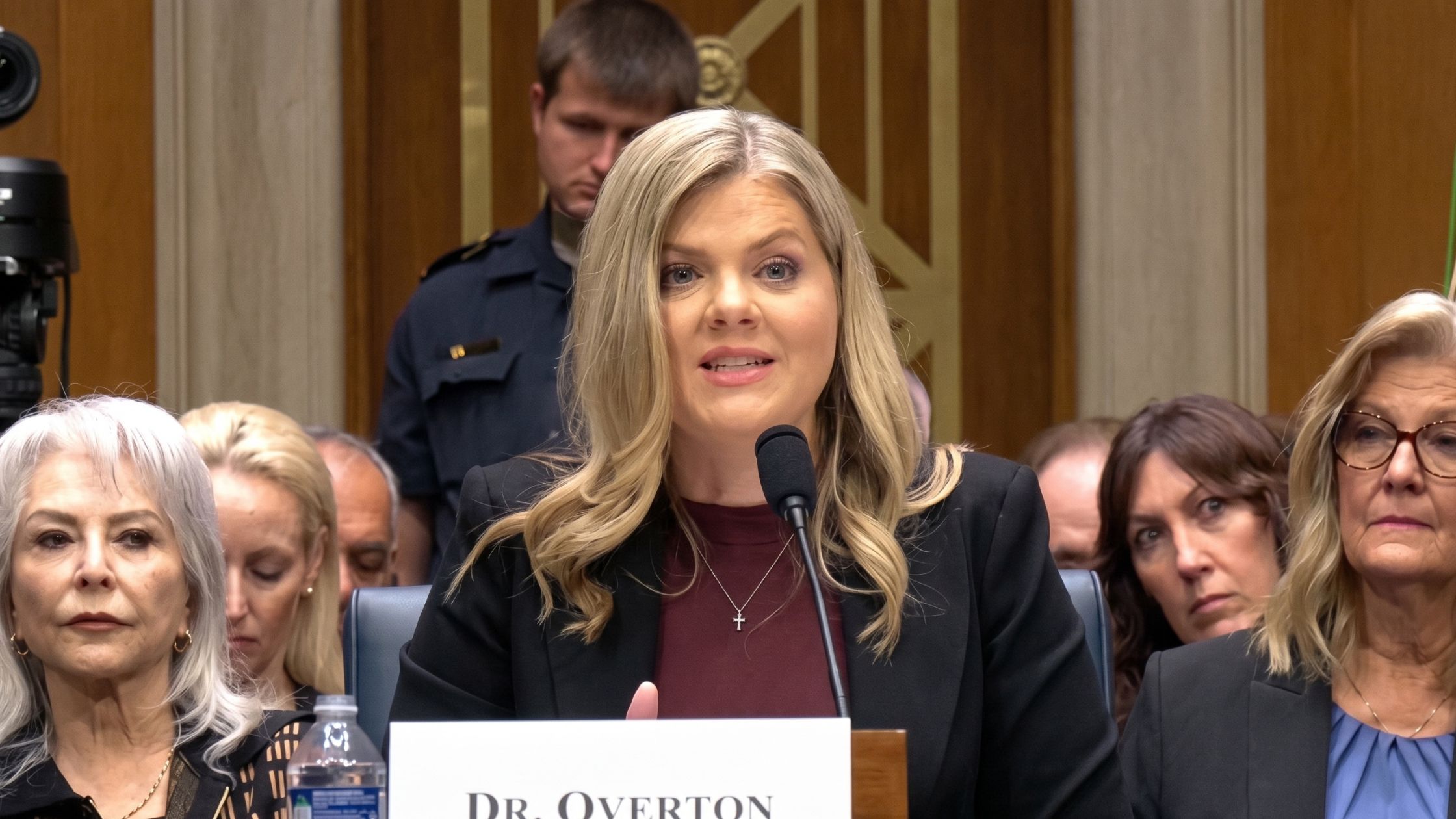
Thank you, Chairman Cassidy, Ranking Member Sanders and members of the Senate Health Committee. Thank you for the opportunity to appear before you today. It is an honor to be considered for the position of Commissioner of Food and Drugs. I would like to thank President Trump and Secretary Kennedy for entrusting me with this opportunity to serve the country. I am deeply honored. First and foremost, I thank my Lord and Savior Jesus Christ for every blessing and opportunity in my life. Matthew 5:16 and Colossians 3:23 have been my life verses since I was a child, and I sincerely hope to exemplify these principles today and always. I want to recognize and honor my incredible family, my parents, Bill and Natalie Overton behind me, my sister and her family, Alyssa, Nathan and Chloe Joy Hatala, two years old at the end there. Every part of my success belongs to them.
(10:27)
Their lives of service, especially my dad's service as a pastor and my mom's as a nurse is my inspiration. I would also like to thank the abundance of friends, mentors, colleagues who have supported me, many from the Four Corners area and traveled here to be with us today. Throughout my life and career, I have experienced seemingly intractable health system failures firsthand, and it has been my motivation to be part of the solution. From seeing disparate health outcomes in the tribal community surrounding my hometown of Gallup, New Mexico, to two years of surgical training in inner city Baltimore, to the White House during COVID and to my own personal health journey, managing adult onset type one diabetes. I have seen system failures detract from the ability of patients to benefit from the world leading innovation and medical discoveries available in America. These experiences culminated in a medical degree from the University of New Mexico, a doctorate of public health and clinical investigation from the Johns Hopkins Bloomberg School of Public Health, a White House fellowship, and board certification in general, public health and preventive medicine. I have served on the boards of the university and hospital of UNM. I contributed to writing clinical guidelines to address the role of surgical over-prescribing during the opioid crisis, and I served in key roles in the COVID response and testing and vaccine prioritization. If confirmed as Commissioner of Food and Drugs, I will immediately set my focus to restoring the primacy of American innovation while furthering the core missions of advancing national security, increasing access to affordable treatments and promoting public health. President Trump's direction for me in this role, should I be confirmed, is to go fast. Slow and prohibitive requirements for cutting edge therapies at the FDA means investment is increasingly flowing to China, who has found ways to do things faster and cheaper. As Chairman Cassidy highlighted in his recent report, China has surpassed the United States as a top venue for clinical trials. This should give pause to every American and to those who serve on their behalf.
(12:26)
When we lose this advantage, we lose our health security, and when we lose our health security, we lose everything. This problem is not partisan. We must reverse this trend. My message to the committee today is that time is certainly of the essence. We can protect America's global leadership in biotechnology, but we have to act fast. The FDA has begun work on this through Operation TrialBlazer. If I have the privilege of being confirmed, I will work with the dedicated career professionals to make sure every aspect of clinical trials and drug development is optimized. This will not only bring development back to the United States, it will bring cures to patients faster. If confirmed, I will work to ensure every talented person at the agency shares the goal of making the FDA the agency of the possible rather than the impossible. The recent rapid approval of a new treatment for pancreatic cancer is one example.
(13:19)
This should be the norm for the FDA so that all Americans get early access to the best care. It's important to remember that food is also a critical part of the Food and Drug Administration's name, and we must continue the revolutionary steps to improve food safety, quality and transparency. Finally, the FDA must remain at the front lines of promoting public health and safety from continuing to tackle the opioid crisis and the new dangers of synthetic 7-OH, to protecting children from illicit foreign vapes, containing dangerous chemicals, to safeguarding infant formula and ensuring robust food outbreak response systems, the FDA must remain vigilant and ready to execute. In closing, I am confident that I have the clinical research and policy background in this critical moment to drive real reform along with the proven ability to manage complex inter-agency processes to achieve meaningful outcomes for the American people.
(14:11)
The talented career scientists and regulators at the FDA deserve leadership who will empower them to tackle these issues head on for the purpose of securing a stronger America. If I have the privilege of being confirmed, I am committed to working with this committee and with all stakeholders to ensure FDA meets this generational opportunity to continue leading the world in innovation while furthering the core missions of advancing national security, increasing access to affordable treatments and promoting public health. Thank you for your consideration. I look forward to your questions.
Speaker 2 (14:40):
[inaudible 00:14:43]
Senator Cassidy (14:43):
Dr. Overton, I shall start. As I started to say earlier, please be unequivocal in your answers. As scripture says, "Let your yay be yay and your nay be nay." You were standing behind President Trump when he called the MMR vaccine potentially, "Quite lethal." Is the MMR vaccine safe and effective?
Dr. Overton (15:03):
Senator Cassidy, as a physician, I appreciated our conversations and thank you for doing this hearing so quickly and have had the privilege of taking care of patients and-
Senator Cassidy (15:11):
Yay and yay, and nay and nay.
Dr. Overton (15:11):
... share that. "Is the MMR vaccine lethal?" Is your question. The MMR vaccine is not lethal. It has been determined-
Senator Cassidy (15:18):
Is it safe and effective?
Dr. Overton (15:20):
Yes, Senator. The MMR vaccine is safe and effective.
Senator Cassidy (15:24):
So you disagree with the president on that?
Dr. Overton (15:27):
Senator, if confirmed as FDA commissioner, my role would be individual product determinations and what the law requires for statutory standards of safety and efficacy. The MMR vaccine is currently licensed and approved by the FDA. It is safe and effective and it is our best tool right now in the public health response to the measles outbreak. It is 97% effective in stopping transmission of the virus after two doses.
Senator Cassidy (15:49):
Are there any vaccines on the U.S. market right now which are unsafe?
Dr. Overton (15:55):
Senator, every vaccine on the U.S. market right now are safe and effective according to the FDA.
Senator Cassidy (16:00):
As FDA commissioner, what would you do if inaccurate information about the safety of an FDA approved vaccine was being communicated to the American people?
Dr. Overton (16:13):
Senator, thank you for the opportunity to address this. The role of the FDA commissioner is very clearly defined in statute and has requirements for individual product safety and efficacy determinations. If I'm confirmed as Commissioner of Food and Drugs, my commitment will be to make sure that Americans know the status of every product that is approved by the FDA that have met those requirements that are laid out as safe and effective.
Senator Cassidy (16:37):
But if someone is alleging something is not safe, when FDA has approved it as safe, what would be your role?
Dr. Overton (16:47):
Senator, I think right now my recommendation to the American people, as I sit before you as the nominee for the Commissioner of Food and Drugs, is that the MMR vaccine is safe and effective.
Senator Cassidy (16:56):
Except that, but I'm giving you a not so theoretical. When someone is saying things alleging that the FDA was wrong in approving a drug as safe, let's assume that that someone is your boss, what is your role?
Dr. Overton (17:14):
Thank you, Senator. I think the role of FDA commissioner, if confirmed, and what I would do in this role is to communicate and use my scientific training and my clinical background to describe what is currently known. And what is currently known is that the vaccines that have been approved by the FDA have met the standards for safety and efficacy. FDA has a robust post-market safety review system, and I would communicate that anytime that any product needs further safety review, that is appropriate for the FDA to do. Right now, every vaccine that is on the market has been determined to be safe and effective.
Senator Cassidy (17:50):
Thank you.
Dr. Overton (17:50):
There's ongoing review-
Senator Cassidy (17:51):
I'm sorry to interrupt. I just have just two minutes left.
Dr. Overton (17:54):
Yes, sir.
Senator Cassidy (17:55):
What role should the White House or Health and Human Services officials who are not part of the FDA play in deciding whether FDA should approve a product?
Dr. Overton (18:08):
Thank you, Senator Cassidy. If I'm confirmed as FDA commissioner, my role and my commitment would be to follow exactly the statutory standards for safety and efficacy review of every individual product. That role as a statute outlines is vested in the Commissioner of Food and Drugs. And so policy priorities can be set by the president and are set by the president. Individual product reviews and determination should be according to statute under the purview of the FDA would take the recommendations of the career experts who are reviewing that. Most individual product determination decisions are made at the career center level, and that is how the reliance on the expertise for each individual product is made and that is what is appropriate.
Senator Cassidy (18:53):
Let me now say what I said in my opening statement. The secretary gave me guarantees by extension, this committee, our Congress and the American people. He later backtracked on those. He said he had to because the president told him to do something different. If you give us... And that's your problem. That's your problem. You are trustworthy, it seems. Had other people with whom we though guarantees coming from the White House and the secretary would be kept, and they weren't. If the president asks you to do something that goes against those guarantees you give us today, what will you do?
Dr. Overton (19:33):
Yeah, Senator, thank you for the opportunity to address this directly. I've had the privilege of working for the president in the first term and again for a year and a half. What I know is that he is driven by outcomes and he wants the best possible solution for the American people.
Senator Cassidy (19:45):
I'm almost out of time. I'm out of time. That's not my question. If he asks you to do something which goes against the guarantee you've made to these American people through us, what will you do?
Dr. Overton (19:54):
Senator, I've had robust discussions with the president. I would give him my best advice and I would follow the statutory requirements for the role of FDA commissioner regarding individual product determinations for safety and efficacy. And that would be what would guide every decision if confirmed to this role.
Senator Cassidy (20:12):
I'm out of time. Senator Sanders.
Senator Sanders (20:17):
Thank you, Mr. Chairman, and thank you for your line of questioning. I think Dr. Overton, the concerns that Senator Cassidy raised are concerns that many of us have. We have a president who, in my view, does not particularly believe in the rule of law, wants to get things done. And if people do not obey his wishes, he deals with that. And what I think the committee wants to know is whether you are going to have the courage to stand up to somebody who lies all of the time, who does not particularly believe in science. So that is the question. Will you have the courage to stand up to President Trump?
Dr. Overton (21:03):
Senator Sanders, thank you for the opportunity to be here today and thank you for your opening comments on the high cost of prescription drug prices and the urgency that we have to address those actions.
Senator Sanders (21:12):
Answer the question, please, doctor.
Dr. Overton (21:14):
Yes. And to your question of... Senator, I have worked for the president for a long time now and earned his trust because I have been part of robust discussions to bring him the best advice. And my job would be to follow the law and execute what is required of the Commissioner of Food and Drugs, which is individual product decisions based on safety and efficacy standards.
Senator Sanders (21:33):
All right. Let me ask you a question a little bit beyond your job description, for the job you're applying for here. The United States is the only major country on earth not to guarantee healthcare to all people as a human right. There are studies that tens of thousands of people in this country die because they don't get to a doctor when they should because they can't afford it. Do you happen to believe that healthcare is a human right that should be available to every man, woman, and child in our country?
Dr. Overton (22:04):
Senator, thank you for the question. My experience as a clinician and the patients that I've taken care of from rural New Mexico to Johns Hopkins Hospital has been a privilege and having access to that healthcare is so important. The importance for us is to be able to deliver that healthcare and to execute the responsibilities that are vested from Congress into the agency-
Senator Sanders (22:28):
Doctor, you're not answering the question. It's not a complicated question. I live 50 miles away from the Canadian border. Somehow everybody in that country can go to a doctor. Everybody's covered. Throughout Europe, everybody is covered. We spend twice as much per capita on healthcare and we got 85 million who are uninsured or underinsured. Is healthcare a human right and you will work with us to make sure that every American has healthcare because it is a human right?
Dr. Overton (22:54):
Senator, it has been, in my privilege to be able to take care of patients and to make sure that they have access to the best care possible and to deliver that care. And if confirmed-
Senator Sanders (23:06):
I don't have a lot of time, doctor, but I'm gathering that you do not think that healthcare is a human right. Let me ask you this. President Trump has claimed in a State of Union address that he took prescription drugs from the highest price in the entire world to the lowest. Wow. The American people are so excited to know now that we pay the lowest prices in the world for prescription drugs. What do you think? Is President telling the truth? Do we pay the lowest prices in the world for prescription drugs? Do we pay the highest prices in the world?
Dr. Overton (23:40):
Senator, lowering drug costs is something that we share and there has been immense progress, especially on individual products. Right now, 89% of branded drugs have signed agreements to lower their prices and make that available directly to-
Senator Sanders (23:54):
Do we pay the lowest prices? The president said it. He's your boss. You just told us you're going to stand up to him. So he just said, "We pay the lowest prices in the world for prescription drugs." It's true or it's not true. Is it true?
Dr. Overton (24:07):
Senator, we have seen the-
Senator Sanders (24:09):
Is it true that we pay the lowest prices in the world for prescription drugs as President Trump has said?
Dr. Overton (24:16):
So Senator, the results that we have seen for the American people from the most favored nation policies have dropped prices. And right now, CPI says that for the first time in 60 years, prescription drug prices have gone down by 3%. That's-
Senator Sanders (24:29):
Yeah, which may have something to do with the legislation that we passed several years ago. Let me ask you this. As you are aware that we have an obesity epidemic in the United States, and since the 1970s, the situation has gotten so bad that one out of every five kids in America is now obese. More than 35 million Americans have type two diabetes, that's over 10% of our population. Earlier this year, this committee passed legislation to require strong warning labels on ultra processed food and to ban junk food ads targeted to kids. No ads on TV for junk food targeted to kids. Do you support that legislation?
Dr. Overton (25:15):
Senator, I support the goal of getting the best information to the American people and addressing the childhood obesity epidemic. It is terrible that only 20% of our youth are eligible for the military because of their health status. I support, like I said in my opening statement, increased food quality, transparency and safety, and that is very important-
Senator Sanders (25:35):
Should we ban TV ads? Should we ban TV ads that advertise junk food to kids, which is what the legislation here did?
Dr. Overton (25:43):
Senator, here today to talk about my nomination for the Food and Drug Administration and appreciate the question. I know we're out of time, but happy to continue answering.
Senator Sanders (25:52):
Okay. Thank you very much.
Senator Collins (25:58):
Senator Cassidy has asked me to chair in his absence, so I'm very pleased to call upon myself for the questions here. Doctor, first of all, let me say that I enjoyed our in-depth discussion in my office. I still have a number of concerns that I want to raise with you today. One is actions that the FDA recently took concerning flavored nicotine products. As I explained to you, Senator Dick Durbin and I have worked for years on smoking related issues. When youth use the e-cigarettes, nearly 90% are choosing flavored products. Yet in August, the FDA authorized several-
Senator Collins (27:00):
I guess the FDA authorized several new flavored nicotine pouches and vapes. Including flavors like blueberry and mango and citrus and autumn spice, cappuccino and cool mint. These new approvals, in my judgment, jeopardize the recent progress that's been made in reducing the number of youth who use e-cigarettes and become addicted to nicotine. FDA justified these approvals by saying that these products give more options to adults. However, we know that the demographic really driving consumption of flavored vapes are young people. It's 90% are more likely to choose flavored products. The previous commissioner of the FDA strongly disagreed with this decision, but apparently was overruled. What is your position on FDA's approval of more flavored vaping products?
Dr. Overton (28:22):
Senator, thank you. And thank you for the amount of time in our discussion on type one diabetes and your leadership in that, that I've personally benefited from greatly. Thank you.
(28:32)
Specific to your question on flavored vapes, I would first like to propose that there is a hundred percent agreement from this administration that we must protect kids from illegal substances and from vapes and from flavored vapes. We saw some of that progress, President Trump signed Tobacco 21 into law last administration, and the drop now at the lowest amount of 5% is still too many. From a peak of 27% to 5%, still too many. So number one, we have to protect kids and we agree with that.
(29:02)
Number two, there is the regulation and the law on the books that the FDA has to abide by, which is looking at the standard of appropriate for the protection of the public health. That decision on flavored vapes was recommended by the careers because they believe that standard was met because so many adults are using flavors. Preferentially, the Journal of Harm Reduction lays out that those who quit smoking because of vapes used flavored vapes.
(29:27)
So this is a robust discussion, but I would want to work with you that if that standard is not appropriate, we should work on statutes to fix that because we have to protect kids number one. And the other big problem for the FDA is the flood of illicit vapes on the market. The FDA asked for more authority in its congressional justification this year to have more authority to better enforce against those products. And those are things I would hope to work with you on because we do agree on protecting kids.
Senator Collins (29:55):
Thank you. I think this was a terrible decision by FDA. I agree with the former commissioner that it should not have occurred.
(30:04)
I want to turn to a different issue, and that is how slow the FDA is despite Congress providing expedited pathways in approving drugs for rare diseases for which there are no options. And I think of ALS where there's very little that can be done. I think of ataxia. I think of Wolfram syndrome, pediatric syndrome. There are many. What will you do to help expedite the approval of promising drugs that have been shown to be safe, but where it's very difficult to do large clinical trials because there are so few people who have these rare diseases. But right now they have nothing to help them.
Dr. Overton (31:09):
Yes. Senator, this is a key priority and something that under the new leadership of the Center directors at the FDA, they have started to make progress. There are good policies underway, for example, the plausible mechanisms pathway, but not just NF1. We should think about NF5, NF20, and those cases where having the flexibility and the risk-based review determinations for those situations like we talked about, where people are willing to take more risk in these scenarios should be formalized into policy. As Chairman Cassidy highlighted the review lottery in cases like this. It's very important that there is best practices across reviewers that is coming from the direction of the Center leaders who right now are saying frontier science doesn't matter if it's not accessible to patients.
(31:54)
So I would want to use all of the statutory authority we can right now at the FDA if I'm confirmed to expedite that and where there are any barriers to come to you and work with you on ways to further provide that clarity. But I believe there's a lot we can do right now to help these patients.
Senator Collins (32:09):
Thank you. Senator Murray.
Senator Patty Murray (32:12):
Thank you very much.
(32:14)
Dr. Overton, do you agree with the FDA approval of mifepristone, which means the agency deems it safe and effective?
Dr. Overton (32:24):
Senator, thank you for the question. I look forward to getting to meet with you next week and talk in more detail. Mifepristone was approved by the FDA as having met its safety and efficacy standard.
Senator Patty Murray (32:37):
No, my question ... I know what the FDA has done. I asked if you agree with the FDA that it's safe and effective.
Dr. Overton (32:45):
Senator, as the nominee for the Commissioner of Food and Drugs, my job would be to abide by the statutory standards set out for safety and efficacy. And when a product is before the agency and has met those standards, I would agree with the statutory standards of safety and efficacy have been met.
Senator Patty Murray (33:03):
So you do believe it's safe?
Dr. Overton (33:06):
I know that it has met the safety and efficacy standard according to the FDA review.
Senator Patty Murray (33:15):
Well, despite what FDA says and despite what decades of science says, you actually published an article three years ago that incorrectly described medication abortion as dangerous to women. The fact that you would blatantly contradict decades of high quality scientific evidence in millions of patients use it is alarming to me. So that's why I asked you that question. You have stated in an article that you believe it is dangerous. So I asked you, do you believe it is safe today? And you're not answering my question.
Dr. Overton (33:45):
Senator, thank you for the opportunity to discuss this directly. I have always been driven by data and information and used the clinical training and the research training that I have in everything that I have written. Specific to that publication in '23 was at a time after a change was made at the FDA and how that medication was accessed. And I think it's very important for the FDA in its post-market review, like with every medication, especially those medications that have a risk evaluation mitigation strategy for it to be reviewed.
Senator Patty Murray (34:19):
I hear you changing your answer and now saying you don't think it is safe. The FDA agreed that this was safe and effective 26 years ago. And from where I come from, I really believe that our FDA needs people who will put science first. The FDA has said this is safe. And we need somebody in FDA who's going to be there to make sure that this is done by science-based. So that's where I come from.
(34:43)
Let me change really quickly. I'm almost out of time. As you know, this summer, Americans have had to deal with lettuce that causes explosive diarrhea. There's been an outbreak recalling millions of eggs. Frozen blueberries were contaminated with E. Coli, multiple recalls of infant formula. And the list goes on. What happened this summer, it cannot happen again. And coincidentally, all of this happened after Trump and DOGE pushed out and fired more than 4,600 people at the FDA. And now the agency, I hear, is trying to scramble to rehire about 3,500 people. That is nearly a 17% reduction in just a year and a half for a workforce whose job it is to keep our food and our medicine safe. Can you tell us how many people currently work at the Human Foods Program at FDA right now?
Dr. Overton (35:36):
Senator, thank you for the question. Having not been at the agency right now, I don't know the exact staffing numbers of that Center. I know there are about 16,000 employees currently. And I know that the FDA, as publicly reported, is hiring to have the best people in the best positions to be able to deliver on the core mission. Food safety is one of those, and there are a lot of things that we can do and work together on [inaudible 00:36:02]-
Senator Patty Murray (36:02):
Yeah, let me just tell you, because this is really important. The office has approximately 1,700 employees, which is still 13% fewer than they had at the start of 2025. So that is deeply disturbing. So I want you to be aware of that and I want you to focus on that. And I wanted to ask you, are you currently aware which part of the FDA's human foods program monitors those kind of outbreaks and foodborne illnesses? Do you know what it's called?
Dr. Overton (36:32):
Within the Center of Human Foods-
Senator Patty Murray (36:33):
Well, I'll tell you-
Dr. Overton (36:34):
It's the Safety and Inspection Center, I believe.
Senator Patty Murray (36:36):
Well, it's the Coordinated Outbreak Risk and Evaluation Network. It's called the Core Network. I think that's really important that you focus on that and know that and make sure that it is fully staffed. It is absolutely, incredibly important to people's safety. And I think everyone right now is very concerned-
Dr. Overton (36:53):
Thank you, Senator.
Senator Patty Murray (36:53):
... about what's been happening, and I see a direct correlation to the reduction of staff that has been there. Finally, and I just have a few seconds left. Last year, the Trump administration falsely labeled birth control as abortion. Do you agree that, say, an IUD is an abortion patient?
Dr. Overton (37:13):
Senator, if I have the privilege of being confirmed, first off, I commit to working with you on the food safety pillars that are critically important. We did ask in the congressional justification for more foreign facility user fees to be able to have more of those inspections and specifically address the problems that were raised this year.
Senator Patty Murray (37:28):
I appreciate that, but I wanted to know if you agree that an IUD is an abortion patient.
Dr. Overton (37:33):
Senator, thank you for the question. If I'm confirmed as FDA commissioner, I'll be fully briefed on all their prior decisions and make determinations according to the standards of safety and efficacy.
Senator Patty Murray (37:43):
Well, I don't think you answered the question. Look, I think it is outrageous and should be deeply alarming to all Americans right now that the prospect of an FDA commissioner who doesn't know that birth control is not an abortion is deeply concerning to me. Thank you, Mr. Chairman.
Senator Tommy Tuberville (38:06):
Congratulations, Dr. Overton. Thanks for being here today. I'm sure my colleagues across the aisle will ask you a lot of questions whether you agree with President Trump or not. I know as a senator, sometimes I say things less artfully than I could. But I think focusing on soundbites misses the bigger picture about you. You've got the experience, the expertise to lead the FDA, even if some of your background may not seem like the traditional path to this position.
(38:37)
And I want to start with the issue today of illicit vapes. We need an FDA Center for the tobacco products that is efficient, predictable, and able to meet its statutory timelines. Dr. Overton, what steps would you take to improve the FDA's tobacco review process and provide manufacturers with more regulatory clarity?
Dr. Overton (39:04):
Thank you, Senator, and thank you for the great conversation that we had and for the encouragement there. I will just note for the committee that my background is very similar, in fact, to a former FDA commissioner who is known to have a very successful tenure and wrote an op-ed with another former commissioner in support of my nomination. So I'd be excited to bring the energy and the ability to solve these complex problems.
(39:25)
Illicit vapes is one of those problems that we need to solve. And I want to work with this committee to make sure that we are doing that in the right way. Number one, we have to protect kids as the first step. Number two, getting more approvals and ... Sorry, excuse me, more authorizations for products that have met the standards at the FDA is critical to being able to have a legal robust market.
(39:47)
Right now, part of the problem, and Senator Moody and I discussed this ... Hi, Senator. There was an immense backlog at the FDA when the Trump administration first came in. There was up to 27 million applications in PMTA. It's been immense work to streamline that. I think there was 310,000 applications that are pending right now or that were pending in May. They're down to about 100,000. There have been 48 products that were authorized for use.
(40:18)
And I think having that robust legal framework is critical in order to get legal approved market products to the people that use them for smoking cessation. While having the strongest protections available to keep them out of the hands of kids, which we all agree on. And being able to do proper enforcement with the other law enforcement agencies. DOJ, DHS all have a critical role. And if I'm confirmed, I would work with them to make sure the enforcement is just as strong as we work to fix the backlog that we inherited from the previous administration.
Senator Tommy Tuberville (40:50):
Do you support category specific product standards for ends of nicotine pouch products? And how would you approach developing those standards?
Dr. Overton (41:01):
Thank you, Senator. I think if I'm confirmed to the role, my first step would be getting a full and complete briefing from the Center for Tobacco Products on exactly that question. I think we do have to have regulatory clarity and certainty to be able to get products that are legal and are helping adults stop smoking. And do that in a way that is protecting kids with, again, appropriate input from this committee on how to best do that in accordance with the standard of appropriate for the protection of public health.
(41:31)
So there's streamlining reviews. There is working with the companies that have applications in front to make sure that they are submitting data and accurately assessing how to meet that standard. But I would want to get briefed fully by the Center if I'm confirmed.
Senator Tommy Tuberville (41:47):
Thank you. We also need to make sure legal tobacco products aren't being undercut by illicit and unauthorized products, including products coming from foreign manufacturers. How would you work with agencies like HSI and DOJ as well as state and local authorities to strengthen these policies?
Dr. Overton (42:07):
Yeah, Senator, thank you. That is something that is of critical importance for the agency. There was a request in the congressional proposal this year to have more authorities for better enforcement at the borders and better coordination with the other agencies on knowing what products are coming in. Often they are mislabeled, and we know they are targeted towards kids', video games and candies and other products. And so that inter-agency coordination and the experience that I bring from having run very big inter-agency processes right now would be used on day one to increase our abilities to enforce appropriately.
Senator Tommy Tuberville (42:48):
Thank you. Thank you, Mr. Chairman.
Senator Cassidy (42:49):
Thank you. Let me also correct something for the record. Chairman, excuse me, Senator Murray said that mifepristone been shown to be safe and effective. And I will point out it was approved under more stringent safety requirements than are currently in effect, and a post-market safety study is ongoing. I'll let my own remarks as regards the absence of ultrasounds to establish gestational age and ectopic pregnancy as in of themselves indicating what I mean.
(43:20)
Next, we'll go to Senator Murphy.
Senator Chris Murphy (43:24):
Thank you very much, Mr. Chairman. Listen, I share the chairman's concern about this dramatic reduction in faith in the FDA that has happened over the past year. And the reason is simple. People don't believe that science has anything to do with some of the decision making and that it's all about politics.
(43:41)
Here's an example. On April 30th, it's a Thursday afternoon, Reynolds, one of the biggest tobacco companies in the country, makes an $8 million donation to the president. Two days later on Saturday, because of that donation, they have lunch with the president and they tell him that they want a change in FDA rules, especially regarding flavored vapes. The president calls the FDA commissioner, he calls the secretary of HHS. And three days later on Tuesday, new guidance is issued that paves the way to the sale of flavored vapes.
(44:16)
That is not a coincidence, right? That is the definition of political interference in FDA decision making. Thursday, a donation is made. Saturday, a meeting with the president. The same day, a call to the FDA commissioner. And three days later, three days later, the FDA changes the rules. Extraordinary. And four days after that, the FDA commissioner resigns either in protest or because he was fired because of his disagreement with this decision.
(44:48)
I heard you say that your commitment is to science being the guiding marker for decisions made at FDA. So let me talk to you about one of the ways that science has been undermined. And that is the eradication of the advisory board system. So since President Trump came into office, 27% of all advisory boards have been eliminated, and of those that remain, there have been 72% fewer meetings. The Tobacco Advisory Board had no specific meeting and no vote on this specific policy. Because if they had had a vote, they would've voted against this. And that's in part why the FDA commissioner resigned. And so, so long as these advisory boards, which are authorized by Congress, are attacked, eliminated, and restricted from meeting, you are not going to rebound the public's support for independent FDA decision making.
(45:50)
So let me ask you specifically, will you commit to restarting the advisory boards that have been disbanded under this president?
Dr. Overton (46:04):
Senator, thank you for the question and hope to have the opportunity to meet and discuss things in more detail. I think specific to your question, I will note that since the FDA has had a number of advisory committees meeting, and I think they are extremely valuable from everything that I know about the FDA. If I'm confirmed as commissioner, they are a critical part of the role of the FDA.
Senator Chris Murphy (46:28):
Okay, I get it. But you've done a pretty good job of avoiding answering questions so far. So will you commit ... It's yes or no. Will you commit to restarting the committees that have been disbanded?
Dr. Overton (46:37):
Senator, if I'm confirmed as FDA commissioner, advisory committees will meet at the FDA. I have to look at specifically all of the ones that might be disbanded to what you're asking. But the ones that I'm familiar with, like the vaccine related biologic product advisory committee has been meeting, they've been making recommendations. Those recommendations have been used as normal process, and I would continue that direction. It's critical to get their input.
Senator Chris Murphy (47:00):
Will you at least commit to ceasing the campaign of disbanding committees? Will you keep the committees that exist today? Or are you open to shutting down more advisory committees?
Dr. Overton (47:16):
Senator, if I'm confirmed as FDA commissioner, advisory committees will be a critical part.
Senator Chris Murphy (47:21):
Can you commit to us that you will not shut down any additional advisory committees?
Dr. Overton (47:25):
Senator, my goal would be to not shut down any advisory committees, but to look at all of them to make sure they're fulfilling their highest purpose, getting the best experts on, providing recommendations. They are a key part of the administrative record of the FDA, and the FDA does rely on that. So yes, that would be a huge part of my role of confirmed.
Senator Chris Murphy (47:45):
I think it's careful wording that your goal will be to not shut down advisory committees. That's not a commitment.
(47:51)
Finally, do you see anything wrong with the chain of events that I just articulated for you? I mean, that's an extraordinary story. An $8 million donation, two days later, a meeting of those donors with the president, an immediate phone call to the FDA to change the rules. Four days later, the rules are changed, and four days after that, the FDA commissioner resigns. Do you have any opinion as to whether that's the way that you want the FDA to work?
Dr. Overton (48:23):
Senator, I reject the framing of that question. I will say, having worked for the president for a year and a half in this role, I know that he is committed to the best possible outcomes for Americans. And he wants his team to ensure that that is what is being delivered.
Senator Chris Murphy (48:37):
So you don't see any connection between the donation, the president's meeting, and four days later, the standards being changed?
Dr. Overton (48:48):
Mr. Chair. Senator, again, I reject the framing of that question. I think the president is aware that adults are using vapes to quit smoking, and that has been his direction, is to get the best outcome for the American people in every decision that is made. If I'm confirmed as commissioner, that will be my commitment.
Senator Cassidy (49:07):
Okay. Senator Moody.
Senator Ashley Moody (49:11):
Thank you, Chairman Cassidy. Dr. Overton, thank you for joining us. And to your family and friends that are here to support you, sometimes these hearings are harder on them, so thank you for being here with our nominee.
(49:24)
We had a good meeting, a long meeting, and I appreciate you stepping up to take on this important position. I think we are at a time when Americans are becoming more conscious of their health, and I wouldn't be surprised if Americans across the country are watching this hearing right now that probably thought five years ago, they would never be watching a Senate confirmation hearing. So I think you come in at a very important time, and we expect high performance from whoever takes on this role.
(49:56)
We are also in the era of drug discovery and pharmaceutical innovation, and you will play a key role in all of that. And I want to ask you a few questions in a moment about some right to try laws, but I want to first follow up, and I didn't want to focus on this too much. But a lot of my colleagues have been talking about something that's been very important to me as a mother, of a kid still in school, kids watching young people as Attorney General become more and more addicted to vapes. A lot of these coming in illegally from foreign countries, especially China, we don't know what is in them. In fact, a large percentage of our market in vaping, I would say 85% of the US market of vapes, illicit nicotine products are illegally smuggled in from China. We know that they're specifically designed to be attractive to kids, and we know this because they often have games on them. It's not hard to tell who they're trying to market to.
(51:07)
So will you commit ... And I know you've answered some questions and a lot of my colleagues, and I'm glad because this was one of the first questions I asked at the last hearing for the same position, will you commit to targeting illegal Chinese vapes for strong regulatory action?
Dr. Overton (51:26):
Senator, thank you for the question. Yes, I will commit to ensuring that the enforcement ... And that FDA is working closely with its other law enforcement agencies to ensure that we are enforcing the law and protecting against illegal vapes.
Senator Ashley Moody (51:40):
Okay, so you're sitting closely with some of the agencies that do seizures and we're trying to make sure we give them more power to do that. But within your power at the FDA, will you commit to examining regulations currently in place and making sure that we are modifying them as necessary to prohibit, crack down on illicit Chinese vapes?
Dr. Overton (52:00):
Yes. If I'm confirming this role, that would be a top priority. It's a critical part of the pillars in order to ensure that we are protecting kids. We are getting legal products to the adults that are using them to stop smoking. And we are cracking down on illicit products that are affecting children especially, but should not be on our market. So yes, that would be a priority.
Senator Ashley Moody (52:18):
Is it your opinion right now that as the regs are set up, that if someone files an application that is a vape product, is the application on file enough to allow the current sale of the product?
Dr. Overton (52:34):
Thank you, Senator. This question, in context of the market that exists right now where there are products that adults are using to stop smoking, it is critical to fix that pipeline and have regulations and laws that fix that.
Senator Ashley Moody (52:49):
That's not my question, though. Right now, if someone files an application and it's pending with you, can they continue to sell even though it hasn't been approved?
Dr. Overton (52:57):
Senator, I believe as the guidance is currently written, there is a low risk for products that have a complete application. It can't be just one note, like the 27 million that came in and 26 million were kicked out because they were not even appropriate-
Senator Ashley Moody (53:11):
So, that's a yes.
Dr. Overton (53:13):
... application to the FDA. So they should have-
Senator Ashley Moody (53:14):
That's a yes. If someone files an application, they can sell, right?
Dr. Overton (53:18):
I think we have to fix. My commitment is we have to fix [inaudible 00:53:22]-
Senator Ashley Moody (53:21):
I'm just trying to find out what the law is. The law is a yes. I'll get to the next question, right? If that's a yes.
Dr. Overton (53:25):
Yeah.
Senator Ashley Moody (53:26):
Because I just think it's important that everybody understands that. Right now, we had millions that were pending, right? And so presumably they could have sold until we kicked them out. Which is why bringing that down was so important. Because you had millions and millions just filed, no idea what's in them, no idea where they come from, no idea what they contain. But we had regs that allowed them to be sold, right?
Dr. Overton (53:46):
Yes, that's right.
Senator Ashley Moody (53:47):
So you've kicked it down now to a couple hundred thousand. Efficiency, I'm hearing, is top of mind for many of my colleagues. And now you're seeing why efficiency is so important-
Dr. Overton (53:55):
Yes.
Senator Ashley Moody (53:56):
... because you're allowing these things to be sold and we don't know what's in them, right? So do you commit to me to-
Senator Ashley Moody (54:00):
... in them, right? So do you commit to me to not only addressing that regulation, if that has indeed allowed products that are harmful to be on the market, do you commit to addressing that if necessary?
Dr. Overton (54:13):
Yes, Senator, I commit to addressing that to find the right solution for this problem. It's critically important.
Senator Ashley Moody (54:18):
Thank you so much.
Dr. Overton (54:19):
Thank you.
Chair Bill Cassidy (54:21):
Senator Baldwin with an apology because she was supposed to go before Senator Murphy, and so I apologize.
Senator Collins (54:26):
Thank you, Mr. Chairman. Dr. Overton, the FDA commissioner should make sure that products on the grocery shelf are labeled accurately, including products in the dairy aisle. I have asked past FDA commissioners to take a common sense approach laid out by my bipartisan Dairy Pride Act. And so far they have failed utterly to do the job. If confirmed, will you rescind FDA's current guidance and enforce existing standards of identity to stop imitation products from using dairy names?
Dr. Overton (55:16):
Thank you, Senator. And I enjoyed our conversation and this topic in particular and your passion, your leadership on it. And I think it is critically important that Americans have transparency in their labels. As we discussed, this is something I would absolutely commit to going, and looking at, and to figuring out the right policy solution so that the guidance from the agency has accurate, transparent information for Americans. So you'd absolutely have my commitment to go, and to look at that, and to work with you on getting that right. It is important that Americans know what is in their food and the standards of identity are a key tool to that.
Senator Collins (55:50):
Thank you. Mifepristone has been FDA approved for nearly 25 years. More than 100 peer reviewed robust clinical studies have confirmed its safety. 99% of patients who took the abortion pill had no complications. FDA's update to the mifepristone risk evaluation and mitigation strategy, otherwise known as REMS, and product label in 2016, 2021, and 2023 all reaffirmed the drug's safety and improved its accessibility for the American people. For each update, the drug went through rigorous scientific review and it's been proven to be even safer than many low risk drugs prescribed for other purposes. Dr. Overton, do you believe mifepristone is safe and effective?
Dr. Overton (56:53):
Senator, thank you for the question and opportunity to discuss this. The mifepristone has been approved by the FDA with the appropriate risk evaluation mitigation strategies. So it has met the safety and efficacy determinations of the FDA for those standards. The REMS did change as you outlined, and the current safety review that is happening at the FDA is taking an internal study and look at the safety after the last REM change.
Senator Collins (57:25):
So you can't answer the question, Dr. Overton, do you believe mifepristone is safe and effective?
Dr. Overton (57:32):
Senator, according to FDA standards, the drug is safe and effective-
Senator Collins (57:37):
Thank you.
Dr. Overton (57:38):
... as labeled today with the appropriate risk evaluation mitigation strategy. But on the-
Senator Collins (57:44):
That leads me to my next question. Do you believe the label for mifepristone needs to be changed, yes or no?
Dr. Overton (57:52):
Senator, I can't prejudge the determination of a safety review that is currently ongoing.
Senator Collins (57:59):
The former FDA commissioner used his position at the agency to proactively request that the drug companies submit new applications to change the label for acetaminophen, also known as Tylenol. This was based on the administration's belief that Tylenol may cause autism, something that has no scientific backing. If confirmed, would you use your position to pressure any company to change their label, yes or no?
Dr. Overton (58:32):
Senator, if I'm confirmed as commissioner of food and drugs, I will be guided by the science and the best evidence that is available, and ensure that labels accurately reflect what is known about a medication.
Senator Collins (58:46):
I haven't been encouraged by what I've seen, but I urge you to indeed follow the well established science on safety and efficacy of mifepristone. The FDA cannot be basing its decisions on political whims of any secretary, including Secretary Kennedy.
(59:07)
I want to go back to the topic of flavored vapes and youth tobacco use. In 2019 at Children's Hospital of Wisconsin, they found the first cases of what was then a mysterious illness linked to vaping. Since then, I've urged the FDA to take stronger action against e-cigarette companies that use tricks to attract children. One reason these products are so popular is because they come in sweet, trendy flavors like root beer float or cotton candy. In fact, a recent study showed that 95% of Wisconsin middle schoolers said they wouldn't use an e-cigarette if it didn't have a flavor. This is why I was deeply concerned to learn earlier this year that the FDA approved two more of these popular vape flavors. Dr. Overton, are you aware that flavored vapes are very popular with teens?
Dr. Overton (01:00:15):
Senator, thank you. And I agree that it is critical and a core priority for us to protect kids from these products. We should not have nicotine in the hands of kids. I am aware of data on flavored vapes and their usages.
Senator Collins (01:00:29):
Okay. So do you believe that this information about flavored vapes being popular should be considered in future approvals?
Chair Bill Cassidy (01:00:40):
Since I was gathering wool and it's gone minute over, I'll ask just to wrap that up and do that for a QFR, please.
Senator Collins (01:00:44):
All right. I will submit that as a question for the record.
Dr. Overton (01:00:47):
Thank you, Senator.
Senator Collins (01:00:48):
Thank you, Dr. Overton.
Dr. Overton (01:00:49):
Thank you.
Chair Bill Cassidy (01:00:49):
Senator Banks.
Senator Jim Banks (01:00:50):
Thank you, Mr. Chairman. Dr. Overton, you agree that China is dominating clinical drug trials, which is concerning because often the standards in those trials are far less safe and effective there than how they are applied in the United States. If confirmed, what will you do to make inspections of clinical trials more safe and effective in China and other countries and make sure that good clinical practice is always being followed?
Dr. Overton (01:01:18):
Yeah. Thank you, Senator. This is a core priority. If I'm confirmed, this is something that we have to address. We have seen progress from the agency recently. They were acting directors at the time, now many of them permanent. The agency leadership who published together a document saying, "All data must have good clinical practices," it was an initial notification that the FDA will be requiring that.
(01:01:41)
If I'm confirmed, going in and making sure that policy is as strong as it can be, enforceable, and communicated well so that our companies, and ultimately our goal is that these products should be developed and manufactured here in America. We want to make it easier for that to happen and we want to be very strict in places that are not doing that right now and are currently stealing away much of our biotechnology.
Senator Jim Banks (01:02:02):
You agree that we're not doing nearly enough right now, but on your watch, we're going to make it a top priority?
Dr. Overton (01:02:07):
Senator, I think there is a lot more to do and I'd be committed to doing that. Absolutely.
Senator Jim Banks (01:02:11):
Under Dr. Makary's leadership, the FDA gave conflicting answers about mifepristone's safety study and reinstating the in-person dispensing requirement. I'm disappointed that the FDA has removed so many guardrails from this dangerous drug, which carries the strongest black box warning. Can you tell us when that safety study will be completed and will you commit to accelerating the safety study in the interest of women's safety?
Dr. Overton (01:02:40):
Thank you, Senator Banks. If I have the privilege of being confirmed, this will be something that would immediately be on my desk. As I understand, the FDA has an update due to the court on October 7th of the process that it is in, and it is a process update. Again, this is the Louisiana case that the FDA must owe an update. So I'm not currently involved in the details of the study, but if I'm confirmed, I would immediately get briefed, and be updated on the process, and be able to give better answers on the estimated timelines of when that review will be completed.
(01:03:13)
The commitment would be that study has to be done in the most durable, scientific way possible and the results communicated transparently. We'll note it is not just the Louisiana court case that is waiting for that update to the court. There's another case from Hawaii that has asked the FDA to remove the REMS altogether, and they are also looking for an update from the safety study.
(01:03:36)
So if I'm confirmed as commissioner, my job would be to use all of the clinical and the research training that I have to make sure that that study is well designed, the analysis is appropriate, it's adjusted appropriately, and the results can be transparently shared so that all Americans have an opportunity to know what exactly is in those findings.
Senator Jim Banks (01:03:57):
As you know, the FDA commissioner has investigatory authority. Is it in the public interest to investigate companies that dispense abortion drugs and mislead women about their risk?
Dr. Overton (01:04:10):
Thank you, Senator. I think every drug that has been approved by the FDA has robust post-market review and enforcement. If there are issues identified, and especially when there is a REMS on a medication, the manufacturers have to abide by the law. This committee published a report recently that highlighted some potential concerns from those manufacturers in regards to meeting the current REMS not related to the ongoing safety study. So if I'm confirmed as commissioner, I would be committed to making sure that every company is following the law regarding the requirements, especially when a drug necessitates a REMS on the medication.
Senator Jim Banks (01:04:47):
I want to work with you on reforming the GRAS standard as well. The mandatory ingredient notification rule that Secretary Kennedy announced last month was a big step forward. Does the FDA have enough resources to do all the ingredient safety evaluations and how can Congress help you provide better and more resources?
Dr. Overton (01:05:07):
Thank you, Senator. To my understanding, the agency would need more resources in its humans foods program to properly be able to do all of those mandatory notifications. I know there are proposals in Congress. There are some that I believe the FDA has given technical feedback to work on this problem together, and I think it is critically important that we get it right. The FDA has the proper authority-
Senator Jim Banks (01:05:29):
So you'll get back with us on what else we need.
Dr. Overton (01:05:30):
... and resources.
Senator Jim Banks (01:05:31):
Last question. Several states have passed their own food ingredient bans and labeling requirements. Do you think many states have adequate personnel and expertise to review food ingredients and determine safety, which has traditionally been the FDA's job?
Dr. Overton (01:05:47):
Thank you, Senator. I think there has been a lot of progress in the states. I think it is important that we have ... Mr. Chair, if I may answer. I think it is very important that when certain thresholds are met across states, there are times that it is appropriate to consider a national standard, a strong national standard to have uniformity. Historically across the FDA and EPA, there have been cases when there is kind of a threshold met that a number of states have done something on an issue that it is appropriate then for the federal regulatory body to look at having a strong national standard.
Senator Jim Banks (01:06:20):
Thank you.
Dr. Overton (01:06:21):
Thank you.
Chair Bill Cassidy (01:06:22):
Senator Hassan.
Senator Maggie Hassan (01:06:24):
Well, thank you, Chair Cassidy, and I thank you and the ranking member for this hearing. Congratulations, Dr. Overton, to you and your family, and thank you for your willingness to serve your country. I just want to start by level setting a little bit here. Mifepristone safety studies show