Bailiff (00:02):
This court is now in session. You may be seated.
Speaker 1 (00:03):
Good morning, Your Honor, may I proceed?
William F. Sullivan (00:06):
Yes, please.
Speaker 1 (00:08):
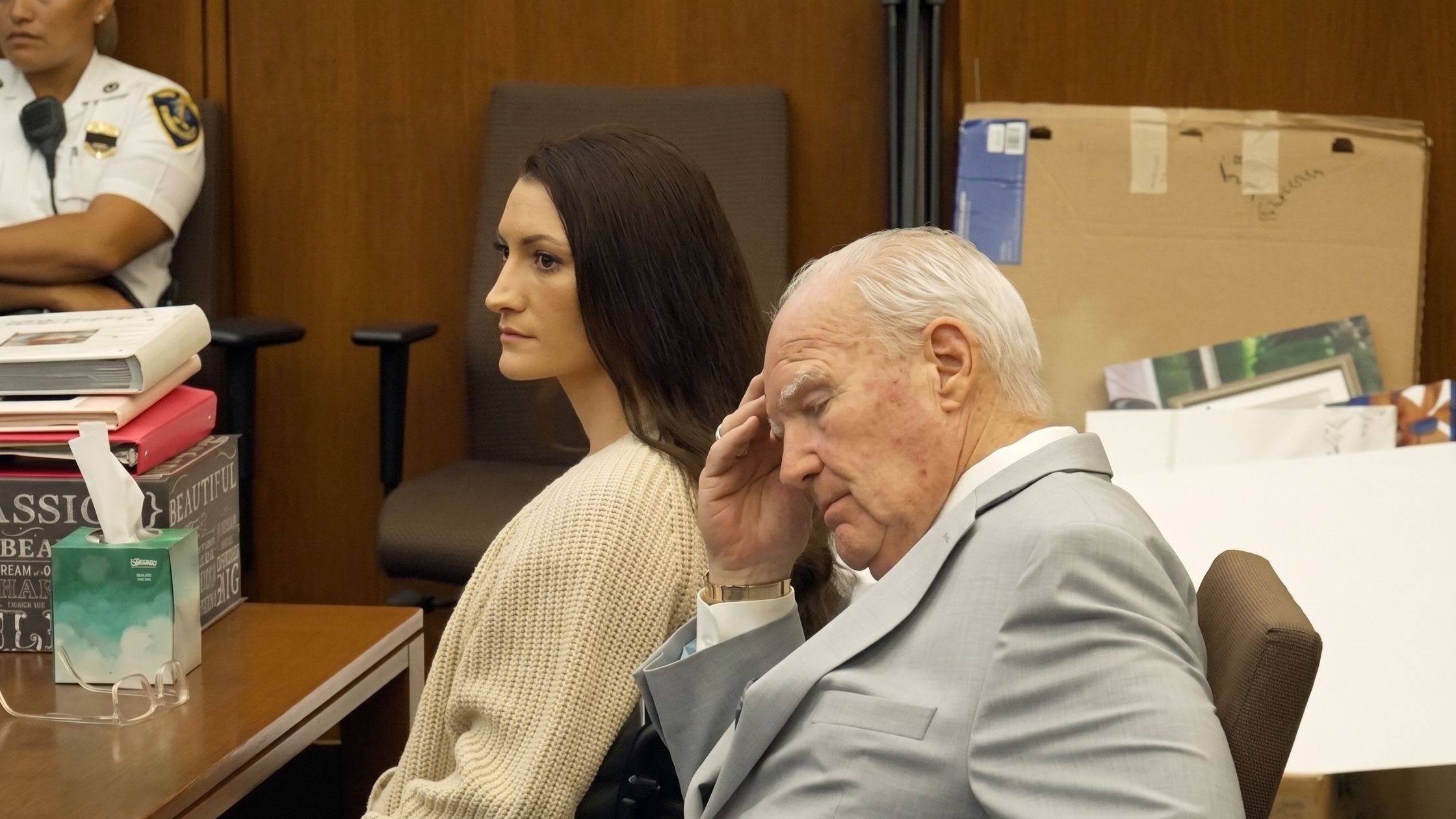
[inaudible 00:00:08], today we have the matter of Commonwealth versus Lindsay Clancy. Ms. Clancy is present. She is represented by Attorney Kevin Reddington. The Commonwealth is represented by Assistant District Attorney Jennifer Sprague and Assistant District Attorney Shanan Buckingham.
William F. Sullivan (00:19):
All right. Good morning, everyone. Good morning, Counsel. Good morning, Ms. Clancy.
Speaker 2 (00:26):
Morning, Your Honor.
William F. Sullivan (00:26):
All right. Before we get going, can I see Counsel sidebar? All right. We're going to be in a short recess and we're going to bring the jury back in and we'll call the next witness. Okay?
Bailiff (00:55):
Court, all rise. This court is back in session. Please, be seated.
Speaker 1 (01:24):
Your Honor, for the purpose of [inaudible 00:01:31].
William F. Sullivan (01:30):
All right. Counsel, we ready for the jury?
Speaker 2 (01:32):
Yes.
Kevin Reddington (01:32):
Yes, Your Honor. [inaudible 00:01:39]
William F. Sullivan (01:32):
All right. [inaudible 00:01:42]
Bailiff (02:53):
Court, all rise, please.
(02:53)
Hey, hey, hey. All persons having anything to do before the honorable William Sullivan, Justice of the Superior Court, now sitting in Plymouth within Commonwealth, draw near and give your attendance and you shall be heard. God save the Commonwealth of Massachusetts. Court is now in session. Please, be seated.
Speaker 1 (03:08):
Good morning, Your Honor. May I have a seat?
William F. Sullivan (03:08):
Yes, please.
Speaker 1 (03:09):
Your Honor, before the court today, we have the continuation of the jury trial in the matter of Commonwealth versus Lindsay Clancy. Ms. Clancy is present. She is represented by Attorney Kevin Reddington. The Commonwealth is represented by Assistant District Attorney Jennifer Sprague and Assistant District Attorney Shanan Buckingham.
William F. Sullivan (03:29):
All right. Thank you, Madam Clerk. Good morning, everyone. Nice to see you again. I know I just spoke to you probably about 10 minutes ago, but again, I want to ask you those questions, then we'll talk a little bit about what our schedule is today and for the rest of the week.
(03:45)
First question, has any member of the jury read, seen, heard, or overheard anything from any source about any aspect of this case that would affect your ability to be fair and impartial as a juror?
Jury (03:57):
[inaudible 00:04:00].
William F. Sullivan (03:59):
Next, is there any other serious matter or concern bearing on your service as a juror that anybody needs to bring to my attention at this time?
Jury (04:06):
[inaudible 00:04:07].
William F. Sullivan (04:07):
All right. Again, thank you for following those instructions. And then in regards to our schedule today, you're allowed to roll your eyes because I'm going to say we're going to have a short day today. All right? And that is, as I talked to you yesterday, about an issue that has nothing to do with any of the attorneys in this case. All right? It's just something we're going to work out and I anticipate it will be worked out, so that tomorrow you should count on a lengthier day. All right?
(04:41)
I've talked to Counsel earlier this morning in regards to where we are in regards to the schedule and the timeline. We are still, if not on schedule, still ahead of schedule. All right? And this delay that we may have a little bit this afternoon won't affect that. All right? I just wanted to let you know that I appreciate it. I know you came in here this morning. It's going to be a short day, but also gear up for a longer day tomorrow.
(05:12)
The other thing is, and I told you it's got nothing to do with any of the attorneys or the parties. You're not to speculate about what this might be. It's also you're not to hold it against either of the parties in regards to this. All right? If you're going to hold it against anybody, you can hold it against me. All right? With that, we're going to return now to the evidence in this case.
(05:36)
Attorney Reddington?
Kevin Reddington (05:38):
Thank you.
(05:39)
Sheila Cavanaugh, please. [inaudible 00:05:43].
Speaker 3 (06:40):
Good morning. In this case, Madam Clerk, raise your right hand, please.
Speaker 1 (06:42):
Do you solemnly swear that the testimony and the evidence you shall give to the court and the jury in the matter now pending shall between the commonwealth and the jury, shall be the whole truth, and nothing but the truth, so help you God?
Sheila Cavanaugh (06:51):
Yes.
Speaker 1 (06:52):
Thank you. You may have a seat.
Speaker 3 (06:53):
Just watch your step right there.
William F. Sullivan (06:56):
All right. Well, good morning.
Sheila Cavanaugh (06:57):
Good morning, Your Honor.
William F. Sullivan (06:59):
All right. I just ask you to speak into that microphone and keep your voice up so the jury can hear you.
(07:04)
Attorney Reddington.
Kevin Reddington (07:06):
Thank you. Good morning. Can you tell us your name and spell your last name, please?
Sheila Cavanaugh (07:11):
My name is Sheila Cavanaugh. C-A-V-A-N-A-U-G-H.
Kevin Reddington (07:21):
What town do you live in?
Sheila Cavanaugh (07:23):
I live in the town of Belmont, Massachusetts.
Kevin Reddington (07:29):
What are you doing for work now?
Sheila Cavanaugh (07:31):
I am a board-certified chaplain at Brigham and Women's Hospital in Boston.
Kevin Reddington (07:36):
I didn't know that there were board-certified chaplains. What does that mean?
Sheila Cavanaugh (07:40):
Well, to become board certified, you need minimally a master's degree in theology or divinity. You need to complete 1,600 hours of training post your master's degree. 1,200 of those hours occur in a clinical setting, and 400 of those hours are in a classroom setting where we sub-study various disciplines, psychology, sociology, philosophy, theology, and ethics. Beyond that training, we need to acquire 2,000 hours of additional clinical training before we can even apply for board certification. And we have to demonstrate mastery of 30 competencies before we go to a national board and they make the assessment. I also need an ecclesiastical endorsement. And in my case, that was from the Archdiocese of Boston from Cardinal Seán O'Malley.
Kevin Reddington (08:40):
Before you obtained the board certification in your education to allow you to be a chaplain, what did you do for work?
Sheila Cavanaugh (08:52):
Prior to becoming a chaplain, which is a second career for me, I was a senior vice president at Fidelity Investments in Boston.
Kevin Reddington (09:00):
How long were you senior VP at Fidelity?
Sheila Cavanaugh (09:03):
16 years.
Kevin Reddington (09:05):
Are you married?
Sheila Cavanaugh (09:06):
I am.
Kevin Reddington (09:07):
You have a family?
Sheila Cavanaugh (09:08):
I do. My husband and I are the parents of four adopted children. When I was pursuing my master's degree at Boston College, it was a three-year master's, but it took me five years because we adopted our fourth child while I was in graduate school. She was a 14-year-old girl from Bogotá, Columbia.
Kevin Reddington (09:29):
How long have you been working now as a chaplain at Brigham and Women's Hospital?
Sheila Cavanaugh (09:34):
Seven years.
Kevin Reddington (09:37):
In the course of your duties as a chaplain at Brigham and Women's Hospital, did circumstances bring you in contact with Lindsay Clancy?
Sheila Cavanaugh (09:48):
Yes, they did.
Kevin Reddington (09:49):
Can you tell the jurors what happened?
Sheila Cavanaugh (09:52):
I arrived on the morning of Wednesday, January 25th, 2023. I arrived at approximately 8:30 that morning because I was there to relieve the overnight chaplain who was carrying the pager. I was taking over the pager shift, which went from 9:00 to 1:00 PM, although I was working a full day. When I arrived that morning, she said to me, "Did you hear the news?" And I had-
Kevin Reddington (10:20):
Okay, so-
William F. Sullivan (10:22):
Sustained.
Sheila Cavanaugh (10:22):
Okay.
Kevin Reddington (10:25):
I'm going to object. So you can't say what someone told you. Okay? That's all hearsay.
Sheila Cavanaugh (10:29):
Oh, okay.
Kevin Reddington (10:30):
So I can say, as a result of the conversation with that person, what happened?
Sheila Cavanaugh (10:37):
I was summoned to the director of spiritual care's office and-
Kevin Reddington (10:41):
Did you have a conversation with her?
Sheila Cavanaugh (10:43):
I did.
Kevin Reddington (10:44):
All right. And as a result of that conversation, what did you do?
Sheila Cavanaugh (10:47):
I went to Unit 8C in the tower building of Brigham to meet with Lindsay Clancy.
Kevin Reddington (10:54):
What time of day was this?
Sheila Cavanaugh (10:57):
Roughly between 8:30 and 9:30 that morning.
Kevin Reddington (11:01):
When you went in to see Lindsay, what did you observe?
Sheila Cavanaugh (11:08):
Well, the unit itself was filled with law enforcement officers, both outside the doors of the unit, there was Brigham security. But the unit itself was flooded. There were people from Plymouth County, Boston City Police, Brigham Security, so I had to make my way through concentric circles of law enforcement to even get to the room. I was permitted to see Lindsay, although she could not speak at that time.
Kevin Reddington (11:39):
What was her condition that you observed?
Sheila Cavanaugh (11:42):
She was dressed in medical armor. She had tubes. She was intubated. She had bandages. She had a neck brace. She was just covered and layered in equipment that enabled her to breathe.
Kevin Reddington (12:03):
I'm showing you a...
Sheila Cavanaugh (12:00):
Meant that enabled her to breathe.
Kevin Reddington (12:03):
I'm showing you exhibit 121 and asking, this may be South Shore, or it could be Brigham and Women's, but is this indicative of what she appeared to be when you first saw her?
Sheila Cavanaugh (12:13):
That looks like it's from South Shore because when-
Kevin Reddington (12:15):
[inaudible 00:12:16].
Sheila Cavanaugh (12:16):
Yes.
Kevin Reddington (12:16):
Did she have the same-
Sheila Cavanaugh (12:18):
Similar.
Kevin Reddington (12:19):
Very similar.
Sheila Cavanaugh (12:21):
Very similar.
Kevin Reddington (12:22):
Like that?
Sheila Cavanaugh (12:23):
Yes. Very similar.
Kevin Reddington (12:24):
Did you see her again on another date?
Sheila Cavanaugh (12:28):
I did. I saw her the next day. Again, she could not speak. She was intubated as well. That was the first week that she was hospitalized.
Kevin Reddington (12:41):
When was the next time that you saw her?
Sheila Cavanaugh (12:43):
The next time I saw her was the following week. I have a calendar here of my visits. I saw her on Tuesday, January 31st, and she had been extubated at that point so she could speak.
Kevin Reddington (13:00):
So the tube had been removed, she was able to communicate, and that was on January 31st?
Sheila Cavanaugh (13:07):
I believe she was extubated the weekend of the 28th, but I didn't work that weekend, so I saw her on Tuesday the 31st.
Kevin Reddington (13:16):
All right. Tell the jurors what you observed and what, if any, conversation you had with Lindsay on the 31st. And let me ask you, how long had it been that they removed the tube?
Sheila Cavanaugh (13:31):
Perhaps a day or two.
Kevin Reddington (13:33):
A day or two. Okay. Tell the jurors what she said to you.
Sheila Cavanaugh (13:36):
She continued to look like the photograph you just saw. She was covered, tubes everywhere, the neck brace. Her emotional state was very neutral, a flat affect. But I remember vividly the first thing she said to me. Now she had heard me for a couple of days. We had been praying together. And so when I went in on Tuesday the 31st, she said to me as I held her hand to comfort her, "I am so glad my children are safe."
Kevin Reddington (14:12):
Was there any other conversation that you had with her?
Sheila Cavanaugh (14:17):
I replied theologically to Lindsay, and I said, "Lindsay, your children are safe. They're safe in heaven with God." And I held her hand throughout that conversation and we prayed for them.
Kevin Reddington (14:32):
Did she make any other statements to you?
Sheila Cavanaugh (14:36):
She did. She alluded to having heard a voice. And the voice, according to Lindsay, told her that if she did not follow the command, neither she nor her children would be safe.
Kevin Reddington (14:50):
And did she indicate whether it was a male voice, a female voice, loud, soft?
Sheila Cavanaugh (14:55):
She alluded to the fact that it was a male voice and it was persistent.
Kevin Reddington (15:01):
Any further conversation that you recall about that? Not about general things.
Sheila Cavanaugh (15:07):
That came up several times. I visited Lindsay minimally 14 times while she was hospitalized at the Brigham. And the voice conversation came up several times during several of our visits.
Kevin Reddington (15:21):
Now, after Lindsay was transferred or cleared to go from Brigham and Women's Hospital, did she go to another facility?
Sheila Cavanaugh (15:31):
She did. She went to Spaulding Rehabilitation Hospital.
Kevin Reddington (15:34):
And do you know when that was?
Sheila Cavanaugh (15:37):
That was roughly late February, perhaps around the 23rd.
Kevin Reddington (15:44):
And did you continue to see Lindsay at Spaulding Rehab?
Sheila Cavanaugh (15:48):
I did.
Kevin Reddington (15:49):
Do you know when she left Spaulding Rehab?
Sheila Cavanaugh (15:55):
In the late March, early April timeframe perhaps.
Kevin Reddington (16:00):
Okay. Now, Brigham and Women's Hospital and Spaulding Rehab are under the same umbrella of hospitals. Is that right?
Sheila Cavanaugh (16:09):
They are. So Brigham and Women's Hospital and Spaulding Rehab are under the Mass General Brigham Complex. So for me to visit Lindsay in Spaulding, I was still within the same hospital complex. And her psychiatrist at Spaulding, as well as the chaplains, advised me to continue-
Kevin Reddington (16:30):
No, no. You can't say what anybody told you. So when she was discharged from Spaulding Rehab, where did she go?
Sheila Cavanaugh (16:41):
She went to Tewksbury State Hospital.
Kevin Reddington (16:44):
And fair to say that that would be back around February... Well, it's been a little more than three years or three and a half years.
Sheila Cavanaugh (16:49):
Yes.
Kevin Reddington (16:50):
Is that correct? Now, when you saw her in Spaulding Rehab and in Brigham and Women's, you were acting in the course of your job. Is that right?
Sheila Cavanaugh (17:01):
That's correct.
Kevin Reddington (17:02):
You're being compensated, you're getting your paycheck, and that type of thing, right?
Sheila Cavanaugh (17:05):
Yes.
Kevin Reddington (17:06):
How many times have you seen Lindsay at Tewksbury Hospital?
Sheila Cavanaugh (17:12):
Perhaps 200 times.
Kevin Reddington (17:15):
Tell the jury why you continued to see her for 200.
Jennifer Sprague (17:18):
Objection.
Speaker 4 (17:19):
Sustained.
Kevin Reddington (17:20):
So can you tell us how often on a weekly basis you would see her at Tewksbury?
Sheila Cavanaugh (17:27):
Yes. When Lindsay was admitted to Tewksbury State Hospital, I continued to see her on a weekly basis. We had built up a very comfortable, respectful rapport, and I felt it was in her best interest to continue that as she healed. She was still in deep grief. She was suffering.
Speaker 4 (17:49):
Sustained. That opinion would be stricken.
Kevin Reddington (17:53):
So did she express anything about her children and their loss over that period of 200 times that you saw her thereabouts in Tewksbury?
Jennifer Sprague (18:05):
Objection.
Speaker 4 (18:06):
No. Overruled.
Sheila Cavanaugh (18:08):
Yes.
Kevin Reddington (18:09):
Tell the jurors.
Sheila Cavanaugh (18:11):
Lindsay talks frequently about her children. She loves them deeply. She carries immense grief.
Jennifer Sprague (18:18):
Objection.
Speaker 4 (18:22):
Overruled. Next question though.
Kevin Reddington (18:26):
And has that continued to your observation?
Sheila Cavanaugh (18:29):
It continues presently.
Kevin Reddington (18:31):
When was the last time that you saw Lindsay in Tewksbury?
Sheila Cavanaugh (18:37):
Just prior to the trial starting.
Kevin Reddington (18:40):
Thank you very much. Appreciate it.
Sheila Cavanaugh (18:41):
Thank you.
Speaker 4 (18:41):
All right. Commonwealth.
Jennifer Sprague (18:44):
Thank you. Excuse me. Good morning.
Sheila Cavanaugh (18:47):
Good morning.
Jennifer Sprague (18:50):
You were talking about on January 25th, 2023 when you first saw Lindsay in direct examination, and you said that there were a lot of police officers in the area, correct?
Sheila Cavanaugh (19:03):
Correct.
Jennifer Sprague (19:04):
But you mentioned that some of them were security personnel from the hospital, correct?
Sheila Cavanaugh (19:07):
Correct.
Jennifer Sprague (19:09):
And you're aware that the security personnel for the hospital don't work for the state police, the Duxbury Police, or the Plymouth County DA's Office, correct?
Sheila Cavanaugh (19:17):
Correct.
Jennifer Sprague (19:18):
So they're separate and apart from law enforcement, correct?
Sheila Cavanaugh (19:21):
Yes.
Jennifer Sprague (19:22):
And then are you also aware that on January 25th, 2023, there was a search warrant being executed to collect evidence from the defendant and from the belongings that she had at the hospital?
Sheila Cavanaugh (19:33):
No, I was not aware of that.
Jennifer Sprague (19:35):
Were you aware that that collection of the search warrant required state police and personnel from the crime lab to be present for the collection of evidence?
Sheila Cavanaugh (19:43):
I was not aware of that.
Jennifer Sprague (19:45):
Were you aware that following that, at any given time, there were only two officers, either Duxbury Police, State Police, or Plymouth County Sheriffs at her room, the defendant's room, at any given time?
Sheila Cavanaugh (19:58):
I do recall that.
Jennifer Sprague (19:59):
And they were stationed outside of her room, correct? In the hallway?
Sheila Cavanaugh (20:03):
Yes.
Jennifer Sprague (20:05):
So the only time you saw this large amount of officers present was on the 25th when there were security from the hospital and search warrants being executed, correct?
Sheila Cavanaugh (20:15):
Perhaps.
Jennifer Sprague (20:16):
Okay. Now, you mentioned that on January 31st, 2023, you spoke to the defendant, and she told you that she heard a voice telling her that if she did not follow the command, neither she nor her children would be safe, correct?
Sheila Cavanaugh (20:35):
Correct.
Jennifer Sprague (20:38):
You wrote very detailed notes that are contained in the Brigham and Women's Hospital records regarding your interactions with Lindsay Clancy, didn't you?
Sheila Cavanaugh (20:47):
Yes, I did.
Jennifer Sprague (20:48):
And in all of these notes that detail every time you interacted with her, you never once wrote that she told you she heard a voice or what that voice said, correct?
Sheila Cavanaugh (20:57):
Correct.
Jennifer Sprague (20:59):
And you also said that this voice, talking about the voice came up in several of your meetings, correct?
Sheila Cavanaugh (21:05):
Correct.
Jennifer Sprague (21:06):
And you never once wrote about any of it in any of your very detailed notes, correct?
Sheila Cavanaugh (21:10):
Well, chaplain notes are not verbatim transcripts of patient conversations. I'm not there to evaluate the patient. I'm there to be a witness to their suffering.
Jennifer Sprague (21:21):
Okay. But the question was, you did not document those statements in your notes, correct?
Sheila Cavanaugh (21:26):
Correct.
Jennifer Sprague (21:27):
But you did document some other statements in those notes, correct?
Sheila Cavanaugh (21:33):
Perhaps.
Jennifer Sprague (21:34):
For example, on February 6th, 2023, in a note that you wrote regarding your interaction with the defendant, you wrote, "Lindsay welcomed the visit and shared her fears of, quote, 'not being able to walk again.' She continued to express her fears of how her inability to walk may make her vulnerable to others in the future." Do you recall writing that?
Sheila Cavanaugh (21:58):
Yes.
Jennifer Sprague (21:59):
Do you recall writing on February 9th, 2023 that the defendant was sitting in a chair adjacent to her bed and appeared to be visibly engaged, energized, and hopeful than in previous visits? Do you recall that?
Sheila Cavanaugh (22:16):
Yes.
Jennifer Sprague (22:17):
You also wrote in that note, "Lindsay spoke hopefully of being discharged when the time arrives to Spaulding," correct?
Sheila Cavanaugh (22:23):
Correct.
Jennifer Sprague (22:25):
And then in February 13th, 2023, you wrote in your note that, "Lindsay also expressed hopefulness in relation to her physical progress. She feels she has gained considerable physical strength and agility despite an inability to move her legs. She admitted that she feels, quote, 'deserving of this' in light of recent events." Do you remember writing that?
Sheila Cavanaugh (22:51):
Yes.
Jennifer Sprague (22:58):
Do you remember on February 16th, 2023 that you wrote in a note that the defendant expressed hopefulness with the news of her anticipated discharge to Spaulding, and seemed uplifted that she would be cared for in a facility with an excellent reputation?
Sheila Cavanaugh (23:14):
Yes.
Jennifer Sprague (23:23):
Do you recall writing on February 16th, 2023 that Paula, the defendant's mother, and Lindsay, the defendant, were playing a card game as they commune quietly, and that Lindsay expressed hopefulness with the news of her anticipated discharge to Spaulding and seemed uplifted?
Sheila Cavanaugh (23:43):
Yes.
Jennifer Sprague (23:44):
And again, you've got all these details about her feelings and her thoughts and what she's doing, but nothing about the voices that you spoke of so many times, correct?
Sheila Cavanaugh (23:53):
Correct.
Jennifer Sprague (23:54):
And speaking of Spaulding, you continued to visit her at Spaulding, correct?
Sheila Cavanaugh (23:59):
Yes.
Jennifer Sprague (24:00):
In those conversations with her at Spaulding, did she tell you that how in those-
Jennifer Sprague (24:00):
In those conversations with her at Spalding, did she tell you that how in those first weeks at Spalding, that part of her physical therapy, she was working out with a yellow exercise band? No?
Sheila Cavanaugh (24:12):
I don't recall her telling me that.
Jennifer Sprague (24:14):
Did she tell you that during that time at Spalding, she reached out to a social worker there and asked for help filling out SSDI paperwork to get an income?
Sheila Cavanaugh (24:24):
That would be beyond the scope of our conversation.
Jennifer Sprague (24:26):
She didn't tell you those things?
Sheila Cavanaugh (24:28):
No.
Jennifer Sprague (24:29):
Thank you.
Kevin Reddington (24:30):
So Counsel has asked you about her filling out a form for SSDI. Were you aware of what expenses her family were incurring as a result of her physical incapacity paralysis and being in the hospital?
Sheila Cavanaugh (24:47):
From my experience with thousands of patients, I had a very clear idea of the enormous expense.
Kevin Reddington (24:55):
There's a difference between, as the district attorney very appropriately referred to, that your comments were about her thoughts and her appearance and her feelings. Is that correct?
Sheila Cavanaugh (25:11):
Correct.
Kevin Reddington (25:12):
There's a difference, however, between privileged communications with a chaplain and observations of a person's feelings and thoughts, correct?
Sheila Cavanaugh (25:20):
Correct.
Kevin Reddington (25:21):
Tell the jury what effect privileged communication has when someone talks to you personally as a chaplain.
Sheila Cavanaugh (25:31):
Because I'm not a medically trained clinician, I approach patients in a vortex of trust. Some of our chaplains at the Brigham are ordained clergy and so there's this understanding that when a patient interacts with a chaplain, the conversations are confidential.
Kevin Reddington (25:55):
Do you put them in medical records?
Sheila Cavanaugh (25:58):
No.
Kevin Reddington (25:59):
The words like Lindsay indicated that she felt uplifted. I think the Counsel read that twice. Were those your notes or is that what she said to you? Did she say, "I feel uplifted," or is that your observation?
Sheila Cavanaugh (26:12):
That was my perception of Lindsay. It was not her words.
Kevin Reddington (26:18):
Thank you.
Sheila Cavanaugh (26:19):
Thank you.
William F. Sullivan (26:19):
Commonwealth?
Jennifer Sprague (26:22):
You said you're not allowed to put the defendant's words in your medical records. Is that correct?
Sheila Cavanaugh (26:26):
No. That's not correct. It's not that I'm not allowed. It's an understanding and it's a conversation that's held in confidence with the patient.
Jennifer Sprague (26:36):
Then why are there direct quotes in these medical records from the defendant?
Sheila Cavanaugh (26:40):
Well, they're not verbatim transcripts.
Jennifer Sprague (26:42):
No, not a transcript of the whole conversation, but you put phrases in quotes. For example, on February 6th, 2023, where it says, "Lindsay welcomed the visit and shared her fears of 'not being able to walk again'". So those were her words in your note, in quotes, in the medical record, correct?
Sheila Cavanaugh (27:00):
Yes.
Jennifer Sprague (27:01):
Thank you.
Sheila Cavanaugh (27:02):
I use my best judgment.
Jennifer Sprague (27:03):
Okay. I would move to have these submitted as the next exhibit, the notes of the witness in her interactions with Ms. Clancy at the Brigham [inaudible 00:27:16]-
William F. Sullivan (27:15):
Any objection?
Jennifer Sprague (27:16):
No.
William F. Sullivan (27:16):
All right. They may be admitted.
Kevin Reddington (27:20):
I have no further questions. Sorry.
William F. Sullivan (27:23):
[inaudible 00:27:24], go ahead.
Kevin Reddington (27:24):
I have no further questions. Thank you.
Sheila Cavanaugh (27:25):
Okay. Thank you.
William F. Sullivan (27:26):
All right. Thank you. You may step down. All right. Counsel, can I see you?
(27:56)
All right. I told you it was going to be a short day for you, right? And I appreciate your patience with this. So I'm going to excuse you till tomorrow at 9:00. All right? Same instructions. And that includes reading anything, talking about this case, watching anything. Just don't do it. All right?
(28:20)
And when you leave here today, just drive, go home, wherever you're going to go, and plan on being back here tomorrow morning at nine o'clock. The plan would be that it will be a longer day than today. I appreciate you coming in here today. We've moved the case a little bit today and I appreciate that. So we're able to do that. So I hope everybody has a nice afternoon and evening. We'll see you tomorrow morning for a longer day. And just remember those instructions from the moment you leave to the moment you come here tomorrow. Okay? Again, thank you so much.
Bailiff (29:01):
All rise, please. Jurors exiting.
(29:01)
Jurors have exited. The courtroom is closed in session. Please be seated.
William F. Sullivan (29:38):
All right. So what we'll do is we'll take a short break at this point. We'll come back. We'll do kind of a preliminary charge conference. I know Counsel knows, but for everybody else, discuss possible jury instructions, suggestions from Counsel. Then we can talk about any logistical issues that we have for tomorrow. And then we'll probably recess at that point. All right? So this will be a short recess and we'll come back up. Thank you.
Bailiff (30:24):
Court, all rise.
(30:24)
This court is back in session. You may be seated.
Speaker 5 (30:28):
Your Honor, for purpose of the record, we return back to the trial of Commonwealth versus Lindsay Clancy. All parties are present excluding [inaudible 00:30:34] jurors.
William F. Sullivan (30:36):
All right. All right. Counsel, what I kind of wanted to do is at least have a preliminary discussion regarding instructions. And what I would generally do is after we have the discussion is then kind of distribute a draft to Counsel so we could have a more focused charge conference in the next day or so. But I just kind of wanted to get everybody's thoughts or kind of suggestions that they would be seeking the court to instruct the jury on. So kind of what I'll be using will be the model jury instructions, generally the model jury instructions from the March 2026, the latest suggestions from the SJC. And so, Commonwealth, let me kind of hear what your thoughts are and then I'll hear from the defendant.
Jennifer Sprague (31:40):
So for individual instructions, we have listed opinion testimony, prior inconsistent and prior consistent statements, redactions. I don't think there are too many, but there were some on the death certificates. Stipulations and consciousness of guilt instruction. In terms of what we're looking for for the charges, we'd be looking for an instruction on first and second with the theories of first being both deliberate premeditation and extreme atrocity and cruelty.
(32:15)
In terms of the criminal responsibility instruction, we're asking that the instruction regarding intoxication not be given because from our perspective, there's been no evidence of intoxication by drugs and/or alcohol during the killings. There's testimony and I think there'll be more testimony about the defendant taking pills after killing the children. And before killing the children, she was on low dose prescription, 10 milligrams of amitriptyline that was recently increased to 20 milligrams, but there's no real evidence of whether or not she actually increased that dose.
(32:56)
And then it was a low dose of Trazodone and a low dose of, I believe, Valium. So those were prescribed medications that she had reported no side effects from. And I believe in the text with her mother, she said that she was still waiting to actually feel effects from those. So there's no evidence of intoxication from those drugs. And then the only intoxication potentially could be when she took pills after killing the children. And even those amounts from the toxicology are a low level amounts. So we're asking that the instruction on intoxication not be given.
William F. Sullivan (33:34):
Let me ask you this. I'm going to ask the defendant as well, because I did read through those. And I was trying to find the definition of intoxication as it applies in the homicide instructions. Most of the cases that I was able to find so far is the dealing with the OUI statute, chapter 90, and trying to find the real definition in regards to that. Is it the Commonwealth's position that the intoxication is beyond what was the considered effect of the drugs? Because do you know what I'm saying?
Jennifer Sprague (34:24):
Yes.
William F. Sullivan (34:24):
So, I don't mean to personalize it, if a defendant takes prescription drugs and it does create some effect, would that be considered intoxicated for the instruction?
Jennifer Sprague (34:45):
I don't believe so. I think in the instructions it talks about being intoxicated to the point where it affects your state of mind or ability to control yourself. I think intoxication, especially where there's not a specific definition given in the homicide instructions, I think you go to the general definition of intoxication, which would not just be taking medication as prescribed, but it would be over taking medication or combining with alcohol or other drugs. It's similar to the instructions in OUIs operating under the influence of alcohol or drugs. I think you would have to go to that definition or to the general definition of intoxication if it's not specifically defined in the instructions. And I think the general definition of intoxication is taking some type of substance, either alcohol, drugs, medication, in excess and to the point where it's affecting your ability to think and to act and to control your behavior.
William F. Sullivan (35:42):
All right. So I've got opinion, prior, consistent, prior inconsistent, redaction, stipulations, consciousness of guilt, first, second, extreme atrocity, deliberate premeditation, and the criminal responsibilities without the sub-paragraph-
William F. Sullivan (36:00):
... abilities without the subparagraph of the paragraph regarding intoxication?
Jennifer Sprague (36:06):
Correct.
William F. Sullivan (36:06):
Okay. All right. Mr. Reddington?
Kevin Reddington (36:13):
I don't know if the government has been listening to the same evidence in this case. This is clearly an involuntary intoxication defense, at least as far as the judge's charge to the jury based upon the evidence that's been presented, whether or not it's what we would argue is the over-prescription of the medications, whether or not it's the side effects of the medications, whether or not it's the titration or the termination or the immediate cessation of the medications against what normal medical advice would be, all of those factors contribute to the state of mind of Ms. Clancy that was expressed to a lot of people, family members, people that knew her.
(36:58)
She had indicated, I think Your Honor knows the evidence repeatedly indicated that she was affected by the benzos. She was affected, felt that she was being addicted to the benzos, trying to get off the benzos. She indicated that the sertraline was obviously killing her as far as going from 25 to 50 milligrams. And then subsequent to that, when there's additional SSRIs prescribed. To suggest that there's no basis to give the jury the instruction, they may determine based on the evidence that is as a result of the involuntary intoxication from narcotics, not alcohol, obviously, from the prescribed narcotics, not illegal drugs.
(37:45)
So from the prescription drugs, that's on all fours with a valid defense that they should be instructed as it relates to involuntary intoxication. I think it's the model jury instructions on criminal responsibility, obviously, if there's any nuances that I would pick up, I would bring that to the court's attention. But I have tried murder case recently with the model jury instructions, and my memory is that I was pretty satisfied with Judge O'Shea, I think, actually in this courtroom a year ago.
(38:22)
And I was satisfied with the instructions on lack of criminal responsibility. I would at some point ask the court to charge on involuntary manslaughter. I'd ask the court to charge on wanton conduct with a component of the impact of the intoxication. So you can't try this case in a vacuum. You can't present the case to the jury. I know the government would like to present the case only on cruelty and atrocity. They probably don't like the statute that allows a jury to determine the degree of murder, which would be first and second. But I think that the evidence is such that a jury should have the option of considering whether or not we're talking about involuntary manslaughter based upon the evidence that's permitted.
(39:11)
So I would defer to the court on the instructions on cruelty and atrocity, premeditated malice of forethought, second degree malice. I would ask the court to consider instructing on involuntary intoxication to consider on the involuntary manslaughter as a lesser offense and anything else that I can think of. But right now, that's what I can think of.
William F. Sullivan (39:35):
All right. Yeah, counsel.
Jennifer Sprague (39:36):
Thank you. Commonwealth did request first and second degree instructions. It's our position that involuntary manslaughter wouldn't apply here. The evidence is that there was a specific intent to cause the death. So there's nothing that I can think of in the involuntary instruction that would apply here.
(39:56)
Going back to the intoxication just for a moment.
William F. Sullivan (39:58):
Sure.
Jennifer Sprague (40:00):
All of the medications, most of the medications that defense counsel talked about that the defendant was having reactions to and side effects from were before her hospitalization at McLean Hospital. And she was weaned off of that. Last one, the Seroquel, while she was in McLean Hospital. And then she was without those medications and they're out of her system for three weeks. And she's just on those other three medications.
(40:21)
So the intoxication that matters is not what happened in the fall and before McLean, it's what happened on the day of the incident. Similar if it's an OUI, it doesn't matter if you were drunk in November. It matters if you're drunk on the date of the incident. So what matters here is that January 24th, 2023 and those other drugs and the effects that they caused to her aren't relevant to what happened on that day as they've been out of her system for at least three weeks at that point.
William F. Sullivan (40:45):
All right. So the Commonwealth's position would be that the relevant analysis is what she was taking on or around that January 24th?
Jennifer Sprague (40:56):
Yes.
William F. Sullivan (40:56):
Okay. All right. All right. Any other-
Kevin Reddington (41:01):
Yes.
William F. Sullivan (41:02):
Yeah. Good. Sure.
Kevin Reddington (41:04):
It occurred to me, again, as I said, it's only fresh in my mind from a case I had here last year. I know the model jury instructions indicate, and I'm trying to find it in here, that there's supposed to be consideration of a chart for the court to write out the elements of the offense of first degree murder, cruelty and atrocity, premeditated malice of forethought, et cetera. And I would ask that you not do that. I don't think that it's appropriate. I think it highlights, if you will, in simplistic terms, premeditated malice of forethought.
(41:41)
I think you and I, we just had a murder case last year on another matter. And I mean, I heard your instructions. You're very forceful with the elements of the offense, and I just don't think we need to have this appendix or whatever you want to call it. And again, I did object to that with Judge O'Shea. We did not submit the instruction list, cookbook or whatever you want to call it to the jury.
(42:05)
So I think that the court's instructions would be sufficient. I would not want to have that chart that is referenced in the model instructions. That's discretionary. It's not obligated. They just say that it might be helpful for the court to give the jury some type of a checklist, but I don't think we should reduce instructions on a murder case to a checklist. And I'm just afraid that what happens is that jurors then take the checklist as it were, and they kind of look at it or consider it, and they just do exactly that. It's a checklist. So I would ask that you not do that.
William F. Sullivan (42:40):
All right. So counsel, my general practice is not to have that kind of list.
Kevin Reddington (42:45):
Right. Yeah. [inaudible 00:42:46].
William F. Sullivan (42:46):
I generally don't, but I also generally will provide a copy of the instructions to each juror. So they'll have their own full copy and they can follow along because the three of you know they're lengthy and kind of dry. So they'll have those with them. But like I said, I generally don't do that chart. All right. So anything else in regards to the instructions?
Kevin Reddington (43:17):
No.
Jennifer Sprague (43:19):
No, Your Honor.
William F. Sullivan (43:20):
All right. So my plan would be to have at least a rough draft available for counsel tomorrow. So you'll at least have that. And depending on the timing and where we go in regards to the actual closings, we'll have the opportunity for you to review those, go over the draft, and then any kind of objections or suggestions you want to make, we'll have a chance to do that. So you'll have, again, it's a rough draft. That's all I can tell you. And nothing's in stone, but at least give you an idea kind of where I'm coming from.
Kevin Reddington (43:57):
Do you think logistically, Your Honor, that with the presentation of Dr. Resnick and then the government having their three doctors, hopefully we finish the evidence tomorrow, we will be closing Monday?
William F. Sullivan (44:12):
I would expect either Monday or Tuesday. If the parties may need... We can talk about that. But my old experience, there's been a lot of evidence and there's a lot of witnesses. And so if the parties feel that they need a day to kind of marshal their thoughts, we could talk about that. So either probably Monday or Tuesday. We could talk about that tomorrow.
Kevin Reddington (44:42):
Okay.
William F. Sullivan (44:43):
All right. All right. Anything else we need to address, you think?
Kevin Reddington (44:46):
Thank you.
Jennifer Sprague (44:46):
No, Your Honor.
William F. Sullivan (44:47):
All right. And so tomorrow will be in recess until tomorrow at nine o'clock. Hopefully we'll start with Dr. Resnick and then... Correct?
Kevin Reddington (44:59):
Yes.
William F. Sullivan (44:59):
All right. Yeah. Right. You just kind of looked, I thought, "Oh-oh."
Kevin Reddington (45:01):
Yeah.
William F. Sullivan (45:02):
Yeah. Yeah. So that'd be the thought. And then we'll just kind of go from there. If the defendant rests, the Commonwealth can then present their witnesses. And if it's not done by Friday, maybe we go into Monday. And that may mean closings and charge on Tuesday.
Kevin Reddington (45:18):
Okay.
William F. Sullivan (45:18):
All right.
Kevin Reddington (45:19):
And Mr. [inaudible 00:45:20] will be here, yes, to set up the Zoom.
William F. Sullivan (45:23):
So you're not going to trust me to set that up this time? I think that's a good move.
Kevin Reddington (45:27):
[inaudible 00:45:29]
William F. Sullivan (45:28):
All right. All right. So thank you everyone. And so we'll be in recess until tomorrow.
Kevin Reddington (45:34):
Thank you.
William F. Sullivan (45:35):
Thank you.
Speaker 6 (45:35):
Court, all rise.