


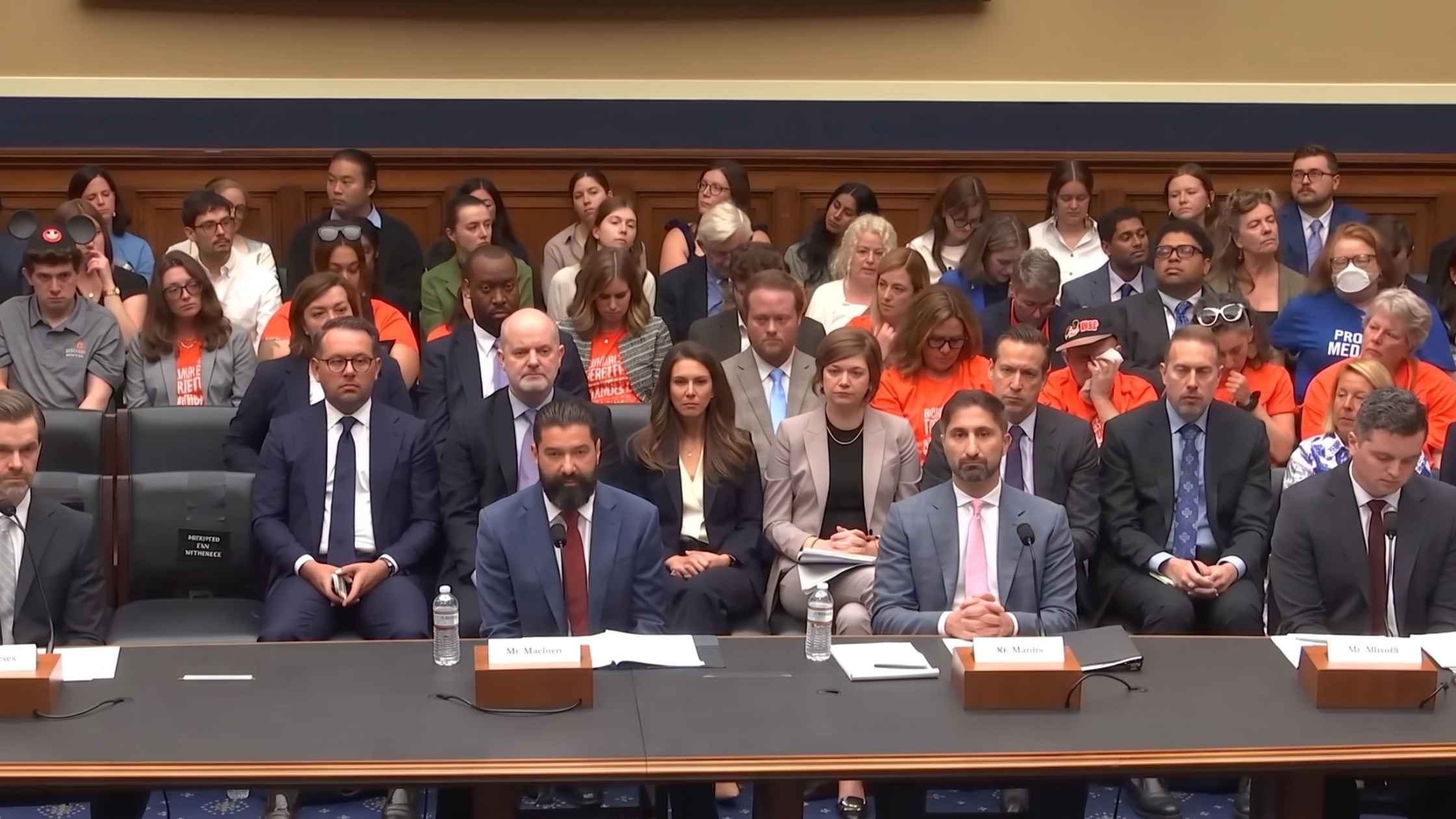
Mr. Chairman (20:57):
The Subcommittee on Oversight and Investigations will now come to order. The chair now recognizes himself for five minutes for an opening statement. Good morning and welcome to today's hearing titled State Medicaid Program Integrity: Examining Fraud Risks and Oversight Deficiencies. Today's hearing will examine Medicaid program integrity in four states: Minnesota, California, New York, and Ohio. For the first time in years, state Medicaid directors are testifying before Congress to share what they are doing to address rampant fraud in government healthcare programs. Let me be clear, fraud is not isolated to these four states. As we have discussed in two previous hearings before this subcommittee, Medicaid fraud is a real problem. It happens in every single state, red and blue and has been harming patients and draining taxpayer resources for decades.
(21:58)
In Minnesota, a recent $ 90 million Medicaid fraud takedown brought charges in autism therapy services, housing support, home healthcare, and personal care services. This was just the latest set of charges in ongoing fraud investigations occurring there. In California, a man recently pleaded guilty to $270 million in fraudulent prescription drug claims to Medicaid. Earlier this year, charges were filed against 21 suspects for defrauding Medicaid hospice benefits of $267 million. In New York, $226 million in social adult daycare fraud has been charged in 2026 just so far this year. Millions of dollars have been implicated in non-emergency medical transportation fraud schemes in recent years. In Ohio, a $42 million Medicaid fraud takedown implicated 9 defendants in connection with therapeutic behavioral health services for children and young adults. Recently, there were also charges made in connection with hundreds of thousands of dollars in in-home service fraud. These fraud schemes harm patients. When services are billed but not rendered to vulnerable Medicaid recipients who are dependent each and every day on this support, the consequences can be severe.
(23:29)
And unfortunately, sometimes those consequences can be fatal. Elderly and disabled patients in need of in home care do not receive the help that they need to live the lives that they have with dignity. Children who have benefited from essential therapies often don't receive them. Those who rely on transportation assistance to attend medical appointments miss the preventative care and treatments that they need to stay healthy. This morning's hearing is a culmination of months-long investigation led by this subcommittee into Medicaid fraud with the goal of strengthening the program integrity. After two hearings, letters to 11 states requesting documents and information and reviewing over 90,000 pages of documents and information produced to this committee, it is clear that some states are not doing enough to safeguard the Medicaid program and gaps remain in program integrity requirements that are opening the door far too wide to fraud.
(24:34)
Thankfully, fraud is finally getting the attention that it deserves. I commend this administration for surging resources to the war on fraud by forming a task force to eliminate fraud. Additionally, CMS and the office [inaudible 00:24:50] General are leveraging their authorities to hold states accountable when they are not meeting the mark. We are seeing accountability for the first time in far too long, but more remains to be done. We can no longer tolerate criminals taking advantage of the Medicaid system. Fraud is not and should not be the cost of doing business. It is preventable and we have a duty to help reign it in. It is no longer sufficient to do the bare minimum. States must rise to the occasion and tackle fraud head on. Our Medicaid program and the patients that rely on that to be healthy each and every day of their lives, they depend on it.
(25:34)
I want to thank all of our witnesses for being here today. We look forward to hearing from you and learning more about the steps that your state is currently taking to address Medicaid fraud. With that, I now recognize our ranking member of the subcommittee, Ms. Clarke, for her opening statement.
Ms. Clarke (25:52):
Thank you very much, Mr. Chairman, and I'm glad to have another opportunity in the subcommittee to discuss the partisan actions that the Trump administration has taken against state Medicaid programs under the guise of fighting fraud. Democrats have been raising concerns about CMS's threats of funding cuts to blue states, which are destabilizing programs and risk further cuts to healthcare in states led by Democratic governors, leaders who President Trump sees as political enemies. The administration's partisan motivations are clear. In January amidst terror and chaos in Minnesota caused by the Trump administration, CMS announced it would withhold up to $2 billion from 14 of Minnesota's healthcare services. Days later on the heels of the killing of an innocent American citizen by ICE agents, President Trump threatened Minnesota with a "Day of reckoning and retribution."
(26:53)
When CMS Deputy Administrator Brandt testified before this subcommittee in March, I asked her when a hearing would be scheduled on CMS's decision to withhold more than 500 million in quarterly Medicaid funding from Minnesota. She said that CMS had been stayed from scheduling a hearing which proved to be entirely false. When we asked for correction or clarification of her false testimony, Deputy Administrator Brandt did not provide one. We cannot conduct oversight if CMS is going to lie about its actions. CMS has also deferred 350 million in Medicaid funding from Minnesota for 2 consecutive quarters in sweeping cuts to entire service categories but has not provided Minnesota with a meaningful or consistent guidance on how to address CMS's concerns.
(27:52)
In California, CMS has put 1.3 billion in Medicaid funding in jeopardy through a deferral for home healthcare service payments. CMS Administrator Oz proudly announced that this was the largest deferral ever by the agency. He fails to acknowledge the impact that these over-broad indiscriminate actions will have and he has refused to accept California's explanations for the growth in those services, which are due to longstanding efforts by the federal government and states to keep patients out of institutions and in their homes and in communities. The need for home healthcare does not disappear when funding is suspended and California patients are terrified of losing care at home and being forced into institutions.
(28:46)
CMS has also threatened my state, New York. When it began investigating New York's program, it touted clumsy and entirely inaccurate math, which ultimately overstated the number of New Yorkers receiving home healthcare services by nearly 11 times. Even though CMS admitted its error, the Trump administration has not let up on its threat to rob New Yorkers of Medicaid for their healthcare. We have also heard that the way CMS treats state officials in some blue states has completely changed. CMS seems to be looking for reasons to cut funding to certain states rather than ways to preserve it.
(29:32)
Administrator Oz and Vice President Vance have held numerous press conferences to announce hastily determined funding cuts that harm patient access to healthcare. They have clearly prioritized headlines over healthcare and partisanship over people. The administration has repeatedly treated blue states as enemies rather than partners. HHS Inspector General March Bell has also joined this campaign against blue states by decertifying Hawaii's Medicaid fraud control unit cutting $3 million for the entity that is responsible for finding and prosecuting Medicaid fraud and patient abuse or neglect. This is particularly ironic as just the other day the Department of Justice touted numerous arrests and charges for healthcare fraud and buried in the DOJ press release is a shout-out to the Medicaid Fraud Control Unit of Hawaii as one of the many agencies responsible for prosecuting the cases in the crackdown. One day they're being denied recertification. The next day they're part of a major operation that the administration wants all the credit for. Which is it?
(30:53)
The answer is that this administration will do anything to cover up for the massive Republican cuts to healthcare. Enrollment in Medicaid and the Affordable Care Act are dropping precipitously, more than five million people just over the past year. CMS and states should work together to address fraud just as they always have. Getting actual fraud out of the programs and hold actual fraudsters accountable. But waging a politically-motivated assault against the sick, the disabled, the blue states in taking healthcare away from millions of Americans is not fighting fraud. That's just using fraud as a convenient excuse to carry out the President's harmful agenda with the most vulnerable individuals in our country paying the price. With that, Mr. Chairman, I yield back.
Mr. Chairman (31:54):
Thank you. The chair now recognizes the chairman of the full committee, Mr. Guthrie, for five minutes for an opening statement.
Mr. Guthrie (32:00):
Thank you, Mr. Chairman. I thank you for holding this important hearing. I want to thank all of our witnesses for being here. I know some came in challenging situations and we really appreciate you being here today. This hearing is about accountability and what all of us can do moving forward to strengthen the Medicaid program integrity. We have a duty to do everything possible to protect the Medicaid program from fraud and preserve it from those who need it most. Each state administers its Medicaid program and is responsible for making sure that fraud prevention and enforcement mechanisms are effective. Unfortunately, this is not always the case. Fraud is not a victimless crime. Not only does it squander taxpayer dollars, but it harms vulnerable patients. Fraudsters are blatantly lining their pockets with taxpayer dollars often at the expense of the elderly, the disabled, and young patients that are receiving substandard or no medical care. Americans are tired of seeing their hard-earned tax money end up in the hands of criminals. So we can't deny ...
Mr. Guthrie (33:00):
... hard-earned tax money end up in the hands of criminals. So we can't deny this is happening. It's amazing that it just seems like this is happening. We have a California man, Paul Randall, who pleaded guilty to $270 million in Medicaid fraud. So, instead of going to help the most vulnerable and the disabled, where did the money go? He bought luxury cars, rare sports memorabilia, including Mickey Mantle rookie baseball cards and game-worn sneakers by Kobe Bryant. These are facts. This isn't something that came from this administration. These are facts in law.
(33:34)
Similarly, in Ohio, law enforcement recently seized 14 luxury vehicles owned by defendants in a $30 million Medicaid behavioral health case fraud. Just this week, the Department of Justice announced, in 2026, National Health Care Fraud Takedown, which charged 455 defendants with over 6.5 billion in healthcare fraud. This takedown was a collaborative effort between federal, state, and international partners, include fraud schemes in Medicare and Medicaid. This is another example of how big this problem is. Through more rigorous oversight and enforcement, we can stop these brazen criminal schemes and make the Medicaid program stronger and ensure its stability for the future.
(34:23)
So, my friend from New York commented on and brought up that the administration just ceased payments and said, "Because you have fraud, you're ceasing payments on all these other programs." Well, let me just say what happened with that. We had over 400, 400 home health providers, so we do want them out of the nursing homes and in their home, over 400 home healthcare providers providing services in LA County. They knew there was rampant fraud, and they couldn't figure out which ones were legit, which weren't. "So let's just suspend payments." So if you performed the service, your payment was suspended. If you were cheating, your payment was suspended. 12 companies out of over 400 called and said, "Where's the money for what we served?" 12 legitimate companies out of over 400 in L.A. County.
(35:17)
So, it's not the administration that was just represented here, saying that "We're going to punish blue states because they're blue states." What is this administration making a decision that we have rampant fraud, it's ripping off the taxpayers, it's cheating the most vulnerable, some here in the audience today, the elderly, the disabled, and those who need Medicare and Medicaid the most. And so they're using the tools available. And I will tell you, the 12 companies who legitimately performed those services did get paid, and the other 400 who were cheating never got their money because they didn't do the services. And so, I will defend that. I think your taxpayer dollars, the most vulnerables need to be defended as well. I will defend that, and we look forward today to kind of frame this debate to understand what has happened, how we're going to deal with it, and how we make sure that the American people who are generous with their tax dollars, as we had some debates on Medicaid, talked to a lot of people about Medicaid, the American people want this program to work. They want the most vulnerable to be taken care of. But they also want to know that people care about their money as well. And so, that's what this hearing's about. That's what we're going to fight for on our side of the aisle. If you're cheating this system, we're going to come after you. And we're going to make sure if you're in the most vulnerable, you're going to be taken care of. And that's our task. And I will yield back.
Mr. Chairman (36:46):
The gentleman yields. The Chair now recognizes the ranking member of the full committee, Mr. Pallone, for five minutes for an opening statement.
Frank Pallone (36:54):
Thank you, Mr. Chairman. Nearly a year ago, Republicans passed their big ugly bill that included the largest healthcare cuts in American history. Republicans cut healthcare by a trillion dollars, which is expected to rip healthcare away from 15 million Americans. According to a recent study, 5 million Americans have already lost their health insurance as result of these cuts. And unfortunately, this is just the beginning. During the markup of the big ugly bill, committee Republicans repeatedly insisted that the cuts wouldn't hurt patients and would only affect waste, fraud, and abuse in the program. But that has proven to be completely false, and they knew that. You cannot cut healthcare by a trillion dollars and not impact millions of people's healthcare.
(37:34)
Earlier this month, the Trump administration released a rule showing just how burdensome and cruel the new requirements to receive care through Medicaid would be. That rule includes a provision that those receiving ongoing treatment for cancer could lose their Medicaid coverage if they don't jump through all the hoops and red tape that Republicans put in their way.
(37:53)
Even cancer patients are under attack by Republican cuts to their healthcare. The Republicans' big ugly bill was never going to strengthen Medicaid as they claimed. It was just another step in the Republican campaign to dismantle it. And now as Republicans try to figure out a way to pay for President Trump's reckless war of choice with Iran through another partisan reconciliation bill, they're reportedly considering even more cuts to Medicaid.
(38:17)
More than 70 million Americans who are disabled or chronically ill, elderly, or children rely on Medicaid for their healthcare. The Trump administration and Republicans in Congress continue to find ways to endanger or take away that care. They've decided that if they simply say they're eliminating fraud in Medicaid, then they can get away with eliminating Medicaid. Well, they're wrong. We're not standing for that.
(38:38)
The attacks on healthcare don't stop with the big ugly bill. The Department of Justice just ripped up decades' worth of guidance and precedent that helped keep those with disabilities out of institutions. And the Centers for Medicare & Medicaid Services has selectively abandoned its practice of working in partnership with states to administer the Medicaid program. It's becoming increasingly clear that, under Dr. Oz, CMS does not intend to work with states in good faith, particularly states that do not vote or did not vote for President Trump.
(39:07)
In California, for example, CMS has deferred $1.3.4 billion in quarterly payments to the state, mostly for home and community-based services, solely based on how quickly the program has grown. If the goal was finding fraud, CMS would identify specific concerning charges and work with the state to resolve them. It would not threaten to defer payments to all in-home supportive services for an entire quarter, and then have the Vice President hold a celebratory press conference.
(39:35)
CMS continues to hold hostage funding to Minnesota, repeatedly making demands of that state with short deadlines only to move the goalposts when the state meets them.
(39:45)
And CMS sent a letter to New York making outlandish allegations about that state's Medicaid program, accompanied by a bombastic social media post from Dr. Oz, claiming that, I quote, "nearly three-fourths of the state's 6.8 million Medicaid enrollees received personal care services." But Dr. Oz and CMS had to walk back those claims after it was pointed out that they had committed obvious errors in math that grossly inflated the number of enrollees receiving those services.
(40:12)
Now, I'd say if Republicans are really interested in looking into waste, fraud, and abuse, they should look no further than the actions of the Trump Administration and the President. I mean, talk about ripoff, the American taxpayers are ripped off every day by Trump's policies and personal effort to try to make a profit for him and his family. Why don't you go after them? Why don't you go after the administration? But it's outrageous to watch the Trump administration going after state Medicaid programs while it's engaged in reckless war of choice that is costing the American people $132 billion, tanking the economy and fueling inflation that the president says he loves, he loves inflation.
(40:52)
Republicans also had no problem supporting a $1.8 billion slush fund to reward Trump's friends and insurrectionists who assaulted police officers on January 6. You think that's not a waste of money? Huge waste of money.
(41:06)
The combination of the Republicans' big ugly bill and the politically motivated cuts by CMS put states in an impossible situation, and patients are already paying the price. Playing politics with Americans' healthcare is cruel and dangerous. Unfortunately, that is what we're repeatedly seeing from Republicans here in Washington.
(41:23)
And with that, Mr. Chairman, I yield back the balance of my time.
Mr. Chairman (41:27):
The gentleman yields. That concludes members' opening statements. The Chair would like to remind members that pursuant to the committee rules, all members' written opening statements will remain part of the record.
(41:38)
We want to again thank our witnesses for being here today, taking time to testify before the Subcommittee. You will have the opportunity to give an opening statement followed by a round of questions from members.
(41:50)
Today's witnesses are Mr. John Connolly, Temporary Commissioner and State Medicaid Director, Minnesota Department of Human Services; Mr. Tyler Sadwith, State Medicaid Director for the California Department of Health Care Services; Mr. Amir Bassiri, State Medicaid Director of New York State Department of Health, and Mr. Scott Partika, Director of Ohio Department of Medicaid. We appreciate all of you being here today, and I look forward to hearing from each of you.
(42:19)
You are aware that the Committee is holding an oversight hearing, and when doing so, has the practice of taking the testimony under oath. Do you have an objection to testifying under oath? Seeing no objection, we will proceed. The Chair advises that you are entitled to be advised by counsel pursuant to House rules. Do you desire to be advised by counsel during your testimony today? Seeing none, please rise. Please raise your right hand. Do you promise to tell the truth, the whole truth, and nothing but the truth, so help you God? Seeing the witnesses answered all in the affirmative, you are now sworn in and under oath, subject to the penalty set forth in Title 18, Section 1001 of the United States Code.
(43:09)
Please be seated. With that, I will now recognize Mr. John Connolly for five minutes to give your opening statement.
John Connolly (43:16):
Thank you, Chairman Joyce, Ranking Member Clarke, and members of the Subcommittee. Thank you for the opportunity to be here today, first of all, and for your continued focus on the important issue of Medicaid integrity.
(43:28)
The programs we administer at Minnesota's Department of Human Services are essential to the health, stability, and economic security of communities across Minnesota. They help children, families, seniors, and people with disabilities access healthcare and other essential services every day. These programs are lifelines, relied upon by over a million Minnesotans in communities large and small.
(43:50)
As is the case with government-funded programs throughout the country and, in fact, across all healthcare payers, including private insurance, bad actors have tried to take advantage of our well-intended services. But let me be clear. The Minnesota Department of Human Services and the Minnesota government have a zero-tolerance policy for any fraud within our government programs. We take attempts to undermine the integrity of these programs very seriously. We are taking aggressive measures to secure our Medicaid programs. And here are just a few recent examples.
(44:22)
Minnesota DHS has conducted over 4,000 investigations and identified more than 50 million in recoveries since 2020, resulting in over 1,150 cases referred to law enforcement, state and federal. Last year, we hired a new Inspector General with a decade-long record of prosecuting Medicaid fraud, and we have also increased his staff to enhance oversight and accountability. We've expanded our pre-payment review protocols to grow our capability to block payments to fraudulent providers on the front end, rather than paying them out and trying to recover those funds later. We have aggressively moved to stop payments to providers upon credible evidence of fraud. We designated 14 Medicaid benefits as high-risk, determining that these benefits warranted heightened levels of scrutiny and controls under Medicaid's regulatory framework. Ultimately, we took decisive action to terminate one of those benefits and to impose licensing for service providers and another. We recently completed a five-month comprehensive review of almost 5,600 high-risk Medicaid providers to ensure they meet rigorous eligibility and compliance standards. In appropriate cases, we issued disenrollment notices and stop payments.
(45:33)
We've been doing this work since long before the recent headlines, and we will continue doing it every day. There is no finish line when it comes to protecting the integrity of our programs. Importantly, however, our work is always done with beneficiaries and the broader public in mind. We strive to enhance program integrity while also providing access to care and continuity of service. So, for example, when we disenroll providers, we work closely with counties and, in some cases, reach out directly to affected Minnesotans to help beneficiaries connect with alternative providers and resources. In pursuing these dual objectives of program integrity and responsible delivery of services, we welcome opportunities for dialogue with Congress, the Centers for Medicare & Medicaid Services, and our fellow states. We all have valuable lessons to learn from each other. We all know that our decisions, as well as those of our federal and state partners, have real-world impacts.
(46:26)
Medicaid in Minnesota serves approximately 1.16 million people. Again, children, families, seniors, people with disabilities, those with serious mental health needs, and others who depend on care to remain safe and stable in their homes and communities. Moreover, Medicaid is a foundation for our entire healthcare delivery system, including hospitals and nursing facilities. And major funding losses threaten to destabilize care for all Minnesotans.
(46:52)
Recent federal deferrals of Medicaid payments to Minnesota have put our residents at severe risk. This is not an accounting dispute on a spreadsheet. These decisions affect Minnesotans with significant needs, people for whom a missed appointment, a gap in treatment or an interrupted support service can quickly become a crisis. This is not an either/or decision. We can protect program integrity while still operating these programs effectively. We can root out fraud, waste, and abuse while still caring for those in need. And we can protect taxpayer dollars while simultaneously directing them to their intended beneficiaries. It is our job that we share with our federal partners.
(47:29)
I believe strongly in public service and am proud of the work Minnesota DHS has done to strengthen program integrity, combat fraud, and ensure that we continue to secure the federal funding that is crucial to our programs and to Minnesotans. I welcome and encourage continued dialogue with you all as we continue these efforts.
(47:47)
Thank you again for the opportunity to share the work we're doing in Minnesota to protect Medicaid program integrity. I look forward to your questions.
Mr. Chairman (47:54):
Thank you. The Chair now recognizes Mr. Sadwith for five minutes for an opening statement.
Tyler Sadwith (48:00):
Chairman Joyce, Ranking Member Clarke, and members of the Subcommittee, thank you for the opportunity to testify.
(48:07)
My name is Tyler Sadwith, and I am the Medicaid Director for California, a position in the California Department of Health Care Services. I want to be clear from the start. We take program integrity seriously and work hard every day to protect California's Medicaid program from fraud so taxpayer dollars can go to healthcare services for eligible patients who need them.
(48:28)
I would like to touch on three areas. First, I want to highlight California's program and the people we serve. Second, I'd like to demonstrate our unwavering commitment to combating fraud, waste, and abuse. Finally, I want to emphasize our valuable partnership with the federal government and make very clear our ongoing commitment to collaborating with our federal partners at CMS, the Centers for Medicare & Medicaid Services.
(48:54)
Medi-Cal is California's Medicaid program. It provides healthcare services to approximately 14 million vulnerable Americans, including pregnant women, seniors, children, and people with disabilities. California is the country's most populous state. It is the fourth-largest economy in the world. This means we support more healthcare services for more vulnerable individuals than any other state Medicaid program in the country. This is a responsibility we take seriously, and it is a vital part of our mission to protect this program.
(49:24)
California is wholly committed to combating fraud, safeguarding taxpayer dollars, and holding bad actors accountable. To meet these commitments, the department prioritizes program integrity at all stages, from provider screening and eligibility determinations to claims processing, to backend analysis and investigations. Approximately 20% of staff are dedicated exclusively to program integrity. We have strong policies and protocols that are designed to prevent, identify, and block fraud, waste, and abuse. A comprehensive oversight strategy includes robust provider vetting that exceeds federal standards, provider suspensions, including approximately 5,000 over the past five years, and secured fraud recovery, totaling more than $1 billion over the past five years.
(50:11)
California is one of only two states with a Medicaid agency that employs armed, sworn peace officers with the legal authority to execute search and seizure warrants. Our teams of auditors, investigators, clinicians, and data scientists conduct top-to-bottom reviews of providers. Our strong partnerships with district attorneys, Medicaid Fraud Control Units, and federal law enforcement and investigators are critical to our success. But we must remain vigilant because we know bad actors seek to exploit Medicaid, Medicare, and private health insurance. That is why we continue to strengthen our program in higher-risk areas such as hospice care. We are implementing new safeguards to ensure appropriate use of services such as Applied Behavioral Analysis and transportation.
(50:56)
We're proud of our program, but I want to emphasize the importance our partnership with CMS plays in ensuring Medi-Cal operates with accountability, transparency, and in compliance with federal requirements. We value that partnership and our shared commitment to protecting taxpayer dollars and maintaining public confidence in Medicaid. A productive relationship with CMS is a key ingredient for continued success. And CMS recognizes California as a national program integrity leader. Across bipartisan administrations, CMS's Medicaid Integrity Institute and the National Association for Medicaid Program Integrity have highlighted our advanced data analytics and investigative strategies. California's program integrity leader recently served on the executive board of the Healthcare Fraud Prevention Partnership, a CMS-convened body working across public and private sector to fight fraud. We will be most successful in keeping bad actors out of the program if we continue working closely with CMS and other federal partners. I know this from my own experience at CMS, where I served seven years across bipartisan lines.
(52:06)
The vast majority of Medi-Cal providers follow the rules. Rooting out unscrupulous providers is critical to safeguarding taxpayer dollars and ensuring Medi-Cal can fulfill its mission to serve the children, pregnant women, and other vulnerable Californians who rely on it. I assure you, California is committed to this important work and unwavering in our efforts to combat fraud.
(52:29)
Thank you, and I look forward to your questions.
Mr. Chairman (52:33):
Thank you. The Chair will now recognize Mr. Bassiri for five minutes to give an opening statement.
Amir Bassiri (52:40):
Chairman Guthrie, Ranking Member Pallone, Subcommittee Chairman Joyce, Ranking Member Clarke, and members of the Subcommittee, thank you for the opportunity to testify today regarding New York's Medicaid program and our efforts to combat fraud, waste, and abuse.
(52:59)
My name is Amir Bassiri. I'm Deputy Commissioner and the Medicaid Director at the Office of Health Insurance Programs at the New York State Department of Health. I've devoted my career in public service to helping ensure that government programs are effective, accountable, and worthy of the trust that the taxpayers put in place in them. I entered this role with a clear responsibility to do what is in the best interest of New York's Medicaid program, including the safeguarding of taxpayer resources with strong oversight and program integrity so that services are maintained for those who need them the most.
(53:41)
New York's Medicaid program is one of the largest in the country, serving more than 6.4 million residents, including over 2 million children, approximately 100,000 pregnant women, and 1.5 million aged, blind, and disabled residents. Given the magnitude and overall scope of our program, we work every day with state and federal partners, law enforcement, and oversight entities to prevent, detect, and address fraud, waste, and abuse. We also engage regularly with the Center for Medicare & Medicaid Services on program integrity matters, and we sincerely value that partnership as a critical component of our ability to strengthen program integrity efforts.
(54:29)
The state recognizes the importance of technology and has made a considerable number of investments in modernizing key technology to both support the consumer and provider experience, as well as improving data interoperability and accountability across the delivery system.
(54:48)
New York's approach to program integrity relies on multiple state agencies working in close coordination. This provides complementary points of accountability and redundancy and responsibilities to ensure no single point of failure. This structure creates several layers of accountability, including provider monitoring and screening to audits, investigations and coordinated enforcement actions. This approach has produced measurable results. The state continuously enhances its efforts to prevent and detect fraud, waste, and abuse. And in 2024, the Office of the Medicaid Inspector General completed more than 2,500 audits and investigations, referred over 450 matters for criminal prosecution and generated approximately $4 billion in recoveries.
(55:43)
These outcomes reflect years of sustained work across agencies to identify improper activity, recover funds, and hold bad actors accountable. We are proud of these results, but we also recognize that a program of this size and complexity requires constant vigilance and continuous improvement. Under Governor Hochul's leadership, New York has pioneered a myriad of reforms in high-risk areas to safeguard taxpayer resources. This is most evidenced by the state's rightsizing of the Consumer Directed Personal Assistance Program, a program that allows Medicaid members to hire their own caregivers by transitioning from a system of over 600 fiscal intermediaries to one single statewide fiscal intermediary, thereby reducing administrative costs in the program while establishing a stronger and more consistent overnight mechanism with full accountability.
(56:44)
In addition, a result of enhanced screening and oversight of the non-emergency medical transportation program was done through the creation of a statewide transportation broker. Nearly 800 providers were terminated or rejected from the network as a result of this transition to the broker, mitigating opportunities for improper billing, while preserving access to this critical service.
(57:12)
I am proud of the work we've done to protect both the integrity of the Medicaid program and the millions of New Yorkers that depend on it. Protecting the integrity of Medicaid requires collaboration, transparency, and a shared commitment to fiscal stewardship of taxpayer dollars. We deeply value our partnership with federal agencies on this effort, and I appreciate the opportunity to testify today and am prepared to answer the Subcommittee's questions.
Mr. Chairman (57:40):
Thank you. The Chair now recognizes Mr. Partika for five minutes for an opening statement.
Scott Partika (57:45):
[inaudible 00:57:48].
Speaker 1 (57:48):
[inaudible 00:57:48] mic turned on?
Scott Partika (57:54):
Apologies. Members of the Subcommittee on Oversight and Investigation, my name is Scott Partika, and honored to serve as the Director of Ohio Medicaid. I represent all of Ohio Medicaid team who wake up each and every day with a passion to serve those in need, support our providers, especially our direct caregivers, and execute the program at the highest level of program integrity each and every day.
(58:16)
Since joining the Department in November of 2025, I found myself laser-focused on program integrity to secure this vital program. Addressing fraud, waste, and abuse within Ohio Medicaid program has always been a focus of the DeWine administration. And our work has especially sharpened and expanded in response to recent program trends noticed in Ohio. And our work is far from over.
(58:36)
Ohio has implemented a series of system reforms over the last five years to add operational efficiencies through administrative consolidation, new advanced IT infrastructure, and the results of that are growing transparency and additional tools for accountability that are just now beginning to bear fruit.
(58:54)
Key program concerns of previous years include payment accuracy, member eligibility and concurrent enrollment in other states, as well as broader program spending in certain areas. Ohio has taken steps each concern head-on, including reducing the PERM finding to 2%, adding new supports for county caseworkers to increase accuracy and efficiency of applications, and increasing data transparency along the way that has helped guide policymaking for the administration and Ohio legislature.
(59:23)
Other ongoing initiatives include rule and policy updates, enhanced provider screenings, new UM practices, and targeted provider audits. These and other activities have helped us address concerns highlighted by state partners and partners at CMS.
(59:39)
When looking at federal initiatives to combat program integrity concerns, it's important to recognize the Working Families Tax Cut legislation, which dramatically increased the level of program oversight and elevated program integrity priorities in state Medicaid programs, including addressing concurrent enrollment across states, ensuring deceased individuals are no longer on the rolls, increased emphasis of audits and subsequent corrective action, increased frequency of eligibility determination, mandating community engagement requirements to help facilitate people moving up and off the program. These efforts are helpful, and we believe our federal partners can and should continue to improve protection and oversight of state programs.
(01:00:20)
Now to Ohio. Troubling data in home health space was uncovered in Ohio late last year. We began investigating the information in conjunction with Ohio Auditor Keith Faber and former Attorney General Dave Yost shortly thereafter. The result culminated in new actions and initiatives to address areas of weakness, combat the fraudsters' attempt at exploiting these critical programs. In recent weeks, Governor DeWine announced several new initiatives aimed at curbing that trend. A six-month moratorium on new home health providers, increased frequency of provider revalidations, new rules to conduct provider payment suspensions during periods of investigations, and updating Ohio's electronic visit verification rules. Additionally, the Ohio Legislature passed Senate Bill 315, which includes a myriad of reforms to the integrity of the Ohio Medicaid program, including increased penalties for fraud violations, expanded oversight of provider ownership structures, enhanced provider enrollment requirements, and expanded use of electronic visit verification.
(01:01:15)
Work to strengthen other high-risk programs is also underway. It is a full press forward to address fraud, waste, and abuse through a thorough policy review across the agency. Through these efforts, we have identified certain areas, such as Ohio's Nursing Facility Ventilator Program, for improvements. Private room compliance monitoring, oversight of certain behavioral health services, home health, and skin substitute coverage are just a few where we are making policy updates.
(01:01:42)
Moving forward, one area we believe the federal government and states could partner is through improved data sharing and tracking of provider ownership and affiliation across state lines and programs. As we continue our program integrity work, it is critical that we are able to systematically root out bad actors and not leave the door open for any exploitation of this program. If somebody is taking advantage of our program in Northwest Ohio, I certainly want to ensure our partners across the state lines in Michigan are aware of that, as well.
(01:02:12)
The department is committed to ensuring Ohioans receive healthcare in accordance with the law and rooting out fraud, waste, and abuse to protect this vital and critical program for the people who need it.
(01:02:23)
Chairman Joyce, Vice Chair Balderson, Ranking Member Clarke, and members of the Committee, thank you for having me today. I look forward to your questions and continued work moving forward. Thank you.
Mr. Chairman (01:02:32):
I thank you all for your testimony. We will now move to questioning. I will begin and recognize myself for five minutes.
(01:02:42)
Director Sadwith, California has a large Medicaid program spending more than $4.7 billion in 2025 on home and community-based services alone. Fraud in these services, as you would recognize, is a serious matter. In some cases across the country, patients have died when fraudsters bill Medicaid for services that were needed but never provided. Your office has stated in correspondence with this committee and CMS that California goes beyond federal requirements for providing screening and enrollment. If that is the case, why has your Medicaid agency classified all Medicaid-only providers as limited risk, a classification that comes with less stringent oversight standards? Do all of California's Medicaid providers being considered as limited risk really reflect what you're seeing in these programs?
Tyler Sadwith (01:03:42):
Thank you, Chairman, for the question, and thank you again for the opportunity to be here today.
(01:03:48)
Home and community-based services are a vital program in California. We know, for example, that they're cost-effective, reflecting a prudent use of taxpayer dollars. One year of receiving in-home supportive services saves federal and state taxpayer dollars approximately $100,000 compared to a stay in a nursing facility. We are absolutely committed to ensuring the integrity of these vital services-
Mr. Chairman (01:04:15):
But by classifying all Medicaid-only programs as limited risk, are you seeing that all of these programs really show the limited risk as far as fraud goes?
Tyler Sadwith (01:04:26):
Thank you for the question. So, the risk classification, categorical risk level classification is one of many tools that we use to assess program risk-
Mr. Chairman (01:04:36):
Is this adequate? When you paint with one brush all of those as limited risk, which requires less oversight, are you missing fraud?
Tyler Sadwith (01:04:46):
We employ a number of safeguards to prevent bad actors from entering the program. For in-home supportive services specifically, we do conduct fingerprint and criminal background checks, which is one of the features of a high-risk categorical level designation. So, even though-
Mr. Chairman (01:05:04):
But is that... That's high risk. But we're talking about limited risk, which you ascribed to all Medicaid-only providers. Does that catch all the fraudsters, or should this be more of an individualized approach and not painting just with one brush? Is there an opportunity to weed out the fraud at its beginning stages?
Tyler Sadwith (01:05:24):
I absolutely share your focus-
Mr. Chairman (01:05:26):
Have you previously designated any Medicaid-only provider types that were classified as moderate or high risk?
Tyler Sadwith (01:05:35):
To my knowledge, we have not classified any Medicaid-only provider types. We have gone above and beyond historically the federally designated risk [inaudible 01:05:47]-
Mr. Chairman (01:05:46):
In California, are you reassessing any provider risk designations in the state?
Tyler Sadwith (01:05:52):
Thank you. We are actively assessing opportunities to strengthen program integrity in key areas. This includes, but is not limited to, the categorical risk level designation-
Tyler Sadwith (01:06:00):
... Is not limited to the categorical risk level designation. We do have other tools that we use to go after higher risk areas. We have developed provider risk profilers for services such as hospice care, such as dental care, and other areas that are on our radar that we use in conjunction with-
Mr. Chairman (01:06:23):
Okay, so you brought into this conversation now home health and hospices. Am I correct that California license home health and hospices before they can operate in the state?
Tyler Sadwith (01:06:36):
Thank you for the question. This is a really important issue that I'm happy to talk about. It's really important.
Mr. Chairman (01:06:42):
Please do.
Tyler Sadwith (01:06:44):
Yeah. The partnership between the State of California and the federal government is paramount to making sure bad actors stay out of the program when it comes to hospice care and home health. Just as context, Medicare, the federal program, is the primary payer for hospice care in California. The California Department of Public Health, my sister state agency does perform licensure for hospice providers and the state has acted swiftly to root out bad actors.
Mr. Chairman (01:07:13):
So before they can operate in California, this is just a simple yes-no, do you allow this hospice organization to operate with or without a California license? Is that required before they can operate in California? Yes or no?
Tyler Sadwith (01:07:31):
The California Department of Public Health has imposed a licensure moratorium that was enacted in 2021 and just this week implemented new regulations strengthening the standards for licensure for providers to be able to obtain-
Mr. Chairman (01:07:44):
So prior to just this week, your words, you could operate a hospice in California without a license. Is that what you just said to me?
Tyler Sadwith (01:07:53):
Pardon me. I respectfully disagree with the framing. I'm actually not an expert on that specific-
Mr. Chairman (01:08:00):
Okay, so let's move on. Director Bassiri, personal care and home health aides are the largest and fastest growing job category in New York and according to CMS accounted for more than $44 billion in total payments between 2023 and 2025. I understand based on information that New York provided to the committee just yesterday, even though it was requested in March, that New York State Department of Health is in the process of designating waivered personal care services as a high risk program. Given that CDPAP, which is a self-directed personal care service waiver program, is provided in private homes with minimal oversight, what safeguards currently exist to verify the services are billed actually and delivered?
Amir Bassiri (01:08:49):
Thank you for the question, Chairman.
Mr. Chairman (01:08:51):
I'm going to ask you, my time has expired. I'm going to ask you to respond to that in writing. And with that, I will yield to the ranking member for her five minutes of questioning.
Ms. Clarke (01:09:00):
Thank you very much, Mr. Chairman. Under the partisan leadership of Donald Trump and Dr. Oz, CMS's use of its authority to withhold and defer Medicaid funding for Minnesota and California is extreme and unprecedented. And the CMS threat against New York based on basic math errors are an embarrassment. Under the leadership of Administrator Oz, CMS no longer supports all states in administering their Medicaid programs. Instead, it seems to be looking for ways to undermine these programs. CMS is demanding that states solve problems in their Medicaid programs without defining what the problems are or in the case of New York, CMS has based its scrutiny of Medicaid spending on an embarrassing misinterpretation of its own data. Mr. Bassiri, Dr. Oz sent you a letter on March 3rd that stated that nearly three out of every four Medicaid beneficiaries received personal care services from 2023 through part of 2025. Dr. Oz posted that letter on social media along with a video threatening New York's Medicaid funding. Mr. Bassiri, was the statement that Dr. Oz made about the number of Medicaid beneficiaries receiving personal care services accurate?
Amir Bassiri (01:10:20):
Thank you for the question Ranking Member Clarke. That information that was reported was inaccurate. We did confirm and state that and the administration confirmed. There are 450,000 New Yorkers that receive some form of personal care services, including consumer directed and licensed home care. It is not the four million that was referenced. It's a little under 5%.
Ms. Clarke (01:10:51):
Mr. Bassiri, do you know about how far off Dr. Oz was from the actual number? I think you just stated it a minute ago.
Amir Bassiri (01:10:59):
Thank you for the follow-up. The discrepancy was between 4 million and 450,000.
Ms. Clarke (01:11:07):
Yikes. This is not a minor rounding error. This is a fundamental misunderstanding of Medicaid programs and basic math. And it is shameful to be that far off and think that it is New York that has the problem. Setting aside the egregious misrepresentation of the facts. Mr. Bassiri, were you aware that one of the footnotes in the same letter shows that CMS apparently used ChatGPT to find an article on CMS's own data?
Amir Bassiri (01:11:42):
Thank you for the question. I had not been aware of that.
Ms. Clarke (01:11:45):
Yeah, I think this is relevant because it demonstrates that CMS is not taking the time to assess its data to identify specific program integrity concerns and it's clear that President Trump and Dr. Oz decided to go after New York and then tried to manufacture the basis for doing it. Mr. Sadwith, in response to CMS's determination in May to defer $1.34 billion from your program, you said CMS has used what was once a routine payment reconciliation process with states to undermine exactly what federal HCBS policy has long sought to achieve, helping more people remain safely at home rather than enter institutions for long-term care. Can you explain how the May referral announced by CMS differs from prior deferrals?
Tyler Sadwith (01:12:41):
Thank you, Ranking Member. I'd be happy to. First of all, we value transparency and we do value the review process with CMS. Some of the deferrals in that deferral are actually a result of California proactively reaching out to CMS and disclosing concerns and issues we had identified and seeking partnership with CMS to ensure federal appropriate claiming. However, the $1.1 billion deferral for our in-home supportive services is unprecedented. We began addressing CMS questions before the deferral was ever issued. They reviewed intensively and we value that partnership. We explained the growth, we explained that intentional policy choices reflecting longstanding federal policy and federal authorities to expand home and community-based services and keep vulnerable Americans at home saving taxpayer dollars was part of our strategy, part of our policy. We explained what drove the growth and CMS decided to defer the payments and they have not provided any instances of fraud, waste or abuse as part of their review.
Ms. Clarke (01:13:52):
Does an extended delay in releasing federal funds threaten accessibility of services for patients?
Tyler Sadwith (01:13:58):
We are continuing to monitor the impact on access to patients as a result of this deferral and working steadfastly to continue responding to every question CMS asks us.
Ms. Clarke (01:14:09):
Very well. Mr. Chairman, I yield back. Thank you, gentlemen.
Mr. Chairman (01:14:14):
Gentlelady yields, the Chair now recognizes the Chairman of the full committee, Mr. Guthrie, for five minutes of questioning.
Mr. Guthrie (01:14:19):
Thank you. So first for Director Bassiri, New York has failed to provide certain information in response to the committee's letter. For example, you've not provided simple information such as all the state's designated risk levels for Medicaid only providers, types. Also note that you only provided the basic information that was requested about the frequency of onsite visits in yearly improper payment and recovery efforts the day before. Why have you been unable to provide that information to the committee?
Amir Bassiri (01:14:46):
Thank you for the question, Chairman. We have been as responsive as we can. We're handling many inquiries from both the committee, the Center for Medicare and Medicaid Services and DHS OIG, but I'm happy to take that back and we will-
Mr. Guthrie (01:15:01):
So we brought this up to you on March the 3rd, it's now June 25th. And if your agency doesn't have this information readily accessible, that's a problem in itself, but the committee and the American people deserve to have transparency at how New York and all states are operating in their program. And will you commit to providing that information to this committee that we've requested?
Amir Bassiri (01:15:21):
Thank you for the follow-up. We agree that transparency is paramount. I can't commit to that here, but I'm happy to take that back and get back to you as soon as possible.
Mr. Guthrie (01:15:30):
You can't commit to providing just the information I just laid out?
Amir Bassiri (01:15:36):
I'm happy to take that back and get back to you.
Mr. Guthrie (01:15:38):
Well, thank you. So Director Sadwith kind of same, committee requested documents and information from your agency on March 3rd, including all audits related to fraud, waste and abuse in the state's Medicaid programs, including audits completed by third party contract auditors from January 1st, 2021 to present. I think that's about the time you said the licensing was ceased. I think I said, I might've said in-home, I think it was hospice care when I was referring earlier. Based on the information that has been provided to the committee, we know that California has conducted such audits, but the committee did not receive a single audit document from California until 7:00 PM last night. Do you believe that providing more than 1,300 pages of documents on the eve of a hearing is fair to this committee?
Tyler Sadwith (01:16:23):
Thank you, Chairman and I acknowledge the frustration. We have been working with committee staff to produce information and address the questions, including the list of 26,000 audits and investigations that we have conducted over the past 5 years. Last night we provided some audits related to transportation and mental health that the committee had indicated where-
Mr. Guthrie (01:16:50):
Well, there are also others that we've requested. Will you commit to providing what we've requested to this committee in a timely manner?
Tyler Sadwith (01:16:58):
Thank you, Chairman. There are ongoing law enforcement investigations that would be impacted by those specific audits that were requested. We're happy to provide the appropriate information at the appropriate time.
Mr. Guthrie (01:17:12):
Well, let me say it just seems unfair to us and then to prepare for a hearing that you sent everything at 7:00 PM last night. It almost seems like that was intentional. It appears that way. Temporary Commissioner Connolly, the Early Intensive Development Behavioral Intervention program, which provides autism therapy services in Minnesota is currently experiencing unprecedented levels of fraud, exemplified by a recent fraud take down in Minnesota charged by DOJ totaling 46.6 million, one of the largest in history. In this scheme, it is alleged that the defendants pay kickbacks to parents to bring their children to autism centers where children were diagnosed with autism regardless of the medical necessity. What are you doing to restore the Early Intensive Development Behavioral Intervention program to provide these service to those who it's intended for?
John Connolly (01:17:58):
Thank you, Chairman Guthrie, for the question. So we are engaged in a number of efforts related to the autism services benefiting Minnesota and certainly significant fraud happened and I am not here to minimize that. However, as the fraud became apparent to us based on the information we were able to collect through investigations and through data analytics, we took a number of actions. I think one of the first was in October of 2024. Our staff did an onsite audit of all autism service providers in the program across the state. Later, it was designated as a high risk service, so that comes with enhanced fingerprint background checks, unannounced site visits, a more frequent revalidation. Those providers are also included in the revalidation of the 5,600 providers that I described in my opening comments. We also implemented pursuant to the direction of the legislature, a new licensing framework for autism service providers. That is being implemented now. It's being phased in. We have a provisional licensure framework that the vast majority of providers have applied for and then full licensure will come into place in 2027.
Mr. Guthrie (01:19:05):
Well, thank you. My time is running out. I just want to say you said significant fraud was been committed and you're not denying that or downplaying that. I think that's the word you said, which I appreciate that. I think hopefully all of you would admit to that. And my wish is that in a bipartisan way, all of us on here instead of, "Well, the administration did this and fraud and whatever," there's significant fraud in the programs that not just the four of you are representing. I think if you look across ... I don't know every, I'm not going to say every state because I don't know that, but I think it's absolutely significant. And it just seems like this is one thing we could all agree that we should fight the fraud of significant levels. You said significant, the word that you used. And I want to ask you, my time's now up, but I think this is just something that's frustrating that this isn't a bipartisan effort to root out fraud. I'll yield back.
Mr. Chairman (01:19:51):
The gentleman yields. The Chair now recognize the ranking member of the committee, Mr. Pallone, for five minutes of questioning.
Frank Pallone (01:19:57):
Thank you, Mr. Chairman. The Republican's Big Ugly Bill cut healthcare by a trillion dollars and then the Trump administration launched a campaign to cut healthcare to blue states even more. On February 26th, just 2 days before Trump began his reckless war of choice with Iran, Vice President Vance announced a deferral of 250 million in Medicaid funding to Minnesota. So I want to ask Dr. Connolly. Actually, I'm going to go to each of the three state representatives. So if you could just respond in a minute or so. So Dr. Connolly, you've described the deferral as a " Catastrophic funding loss for Minnesota and the children, families, and seniors that rely on the program." So what does an unprecedented deferral of this size mean for Minnesota children and families and has CMS given you any indication of whether these deferred payments will be released or when?
John Connolly (01:20:48):
So the size of both the deferrals, which are roughly $350 million on top of the $2 billion roughly annual withholding associated with CMS's compliance action, that is a significant amount of money when the entire program is roughly $20 billion in entire federal and state spend. So that is a very large sum of money that threatens the state's ability to finance the services and benefits that are part of the program. In addition, we have a structural budget deficit in Minnesota. We've had that for a couple of years now and so we are already struggling to maintain the services, the payment levels for providers across the state, the eligibility levels that we have in the program. So this adds another layer of pressure and risk to those realities. With respect to CMS and us working with them, we have done everything since December 5th and the notification that they were requiring a corrective action plan of us that they have asked. We've revised it once, provided that timely on time and have implemented every step in milestone in that corrective action plan since we submitted it.
Frank Pallone (01:21:54):
Any indication of whether these payments will be released or when? I'm just trying to move on.
John Connolly (01:21:59):
None yet Representative Pallone. Thank you.
Frank Pallone (01:22:01):
I appreciate it. I'm just trying to get all of you in. In California, CMS has targeted home and community-based services or HCBs. Cuts to HCBs mean Medicaid recipients will end up in institutions rather than get care in their homes or receive no care at all possibly. So Mr. Sadwith, if HCBs are cut and patients are forced into institutions, what are the consequences for patients, their families, and taxpayers in about a minute, if you don't mind.
Tyler Sadwith (01:22:31):
Thank you for the question Representative. So I'd like to take a minute just to talk about what these services are and who's receiving them to put a human face on them. So in-home supportive services are provided to some of California's most vulnerable residents, including children with disabilities, adults with disabilities and seniors who cannot live safely at home. All in home supportive services recipients meet institutional level of care, which means that they qualify to be admitted and to live in facilities and in institutions. IHSS services assist people with living safely at home. These services include things like helping with bathing, with grooming, with hygiene, with meal preparation, and paramedical supports such as changing colostomy bags, injections, medication administration, and driving recipients to doctor's appointments. So without these services, children would be living in facilities and adults and seniors would also be living in facilities. And these are also cost-effective services. It's a good use of taxpayer dollars to invest in these services. Every year that we provide in-home supportive services and keep someone out of a nursing facility, we save state and federal taxpayers approximately $100,000.
Frank Pallone (01:23:53):
I appreciate it. Institutionalization is not only terrible, but costs so much more money. So Mr. Bassiri, you said the effects of paperwork requirements could be "Catastrophic for New York." What impact will these requirements have on patients and providers in New York's Medicaid program? And you've only got about 45 seconds to answer.
Amir Bassiri (01:24:13):
Thank you for the question, Ranking Member Pallone. I believe you're referring to the implementation and community engagement requirements, which we are set to do on January 1st of this year. I think the biggest challenge is communicating effectively and accurately with our members about the changes that are forthcoming and the varied nature of those changes at different time periods. We are incurring about a 20% increase in administrative costs to accommodate some of the implementation requirements to mitigate from consumers, but we are taking proactive steps to make sure we're making sure people are aware of the changes. We don't want any disruptions and continuity of care and that's where our focus has been.
Frank Pallone (01:24:59):
Thank you. Thank you, Mr. Chairman, I yield back.
Mr. Chairman (01:25:03):
The gentleman yields. The Chair now recognizes the Vice Chairman of the Subcommittee, Mr. Balderson, for his five minutes of questioning.
Mr. Balderson (01:25:10):
Thank you, Mr. Chairman, and I thank all of you for being here today. This is a very challenging subject to talk about and I reiterate what the Chairman said during his statement. So relax, breathe a little bit, all of you and just let's do the best we can here and work together. Mr. Partika, November 2025, 7 months into this, this has been quite a interesting challenge for you and I appreciate the work that you've done and the great State of Ohio and the state that I am blessed and fortunate to represent. This committee implemented robust Medicaid program integrity reform in last year's working families tax cut legislation. You mentioned some of that. Can you share how the Ohio Department of Medicaid has benefited from these reforms so far?
Scott Partika (01:26:02):
Thank you, Congressman. Yes, as referred to in my testimony around the benefits from that, one of frequent audit findings we had was inaccuracies around member eligibility. The Working Family Tax [inaudible 01:26:15] legislation increased the frequency of those redeterminations of individuals, which will increase the accuracy of our rules as well as work requirements and additional supports around identifying individuals enrolled in multiple states, which as we look across the board, is producing a significant savings to the ongoing state budget as we move forward.
Mr. Balderson (01:26:35):
Okay. Thank you. Ohio recently announced steps to build a national model of federal and state cooperation on fraud enforcement. What does this federal state partnership look like? Could you explain a little bit?
Scott Partika (01:26:49):
Yes, Congressman. Yes, the effort I think is a great reflection of the longstanding work that Ohio has had between the department from the administrative perspective and our law enforcement partners at the attorney generals and at the federal level. Longstanding history of convictions, over 2,000 individuals since 2011 have been convicted. Upon recent trends that we have found in this area, we have started to move from this cotton stopped policy to say, "How can we go upstream and start to close doors before fraudsters enter our program?" In the wake of recent trends we have seen, we were collaborating very closely with our partners at CMS from new data sharing agreements to having robust conversations around how to handle a provider suspension to stop the bleed where appropriate, but also be cognizant and aware of individuals who need to continue to receive care. That all has culminated into the recent efforts.
(01:27:45)
Most recently, the federal government has been rolling out a new dashboard that compares states and compares risk of certain services that is serving for a good guiding tool as we look and say, "What are the anomalies in Ohio? Is that inconsistent with what we're seeing across state lines?" Which is a new way of looking at things. It's evolving and we plan to continue to respond as we move forward.
Mr. Balderson (01:28:06):
All right. Thank you. Well done. Mr. Partika, a recent article explained how Ohio's Medicaid paid more than five million to a company whose president had a daycare shutdown because of signs of fraud, and her husband has a felony conviction for billing for non-existent elder services. How is Ohio reforming its provider enrollment and revalidation process to detect known criminals that may be operating in concert with Medicaid providers?
Scott Partika (01:28:37):
Congressman, as I mentioned, recent legislation increased the frequency of those revalidations as one particular tool. I know in instances where we find individuals have committed a past violation that was not captured upon enrollment is one of the areas I think from a data sharing perspective across state lines would be incredibly helpful to know from across multiple programs, not just Medicaid but also Medicare. In Ohio, we are proactively starting to share this information with our partners at other state agencies, not to determine if there is a potential for fraud, waste and abuse in other programs as we see individuals involved in not just Medicaid services, but perhaps daycare services and the like.
Mr. Balderson (01:29:19):
Okay. And we're down about 50 seconds, Mr. Partika. What considerations are being made in Ohio if any, to reassess Medicaid only provider categorically risk types after fraud allegations and charges that have recently been made?
Scott Partika (01:29:36):
Congressman, our revalidation plan that we have submitted to CMS in particular, looking at the categories of risk, but also looking at how can we do a data dive to not just determine what type of provider they are, but what is the behavior of that provider? What are the billing patterns? Are they massive outliers from others and moving them into high risk category based on behavior? Moving into a high risk category, of course, does not mean you are fraudulent on its face. It means you require additional investigation and oversight on a more frequent basis.
Mr. Balderson (01:30:05):
All right. Thank you very much. Mr. Chairman, I yield back. Thank you all for being here.
Mr. Chairman (01:30:09):
The gentleman yields. The Chair now recognizes Ms. DeGette for her five minutes of questioning.
Ms. DeGette (01:30:14):
Thank you so much, Mr. Chairman, and I want to thank the witnesses for being here. All of you are taking time out of your busy schedules and we appreciate it because you don't have an easy job. I would imagine that a large part of what you do is try to integrate your programs with CMS and the other executive branch agencies and I would imagine it would help if it was that collaborative. So I have a long list of questions. I would appreciate yes or no answers and you do not need to thank me for the questions. Mr. Partika, I want to start with you. Has CMS been collaborative with Ohio in pursuing anti-fraud initiatives?
Scott Partika (01:30:55):
Yes, ma'am.
Ms. DeGette (01:30:56):
Earlier this month, DOJ announced a collaborative federal state partnership with Ohio to combat fraud. Is that correct?
Scott Partika (01:31:04):
Yes.
Ms. DeGette (01:31:05):
And during this administration, has CMS sent Ohio a formal inquiry regarding the state's anti-fraud policies? Has CMS sent Ohio a formal inquiry regarding the state's anti-fraud policies?
Scott Partika (01:31:23):
Ma'am, I will have to confirm. We've had various inquiries from CMS.
Ms. DeGette (01:31:27):
Oh, you don't know. Okay. Dr. Connolly, on December 5th, 2025, CMS sent Minnesota a letter demanding a corrective action plan. Is that correct?
John Connolly (01:31:36):
Yes.
Ms. DeGette (01:31:37):
Oh, you need to turn your mic on.
John Connolly (01:31:39):
Yes.
Ms. DeGette (01:31:39):
You submitted a corrective action plan to CMS by the deadline they provided and then your office met with CMS on January 6th to discuss that plan. Is that correct?
John Connolly (01:31:50):
I'd have to confirm the date of the meeting, but yes.
Ms. DeGette (01:31:52):
Yeah, you met with them. Later that same day on January 6th, Administrator Oz announced CMS would withhold up to $2 billion from Minnesota. Did the agency give you any indication it was about to make a significant funding threat just hours later?
John Connolly (01:32:09):
Not in advance of the meeting in January.
Ms. DeGette (01:32:10):
Thank you. And also, Dr. Connolly, is it true that after receiving additional questions from CMS, Minnesota submitted a revised corrective action plan January 20th and met with CMS on February 3rd, February 10th, February 17th, and February 24th?
John Connolly (01:32:29):
Yes, I believe that's true.
Ms. DeGette (01:32:30):
And on February 25th, after 4 weeks of refusing to provide Minnesota feedback on its plan, Administrator Oz announced he was deferring $259 million in Medicare funding. During your four meetings, Dr. Connolly with CMS in February alone, did the agency ever provide notice that it was planning to defer nearly a quarter billion dollars in funding?
John Connolly (01:32:55):
I personally was not given that information.
Ms. DeGette (01:32:58):
You don't think so?
John Connolly (01:33:00):
I personally was not aware of that coming, no.
Ms. DeGette (01:33:02):
Okay. Mr. Sadwith, California had a $1.3 billion deferral from CMS. Did CMS provide you with any notice of the incoming deferral or any concrete things you could do to prevent it?
Tyler Sadwith (01:33:17):
CMS asked questions and we responded to them.
Ms. DeGette (01:33:21):
But they didn't tell you what to do?
Tyler Sadwith (01:33:23):
Correct.
Ms. DeGette (01:33:24):
Has CMS told you anything about what your state needs to do to get that critical funding released?
Tyler Sadwith (01:33:30):
CMS continues to pose questions to us and we continue-
Ms. DeGette (01:33:33):
So they haven't told you what you need to do to get it released, yes or no?
Tyler Sadwith (01:33:37):
No.
Ms. DeGette (01:33:38):
And is this a departure from how CMS and California have collaborated in the past?
Tyler Sadwith (01:33:43):
Yes.
Ms. DeGette (01:33:43):
Thank you. So CMS, in my view, is going out of its way to blindside blue states while pampering red ones. In fact, CMS has sent letters investigating Medicaid programs in New York, California, Maine, Minnesota, and Florida. Florida's letter is a fig leaf to pretend the agency's investigations were not partisan coming minutes before CMS leadership was set to appear before this subcommittee. Soon after sending the letter to Florida, however, Dr. Oz took to social media to praise the DeSantis administration. Only blue states have had their Medicaid funding deferred or threatened and CMS has shown no evidence that these states are worse actors.
(01:34:28)
Frankly, unfortunately, this is a staged performance to target blue states, not a genuine fraud investigation. It's exemplary of how this whole administration works and how hollow the administration's focus on fraud really is. Donald Trump has pardoned or commuted the sentences of several convicted fraudsters who seem to be his supporters. Lawrence Duran stole $205 million from Medicare and was sentenced to 50 years in prison. Sentence commuted. Paul Walczak stole money from the employees of his nursing home. President Trump pardoned him in April 2025 after his mother attended a million dollar person fundraiser at Mar-a-Lago. We can figure this out. I'm reminded of an old phrase that sums up everything this administration is all about. [foreign language 01:35:20]. To my friends everything, to my enemies, the law. I yield back.
Mr. Chairman (01:35:29):
Gentlelady yields, the Chair now recognizes Mr. Palmer for his five minutes of questioning.
Mr. Palmer (01:35:34):
My first three questions are a yes or no answer. You do not have to thank me for the question. Given that providers engaged in fraud, waste and abuse that may involve being enrolled in both Medicare and Medicaid, does your state share information between the two programs prevent enrollment of bad actors, Mr. Connolly?
John Connolly (01:35:54):
I'm sorry, could you ... Are we sharing information with the Medicare program?
Mr. Palmer (01:35:59):
To ensure that you don't have fraudulent dual enrollment, Medicare and Medicaid?
John Connolly (01:36:04):
We are sharing information weekly with the Centers for Medicare and Medicaid Services-
Mr. Palmer (01:36:08):
... Yes or no? It's a yes. Mr. Sadwith?
Tyler Sadwith (01:36:11):
Yes, we share information with CMS.
Mr. Palmer (01:36:12):
Mr. Bassiri?
Amir Bassiri (01:36:12):
Yes, we share-
Mr. Palmer (01:36:12):
Mr. Partika.
Scott Partika (01:36:17):
Yes, sir.
Mr. Palmer (01:36:17):